DD
MM
YYYY

PAGES

DD
MM
YYYY

spot_img

PAGES

Home Blog Page 1106

USD1 Listing on Binance Could Solidify Its Role in the Stablecoin Market

0

Binance listed World Liberty Financial’s USD1 stablecoin on May 22, 2025, with trading starting at 12:00 UTC for the USD1/USDT pair. Deposits opened on the same day, with withdrawals available from May 23, 2025, at 12:00 UTC. USD1, launched by World Liberty Financial (WLFI) in April 2025, is a fiat-backed stablecoin pegged 1:1 to the U.S. dollar, backed by short-term U.S. Treasuries, dollar deposits, and cash equivalents, and managed by BitGo Trust Company under U.S. regulatory compliance.

It operates on Ethereum and BNB Chain, with plans to expand to other blockchains. The listing, with no fee (0 BNB), aims to boost USD1’s liquidity and visibility. USD1 has a market cap of $2.3 billion, ranking it among the top USD-backed stablecoins. The move aligns with growing U.S. regulatory momentum for stablecoins, notably the GENIUS Act. However, USD1’s ties to the Trump family have sparked concerns about potential conflicts of interest among some lawmakers.

Binance’s listing boosts USD1’s accessibility, likely increasing its trading volume and adoption in DeFi and crypto markets. With a $2.3 billion market cap, USD1 strengthens its position among top stablecoins like USDT and USDC, potentially attracting institutional and retail users seeking a U.S.-regulated stablecoin. USD1’s compliance with U.S. regulations, backed by BitGo Trust Company and pegged to U.S. dollar assets, aligns with growing regulatory clarity, particularly the GENIUS Act. This could position USD1 as a preferred stablecoin in a U.S. market increasingly favoring regulated digital assets, potentially pressuring non-compliant competitors.

USD1 enters a crowded stablecoin market dominated by Tether (USDT) and Circle (USDC). Its Ethereum and BNB Chain compatibility, with plans for broader blockchain support, could challenge existing players, especially if WLFI leverages Binance’s ecosystem for DeFi integrations. USD1’s association with the Trump family raises concerns about conflicts of interest, especially with Donald Trump’s vocal support for crypto and his administration’s pro-crypto stance. This could accelerate favorable crypto legislation but risks politicizing stablecoin adoption, potentially alienating users or regulators skeptical of centralized influence.

As a U.S.-backed stablecoin, USD1 could strengthen the dollar’s dominance in global crypto markets. However, it may face resistance in regions wary of U.S. financial oversight, potentially limiting its international reach compared to less regulated stablecoins. Supporters, including crypto enthusiasts and investors, view USD1’s listing as a step toward mainstreaming stablecoins, especially with U.S. regulatory backing. They see it as a win for innovation and financial inclusion, particularly in DeFi.

Critics, including some lawmakers and traditional finance advocates, worry about the Trump family’s involvement, fearing it could lead to biased policy-making or undermine regulatory impartiality. Concerns about transparency and potential market manipulation persist. USD1’s alignment with U.S. regulations and Treasuries appeals to American users and institutions, reinforcing dollar hegemony in crypto. The GENIUS Act’s support for stablecoins further emboldens this view.

Non-U.S. markets may resist USD1 due to its U.S.-centric regulatory framework and political ties, preferring decentralized or non-U.S.-backed stablecoins like DAI or USDT, which dominate in regions with less trust in U.S. oversight. Those favoring regulated, fiat-backed stablecoins see USD1 as a stable, trustworthy option for bridging traditional finance and crypto. Crypto purists may criticize USD1’s centralized structure and political connections, favoring algorithmic or decentralized stablecoins that align with blockchain’s ethos of independence from government influence.

The USD1 listing on Binance could solidify its role in the stablecoin market, leveraging regulatory clarity and Binance’s reach. However, its Trump family ties and U.S.-centric framework create a divide, fueling debates over political influence, regulatory fairness, and global adoption. While it strengthens U.S. crypto leadership, it risks alienating segments of the global crypto community wary of centralized control.
NNPCL To Shut Down Port Harcourt Refinery for Maintenance, Sparks Criticism Amid Billions Spent Without Production

0

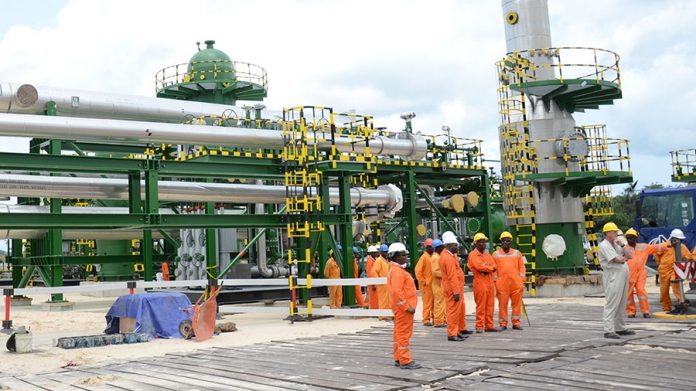
The Nigerian National Petroleum Company Limited (NNPC Ltd) has announced that the Port Harcourt Refining Company (PHRC) will undergo yet another shutdown — this time for “scheduled maintenance and sustainability assessment” starting May 24, 2025.

In a statement released Saturday by Chief Corporate Communications Officer, Femi Soneye, the NNPC explained the shutdown as part of its broader plan to ensure long-term reliability of the facility.

“We are working closely with all relevant stakeholders, including the Nigerian Midstream and Downstream Petroleum Regulatory Authority (NMDPRA), to ensure the maintenance and assessment activities are carried out efficiently and transparently,” the statement read.

“NNPC Ltd remains steadfast in its commitment to delivering sustainable energy security.”

However, the phrase “sustainable energy security” is beginning to ring hollow for Nigerians who have seen years of similar pledges lead to dead ends.

A Refinery That Produces No Fuel

The Port Harcourt refinery — comprising the older 60,000 bpd and newer 150,000 bpd units — was supposed to be a crown jewel in Nigeria’s bid to revive local refining. In August 2021, the Federal Executive Council approved a sweeping rehabilitation plan across four government-owned refineries: Port Harcourt (210,000 bpd), Warri (125,000 bpd), and Kaduna (110,000 bpd), giving a combined nameplate capacity of 445,000 barrels per day — the basis for the crude intervention stock allocated to the NNPC.

The cost was staggering:

  • $1.48 billion for Port Harcourt
  • $897.7 million for Warri
  • $586.9 million for Kaduna

That’s a total of nearly $3 billion, in a country plagued by budget deficits, currency instability, and widespread poverty. Because the federal government couldn’t cough up the full sum at once, it granted the NNPC leeway, just nine days before the Petroleum Industry Act (PIA) was signed into law on August 21, 2021, to source funds externally.

NNPC structured a series of forward-sale agreements, pledging Nigeria’s future crude oil output in exchange for immediate cash from multilateral development banks and oil trading companies. These traders were granted preferential creditor status — meaning repayment was prioritized, regardless of Nigeria’s domestic needs.

“$1.04 billion came from a multilateral development bank, while $450 million came from a trader that has been collecting 67,000 barrels per day as repayment for a few years,” energy expert Kelvin Emmanuel said.

“The crude that should have been sold to earn FX for stabilizing the naira and funding the budget deficit has been swept down the drain. And the EFCC is quiet — but when it’s yahoo boys, you’ll see their erection.”

The NNPC has never denied these arrangements. The company once described the forward sale as a creative financing model. But nearly four years later, the refinery is still yet to produce any refined fuel for the Nigerian market — only official statements, ribbon-cutting ceremonies, and now, recurring shutdowns.

A Pattern of Dysfunction and Secrecy

The PHRC reportedly resumed operations briefly in late 2024 after years of inactivity, a milestone celebrated by government officials who framed it as a turning point for local refining. But just weeks later, in December, the refinery was again shut down — quietly. No official reason was provided at the time, and the public was left to guess whether the plant had ever truly come online.

Now, with this new shutdown announced as “planned maintenance,” analysts are questioning the logic of spending billions on a facility that has yet to show functional output. The opacity surrounding the true status of the refinery’s performance only deepens suspicions.

Despite the enormous cost of refinery rehabilitation, Nigeria still relies largely on imported fuel. This continues to drain foreign reserves and deepen inflationary pressures, with petrol prices frequently adjusted upward since the removal of the fuel subsidy in 2023.

While NNPC insists that the latest shutdown is routine, the optics are damning. The refinery’s inability to produce despite billions of dollars pumped into rehabilitation has sparked criticism, with many believing that it’s just another plot to embezzle public funds.

Tekedia Capital is Excited to welcome PAX, a Crypto Exchange on a Chip

0

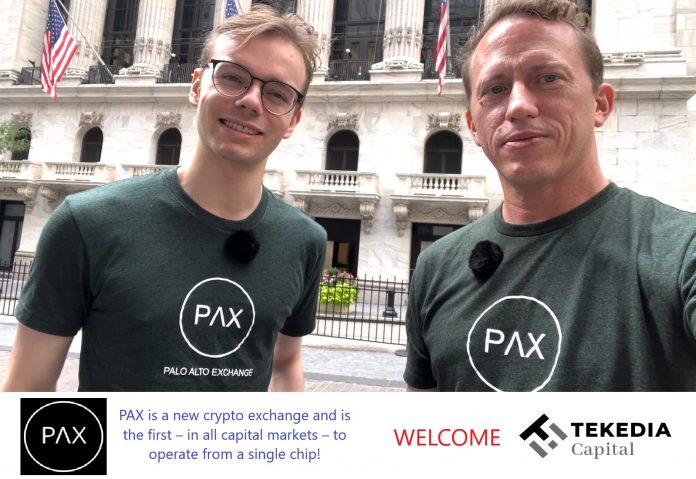
Tekedia Capital is excited to welcome PAX, a crypto exchange on a chip, faster and smaller than a datacenter. PAX is the first – in all capital markets – to operate from a single chip rather than an entire datacenter. PAX moves traders to within nanometers of the exchange – closer than ever before possible!

Such proximity unlocks unprecedented value to high frequency customers and PAX shares this value by offering zero-fee with cash-back to every other market participant on every trade. PAX is to exchange as Robinhood was to retail brokerage: the first in the industry to “go to zero” and a complete game changer across every asset and geography.

Tekedia Capital understands great business models when we see them. PAX is inventing a new one. Yes, how can we do trading without fees? How can we shrink datacenters into microprocessors to eliminate latency and offer a new generation exchange market?

To learn more about PAX co-location on a single silicon chip, visit https://pax.markets/ . For Tekedia Capital, go here capital.tekedia.com

Bitcoin’s ATH of $112,000 Fuels Rising Hopes of Trading Above $120K on X

0
CREATOR: gd-jpeg v1.0 (using IJG JPEG v80), quality = 82

Bitcoin reaching a new all-time high just shy of $112,000 aligns with recent reports of its rally, driven by investor optimism and a favorable regulatory outlook. On May 22, 2025, Bitcoin hit a record high near $112,000, as noted by CNBC, fueled by renewed risk appetite and expectations of crypto-friendly policies under the Trump administration.

This follows a surge past $109,000 earlier that week, with prices climbing from an overnight low of around $106,000. The rally has been supported by strong institutional demand, with spot Bitcoin ETFs seeing significant inflows since their January 2024 launch, and pro-crypto sentiment boosted by Trump’s nominations, like Paul Atkins for SEC chair. However, Bitcoin’s volatility remains a factor, with historical patterns suggesting potential corrections after such rapid gains.

Posts on X also reflect bullish sentiment, with some users projecting further upside toward $120,000 or even $150,000, though these are speculative and not guaranteed. Always approach such predictions cautiously, as crypto markets are inherently risky. Bitcoin’s new all-time high near $112,000 carries significant implications for markets, investors, and society, while also highlighting a growing divide in how it’s perceived and adopted.

The rally reflects strong institutional interest, with spot Bitcoin ETFs seeing $12.1 billion in inflows in Q4 2024 alone (CNBC, May 22, 2025). This legitimizes Bitcoin as an asset class, potentially drawing more traditional investors. Early adopters and HODLers see massive gains, with Bitcoin’s market cap now exceeding $2.2 trillion. However, late entrants face higher entry costs, risking FOMO-driven investments at peak prices.

Bitcoin’s history suggests corrections often follow sharp rallies. For instance, after hitting $69,000 in 2021, it dropped 30% within weeks. Investors should brace for potential pullbacks. Trump’s crypto-friendly stance, including nominations like Paul Atkins for SEC chair and plans for a Bitcoin strategic reserve, has fueled optimism. This could lead to lighter regulations, encouraging further investment.

The U.S. push for crypto leadership may pressure other nations to clarify their stance, potentially accelerating global adoption or creating regulatory fragmentation. Bitcoin’s surge boosts interest in blockchain ecosystems, potentially accelerating DeFi and Web3 innovation. With inflation concerns lingering, Bitcoin’s “digital gold” narrative strengthens, though its volatility undermines this for some investors.

Early adopters, institutions, and crypto whales benefit disproportionately, while retail investors buying at $112,000 face higher risks. X posts highlight this, with some users celebrating gains while others lament missing earlier opportunities. High prices and technical complexity exclude many, especially in developing regions, deepening the gap between crypto “haves” and “have-nots.”

Traditional finance voices and some X users warn of a speculative bubble, citing Bitcoin’s lack of intrinsic value and environmental concerns from mining. For example, critics note Bitcoin’s energy consumption rivals small nations. While the U.S. leans pro-crypto, countries like China maintain strict bans, creating a patchwork of adoption. This split affects global investment flows and innovation hubs.

Institutions enjoy better access to regulated products like ETFs, while retail investors face risks in unregulated exchanges or scams. Younger investors (Gen Z, Millennials) are more likely to embrace Bitcoin, with 60% of U.S. 18-34-year-olds viewing crypto favorably (2024 surveys). Older generations remain skeptical, preferring traditional assets like stocks or gold.

Continued institutional inflows, clearer U.S. regulations, and global adoption could push Bitcoin higher, with some X users speculating $150,000-$200,000 by 2026. A regulatory crackdown elsewhere, macroeconomic shifts (e.g., rising interest rates), or a major security breach could trigger a crash. The divide may widen if Bitcoin’s benefits remain concentrated among early adopters and institutions, potentially fueling resentment or calls for stricter oversight.

For investors, caution is key: diversify, avoid FOMO, and consider Bitcoin’s volatility. For society, bridging the divide requires education, accessible entry points, and balanced regulations to ensure broader participation without stifling innovation.

QFSCOIN Launches the Best Free Bitcoin(BTC) Cloud Mining: Earn Up to $5,000 a Day Without Equipment in 2025

0

Bitcoin just reached a new high of $109,000, which has made a lot of people in the crypto world very happy.  A lot of people are looking for easy and cheap methods to become engaged.  That’s where QFSCOIN comes in.  It is a cloud mining firm based in the US that lets you mine Bitcoin for free and gives you the potential to make up to $5,000 a day without having to buy any expensive hardware.

QFSCOIN is an excellent choice for both new and experienced users who want to get in on the crypto explosion without investing a lot of money.

What is QFSCOIN?

QFSCOIN is a cryptocurrency cloud mining company founded in Minnesota, USA, in 2019. Since its launch, it has grown into a trusted platform for mining Bitcoin, Litecoin, and Dogecoin, offering a regulated and secure environment for users to earn passive income. The company operates data centers in the United States, Canada, Norway, and Iceland, utilizing professional mining equipment to deliver top-level computing power and returns.

Unlike traditional mining setups that demand technical knowledge and high-power hardware, QFSCOIN removes these barriers completely. Through cloud mining, users can start earning with just a few clicks.

Why QFSCOIN is the Best Free Cloud Mining Platform in 2025

QFSCOIN is recognized for its user-friendly platform, cutting-edge technology, and commitment to accessibility. Here’s what makes it stand out:

  • Free mining package available
  • $30 registration bonus
  • Daily automated payouts
  • No electricity or maintenance costs
  • SSL and DDoS protection
  • Contracts for all budget levels
  • Affiliate program offering up to 4% commission
  • 24/7 customer support

QFSCOIN’s regulated status under US financial oversight adds another layer of trust and security, ensuring users’ funds and personal data are well-protected.

Mining Earnings & Contract Options

QFSCOIN offers multiple contract packages to suit different investment levels. Even the free plan gives a return, making it ideal for anyone starting without upfront capital.

Contract Price Term Fixed Return Daily Rate
$30 (Free) 1 Day $30 + $0.90 3.00%
$100 2 Days $100 + $5 2.50%
$300 2 Days $300 + $19.20 3.20%
$1,200 3 Days $1,200 + $144 4.00%
$3,500 3 Days $3,500 + $630 6.00%
$10,000 6 Days $10,000 + $5,400 9.00%

These returns are generated through high-performance mining hardware located in industrial-grade facilities in Iceland, Kazakhstan, and other mining-friendly regions.

Start Mining Bitcoin, Litecoin, and Dogecoin with Zero Hassle

The beauty of QFSCOIN lies in its simplicity. Anyone can sign up and start earning crypto in just a few minutes. Here’s how to get started:

Step 1: Choose a Reputable Provider

Choosing a legitimate platform is essential. QFSCOIN ticks all the right boxes—it’s regulated, well-established, and offers a free entry point into cloud mining.

Step 2: Register and Claim Your Bonus

Sign up at QFSCOIN’s website using just your email address. Once registered, you’ll receive a $30 bonus instantly, which is automatically applied to your first mining contract.

Step 3: Start Mining

Begin mining with your bonus right away. You don’t need any technical expertise or physical hardware. The cloud-based system handles everything for you.

Step 4: Explore More Contracts

Want to maximize your returns? You can upgrade to larger contracts that offer higher daily payouts, some as high as $5,400 in just six days. Whether you’re a cautious beginner or a high-rolling investor, there’s a contract that suits your goals.

A Smart Move Amid the Bitcoin Surge

Bitcoin’s rise to $109,000 is attracting fresh attention from retail and institutional investors alike. For those who missed the previous bull runs, QFSCOIN’s platform offers a second chance—without the need for expensive mining rigs or deep crypto knowledge.

With automated daily payouts and reliable returns, it’s now easier than ever to ride the crypto wave from your smartphone or computer.

Final Thoughts

QFSCOIN is setting a new standard for accessible, secure, and profitable cloud mining in 2025. With free Bitcoin mining, high-yield contract options, and support for Dogecoin and Litecoin, it offers something for everyone.

Whether you’re a crypto enthusiast looking to scale your mining earnings or a beginner testing the waters with zero investment, QFSCOIN makes the process simple, fast, and risk-free.

Now is the time to act—Bitcoin is booming, and thanks to QFSCOIN, you don’t need to be a tech wizard or a millionaire to get your piece of the pie. Sign up today and start mining your way toward daily crypto profits of up to $5,000.

For more details please visit https://qfscoin.com