DD
MM
YYYY

PAGES

DD
MM
YYYY

spot_img

PAGES

Home Blog Page 1106

Nigeria’s Option As Dangote Refinery Scales Its Mission in Downstream Oil Sector

0

I smile: “The Petroleum Products Retail Outlets Owners Association of Nigeria (PETROAN) has once again raised concerns over the growing influence of the Dangote Refinery in Nigeria’s downstream petroleum sector, warning that the company’s forward integration strategy could lead to monopolistic control, threaten thousands of jobs, and cripple small players across the fuel value chain.

“On June 15, Dangote Refinery announced it would begin nationwide distribution of diesel and premium motor spirit (PMS), commonly known as petrol, starting August 15. With a daily refining capacity of 650,000 barrels, it is the largest refinery in sub-Saharan Africa, and many had initially welcomed the move as a long-awaited breakthrough in Nigeria’s fuel-sufficiency efforts.”

The wailing has started. Before you know it, no one will remember how bad it was before Dangote Refinery was born. Yes, a monopolistic has received the refining sector from the gods of Nigeria, free! Nothing like that: Nigeria needs efficient supply chain and competition is the only way to make that happen since the governments at all levels are severely underfunded to deliver platforms of commerce.

Every economy needs big companies especially when governments do not show up. Before the Central Bank of Nigeria had its mojo, the First Bank of Nigeria acted as banks’ bank, clearing cheques for other banks, with the same authority you would have expected from an apex bank.

What the government should focus on is creating smart regulations and not going after big companies. Think of it: before CBN had zonal offices, First Bank ran the zones but was required to support other banks. And First Bank did and everyone was fine.

So, as Dangote expands, we can ask it to open its networks so that qualified trucks can participate, making sure those who want to work stay at work. But we must not be intimidated by associations.  Nigeria needs railway investors, postal system investors and broad investors in platforms of commerce for the economy to have any chance, as you need those investors for entrepreneurs to plant companies on them.

Petrol Marketers Warn of Dangote Refinery’s Threat to Jobs, Market Competition, Analyst Dismisses Fears

Meta Breaks WhatsApp’s Ad-Free Promise, Introduces Status and Channel Ads in Monetization Shift

0

More than a decade after acquiring WhatsApp for $19 billion, Meta has finally begun injecting ads into the once ad-free messaging app, shattering a core promise made at the time of the purchase.

The move marks a sharp shift in Meta’s strategy. It underscores its growing dependence on advertising — the company’s financial backbone — even at the cost of abandoning commitments that were once central to user trust and the app’s identity.

Announced Monday, Meta said businesses can now run “status ads” in WhatsApp’s Updates tab, the space used by users to post images, text, and videos that disappear after 24 hours — similar to Instagram Stories. These ads won’t interfere with private conversations, which Meta says remain end-to-end encrypted.

But the development signals a clear departure from WhatsApp’s founding philosophy and a monetization model that had long stood apart from the rest of Meta’s portfolio.

Meta will also begin monetizing WhatsApp’s Channels feature, allowing channel owners — including organizations, influencers, and public figures — to boost their visibility via paid placements in search results. In addition, administrators can charge monthly subscription fees for access to exclusive content, although Meta will take a 10% cut from these fees at a later date.

A Broken Promise

When Facebook (now Meta) acquired WhatsApp in 2014, it did so under unusual terms. WhatsApp’s founders, Jan Koum and Brian Acton were staunchly opposed to advertising, calling it a violation of user privacy. The duo insisted that their platform was to remain ad-free, and this position was written into parts of the acquisition agreement to ensure that Meta would respect the app’s original values.

But as Meta grew more dependent on advertising revenue — which made up over 97% of its income by 2023 — pressure mounted to monetize WhatsApp, especially as other Meta platforms like Facebook, Instagram, and more recently Threads, were saturated with ads.

That pressure ultimately drove both Koum and Acton to leave the company, reportedly after a series of internal clashes with executives over the future of WhatsApp. Acton, who later founded the encrypted messaging app Signal, publicly criticized Meta, saying, “I sold my users’ privacy.”

Despite their departure, WhatsApp’s popularity soared, surpassing 3 billion monthly users globally. But its revenue remained a fraction of Meta’s overall earnings, estimated between $500 million and $1 billion annually — mainly from charging businesses for customer service tools.

Now, with these changes, WhatsApp joins Meta’s other platforms in the company’s larger plan to extract more commercial value from its vast user base. The new status ads, as well as click-to-message campaigns that already run on Facebook and Instagram and direct users to WhatsApp, are being positioned as a new revenue pillar.

“Messaging between brands and consumers should be the next pillar of our business,” CEO Mark Zuckerberg told analysts in April.

Why Now?

Meta says the new monetization approach is designed to be subtle. According to Nikila Srinivasan, Meta’s head of product for business messaging, ads will only appear in the Updates tab — not in personal chat threads or call logs — and targeting will rely on “very basic information” like device, language, city, or user interactions with ads.

But the timing isn’t accidental. Meta is under increasing pressure from investors to diversify revenue sources and maintain growth as its core social media platforms face saturation and regulatory headwinds. The company is also locked in a high-profile antitrust battle with the U.S. Federal Trade Commission, which has challenged its acquisitions of WhatsApp and Instagram on the grounds that they were intended to eliminate competition.

For years, WhatsApp was seen as an anomaly — a rare tech giant product that grew without relying on user data for ads. That exception is now over. And for many, the decision to monetize WhatsApp is not just a business strategy — it’s a betrayal of the very principles that built the app’s global credibility.

Meta, for its part, hopes to limit the backlash by avoiding ad overload. “We really believe that the Updates tab is the right place for these new features,” Srinivasan said.

But with WhatsApp’s original founders long gone, and the platform’s founding ideals clearly overwritten, Meta appears free to break even its most sacred promises — especially as advertising is involved.

Petrol Marketers Warn of Dangote Refinery’s Threat to Jobs, Market Competition, Analyst Dismisses Fears

0

The Petroleum Products Retail Outlets Owners Association of Nigeria (PETROAN) has once again raised concerns over the growing influence of the Dangote Refinery in Nigeria’s downstream petroleum sector, warning that the company’s forward integration strategy could lead to monopolistic control, threaten thousands of jobs, and cripple small players across the fuel value chain.

On June 15, Dangote Refinery announced it would begin nationwide distribution of diesel and premium motor spirit (PMS), commonly known as petrol, starting August 15. With a daily refining capacity of 650,000 barrels, it is the largest refinery in sub-Saharan Africa, and many had initially welcomed the move as a long-awaited breakthrough in Nigeria’s fuel-sufficiency efforts.

But PETROAN, in a statement signed by its national public relations officer, Joseph Obele, said Dangote’s integration into the distribution end of the market is a dangerous overreach. The association accused the refinery of deploying tactics akin to market strangulation, including plans to cut prices aggressively in a bid to push out independent marketers and small-scale suppliers.

“This could lead to a massive shutdown of filling stations across Nigeria, resulting in widespread job losses,” the statement said, adding that “the introduction of 4,000 compressed natural gas (CNG)-powered tankers by Dangote further threatens the livelihoods of existing truck owners and drivers.”

The association argued that the refinery should restrict its focus to upstream and midstream activities, rather than venturing into retail distribution, where its sheer size could distort competition and eliminate alternatives for consumers.

Stakeholders Caught Between Efficiency and Market Control

PETROAN has insisted that it is not opposed to refining at scale, but that fair competition must be preserved. It wants regulators, including the Nigerian Midstream and Downstream Petroleum Regulatory Authority (NMDPRA) and the petroleum ministry, to intervene by enforcing price control mechanisms and strengthening oversight to ensure no single player dominates the downstream sector.

The association also recommended that the government ensure reliable crude supply to smaller refineries, which are already struggling to survive without access to feedstock. It urged the administration to create alternative livelihood opportunities for stakeholders at risk of displacement.

However, critics of PETROAN’s position say Nigeria has struggled for decades under a dysfunctional and opaque import-dependent fuel supply model. They believe that if Dangote can cut costs, improve fuel quality, and guarantee local refining, that alone should not be vilified—especially in a sector long plagued by scarcity, subsidy fraud, and dependence on foreign supply chains.

PETROAN’s Argument ‘Not Grounded in Economics’

Energy analysts who had previously praised Dangote’s nationwide distribution plan say PETROAN’s concerns, while not entirely unfounded, ignore key realities of the energy sector.

Kelvin Emmanuel, an energy economist, dismissed the association’s logic, particularly its suggestion that modular and small-scale refineries can stand toe-to-toe with the technologically advanced Dangote plant.

“How can a commercial refiner compete with modular refineries that do not even have catalytic converters and reforming units to crack naphtha into PMS?” he said, pointing out that most local modular facilities lack the infrastructure and efficiency to refine to standard fuel quality.

He also rejected the suggestion that Dangote’s model would kill jobs, saying the reverse is true.

“The Dangote Refinery employs 30,000 people directly and indirectly — at least 90% are Nigerians. Please, what job is PETROAN speaking of?” Emmanuel asked.

According to him, the 4,000 CNG trucks are not a threat to employment but a boost to industrial logistics and energy transition goals.

“These trucks will employ 4,000 drivers directly and another 4,000 people indirectly as mechanics, station attendants, engineers at CNG mother and daughter stations deployed along the corridor. Do you know what it means to make payroll every month?” he said.

He argued that PETROAN’s opposition stems from a fear of losing market privileges rather than a concern for public interest or national energy sustainability.

Generative AI Math Problems

0

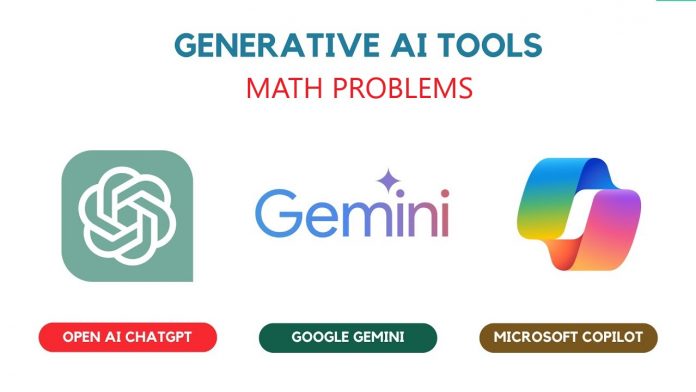
When your professor suddenly adds some unrelated Math questions in a course on regression or calculus these days, do not think he/she is distracting you. What is happening is that if you use these generative AI tools for computations, you will note that most are still at the level of infancy.

Microsoft Copilot fails basic statistics. So, to catch cheating students, throw some questions where gen AIs struggle, and you can catch a cheating student. So, students, from mean to standard deviation, do not outsource your brain to these tools.

Prompt this into your favourite AI chatbot: “What is the standard deviation of 10, 90, 12, 17, 19, 100, 121, 88, 77, 45, 34?”

Mean:

Microsoft Copilot: 57.63

Google Gemini: 55.727

ChatGPT: 55.73


Standard Deviation:

Microsoft Copilot: 36.73

Google Gemini: 40.407

ChatGPT: 39.68

Notice how Copilot failed the question. As you move harder into statistics, Gemini and ChatGPT will also begin to get into trouble. But across all indicators, ChatGPT is the most advanced. Google Gemini follows while Copilot has a math error problem.

HYPE Shows Signs of Cooling, Analysts Eye Neo Pepe’s ($NEOP) Explosive Presale

0

Emerging Opportunities Amid Crypto Volatility

As Hyperliquid (HYPE) signals potential price turbulence, crypto analysts are swiftly pivoting toward emerging opportunities with strong early momentum—and Neo Pepe Protocol ($NEOP) is surging to the forefront. More than just a meme token, Neo Pepe Coin is positioned as a bold cultural counterstrike against centralization, blending meme culture with genuine decentralized governance, on-chain transparency, and deflationary tokenomics.

Currently, the Neo Pepe Protocol presale is live at Stage 0 and has already attracted significant investor interest, raising over $110,000 at an introductory token price of $0.05. This robust initial traction highlights growing investor confidence, particularly amid the backdrop of cooling enthusiasm around HYPE.

How Market Volatility Is Shaping HYPE Sentiment

Hyperliquid (HYPE), previously enjoying a strong rally, now faces potential instability, prompting profit-taking from major holders. Retail investors, wary of valuation concerns and liquidity risks, are re-evaluating their positions. Traders are increasingly selective, gravitating toward assets that offer clear fundamentals, decentralization, and community-driven models. Amid this shifting landscape, assets like Neo Pepe Protocol—built from inception on community governance—are capturing heightened attention.

$NEOP— High-Upside Alternative to HYPE

Neo Pepe Coin’s momentum is not purely speculative. Instead, it’s anchored in strong protocol design, offering both fiscal transparency and robust community governance. Unlike tokens with centralized oversight, the Neo Pepe treasury is entirely governed by DAO approval with enforced time-delayed execution, ensuring thorough scrutiny and security. This transparent governance model significantly mitigates risks associated with centralized control, appealing to investors who prioritize structural integrity alongside high growth potential.

Key Advantages of Neo Pepe Protocol:

  1. DAO Governance: Treasury controlled by transparent smart contracts with community voting.
  2. Deflationary Mechanics: Fixed supply of 1 billion tokens with community-approved burn proposals.
  3. Liquidity Stability: Each transaction includes a 2.5% fee automatically added to liquidity pools, enhancing price stability.
  4. Presale Incentives: Structured, stage-based presale model rewarding early investors.

Crypto Fire Checks Out Neo Pepe—Balanced Insights on Memecoin’s Future

Crypto analyst Crypto Fire offers their perspective on Neo Pepe’s presale, identifying clear strengths while carefully navigating potential areas of uncertainty. They commend the project’s carefully structured presale stages, community-oriented governance, and sophisticated auto-liquidity model, emphasizing that these features set Neo Pepe apart from typical memecoin trends. While recognizing that meme-based projects naturally carry speculative elements, Crypto Fire suggests these aspects are balanced by the coin’s transparent, practical approach, positioning it as a notable prospect worth watching closely as the presale unfolds.

Analyst Focus Shifts as Presale Gains Momentum

Analysts tracking presale capital movements identify Neo Pepe Protocol as a rapidly emerging standout. Early indicators—rapid funding achievements and increasing wallet participation—suggest significant organic interest. The project’s non-mintable, fully allocated token supply model reassures investors by eliminating dilution risks, while the community-driven burn mechanics further enhance its appeal.

Confidence in HYPE Fades— Investors Turning to Neo Pepe

As investor sentiment toward HYPE cools due to profit-taking and market fatigue, many are redirecting their focus toward tokens offering both immediate upside and long-term engagement. Neo Pepe Protocol’s interactive presale model includes innovative features such as a real-time leaderboard, encouraging and rewarding active community participation with strategic airdrops.

Unlike conventional meme tokens, Neo Pepe Protocol is designed for sustained, meaningful engagement. Investors seeking substantial involvement rather than short-lived speculation are finding the protocol increasingly appealing.

How to Participate in Neo Pepe Protocol’s Presale

  • Visit the official website: Neo Pepe
  • Join the community Telegram channel: Neo Pepe Telegram
  • Contribute using supported cryptocurrencies such as ETH and USDT.
  • Monitor token allocation and unlock schedules in real-time.

Neo Pepe Protocol represents not merely a financial opportunity but a chance to be part of a decentralized crypto movement defined by trust, transparency, and collective empowerment.