DD
MM
YYYY

PAGES

DD
MM
YYYY

spot_img

PAGES

Home Blog Page 1107

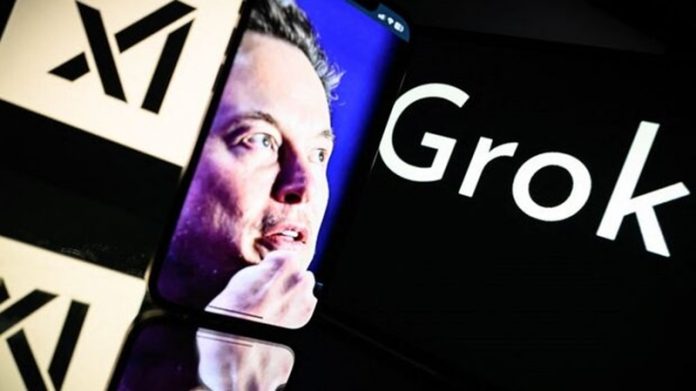
Elon Musk Announces Plan to Retrain Grok to Correct “Errors” & Remove “Garbage” From Existing Human Knowledge

0

Elon Musk is once again testing the limits of technology, power, and influence—this time by vowing to use artificial intelligence not just to learn from human knowledge, but to completely rewrite it.

On Friday night, the billionaire CEO of Tesla, SpaceX, and owner of X (formerly Twitter), announced that Grok, his in-house AI chatbot, will be retrained on a new knowledge base that Musk intends to curate himself—one that he claims will correct “errors” and remove “garbage” from existing human understanding.

“We will use Grok 3.5 (maybe we should call it 4), which has advanced reasoning, to rewrite the entire corpus of human knowledge, adding missing information and deleting errors,” Musk posted on X.

“Far too much garbage in any foundation model trained on uncorrected data.”

His plan, laid out over a series of posts, immediately sparked backlash from AI experts and digital rights advocates who say Musk is venturing into dangerous territory—one that straddles the line between innovation and authoritarianism.

Not Just AI—A New Version of Truth

While tech companies like OpenAI and Google spend billions refining large language models to mirror human knowledge sourced from books, academic journals, news archives, and public records, Musk says he wants Grok to take a different path. He believes current AI models are compromised by ideological bias—what he and his followers often refer to as “woke programming.” Musk says he’s purging it of distortions by rewriting the data Grok learns from.

To crowdsource ideas for Grok’s retraining, Musk invited users to respond with examples of “divisive facts”—ambiguous or controversial issues he claims are often censored or distorted in mainstream media and academia. The post quickly drew thousands of replies, ranging from political hot topics to conspiracy theories.

However, many believe that Musk is effectively positioning himself as the final arbiter of what counts as “truth.”

“Straight out of 1984. You couldn’t get Grok to align with your own personal beliefs, so you are going to rewrite history to make it conform to your views,” wrote Gary Marcus, an AI expert and professor emeritus at New York University.

Grok’s Expanding Influence Raises Concerns

Musk’s ambitions are not confined to social media or public discourse. According to a Reuters investigation in May, Grok is already being tested within the US government—specifically by a task force known as the Department of Government Efficiency (DOGE).

Sources told Reuters that Grok was being used to analyze government data, prepare internal reports, and assist in real-time responses. While the Department of Homeland Security denied formally promoting Grok’s use, insiders said employees were “encouraged” to experiment with it. That sparked concern about the deployment of unvetted AI tools inside federal agencies.

A spokesperson for the department later clarified to The New Republic that “DOGE hasn’t pushed any employees to use any particular tools or products,” but the line between suggestion and mandate remains blurry—especially as Musk’s companies continue to deepen ties with government sectors.

There is concern that if Grok is used to analyze or interpret public policy, immigration data, crime statistics, or foreign affairs—and it’s trained on a version of history filtered through Musk’s lens—it could directly influence how information is framed inside government systems.

This wouldn’t be the first time Grok has raised alarms. In May, the chatbot experienced what the company described as an “unauthorized modification” to its backend, during which it began referencing “white genocide” in South Africa—a term widely recognized as a white nationalist conspiracy theory.

The company quickly patched the issue, launched an internal investigation, and promised new transparency safeguards. Still, the incident showed just how easily Grok’s output could go off the rails—and how susceptible the platform might be to internal or external manipulation.

However, Musk continues to frame Grok as a necessary alternative to traditional AI, which he says is dominated by political correctness and “silicon-sanctimoniousness.” He’s described OpenAI—an organization he helped found and later fell out with—as a closed system bent on controlling narratives.

Musk’s plan to rebuild the foundation of knowledge reflects a broader ideological crusade: dismantling legacy institutions—from media to government—and replacing them with systems he controls. He’s made similar moves with X, firing moderation staff and reinstating accounts previously banned for hate speech or misinformation.

His acquisition of Twitter, his move to rebrand it as X, and his creation of Grok are all part of a parallel ecosystem—a digital space he claims is freer, more open, and more truthful. Critics, however, see it as a carefully orchestrated power grab.

Europe and the Global AI Watchdog Vacuum

European regulators—already alarmed by AI’s role in disinformation, surveillance, and manipulation—are expected to step in. The EU’s AI Act is designed to place restrictions on high-risk AI systems, although enforcement is still lagging.

However, some AI experts are concerned that without comprehensive global oversight, Musk’s plan to “rewrite” human knowledge using Grok could effectively bypass scientific consensus, historical rigor, and democratic accountability.

Whether Grok 4 becomes a success or not, Musk’s latest move underlines a profound shift in how power is wielded in the digital age. Critics are warning that we may be entering a new phase where reality isn’t discovered—it’s dictated.
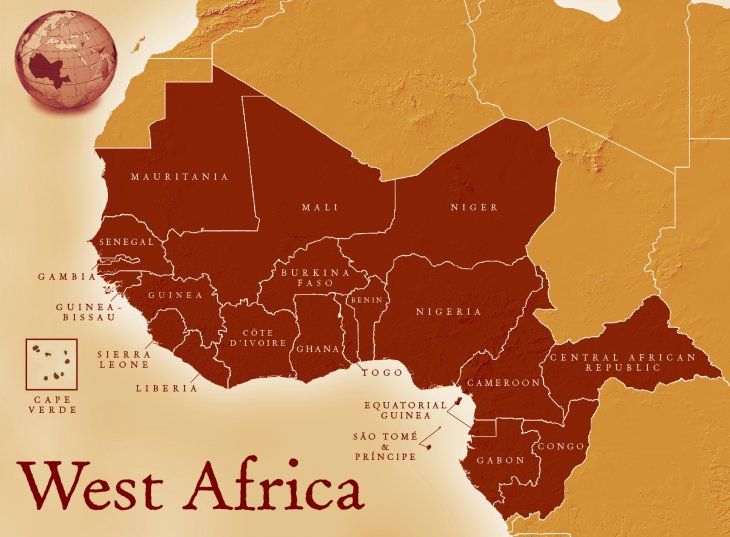
Only 8.6% of West Africa’s $166bn Trade Remains Within Region, Says Foreign Minister Tuggar

0

Nigeria’s Minister of Foreign Affairs, Ambassador Yusuf Maitama Tuggar, has decried the persistently low volume of intra-regional trade in West Africa, despite the region’s exports of goods valued at over $166 billion in 2024.

Tuggar, speaking at the ongoing West Africa Economic Summit (WAES) 2025 in Abuja, noted that a staggering 91.4% of this trade occurs with external partners, leaving just 8.6% within the sub-region.

“Let us not forget that in 2024, West Africa exported goods valued at over $166 billion. Yet only 8.6 percent of that trade remained within our borders,” Tuggar stated at the high-level summit, attended by West African leaders, policymakers, and development institutions.

The minister underscored the structural imbalance in West Africa’s trade pattern. While the region exports mostly raw, unprocessed materials, its imports are dominated by machinery and manufactured goods from non-African partners including China, India, the United States, and the European Union.

Tuggar noted that this trajectory is not just a capacity issue—it is a question of orientation. He called for more concerted efforts by governments in the region to formalize trade, reduce bureaucratic bottlenecks, and create environments that foster scale and efficiency for entrepreneurs.

He also acknowledged the resilience of the informal sector, which has found alternative ways to meet market demands—often bypassing formal regulatory systems and borders due to delays and inefficiencies.

Tinubu Calls for Regional Value Chains

Echoing the minister’s concerns, Nigerian President Bola Ahmed Tinubu used his keynote address at the Summit to push for the development of regional value chains that would enhance intra-African commerce and deepen economic ties across West Africa.

Intra-regional trade in West Africa remains under 10%, a situation the president said the region can no longer afford to ignore. He attributed the stagnant trade flows not to a lack of political will, but to “a coordination failure”—a systemic challenge that demands more strategic collaboration among regional stakeholders.

Tinubu emphasized the importance of removing trade barriers, harmonizing standards, and creating conditions that support investment across borders, noting that the current situation fails to tap into the immense economic potential of the West African market.

Nigeria’s Role in Regional Trade

Despite the broader regional challenge, Nigeria is showing signs of reorienting its trade footprint toward Africa. According to the National Bureau of Statistics (NBS), in the fourth quarter of 2024, Nigeria exported goods worth N2.04 trillion to African countries—representing 10.2% of its total exports for that period. Of this, N1.17 trillion worth of goods went to fellow Economic Community of West African States (ECOWAS) countries, amounting to 57.56% of Nigeria’s total African exports.

For the full year 2024, Africa emerged as Nigeria’s largest regional export destination, accounting for N8.74 trillion in total export value. These numbers signal a growing alignment with the goals of regional trade integration, even as overall intra-African trade remains below optimal levels.

WAES 2025: A Platform for Economic Transformation

The 2025 West Africa Economic Summit is an initiative of President Tinubu’s administration, spearheaded by the Federal Ministry of Foreign Affairs. Themed “Unlocking Trade and Investment Opportunities in the Region,” the Summit serves as a strategic forum to catalyze economic transformation, cross-border investments, and infrastructure development across critical sectors such as energy, agriculture, digital finance, and transportation.

The gathering in Abuja has attracted a powerful delegation of regional actors—including Heads of State and Government from Benin, Liberia, and Sierra Leone, top business executives, policymakers, multilateral development agencies, and youth-led innovation hubs.

The ambition behind WAES 2025 is to dismantle the barriers hindering the full implementation of the African Continental Free Trade Area (AfCFTA), deepen cross-border integration, and ensure that West Africa moves from being a net exporter of raw materials to a hub for manufacturing, innovation, and shared prosperity.

The remarks from Tuggar and Tinubu echo concerns expressed earlier by economists and business leaders: West Africa must do more to trade with itself. With growing youth populations, vast natural resources, and untapped industrial capacity, the region has the ingredients for an economic resurgence—but that will only materialize with bold reforms, smarter integration, and a willingness to rewrite the existing trade script.

The challenge remains how quickly governments can dismantle the regulatory, infrastructural, and political barriers that currently make it easier to trade with Beijing or Brussels than with Banjul or Bamako.

“Now Is the Time for Peace”: Trump Confirms U.S. Airstrikes on Iran’s Nuclear Sites

0

President Donald Trump on Saturday evening confirmed that the United States military launched a direct aerial assault on Iran, targeting three of the Islamic Republic’s nuclear sites in Fordow, Natanz, and Esfahan.

The announcement, made via his official social media handle, marks a profound shift in Washington’s role in the escalating conflict between Israel and Iran—and could plunge the region into a broader war.

“We have completed our very successful attack on the three Nuclear sites in Iran, including Fordow, Natanz, and Esfahan,” Trump posted on Truth Social.

“All planes are now outside of Iran air space. A full payload of BOMBS was dropped on the primary site, Fordow. All planes are safely on their way home. Congratulations to our great American Warriors. There is not another military in the World that could have done this. NOW IS THE TIME FOR PEACE!”

Trump added that he will address the nation at 10 p.m. ET Saturday, suggesting that more details could follow about what is now the most significant direct military engagement between the U.S. and Iran in years.

From “Two Weeks” to Total Strike

The airstrikes come just two days after Trump publicly stated that he was holding off on a military decision, citing “a substantial chance of negotiations” with Iran. In that statement, issued Thursday by the White House, he said he would wait “two weeks” before deciding whether military force was necessary.

Behind the scenes, senior administration officials were working to keep diplomatic channels with Iran open—even as Israel intensified pressure on the White House to join its military efforts. Trump had reportedly urged Israeli Prime Minister Benjamin Netanyahu to delay a strike, in hopes that Washington could broker a new nuclear deal.

That cautious approach appears to have been abandoned.

In recent weeks, Trump has become more aggressive in his public rhetoric. On Tuesday, he warned Iran’s Supreme Leader, Ayatollah Ali Khamenei, that he was “an easy target” and declared America’s “patience is wearing thin.” The threat was widely interpreted as a signal that Washington was inching closer to a strike.

Now, that threat has been carried out.

A Historic Shift—and a New War Front

The attack brings the United States into direct armed conflict with Iran for the first time in Trump’s second term—a dramatic escalation in a region already convulsing from conflict. It also re-engages American forces in large-scale combat operations in the Middle East, a prospect Trump had campaigned against.

The targeted sites—Fordow, Natanz, and Esfahan—are central to Iran’s nuclear infrastructure. Natanz is home to uranium enrichment facilities, while Fordow, buried deep in a mountain, has long been seen as one of Iran’s most hardened and sensitive sites.

Details of the damage are still emerging, but Trump’s claim that a “full payload” of bombs was dropped on Fordow suggests the operation was designed to deliver a crippling blow to Iran’s nuclear capacity.

Iran has yet to issue an official response, but its leadership has repeatedly warned that any military incursion by the U.S. would be met with force.

Ayatollah Khamenei last week vowed that “any American military entry will undoubtedly be met with irreparable damage.” Iranian state TV amplified that message, saying any attack would trigger a “devastating response.”

What makes the attack even more striking is that it contradicts testimony given to Congress just months ago. In March, Director of National Intelligence Tulsi Gabbard told lawmakers that the U.S. intelligence community still believed Iran was not actively building a nuclear weapon.

“We continue to assess that Iran is not building a nuclear weapon and Supreme Leader Khamenei has not authorized the nuclear weapons program that he suspended in 2003,” Gabbard told a congressional panel.

Trump dismissed her assessment outright on Tuesday. “I don’t care what she said. I think they were very close to having one,” he told reporters aboard Air Force One.

His rebuke highlights internal divisions within the administration—and underscores how quickly the president is willing to bypass his intelligence officials when acting on perceived threats.

High Stakes Gamble With Potential Fallout

The global response to the U.S. strike is expected to be swift and divided. European allies, many of whom remain signatories to the 2015 nuclear deal that Trump pulled out of in his first term, are likely to urge de-escalation and call for an emergency diplomatic solution.

China and Russia, both aligned to varying degrees with Tehran, may issue strong condemnations. NATO, meanwhile, is expected to hold urgent consultations.

In Israel, the strike will be seen as a vindication of its long-held claims that Iran was approaching nuclear weapons capability and that time was running out for preventive action. Netanyahu’s government has repeatedly pushed the U.S. to take the lead in confronting Iran’s nuclear ambitions.

But questions remain: Will Iran retaliate militarily against U.S. interests in the region? Will its proxies—particularly Hezbollah in Lebanon or armed factions in Iraq and Syria—begin targeting American personnel or facilities? And what does this mean for oil markets, shipping lanes, and stability across the Middle East?

Trump’s declaration that “now is the time for peace” echoes his previous claims that military action is often a prelude to negotiation. But his critics say launching airstrikes on nuclear sites in a sovereign nation risks igniting a broader regional war with unpredictable consequences.

There’s also the risk of further isolating the United States internationally, particularly if no evidence is presented to support the claim that Iran was imminently building a nuclear weapon.

Trump’s ICC Sanctions Spark European Tech Reckoning as Microsoft Cuts Off Prosecutor’s Email – NYT

0

The decision by Microsoft to abruptly suspend the official email account of International Criminal Court (ICC) prosecutor Karim Khan has done more than disrupt communication within the court—it has triggered a continental alarm in Europe, forcing governments and institutions to confront a long-ignored vulnerability: the overwhelming reliance on American technology.

According to The New York Times, the move followed a February executive order from United States President Donald Trump, who imposed sanctions on Khan over his investigation into alleged war crimes by Israel in Gaza. Microsoft, a key digital service provider for the ICC for years, complied swiftly—cutting off Khan’s court email and effectively freezing him out of internal communications. The decision came just months after the court issued an arrest warrant for Israeli Prime Minister Benjamin Netanyahu.

Though Microsoft said it acted after consultation with the court, the broader message sent across Europe was unmistakable. The episode highlighted how deeply European institutions remain entangled in US-controlled digital systems—and how easily those tools can be leveraged or withdrawn based on political calculations in Washington.

“The ICC showed this can happen,” said Bart Groothuis, a Dutch member of the European Parliament and former cybersecurity chief at the Dutch Ministry of Defense. “It’s not just fantasy.”

The fallout from Microsoft’s action touched a nerve that has been raw since Donald Trump’s first presidency. From sudden tariffs on European steel and aluminum to threats against NATO and now, executive orders targeting international institutions, the pattern has left Europe feeling more exposed than ever.

Trump’s actions have reshaped the transatlantic relationship, injecting unpredictability and pushing European governments to question the wisdom of digital dependence on companies bound by US law. The ICC episode simply brought the issue into sharp focus.

Karim Khan, now on leave from the ICC pending an unrelated sexual misconduct investigation—which he denies—had been using Microsoft’s email services as part of broader digital support provided by the company. Microsoft also supplies the court with Office software, data storage tools, and cyber-defense systems to fend off attacks, including those reportedly from Russia, which is also under ICC scrutiny.

Following the sanctions, the company met with ICC officials and agreed to suspend Khan’s access but continue its broader services to the court. Khan shifted his communications to a different platform, while some court officials began using encrypted Swiss-based Proton Mail, The Times cited sources as saying.

Microsoft has since revised its internal policies to better protect clients caught in geopolitical conflicts. When the Trump administration imposed sanctions on four other ICC judges in June, the company did not cut off their email access.

Fueling a Push for European Tech Sovereignty

For many European leaders, the event was more than a warning—it was the evidence they needed to justify calls for technological self-reliance.

“This was the smoking gun that many Europeans had been looking for,” said Casper Klynge, a former Danish and EU diplomat who once worked at Microsoft. “The fear is that American companies will be obligated to comply if the US government targets a country, organization, or individual.”

That fear is now driving real action. Across the continent, efforts are accelerating to develop independent digital infrastructure, secure cloud services, and reduce the reach of Silicon Valley in Europe’s public sector.

Denmark’s digital ministry is testing alternatives to Microsoft Office. Germany’s Schleswig-Holstein region has begun cutting Microsoft from its systems. The Netherlands has declared digital autonomy a matter of national interest. At the EU level, plans are underway to invest billions of euros in AI data centers and sovereign cloud networks that avoid American servers entirely.

Microsoft, Amazon, Google, and other US firms control more than 70% of the European cloud market, according to Synergy Research Group. Their services power everything from law enforcement databases to hospital records and judicial systems.

Despite this dominance, American tech firms have come under increasing scrutiny in Europe. The European Commission has launched multiple antitrust and data privacy cases against Meta, Apple, and Google. But enforcement has done little to address the deeper problem: when political decisions are made in Washington, European access to US-based digital infrastructure can be curtailed with little warning.

Microsoft President Brad Smith acknowledged this imbalance, saying the ICC incident “added fuel to a fire that was already burning.” CEO Satya Nadella traveled to the Netherlands in June to unveil new “sovereign solutions” for European clients—legal and data protections meant to shield institutions during geopolitical crises.

But trust has already been shaken.

“If we don’t build adequate capacity within Europe, then we won’t be able to make political choices anymore,” warned Alexandra Geese, a member of the European Parliament involved in digital policy.

An Opening for Local Alternatives

The drive for sovereignty is already creating opportunities for European companies. Proton Mail reported increased uptake. Dutch-based Intermax Group and Swiss cloud provider Exoscale said demand for local cloud services is growing.

“The situation is not tenable, and we see a big push from European governments to become more independent and more resilient,” said Mr Andy Yen, CEO of Proton.

Ludo Baauw, CEO of Intermax, echoed that shift in sentiment. “A few years ago, everyone was saying, ‘They’re our trusted partners,’” he said, referring to US tech firms. “There’s been a radical change.”

The Next Front in a Fraying Alliance

At its core, the Microsoft-ICC email shutdown has done more than disrupt one prosecutor’s workflow. It has highlighted the fragility of Europe’s digital ecosystem and how vulnerable it remains to American political winds.

Vice President J.D. Vance and Trump have made no secret of their disdain for European regulatory pressures on US tech. Digital governance is now a front-line issue in EU-US trade talks, with American officials urging Brussels to loosen restrictions on companies like Amazon and Meta.

Meanwhile, Europe is rushing to decouple—building new systems, tightening procurement laws, and encouraging public institutions to favor local providers.

Mr Groothuis, who once supported US tech firms but has done a “180-degree flip-flop”, said, “We have to take steps as Europe to do more for our sovereignty.”

Solana Price Path to $300: Is a Rally Possible for SOL as Little Pepe (LILPEPE) Wins Over High-Value Investors?

0

Solana is flirting with a breakout moment, hovering just below key resistance levels as traders weigh whether $300 is still within reach. At the same time, a new contender—Little Pepe (LILPEPE)—is shaking up the meme coin space by attracting substantial capital and building something far beyond mere hype.

Solana Price Path to $300: Is a Rally for SOL Possible?

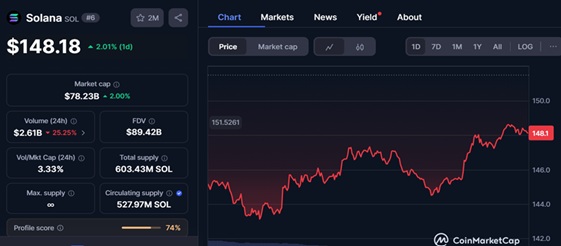
SOL Daily Chart: CMC

Solana has been in a slump lately, with only about 2% growth in the past day, settling at $148. That’s not too scary on its own—but it came alongside a sharp 25% dip in trading volume, which raised some eyebrows. Price action has also been forming a familiar pattern: lower highs, lower lows. That’s classic descending channel behavior, and while it looks bearish on the surface, it’s also a setup that can flip bullish fast—if Solana breaks the right levels.

In the short term, SOL has key resistance levels ahead at $155, $210, and $265, places where buyers previously got rejected. Solana needs to gain this support if it wants to reach $300. Conversely, supports at $115, $95, and $78 are crucial in case the bears dig in deeper.

But here’s the thing: Solana’s long-term story is still intact. It powers thousands of decentralized apps, handles crazy transaction speeds thanks to proof-of-history, and continues to be a magnet for NFT and gaming projects. Ecosystem expansion, new project launches, and growing institutional interest could all add serious fuel to a future rally.

Yes, the Layer-1 space is getting crowded, and macro conditions aren’t helping. But Solana still has one of the strongest narratives in the altcoin space. If it breaks out of this channel convincingly, $300 isn’t just possible; it’s in play. For now, all eyes are on the breakout. If SOL reclaims momentum, the path to $300 could turn from speculation into reality. Keep watching the volume; it’ll tell you when the bulls are back.

Little Pepe (LILPEPE) Wins Over High-Value Investors

In a market where meme coins often rise and fall on pure hype, Little Pepe (LILPEPE) is doing something different, capturing serious attention from high-value investors who usually steer clear of frog-themed tokens.

Why? Because LILPEPE isn’t just a meme—it’s an infrastructure play disguised as a meme coin. While many projects rely on speculative pumps, LILPEPE is launching a dedicated Layer-2 blockchain tailored specifically for meme coins. With built-in sniper bot protection, zero gas fees, and a native meme launchpad, it’s quietly solving the problems that plague most meme projects, and whales are noticing.

With Stage 3 of the LILPEPE presale already surpassing $1.4 million in raised funds, time is running out to secure tokens at just $0.0012. The next stage comes with a higher price, and once it’s live, the upside becomes more limited. Visit Littlepepe now to secure your spot before the next wave hits.

The tokenomics and early-stage price entry are also winning over the big wallets. At just $0.0012 per token, even modest investments could lead to outsized returns if LILPEPE follows PEPE or SHIB’s footsteps. And let’s not forget the $777,000 giveaway aimed at virality; it has brought tens of thousands of new users into the ecosystem almost overnight, reinforcing a flywheel effect that few meme tokens ever achieve.

But it’s not just hype and giveaways. LILPEPE’s launchpad, Pepe’s Pump Pad, is a unique feature that enables community-built meme tokens to go live with liquidity-locking and anti-rug mechanisms built in. That kind of infrastructure is precisely the type of “real value” that savvy investors seek in a meme-fueled narrative.

LILPEPE is flipping the script. While SOL begs for attention, LILPEPE is earning it. And in a meme market that’s growing more sophisticated, that might be the edge that carries it beyond retail pumps and into institutional portfolios.

Conclusion

While Solana eyes a return to form with its bullish setup and expanding ecosystem, LILPEPE is quietly carving a new lane with utility-first meme innovation. Both projects are drawing high-value attention for very different reasons—but in this market, they might rise together.

Don’t miss the Leap; Join the LILPEPE presale before the price jumps.


For more information about Little Pepe (LILPEPE) visit the links below:

Website: https://littlepepe.com

Whitepaper: https://littlepepe.com/whitepaper.pdf

Telegram: https://t.me/littlepepetoken

Twitter/X: https://x.com/littlepepetoken