DD
MM
YYYY

PAGES

DD
MM
YYYY

spot_img

PAGES

Home Blog Page 111

SEC Issues No-Action Letter to Fuse Energy Solana DePIN Project

0

The U.S. Securities and Exchange Commission (SEC) issued a no-action letter to Fuse Crypto Limited, the developer of Fuse Energy—a decentralized physical infrastructure network (DePIN) project built on the Solana blockchain.

This letter provides regulatory clarity by confirming that the project’s native FUSE also referred to as ENERGY token does not need to be registered as a security under Sections 5 and 12(g) of U.S. securities laws, as long as it is offered and sold in the manner described in Fuse’s application.

Fuse Energy incentivizes users to participate in a decentralized energy grid through its mobile app. Users earn FUSE tokens by completing tasks like reducing energy consumption during peak hours, generating solar power, or using EV chargers.

These tokens offer real-world utility, such as energy bill discounts and carbon offsets, positioning them as rewards for network maintenance rather than investment opportunities. This is the SEC’s second no-action letter to a DePIN project in recent months, following a similar one issued to DoubleZero earlier in 2025.

The decision reflects a shift toward a more crypto-friendly stance under new SEC Chairman Paul Atkins, with Commissioner Hester Peirce leading the agency’s crypto task force. Legal experts note that no-action letters provide “regulatory cover” by assuring projects they won’t face immediate enforcement for securities violations.

The DePIN sector, valued at over $24 billion, sees this as a blueprint for utility tokens tied to real-world actions. Fuse’s token design—emphasizing consumptive use over speculation—aligns with SEC expectations, potentially boosting adoption in green energy initiatives.

Post-announcement discussions on X highlighted optimism, with one post noting: “SEC issues no action letter to Fuse Crypto for Solana based ENERGY token Tokens earned as rebates for solar panels/EV chargers not sold as investments.”

This milestone underscores evolving U.S. crypto regulations, offering a clearer path for Solana-based projects focused on tangible utility.

REKT Sponsors FaZe Clan Gaming Jerseys

Rekt Brands Inc.—the company behind the crypto-native beverage Rekt Drinks and its $REKT token—announced a $2 million agency-of-record partnership with GameSquare Holdings (NASDAQ: GAME), the parent company of esports giant FaZe Clan.

A core element of the deal includes prominent branding for Rekt on FaZe Clan’s esports jerseys, marking a strategic push into gaming culture.

GameSquare, which operates one of North America’s largest gaming media networks, will leverage its platforms to promote Rekt Drinks’ physical products, digital experiences, and $REKT token adoption.

This includes adding $2 million worth of $REKT tokens to GameSquare’s treasury alongside holdings like Ethereum and Animecoin and co-developing gaming-integrated products.

Rekt’s logo will appear on FaZe Clan’s iconic jerseys, exposing the brand to FaZe’s massive audience of over 290 million across gaming and youth culture. This follows a similar strategy in GameSquare’s prior deal with Animecoin and aligns with broader Web3-esports integrations.

Rekt emerged from the Rektguy NFT collection and has sold over 1 million cans of its sparkling water in its first year, emphasizing direct-to-consumer sales and community-driven “movements.” CEO Ovie Faruq described the partnership as a way to “take that movement global” through gaming ties.

This sponsorship enhances Rekt’s visibility in esports, bridging crypto, beverages, and competitive gaming—potentially driving $REKT token engagement among Gen Z and millennial audiences. No recent updates indicate changes, but it remains a key pillar of Rekt’s expansion.

Pump.fun Introduces $60K Community Grants for 6 Token Projects Amid Sappy Seals NFT Launchpad on Monad

0

Pump.fun, the popular Solana-based memecoin launchpad, has rolled out a new initiative allocating $60K in community grants to support six standout token projects.

This move is part of a broader push to bolster ecosystem growth, drawing from the platform’s ecosystem fund which receives 2.4% of $PUMP token supply dedicated to partnerships, grants, and development.

The selected projects—focused on innovative memecoins, tools, and community tools—will receive $10K each to fund marketing, liquidity boosts, or feature expansions. Pump.fun’s co-founder Alon Cohen announced the grants on X, emphasizing how they aim to “fuel the next wave of viral tokens” amid the platform’s record 6M+ token launches in 2025.

This comes on the heels of Pump.fun’s $PUMP token ICO in July 2025, which raised $1.32B at a $4B valuation, with 24% of supply earmarked for community initiatives like these grants and airdrops. Critics note the timing aligns with recent treasury management drama, where $436M in USDC transfers sparked sell-off rumors later denied by the team.

Still, the grants highlight Pump.fun’s revenue-sharing model: creators earn 0.05% on trades via PumpSwap DEX, and now communities can redirect fees for takeovers of abandoned tokens. For context, Pump.fun’s “graduation” threshold for tokens is $90K market cap up from $60K earlier in 2025, after which they migrate to Raydium or PumpSwap with auto-liquidity.

The platform has generated $800M+ in fees since 2024, making these grants a drop in the bucket but a smart play for loyalty.

Sappy Seals Releases NFT Mint Launchpad on Monad

Sappy Seals, the Ethereum-native PFP NFT collection 10K seals launched in 2021, current floor ~0.28 ETH, has expanded into the Monad ecosystem with “Seals on Monad”—a dedicated NFT mint launchpad built on the high-performance EVM-compatible L1 blockchain.

The platform enables seamless minting of seal-themed NFTs, integrating with Monad’s testnet for low-fee, fast transactions, and ties into the $PIXL token for governance, breeding, and DeFi utilities like staking Pixl Pets.

The launch coincides with Monad’s NFT Week and features collaborations like “All Roads Lead to Seals” via Magic Eden’s Monad testnet launchpad—a Sealuminati-driven activation blending Sappy Seals lore with Monad’s cultural push.

Sealuminati, incubated by PixlDAO, acts as the bridge, allowing holders to mint chapter-based NFTs that unlock WLs, codes, and rewards from Monad partners (e.g., Purple Frens staking nodes or Mop Nads PFPs).

Sappy Seals holders qualify for Monad’s airdrop claims open through November 2025, rewarding long-term NFT ownership alongside DeFi activity. The launchpad supports no-code mints, allowlists, and royalties, positioning Sappy Seals as a metaverse “safe haven” for creators—echoing its meme-heavy roots.

With Monad’s node architecture emphasizing speed (10K TPS), this could supercharge Sappy’s community-driven drops, especially as the ecosystem adds GameFi like Flappy Trump or Valor Quest. Both announcements underscore 2025’s trend of cross-chain expansions.

Pump.fun rewarding Solana memecoin chaos, Sappy Seals betting on Monad’s DeFi/NFT synergy. Raydium focuses on broader ecosystem incentives, liquidity mining, and token allocation for partnerships—leveraging its $RAY tokenomics to fuel growth.

About 30% of the total $RAY supply 555M tokens is reserved for “partnerships and ecosystem expansion,” explicitly including grants to projects that enhance Raydium or the Solana ecosystem.

This pool has supported integrations, liquidity bootstraps, and developer tools since Raydium’s 2021 launch, generating over $500M in cumulative fees with 0.25% directed to the protocol treasury for such initiatives.

Raydium distributes rewards to liquidity providers (LPs) and traders via its farms and pools. A key recent example is the April 2025 LaunchLab Incentives Program, which allocated 50,000 $RAY ~$132K at the time to users trading tokens launched through Raydium’s LaunchLab.

Eligibility is based on trade volume across DEXs like BullX, Photon, or Banana Gun—no minimum, but higher activity yields more. Rewards are claimable post-campaign; it’s open to anyone trading LaunchLab tokens, boosting memecoin liquidity and creator revenue.

This echoes Pump.fun’s fee-sharing but ties directly to $RAY emissions. Revived trading activity in Solana’s memecoin sector, with BONK’s partnership enabling auto-Raydium integrations for new launches. Current APYs range from 10-50% on select pools, with ~12% of $RAY supply staked for governance and fee shares.

Automatic via wallet activity; check claims on Raydium’s dashboard. Ongoing emissions total ~34% of supply over three years. Raydium’s IDO platform for vetted Solana projects, offering liquidity bootstrapping, marketing, and treasury grants often $50K-$200K in $RAY or SOL equivalents.

It’s selective 10-15 projects/year but has launched hits like Star Atlas and Aurory, providing seed funding for DeFi, GameFi, and tools. Projects apply via Raydium’s site; approved ones get priority $RAY staking access for backers, plus post-launch liquidity mining boosts.

This functions like grants for “ecosystem contributors,” with funds from the 30% partnership pool. Over $100M raised across launches; stakers earn priority WLs and revenue shares. In 2025, it expanded to support concentrated liquidity pools, granting more granular funding for asymmetric LPs.

Raydium’s model is more decentralized and ongoing, rewarding broad participation over targeted grants—ideal for Solana’s trading frenzy.


Bitcoin’s Security Challenge: From Block Rewards to Fee-Driven Sustainability

0

Arch Network is a Bitcoin-native platform backed by Pantera Capital and Multicoin Capital.  They’re building tools to make Bitcoin programmable without bridges or wrappers, aiming to activate dormant BTC and drive real on-chain demand.

This isn’t just hype; it’s addressing a fundamental economic shift in Bitcoin’s protocol. Let me break it down, explain why it’s a real issue, and how Arch and similar projects are tackling it.

Bitcoin’s design is elegant but time-bound. The block reward—currently 3.125 BTC per block after the 2024 halving—halves every four years, dropping to near-zero by around 2140.

This subsidy has kept miners incentivized to secure the network through proof-of-work (PoW), but as it fades, transaction fees must take over to cover ~$20-30 billion in annual mining costs based on current hash rate and energy prices.

Right now fees are sporadic: They spike during bull runs like the Ordinals frenzy in 2023 pushed fees to 20-35% of miner revenue, but average under 10% most days. Without consistent demand, miner revenue could crash, potentially reducing hash rate and making the network vulnerable to attacks.

BTC is mostly parked ~70-80% of Bitcoin’s supply is illiquid HODLed in cold storage or long-term wallets. This creates a “liquidity trap”—trillions in value, but little churn to generate fees. Everyday transfers such as peer-to-peer sends won’t cut it; they produce low-value txs that can’t sustain PoW costs.

No native apps for demand: Bitcoin’s script is intentionally limited not Turing-complete, so it lacks DeFi, RWAs, or yield protocols that could create recurring, high-value activity. Layer-2s like Lightning help with scaling but often settle off-chain, bypassing base-layer fees.

In short, without intervention, Bitcoin risks a “security budget crisis” in 10-15 years, as miners chase cheaper energy or pivot to other chains. Turn Bitcoin into a settlement layer for high-value finance. This means building apps that execute off-chain but settle on-chain, anchoring liquidity and generating fees per operation.

Arch Network is leading here with their ArchVM—a Bitcoin-optimized virtual machine for smart contracts, using zero-knowledge proofs and threshold signatures to keep everything native and secure. Run DeFi lending, swaps, stablecoins and RWAs tokenized stocks, real estate that settle directly to Bitcoin’s UTXO model.

Users earn yield on HODLed coins without moving them, turning passive holdings into productive capital. This could unlock trillions in tokenized assets. Every settlement tx pays Bitcoin fees, creating “economic throughput.” For example, institutional trades or asset issuances produce fewer but higher-value txs, sustaining miners better than spam-like volume.

From Arch’s docs and posts: “Bitcoin’s long-term security depends on a reliable fee market… Structured settlements, asset issuance, and institutional coordination all require final settlement.” Sustained BTC-denominated activity that ties security to real demand, not subsidies.

Arch is in testnet with airdrops and incentives ongoing, but adoption is building. $13M Series A from Pantera; partnerships for oracles and devs. Post-2024 halving, fees hit 25% of revenue during peaks—proof that demand is emerging via Ordinals/Runes, but Arch scales it to finance.

Recent X threads echo your point, with users noting “Bitcoin fees are rising as block rewards drop… More settlement means stronger Bitcoin.” ~90% of miner revenue. Shifts to 60-70% fees by 2032 via high-value txs
On-Chain Activity.

~300K daily txs mostly transfers, +DeFi/RWAs could 5-10x value per tx, targeting 1M+ settlements/year. Unlocks 20-30% for yield, driving recurring fees. Hash rate drop if fees <20% revenue. Fees as “economic engine” for self-sustaining PoW.

ZK proofs for BTC staking and execution.
But Arch stands out for its focus on institutional-grade settlement, like tokenized treasuries yielding real returns on BTC. This shift could make Bitcoin the “world’s settlement layer,” as Arch puts it.

If it works, fees become a feature: proof of real-world utility. Thoughts—do you see RWAs as the killer app here, or something else like MEV extraction?

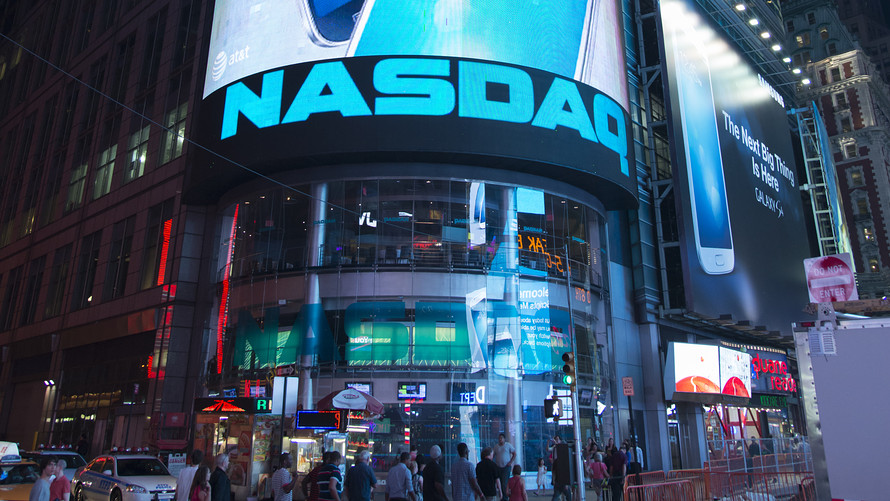
Nasdaq’s Stellar Rebound, Best Day Since May 2025

0
NASDAQ

The Nasdaq Composite surged 2.69%, marking its strongest single-day performance since May 12, when it gained 4.35%.

This rally erased the index’s entire loss from the previous week, amid a broader market bounce that lifted the S&P 500 by 1.55% and the Dow Jones Industrial Average by 0.44%. The tech-heavy index closed at 22,872.01, up 598.92 points, fueled by renewed optimism in artificial intelligence (AI) and expectations for a Federal Reserve rate cut in December.

Alphabet Google’s parent led the charge, jumping 6.3% after launching Gemini 3, its latest AI model, which reignited investor enthusiasm for the sector.

Other tech giants followed: Tesla rose 7% on Elon Musk’s comments about AI chip advancements, Broadcom climbed 11%, and Nvidia gained 2%. The semiconductor index (SOXX) soared 4.6%, reflecting broader confidence in AI infrastructure.

Comments from Federal Reserve officials, including New York Fed President John Williams and Governor Christopher Waller, boosted probabilities of a 25-basis-point cut in December to 85% up from 39% the prior week. This eased fears of tighter policy amid cooling inflation data.

Geopolitical de-escalation like U.S.-China talks and Ukraine-Russia negotiations and positive economic signals helped. Small-cap stocks like Russell 2000 also rose 1.9%, signaling a risk-on environment. Commodities like crude oil and copper ticked higher, while Bitcoin held above $88,000.

Best day since May 12; fully recovers prior week’s loss, 9 of 11 sectors positive; tech up 3.8%. November has been volatile for the Nasdaq, down over 3% month-to-date after a reassessment of sky-high AI valuations.

However, this rebound suggests the sell-off may have bottomed, with UBS analysts noting that Fed cut expectations are “back on track.” Looking ahead to the short Thanksgiving week markets close early on Wednesday, key data releases like delayed economic reports could sustain momentum—if no surprises emerge.

Tesla Stock Impact from the Nasdaq Surge

Tesla (TSLA) was a standout performer amid the Nasdaq’s 2.69% rally on November 24, 2025, surging 6.8% to close at $417.78—its highest level in nearly two weeks.

This gain erased much of the stock’s November losses and contributed significantly to the tech sector’s rebound, with Tesla’s market cap climbing back above $1.3 trillion.

The move aligned with broader AI enthusiasm and positive analyst notes, though it came against a backdrop of ongoing challenges like delayed autonomy revenue and a recent lawsuit.

Data reflects limited after-hours activity on Thanksgiving (markets closed); full session pending Monday. Elon Musk’s comments on AI chip advancements during a late-week X Spaces session sparked a 10% two-day rally (November 21–24), positioning Tesla as a key AI play beyond EVs.

This tied into Alphabet’s Gemini 3 launch, amplifying sector-wide optimism. A Melius Research note labeled TSLA a “must-own” stock, citing undervalued AI potential and Cybertruck ramp-up, fueling the midday pop to +7% intraday.

Rising odds of a December rate cut to 85% supported growth stocks like Tesla, easing pressure from high valuations. A fresh lawsuit alleging misleading autonomy claims capped gains, while November’s overall -3% YTD dip reflects retail investor caution over AI revenue delays.

The surge pushed Tesla’s year-to-date gain to +28%, outperforming the Nasdaq’s +22%, but analysts remain split: Zacks forecasts +15.4% earnings growth for Q4 2025, yet Warren Buffett-style warnings highlight overreliance on unproven AI bets.

With markets closed for Thanksgiving, watch Monday’s open for follow-through—potential catalysts include Q4 delivery previews and Fed speakers. For long-term holders, this dip-buy opportunity reinforces Tesla’s AI pivot, but volatility persists amid regulatory scrutiny.

Social media buzz on X echoed the excitement, with traders highlighting the “AI dominance shift” and Fed odds as the real catalysts. For investors, this could signal a tactical entry point in tech, but watch for holiday liquidity dips.

Alphabet Rises as a Powerful Challenger to Nvidia’s Market Dominance

0

Alphabet is rapidly emerging as a formidable challenger to Nvidia’s position as the world’s most valuable company, fueled by surging cloud revenues, enthusiastic reception to its Gemini 3 chatbot, and an intensified push into developing its own AI chips.

The company closed Monday at $315.90 per share, lifting its market capitalization to $3.82 trillion and placing it on the brink of becoming just the fourth company to surpass the $4 trillion mark. Alphabet’s 70% year-to-date rally has now outpaced tech peers such as Microsoft and Amazon, reversing the narrative from 2022 when many believed OpenAI’s ChatGPT had jeopardized Google’s long-standing dominance in search.

The stock has climbed 35% since October alone, adding nearly $1 trillion to its valuation and bringing it within striking distance of Nvidia’s $4.4 trillion record. This momentum is reshaping the hierarchy of the Magnificent Seven tech giants.

Analysts point to a powerful combination of Gemini 3 traction, industry validation of Google’s Tensor Processing Units (TPUs), including adoption by Meta and a revived belief in Alphabet as a major supplier of computing infrastructure, all of which have narrowed the gap between Alphabet and Nvidia.

Notably, the surge in Alphabet’s valuation, reflects a decisive shift in investor sentiment. While the tech giant pioneered many foundational technologies behind generative AI, skepticism grew after ChatGPT’s debut suggested Google had fallen behind. In 2025, however, the company has reasserted itself. Its cloud division, once overshadowed by its advertising business, has transformed into a major growth engine and recently attracted a $4.3 billion investment from Warren Buffett’s Berkshire Hathaway. Berkshire acquired roughly 17.8 million Alphabet shares in the third quarter after reducing its Apple and Bank of America positions.

According to Steve Sosnick, chief market analyst at Interactive Brokers, Berkshire’s involvement played a vital role in catalyzing wider institutional interest. He noted that even if Warren Buffett personally had no hand in the decision, the market still tends to emulate Berkshire’s moves often with successful outcomes. This marked a turning point, AI began to look less like a high-risk growth bet and more like a compelling value play. For professional investors, Alphabet increasingly resembles a core infrastructure provider wrapped in the valuation profile of a growth stock.

The company plans to deploy $91–93 billion in capital expenditures in 2025, with most of the investment directed toward AI datacenters, networking hardware, and its cost-efficient TPUs, which analysts say can undercut Nvidia’s GPU prices by about 40%. Despite this massive spending, Alphabet’s financials remain exceptionally strong. Third-quarter free cash flow reached $24.5 billion, nearly matching its capex, underscoring both its profitability and its ability to fund long-term AI expansion without financial strain.

Meanwhile, Alphabet’s foundational businesses continue to thrive. Search and YouTube advertising revenues grew in the mid-teens during the third quarter, even as AI Overviews deliver more inline answers, demonstrating that AI integration has not eroded its advertising engine. With consolidated operating margins near 31%, Alphabet possesses the rare capacity to finance its aggressive AI infrastructure race without sacrificing earnings, a competitive advantage few rivals can claim.

Alphabet’s resurgence signals a new era in the AI and cloud landscape, one in which the company is no longer just defending its legacy but rapidly advancing toward the top of the market’s value leaderboard.