DD
MM
YYYY

PAGES

DD
MM
YYYY

spot_img

PAGES

Home Blog Page 111

Solana and Ethereum ETFs Continue to See Inflows While BTC ETFs See Outflows

0

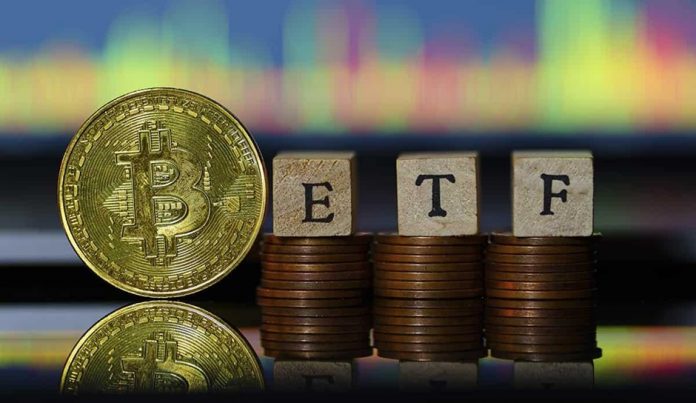
Spot exchange-traded funds (ETFs) for Solana (SOL) and Ethereum (ETH) have been recording consistent net inflows over the past few weeks, driven by institutional interest in high-yield and growth-oriented assets.

In contrast, Bitcoin (BTC) ETFs have faced substantial outflows amid broader market volatility, profit-taking, and macroeconomic pressures like tightening liquidity. This divergence highlights a rotation of capital toward altcoins, even as BTC and ETH prices hover near yearly lows (BTC around $82,000–$86,000, ETH under $2,800).

SOL ETFs, launched in late October 2025, offer staking yields of 5–7%, attracting investors seeking productive returns that BTC ETFs lack. They’ve maintained an unbroken streak of positive flows, signaling strong conviction despite a 15% SOL price dip this month.

ETH ETFs have shifted from heavy outflows earlier in November to recent inflows, buoyed by DeFi exposure and products like BlackRock’s ETHA. BTC ETFs are experiencing their worst month since launch, with cumulative outflows approaching records, as investors de-risk amid a stalled rally and leveraged liquidations.

This pattern suggests “smart money” is repositioning into yield-bearing alts like SOL, potentially forming a support floor for prices. However, volatility persists—SOL tests $139 resistance, while BTC/ETH risk deeper corrections if outflows accelerate.

The Federal Reserve’s monetary policy remains a pivotal driver for risk assets like cryptocurrencies, influencing liquidity, investor sentiment, and capital flows into ETFs.

In November 2025, the Fed has shown signs of internal division following its October 29 rate cut, with hawkish undertones tempering expectations for further easing.

However, dovish signals—such as comments from New York Fed President John Williams—have boosted December rate cut probabilities to 69–84%, alongside the planned end of quantitative tightening (QT) on December 1. This mixed environment has exacerbated crypto volatility, contributing to Bitcoin’s recent drawdown while supporting altcoin ETF inflows as a hedge.

The Fed’s September and October 2025 cuts totaling 50 basis points, bringing the federal funds rate to 3.75%–4.00% aimed to balance cooling inflation with employment goals, but minutes from the October FOMC revealed a 10-2 vote with dissenters wary of over-easing.

Upcoming December 10–11 meeting odds favor a 25-basis-point cut, but persistent inflation data could pivot to a pause or hike, per divided policymaker views.

Richmond Fed’s Jefferson speech: Signals steady balance sheet post-December, passive reserve decline. Powell era of consensus ends with split on cuts. BTC tests $85K support; increased X chatter on risk-off. FOMC minutes release: Opposition to December cut grows; inflation uncertainty highlighted.

BTC -12% weekly drop; $3.79B BTC ETF outflows. Dovish Williams comments spike Dec cut odds to 69%+; QT end confirmed for Dec 1. Optimism builds—BTC rebounds slightly to $85K; SOL/ETH ETF inflows accelerate +$50M+ daily.

Impacts on Cryptocurrency Markets and ETFs

Fed policy shifts create a “liquidity lever” for crypto: Easing cuts, QT end reduces yields on safe assets, driving capital to high-beta plays like BTC/ETH/SOL, while tightening prompts de-risking and outflows.

November’s hawkish tilt has amplified BTC’s sensitivity, but anticipated dovish pivots could catalyze a reversal. Bitcoin directly tied to macro liquidity. Hawkish signals triggered a 2025 downturn, with BTC falling below $86K amid $3.79B in ETF redemptions—its worst monthly outflows since launch.

Historical patterns show rate cuts spark 10–20% rallies within a week; the December pivot could establish a $85K floor and reverse flows, as lower rates lower BTC’s opportunity cost and fuel institutional adoption now 71% of holdings.

BTC’s low beta to equities/bonds positions it as a hedge, but leverage unwinds exacerbate drops. Ethereum benefits from DeFi yields but mirrors BTC on liquidity shocks. Early November saw rapid outflows (ETH price < $3,100), but recent dovish odds shifted to +$78M inflows.

A policy easing would amplify this via ETF demand (e.g., BlackRock’s ETHA), potentially pushing ETH toward $3,500 if QT ends inject broader liquidity. Solana less macro-sensitive due to staking yields (5–7%), enabling resilience. Inflows hit +$53M (Nov 25), extending a 21-day streak amid BTC weakness—investors rotate for “productive” alts.

Dovish shifts could supercharge this, with SOL ETFs drawing pension/hedge fund allocations, targeting $150+ if risk-on sentiment returns. Uncertainty has led to a “liquidity reset,” with declining stablecoin supply and leverage liquidations pressuring prices.

Yet, 96% of institutions view crypto as a long-term allocation, accelerated by ETF access and regulatory clarity. Risks include negative economic surprises decoupling crypto from Fed support. A confirmed December cut could add $1–2B in weekly ETF inflows across assets, per analyst models.


Bitcoin Unstoppable, Warns Tether CEO Amid Growing Opposition

0

In a bold assertion about the future of Bitcoin, Tether CEO Paolo Ardoino has emphasized the crypto asset’s enduring resilience, noting that it will stand the test of time.

According to Ardoino, despite efforts by various organizations to undermine it, Bitcoin will continue to thrive driven by people’s unwavering choice for financial freedom.

In a post on X, he wrote,

“Bitcoin will withstand the test of time. Those organizations that try to undermine it, will fail and become dust. Simply because they can’t stop people’s choice to be free.”

His statement claims that Bitcoin’s strength lies not in regulation or opposition, but in the collective will of its global community. Several users on X also shared the same sentiment as Ardoino, noting that the crypto asset is unstoppable.

@henrychang wrote,

“Innovation is definitely dynamic, and so is Bitcoin. It’s only natural that it’s volatile, but it will inevitably survive in the end.”

@Ladybird wrote,

Institutions fade, but the ledger endures forever.”

@promirexy wrote,

Those institutions that refuse to adopt bitcoin now would definitely end up playing catch-up up. It’s just a matter of time”.

@reemtechmaven wrote,

Bitcoin’s transformative potential is fundamental! Its promise of financial freedom keeps us empowered and driving innovation globally.”

It is understood that a growing number of institutions globally are issuing warnings, crafting regulations, and promoting alternatives to Bitcoin. These efforts amount to a coordinated shift toward more control, oversight, and institutionalised digital money often at the expense of decentralised cryptocurrencies.

Bodies like BIS and IMF are signalling that the future lies in tokenised central bank money, suggesting that Bitcoin may be sidelined if regulators succeed in promoting CBDCs or fiat?backed digital money.

BIS argues that crypto lacks the core characteristics required for sound money stability, backing, and a unified monetary base. On the other hand, the IMF has repeatedly warned that widespread adoption of crypto-assets poses risks to macroeconomic stability, potentially weakening monetary policy effectiveness, facilitating capital flight, and undermining financial integrity in emerging and low-income countries.

Notably, JPMorgan Chase arguably one of Bitcoin’s highest-profile institutional critics, has publicly cast doubt on its intrinsic value and warned of illicit uses. At the same time, the bank’s newer moves show it’s unwilling to ignore demand entirely, rather it is experimenting with stablecoins and blockchain-based tokenized assets and is cautiously opening a channel for clients to access Bitcoin through investments (albeit without custody).

Aside statements from financial institutions, public figures such as Bloomberg’s senior macro strategist Mike McGlone, issued one of his starkest warnings regarding Bitcoin. McGlone in a recent statement, predicts that the world’s largest crypto asset could collapse to zero, as volatility heightens and investor confidence wavers.

Amidst all these, Tether CEO Ardoino has repeatedly called Bitcoin “the only decentralized currency.” He argues that unlike most other cryptocurrencies which may be controlled or altered by developer groups, Bitcoin rules.

His comment comes at a time when Bitcoin is facing a price drop as investors’ concerns heighten. Recall that BTC rose to a time high of $126,251 in early October, driven partly by massive inflows into exchange-traded funds. Then came a market crash sparked by massive liquidations in leveraged bets that sent Bitcoin tumbling.

At the time of this report, Bitcoin was trading at $87,233, up from Friday’s low of $80,524. The crypto asset according to several analysts is poised to continue to rise upward directly, with some stating that the price decline witnessed is only a short-term drama for a bullish move.

Outlook

Despite heightened regulatory pressure, institutional skepticism, and recent market volatility, Bitcoin’s long-term trajectory remains shaped by two powerful and opposing forces; growing institutional control and grassroots demand for decentralized freedom.

Looking ahead, Bitcoin is likely to navigate a complex environment where regulation tightens, institutional narratives evolve, and its community grows more resolute. If adoption continues to expand, especially in emerging markets, and among retail users, the crypto asset Bitcoin may validate Ardoino’s assertion that it will “stand the test of time”.

Polymarket Secures CFTC Approval for Regulated U.S. Operations

0

Polymarket announced that the U.S. Commodity Futures Trading Commission (CFTC) has issued an Amended Order of Designation, allowing the platform to operate as a fully regulated, intermediated prediction market exchange in the U.S.

This marks a significant milestone, enabling Polymarket’s formal re-entry into the American market after a three-year hiatus imposed by regulatory scrutiny. Polymarket, the world’s largest prediction market platform, exited the U.S. in 2022 following a CFTC enforcement action.

The regulator fined the company $1.4 million for operating an unregistered derivatives platform offering event-based binary options without proper designation as a contract market or swap execution facility.

To pave the way for compliance, Polymarket acquired CFTC-licensed entities QCX LLC, a designated contract market and QC Clearing, a derivatives clearing organization in July 2025 for $112 million.

This acquisition positioned Polymarket to integrate with traditional financial infrastructure, including enhanced surveillance, clearing systems, and Part 16 reporting—standards required for Designated Contract Markets (DCMs) under the Commodity Exchange Act.

The approval reflects a maturing regulatory environment for prediction markets, which use blockchain to let users bet on real-world outcomes like elections, sports, or economic events. U.S. users can now trade through registered Futures Commission Merchants (FCMs) and brokerages, bypassing the need for VPNs or offshore workarounds.

This aligns Polymarket with established U.S. futures trading channels. As a DCM, Polymarket must adhere to self-regulatory obligations, market supervision, and customer protections, fostering trust and attracting institutional players.

Expect increased liquidity, volume, and mainstream adoption. Polymarket already handles ~40% of global prediction market volume, with $3B+ traded in November 2025 alone. Partnerships with UFC, NHL, Yahoo Finance, and Google underscore its growing influence.

Recent collaborations, like with PrizePicks, an FCM, signal sports and event markets will proliferate. Shayne Coplan, Polymarket’s Founder and CEO, stated: “This approval allows us to operate in a way that reflects the maturity and transparency that the U.S. regulatory framework demands. We’re grateful for the constructive engagement with the CFTC and look forward to continuing to demonstrate leadership as a regulated U.S. exchange.”

This greenlight could catalyze the prediction market sector, valued at billions in 2025 bets across politics, pop culture, and finance. It sets a precedent for crypto-native platforms to bridge with TradFi, potentially inspiring similar approvals elsewhere in Africa for stablecoin integrations.

On X, users are buzzing about retail trader access, on-chain liquidity boosts, and an impending $POLY token airdrop, with some calling it an “explosive setup” for 2026. In contrast, rival Kalshi faced setbacks, with a Nevada court blocking its sports markets on the same day.

Polymarket’s move positions it as the frontrunner in regulated event trading. Additional processes for intermediated trading are being rolled out ahead of a full launch, expected soon.

U.S. participants can now access Polymarket through registered Futures Commission Merchants (FCMs) and brokerages, eliminating the need for VPNs or offshore proxies that were common workarounds since the 2022 ban. This aligns Polymarket with established channels like those used for futures trading, potentially onboarding millions of non-crypto users via familiar platforms.

With brokerages able to offer Polymarket contracts directly, trading volumes—already at $3 billion in November 2025—could explode, tightening spreads and improving price efficiency. Partnerships like the recent one with PrizePicks (an FCM) signal rapid rollout of sports and event markets, while integrations with NHL and UFC could drive daily active users.

Everyday traders gain legal, compliant exposure to real-time event probabilities (e.g., “Will the Fed cut rates in December?” or “Will Boeing face charges?”), turning prediction markets into a mainstream tool for hedging personal risks.

The approval removes regulatory barriers for hedge funds, trading firms, and liquidity providers, allowing them to use prediction markets for hedging macro events, geopolitical risks, or corporate outcomes. This could position Polymarket as a “shadow oracle” for Wall Street, where probabilities inform portfolio decisions faster than traditional forecasts.

By connecting crypto-native innovation with regulated infrastructure, Polymarket becomes the first on-chain platform fully embedded in U.S. capital markets. Analysts predict it could evolve into a standalone asset class alongside equities and options, with potential for tokenization of contracts.

Polymarket now leads rivals like Kalshi which holds 62% of U.S. volume as of mid-November 2025 but faced a sports market setback in Nevada. This could consolidate market share, with Polymarket’s global dominance 40% of worldwide volume amplifying U.S.-specific growth.

NNPCL’s Revenue Soars to N45tn in 2024, But Financial Statement Reveals Troubling Details

0

The Nigerian National Petroleum Company Limited posted one of the strongest revenue years in its history, generating N29.21 trillion from crude oil sales in 2024 — more than double the N14.07 trillion reported in 2023.

The company’s newly released audited financial statements show a sweeping rise across nearly every revenue stream, driven by increased crude production, stronger export flows, and a widening network of international buyers.

Total revenue from customer contracts climbed to N45.08 trillion in 2024, sharply up from N23.99 trillion the previous year, with crude oil contributing the largest share. Petroleum product earnings rose from N7.15 trillion to N9.68 trillion, while natural gas revenue jumped to N5.20 trillion from N2.30 trillion. The services segment, which covers seismic work, marine operations, engineering services, and gas transmission fees, also grew significantly to N980.46 billion from N464.94 billion.

The revenue surge reflects a company that appears to have moved past its historically lackluster performance. However, analysts who reviewed the financial statements note that, despite the impressive rise, NNPCL’s earnings still pale compared with global peers. They point out that the company’s 2024 revenue is only about three percent of Saudi Aramco’s 2024 turnover. The contrast underscores the scale gap between Nigeria’s national oil company and the world’s dominant state-run producer, even though both have access to vast reserves.

Nigeria remained NNPCL’s strongest market, contributing N34.41 trillion in 2024, nearly double the N18.29 trillion posted in 2023. Crude sales within Nigeria amounted to N19.59 trillion, petroleum products N9.68 trillion, natural gas N4.16 trillion, services N973.45 billion, and power N9.42 billion.

Outside Nigeria, Switzerland led the pack with N2.14 trillion in revenue, driven almost entirely by crude liftings of N2.12 trillion. Spain generated N1.40 trillion, the UAE N1.26 trillion, France N1.19 trillion, Singapore N979.90 billion, and the UK N743.90 billion, lower than the N993.72 billion recorded in 2023. Smaller or new markets such as Italy, Vietnam, and Cyprus surfaced in 2024, signaling ongoing diversification in export destinations.

At the standalone company level, NNPCL earned N19.66 trillion in 2024, more than double the N8.13 trillion recorded the previous year. Crude sales rose from N7.03 trillion to N17.39 trillion, natural gas from N951.61 billion to N2.10 trillion, and petroleum products from N151.79 billion to N158.81 billion. Panama unexpectedly emerged as the largest revenue source for the standalone entity, contributing N14.77 trillion, mostly from crude shipments. Nigeria followed with N4.85 trillion, and Ghana delivered N37.54 billion.

Most group revenue — N40.49 trillion — was recognized at a point in time, indicating revenue was booked once control of crude, gas, or petroleum products passed to buyers. The remaining N4.58 trillion was recognized over time, largely from gas contracts and services.

Troubling Pipeline Security Deals

However, beneath the strong headline numbers, analysts found features of the financial statements that raise questions about crude allocation and national fiscal priorities. Energy economist Kelvin Emmanuel drew attention to what he described as confirmation of long-rumored crude allocations tied to pipeline security arrangements.

“For months I have been saying that the government is giving crude oil daily to militants for pipeline protection. Now that the NNPC’s financial statement shows that N7.1 trillion was disbursed in 2024 from supposed subsidy savings for pipeline security contracts,” Emmanuel said.

“I am sure the 78k to 110k barrels p.d is now confirmed,” he added.

According to the financial statement, a portion of the crude volumes classified as “subsidy savings” was redirected as daily allocations across several channels. The breakdown includes 312,000 barrels per day tied to subsidy savings in the crude allocation framework. Out of this, 110,000 barrels were assigned to pipeline security contracts. Another 202,000 barrels went into what Emmanuel described as funding for parallel accounts not covered by approved budgets, such as the coastal road and Lagos airport rehabilitation fund.

While the company did not respond to these interpretations, analysts have pointed out that such commitments have practical consequences. One of the immediate effects, they say, is NNPCL’s inability to meet its crude supply obligations to the Dangote Refinery.

“But Dangote has to import 53% of the crude he uses daily from mostly America,” Emmanuel said.

He argued that the refinery has been navigating two major hurdles. “If it’s not the JV partners trying to strangle him with an additional $3 per barrel commission by routing feedstock through their third party trading houses (that do not pay tax to Nigerian government), and then claiming ‘willing buyer, willing seller’, it’s NNPC telling him that all their barrels are committed.”

This situation has intensified criticism of Nigeria’s crude allocation structure, particularly as the country battles foreign exchange shortages, fuel import dependence, and rising domestic energy costs. Analysts have noted that a national refinery of that scale relying on imported crude not only raises costs but also weakens the original policy objective behind its establishment — to reduce import dependence and conserve foreign exchange.

Despite the strong earnings, energy economists warn that the company’s financial position continues to mirror Nigeria’s broader oil sector struggles. The numbers capture what happens when production rises, trading improves, and buyers increase. They also expose how allocations, off-the-book commitments, and structurally embedded leakages drag the national oil company away from its core commercial obligations.

xAI’s Latest Funding Push Targets $15 Billion Raise at $230B Valuation

0

Elon Musk’s xAI is in advanced discussions to raise approximately $15 billion in equity funding at a $230 billion pre-money valuation, according to multiple reports from late November 2025.

This would more than double the company’s valuation from $113 billion, as disclosed during its all-stock merger with the social media platform X back in March 2025. The deal is expected to close by December 19, 2025, after an extension from an earlier deadline, giving investors more time to commit.

The round is primarily equity-based, with terms outlined to investors by Musk’s wealth manager, Jared Birchall. It’s positioned as xAI’s Series E, following prior raises including $6 billion in Series B (May 2024) and another $6 billion in Series C (December 2024), bringing total funding to over $37 billion if this closes.

At $230 billion pre-money, the post-money valuation would hit around $245 billion—still below rivals like OpenAI valued at ~$500 billion after a $40 billion raise earlier in 2025 but a massive leap for a two-year-old startup founded in July 2023.

Appetite remains high due to xAI’s aggressive scaling in AI infrastructure. NVIDIA’s CEO, Jensen Huang, recently expressed regret over not investing more, calling it a “great future company.”

Strategic backers like SpaceX which contributed $2 billion in a prior round and potential Tesla involvement approved by shareholders in November 2025 add to the momentum.

However, Musk publicly dismissed an earlier CNBC report on a $15 billion raise at $200 billion as “false,” though subsequent reporting aligned with the higher $230 billion figure without rebuttal.

xAI’s surge reflects the broader AI “arms race,” where investors prioritize compute power, talent, and speed over immediate revenue. The funds are earmarked for. Expanding the Colossus supercomputer in Memphis, Tennessee—a 1-million-square-foot data center already partially funded by a $10 billion equity/debt mix in June 2025.

Advancing Grok, xAI’s AI chatbot, including the recent launch of Grokipedia an AI-powered Wikipedia alternative aimed at reducing “propaganda”. Securing GPUs amid shortages, with xAI burning cash on training runs to catch up to OpenAI’s ChatGPT and Anthropic’s Claude.

The idea for Grokipedia emerged in September 2025 during a conversation at the All-In podcast conference between Musk and David Sacks, a White House advisor on AI and cryptocurrency.

Sacks criticized Wikipedia’s biases, calling it a “constant war” maintained by left-wing activists, and suggested publishing Grok’s knowledge base as “Grokipedia.” Musk quickly endorsed the concept, announcing on X that xAI was building it as a “massive improvement over Wikipedia.”

Musk calls for xAI engineers to join the project, emphasizing its open-source nature and unlimited public use. Musk announces version 0.1 beta in two weeks, highlighting Grok’s process of analyzing sources like Wikipedia for truthfulness and rewriting entries accordingly.

Musk envisions renaming it “Encyclopedia Galactica” once mature, with copies preserved on the Moon and Mars. Version ~0.2 released with proposed edits beta.

Musk has repeatedly claimed Grokipedia will surpass Wikipedia “by several orders of magnitude in breadth, depth, and accuracy,” with version 1.0 promising to be “10X better.”

Powered by Grok, which analyzes and rewrites sources for biases, falsehoods, and omissions. It uses real-time data from X (formerly Twitter) and web searches for dynamic updates.

However, it drew sharp criticism for promoting right-wing views, conspiracy theories, and Musk’s perspectives—e.g., linking pornography to worsening the AIDS epidemic or suggesting social media fuels transgender identities.

Entries on figures like Parag Agrawal (ex-Twitter CEO) amplify Musk’s criticisms absent from Wikipedia. xAI’s response to media inquiries was an automated “Legacy Media Lies” message.

Wikipedia’s foundation stated it doesn’t interfere with such experiments, noting AI reliance on human-curated data. Experts like Ryan McGrady warn it exemplifies “controlling knowledge” for power.

It’s a bold, polarizing entry in the “encyclopedia wars,” prioritizing AI speed over crowdsourced consensus—but its long-term impact hinges on balancing ambition with verifiable accuracy. Critics argue the valuation is “vibes-based” rather than fundamentals-driven—Musk’s track record fuels FOMO.

Still, with AI projected to require $1 trillion in compute by 2027, backers see xAI as a high-upside bet on rapid iteration. This raise cements xAI as one of the world’s most valuable private companies, intensifying competition.

X Users hail it as “the most Elon move ever,” emphasizing xAI’s “anti-corporate” speed, while skeptics question if it’s sustainable hype. If it closes, expect accelerated Grok updates and deeper ties to Musk’s ecosystem like Tesla robotics. For now, it’s a bold signal: In AI, ambition prices like reality.