DD
MM
YYYY

PAGES

DD
MM
YYYY

spot_img

PAGES

Home Blog Page 1110

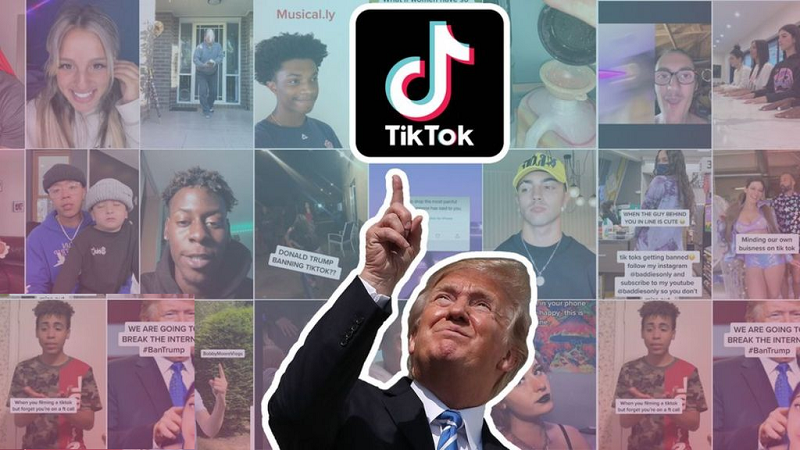
Trump Grants Third Extension for TikTok as Divestment Talks Drag On, Raising Legal and Political Stakes

0

President Donald Trump has once again delayed enforcement of the divestment order against TikTok’s U.S. operations, marking the third time since assuming office in January that the administration has moved the deadline.

The new 90-day extension, confirmed by White House Press Secretary Karoline Leavitt on Wednesday, pushes the cutoff to September 17, 2025, offering China’s ByteDance more time to negotiate the sale of TikTok’s American business.

“President Trump will sign an additional Executive Order this week to keep TikTok up and running,” she said. “As he has said many times, President Trump does not want TikTok to go dark. This extension will last 90 days, which the Administration will spend working to ensure this deal is closed so that the American people can continue to use TikTok with the assurance that their data is safe and secure.”

The reprieve comes just days ahead of the original June 19 deadline mandated under a national security law that the U.S. Supreme Court upheld shortly before Trump’s second inauguration. The law, passed in April 2024 with bipartisan support, requires ByteDance to divest its U.S. TikTok assets or face a ban, with penalties extending to app store operators like Apple and Google and internet service providers that support the app.

Political, Legal, and Market Friction

The extensions have already provoked strong reactions on Capitol Hill, especially from Senate Republicans who argue the law was explicit in allowing only one 90-day reprieve.

Legal experts say Trump’s action could open the door for lawsuits challenging executive overreach.

Despite the legal ambiguity, Trump has been consistent in stating he does not want TikTok shut down entirely. Speaking to NBC News last month, he reiterated that while data security is a legitimate concern, banning the app outright could hurt younger people who use it regularly.

There is also strategic political calculus behind the decision. TikTok played a key role in social media outreach during the 2024 campaign. Though Trump has been vocally critical of the platform in the past, his current stance seeks to balance national security fears with user base sensitivities and diplomatic considerations with Beijing.

Several entities, including Oracle, AppLovin, and Frank McCourt’s Project Liberty, have expressed interest in acquiring TikTok’s U.S. assets. However, negotiations have stalled amid ongoing uncertainty about whether the Chinese government would approve such a sale. Observers believe the stalemate reflects broader trade and diplomatic tensions between Washington and Beijing.

Notably, a previous TikTok shutdown in January led to the app being briefly removed from the Apple App Store and Google Play. It returned only after Trump’s initial executive order granted a delay. The same scenario could recur if no concrete sale agreement is reached by the new September deadline.

Trump’s administration has privately hinted that tariffs or other trade levers could be adjusted to break the deadlock with Beijing.

TikTok remains one of the most popular social media platforms in the United States, boasting over 170 million users and generating $10.4 billion in ad revenue in 2024 alone. Its user base, content creators, and advertisers have expressed relief at the extension, but uncertainty over the app’s long-term future continues to cloud business decisions.

According to a recent Pew Research survey, public sentiment against a TikTok ban is declining. Only about one-third of Americans now support removing the app, compared to nearly half in 2023.

Analysts say rivals like Meta (owner of Instagram and Facebook), Snap, and Reddit could benefit from prolonged ambiguity, possibly absorbing creators and ad budgets that might otherwise remain with TikTok.

A Crucial Three Months Ahead

The Trump administration insists the additional 90 days will be used to finalize a deal that secures American user data and ensures operational independence from China. National Security Adviser Michael Waltz and Vice President JD Vance are reportedly spearheading negotiations with potential acquirers.

In the background, ByteDance is also managing litigation and lobbying. Legal experts point out that the Supreme Court’s ruling upholding the law puts pressure on ByteDance to act swiftly.

Some legal experts have argued that there’s no fourth extension authorized by law, and if this deal isn’t closed by September, enforcement becomes inevitable unless Congress rewrites the statute.

However, TikTok will remain online and fully functional in the United States, with its fate hinging on the outcome of high-stakes talks between tech giants, lawmakers, and diplomats. The next three months are expected to determine the future of the embattled short-form video app.

Google Faces Likely Defeat in $4.1bn EU Antitrust Case Over Android Domination

0
The US is after Google also

Google’s legal battle to overturn a record €4.125 billion ($4.7 billion) European Union antitrust fine suffered a significant setback Thursday after an influential advisor to the EU’s top court urged judges to dismiss the tech giant’s appeal.

Juliane Kokott, advocate general at the European Court of Justice (ECJ), recommended that the court uphold a 2022 ruling by the EU’s General Court, which had slightly reduced the original fine but maintained the substance of the European Commission’s decision.

In her non-binding opinion, Kokott said the court should reject Google’s arguments and confirm the General Court’s judgment that the U.S. tech giant indeed abused the dominant position of its Android mobile operating system.

The fine, originally imposed in 2018 by the European Commission, remains the largest ever levied by the EU in an antitrust case. At the time, the Commission concluded that Google used Android’s dominance in the mobile space to illegally cement its search engine’s market leadership by forcing smartphone manufacturers to pre-install Google Search and Chrome as a condition for accessing the Play Store.

Commission’s Verdict on Android’s Market Power

The Commission’s case centered on how Google structured its licensing arrangements for Android, which the regulator said deprived rivals of a fair opportunity to compete. According to the Commission, manufacturers who wanted to use Google’s Play Store and other proprietary apps had to agree to exclusively pre-install Google’s own search and browser apps, effectively squeezing out competing software from the market.

Margrethe Vestager, the EU’s competition chief, had described Google’s practices as “illegal under EU antitrust rules,” adding that the company denied consumers “the benefits of effective competition in the important mobile sphere.”

Google’s Pushback and Its Broader Argument

Reacting to Thursday’s development, Google said it was “disappointed” with Kokott’s recommendation, which it believes sends the wrong signal to developers and users relying on open-source platforms.

“Android has created more choice for everyone and supports thousands of successful businesses in Europe and around the world,” a Google spokesperson told CNBC. The company further argued that the EU’s case, and the resulting fine, could discourage investment in open platforms.

Google maintains that Android, which it distributes free of charge, has enhanced competition by enabling smartphone manufacturers to customize devices and offer affordable handsets in both mature and emerging markets. The company also said it had made changes to its business practices following the original 2018 decision, including offering users in Europe a choice of default search engines on Android devices.

What Comes Next?

While Kokott’s opinion is not binding, it carries substantial weight in the ECJ’s final deliberations. Historically, the court follows the advocate general’s recommendation in approximately 80% of cases. A final ruling from the ECJ is expected in the coming months.

If the court affirms the judgment, it would be the third consecutive major loss for Google in high-profile EU antitrust cases. It would also underscore the European Commission’s authority to regulate Big Tech and its ability to enforce competition policy against dominant players in digital markets.

Google has been fined more than €8 billion by the EU across three separate cases, including another for favoring its own shopping service in search results and a third involving online advertising.

The Android case remains particularly important due to its far-reaching implications for the mobile ecosystem and the future of bundled services in digital platforms.

A final defeat in the case could embolden EU regulators to more aggressively pursue other ongoing investigations involving Apple, Amazon, and Meta under the bloc’s evolving competition laws. It may also influence how global regulators, including those in the U.S. and U.K., interpret platform dominance and anti-competitive bundling in mobile and digital ecosystems.

As the Digital Markets Act begins to take effect, Thursday’s opinion reaffirms Europe’s tough stance against perceived abuses of platform power and sets a precedent that could affect how open-source business models are regulated across industries.

Pesa Acquires Authoripay, Rebrands as Pesapeer Payments to Expand Global Remittance Capabilities

0

Pesa, (formerly Pesapeer), a Canadian based financial technology company improving the global money transfer, has announced the acquisition of UK-based Authoripay.

AuthoriPay is known for helping fintech startups secure FCA licenses and providing escrow services. It is regulated by the FCA and offers solutions for SEPA payments and central bank digital currency integration.

Now rebranded as Pesapeer Payments, this strategic move advances the fintech mission to create truly borderless global money transfers.

With direct FCA licenses across the UK and EU and Mastercard principal membership, Pesapeer Payments can now issue multi-currency debit and prepaid cards worldwide. These include permissions for money remittance, electronic money issuance, payment initiation, and virtual IBAN services.

Also, this acquisition enhances the company’s ability to deliver seamless, affordable, and instant payment solutions, expanding its reach and introducing competitive services and innovative products for users.

Speaking on the acquisition, CEO and co-founder of Pesa Tolu Osho said,

“This acquisition is a strategic leap forward for us. With these licenses and Mastercard membership, we can now operate with the flexibility and scale of a global financial institution, while continuing to deliver superior remittance and payment products for our users.”

There is still a significant gap between the experience of sending money within the same country and sending money across borders. Pesa believes that sending and receiving money across borders should be as hassle-free as sending money within the same country.

Founded in 2021 by Tolu Osho Yusuf Yakubu, and Adewale Afolabi, Pesa is committed to making global money transfers have that local experience of sending money within the same country, while eliminating the mental gymnastics of figuring out how to get money across borders. In January 2025, the company rebranded to Pesa, updating its logo, mobile app interface, website, typography, and colors while maintaining its core services.

The fintech offers secure, swift and seamless cross-border transactions, so users can stay worry free while they send or receive money abroad without the hefty fees and frustrating processes. Whether supporting loved ones or managing International business transactions, Pesa is on a mission to create opportunity for users to save time, money and simplify their life.

Key Features of Pesa:

Zero-Fee Transfers: Pesa offers free money transfers from Canada, Nigeria, and the UK to over 50 countries, with no hidden fees.

Multi-Currency Wallet: Users can hold and manage multiple currencies (e.g., CAD, NGN, GBP, EUR, INR) and convert them at competitive exchange rates. For freelancers and remote workers navigating the global economy, managing diverse income streams often comes with hidden complexities.

Pesa Multi-Currency account is engineered to transform this challenge into a seamless opportunity, empowering millions to pursue careers that transcend geographical boundaries.

Instant Transfers: Transactions are typically completed in 5 minutes or less, with instant notifications for tracking.

Security: Pesa LLC is registered as a Money Service Business in Canada. The platform uses facial verification, password encryption, and fraud monitoring to ensure safety.

The recent acquisition positions Pesa to compete more effectively in the European remittance market, utilizing AuthoriPay’s regulatory framework and infrastructure. Notably, it supports Pesa’s broader vision to build a borderless financial platform for underserved global citizens and enterprises.

With its newly acquired regulatory foundation in Europe, Pesa intends to offer more competitive pricing, develop new financial products, and deepen compliance across key international markets.

Fidelity Bank, FirstHoldCo Commit to Exiting CBN Forbearance as Sector Pushes for Stability and Dividend Resumption

0

Fidelity Bank and FirstHoldCo Plc have both confirmed plans to fully exit the Central Bank of Nigeria’s (CBN) regulatory forbearance framework in 2025.

Their separate announcements mark a key development in Nigeria’s banking sector, which has come under heightened regulatory scrutiny over capital adequacy and compliance amid new prudential directives by the CBN.

Fidelity Bank Targets Full Compliance by H1 2025

Fidelity Bank announced on Wednesday its commitment to exit CBN’s forbearance arrangements by the end of the first half of 2025, a move that would restore its capacity to pay dividends and resume other discretionary spending. According to a statement signed by the bank’s Company Secretary, Ezinwa Unuigboje, the forbearance linked to a breach of the Single Obligor Limit (SOL) is tied to two obligors. The bank expressed confidence that the exposures will be brought within regulatory thresholds by June 2025.

The lender also revealed that it is managing four other credit facilities currently under forbearance. The bank said it has made significant provisioning on those accounts and is working towards either full provisioning or returning the loans to performing status by the middle of 2025.

“Fidelity Bank remains committed to strict compliance with all regulatory policies, including the recent CBN directive on forbearance. We have proactively made substantial provisions on affected facilities and taken targeted steps to resolve the exposures,” the statement said.

To strengthen its capital base and meet the CBN’s N500 billion minimum capital requirement for banks with international authorization, Fidelity Bank disclosed that it has successfully raised N273 billion through an oversubscribed Public Offer and Rights Issue. The public offer recorded a 237.92% subscription, while the rights issue was oversubscribed by 137.73%.

In addition, the bank is planning to raise another N200 billion through a private placement in the 2025 financial year. It confirmed that CBN and shareholder approvals for the private placement have already been secured, with other regulatory clearances underway to ensure completion.

Fidelity Bank emphasized that the capital raising efforts and planned exit from forbearance will position it for dividend resumption in the 2025 financial year.

“We remain in a strong position to meet all regulatory expectations to enable dividend payments going forward,” the bank stated.

FirstHoldCo Moves to Resolve SOL Breach and Loan Forbearance

Similarly, FirstHoldCo Plc disclosed on Thursday that its banking subsidiary, FirstBank, is working to resolve breaches of the Single Obligor Limit stemming from two foreign currency loan exposures. The loans were affected by the over 200% naira devaluation that occurred between 2023 and 2024, pushing the exposures above regulatory limits.

The firm explained that the affected loans are part of syndicated credit facilities with industry-wide exposure and that all the underlying assets are now back in active production and generating revenue. Some of the projects are also awaiting receivables from government agencies.

“The syndicate is actively restructuring and re-tenoring the loans based on improved cash flows. The process is expected to be completed within the current financial year,” the statement said.

Should the restructuring fail to be completed in time, FirstHoldCo assured that it would make full provisioning on the remaining facilities to ensure a clean exit from forbearance and resume dividend payments in 2025.

In parallel, FirstHoldCo is undertaking its own capital raise scheduled for the second half of 2025, reinforcing its long-term commitment to balance sheet stability and regulatory compliance.

CBN Forbearance Framework and Sector-Wide Impact

These developments come in response to the CBN’s directive earlier this year that banks under regulatory forbearance must suspend dividend payments, defer executive bonuses, and halt foreign investments. The central bank’s new rules aim to improve capital buffers, encourage prudent risk management, and ensure that banks under financial stress are not distributing value to shareholders or engaging in expansionary activity.

The forbearance framework primarily applies to banks with unresolved breaches of lending concentration rules (such as SOL breaches) and non-performing credit exposures that require exceptional regulatory tolerance.

Both Fidelity Bank and FirstHoldCo appear determined to resolve their exposures and exit the CBN’s list of forbearance beneficiaries. Their capital-raising efforts and transparent updates to shareholders indicate an industry-wide effort to regain regulatory confidence and reposition for long-term stability.

What This Means for Investors

Investors in Fidelity Bank and FirstHoldCo can take some assurance in the clear timelines provided for resolving outstanding issues and the strong commitment to dividend resumption. Both banks have linked their strategic plans to the broader CBN agenda of deepening financial system resilience and curbing systemic risk.

If successfully executed, the exit from forbearance would allow both banks to restore their full standing in Nigeria’s capital markets and deliver on shareholder returns as early as the 2025 financial year.

More banks are expected to follow suit in reassessing their credit exposures, recapitalizing, and reestablishing dividend-paying capacity in line with evolving CBN’s regulatory standards.

Dangote Refinery Expands Export Push with First-Ever Gasoline Shipment to Asia Amid Global Market Disruption

0

Nigeria’s Dangote Refinery is set to ship 90,000 metric tons of gasoline to Asia, marking the first gasoline export beyond West Africa by Africa’s largest refining complex.

This milestone comes months after the refinery began full operations, and underscores the company’s ambition to become a global force in petroleum exports.

According to Reuters, the cargo is expected to be loaded by Mercuria, a global energy and commodities trading firm, on June 22. While Dangote Refinery has previously exported refined products such as jet fuel and naphtha within the West African region, this will be the first time its gasoline reaches Asian markets—a move that signals a bold pivot in the continent’s downstream trade dynamics.

A New Era for African Energy Exports

Commissioned in 2023 and built at a cost of $19 billion, the 650,000-barrel-per-day Dangote Refinery located in the Lekki Free Trade Zone has quickly become a game changer for Nigeria’s oil industry and Africa’s energy security. Designed to process a wide range of crude types, from Nigeria’s Bonny Light to heavier crudes, the refinery is not only reducing the country’s reliance on imported fuel but is now also positioning Nigeria as a net exporter of refined petroleum products.

Since the start of operations, Dangote Refinery has exported:

  • Over 1.7 million barrels of jet fuel to the United States, across six different shipments.
  • Two separate consignments of jet fuel to Saudi Aramco, marking a rare case of Nigeria exporting finished fuels to the Gulf.
  • A shipment of low-sulfur straight-run fuel oil (LSSR) to Singapore in April, reflecting growing demand from Asia’s marine fuel market.

LSSR is commonly used as a blendstock to produce low-sulfur fuel oil for bunkering or further refining. The cargo to Singapore marks one of the earliest signs that Dangote is already reshaping regional trade flows traditionally dominated by the Middle East and Asia.

The End of Europe’s Fuel Dominance?

The refinery’s growing exports are also rattling the European markets. For decades, Africa—despite being a major crude producer—has been heavily dependent on refined fuel imports, particularly gasoline from Europe. In 2022, that trade was valued at over $17 billion, with Europe exporting as much as 1 million barrels per day of gasoline and diesel to West Africa, especially Nigeria.

But with Dangote ramping up output and capable of meeting a substantial portion of regional demand, analysts now warn that Europe’s long-held market share is under threat. In January, OPEC acknowledged that Nigeria’s new refining capacity was beginning to disrupt supply chains in the Atlantic Basin, particularly for gasoline and jet fuel.

Experts suggest that if the refinery operates near full capacity, it could eliminate the need for gasoline imports into West Africa altogether, redirecting surplus volumes instead to more profitable markets in Asia and the Americas.

The exports align with Nigeria’s broader goal of capturing more value from its natural resources by refining domestically rather than exporting raw crude. For decades, Nigeria exported crude oil and imported nearly all of its refined petroleum products, draining foreign exchange and creating fuel shortages at home. The Dangote Refinery is seen as a central piece of President Bola Tinubu administration’s plan to restructure Nigeria’s oil and gas sector and reduce its exposure to global fuel market volatility.

Furthermore, fuel exports are expected to boost Nigeria’s non-oil revenue, improve trade balances, and support the naira by reducing the demand for foreign currency to import refined products.

What Lies Ahead?

While gasoline to Asia represents a significant step, Dangote Refinery is not stopping there. Sources say the facility is preparing to ramp up production of diesel and aviation fuel at even larger volumes and is actively in talks with buyers in Latin America and Southeast Asia.

By the end of 2025, industry insiders believe the refinery could reach output levels close to 450,000 barrels per day, enabling Nigeria to potentially join the ranks of global refined product exporters alongside giants like India, South Korea, and the United States.

With its latest export announcement, Dangote Refinery has officially entered a new phase—one in which Nigeria is no longer just a source of crude oil, but a competitive player in the refined petroleum market, rewriting decades of African energy trade.