DD
MM
YYYY

PAGES

DD
MM
YYYY

spot_img

PAGES

Home Blog Page 1110

Civic is Creating Holy Grail With Solana Attestation Service (SAS) on Interoperability For Reusable Verifications

0

Civic is announcing its participation in the Solana Attestation Service (SAS), a new standards layer for verifiable credentials across the Solana ecosystem. Led by Solana Foundation, this consortium will standardize identity verification, allowing users to create credentials that can be reused across different applications while preserving privacy.

Coinbase recent security breach ($180-400M in estimated damages) is just the latest in a series of high-profile incidents highlighting vulnerabilities in current security systems. According to recent data, crypto hacks exceeded $2 billion in Q1 2025 alone, with a significant portion stemming from compromised identity verification

Protecting your dApp from bots, Sybils, cheaters and other bad actors is a never-ending challenge for any builder, and Solana builders are no different. Digital identity can help solve these issues by keeping bad actors out of your platform. However, as it stands, the identity ecosystem is fragmented because there are no common standards that address on-chain identity proofs.

Fortunately, a new consortium led by Solana Foundation, Civic is proudly part of, and its tackling this issue on behalf of blockchain users. It’s coming together to create a holy grail of interoperability for reusable persistent verifications, including proofs of personhood and KYC/KYW checks. Not only will SAS help make it easier to keep bad actors out, it will also be easier to implement compliance.

What is SAS?

Today, Civic is excited to announce being part of Solana Attestation Service (SAS), a standards layer that gives dApp the advantage when it comes to dealing with bad actors. SAS will also improve user experience by lowering the burden on users to get verified every time they use services across multiple blockchains. Importantly, users will also have the choice and flexibility in sourcing verifications.

SAS standardizes verifiable credentials for Solana ecosystem wallets, all while preserving user privacy. Verifiable credentials are digital attestations issued by a trusted authority that can be securely shared and cryptographically verified to prove identity or other claims. With verifiable credentials, you’ll be able to ensure someone has had their ID verified, verify membership, or just find out if a wallet belongs to a human instead of a bot.

This is just the starting point. Credential types are dependent on the verifiers in the SAS network, and with reusable and vendor-agnostic verification, builders can easily implement additional credential checks, including compliance requirements, anti-Sybil measures, sanctions screening, trading entity verification, and even accredited investor validation.

The goal of this implementation is to provide a neutral attestation registry that allows protocols and companies to build applications with a solid foundation for verifiable credentials. All integrators will be better served with a common interoperable base-layer for reusable on-chain identity. Users can create a credential for their wallet that can be re-used over and over for a more seamless web3 experience. Developers will benefit from a trusted verifiable credential registry that serves the entire community, accessible via clear schemas.

SAS for Civic Pass holders

According to Civic, Civic Pass holders will be able to access the benefits of working with SAS all without any action on their part. In fact, the building for this framework has taken place entirely behind the scene, so Civic Passes will already be compatible with SAS. Reach out to our team to ensure we issue SAS attestations along with your Civic Passes.

To illustrate the value of a permissioned approach to attestations, we turn to the team at Honeyland, a play and own mobile game built on Solana. After only a year on app stores globally, the game has more than 20,000 daily active players. Within the game, you can mint, buy, sell and trade NFTs through a marketplace using their own cryptocurrency.

The game’s ecosystem relies on Certified Beekeepers, who are all verified with Civic Pass, a verified credential, to be unique players. With SAS, players can now leverage their active verification proof in other Solana applications that require a 1-person-1-wallet proof.

Apple Stock Dropped 4% in Premarket After Trump’s 25% Tariff on IPhones

0

Apple’s stock dropped 4% in premarket trading on May 23, 2025, after President Donald Trump threatened a 25% tariff on iPhones not manufactured in the U.S., as stated in a Truth Social post. Trump emphasized domestic production, saying he expects Apple to make iPhones in the U.S. rather than in countries like India or China. This follows earlier tariffs, with China facing a 30% levy (down from 145%) and India at 10%, impacting Apple’s supply chain, which relies heavily on Chinese manufacturing (90% of iPhones) and increasingly on India and Vietnam.

Apple has been shifting production, with most U.S.-bound iPhones now made in India and other devices like iPads and Apple Watches produced in Vietnam, aiming to mitigate tariff costs estimated at $900 million this quarter. Despite exemptions for smartphones and electronics announced in April, the renewed tariff threat has rattled investors, contributing to a 19.4% year-to-date stock decline. Analysts suggest Apple may delay price hikes until the iPhone 17 launch, but a potential 17-18% price increase could hurt demand in a competitive smartphone market.

Moving production to the U.S. is seen as unlikely in the short term due to complex supply chains and high costs, potentially tripling iPhone prices to $3,500 if fully domestic. The broader market also saw declines, with Nasdaq, Dow Jones, and S&P 500 futures slipping 0.4%, 0.3%, and 0.3%, respectively.

The 4% drop in Apple’s stock following Trump’s tariff threat on foreign-made iPhones carries significant implications for Apple, the tech industry, and the broader economy, while also highlighting a deepening divide in economic policy, consumer impact, and global trade dynamics. Apple’s reliance on China (90% of iPhone production) and growing manufacturing in India and Vietnam makes it vulnerable to tariffs.

A 25% tariff could add $900 million in costs this quarter alone, potentially forcing price hikes of 17-18% for consumers, which could reduce demand in a competitive smartphone market. Moving manufacturing to the U.S. is impractical short-term due to complex supply chains, lack of skilled labor, and higher costs. Estimates suggest U.S.-made iPhones could cost $3,500, eroding Apple’s market share.

Apple may absorb some costs to delay price increases until the iPhone 17 launch, but sustained tariffs could squeeze margins, especially if competitors like Samsung, with more diversified production, adapt faster. The tariff threat extends beyond Apple, impacting other tech giants like Nvidia, Microsoft, and chipmakers (e.g., Qualcomm, Broadcom) reliant on Asian manufacturing. This contributed to a 0.4% drop in Nasdaq futures.

Higher costs could divert funds from R&D, slowing innovation in AI, semiconductors, and other tech sectors critical to U.S. competitiveness. Higher iPhone prices could dampen consumer spending, especially among price-sensitive buyers, potentially slowing economic growth. The broader market saw declines (Dow -0.3%, S&P 500 -0.3%), reflecting investor concerns about trade wars and inflation. Tariffs could exacerbate inflationary pressures, complicating Federal Reserve rate decisions.

Tariffs risk retaliatory measures from China and India, escalating trade tensions and disrupting global supply chains already strained by geopolitical issues. Trump’s tariff aligns with his “America First” policy to boost U.S. jobs, but critics argue it overlooks the complexity of global supply chains and could lead to job losses in other sectors if consumer spending falls. Uncertainty around tariff implementation and exemptions (smartphones were previously exempt) fuels market instability, as seen in Apple’s 19.4% year-to-date stock decline.

The tariff threat underscores a broader divide in economic philosophy and stakeholder interests. Globalists argue that tariffs disrupt efficient supply chains, raise costs, and hurt consumers. Apple’s globalized model relies on cost-effective manufacturing in Asia, and tariffs could undermine its competitiveness. Protectionists support Trump’s push for domestic production to create U.S. jobs and reduce reliance on foreign supply chains, citing national security and economic sovereignty.

Consumers face higher prices or reduced access to affordable tech, disproportionately affecting lower-income households. A $3,500 iPhone would make premium devices a luxury, widening inequality in tech access. Corporations must navigate cost increases, supply chain shifts, or lobbying for exemptions, diverting focus from innovation to compliance.

Tariffs aim to boost domestic manufacturing but risk alienating allies like India and escalating tensions with China, which could retaliate with tariffs on U.S. goods (e.g., agriculture, tech). Countries like China and India, key to Apple’s supply chain, may face economic fallout, with India’s iPhone exports to the U.S. (a growing hub) particularly at risk. Higher prices, market volatility, and supply chain disruptions could dominate 2025, especially if tariffs are implemented without exemptions.

Proponents argue tariffs could incentivize U.S. manufacturing over decades, but critics warn of entrenched inflation and reduced global competitiveness. The tariff threat on foreign-made iPhones exposes Apple to significant financial and operational risks, with ripple effects across tech, consumers, and global trade.

It amplifies a divide between protectionist and globalist visions, pitting short-term economic pain against long-term strategic goals. Apple’s response—whether absorbing costs, raising prices, or accelerating supply chain diversification—will shape its trajectory, while the broader debate on trade policy will influence U.S. economic and geopolitical standing.

Trump’s Fresh Tariff Threats Roil Markets, Raises Suspicion About Market Manipulation Tactics

0

President Donald Trump on Friday ramped up pressure on Apple and other smartphone makers, demanding they move production of their devices to the United States or face a crippling 25% tariff.

In a post on his social media platform Truth Social, Trump warned, “I expect their iPhones that will be sold in the United States of America will be manufactured and built in the United States, not India, or anyplace else. If that is not the case, a Tariff of at least 25% must be paid by Apple to the U.S.”

But the fallout from that post was swift and far-reaching—financial markets trembled, Apple shares nosedived 3.6% in premarket trading, and the broader S&P 500 index fell 1.5%. European markets also stumbled, reacting not only to the Apple threat but to another salvo from Trump: a proposed 50% tariff on European Union goods beginning June 1.

“Trump just threatened to impose 50% tariffs on imports from Europe, much higher than what Americans pay to import goods from China. The skeptic in me thinks this is just market manipulation, giving insiders opportunities to trade before the tariffs are called off with a fake win,” said Peter Schiff, Chief Economist and Global Strategist at Euro Pacific.

Schiff’s comments echo a growing suspicion among investors, analysts, and some former officials that Trump’s aggressive trade posturing is not just economic policy—it’s a deliberate tactic to jolt markets, drive panic selling, and let allies or insiders capitalize on wild swings.

Familiar Playbook

The theory is not new. Just last month, Trump launched a sweeping round of tariff threats targeting multiple countries—including China, Mexico, Canada, Vietnam, and the EU—causing global stock markets to plunge. The S&P 500 dropped nearly 14% in four days, wiping out over $5.7 trillion in value.

Then, without warning, Trump declared on Truth Social: “THIS IS A GREAT TIME TO BUY!!! DJT.”

Less than four hours later, he announced a 90-day suspension of nearly all the tariffs he had just imposed. Markets roared back, with the S&P 500 closing the day up 9.5%, recovering around $4 trillion in lost value. Investors who had bought the dip immediately after Trump’s post saw massive returns—raising questions about who had advance knowledge of the president’s plans.

“It was a prescient call by the president,” said Richard Painter, a former White House ethics lawyer and vocal Trump critic. “Maybe too prescient.”

Painter warned that while presidents are allowed to speak about policy, there are legal limits to using that information for financial gain.

“He’s loving this, this control over markets, but he better be careful. Securities law prohibits trading on insider information or helping others do so,” he said. “The people who bought when they saw that post made a lot of money.”

Behind the Tariff Threat

Trump’s latest clash with Apple comes amid growing frustration over the company’s decision to shift manufacturing to India. On Apple’s recent earnings call, CEO Tim Cook said he expects “the majority of iPhones sold in the US will have India as their country of origin.” Trump, who met Cook last week in Riyadh, scolded him for the move.

“I had a little problem with Tim Cook,” Trump said in Qatar. “I said to him, ‘Tim, you’re my friend. I treated you very good. You’re coming in with $500 billion.’ But now I hear you’re building all over India. I don’t want you building in India.”

The president reiterated his demand on Friday, telling reporters in the Oval Office after signing executive orders that the tariff would extend beyond Apple.

“It would be more. It would be also Samsung and anybody that makes that product,” he said. “Otherwise it wouldn’t be fair.”

Samsung, however, has largely pulled out of China, having shuttered its final phone plant there in 2019. Most of its smartphone assembly is now spread across South Korea, Vietnam, India, and Brazil. Apple, on the other hand, still relies heavily on China, with about 90% of its iPhones assembled there, according to estimates by Wedbush Securities.

Cook, who also met with Trump at the White House on Tuesday, has not commented publicly on the president’s ultimatum. Apple, which recently began sourcing some of its chips from a TSMC plant in Arizona, remains tight-lipped about how the tariff threat will affect its supply chain.

According to Cook, Apple already expected up to $900 million in tariff burdens this quarter. That figure may balloon significantly if Trump follows through on the 25% levy.

Trump’s threats are now reaching beyond individual companies or trade policy. Analysts warn they are beginning to resemble a larger strategy of chaos-driven market manipulation. The dramatic rise-and-fall pattern, from public threats to abrupt reversals, has prompted concern that financial markets are being used as levers for political or personal gain.

Amazon CEO Says Trump Tariffs Haven’t Raised Prices Yet – But Earlier Washington Pressure Casts Doubts on The Claims

0
Andy Jassy, boss of AWS

Amazon CEO Andy Jassy is insisting that the Trump administration’s sweeping new tariffs on Chinese imports have had no significant impact on prices or consumer demand on the platform. But his comments, made during the company’s annual shareholder meeting, have done little to quell suspicions, especially in light of a recent behind-the-scenes intervention by President Trump himself over Amazon’s pricing practices.

Speaking to shareholders, Jassy said Amazon had not observed any meaningful increase in average selling prices and that shoppers were still spending normally.

“We have not seen any attenuation of demand at this point,” he said. “We also haven’t yet seen any meaningful average selling price increases.”

Jassy admitted that some sellers—particularly third-party merchants who make up the majority of Amazon’s marketplace—have raised prices in response to the tariffs. But he emphasized that the effect had been inconsistent across the platform.

“When you have 2 million sellers, they’re not all going to take the same action,” he said.

However, many find the CEO’s reassurances difficult to believe, especially following Amazon Chairman Jeff Bezos’ recent and unusual run-in with the White House. In April, President Trump personally called Bezos to pressure him into abandoning a plan that would have publicly disclosed how much new tariffs were increasing the cost of goods sold on Amazon. The plan, first reported by Punchbowl News, involved labeling products—particularly on Amazon’s budget-focused “Haul” section—with clear indicators showing the tariff burden passed on to U.S. customers.

The White House saw the move as a political provocation. Press Secretary Karoline Leavitt blasted Amazon’s proposal as “a hostile and political act,” accusing the company of playing partisan games with economic policy. The administration’s quick and vocal pushback triggered a rapid about-face at Amazon.

Within hours of the Punchbowl report, the company issued a statement downplaying the feature, first suggesting that the tariff labels were being considered only for the Haul platform. But in a follow-up clarification, Amazon abruptly abandoned the plan, stating it “was never approved” and “is not going to happen.”

Then came Trump’s public confirmation. In a comment earlier this month, the President revealed that Bezos had personally reversed course after a phone conversation between the two.

“He took it off immediately. He’s just a very nice guy,” Trump said, offering rare praise for a billionaire he has frequently criticized in the past.

For many observers, the optics of that intervention cast doubt on Jassy’s current claims. If Amazon was prepared to show Americans how much tariffs were costing them, and then suddenly scrapped the plan after presidential pressure, it’s hard to believe the company now genuinely sees no impact on prices or demand.

It is especially so as evidence on the ground points to rising costs. A report published in April revealed that many Chinese sellers on Amazon had already begun raising prices, with at least one admitting to a 30% increase for U.S. customers due to the tariffs. While some sellers are absorbing the cost, others—especially smaller merchants—say they have no choice but to pass it on.

The 30% tariffs on Chinese goods remain in effect, and a 145% duty, though paused, could resume after August 12. The end of the de minimis exemption, which once allowed U.S. consumers to receive foreign shipments under $800 without paying import duties, is also quietly driving up prices for lower-cost goods—many of which dominate Amazon’s catalog.

Amazon has warned investors that tariffs are among several risk factors that could affect its financial guidance for the quarter, but the company has avoided direct confrontation with Trump since the Bezos call. Instead, it has stayed on message, emphasizing seller diversity and pricing resilience.

Other retailers, however, have been more candid. Walmart has said prices will likely increase “soon,” and Target confirmed it expects to pass some tariff costs to customers. Home Depot, for now, says it anticipates price stability, while Apple is preparing to raise prices on its upcoming iPhone models—though the company claims the increase is due to added features, not tariffs.

For Amazon, the controversy over tariff transparency has exposed a deeper tension between political power and corporate autonomy. While the company may be trying to present a united front, Jassy’s comments now appear less like a reflection of consumer trends and more like an effort to avoid reigniting a public battle with Washington.

U.S. Treasury Department To Phase Out New Mint of Pennies

0

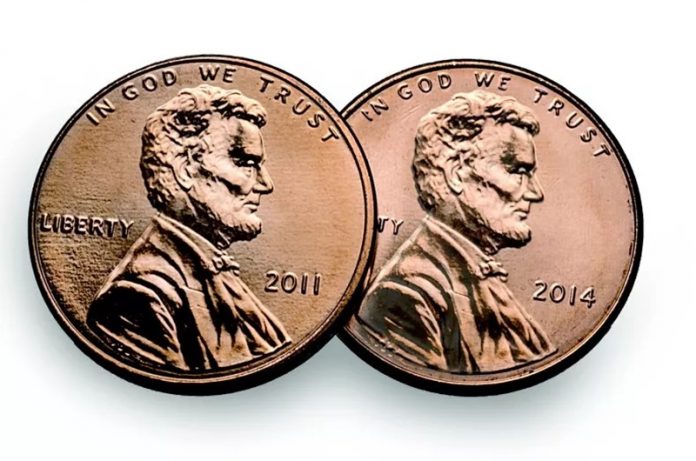
The U.S. Treasury Department has confirmed it will phase out the production of new pennies, with the U.S. Mint placing its final order for penny blanks in May 2025. Production will cease once the existing inventory of blanks is depleted, likely by early 2026. This decision, driven by President Trump’s directive in February 2025, aims to cut costs, as producing a penny now costs 3.69 cents, resulting in a $85.3 million loss for the Mint in 2024.

There are approximately 114 billion pennies in circulation, and they will remain legal tender, though their use is expected to decline as businesses may need to round cash transactions to the nearest nickel. The move is projected to save $56 million annually in material costs, with additional savings from repurposing production facilities.

Ceasing penny production is expected to save the U.S. Mint approximately $56 million annually in material and production costs, as pennies cost 3.69 cents to produce but are worth only one cent. Additional savings will come from reallocating Mint resources. Without pennies, cash transactions may need to be rounded to the nearest nickel, potentially affecting pricing strategies. For example, a $9.99 item might round to $10.00, slightly increasing costs for consumers in some cases (estimated at $0.02-$0.03 per transaction). Electronic transactions, which make up over 60% of U.S. payments, will remain unaffected.

Some fear rounding could contribute to minor inflationary pressure, though studies (e.g., Canada’s 2013 penny phase-out) suggest the impact is negligible, less than 0.01% on overall prices. Businesses will need to adapt cash registers and pricing strategies, potentially incurring short-term costs for system updates. Small businesses, especially those reliant on cash, may face higher adjustment costs.

Pennies are often hoarded or discarded (e.g., in jars or lost), with 114 billion in circulation but only a fraction actively used. Consumers may notice little day-to-day change, though some may perceive rounding as a price hike, affecting low-income individuals disproportionately. Penny drives (e.g., for charities) and tipping norms may shift, as small-denomination donations become less common.

Producing pennies consumes significant resources (e.g., zinc and copper). In 2024, the Mint used approximately 1.2 million pounds of zinc for pennies. Eliminating production reduces environmental strain from mining and minting processes. The penny, featuring Abraham Lincoln, holds sentimental value for some Americans. Its phase-out may be seen as a loss of tradition or a step toward a cashless society, raising concerns about financial inclusion for unbanked populations (about 5% of U.S. households).

The decision has polarized opinions, with distinct groups advocating for or against the penny’s elimination. The Treasury and many economists (e.g., citing studies from the GAO) argue that pennies are inefficient, costing more to produce than their value and slowing transactions. They point to successful phase-outs in Canada (2013), Australia (1992), and New Zealand as evidence.

Retail associations, like the National Retail Federation, support the move, citing reduced handling costs and faster checkout times. They note that pennies often clog cash registers or are left unused. Environmental Groups highlight the ecological benefits of reducing metal use and waste from penny production.

A 2023 YouGov poll found 59% of Americans support phasing out the penny, citing inconvenience and inflation rendering it nearly obsolete (e.g., a penny in 1969 had the purchasing power of about 8 cents today). Traditionalists and Numismatists collectors and those valuing the penny’s historical significance (e.g., Lincoln’s legacy) argue it’s a cultural touchstone. Groups like Americans for Common Cents advocate for its retention.

Critics, including some consumer advocacy groups, argue that rounding could disproportionately burden low-income cash users, who may face cumulative price increases. A 2019 study estimated a potential $600 million annual cost to consumers from rounding, though this is debated. Some small retailers, particularly in rural areas, worry about the costs of updating systems and customer backlash over perceived price hikes.

The zinc lobby, represented by groups like Jarden Zinc Products, opposes the move, as pennies account for a significant portion of U.S. zinc demand. In 2024, penny production used about 1% of domestic zinc output, supporting jobs in mining states. While many Americans are indifferent (e.g., 34% in the YouGov poll were neutral), some express mixed feelings, valuing tradition but acknowledging the penny’s declining utility.

Banks are largely neutral, as pennies will remain legal tender, but they anticipate a gradual shift toward digital payments, reducing the need for small change. The penny’s phase-out is a pragmatic step toward cost savings and efficiency, aligning with global trends (e.g., Canada’s penny-free economy since 2013).

However, it raises concerns about fairness, tradition, and economic impacts on specific groups. The divide reflects a tension between modernization and preserving familiar systems, with the outcome likely hinging on how well businesses and consumers adapt to a penny-less cash economy.