DD
MM
YYYY

PAGES

DD
MM
YYYY

spot_img

PAGES

Home Blog Page 1118

BlockDAG’s $303M Surge and Miner Rollout News Eclipses XRP Optimism and UNI Momentum

0

While legacy projects like XRP and Uniswap are fighting to regain market confidence, BlockDAG is setting new benchmarks in 2025, not through speculation, but execution. With a presale haul now surpassing $303 million, over 22.6 billion BDAG coins sold, and 2 million global users actively mining on its X1 mobile app, BlockDAG is doing what many projects promise but rarely deliver.

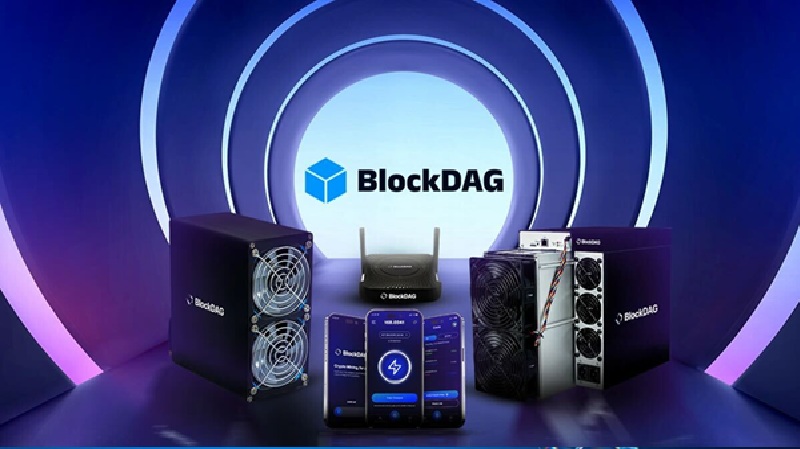
Adding further momentum, the team has confirmed shipping dates for its hardware mining units. X30 and X100 rigs will ship on June 30, and X10 rigs follow on August 15, marking one of the most significant infrastructure deployments in presale history. While XRP bulls push for recovery and Uniswap rides short-term upside, BlockDAG is already in motion, onboarding users, delivering tech, and making the case that this isn’t just a presale, it’s the best-performing launch story of the year.

XRP Bulls Wait for the Next Breakout

Ripple’s XRP token has long been a barometer of legal sentiment and market reaction. After clearing its major courtroom hurdle in 2023, many investors believed XRP would quickly return to previous highs. That didn’t happen. Instead, the token has spent most of 2024 and early 2025 in consolidation mode.

According to analysts at Blockchain Magazine, there is growing optimism for a rally in 2025, with some predicting a potential move toward $3 or higher. Technical indicators have shown stronger accumulation zones and a shift in trader sentiment, but resistance remains stiff in the $1.40 to $1.80 range. For now, XRP is mostly a watchlist token, one with potential, but limited near-term traction.

And with no major new utility updates or breakthrough adoption, XRP’s price outlook depends heavily on macro shifts and investor patience. For active crypto participants, that’s a lot of waiting and not much doing.

Uniswap Sees Gains, but Fundamentals Remain Cautious

Uniswap (UNI), one of DeFi’s cornerstone protocols, has recently attracted attention for a surprise price surge. As reported by Blockonomi, UNI saw gains of over 28% in a single trading window, sparked by renewed optimism around decentralized finance and positive investor inflows.

The surge was partly driven by market-wide speculation and Uniswap’s strong position in the DEX space. Analysts believe UNI could climb higher if DeFi momentum sustains, but risks remain. Regulatory pressure on token issuance, fee proposals within the DAO, and competition from alternative DEX platforms could weigh on future upside.
For now, Uniswap’s rally is encouraging, but it lacks the deep ecosystem engagement and consistent user expansion that long-term investors seek. The price action is impressive, but the foundation is still uncertain.

BlockDAG’s $303M Presale Redefines Success in Crypto Market

In contrast to XRP’s cautious optimism and Uniswap’s temporary momentum, BlockDAG is showing full-spectrum strength, capital raised, users onboarded, and product shipping.

The $303 million raised so far puts BlockDAG among the highest-raising crypto launches ever, even ahead of iconic ICOs like Filecoin ($233M), Tezos ($232M), and Polkadot ($145M). Yet what sets BlockDAG apart isn’t just the dollar amount, it’s where the money came from.

There’s no VC involvement, no private rounds, and no insider token allocations. The presale is structured entirely for the public, and all tokens sold have gone directly to retail buyers. That model has not only created transparency, but also empowered a growing, committed community.

At a time when many projects focus on future promises, BlockDAG is shipping now, and that’s the difference. The BlockDAG ecosystem is already active. The X1 mobile app lets users mine BDAG directly from their smartphones, and as of now, over 2 million people globally are engaging with the platform. This isn’t theoretical traction, it’s measurable usage.

And for those looking to scale, BlockDAG has confirmed its hardware launch schedule:

  • X30 and X100 units ship on June 30 to early testers
  • X10 rigs will ship on August 15, extending access to more retail participants

This staged rollout of mining hardware positions BlockDAG as one of the only new crypto projects delivering both software-based onboarding and physical infrastructure ahead of launch.

It’s a layered, inclusive strategy that allows anyone, from app-based users to power miners, to participate based on their commitment level and resources. With presale batch 29 currently open, BDAG is priced at $0.0276. And yet, its momentum, in both visibility and adoption, suggests that this is still a low entry point.

Consider the potential returns:

  • At $1, that’s a 2x ROI 
  • At $4, it becomes 9x 
  • If BDAG ever reaches $10+, the returns would dwarf nearly all other altcoin cycles
Unlike other projects, where early-stage prices are reserved for institutional backers, BlockDAG gives everyday users access to upside from the ground floor.

To Conclude

The current market offers no shortage of headlines, XRP may rally, UNI may extend gains. But behind the buzz, only a handful of projects are building with clarity, speed, and user-first thinking.

BlockDAG is one of them. With $303 million raised, 22.6 billion coins sold, 2 million miners onboarded, and shipping dates confirmed for its mining rigs, the project has done more in presale than many tokens do post-launch.

While XRP awaits the next bullish trigger and Uniswap navigates short-term volatility, BlockDAG is doing what truly matters: growing, delivering, and proving that real infrastructure can come before the hype. For those looking at the best performing crypto today, not based on price swings but on actual progress, BlockDAG is no longer a hidden gem. It’s the lead story.

Presale: https://purchase.blockdag.network

Website: https://blockdag.network

Telegram: https://t.me/blockDAGnetworkOfficial

Discord: https://discord.gg/Q7BxghMVyu

Google Tests AI-Generated Audio Overviews for Search Queries

0

Google is now testing a new feature called Audio Overviews in its Search interface, allowing users to listen to AI-generated summaries of their queries. The move is part of a broader shift by the tech giant to embed its powerful Gemini artificial intelligence into more products — transforming the traditional search experience into a multimodal, voice-assisted journey.

In a blog post on Friday, Google said the feature, now available in Google Labs, will generate quick, conversational audio overviews for selected queries using its Gemini models. The company explained that the new experience aims to help users “get a lay of the land” while multitasking or simply consuming information in an audio format.

The rollout follows the integration of similar audio functions into NotebookLM, Google’s AI-powered research and note-taking assistant, and more recently into the Gemini mobile app, where users can generate podcast-style summaries of their uploaded documents.

The new audio option comes just weeks after The Wall Street Journal reported that Google’s AI Overviews — the text-based summaries introduced earlier this year — are significantly reducing traffic to websites, particularly for publishers and content creators.

According to the Journal, several media outlets have seen sharp drops in search traffic since the AI-generated Overviews began appearing at the top of search results. The feature often answers user queries directly, summarizing content from multiple sources without requiring users to click through to the original websites. Industry experts and publishers have expressed concern that this is cannibalizing web traffic, undercutting ad revenue, and posing an existential threat to journalism.

The Audio Overviews are expected to worsen that situation. Instead of scanning through summaries or clicking for more, users can now passively listen to AI narrations — a format that further reduces the incentive to visit original sources. While Google says it includes links to source material within the audio player, there’s concern that these references will be ignored by most listeners.

Google maintains that the goal is to enhance accessibility and improve the user experience. In its announcement, it said the feature will only appear for certain queries and will be refined based on user feedback. The audio player comes with controls for playback speed, volume, and pause, along with visible source links that users can explore to get more in-depth information.

But publishers argue that offering information in this kind of pre-packaged audio format — even when sourced — disincentivizes engagement with original content.

The development is the latest in a series of AI-driven disruptions to the digital publishing ecosystem. Google, along with rivals like OpenAI and Meta, has been under scrutiny for using publisher content to train AI models without compensation or proper credit. Several newsrooms are already pursuing legal and policy remedies to defend their content and secure a more equitable digital economy.

For now, Audio Overviews remain experimental and are available to a limited group of users enrolled in Google Labs. But if the feature expands widely, it could become a central part of Google’s vision for a more AI-integrated Search — and a further blow to news publishers still struggling to adapt to the changing dynamics of the web.

XRP’s Dull Price Action and Dogecoin’s Wild Swings Are Scaring Off New Investors. Is Little Pepe (LILPEPE) the Secret to Bigger Gains in 2025?

0

Currently, XRP traded in lethargic ranges—neither plunging nor making new highs—leaving investors who crave action unfulfilled. Meanwhile, Dogecoin continues to be driven by the community, resulting in wild price swings that resemble casino-like bets more than sustainable growth. As old-timers yawn and newcomers hesitate, one emerging contender is igniting fresh excitement: Little?Pepe ($LILPEPE). Armed with its own Layer?2 blockchain, anti-bot mechanics, and a launchpad built for memes, LILPEPE embodies the next wave of meme-driven innovation. Could LILPEPE offer a better path to rapid gains in 2025, for impatient investors tired of stale tokens and speculative pumping? Let’s dive into what sets it apart.

A Layer?2 Blockchain Built for Meme Infrastructure, Not Just Momos

XRP’s slow movement and DOGE’s erratic price fluctuations stem from outdated technology that can’t keep pace. XRP’s ledger has long struggled to attract fresh developer activity, while Dogecoin remains a dog in a race designed for horses—its bloated network can’t handle high-frequency demand. Little?Pepe changes that narrative. $LILPEPE isn’t a token on Ethereum or a sidechain prototype—it’s launching on its own Layer 2 blockchain, built exclusively for meme coins. That means optimized throughput, sub-second transaction speed, and fees so low they encourage free-form speculation. However, it goes deeper than just scaling: the Little Pepe chain incorporates core features such as sniper bot immunity, gas token functionality, and custom-built meme coin mechanics, elevating it from a hype meme to serious infrastructure. This tech-forward approach offers modern performance and meme coin culture baked into the protocol for new investors frustrated by XRP’s stagnation and weary of DOGE’s wild swings.

Anti-Bot Presale and Zero-Tax Tokenomics: A Fair Launch Reimagined

Meme coin presales are often skewed by insiders and front-running bots, causing retail investors to be hesitant to participate. XRP’s orderly trading and DOGE’s speculative pump cycles can’t address this core problem: early participants are frequently squeezed out.

Little?Pepe addresses this head-on with two groundbreaking features:

  • Zero buy/sell tax: Every other token—XRP included—is burdened by fees that penalize traders during fast moves. $LILPEPE eliminates that tax hurdle, ensuring maximum capital efficiency for every wallet.
  • Anti-sniper architecture: Its Layer 2 protocol neutralizes counterparty bots during the presale and launch phases. That means every new or old buyer has a fair shot, without being steamrolled by automation.

This isn’t just a novelty—it’s a reversal of the broken presale model. When tokenomics are designed to be fair and transparent, more investors will remain post-launch, resulting in increased speculative buy-in, for those spooked by the erratic swings of DOGE or the stagnant cycles of XRP, $LILPEPE’s approach offers a welcome balance.

Strategic Exchange Listings and a Meme Launchpad That Grows Ecosystems

XRP boasts a long-term presence on exchanges, but its listings are no longer a catalyst. DOGE trades everywhere, but gains often fizzle quickly as retail money flees the volatility. A token without listings or ecosystem traction is a sitting duck, but one with both can rapidly scale. That’s where Little?Pepe excels. It launches with confirmed listings on two major centralized exchanges, and insiders say a third (the world’s largest) is in the works. That level of instant accessibility is usually reserved for blue-chip tokens, not new meme plays. But listing is only part of the story. Little Pepe’s Pump Pad is a native on-chain engine for launching meme tokens built on its Layer 2 chain. Think of it as combining a gainable launchpad and viral-friendly social mechanics, all without the ick of bot front-running or liquidity traps. If a new meme sensation emerges on the Pump Pad, early $LILPEPE holders indirectly benefit and can capitalize on the network-wide hype and token demand it generates. This infrastructure can scale with use cases, not just Twitter shout-outs.

Meme-Native Tokenomics Designed for Long-Term Holder Alignment

Tokens like XRP and DOGE lack long-term holder alignment because they don’t incentivize ecosystem participation. Dogecoin’s massive inflation rate and XRP’s steady emissions don’t encourage active holding or staking.

On the other hand, Little?Pepe was designed for long-term vesting and rewards. Its 100-billion token supply is allocated with the intention:

  • 5% in public presale
  • 10% for liquidity
  • 5% for staking rewards
  • 30% sequestered for chain operations

These on-chain alignments foster network loyalty, curbing sell pressure even during speculative runs. When holders can stake and benefit from the meme infrastructure, token velocity becomes slower, and upward price pressure becomes sustainable over time. For new investors fatigued by traditional meme token dumps or frustrated by XRP’s dormancy, this structure offers predictability without sacrificing potential.

Conclusion: Little?Pepe May Be the Meme Alternative 2025 Needs

XRP has traded in neutral waters for months, boring both day traders and long-term investors alike. At the other end of the spectrum, Dogecoin remains volatile, capable of 50% pumps and dumps within hours, leaving new investors wary of wild swings. Little?Pepe ($LILPEPE) offers a compelling middle ground. Built from the blockchain up for meme culture, with hacker-resistant tokenomics, zero tax, strategic listings, and a native platform to launch the next wave of hot coins, it provides both structure and speed. For 2025 investors searching for membrane-level upside without the downsides of the past, $LILPEPE might just be the meme revolution they’ve been waiting for.

For more information about Little Pepe (LILPEPE) visit the links below:

Website: https://littlepepe.com

Whitepaper: https://littlepepe.com/whitepaper.pdf

Telegram: https://t.me/littlepepetoken

Twitter/X: https://x.com/littlepepetoken

BlockDAG Crosses $303M in Presale With 2M Active X1 App Users – Shipping Dates For X10, X30, & X100 Revealed

0

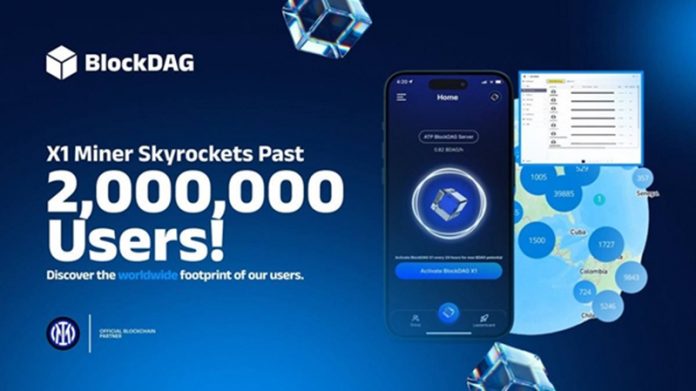
While most crypto presales struggle to move beyond speculation, BlockDAG is already demonstrating real traction through product delivery, user growth, and capital raised. It has now crossed $303 million in total presale funding, sold 22.6 billion BDAG coins, and officially onboarded over 2 million active users globally through its X1 mobile mining app.

And now, another key milestone is arriving, hardware shipping. BlockDAG has confirmed that its X30 and X100 mining units will be delivered to early testers starting June 30, while the X10 model will begin shipping August 15. For a project still in presale, that level of delivery is nearly unheard of. BlockDAG isn’t just selling a vision. It’s shipping products, building global community infrastructure, and proving that a crypto launch can be community-first, hardware-backed, and user-validated, all before hitting exchanges.

The $303M Milestone: A Presale That Just Keeps Growing

When BlockDAG first announced its Layer 1 vision powered by DAG-based consensus, most didn’t expect the presale to become one of the largest in crypto history. With no VC funding, no seed allocations, and a presale model focused entirely on retail investors, the team set an ambitious goal of $600 million.

Now, halfway there with $303 million raised, BlockDAG has outpaced historic launches from Tezos, Filecoin, and Polkadot, all of which leaned heavily on institutional capital. The momentum here is entirely organic, backed by retail buyers and grassroots growth through the live X1 app, which has now crossed 2 million global users.

Few projects have this level of adoption before launch. Even fewer are delivering mining hardware before token listings.

2 Million Users and Growing: The X1 App Advantage

At the heart of BlockDAG’s meteoric rise is the X1 mobile mining app, a lightweight, user-friendly platform that allows anyone with a smartphone to earn BDAG tokens ahead of the project’s launch. It isn’t theoretical, the app is live, widely adopted, and already driving token distribution through proof-of-engagement mining.

With 2 million users currently mining, BlockDAG isn’t waiting for hype cycles or exchange listings to prove demand. It’s fostering daily interaction, building a community that participates rather than speculates, and creating utility from the start.

This is not your typical whitepaper-fueled hype train. It’s a real-world ecosystem forming while others are still in fundraising mode.

X10, X30, X100 Mining Hardware: Delivery Timeline Confirmed

BlockDAG is taking the “future of mining” seriously, and it’s not just talking about it. The company has confirmed shipping schedules for its hardware lineup:

  • X30 & X100 mining rigs will ship to early testers on June 30 
  • X10 mining rigs are scheduled to begin shipping on August 15 

These devices are designed to scale with user needs. Whether someone is mining via mobile or investing in high-performance units, BlockDAG offers options that cater to retail, hobbyists, and professional miners alike.

This kind of layered mining structure, mobile-first, then hardware, is setting a precedent in the industry. It proves BlockDAG isn’t building speculative tech, but actual infrastructure that users can plug into.

A Project With Delivery, Not Delays

The crypto industry is riddled with presales that promise aggressive timelines but struggle with follow-through. Delayed mainnets, postponed token unlocks, and roadmap reworks are the norm.

BlockDAG is proving to be an exception. While still in presale, it has already:

  • Raised over $303M from public contributors
  • Onboarded 2M active users into a live ecosystem
  • Scheduled real-world product shipments within months

The result is a presale that actually delivers, rather than one that kicks milestones into the future. This mix of capital, product, and community, all growing in parallel, is why BlockDAG is now being called the most credible launch of 2025. Most big presales start with seed rounds and institutional deals. BlockDAG didn’t. Every token sold so far has been acquired by the public, no VC dilution, no early unlocks, and no centralized holders waiting to dump on day one.

That model has made all the difference. Buyers know they’re entering on equal terms, with pricing set by presale batch and not dictated by private allocations. It has created a rare window of trust and access for retail, and the community is responding in kind.

With presale batch 29 now live and BDAG priced at $0.0276, early adopters still have a chance to buy in before price levels move further up.

Why This Isn’t Just Another Presale

Plenty of projects raise funds. Some build hype. Fewer actually ship. And almost none do all three, before their token even launches.

BlockDAG has now proven that:

  • Its community is real and growing (2M+ X1 App users)
  • Its funding is substantial and accelerating ($303M+)
  • Its hardware is ready and shipping this summer (X30/X100 in June, X10 in August)

That’s not a presale. That’s a launch in motion.

And yet, it’s still early.

With billions of coins left to be distributed, rising demand from both mobile and hardware miners, and zero reliance on external capital, BlockDAG is positioned as one of the few major crypto launches of this cycle that’s actually backed by retail, for retail.

Final Thoughts: The Future of Mining Has Already Started

BlockDAG is doing what others only claim: building, shipping, and growing a global base of contributors before ever listing on an exchange. It’s moved past promises and into execution, raising $303 million, activating 2 million users, and beginning shipments of real mining hardware.

While the rest of the market waits for the next big token to launch, BlockDAG is already operating as a live, evolving ecosystem. The “future of mining” isn’t coming, it’s already shipping.

And with the presale still active and BDAG priced at just $0.0276, this moment may be the last chance for early access before the next wave pushes prices beyond reach.


Presale: https://purchase.blockdag.network

Website: https://blockdag.network

Telegram: https://t.me/blockDAGnetworkOfficial

Discord: https://discord.gg/Q7BxghMVyu

Boeing Delivers First Jet to China, Signaling Easing Trade Tensions After U.S.-China Tariff Deal

0

Boeing has delivered its first commercial aircraft to a Chinese airline since the United States and China agreed to roll back some of the tariffs imposed during the bruising trade war that began under President Donald Trump.

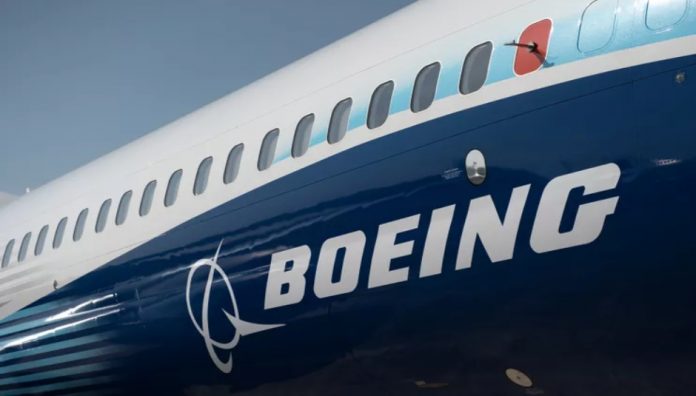
The handover of a 787-9 Dreamliner to Juneyao Air, which took off from Paine Field in Everett, Washington, on Friday en route to Shanghai Pudong International Airport, is being seen as a key sign that trade relations between the world’s two largest economies are beginning to stabilize.

The aircraft delivery, tracked via Flightradar24, had been delayed for a long as China imposed retaliatory duties on U.S. goods, including Boeing aircraft after the U.S. government slapped tariffs on hundreds of billions of dollars worth of Chinese exports in 2018. At the height of the dispute, both sides had imposed tit-for-tat tariffs covering goods ranging from semiconductors to soybeans, snarling global supply chains and freezing aircraft orders. The Chinese government, in protest, largely suspended approval for new Boeing purchases and slowed or blocked deliveries of already completed jets.

But this recent delivery comes just days after Beijing and Washington reached a partial agreement to reduce or suspend select tariffs on key industrial and consumer goods, including aerospace components. While the full details of the deal remain under wraps, U.S. officials confirmed that the Trump administration had agreed to delay further tariff hikes on Chinese-made electronics and auto parts, while China had signaled readiness to reopen its market to U.S. aircraft and agricultural exports. Both sides also committed to resuming bilateral talks to address broader trade imbalances and technology transfer concerns.

The breakthrough appears to be yielding tangible results. Earlier this week, a Boeing 737 Max aircraft designated for Xiamen Airlines landed at the company’s Zhoushan delivery facility in China, a move widely interpreted as a signal that China is once again preparing to accept U.S. jetliners. On Friday, a second 737-8 Max also departed from Boeing Field in Seattle, heading across the Pacific via Hawaii en route to China — further evidence that the delivery pipeline, which had been effectively frozen, is now beginning to thaw.

The resumption of deliveries is critical for Boeing. The U.S. planemaker has about 85 completed aircraft originally ordered by Chinese customers that have been sitting undelivered, some for years. China had been Boeing’s largest overseas market before the trade war and before the prolonged grounding of the 737 Max following two fatal crashes in 2018 and 2019.

Now, with Chinese airlines grappling with a rebound in passenger demand and a growing need to modernize their fleets, the thaw in trade relations comes at a pivotal moment. The delivery of the Juneyao Dreamliner, in particular, offers hope for Boeing’s 787 program, which has been under pressure following a recent crash involving an Air India Express 787, and broader scrutiny over safety and quality control lapses.

Industry analysts say the move also underscores China’s strategic calculus in balancing its domestic aviation ambitions — particularly the commercial rollout of the C919 jet by COMAC — with the need to maintain a diversified fleet that includes advanced U.S.-made aircraft. Airbus has aggressively expanded its footprint in China in recent years, striking multiple deals and even opening final assembly lines. Boeing’s renewed access signals a potential rebalancing of that competitive dynamic.

For now, the deliveries remain modest. But they could grow quickly. Boeing has reportedly lined up nearly 50 aircraft for Chinese customers this year, and the latest movements suggest that regulatory bottlenecks are easing. More broadly, the delivery reflects a significant softening of trade tensions between Washington and Beijing after more than five years.

The tariff dispute, which began in early 2018 when Trump imposed sweeping levies on Chinese steel, aluminum, and later on over $200 billion worth of other products, marked the most significant rupture in U.S.-China trade in decades. It led to $550 billion worth of tariffs being levied by both countries and severely disrupted sectors like technology, automotive, and aviation.

The delivery of Boeing jets, therefore, is more than just a business transaction — it’s a diplomatic barometer.