DD
MM
YYYY

PAGES

DD
MM
YYYY

spot_img

PAGES

Home Blog Page 1124

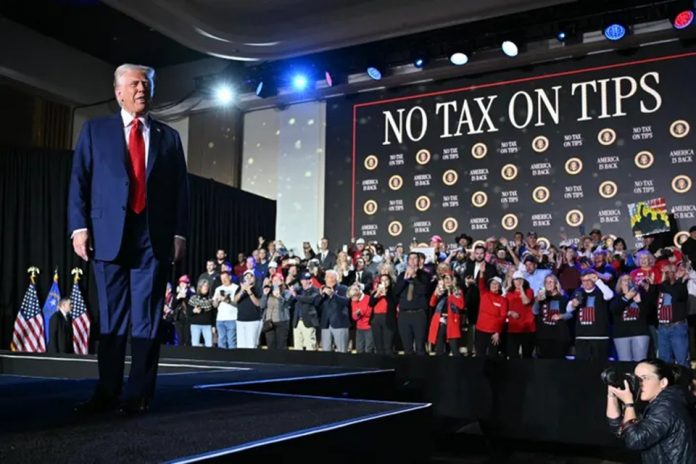
U.S. Senate Passes ‘No Tax on Tips Act’

0

U.S. Senate passed the “No Tax on Tips Act” with a 100-0 vote is supported by multiple sources. On May 20, 2025, the Senate unanimously passed the bipartisan bill, introduced by Sen. Ted Cruz (R-Texas) and co-sponsored by Sens. Jacky Rosen and Catherine Cortez Masto (D-Nevada), among others. The legislation allows a tax deduction of up to $25,000 for reported cash tips (including cash, credit/debit card, and checks) for workers earning $160,000 or less in 2025, with the income threshold adjusting for inflation in future years.

The bill aims to exempt tips from federal income tax, fulfilling a campaign promise by President Donald Trump. It now heads to the House for consideration, where it may be included in a broader tax package or passed as a standalone bill. However, critics, including the Tax Foundation and the Center for American Progress, warn it could increase the federal deficit by $100-250 billion over a decade and may primarily benefit higher-earning tipped workers while opening avenues for tax avoidance by wealthier individuals.

Implications of the “No Tax on Tips Act”

The unanimous Senate passage of the “No Tax on Tips Act” on May 20, 2025, carries significant implications for workers, the economy, and tax policy. The act allows a tax deduction of up to $25,000 on reported tips for workers earning $160,000 or less annually, effectively exempting tips from federal income tax. This could increase disposable income for millions of tipped workers, such as servers, bartenders, and delivery drivers, particularly in industries like hospitality where tips are a significant portion of earnings.

The income threshold adjusts for inflation, ensuring the benefit remains relevant in future years. Supporters argue it will boost the financial security of low- and middle-income service workers, potentially stimulating local economies as these workers spend more. The National Restaurant Association and similar groups have endorsed the bill, citing relief for employees in high-cost-of-living areas.

Critics, like the Tax Foundation, estimate a $100-250 billion increase in the federal deficit over 10 years due to lost tax revenue. This could strain federal budgets, especially if not offset by other revenue measures. The act may incentivize better tip reporting, as the deduction applies only to reported tips, potentially reducing under-the-table payments and increasing transparency in the service industry.

However, the Center for American Progress and others warn of potential tax avoidance, where high-income individuals or businesses might reclassify income as “tips” to exploit the deduction, undermining the tax code’s integrity. The $25,000 cap and income limit aim to target relief to lower earners, but critics argue higher-earning tipped workers (e.g., in upscale establishments) may benefit disproportionately.

The 100-0 Senate vote signals strong bipartisan support, reflecting the bill’s populist appeal and alignment with President Trump’s campaign promise. Its passage in the House, either standalone or within a larger tax package, seems likely given the political climate, though debates over funding offsets could arise. The bill’s success could set a precedent for further tax relief measures, potentially shaping the trajectory of Trump’s tax policy agenda in his second term.

Despite the unanimous Senate vote, the act has sparked divisions among stakeholders: Service workers and organizations like the National Restaurant Association support the bill, viewing it as a lifeline for low-wage earners who rely on tips to offset stagnant wages in inflationary times. The bipartisan sponsorship (e.g., Cruz, Rosen, Cortez Masto) and unanimous vote reflect broad political appeal, especially in states like Nevada with large hospitality sectors. Republicans frame it as a tax cut victory, while Democrats highlight support for working-class families.

Groups like the Tax Foundation and the Center for American Progress argue the bill is poorly targeted, potentially benefiting higher earners more than low-wage workers. They also highlight the deficit increase and risks of tax loopholes. Labor Advocates argue the bill distracts from addressing deeper issues, like raising the federal minimum wage for tipped workers (stagnant at $2.13/hour for tipped employees in many states). They see it as a temporary fix that doesn’t address structural inequalities in the gig and service economies.

Concerns exist about enforcement challenges, as the IRS may struggle to verify legitimate tips versus reclassified income, potentially leading to fraud or administrative burdens. While the Senate vote suggests unity, X posts reveal polarized views. Some users praise the bill as a win for workers, while others call it a “gimmick” that fails to address broader tax fairness or wage stagnation. This reflects a broader divide between those prioritizing immediate worker relief and those advocating for systemic reforms.

In the House, debates may intensify over funding the tax cut or integrating it into a larger tax package, potentially exposing partisan fault lines despite the Senate’s consensus. The “No Tax on Tips Act” offers tangible benefits for tipped workers but raises concerns about fiscal impact and tax equity.

While the Senate’s 100-0 vote reflects rare bipartisan agreement, the divide among analysts, advocates, and the public highlights competing priorities: immediate relief versus long-term fiscal and labor policy reform. The bill’s fate in the House and its implementation will likely shape these debates further, with potential ripple effects on tax policy and worker protections.

The U.S. GENIUS Act Passes Procedural Senate Votes

0

The U.S. Senate successfully passed a procedural vote on the GENIUS Act, a bill to regulate stablecoins, on May 19, 2025, with a 66-32 vote, achieving cloture to move the bill toward a full floor vote. This followed a failed attempt on May 8, 2025, where the bill fell short of the 60 votes needed, with a 48-49 tally, due to opposition from all Senate Democrats and two Republicans, Senators Josh Hawley and Rand Paul.

The recent success came after bipartisan negotiations led to revisions addressing Democratic concerns, including stronger consumer protections, limits on Big Tech issuing stablecoins, and stricter compliance for foreign issuers. Sixteen Democrats, including Senators Mark Warner, Kirsten Gillibrand, and Ruben Gallego, flipped their votes to support the bill.

Circle CEO Jeremy Allaire celebrated the vote, stating on X, “Tonight’s vote on GENIUS Act is a huge step forward in advancing dollar digital currency as the foundational layer of the Internet financial system. Fully reserved, prudentially supervised programmable digital cash that operates at Internet scale.” His comments reflect optimism about the bill’s potential to establish a regulatory framework for stablecoins like Circle’s USDC, enhancing U.S. leadership in digital finance.

However, concerns persist among some Democrats, notably Senator Elizabeth Warren, who argues the bill fails to address conflicts of interest, particularly regarding President Trump’s family ties to the USD1 stablecoin and other crypto ventures. The bill’s passage in the Senate now sets the stage for a full vote, and if approved, it will need reconciliation with a House version before reaching President Trump’s desk.

Implications of the GENIUS Stablecoin Bill

The successful Senate procedural vote on the GENIUS Act (May 19, 2025) marks a significant step toward regulating stablecoins in the U.S., with broad implications for the financial system, cryptocurrency industry, and global economic leadership. The bill establishes a regulatory framework for stablecoins, requiring issuers to maintain full reserves, comply with anti-money laundering (AML) and know-your-customer (KYC) rules, and obtain federal or state charters. This could legitimize stablecoins like Circle’s USDC, fostering trust and wider adoption.

Circle CEO Jeremy Allaire’s comments highlight the potential for stablecoins to become a “foundational layer” of the internet financial system, enabling faster, cheaper, and programmable digital transactions at scale. Clear regulations could attract institutional investment and spur innovation, positioning the U.S. as a leader in digital finance. Revisions to the bill, which secured Democratic support, include stronger consumer protections, such as safeguards against fraud and insolvency risks, and restrictions on Big Tech companies issuing stablecoins to prevent monopolistic control.

Enhanced oversight of foreign issuers addresses concerns about unregulated stablecoins like Tether (USDT), potentially reducing systemic risks to the financial system. The bill aims to bolster the U.S. dollar’s dominance in global finance by promoting regulated dollar-backed stablecoins, countering efforts by countries like China to advance their own digital currencies. It could enhance U.S. competitiveness in the global crypto market, where jurisdictions like the EU (with MiCA regulations) and Singapore have already implemented stablecoin frameworks.

Critics, including Senator Elizabeth Warren, argue the bill doesn’t adequately address conflicts of interest, particularly given President Trump’s reported ties to the USD1 stablecoin and other crypto ventures. This could fuel perceptions of favoritism or regulatory capture. If the bill passes, reconciling Senate and House versions could delay implementation, especially if disagreements arise over provisions like Big Tech restrictions or state vs. federal oversight.

Overregulation could stifle smaller issuers, consolidating the market among large players like Circle, while underregulation risks repeating past crypto failures (e.g., TerraUSD’s collapse). The GENIUS Act has exposed a stark partisan and ideological divide in the Senate, reflecting broader tensions over cryptocurrency regulation.

Bitcoin climbed to a record high on Wednesday, fueled by growing optimism over regulatory progress and increasing adoption by financial institutions. The digital asset hit $109,856, before retreating lower amid a broader downtrend in financial markets. Bitcoin’s milestone comes as legislation known as the GENIUS Act, which would create a regulatory framework for stablecoins, advanced in the Senate. Meanwhile, JPMorgan CEO Jamie Dimon said this week that the bank would enable its clients to buy bitcoin.

Most GOP senators support the bill, viewing it as a pro-innovation, pro-market measure that strengthens U.S. financial leadership. The Trump administration’s backing, with its “America First” crypto agenda, has driven Republican unity, though Senators Josh Hawley and Rand Paul dissented, likely over concerns about government overreach or corporate influence. Initially, all Democrats opposed the bill on May 8, 2025, citing insufficient consumer protections and risks of regulatory loopholes. After revisions, 16 Democrats, including moderates like Mark Warner and Kirsten Gillibrand, supported the May 19 vote, but progressives like Elizabeth Warren and Sherrod Brown remain opposed, arguing it prioritizes industry interests over public welfare.

Democrats pushed for stronger safeguards against fraud, insolvency, and market manipulation, leading to amendments that swayed some to support the bill. Critics still argue these measures fall short. Concerns about tech giants like Meta or Amazon issuing stablecoins led to provisions limiting their role, addressing Democratic fears of concentrated financial power.

The bill’s alignment with Trump’s crypto-friendly agenda, including his family’s ties to USD1 and World Liberty Financial, has fueled Democratic skepticism, with Warren highlighting potential conflicts of interest. Some Democrats and Republicans disagree on whether state regulators or federal agencies like the SEC and CFTC should have primary authority, reflecting broader debates over regulatory centralization.

Supporters, including Allaire and most Republicans, see stablecoins as a transformative technology that can democratize finance, reduce transaction costs, and maintain U.S. dollar hegemony. Progressive Democrats like Warren view cryptocurrencies, including stablecoins, as prone to fraud, instability, and enabling illicit activity, advocating for stricter regulations or outright bans on certain crypto activities.

The bill’s advancement signals growing bipartisan momentum, but the divide remains. A full Senate vote is pending, and reconciliation with the House version could reignite debates over contentious provisions. If passed, the GENIUS Act could reshape the U.S. crypto landscape, but its success hinges on balancing innovation with robust oversight—a challenge that continues to polarize lawmakers.

Tekedia Capital Welcomes Ginger, B2B Beauty Ecommerce Startup

0

Looking good is a big business, and the emerging market is logging record growth in the broad beauty sector. In Nigeria and broad Africa, for most people, after food, beauty comes next as the monthly budget is being developed. And within that framework, there is a huge opportunity to orchestrate a modern supply chain framework to ensure genuine beauty products are available in stores, salons, bars, etc when needed.

Tekedia Capital understands this emerging redesign which is reshaping Africa and we’re excited to report investment in Ginger, an all-in-one marketplace that connects brands and suppliers with global wholesale buyers in high-growth emerging markets. Operating from New York with an office in Lagos (more coming across African capitals), Ginger brings bulk buyers of beauty products and manufacturers, helping with logistics, financing and market development.

Ginger works with global brands like L’Oreal and Ivy Beauty within the B2B ecommerce framework to ensure the right beauty products are available and at the right prices across Africa and beyond. In the age of Instagram and TikTok, looking good is an opportunity. Tekedia Capital welcomes Ginger.

To learn more:

To learn more:
Tekedia Capital: capital.tekedia.com
Ginger: gingerme.io

MAGACOIN FINANCE vs XRP: Which Has the Bigger Growth Potential Going Into Q3 2025?

0

The altcoin race is heating up as Q3 2025 approaches, and two tokens are currently standing out on opposite sides of the crypto spectrum: the well-established XRP, and the fast-rising political contender, MAGACOIN FINANCE. One represents years of institutional groundwork. The other represents a fresh opportunity with explosive early-stage upside.

So which of these two offers greater growth potential over the next few months?

XRP: Steady Institutional Progress, But Limited Short-Term Multiples

XRP has built a reputation on resilience. After years of legal battles and continued partnerships with banks and remittance platforms, it remains one of the few altcoins with legitimate utility in traditional finance. However, when it comes to price action, analysts expect steady but capped gains in the near term.

Many forecasts for XRP place its 2025 price between $2.50 and $4, with a potential breakout if ETF speculation materializes. But for new investors, these returns are likely to fall in the 2x–4x range, not the kind of multiples that deliver major portfolio transformations.

MAGACOIN FINANCE: The Early-Stage Altcoin Eyeing a 25x–35x Surge

Enter MAGACOIN FINANCE, a newcomer that has ignited strong investor attention due to its unique combination of political narrative, growing visibility, and well-structured tokenomics. This project is capturing a segment of the crypto community that wants both utility and virality, and it is doing so at a price point that still offers massive upside.

Analysts tracking MAGACOIN FINANCE suggest the token could reach $0.007 by Q4 2025 — a move that would represent a 25x return from current entry levels. And with the latest limited-time promo, early buyers using the code PATRIOT35X are projecting up to 35x upside through bonus token allocations.

Why MAGACOINFINANCE Could Outpace XRP This Quarter

The difference comes down to timing and position. XRP is already integrated into global remittance systems, but that maturity comes with limited room for explosive growth. MAGACOIN FINANCE, by contrast, is still in its early phases, meaning any listing, exchange partnership, or viral event could send it soaring.

Traders are watching MAGACOIN FINANCE for several reasons:

  • It’s a narrative-driven token that aligns with U.S. political cycles
  • It has media traction across platforms like MSN and Google News
  • It’s offering aggressive entry bonuses to attract early capital

Final Verdict: Where the Bigger Opportunity Lies

While XRP remains a strong and stable player in the crypto ecosystem, the most aggressive gains heading into Q3 2025 may belong to MAGACOIN FINANCE. With early-stage pricing, high community energy, and a clear path toward listings, it is attracting the kind of speculative interest that typically fuels massive ROI moves.

For traders seeking multiples beyond 10x, MAGACOIN FINANCE is increasingly becoming the altcoin of choice.

To learn more about MAGACOIN FINANCE, please visit:

Website: https://magacoinfinance.com

Twitter/X: https://x.com/magacoinfinance.

China Threatens to Take Legal Action Against Anyone Complying With U.S. Ban on Huawei AI Chips

0

China has warned of possible legal consequences for individuals or companies that comply with new U.S. restrictions discouraging the use of Huawei’s artificial intelligence chips, marking a sharp escalation in the deepening technology rivalry between Washington and Beijing.

The Chinese Ministry of Commerce, in a strongly worded statement on Wednesday, denounced the U.S. measures as discriminatory and politically motivated, accusing Washington of abusing export control rules to suppress Chinese firms.

“The US abuses export controls to contain and suppress China, which violates international law and basic norms of international relations. This severely harms the legitimate rights and interests of Chinese enterprises and undermines China’s development interests,” it stated.

These actions violate the principles of fair competition and international economic and trade rules, the ministry said, adding that any institution or individual that enforces such discriminatory restrictions may face corresponding legal liabilities under Chinese law.

The warning comes days after the U.S. Commerce Department issued guidance suggesting that companies using Huawei’s Ascend AI chips—particularly in cloud computing and data centers—could be in violation of U.S. export control regulations. While not an outright ban, the advisory puts additional pressure on firms to steer clear of Chinese semiconductors, intensifying the technological decoupling between the world’s two largest economies.

China passed a significant rule in 2021 called the Anti-Foreign Sanctions Law. Under this regulation, anyone imposing an unnecessary ban against China or Chinese firms will be subject to prosecution and have to pay compensation for losses incurred.

A Fragile Truce Unraveling

The move risks unraveling a tentative truce reached in late 2023 between the Biden administration and Beijing aimed at stabilizing trade relations after years of tit-for-tat tariffs and blacklisting of tech companies. But with President Donald Trump returning to the White House and reaffirming his “America First” doctrine, Washington has re-energized its campaign to stifle China’s access to cutting-edge technology.

Trump has repeatedly accused China of leveraging U.S. innovations for military and surveillance purposes. In his first term, he placed Huawei on the Commerce Department’s Entity List, effectively cutting it off from American suppliers. Now, with Huawei’s AI breakthroughs in view, his administration is expanding those measures.

Beijing Hits Back

China’s threat of legal action marks the first time it has explicitly warned of judicial consequences for following U.S. tech sanctions. While it remains unclear what form these liabilities could take, analysts say that it sends a clear message that China is no longer content with issuing diplomatic protests—it may now retaliate with domestic legal tools.

The Ministry of Commerce called on the United States to “respect the legitimate development rights of enterprises in all countries, including China,” and reiterated that technological progress should not be politicized or weaponized.

Huawei Sanction-Driven Innovation: The Good Side of U.S. Restrictions

Huawei’s recent breakthroughs illustrate how U.S. pressure has inadvertently spurred Chinese innovation. Once heavily reliant on American technology, the Shenzhen-based giant has spent the past four years reengineering its supply chains.

By early 2024, Huawei announced it had successfully replaced over 13,000 parts previously sourced from U.S. companies and redesigned 4,000 circuit boards. More recently, the company achieved a milestone in producing its Ascend 910C AI chips, reportedly doubling its production yield from 20% to 40%—a major leap in semiconductor self-sufficiency.

The chips, which power Huawei’s AI cloud services and data centers, have increasingly become a symbol of China’s determination to compete in the global race for artificial intelligence supremacy. That progress has alarmed U.S. policymakers, who view advanced chips as strategic assets vital to national security.

Tech Cold War Deepens

China’s retaliatory tone signals that the tech cold war between the two powers is entering a more aggressive phase. Legal threats could deter multinational corporations from complying with U.S. directives, especially those operating in or selling to China’s massive market.

However, it also puts global businesses in a precarious position. “Companies are being squeezed from both sides—told by the U.S. not to use Chinese tech and warned by China not to comply with U.S. rules,” said Paul Triolo, a China tech expert at Albright Stonebridge Group.

The Biden administration had attempted to keep the rivalry contained within strategic parameters, but Trump’s return has revived a confrontational posture that risks fracturing global supply chains. With Huawei proving resilient under sanctions, and China now openly threatening legal retaliation, the struggle over AI chips is fast becoming a defining front in the broader geopolitical contest for technological dominance.