DD
MM
YYYY

PAGES

DD
MM
YYYY

spot_img

PAGES

Home Blog Page 1128

Nvidia CEO: U.S. AI Export Ban Was a Failure, Trump’s Reversal a Welcome Correction

0

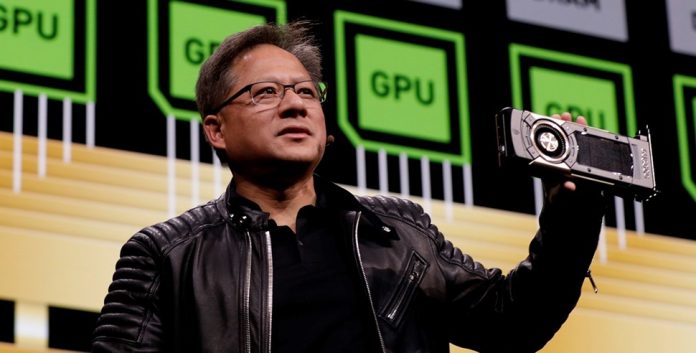
Nvidia’s CEO, Jensen Huang, has sharply criticized the U.S. policy of restricting advanced chip exports to China, arguing that the move backfired by accelerating Chinese technological advancement.

Speaking at the Computex tech conference in Taipei, Huang described the Biden-era export controls as counterproductive and welcomed President Donald Trump’s decision to scrap some of those curbs.

“Incredible things have happened in the last year as a result of the export controls,” Huang told reporters. “The local companies are very, very talented and very determined, and the export control gave them the spirit, the energy, and the government support to accelerate their development.”

Huang pointed to China’s rapid progress in artificial intelligence and chip manufacturing as unintended consequences of Washington’s clampdown on AI chip exports.

“I think, all in all, the export control was a failure,” he said.

The U.S. had sought to curb Beijing’s access to high-end semiconductor technology amid rising geopolitical tensions, citing concerns over the potential military applications of artificial intelligence. But the move cost American firms, including Nvidia, a significant share of their most lucrative overseas market.

Nvidia, once dominant in China with an estimated 95% market share for high-end AI chips, has seen that figure cut nearly in half. We went from basically having 95% share to having 50% share, Huang said.

He added that while the original intent of the policy was to hinder China’s AI capabilities, it instead fueled a surge in domestic innovation. It’s labeled the unintended consequence of a policy that didn’t work.

Now, Trump appears poised to reverse that course. His administration is reportedly planning to replace the current tiered export control regime with a global licensing system that would allow technology trade under government-to-government agreements. The approach is seen as a more strategic and flexible way to maintain U.S. influence in global tech markets while avoiding unintended backlash.

Huang believes President Trump realizes it’s exactly the wrong goal to try to isolate U.S. technology from the world because it undermines our leadership. This is because if U.S. technology is not available to the rest of the world, they will build it themselves.

Indeed, that has already happened. Chinese firms, with strong state baking, have responded to the curbs by making rapid strides in tech self-sufficiency. Huawei’s breakthroughs in chipmaking and the rollout of its own HarmonyOS mobile operating system—designed to replace Google’s Android—have been cited as clear examples of how restrictions pushed China to innovate faster.

The Biden administration’s AI export controls, imposed in 2022 and 2023, particularly targeted Nvidia’s top-performing chips, such as the A100, H100, and more recently, the H800 and A800 variants tailored for Chinese clients. In response, Nvidia began designing downgraded versions to remain compliant. The company is now preparing to release a variant of its powerful Blackwell GPU architecture with reduced memory capacity to meet export standards.

But even with these workarounds, the Chinese market has grown more competitive. Huang acknowledged that domestic chipmakers such as Huawei and startup firms, with Beijing’s support, have filled the vacuum.

At Computex, Huang stressed the importance of maintaining access to global markets. He emphasized that the need for U.S. technology to be widely used.

China, for its part, has consistently condemned the U.S. curbs as discriminatory and politically motivated. The country’s commerce ministry reiterated this stance earlier this year, warning that it would “take resolute measures” to safeguard its interests if Washington continued to impose technology barriers.

As global AI competition intensifies, U.S. policymakers are facing an increasing challenge of how to constrain strategic rivals without undermining American firms or driving them into isolation.

Trump’s strategy signals a potential rebalancing, away from blanket restrictions and toward a model that preserves commercial advantage while allowing room for geopolitical negotiation. However, it is not clear whether this course correction will recover lost ground or simply mark a shift in the broader technological power balancing.

President Donald Trump Optimistic About A Potential Ceasefire In Russia-Ukraine Conflict

0

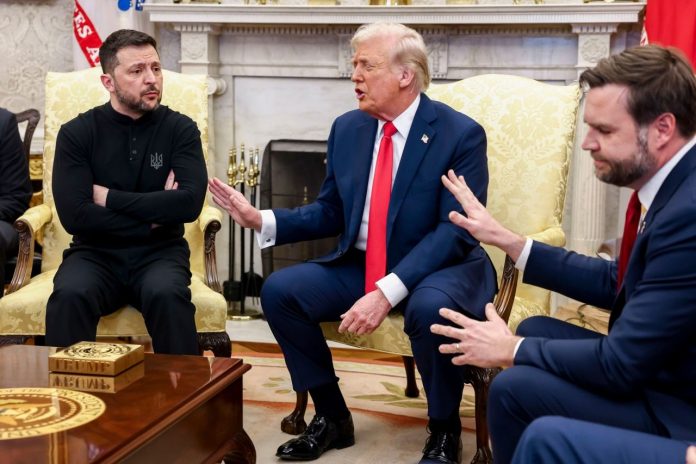
President Donald Trump has expressed optimism about a potential ceasefire in the Russia-Ukraine conflict following a two-hour phone call with Russian President Vladimir Putin on May 19, 2025. Trump stated that Putin agreed to “immediately” start direct negotiations with Ukraine toward a ceasefire and a broader peace deal, marking a shift from his earlier demand for an immediate Russian ceasefire. Instead, Trump endorsed Putin’s call for direct talks between the two nations, suggesting they negotiate the conditions themselves.

Ukrainian President Volodymyr Zelenskyy, however, emphasized that any negotiation process must involve American and European representatives and reiterated his stance against conceding Ukrainian territory, citing constitutional obligations. Despite Trump’s optimism, Putin has not fully committed to an immediate ceasefire, and Russian officials have expressed concerns about enforcement and Ukraine potentially using a truce to regroup. European leaders continue to push for a 30-day unconditional ceasefire, threatening sanctions if Russia does not comply, while some analysts warn that Putin may be delaying or seeking terms unfavorable to Ukraine.

The implications of Trump’s optimism about a Russia-Ukraine ceasefire following his two-hour call with Putin on May 19, 2025, are multifaceted, with significant geopolitical, strategic, and domestic consequences. The divide between stakeholders—particularly between Trump, Ukraine, Russia, and European allies—highlights competing interests and challenges in achieving a sustainable resolution.

Trump’s push for direct Russia-Ukraine talks signals a potential reduction in U.S. mediation, aligning with his “America First” approach. This could weaken multilateral frameworks like NATO or EU-led initiatives, as Trump appears to favor bilateral negotiations. Putin’s agreement to talks without an immediate ceasefire commitment suggests Russia may exploit negotiations to maintain military pressure or secure favorable terms, such as territorial concessions or Ukraine’s neutrality.

Zelenskyy’s insistence on no territorial concessions and the inclusion of Western representatives underscores Ukraine’s reliance on international support. A U.S. withdrawal from active mediation could weaken Ukraine’s negotiating position. European leaders’ push for a 30-day unconditional ceasefire reflects fears of Russian stalling. If Trump’s approach sidelines Europe, it could strain transatlantic relations and embolden Russia to test EU resolve.

Without clear enforcement mechanisms, any ceasefire risks collapsing, as Russia could use it to regroup or rearm, while Ukraine fears being pressured into unfavorable terms. A resolution perceived as rewarding Russian aggression could embolden other authoritarian regimes, impacting conflicts in regions like Taiwan or the Middle East. A prolonged negotiation without a ceasefire could sustain disruptions in energy markets and global supply chains, particularly affecting Europe’s reliance on Ukrainian grain and Russian gas.

Domestic U.S. Impact

Trump’s optimism could bolster his domestic image as a dealmaker, but failure to deliver a lasting peace might draw criticism from both hawks, who oppose concessions to Russia, and doves, who fear escalation. His approach may deepen partisan divides, with critics arguing it risks abandoning Ukraine, while supporters see it as a pragmatic step to avoid U.S. overreach.

Trump’s endorsement of direct Russia-Ukraine talks without preconditions suggests a hands-off U.S. role, prioritizing quick resolution over long-term commitments. This contrasts with his earlier campaign rhetoric demanding an immediate Russian ceasefire. Zelenskyy’s insistence on Western involvement and no territorial concessions reflects Ukraine’s need for guarantees against Russian dominance. Kyiv fears Trump’s approach could pressure them into ceding ground, undermining their constitutional and public commitments.

By encouraging bilateral talks, Trump appears to sideline European efforts for a multilateral ceasefire with strict enforcement, potentially viewing EU sanctions threats as ineffective. European leaders advocate for a 30-day unconditional ceasefire backed by sanctions, reflecting a more cautious approach. They worry Trump’s strategy risks legitimizing Russian gains and weakening NATO’s unity. Putin’s openness to talks without committing to an immediate ceasefire suggests a desire to maintain battlefield leverage. Russia may demand concessions like recognizing occupied territories or Ukraine’s non-alignment with NATO.

Zelenskyy’s firm stance against territorial losses and his call for Western involvement highlight Ukraine’s distrust of Russia’s intentions, fearing negotiations could be a pretext for further aggression. Supporters view his outreach to Putin as a bold move to end a costly conflict, avoiding deeper U.S. entanglement. Opponents, including some Republicans and most Democrats, argue that Trump’s approach risks betraying Ukraine and emboldening Putin, potentially undermining U.S. credibility globally.

The divide reflects deeper tensions over how to balance peace, sovereignty, and global stability. Trump’s optimism may hinge on his ability to broker a deal that satisfies both Russia and Ukraine, but the lack of alignment on terms—territory, NATO membership, and enforcement—suggests significant hurdles. If negotiations falter, Ukraine could face increased pressure, Europe might escalate sanctions, and U.S.-Russia relations could deteriorate further, complicating global security dynamics.

South Korean Presidential Candidate Proposes Accelerating Stablecoin Regulation Pegged with Won

0

South Korean presidential candidate Lee Jae-myung, the Democratic Party leader and front-runner for the June 3, 2025, election, has proposed accelerating stablecoin regulation, specifically advocating for a won-pegged stablecoin to curb capital outflows and enhance financial sovereignty. His plan aims to reduce reliance on foreign-issued stablecoins like USDT and USDC, which dominate local crypto markets due to South Korea’s current prohibition on domestic stablecoin issuance.

Lee’s proposal includes the Digital Asset Basic Act to establish a legal framework for cryptocurrencies, covering stablecoin issuance, trading, and regulation with requirements like substantial reserves and Financial Services Commission (FSC) approval. This marks a shift from South Korea’s historically cautious crypto stance, following the recent lifting of a ban on corporate crypto trading. However, the Bank of Korea’s Governor, Lee Chang-yong, has emphasized that stablecoin regulation is urgent, warning that foreign stablecoins could bypass capital and foreign exchange regulations.

Critics, including rival candidate Lee Jun-seok of the Reform Party, argue that Lee Jae-myung’s proposals lack market understanding and could be risky, citing past issues with volatile stablecoins like Terra’s UST. Economists also caution that private stablecoin issuance might undermine the central bank’s control over inflation and liquidity. A won-pegged stablecoin could reduce South Korea’s reliance on foreign stablecoins (e.g., USDT, USDC), which currently dominate 99% of local crypto trading volume. This could limit capital outflows, as foreign stablecoins facilitate cross-border transactions that bypass South Korea’s strict capital controls.

By issuing a domestic stablecoin, South Korea could strengthen its monetary policy control, reducing the influence of foreign currencies like the USD in its crypto markets. This aligns with concerns from the Bank of Korea about foreign stablecoins undermining capital and foreign exchange regulations. A regulated stablecoin framework could foster trust in digital assets, encouraging adoption and investment in South Korea’s crypto market, which is among the world’s most active. However, poorly designed regulations or volatile stablecoin models (e.g., Terra’s UST collapse in 2022) could destabilize markets and erode public confidence.

Private stablecoin issuance might conflict with the Bank of Korea’s authority over monetary policy, potentially complicating inflation and liquidity management. The central bank is exploring a central bank digital currency (CBDC), which could compete with or complement a won-pegged stablecoin. Lee’s pro-crypto stance targets younger voters and crypto enthusiasts, a significant demographic in South Korea, where crypto trading is popular. His promise to lift ICO bans and regulate stablecoins could position him as a forward-thinking candidate.

Rushed or poorly crafted regulations could lead to financial instability, potentially damaging Lee’s credibility if elected. The Terra-Luna crash, linked to South Korean founders, remains a cautionary tale for voters and regulators. South Korea’s move could set a precedent for other Asia-Pacific nations with active crypto markets, like Japan or Singapore, to develop their own stablecoin regulations. A won-pegged stablecoin could challenge the dominance of USD-based stablecoins, though its global adoption may be limited due to the won’s smaller international footprint.

Local exchanges, blockchain startups, and crypto traders support Lee’s proposal, as it could legitimize the industry, attract investment, and reduce dependence on foreign platforms. The recent FSC approval of corporate crypto trading accounts has already boosted optimism. Lee’s pro-crypto policies resonate with tech-savvy, younger demographics who see digital assets as a hedge against economic uncertainty and a path to financial innovation. Policymakers and economists favoring reduced reliance on USD-based systems see a domestic stablecoin as a step toward greater economic independence.

The central bank, led by Governor Lee Chang-yong, warns that private stablecoins could undermine monetary policy and enable regulatory evasion. Economists argue that only a CBDC under central bank control can ensure stability. Lee Jun-seok of the Reform Party criticizes the proposal as populist and poorly thought-out, arguing it lacks understanding of crypto market dynamics and risks repeating past failures like Terra’s UST.

Critics highlight South Korea’s history of stringent crypto oversight (e.g., real-name trading laws, high taxes on crypto gains) and question whether the FSC can implement robust regulations without stifling innovation or exposing consumers to risk. South Korea’s crypto market is vibrant, with over 7 million active traders (14% of the population) as of 2024. Many support deregulation and innovation but remain wary after the $40 billion Terra-Luna collapse.

Older generations and conservative investors, scarred by past crypto scandals, favor stricter oversight or a CBDC over private stablecoins, fearing volatility and fraud. Lee Jae-myung’s push for accelerated stablecoin regulation reflects a balancing act between fostering innovation and addressing economic risks. While it could strengthen South Korea’s crypto market and financial sovereignty, it faces resistance from traditional financial institutions and skeptics wary of regulatory missteps.

Tesla Set to Launch 1,000 Robotaxis in June in Austin, Aiming to Redefine Public Transport and Challenge Waymo

0

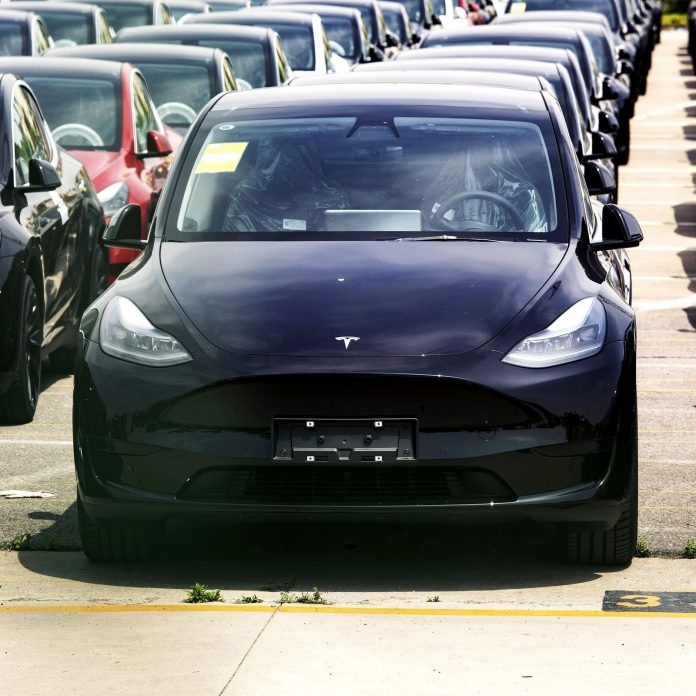
Tesla’s long-anticipated robotaxi service is finally making its debut, starting in Austin this June, in what CEO Elon Musk says will be a cautious but fast-paced rollout that could see up to 1,000 autonomous Teslas operating in the city within a few months.

The move marks a significant milestone in Tesla’s vision to reshape urban mobility and carve out a new revenue frontier beyond electric vehicle (EV) sales.

“We’ll start with probably 10 for a week, then increase it to 20, 30, 40,” Musk said in an interview with CNBC on Tuesday. “It will probably be at 1,000 within a few months.”

This will be Tesla’s first real-world deployment of a robotaxi service, part of a broader push by Musk to revolutionize transportation. He has long pitched the idea of a fleet of fully autonomous Teslas that could earn money for their owners, operating like a self-driving Uber, whenever the car is not in personal use. For Tesla owners, this promises a potentially lucrative side hustle. For Tesla, it introduces a new business model that could generate recurring revenue while amplifying the brand’s dominance in mobility tech.

The launch will begin under strict controls. The pilot will be invite-only, and the robotaxis will operate on public roads but be geo-fenced to limited, safer regions of Austin.

“We will geo-fence it,” Musk said. “It’s not going to take intersections unless we are highly confident it’s going to do well with that intersection. Or it will just take a route around that intersection.”

Teleoperators — remote human supervisors — will be on standby to intervene when the autonomous system gets stuck or faces an edge-case scenario. While competitors like Waymo and Zoox also use similar systems, Tesla has historically taken a different approach to autonomy, relying on camera-based systems and neural networks rather than expensive lidar and detailed 3D maps.

Musk has promised that Tesla will scale rapidly once the initial fleet proves itself. After Austin, the company plans to roll out robotaxis to other cities, including San Francisco. By the end of 2026, Musk claims there could be more than 1 million self-driving Teslas on the road in the United States alone — a bolder rehash of a promise he first made in 2019. At the time, Musk claimed there would be 1 million Tesla robotaxis by the end of that year. That goal was missed, and Musk later conceded that punctuality was not his “strong suit.”

Regulatory Hurdles Ahead

But scaling won’t be simple. Tesla’s push to launch robotaxis across multiple states will run headlong into a patchwork of regulations. California, for instance, home to Musk and Tesla’s earliest Full Self-Driving (FSD) experiments, still hasn’t granted full approval to Tesla for robotaxi operations. Alphabet’s Waymo, on the other hand, has already made significant progress in cities like San Francisco, Phoenix, and Los Angeles, and has permission to offer fully driverless rides to paying customers.

“The approval process is very haphazard and sort of state-by-state, and sometimes city-by-city,” Musk said, voicing frustration at the regulatory fragmentation. “We really need to get national regulations in place.”

That lack of federal cohesion could delay Tesla’s rollout in key markets, giving competitors more time to entrench themselves. Waymo, for instance, already operates in dense urban environments and has quietly expanded its fleet while earning regulators’ trust. Unlike Tesla, Waymo has focused on building a purpose-designed self-driving vehicle from the ground up, equipped with lidar and operating under a highly conservative safety model. These choices may slow down development, but have helped avoid high-profile incidents.

Tesla’s Full Self-Driving software remains under public and regulatory scrutiny. A recent test by Business Insider comparing Waymo and Tesla’s supervised FSD showed a Tesla running a red light at a complex intersection in San Francisco. Musk dismissed the test as flawed, saying it “made no sense,” but acknowledged Tesla’s robotaxis will avoid high-risk intersections until system confidence improves.

The robotaxi pilot, while limited in geographic scope, will serve as a crucial test of Tesla’s AI-driven approach to autonomy. Unlike Waymo’s laser-scanned maps and tightly controlled routes, Tesla is betting on fleet-collected real-world data and neural network learning to scale rapidly and cheaply. If it works, Tesla could leapfrog the more cautious, hardware-heavy approaches used by rivals.

A New Business Model

Tesla’s robotaxi venture isn’t just about advancing self-driving technology — it’s also about redefining Tesla as more than an automaker. Musk envisions a future where most Tesla owners can opt in to the autonomous network, allowing their vehicles to work as driverless taxis while they’re at home or at work. This model would transform every Tesla into a potential revenue-generating asset, something no other car company currently offers.

The company has said that eventually, these robotaxis could function without any manual controls, built specifically for autonomy. A new robotaxi design is expected to be unveiled at Tesla’s upcoming event on August 8.

Weak Auction of Japan’s 20-Year Bond Underscores Vulnerabilities in Japan’s Debt Market

0

The recent auction of Japan’s 20-year government bonds saw the weakest demand since August 2012, with a bid-to-cover ratio of 2.5, down from 2.96 in the previous auction. This indicates that for every ¥100 offered, only ¥250 was bid, reflecting investor hesitancy. The tail, or gap between average and lowest-accepted prices, was 1.14, the widest since 1987, signaling sluggish demand.

This weak auction drove the 20-year JGB yield up by about 15 basis points to 2.555%, the highest since October 2000. The 30-year yield hit a record 3.14%, and the 40-year yield reached 3.6%. Concerns stem from the Bank of Japan’s (BOJ) gradual retreat from its massive bond-buying program, raising fears about who will fill the demand gap as yields rise. Analysts suggest structural issues in Japan’s debt market and global worries about rising government spending are contributing to the lack of investor appetite.

The weak demand for Japan’s 20-year government bonds, with the lowest bid-to-cover ratio since 2012, has significant implications for Japan’s economy and its debt market, while also highlighting a growing divide between market dynamics and policy expectations. The surge in the 20-year JGB yield to 2.555%—a 25-year high—along with record highs for 30-year (3.14%) and 40-year (3.6%) yields, signals increasing borrowing costs for the Japanese government. This could strain public finances, given Japan’s massive public debt, which exceeds 250% of GDP.

The Bank of Japan’s (BOJ) gradual withdrawal from its bond-buying program, part of its ultra-loose monetary policy, is reducing its role as a dominant buyer. This shift leaves uncertainty about who will absorb the supply of JGBs, especially as global investors demand higher yields to compensate for inflation and currency risks. The wide tail (1.14) in the auction reflects poor market depth and investor reluctance, potentially undermining confidence in JGBs. If demand continues to weaken, it could lead to further yield spikes, destabilizing the bond market and complicating the BOJ’s efforts to manage monetary policy.

Rising JGB yields could influence global bond markets, as Japan is a major holder of foreign debt. Higher yields may attract some capital back to Japan, strengthening the yen but potentially disrupting global carry trades that rely on low Japanese rates. With Japan’s aging population and rising social spending, higher borrowing costs could limit fiscal flexibility, forcing tougher choices between austerity, tax hikes, or increased debt issuance, all of which carry economic and political risks.

The BOJ has historically suppressed yields through aggressive bond purchases and yield curve control. However, as it scales back, markets are pushing yields higher, reflecting inflation concerns and expectations of tighter policy. This creates a disconnect between the BOJ’s desire for gradual normalization and the market’s anticipation of faster change. Domestic investors, like Japanese banks and pension funds, have traditionally been reliable buyers of JGBs due to regulatory and structural incentives. However, global investors are less willing to hold JGBs at low yields, especially with the yen weakening (recently hitting a 34-year low against the USD). This divide in demand exacerbates the auction’s weakness.

The BOJ faces a short-term challenge in stabilizing the bond market while addressing long-term structural issues, such as Japan’s shrinking population and stagnant growth. Investors are increasingly skeptical about the sustainability of Japan’s debt-driven economic model, creating a divide between current policy and future risks.

The weak auction underscores vulnerabilities in Japan’s debt market as the BOJ navigates a delicate transition. The divide between policy intentions and market reactions, as well as between domestic and global investor behavior, could amplify volatility if not carefully managed.