DD
MM
YYYY

PAGES

DD
MM
YYYY

spot_img

PAGES

Home Blog Page 113

Ethereum’s Decade in the “Ocean of Exploits” Didn’t Drown It

0

Ethereum has faced a long history of exploits—particularly in its early years and especially at the smart contract and DeFi application layers—ranging from infamous incidents like The DAO in 2016 to various bridge hacks and protocol vulnerabilities in subsequent years.

Billions have been lost in total across the ecosystem over the decade. However, this adversarial environment has functioned as a Darwinian forge for security. Massive bug bounty programs via platforms like Immunefi, with rewards often reaching millions for critical finds have incentivized white-hat researchers to identify and patch issues proactively.

The Ethereum Foundation and ecosystem projects regularly award high-severity bounties, such as the $50,000 maximum from the Foundation in early 2026 for an ERC-4337-related vector. Combined with a passionate, highly active developer community.

Ethereum and its Layer 2s consistently lead in developer activity—this has driven continuous hardening: rigorous audits, formal verification efforts, post-Merge proof-of-stake improvements, and ongoing upgrades; 2026’s focus on higher gas limits, quantum-resistant cryptography, and better interoperability.

Ethereum’s core protocol has maintained 100% uptime since genesis, with no successful direct attacks on the consensus layer in its history, distinguishing it from many alternatives that have suffered outages or centralization concerns. This battle-tested resilience, paired with unmatched decentralization positions Ethereum as arguably the most secure and decentralized blockchain for high-value settlement.

Comparisons highlight Ethereum’s edge in security and decentralization, making it the “Swiss bank” for large-value assets, institutional DeFi, and complex contracts while faster chains trade off some of those qualities. Institutional asset managers clearly appreciate this.

Giants like BlackRock with BUIDL tokenized fund heavily on Ethereum, often 90%+ allocation, Fidelity, Franklin Templeton, Deutsche Bank, UBS, and others have chosen Ethereum as their primary or exclusive base for building: tokenized real-world assets (RWAs), stablecoins, funds, and infrastructure.

Corporate treasuries and asset managers now hold tens of billions in ETH, with inflows into Ethereum products reflecting recognition of its security, yield via staking, programmability, and role as neutral settlement layer. Regulatory clarity and institutional-grade tools have accelerated this.

Ethereum’s decade in the “ocean of exploits” didn’t drown it—it evolved it into the blockchain institutions trust most for serious capital deployment. The point stands: they fully appreciate the security and decentralization that emerged from that crucible.

The institutional adoption of Ethereum, driven by its proven security and decentralization forged through a decade of real-world testing, is having profound and multifaceted impacts as of March 2026. Institutions are pouring capital into Ethereum-based products, viewing it as the premier settlement layer for high-value assets.

This includes massive allocations to tokenized real-world assets (RWAs), stablecoins, and staking. BlackRock’s BUIDL tokenized fund—despite multi-chain expansion—still holds significant Ethereum dominance around $694 million in on-chain distribution earlier this year, though shares have shifted.

Ethereum commands ~57-65% of tokenized RWAs, with the global distributed RWA value exceeding $26 billion and Ethereum hosting ~$15 billion. Stablecoin supply has surpassed $300 billion, with the majority on Ethereum, reinforcing its role in payments and liquidity. This influx is reshaping crypto markets.

Grayscale and others describe 2026 as the “dawn of the institutional era,” with bipartisan U.S. legislation expected to further integrate public blockchains into mainstream finance. Institutional flows now act as the marginal price driver, reducing reliance on retail speculation and adding stability amid volatility.

Ethereum’s TVL is poised for explosive growth—analysts predict up to 10x surges from institutional participation in RWAs potentially reaching $300 billion market-wide and DeFi. This drives ETH demand through staking yields, gas fees, and burn mechanisms. Predictions range from ETH reaching $4,200+ due to these tailwinds, with institutions treating Ethereum as “core infrastructure” or a “toll road” for tokenization.

The network’s battle-tested resilience—no consensus-layer exploits since genesis, thousands of validators, and ongoing upgrades; gas limit increases, zkEVM security to 128-bit standards, quantum-resistant cryptography—underpins this trust.

Institutions prioritize these qualities over raw speed; favoring Ethereum over faster chains like Solana for large-value settlement and complex contracts, leading to deeper liquidity, tighter spreads, and preference for Ethereum in regulated environments. RWAs are moving beyond treasuries into credit, equities, and private markets, turning Ethereum into programmable financial rails.

This enhances efficiency, transparency, and access while bridging TradFi and DeFi.

Clarity enables banks and asset managers to deploy on-chain solutions, with Ethereum as the default for institutional-grade tools. While Solana excels in retail activity and low-cost transactions, Ethereum retains institutional preference for security and decentralization, solidifying its lead in high-stakes use cases like institutional DeFi and tokenized funds.

Ethereum’s decade-long “ocean of exploits” has culminated in unmatched institutional appreciation: it’s no longer just surviving—it’s becoming the foundational layer for the next phase of global finance. This shift promises sustained capital deployment, reduced volatility from diverse holders, and Ethereum’s evolution into the neutral, secure backbone institutions demand for serious on-chain value transfer.


Google Releases Open-source Command-line Interface for Google Workspace

0

Google has recently released an open-source command-line interface (CLI) for Google Workspace, providing unified access to services like Gmail, Calendar, Drive, Sheets, Docs, Chat, Admin, and more.

This tool, often referred to as gws from the package Googleworkspace/cli, was announced and shipped in early March 2026. It’s explicitly designed for both human users; developers working in the terminal and AI agents, making it easier to build agentic workflows that interact with Workspace data without custom wrappers, browser automation, or third-party connectors like Zapier.

It pulls from Google’s Discovery Service at runtime, so commands auto-update when Google adds new API endpoints or methods. Human-friendly — Tab completion, –help per resource, –dry-run previews, auto-pagination, and easier OAuth handling than manual curl calls. Agent-ready — Outputs structured JSON by default, which LLMs and agents can reliably parse. Includes over 100 agent skills (SKILL.md files in the repo), covering individual APIs plus higher-level workflows and 50+ curated recipes for common tasks in Gmail, Drive, Calendar, Docs, Sheets, etc.

Then run commands like gws. Agent skills can be added directly, e.g., npx skills add github:googleworkspace/cli. Open-source under Apache 2.0. It’s described as experimental and community-oriented in some coverage; not a fully “official” Google product in the same way as gcloud, but introduced by Google Cloud figures and covered widely as a Google AI and Workspace release.

This arrives amid growing interest in agentic AI that can read and write emails, manage events, edit docs and files, search Drive, etc. It simplifies integration for tools like Claude Code, Vertex AI agents, Gemini Enterprise agents, or custom LLMs that support shell execution or tool calling. The release has generated buzz in dev communities for reducing friction in automating Workspace tasks via AI.

Microsoft offers strong support for AI agents interacting with Microsoft Graph (the unified API for Microsoft 365 services like Outlook, Teams, OneDrive, SharePoint, Entra ID, Intune, and more), though the approach differs notably from Google’s Workspace CLI.

The official Microsoft Graph CLI often called mgc was a cross-platform. NET-based tool for calling Graph APIs from the terminal. However, Microsoft deprecated and archived it in late 2025, with full retirement scheduled around August 2026.

Reasons cited include declining usage and overlap with the more powerful Microsoft Graph PowerShell SDK using cmdlets like Invoke-MgGraphRequest or specific resource cmdlets. Community feedback, especially in AI/agent contexts, has highlighted this as a missed opportunity—Google’s agent-optimized Workspace CLI launched around the same time with features like structured JSON output, dynamic commands, and built-in agent skills/recipes.

For agentic workflows, LLMs like Gemini, Claude, or custom agents reading/writing emails, managing calendars, searching files, querying users/devices, etc., the ecosystem leans toward these:merill/msgraph Agent Skill (most direct analog to Google’s agent-ready CLI)Open-source Agent Skill (following the agentskills.io spec) that bundles the complete Microsoft Graph API surface (~27,700 endpoints) as local searchable indexes.

Agents get instant, offline knowledge of APIs, parameters, examples—no network calls for discovery. Optional direct execution: Authenticate once and let the agent call Graph APIs live supports GET/POST/PATCH/DELETE, but DELETE is blocked by default for safety.

Zero dependencies, cross-platform (macOS/Linux/Windows), installs via npx skills add merill/msgraph. Often paired with MCP (Microsoft Cloud Protocol) servers or tools like lokka.dev for execution. This is community-driven but widely adopted in agent builders for reliable, up-to-date Graph integration without wrappers.

Example from agent demos: Pipe mgc JSON outputs into processing scripts for compliance reports, user/device queries, etc. Agents compose pipelines autonomously, e.g. mgc devices list –filter “complianceState eq ‘noncompliant'” –output json | … Familiar CLI feel; works in terminals where agents have exec access.

Less “agent-native” than Google’s dynamic, JSON-first design—no built-in recipes/skills. Agent identities in Microsoft Entra ID (formerly Azure AD) for daemon/background agents calling Graph with application permissions. Emerging Microsoft 365 Agents Toolkit / Teams CLI integrations for building callable agents/functions in Teams/365.

Dynamic (runtime discovery), agent-first (JSON default, 100+ skills/recipes, tab completion + dry-run for humans too), open-source and actively positioned for AI agents. Microsoft’s side: Shifted to PowerShell SDK + community agent skills like msgraph. No official equivalent “agent-optimized CLI” yet, but the merill/msgraph skill fills much of the gap and is praised for speed/local search.

If you’re building agents that need to act on Microsoft 365 data, start with the msgraph Agent Skill—it’s the closest to a plug-and-play, agent-ready interface today. For production and enterprise, combine with official Entra agent auth + Semantic Kernel plugins. The space is evolving fast amid the agent boom, so watch for potential Microsoft announcements on native agent tooling.

Coinbase Faces Delays in Processing Solana Transactions Amid Polygon Labs Launching Polygon Agent CLI Open-source Toolkit

0

Coinbase has recently experienced delays in processing Solana (SOL) transactions. According to Coinbase’s official status page, an incident occurred where some users faced delayed sends, receives, buys, and sells on the Solana network.

This was investigated and officially resolved on March 5, 2026, at 16:47 PST. Fiat-related withdrawals and deposits remained unaffected during the issue. The problem appears tied to Coinbase’s internal handling rather than a widespread Solana network outage (Solana itself has generally maintained high uptime).

Similar Solana delays on Coinbase have happened before, often during surges in activity like meme coin launches or high volume periods in prior years like January 2025, where backlogs led to multi-hour or even multi-day waits.

Recent posts on X also highlighted the issue, with users and news accounts noting pending transactions and advising to check the status page or Solana explorers for updates. One user mentioned an hour+ delay for a receive as of March 6, though this may reflect residual effects or individual cases post-resolution.

Affected users faced slowdowns in sends, receives, buys, and sells of SOL and Solana-based assets. This disrupted immediate transfers, trading, or withdrawals to external wallets during the incident window. Social media posts showed users complaining about stuck or pending transactions, with some seeking support.

However, no widespread reports of multi-hour or multi-day backlogs emerged this time—unlike earlier 2025-2026 surges. Coinbase consistently reassured users that funds remained secure and unaffected. Fiat withdrawals and deposits were explicitly not impacted. A few users might have seen lingering minor delays post-resolution as systems fully caught up, but the status page confirms Solana as fully operational with no active incidents.

No significant SOL price movement tied directly to this brief Coinbase issue. SOL was trading around $87-89 USD on March 6, amid broader market trends (downward pressure noted in February/March 2026, with SOL down over 30% month-over-month in some reports, but unrelated to this specific delay).

Past longer delays; January 2025 meme coin surges causing 30x volume spikes and multi-day backlogs led to user complaints and temporary frustration but didn’t cause lasting SOL price crashes—more often tied to network congestion or hype cycles.

This incident was too short to trigger notable sell-offs, panic, or shifts to other exchanges and wallets. Highlights recurring challenges for Coinbase with high-throughput chains like Solana during any activity spikes, despite upgrades; dedicated Solana architecture rolled out in early 2026, delivering 12x throughput and 20% lower deposit latency.

No evidence of major reputational damage or mass user exodus from this event—contrast with heavier 2025 incidents that prompted CEO apologies and infrastructure retrospectives. Coinbase postponed some listings and has other suspensions planned but these aren’t linked to the Solana delay.

This was a minor, quickly resolved operational hiccup with primarily short-term user inconvenience rather than systemic or market-wide fallout. If you’re holding SOL on Coinbase or waiting on a transaction, check your account directly or the status page for personalized updates—most should now process normally.

As of the latest checks, the status page shows Solana as operational with no active incidents. For pending transfers, delays can sometimes resolve as systems catch up, but contact Coinbase support if issues persist. This seems to be a recurring operational challenge for Coinbase with high-throughput chains like Solana during peak times.

Polygon Labs Launches the Polygon Agent CLI Open-source Toolkit

Polygon Labs has launched the Polygon Agent CLI, an open-source, end-to-end onchain toolkit specifically designed for AI agents in the emerging “agent economy.”

This tool simplifies building autonomous AI agents that can securely interact with blockchain networks — particularly settling transactions on Polygon. The CLI provides everything an AI agent needs to operate onchain in a single installation, replacing the need to integrate multiple fragmented tools: Wallet creation and management — Session-scoped smart contract wallets with limits and allowances.

Payments and stablecoin support — Send stablecoins, pay gas fees in stablecoins (no native POL required), and support for protocols like x402 for micropayments to APIs/data sources.

Swaps, bridging assets cross-chain, querying multi-chain balances, and DeFi interactions. Register identities and build verifiable reputation using the ERC-8004 standard. Track transaction history, onramp assets, and more — all with security features suited for autonomous agents.

Installation is straightforward via npm: It’s compatible with popular agent frameworks like Claude (Anthropic) and Openclaw, and includes a SKILL.md file for easy integration into agents without heavy custom work.Why It MattersAI agents are evolving from data analyzers to autonomous entities that can hold, move, and spend funds without human intervention.

Polygon positions this as the “fastest path from zero to an agent that can transact,” leveraging Polygon’s low-cost, high-speed infrastructure recently hitting throughput ATHs and stablecoin supply records. This launch aligns with Polygon’s broader push into AI + blockchain, including recent upgrades like the Lisovo hardfork with subsidized gas for agent payments and growing stablecoin adoption.

Bullish step for programmable money and autonomous onchain finance. This toolkit positions Polygon as a foundational layer for autonomous AI agents to hold, manage, and spend funds without constant human oversight. By providing a unified “Open Money Stack”, it enables real financial rails — wallets, stablecoin payments, identity, and micropayments — that agents need to operate independently.

Enables agent-to-agent commerce through verifiable onchain identity via ERC-8004 standard and reputation building, allowing agents to discover, trust, and transact with each other trustlessly. Supports x402 protocol for per-request stablecoin payments to APIs, data feeds, or services — crucial for agents paying for real-time data or compute without subscriptions or gas hassles.

Could spark growth in autonomous workflows, like AI-driven DeFi strategies, automated trading, or cross-chain operations, where agents execute decisions and settle natively. This is seen as a “game-changer” for making AI truly onchain, with potential to unlock massive automation in Web3.

The CLI dramatically lowers barriers: Single install replaces fragmented integrations; separate wallet libs, bridging tools, gas payers, etc., reducing complexity, bugs, and setup time. Compatible with major frameworks like Claude (Anthropic), Openclaw, LangChain, and CrewAI — developers add it as a “skill” with minimal code changes.

Session-scoped smart contract wallets keep private keys isolated from the agent’s LLM context, enforce spending limits, expiry and whitelists, and include transaction previews (“dry runs”) to prevent errors or exploits. This makes building production-grade onchain agents faster and safer, potentially boosting adoption among AI devs experimenting with blockchain.

Agents settle transactions on Polygon, leveraging its low costs, high throughput, and stablecoin dominance (recent records in supply and volume). Aligns with Polygon’s upgrades: Complements gas subsidies; $1M for agent payments via Lisovo hardfork, stablecoin-native ops, and Trails routing for efficient swaps/bridging.

Positions Polygon as the go-to chain for agentic finance and programmable money — if adoption grows, it could increase onchain volume, DeFi interactions, and cross-chain flows, enhancing POL’s value and ecosystem stickiness. Early commentary suggests this could lead to stronger integration into autonomous transaction flows and long-term network growth.

Advances AI-blockchain fusion by making onchain actions accessible to non-custodial, autonomous entities — a major step beyond data analysis toward real economic participation. Promotes standards like ERC-8004 for interoperable agent identity and reputation, and x402 for frictionless micropayments.

Could catalyze wider adoption of stablecoin rails for AI (no native token management needed), lowering entry for AI agents into DeFi, payments, and beyond. While bullish, impacts depend on adoption: Success hinges on developer uptake and real-world agent use cases scaling. Competition from other chains or tools could fragment the space.

Even with guardrails, autonomous agents handling funds introduce new risks if not managed carefully. This is viewed as a bullish, forward-thinking move for Polygon in the emerging agentic web. It provides the missing infrastructure layer; “infrastructure over intelligence” to let AI agents evolve from observers to active participants in programmable, decentralized economies.

US Drafting New Export Control Rules Centred on Advance AI Chips 

0

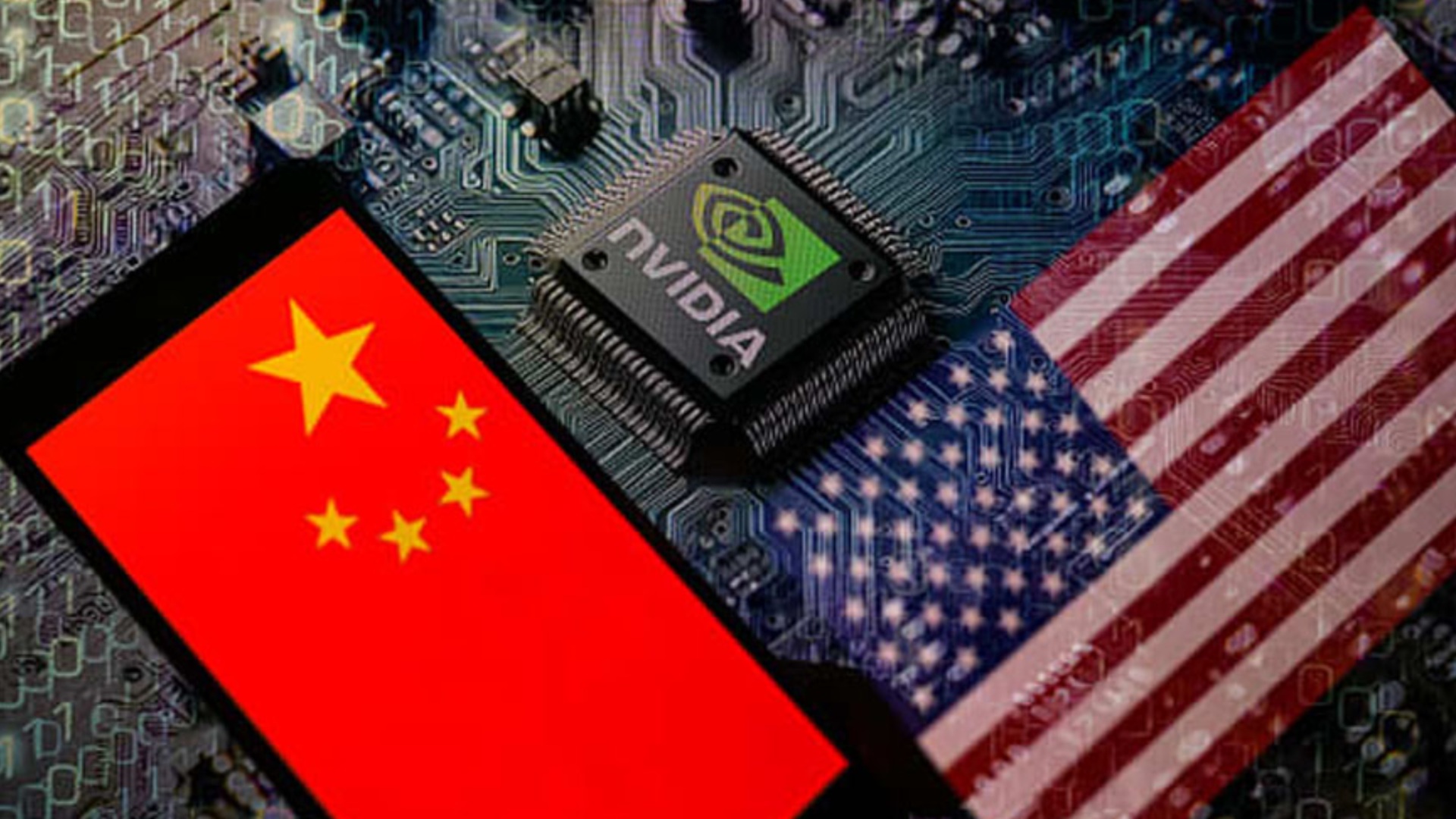
The US is drafting new export control rules under the Trump administration that would require government approval via the Department of Commerce for virtually all global exports of advanced AI chips and accelerators from companies like Nvidia and AMD.

This expands existing restrictions which already target around 40 countries, including China into a worldwide licensing framework, positioning the US as a “gatekeeper” for AI infrastructure. The goal appears to be oversight, security, and leverage for negotiations requiring foreign investments in US AI data centers or security guarantees for very large deployments.

Tiered review process. Smaller shipments; up to 1,000 Nvidia GB300 GPUs or equivalent ? Streamlined and simplified review. Larger clusters ? Pre-clearance, potential site visits, or monitoring requirements (e.g., software to prevent clustering without approval). Massive scales (e.g., over 200,000 units) ? Formal host-government agreements, “matching” US investments, or stricter conditions.

This builds on prior policies during Biden-era restrictions on certain countries, recent shifts allowing conditional sales to China with fees/tariffs), but shifts toward broader global control to prevent diversion risks and promote secure AI buildouts.

The news caused immediate stock declines: Nvidia (NVDA): Down about 1.8–1.9%. AMD: Down about 2.2–2.3%. Micron: Down around 3.4%. These rules introduce bureaucratic hurdles, potential delays, and uncertainty for international sales, which could slow global AI deployments especially sovereign projects and affect revenue growth for US chipmakers.

AI-linked cryptocurrencies often tied to decentralized AI compute, rendering, or infrastructure narratives dropped in tandem, with several falling around 5%. This reflects market sensitivity: Tighter controls on leading AI hardware suppliers can dampen enthusiasm for AI ecosystem growth, including blockchain-based alternatives that rely on or compete with centralized AI infrastructure.

The proposals are still drafts and could change, be softened, or face pushback from industry players. They aim to balance national security with keeping US tech dominant globally, but critics worry about overreach harming competitiveness.

While not directly targeting TSMC; a Taiwanese firm, the rules’ global licensing requirements for US-designed chips could indirectly affect its order pipeline, production allocation, and revenue from AI-related manufacturing. TSMC’s American depositary shares closed at $344.94 on March 6, 2026, down 2.52% from the previous close of $353.86.

This decline mirrors the broader semiconductor sector’s response to the export news, with Nvidia and AMD also dropping 1.8-2.3% on March 5 amid fears of delayed international sales and bureaucratic hurdles. The dip reflects investor concerns over potential order disruptions, particularly for China-bound chips, but TSMC’s shares have still surged over 200% in the past five years, driven by explosive AI demand.

Analysts view this as a temporary pullback, with long-term growth intact due to TSMC’s near-monopoly over 90% market share in advanced nodes like 3nm and 2nm processes critical for AI. Nvidia has reportedly halted production of its H200 AI chips intended for China, redirecting TSMC manufacturing capacity toward its next-generation Vera Rubin platform.

This stems from stalled US export licenses and Beijing’s push for domestic alternatives, reducing near-term H200 volumes but potentially maintaining or boosting overall utilization at TSMC fabs for unrestricted products. Similar dynamics could apply to AMD’s MI325X chips.

TSMC’s Nanjing fab in China faces ongoing restrictions; the US revoked its special export license for advanced tools by the end of 2025, forcing case-by-case approvals that could limit upgrades or output. However, China represents less than 10% of TSMC’s revenue, minimizing the hit compared to peers like Samsung or SK Hynix. If global export approvals slow large-scale AI cluster sales, it might temper TSMC’s 2026 production ramp-up for restricted chips.

To counter uncertainties, TSMC is speeding up construction of its mega-fab in southern Taiwan to meet surging AI chip demand, backed by projected 53.77% year-over-year EPS growth. This aligns with US policies under the CHIPS Act, which have pushed TSMC to invest over $65 billion in US facilities reducing reliance on Taiwan-based production and mitigating geopolitical risks.

As the producer of 90%+ of the world’s advanced semiconductors, TSMC gives Taiwan significant influence in the AI ecosystem. The rules position the US as a “gatekeeper,” potentially driving more AI infrastructure investments stateside, but they also highlight TSMC’s bottlenecks in advanced packaging, which are critical for inference-heavy AI agents and could amplify its role in future growth.

The tiered approval process isn’t an outright ban and could foster negotiated deals, like foreign investments in US data centers. This might sustain demand for TSMC’s services, especially as AI shifts from training to real-time inference, where its hardware dominance is key.

Critics argue overreach could harm US competitiveness, but for TSMC, it reinforces its indispensable position. Escalating US-China tensions or broader conflicts (e.g., US-Iran issues cited in recent chip dips) could disrupt supply chains. If China accelerates self-sufficiency, it might erode TSMC’s edge, though experts estimate a multi-year gap in capabilities.

The rules introduce near-term headwinds like order volatility and stock pressure, but TSMC’s fundamentals remain strong amid AI’s explosive trajectory. The proposals are still in draft form and could evolve with industry feedback.

Oil and Natural Gas Prices Surge as Conflicts Escalate in Middle East

0

Oil prices have surged significantly in early March 2026, with Brent crude, the global benchmark climbing above $84 per barrel amid escalating geopolitical tensions in the Middle East, particularly the ongoing conflict involving the US, Israel, and Iran.

Recent reports indicate Brent crude jumped around 8-10% in single sessions, reaching levels like $84.24 early in the week and continuing to climb higher—some sources show it breaking $91 in subsequent trading on March 6, with intraday highs pushing toward $94 in volatile conditions. WTI (US benchmark) has followed suit, surging past $75 initially and reaching into the high $80s to low $90s range by March 6.

The primary catalyst is the widening Middle East conflict, which has raised serious fears of supply disruptions: Strait of Hormuz risks — This critical chokepoint handles about 20% of global oil trade. Reports indicate near-total halts in shipping traffic, attacks on export facilities, and Iranian threats and closures, leading to massive tanker rerouting and skyrocketing freight rates.

US and Israeli strikes on Iran, retaliatory responses, and broader regional involvement including impacts on Gulf states have materialized supply risks that markets had previously priced in cautiously. This has triggered a rapid rally, with prices up 18-35% in recent days and weeks in some assessments, marking the highest levels in over a year since mid-2024 or 2025 peaks.

The surge has rippled through markets:Higher energy costs are pressuring inflation, potentially complicating central bank plans. Stock indexes like the Dow have fallen sharply in response to these fears. Gasoline and transport costs are rising, with warnings of echoes from past energy shocks.

While some earlier 2026 forecasts from EIA or J.P. Morgan anticipated averages in the $50-60 range assuming balanced supply and demand, the geopolitical “war premium” has overridden those fundamentals temporarily. Markets remain volatile, with potential for further spikes if disruptions persist or de-escalation if resolved quickly.

This situation is fast-moving—prices can fluctuate rapidly based on news from the region. Natural gas prices have surged sharply in early March 2026, driven by the same escalating Middle East conflict that’s pushing oil above $84/barrel.

US Henry Hub (domestic benchmark): Trading around $3.00–$3.10 per million British thermal units (MMBtu) in futures contracts, with spot prices in the low $3 range recently. This reflects a modest rally up ~3–8% in recent sessions but remains relatively insulated compared to international markets, thanks to abundant US production and limited direct export reliance on the Strait.

Europe’s TTF benchmark (Dutch Title Transfer Facility): Spiking dramatically to around €52–€53 per megawatt-hour (MWh), up significantly from pre-conflict levels; gains of 40–50%+ in single days earlier in the week, with weekly increases exceeding 50–70% in some reports. This equates to roughly $15+ per MMBtu in equivalent Asian LNG markers (JKM), which also jumped 30–45%.

Asian LNG prices (JKM benchmark): Surged ~39–45% in early March sessions, reflecting heavy dependence on Middle East/Qatar LNG cargoes. These moves mark some of the sharpest short-term spikes since the 2022 energy crisis, though volatility persists as markets digest news, brief pullbacks on de-escalation rumors.

The conflict has directly hit natural gas harder in import-dependent regions due to: Qatar production halts — QatarEnergy (a top global LNG exporter) suspended output after attacks on facilities, slashing near-term supply.
Strait of Hormuz disruptions — Near-total shipping halts, tanker attacks, rerouting, and threats have skyrocketed freight costs and delayed cargoes, amplifying a “supply shock” premium.

Strikes and retaliations affecting Gulf infrastructure; Saudi refinery shutdowns raise fears of prolonged outages. Europe and Asia — Most vulnerable. Higher gas prices threaten to reignite inflation, raise household and industrial energy bills potentially echoing 2022’s crisis, dent economic growth, and pressure central banks.

Analysts warn of risks to recovery in energy-intensive sectors like manufacturing and chemicals. United States — More buffered due to domestic shale production and Henry Hub’s isolation from direct Gulf disruptions. US natgas has seen milder gains, but indirect effects include higher global LNG demand and knock-on inflation from oil/gas-linked costs.

Elevated energy costs could boost overall inflation, complicate monetary policy, and contribute to stock market volatility as seen with recent equity drops. Fertilizer, chemicals, and transport sectors face input cost pressures. US gasoline has risen; ~$3.11/gallon in some reports, but heating and power bills could climb in import-reliant areas if LNG shortages persist.

The surge is largely a geopolitical risk premium — if the conflict de-escalates quickly via diplomacy, prices could retreat sharply. Prolonged disruptions, however, risk sustained highs and broader economic strain. Markets remain highly sensitive to headlines from the region, with volatility expected to continue. This is a fast-evolving situation — prices can swing rapidly on new developments.