DD
MM
YYYY

PAGES

DD
MM
YYYY

spot_img

PAGES

Home Blog Page 1138

Choosing the Right Pilates Studio Software

0

When it comes to managing a Pilates studio, using efficient software can make all the difference. However, with so many options available, selecting the right Pilates studio software is not straightforward.

Therefore, to help you out, here are some valuable tips on how you can choose the right Pilates studio software.

1.      Look for Your Needs

Before starting your search for a suitable Pilates studio software, you must have a clear understanding of what you need. This will narrow down your search and help you make an informed decision for your Pilates studio.

You must think about what you are expecting from the platform and ask yourself:

  • Do you want to manage the group classes, individual sessions, or video sessions?
  • Do you need features related to billing or marketing?
  • Do you want software that can be easily upgraded as your studio grows?

All these considerations will help you choose a Pilates studio software that best aligns with your needs and preferences.

2.      Consider the Essential Features

To streamline your operations and improve the workflow, you must consider what features are offered by the Pilates studio software.

When selecting the software, you must look for the following features:

  • Comprehensive Class Scheduling and Management: This will help you run the studio smoothly, maximising class attendance.
  • Detailed Reporting and Analytics: Comprehensive reports on various aspects, including revenue, client retention, and class attendance, can help you make informed decisions for your business.
  • Seamless Payment Processing: These features allow your clients to smoothly complete their transactions without any hassle, improving their overall experience.
  • Client Management and Engagement Tools: These tools help you keep track of your clients’ information, interactions, and preferences.

3.      Evaluate Customisation Options

Every business has its unique needs and characteristics. Therefore, it is essential to choose a Pilates studio software that is flexible and offers different customisation options. This will allow you to adjust the platform as per your needs, improving your overall workflow and business efficiency.

When selecting a Pilates studio software, you must check whether you can add your logos and incorporate colours to show your business identity, as this will be a real boost to your business.

4.      Ensure Quality Customer Service

Quality customer service is the key aspect to attract potential customers and boost your business growth. Therefore, when choosing a Pilates studio software, you must consider how its different features and tools can help you improve clients’ experience.

You must look for a good onboarding process that includes the proper introduction of the software. Also, ensure the platform can provide optimal support in case of any issues. These features are essential to facilitate your customers in the best way and provide them with a good experience.

5.      Don’t Forget to Request a Demo Session

Before making the final decision, it is advisable to request a demo session of the software. This will help you to evaluate whether it can meet your business needs and facilitate your customers.

Moreover, a demo session will also give you some valuable insights about the Pilates studio software and its features, helping you make an informed decision.
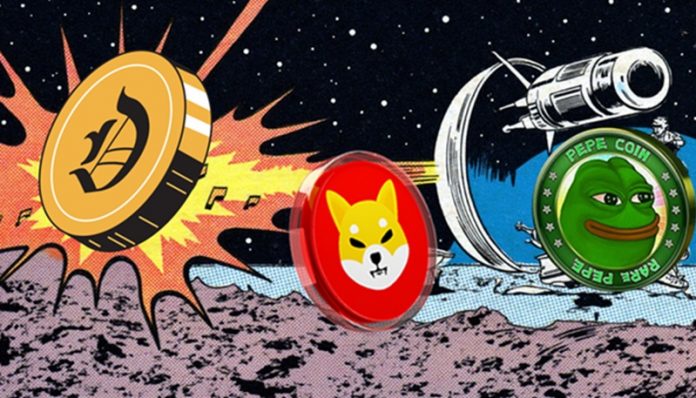

5 Hot Meme Coins to Invest in Today to Make $2,000,000 By 2026

0

The headline promises big potential, and rightly so. Meme coins are no longer just internet jokes; they’ve evolved into high-stakes digital assets with real community backing and serious market presence. Among the rising contenders in this space is Salamanca, a meme coin project inspired by one of television’s most iconic criminal families.

Unlike most meme tokens, Salamanca blends market relevance, pop culture power, and early-stage investment appeal, all without losing its meme coin roots. With increasing interest and strong fundamentals, projects like Salamanca could turn modest bets into major returns by 2026.

Salamanca: The Meme Coin with a Cartel-Strong Vision

Inspired by the notorious Salamanca family from Breaking Bad and Better Call Saul, this project doesn’t just play for laughs. With its ticker symbol $DON, the Salamanca token combines dark storytelling with meme appeal to target a powerful niche in the BSC meme space.

Trading between $0.00194 and $0.002237, the project currently sits at a level considered highly favorable by investors expecting a parabolic move. Analysts believe that a 2000% price surge is within reach. This is particularly with its strong listing lineup, already on Gate.io, MEXC, and PancakeSwap, with an anticipated addition of Binance soon.

Shiba Inu (SHIB): The Original Underdog Turned Global Phenomenon

Shiba Inu (SHIB) emerged in 2020 with modest intentions but rapidly evolved into one of the world’s most recognized meme coins. Created by the anonymous “Ryoshi,” SHIB gained traction as a decentralized currency with a devoted global following. It is now accepted at hundreds of merchants, either directly or through third-party systems.

Built on Ethereum, SHIB keeps proving its staying power in the market. With a passionate community cheering it on and an expanding ecosystem, this meme coin is a standout pick for investors chasing both cultural buzz and serious growth potential.

Dogecoin (DOGE): The King of Meme Coins Holds Its Ground

Dogecoin’s journey from internet joke to crypto mainstay is quite the tale. Starting as a meme-based currency, DOGE has kept its spot among the crypto elite thanks to its passionate online community and shoutouts from big names (Elon Musk being a notable fan).

The coin jumped over 30% last week, riding Bitcoin’s upward wave during favorable market conditions. Currently trading at about $0.23, DOGE continues to weather market ups and downs while maintaining its loyal following among traders who appreciate its quirky origins and surprising staying power.

PEPE: The Frog That Sparked a Meme Coin Frenzy

PEPE stole the spotlight in mid-2023 with a jaw-dropping surge. Rooted in the legendary Pepe the Frog meme, this deflationary token won hearts with its no-nonsense vibe; no taxes, no hype, just pure meme culture driving its rise.

Its rapid surge pushed its market cap to nearly $1.6 billion, with some early adopters walking away as millionaires. PEPE’s strategy to stay purely meme-focused has helped it carve out a niche in an otherwise utility-driven market, sparking waves of copycats and fueling a short-lived memecoin season.

Neiro: A Tribute to Doge’s Legacy

NEIRO was launched in August 2024 following the adoption of a Shiba Inu pup named Neiro by Atsuko Sato, the owner of Kabosu, the original Doge meme dog. Neiro’s connection to the Doge family helped it quickly go viral across crypto communities.

It runs on both Ethereum and Solana networks, embracing a multi-chain structure while staying rooted in meme culture. Neiro’s charm lies in its tribute to a legend and its grassroots, community-run approach. The project taps into nostalgia, a strong community, and dog-themed branding to stay relevant in the competitive meme coin space.

Why Salamanca May Lead the Meme Coin Charge

Salamanca is gaining momentum not only for its branding but also for its expanding social presence. With over 20,000 members on Telegram and thousands of followers on X, the project enjoys an engaged and growing community.

The total supply of Salamanca is capped at a billion tokens, which provides a clear and manageable framework for future valuation. With its strategic roots on the Binance Smart Chain and an upcoming Binance listing, $DON is positioned as a front-runner in the 2025 meme coin surge.

Don’t miss the momentum. The best BSC meme coin of 2025 may already be in motion. Check out the Salamanca website and get your $DON tokens today!


Ripple (XRP) Poised to Rally Past $7 in Weeks, with Cardano (ADA) and This $0.20 Token Expected to Join the Climb

0

As Ripple (XRP), Cardano (ADA), and the rising surprise contender Rexas Finance (RXS) watch the crypto market blossom after positive regulatory news and further bullish indicators, all three appear well-positioned to benefit from a predicted surge. Rexas Finance, a $0.20 real-world asset tokenization project, may take center stage, while Ripple and Cardano have already demonstrated significant growth. With enthusiastic charts alongside legal clarity and innovative fundamentals, all three tokens are likely to attract the attention of investors in the coming weeks.

Ripple (XRP): Positive XRP Moves Caused by ETF Speculation

Ripple’s (XRP) growth benefits from a shift to the bull case due to increased U.S. regulatory sentiment. Exposure to cryptonism, following Paul Atkins’ appointment as the new SEC Chair, has increased optimism among XRP investors. Guaranteeing a lack of enforcement discretion based on securities law citations has biased policy construction, enforcing that claiming de facto regulation is a sharp turn from the baseline control the SEC used in the Ripple-law lawsuit. This development has led to a further 4% gain in the XRP price in under 48 hours since confirmation of his position.

Adding fuel to the bullish sentiment is Teucrium’s introduction of XRP futures and its 2X leveraged XRP ETF, which is now sparking conversations about the potential for a spot XRP ETF. These products would likely serve as the much-needed trigger for XRP to catch the attention of institutional investors. XRP is trading at $2.2187 after a peak of $2.3007, representing a 25% increase since April 7. Analysts suggest the token could surge past $7 if it exceeds the crucial resistance zone of $2.50 to $2.67. Other technical indicators, such as an inverse head-and-shoulders pattern, support this price surge expectation.

Cardano (ADA): Forecasted to Rally up to $1

Cardano has been flashing signals on its chart, which looks green. $ADA rebounded from $0.512 on April 7, which aligns with the low swing of $ADA on February 13. A double bottom pattern makes it so that a neckline is made around $1.173—an area monitored by traders for which a breakout occurs. $ADA has also surpassed $1.173, where traders actively monitor, realizing gains. Furthermore, $ADA exceeding the 50-day Exponential Moving Average has accounted for breaking out of a falling wedge—a signature bullish reversal pattern. Recent advances above the 61.8 Fibonacci retracement level significantly bolster the case. Additionally, there is spending pressure primarily coming from whale investors. All indicators suggest ADA’s price will move approximately 43% toward $1 from its current value. Increased bullish market momentum will likely warrant the token retesting 1.17, which could lead to surpassing and catalyzing even greater gains.

Rexas Finance (RXS): The Token Set at $0.20 That Might Steal Attention

As XRP and ADA dominate the headlines, Rexas Finance quietly becomes a giant in the shadows. Currently priced at $0.20, RXS is revolutionizing the crypto industry by enabling the tokenization of assets such as real estate and commodities on the blockchain. This further positions Rexas as a distinct project that goes beyond speculation into practical use cases. The project has no venture capital (VC) backing and is community-driven, further enhancing its credibility due to a full Certik audit and a transparency-focused approach. A massive $1 million giveaway campaign has helped build a vibrant, organic user base, yielding nearly 2 million entries. Rexas Finance’s presale has seen great success, raising $48.4 million by selling 462 million tokens and achieving a 92.41% completion rate. The token has also shown over 6x growth since its initial start at $0.03. Many anticipate an RXS surge following the post-launch listing date on June 19, 2025. Citing the high demand and low supply, alongside the expected listing price of $0.25, makes Rexas a post-launch propeller among the big names. With the perceived demand, Rexas is scheduled to rally or shine, surpassing its competitors.

Conclusion

The comparison of XRP alongside Cardano and Rexas Finance highlights three distinct aspects of the crypto market: redemption through regulation, a breakout from stagnation, and groundbreaking technological advancements. Ripple is moving robustly with growing institutional support and clear legal waters. There are whales silently guiding absolute Cardano sufficiency. In contrast, Rexas Finance is the $0.20 diamond in the rough, riding the presale hype, the market utility wave, and poised for a breakout. All three tokens are frontrunners in the forthcoming bull market, a movement greatly appreciated by discerning traders.


For more information about Rexas Finance (RXS) visit the links below:

Website: https://rexas.com

Win $1 Million Giveaway: https://bit.ly/Rexas1M

Whitepaper: https://rexas.com/rexas-whitepaper.pdf

Twitter/X: https://x.com/rexasfinance

Telegram: https://t.me/rexasfinance

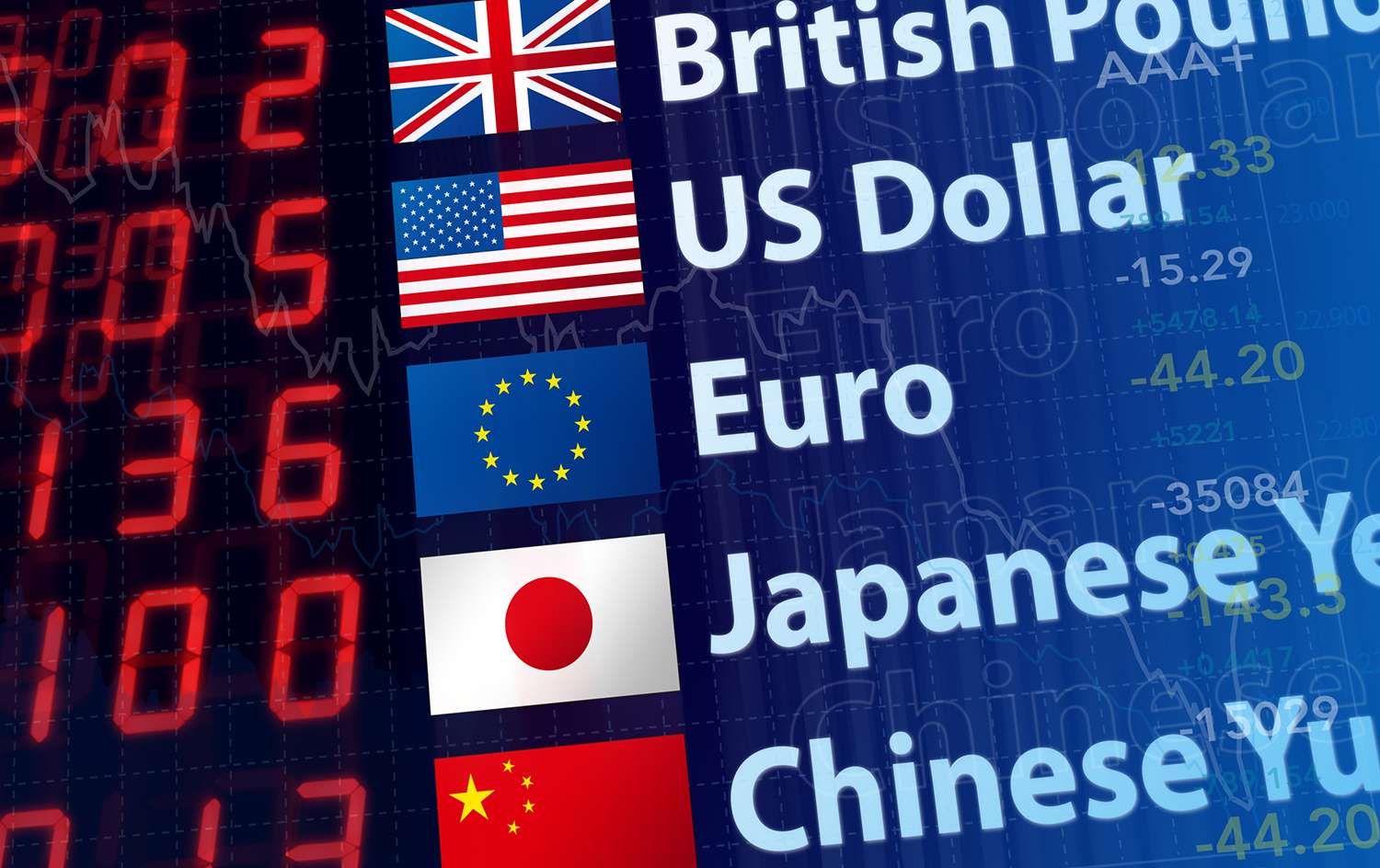
U.S. Dollar Index Fell To a 10-Day Low of 100.186

0

The U.S. Dollar Index (DXY) fell to a 10-day low of 100.186, as reported on May 19, 2025. This decline of approximately 0.75% occurred despite rising U.S. Treasury yields, which typically support the dollar. Analysts suggest market caution and a disconnect between rates and the dollar’s performance, with some linking the drop to broader concerns, such as Moody’s downgrade commentary.

The DXY, which measures the U.S. dollar against a basket of six major currencies (EUR, JPY, GBP, CAD, SEK, CHF), has been under pressure, with recent data showing a 0.51% decrease to 100.3080 from 100.8190. Technical analysis indicates potential further declines unless the index breaks above key resistance levels like 102.

The U.S. Dollar Index (DXY) dropping to a 10-day low of 100.186 on May 19, 2025, despite rising U.S. Treasury yields, carries significant implications for markets and highlights a notable divide between traditional economic relationships and current market dynamics. A weaker dollar makes U.S. exports more competitive, potentially boosting sectors like manufacturing and agriculture. However, it raises the cost of imports, which could pressure consumer prices and contribute to inflation.

Emerging markets with dollar-denominated debt may see temporary relief, as a weaker dollar reduces repayment burdens. The Federal Reserve faces a complex environment. A declining dollar amid rising yields could signal market skepticism about the Fed’s ability to maintain tight policy without triggering economic slowdown. Posts on X suggest traders are cautious, with some speculating the Fed might pause rate hikes if inflationary pressures ease due to a weaker dollar.

Conversely, persistent inflation (amplified by costlier imports) could force the Fed to maintain or increase rates, further complicating the dollar’s trajectory. Major currencies in the DXY basket, like the euro (57.6% weight) and yen (13.6% weight), may strengthen. This could support European and Japanese exports but challenge their domestic inflation control efforts.

A weaker dollar may also bolster commodity prices (e.g., oil, gold), as these are priced in USD. This could exacerbate inflationary pressures globally. A declining dollar often correlates with rising equity markets, as it reduces pressure on multinational corporations with foreign earnings. However, the disconnect with rising yields suggests investor uncertainty, potentially capping risk-on rallies.

The traditional relationship where rising U.S. Treasury yields (e.g., 10-year yields recently climbing) strengthen the dollar is breaking down. This divide stems from several factors: Investors may doubt the Fed’s ability to sustain high rates without triggering a recession, leading to dollar selling despite yield increases. Rising yields typically attract capital to U.S. assets, but global uncertainty (e.g., geopolitical tensions, China’s economic recovery) may be driving safe-haven flows into other currencies or assets, weakening the dollar.

Technical analysis, shows the DXY struggling below key resistance (e.g., 102). Heavy dollar positioning by traders may be unwinding, exacerbating the decline. Commentary around Moody’s downgrade of U.S. credit outlooks, referenced on X, suggests structural concerns about U.S. fiscal health, which could undermine confidence in the dollar even as yields rise.

This divide reflects a market grappling with conflicting signals: rising yields signal tighter policy, but a falling dollar suggests doubts about U.S. economic resilience. If the DXY continues to weaken (e.g., toward support levels near 99.5), it could trigger further commodity price spikes and equity volatility. Conversely, a reversal above 101 could restore the traditional yield-dollar correlation.

Microsoft Drops Developer Onboarding Fees for Windows App Store in Push to Attract More Creators

0

Microsoft is making a decisive play to draw more developers to its ecosystem. During its Build 2025 conference on Monday, the company announced it is eliminating the registration fee required to publish apps on the Microsoft Store.

The change takes effect in June 2025 and marks a significant shift in Microsoft’s approach to lowering the barrier for individual developers.

Under the current model, developers pay a one-time fee of $19 to sign up and submit their applications to the Microsoft Store. Beginning next June, that cost will be waived entirely for individual developers looking to publish Windows apps.

“By eliminating these one-time fees, Microsoft is creating a more inclusive and accessible platform that empowers more developers to innovate, share, and thrive on the Windows ecosystem,” the company said in a press statement.

The move positions Microsoft as the only major platform among its peers to drop developer onboarding charges altogether. Apple still requires developers to pay a $99 annual fee to distribute apps through its App Store, while Google maintains a one-time $25 registration fee for the Play Store. These charges have come under increasing scrutiny, particularly as regulatory pressure mounts against Big Tech’s control over digital storefronts and app distribution policies.

Though onboarding fees are being scrapped, Microsoft emphasized that its existing revenue-sharing model will remain in place for developers using its in-app commerce platform: 15% for non-gaming apps and 12% for games. However, developers who opt to use their own payment and commerce systems will continue to retain 100% of their revenue from non-gaming apps.

The announcement also dovetails with the launch of Microsoft’s new FastTrack Program for the Microsoft Store, designed to provide support and incentives for larger app publishers. The program offers benefits such as waived registration fees, accelerated certification processing, and customized onboarding support for qualifying companies.

In a broader overhaul of the developer experience, Microsoft is also introducing enhancements to the app review and certification process. Developers will now receive detailed submission reports, including crash logs and compliance recommendations, allowing them to fix issues more quickly and resubmit with clarity. Additionally, Microsoft will begin hosting privacy policy documents for developers at no extra cost — a move intended to ease the publication burden and eliminate the need for third-party web hosting just to meet submission criteria.

These steps are part of Microsoft’s wider effort to rejuvenate the Windows app ecosystem and reinforce the Microsoft Store as a viable and attractive alternative for developers increasingly looking for less restrictive marketplaces. The changes also come at a time when developer sentiment is souring toward Apple and Google over steep fees and stringent app review processes.

With the removal of onboarding fees, Microsoft hopes to tap into a broader pool of independent developers and startups who may have been deterred by upfront costs.

By opening the doors wider, Microsoft is signaling that it wants the Microsoft Store to become more than just a marketplace — it wants it to be a platform where developers of all sizes, from bedroom coders to enterprise teams, can publish with fewer hurdles and greater control.