DD
MM
YYYY

PAGES

DD
MM
YYYY

spot_img

PAGES

Home Blog Page 1146

Trump Urges Fed to Cut Rates by One Full Point as Little Pepe ($LILPEPE) Becomes Crypto’s Newest Obsession in 2025

0

In a political and financial landscape already rife with uncertainty, former U.S. President Donald Trump has called on the Federal Reserve to cut interest rates by a whole percentage point. While the political world debates the implications, the crypto community seems locked onto a different headline: the meteoric rise of Little Pepe ($LILPEPE) — a meme-fueled, high-speed Layer 2 blockchain project that’s rewriting what it means to be both a movement and a utility token. As central banks recalibrate their monetary policies, retail and institutional investors alike are moving quickly to hedge against inflation and the erosion of fiat currencies. But in 2025, that hedge isn’t gold or Bitcoin — it’s Little Pepe, the native token of the Little Pepe Ecosystem, a blockchain tailor-made for memes, speed, and financial freedom.

What Is Little Pepe?

$LILPEPE is more than just another meme coin. It’s the beating heart of Little Pepe, the world’s first Layer 2 blockchain purpose-built for meme culture. Designed to scale Ethereum while delivering the kind of internet-breaking energy memes that deserve, Little Pepe blends:

  • Warp-speed security
  • Ultra-low gas fees
  • Lightning-fast finality (quicker than Elon tweets)
  • A meme-first ethos

Unlike traditional Layer 2s, which simply offer speed and scalability, Little Pepe out-memes Ethereum. It fuses humor with hard tech to bring you a chain where culture and code converge. And yes—sniper bots can’t touch us. Built with unique on-chain defense mechanisms, Little Pepe’s architecture ensures fairer trading, safer launches, and a level playing field for all. This is DeFi the way it was meant to be: clean, fast, and fun.

Tokenomics of Little Pepe: Engineered for the Culture

This isn’t just a cute frog on the blockchain. $LILPEPE has a well-thought-out token structure designed to support growth, liquidity, and long-term utility:

  • 10% Liquidity: For smooth and deep trading. No rug pulls, only meme pulls.
  • 5% Presale: For early adopters who saw potential before the hype.
  • 30% Chain Reserves: Fuel for the Road Ahead.
  • 10% DEX Allocation: Ready for major decentralized exchange listings.
  • 10% Marketing: Think memes, viral videos, influencer drops, and even billboards in wild places.
  • 5% Staking & Rewards: Built for holders with diamond hands.
  • 0% Tax: No buy or sell tax. Freedom to trade like Little Pepe hops — fast and free.

A Roadmap Unlike Any Other

PREGNANCY:
Still in the crypto womb but making noise. The presale is here. Partnerships are forming. Community vibes are peaking.

BIRTH:
From meme to market leader. Exchange listings, a marketing explosion, and a path to a $1 billion market cap.

GROWTH:
Enter the L2 battlefield. With EVM compatibility, blazingly fast speeds, unmatched security, and the cheapest transaction costs in crypto, Little Pepe is gunning for the TOP 100 on CoinMarketCap.

Why Little Pepe Is the Talk of 2025

As traditional markets remain shaky and political figures like Trump push for aggressive monetary easing, smart money is once again pivoting to crypto. However, this time, the focus isn’t just on Bitcoin or Ethereum — it’s on utility-infused meme tokens like Little Pepe, which offer actual infrastructure and not just cultural clout.

And here’s where things get serious.

Little Pepe is building the world’s first meme-focused Launchpad on-chain — a decentralized hub where the next generation of meme tokens will be born, scaled, and launched. This makes Little Pepe not just a token, but a launch engine for viral culture. And guess what? Unlike most chains plagued by sniper bots and unfair launches, Little Pepe’s tech ensures sniper-proof drops, meaning new projects launching on the platform will have fair, community-first distribution.

Backed by Anonymous Giants

Behind the scenes, anonymous crypto veterans and meme masterminds — individuals who’ve engineered the viral rise of some of the most successful tokens on the market — are lending their expertise to Little Pepe. While their identities remain hidden, their track records speak volumes. They’re the brains behind past top meme hits, and now they’re rallying behind Little Pepe.

Major Exchange Plans Already in Motion

Little Pepe isn’t walking — it’s sprinting.

The project has already confirmed listings on two top centralized exchanges (CEXs) at launch, bringing instant liquidity and access to millions of global traders. Beyond that, insiders suggest plans are already in place to list Little Pepe on the world’s largest exchange — a move that would catapult the token into the crypto hall of fame. While the name of the exchange remains undisclosed, strategic preparations are reportedly complete.

The Final Meme-ifesto

In a world where memes move markets and central banks can’t stop printing money, Little Pepe is the next evolutionary leap. Little Pepe isn’t just a meme coin — it’s a new economic engine for internet culture, powered by a meme-native Layer 2 blockchain that leaves Ethereum gasping for air. It’s fast, it’s fair, it’s fun — and above all, it’s community-driven. So while Trump may be focused on the Fed, the rest of us are watching Little Pepe leap into the future, turning every rate cut and macro headline into fuel for the meme economy. If you missed Doge and sat out Shiba, this is your last stop before the moon.


For more information about Little Pepe (LILPEPE) visit the links below:

Website: https://littlepepe.com

Whitepaper: https://littlepepe.com/whitepaper.pdf

Telegram: https://t.me/littlepepetoken

Twitter/X: https://x.com/littlepepetoken
New York’s RAISE Act Pushes Ahead — Even as Washington Threatens States That Dare Regulate AI

0

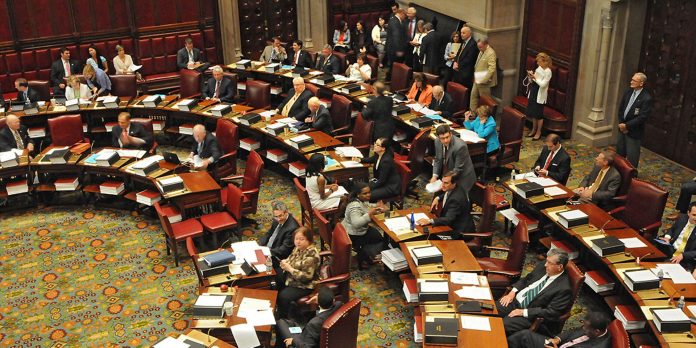
New York lawmakers have passed a sweeping bill aimed at holding artificial intelligence giants like OpenAI, Google, and Anthropic accountable for the safety of their most advanced models — even as Washington moves to penalize states for attempting to regulate AI.

The Responsible Artificial Intelligence Systems and Evaluation (RAISE) Act, now awaiting Governor Kathy Hochul’s signature, would require AI companies operating in New York to publish comprehensive safety and security reports for frontier models, disclose any incidents of dangerous behavior or breaches, and comply with legally binding transparency standards or face fines of up to $30 million.

The RAISE Act represents a significant milestone in the growing push for AI safety, a cause long championed by renowned researchers such as Geoffrey Hinton and Yoshua Bengio. For them and other experts, the threat posed by unregulated frontier AI models is no longer theoretical.

The Act specifically targets models trained with more than $100 million in computing resources and deployed to residents of New York. It is designed to prevent worst-case scenarios, including mass casualty events or economic damages exceeding $1 billion — risks that safety researchers say are becoming increasingly probable with the scale and capabilities of modern AI systems.

But New York’s bold move arrives at a politically fraught moment. At the federal level, Republican lawmakers have inserted a controversial clause into a broader spending bill, which seeks to impose a 10-year ban on state-level AI regulation. In its revised form, the provision now ties federal broadband funding to compliance with this moratorium. If passed, states like New York that enact AI safety laws would lose access to key broadband infrastructure grants, including allocations from the Biden administration’s $42 billion Broadband Equity, Access, and Deployment (BEAD) program.

This means that by pushing ahead with the RAISE Act, New York risks being denied federal broadband funding for the next decade — a high-stakes gamble in a state where internet access remains unequal across rural and urban areas.

However, lawmakers say the risk is worth it. Senator Andrew Gounardes, who co-sponsored the RAISE Act, said he deliberately designed the bill to avoid stifling innovation among startups or academic researchers — a key criticism that tanked California’s similar SB 1047 proposal. The RAISE Act does not require AI developers to build in kill-switches or impose liability for downstream harms — measures critics say would have been overly burdensome and legally ambiguous.

Gounardes argued the window to establish guardrails is closing fast, given the pace of innovation. He pointed to alarming warnings from insiders who have helped build the technology.

“The window to put in place guardrails is rapidly shrinking given how fast this technology is evolving,” said Gounardes. “The people that know [AI] the best say that these risks are incredibly likely […] That’s alarming.”

Assemblymember Alex Bores, who co-sponsored the bill in the State Assembly, acknowledged resistance from Silicon Valley, particularly from investors like Andreessen Horowitz and tech incubators like Y Combinator. But he said their opposition mirrors the same backlash seen in California — and predicted that the economic clout of New York, the third-largest economy in the U.S., would ultimately prevent companies from pulling their models from the state.

“I don’t want to underestimate the political pettiness that might happen,” Bores said, “but I am very confident that there is no economic reason for AI companies to not make their models available in New York.”

Jack Clark, co-founder of Anthropic, said the company has not taken an official position on the bill. However, he expressed concern that the Act, as currently written, could impose constraints on smaller developers — a view Gounardes dismissed, saying the bill is carefully tailored to target only the world’s most resource-intensive AI systems.

The New York law’s passage also comes amid a growing regulatory vacuum in the federal oversight of artificial intelligence. Despite multiple hearings in Congress and high-profile appearances by executives like Sam Altman calling for regulation, no comprehensive national AI framework has yet been enacted. In the absence of federal leadership, states have stepped in — proposing and passing various forms of AI legislation touching on everything from algorithmic bias to consumer data protections.

However, Washington appears to be moving to shut down those efforts. The modified moratorium provision, now tied to broadband funding, represents an aggressive bid to centralize AI regulation at the federal level. Many believe it’s a dangerous overreach that will likely result in the prioritization of corporate interests and innovation speed over public safety.

The RAISE Act, if signed into law by Hochul, would become the first in the nation to establish mandatory safety protocols for frontier AI systems. Defying federal threat means New York is ready to forgo federal funding for broadband for the Act, which is expected to shape the power balance between states and Washington in defining how AI should be governed in the United States.

However, critics have expressed concern that the Act is capable of spooking AI companies from New York.

“The NY RAISE Act is yet another stupid, stupid state level AI bill that will only hurt the US at a time when our adversaries are racing ahead,” said Andreessen Horowitz general partner Anjney Midha in a Friday post on X. Andreessen Horowitz and startup incubator Y Combinator were some of the fiercest opponents to SB 1047.

But Assemblymember Bores told TechCrunch that he is “very confident that there is no economic reason for [AI companies] to not make their models available in New York,” although he does not want to underestimate the political pettiness that might happen,

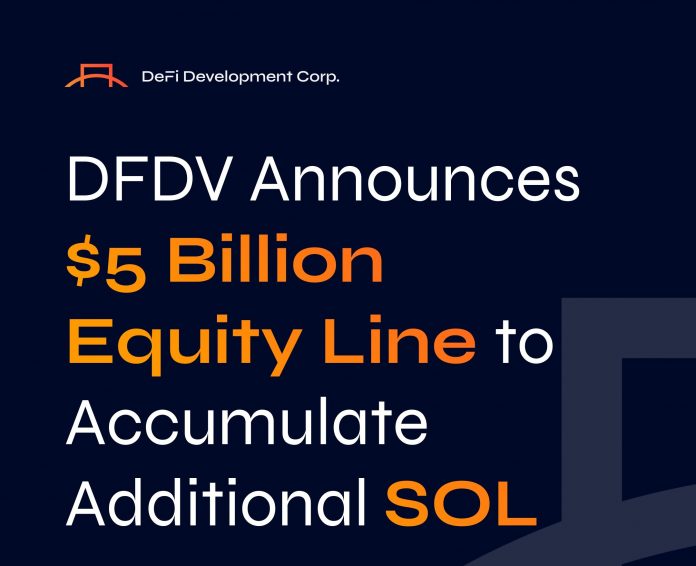
DFDV’s $5B Equity Line of Credit (ELOC) Is A High-Stake Bet on Solana

0

DeFi Development Corp. (NASDAQ: DFDV), formerly Janover, has secured a $5 billion equity line of credit (ELOC) with RK Capital Management to bolster its Solana (SOL) treasury strategy. This move allows the company to issue and sell up to $5 billion in common stock over time, providing flexibility to raise capital strategically and avoid dilution from fixed-price offerings. The proceeds will primarily fund the accumulation of Solana tokens, aiming to increase the company’s SOL per Share (SPS) metric, which ties shareholder value to its Solana holdings.

As of May 31, 2025, DFDV held 621,313 SOL, valued at approximately $97-$107 million, making it the largest public holder of Solana. The company also operates validator nodes, generating staking yields that are reinvested into its SOL treasury, enhancing its role in the Solana ecosystem. This follows a pivot in April 2025, led by former Kraken executives, shifting from real estate tech to a crypto-focused treasury model.

The $5 billion ELOC replaces a previously paused $1 billion filing delayed by SEC reviews, signaling DFDV’s aggressive commitment to Solana. Despite a 10% SOL price drop on June 12, 2025, DFDV’s stock rose 12% that day, reflecting investor optimism. The company also announced a Twitter Spaces event on June 16, 2025, at 1:00 PM ET to discuss its strategy, S-1 filings, and validator economics. However, challenges include Solana’s volatility, regulatory scrutiny, and execution risks.

The $5 billion equity line of credit (ELOC) enables DeFI Development Corp. (DFDV) to significantly expand its Solana (SOL) holdings, already the largest among public companies at 621,313 SOL as of May 31, 2025. This could increase SOL per Share (SPS), aligning shareholder value with Solana’s performance. By operating validator nodes and reinvesting staking yields, DFDV strengthens Solana’s network security and decentralization, potentially boosting SOL’s long-term value and adoption.

The ELOC allows DFDV to sell stock opportunistically, minimizing dilution compared to fixed-price offerings and providing resilience against market volatility. A 12% stock price increase on June 12, 2025, despite a 10% SOL price drop, suggests investor optimism about DFDV’s crypto pivot and its ability to execute. The shift from real estate tech to a crypto-focused treasury, led by ex-Kraken executives, positions DFDV as a pioneer in corporate crypto adoption, potentially inspiring other firms.

SOL’s price swings (e.g., 10% drop on June 12, 2025) expose DFDV’s treasury to significant valuation fluctuations, impacting SPS and investor sentiment. The SEC’s ongoing review of DFDV’s earlier $1B ELOC filing highlights potential scrutiny of crypto-focused public companies, which could delay or restrict future capital raises. Managing a $5B ELOC and scaling validator operations require operational expertise. Missteps could erode investor trust or strain resources.

While flexible, issuing $5B in stock over time could still dilute existing shareholders, especially if SOL underperforms or market conditions worsen. DFDV’s valuation is increasingly tied to Solana’s success, making it vulnerable to broader crypto market downturns or Solana-specific issues like network outages. Enthusiastic about DFDV’s Solana bet, they see it as a bold move to capitalize on DeFi and Web3 growth. The 12% stock rally on June 12, 2025, reflects their support, viewing SPS as a novel value metric.

Skeptical of crypto’s volatility and regulatory risks, they may view the pivot as speculative, preferring diversified or tangible assets. Some may sell off shares, fearing dilution or SOL price crashes. DFDV’s validator role and treasury strategy are bullish for Solana, enhancing network stability and corporate adoption. Solana developers and holders likely welcome the move.

Ethereum, Cardano, or other Layer-1 advocates may see DFDV’s exclusive Solana focus as a missed opportunity to diversify, potentially intensifying tribalism in the crypto space. The SEC’s scrutiny of DFDV’s prior ELOC filing suggests caution, viewing large-scale crypto treasuries as potential risks to public markets. This could lead to tighter rules, creating friction. DFDV’s strategy is a test case for corporate crypto adoption. Innovators hope it sets a precedent, but regulatory pushback could chill similar initiatives.

Drawn to DFDV’s stock volatility and SOL price movements, they may amplify price swings through trading, as seen in the June 12 rally. Focused on DFDV’s ability to grow SPS and validator yields, they prioritize execution over short-term market noise but face risks from prolonged SOL downturns. DFDV’s planned Twitter Spaces on June 16, 2025, could clarify its strategy, addressing concerns from traditional investors and regulators.

Hedging SOL exposure or diversifying crypto holdings could balance volatility, appealing to cautious stakeholders. Explaining SPS and validator economics to non-crypto investors may reduce skepticism and align expectations. Proactively working with the SEC could mitigate delays and set a model for compliant crypto treasuries.

DFDV’s $5B ELOC is a high-stakes bet on Solana, with potential to reshape corporate crypto strategies but also significant risks. The divide among investors, ecosystems, and regulators underscores the tension between innovation and stability in integrating crypto into public markets. Execution and communication will determine whether DFDV bridges this gap or deepens it.

Vietnam Joins BRICS as Partner Country Despite Risk of U.S. Blowback Amid Rising Tariff Tensions

0

Vietnam has officially joined BRICS as a “partner country,” the tenth nation to gain this designation under the bloc’s newly expanded cooperation framework.

The move, announced Friday by Brazil, which holds BRICS’ rotating presidency in 2025, is part of a broader strategy to bring emerging economies closer to the bloc’s vision of global reform and multipolar governance. But it also places Vietnam in a politically delicate position, as the United States signals tougher policies toward countries seeking alternatives to the U.S.-led economic order.

In its announcement, Brazil cited Vietnam’s dynamic economy and nearly 100 million-strong population as key factors behind the country’s admission. The government in Brasília praised Hanoi’s commitment to South-South cooperation, and sustainable development, and calls for a more inclusive international system — themes that have become central to BRICS’ identity as a counterbalance to Western institutions.

“Vietnam stands out as a significant player in Asia,” the Brazilian government said in its official statement. “The country shares with BRICS members and partners a commitment to a more inclusive and representative international order.”

The “partner country” designation allows Vietnam to participate in selected BRICS meetings and initiatives, including potential collaboration with institutions like the New Development Bank (NDB). The status was introduced during the 2024 BRICS summit in Kazan, Russia, as a way to bring more nations into the BRICS fold without granting full membership — a move that has dramatically expanded the bloc’s diplomatic reach.

Although Hanoi has not issued a formal response to the announcement, its recent foreign policy actions point to growing interest in the BRICS agenda. Prime Minister Pham Minh Chinh attended the expanded BRICS+ summit in Kazan last October, and Vietnamese delegations participated in a June 2024 working-level meeting in Nizhny Novgorod, which focused on strengthening cooperation among developing countries.

Internally, Vietnam has also stepped up talks with the New Development Bank, which lists the country as a “partner and potential aspirant” for development financing. Unlike the World Bank or IMF, the NDB is known for lending without imposing strict political or macroeconomic conditions — a feature increasingly attractive to emerging economies.

But as Hanoi moves closer to BRICS, it risks running afoul of Washington’s increasingly confrontational stance toward the bloc. President Donald Trump has repeatedly accused BRICS of trying to undermine U.S. global influence and the central role of the dollar in international trade.

In recent months, he has warned that the United States would impose sanctions on any country that joins BRICS with the intention of bypassing the dollar system — a warning widely interpreted as directed at countries like Iran and Russia, but which could also implicate newcomers like Vietnam if they deepen economic integration within the group.

The timing of Vietnam’s admission is particularly sensitive. Trump has revived a wave of trade protectionism, threatening to impose steep tariffs on Asian economies — including Vietnam — that he claims are benefitting unfairly from U.S. market access while strengthening ties with America’s geopolitical rivals.

In 2024, the Trump administration placed Vietnam on a watchlist for currency manipulation and began reviewing its eligibility for certain trade preferences. The country has also come under scrutiny for its growing trade surplus with the United States, a factor that has made it a target of past tariff actions.

Officials in Hanoi have sought to walk a diplomatic tightrope, deepening ties with BRICS members while simultaneously maintaining strong relations with the U.S. and European Union. Vietnam has long embraced a policy of non-alignment, avoiding formal alliances and seeking to balance its relations across competing global powers. Yet its engagement with BRICS, especially in areas involving the New Development Bank or potential de-dollarization initiatives, may test that balancing act.

Vietnam’s entry into the BRICS ecosystem helps the bloc in expanding both its scope and influence. Since 2024, BRICS has admitted Egypt, Ethiopia, Indonesia, Iran, Saudi Arabia, and the United Arab Emirates as full members, and created the “partner country” category to accommodate others like Belarus, Nigeria, Kazakhstan, and now Vietnam. These moves are part of a broader push to build a multipolar world order — one less dependent on Western financial institutions and political norms.

Vietnam, for its part, has echoed many of the bloc’s themes at global forums. It has repeatedly called for more equitable development financing, greater access to climate technology, and a fairer global trading system — positions that closely align with BRICS’ stated goals.

The country’s deepening bilateral ties with key BRICS members underscore this trajectory. In 2024, Vietnam upgraded its relationship with the United Arab Emirates to a comprehensive partnership. It also hosted Ethiopian Prime Minister Abiy Ahmed for a state visit in April and has initiated trade and investment dialogues with both Iran and Egypt.

Though full BRICS membership would require unanimous approval by all existing members, a high bar that ensures no rapid expansion, the partner country status gives Vietnam a platform to gradually integrate into the group’s decision-making processes.

However, the extent of that integration may soon be constrained by the geopolitical cost of doing so. As the Trump administration becomes more assertive in its challenge to BRICS and threatens punitive action against nations seen as drifting away from Washington’s orbit, Vietnam’s leadership will have to carefully weigh its next moves.

In the short term, Hanoi may focus on technical cooperation with BRICS institutions and avoid controversial policy positions that could invite direct U.S. retaliation.

Hold the Hype, Dogecoin (DOGE): This Token Has a Clearer Shot at 12050% ROI in 2025

0

Despite remaining a cultural icon in the crypto world, Dogecoin (DOGE) is set to be overshadowed by utility-driven tokens in 2025. Rexas Finance (RXS), a platform dedicated to tokenizing real-world assets, appears to be a serious contender. Unlike meme coins, Rexas provides DeFi, AI, real estate, and token creation tools.  Rexas has almost completely sold out its presale allocation, raising an astounding $49 million, and is selling at $0.20 with a projected launch price of $0.25. This puts Rexas on track to increase its ROI by up to 12,050%. As Rexas nears the final presale phase, it appears to outperform its competitors this year in terms of sheer utility and growth adoption, rather than hype.

Why Dogecoin May Struggle to Outperform in a Utility-Driven Market

Once driven by memes and celebrity endorsements, Dogecoin (DOGE) struggles to establish a long-term investment rationale in a utility-based world. Unlike some other altcoins, it still enjoys name recognition; however, the absence of real-world applications is detrimental to its future growth. In 2025, the market is shifting towards more purposeful projects, such as Rexas Finance (RXS), which provide functional applications for DeFi, real estate, AI, and even tokenization.  DOGE’s excessive reliance on social hype for value appreciation has become an albatross around its neck as the market shifts focus from a hopeful narrative toward tangible utility. Integrated utility and steadfast adoption make Rexas poised to deliver sustainable returns, indicating a transition from meme-driven markets to value-driven blockchain ecosystems.

Rexas Finance (RXS): From Presale Underdog to Potential 100x Performer

The spotlight may be on meme coins, but Rexas Finance is proving to be a serious contender with its robust roadmap and quick-selling presales. It is currently priced at $0.20, which is proving to be far more than speculation, as RXS is showing significantly greater promise. The finance sector Rexas caters to for its users includes launching real-life assets on the market, co-investing in property, earning from decentralized finance protocols, and developing NFTs powered through artificial intelligence. The ecosystem is supported by multiple income streams and is designed for longevity, making it attractive to long-term holders and developers. Its current presale is in its 12th and final stage, with more than 93% of tokens sold and $49,355,699 already raised. With the launch date scheduled for June 19, 2025, excitement is building around the potential for a major post-launch rally.  Investors are already projecting a 100x to 120x return as the token transitions from presale to active trading, particularly as real-world adoption of its tools accelerates. This level of projected growth dwarfs most expectations for DOGE, especially in a market that now rewards utility over virality.

Mass Adoption Is Fueling the Next Generation of Blockchain Leaders

Rexas Finance Capitalize allows non-technical users to tokenize assets, generate passive income through staking, and even invest in fractional property ownership. This broad appeal makes it one of the few blockchain platforms with built-in mainstream utility. Rexas is constructing an economy that resembles conventional finance but employs decentralized systems for enhanced efficiency by integrating real-world applications and blockchain technology. This approach differs enormously from meme coins, which often have scant blueprints and shallow applications.

RXS Could Be the Breakout Token of 2025—Not DOGE

Although Dogecoin still retains entertainment value and a loyal following, the 2025 market outlook appears to be significantly more competitive than in previous years. Investors now expect more than name recognition; they demand functional ecosystems, real-world applications, and sustainable growth models. Rexas Finance appears to meet all of these requirements and more. The rapid sale of presales indicates that the market is beginning to shift its focus from speculative coins to real projects that provide infrastructure-grade value. The 12,050% ROI projections for RXS aren’t just speculative—they’re grounded in math, momentum, and a robust ecosystem. Rexas is poised for a major leap in value following its official launch, with a low presale price, a clear roadmap, and diverse platform features. As Ethereum competitors and real-asset tokenization platforms gain prominence, Rexas is stepping into a leadership position that few meme coins can hope to replicate. It represents a convergence of DeFi, AI, and real estate—all wrapped into a single blockchain-powered experience. That’s the kind of token that can genuinely outperform in a market defined by utility, rather than virality.

Conclusion: Don’t Let Meme Hype Blind You to Real Opportunity

Dogecoin possesses some sociocultural significance, but Rexas Finance will provide greater utility and a superior return on investment potential in 2025. RXS, aimed at redefining blockchain investing—where fundamental value, not empty promises, fuels sustained growth—has a $0.20 presale price and an allocation that is almost entirely sold out before the June 19 launch.


For more information about Rexas Finance (RXS) visit the links below:

Website: https://rexas.com

Win $1 Million Giveaway: https://bit.ly/Rexas1M

Whitepaper: https://rexas.com/rexas-whitepaper.pdf

Twitter/X: https://x.com/rexasfinance

Telegram: https://t.me/rexasfinance