DD
MM
YYYY

PAGES

DD
MM
YYYY

spot_img

PAGES

Home Blog Page 1149

OpenAI Unveils Codex: A Multi-Tasking AI Coding Agent to Assist Developers With Software Engineering Tasks

0

OpenAI has launched a research preview of Codex, an advanced AI coding tool designed to assist developers with various software engineering tasks. The launch signals OpenAI’s deeper push into the competitive AI coding space, currently dominated by players like Amazon, Anthropic, and Google.

Trained with reinforcement learning on real-world coding tasks, the tool generates human-like code, adheres to instructions, and iteratively runs tests to ensure accuracy. Operating in cloud-based sandbox environments preloaded with a user’s repository, Codex supports parallel task execution.

Announcing the launch of the coding tool, OpenAI wrote,

“Today we’re launching a research preview of Codex: a cloud-based software engineering agent that can work on many tasks in parallel. Codex can perform tasks for you such as writing features, answering questions about your codebase, fixing bugs, and proposing pull requests for review; each task runs in its own cloud sandbox environment, preloaded with your repository.”

Codex is powered by codex-1, a version of OpenAI o3 optimized for software engineering. It was trained using reinforcement learning on real-world coding tasks in a variety of environments to generate code that closely mirrors human style and PR preferences, adheres precisely to instructions, and can iteratively run tests until it receives a passing result.

Codex can read and edit files, as well as run commands including test harnesses, linters, and type checkers. Task completion typically takes between 1 and 30 minutes, depending on complexity, and users can monitor Codex’s progress in real time. Once Codex completes a task, it commits its changes in its environment. Also, it provides verifiable evidence of its actions through citations of terminal logs and test outputs, allowing users to trace each step taken during task completion.

Lauding the tool, OpenAI CEO Sam Altman said, “it is amazing and exciting how much software one person is going to be able to create with tools like this. “you can just do things” is one of my favorite memes; i didn’t think it would apply to AI itself, and its users, in such an important way so soon”.

Codex is being gradually rolled out to ChatGPT Pro, Team, and Enterprise users, with availability for Plus and Edu users expected soon. Within OpenAI itself, engineering teams have already incorporated Codex into their daily workflows. It is particularly effective for offloading repetitive or well-defined tasks such as refactoring, renaming, test-writing, and bug fixing. The tool also assists in scaffolding new features, drafting documentation, and managing day-to-day development chores like triaging on-call issues and planning tasks.

By reducing the cognitive load of context-switching and surfacing overlooked to-dos, Codex allows developers to stay focused on more meaningful work. The AI acts as a collaborative partner, enabling engineers to ship code faster and more efficiently.

OpenAI envisions a future in which developers take ownership of high-priority tasks while delegating routine or time-consuming work to AI agents like Codex. To support this shift, the company is building a suite of Codex tools that accommodate both real-time collaboration and asynchronous task delegation.

OpenAI believes that while tools like Codex CLI have made real-time AI-assisted coding the industry standard, the multi-agent, asynchronous workflow introduced through Codex in ChatGPT will soon become the dominant method of producing high-quality software.

Looking ahead, OpenAI plans to introduce more interactive agent workflows that will allow developers to provide guidance mid-task, collaborate on implementation strategies, and receive real-time progress updates—bridging the gap between live coding assistance and autonomous task management.

Shiba Inu (SHIB) 2025 Bull Run Dreams Drift Further Away, But This SHIB Competitor Is Still Set for 15639% ROI

0

The Shiba Inu (SHIB) project lost significant momentum after its initial popularity but now faces even greater challenges to realize its anticipated 2025 bull run as the token continues to struggle for its previous success. Rexas Finance (RXS) stands as a new industry challenger offering investors the potential for a 15,639% return on investment while drawing attention from those searching for the next major crypto opportunity. The struggling SHIB price alongside declining community interest creates an opportunity for RXS to become a utility-focused dominant force by digitally transforming the way global stakeholders can access and trade real-world assets.

RXS: Redefining Asset Ownership and Utility

The Real World Asset (RWA) sector leader Rexas Finance (RXS) introduces blockchain technology to real-world applications while offering tangible assets to the market. The real-world assets tokenization focus of RXS creates a connection between traditional finance systems and decentralized environments that allows everyday investors to access the multi-trillion-dollar global asset market. Users can now conduct transactions involving real estate and commodities and financial instruments on this platform through an innovative system which provides cost-effective and transparent service. Users can access various token standards through RXS platform since it supports ERC-20, ERC-721 and ERC-1155 which enables users to engage with different asset classes.

Rexas Finance Utilities: Beyond the Meme Coin Hype

Rexas Finance differentiates itself from meme coins by creating an extensive practical ecosystem that provides functionalities superior to basic price speculation methods. The platform gives users access to the Rexas Token Builder and Rexas Launchpad tools along with other instruments that enable users and projects to build tokens and run fundraising initiatives easily. The platform’s useful features both promote innovation across the RXS system and draw diverse developers who want to utilize blockchain solutions for practical applications. The RXS platform establishes itself as the preferred solution for tokenized asset management through its institutional-grade security together with multiple blockchain connectors and regulatory compliance features.

Presale Momentum and Imminent Exchange Listing

The current stage of Rexas Finance presale is Stage 12 where each RXS token sells for $0.20. The presale has reached impressive success by completing 92.24% of its goals while raising $48,239,379 from a $56,000,000 target and selling 461,194,606 out of 500,000,000 available RXS tokens. The substantial market response represents increasing investor trust in RXS’s market-changing approach to traditional asset markets. The RXS team has created great anticipation among investors as they plan to list on exchanges at $0.25 on June 19, 2025. Public trading debut following the presale period will create substantial price movements that strengthens RXS’s position as the top crypto performer of 2025.

RXS: A 15,639% ROI Powerhouse

A 15,639% Return on Investment stands as more than a capture-attention headline because it represents the complete transformation power which RXS offers to crypto markets. The declining prospects of Shiba Inu combined with its fading dream of more price surges make RXS emerge as a leadership force in innovation and profitability. Early adopters of RXS can expect life-changing returns because its real-world tokenization capabilities merge with extensive utilities and its successful presale which positions the platform as a competitive strong force in the market. RXS is a project with genuine value and longevity as it already meets leading standards through listings on CoinMarketCap and CoinGecko and has undergone the security audit by Certik.

The Future of Asset Tokenization Belongs to RXS

Rexas Finance along with other projects are driving the crypto market toward utility-driven solutions combined with increased transparency and real-world benefits for investors beyond mere hype. The projected 15,639% ROI for RXS represents both the project’s strong development potential and a wider trend shift within crypto asset investments. The RXS presale remains in its last stages where completion exceeds 92% while an upcoming major exchange listing positions the project to become the digital asset investment leader of its time. Rexas Finance provides a dependable solution for individuals who want to shift away from meme coin risks and establish ownership in the emerging asset market.


Website: https://rexas.com

Whitepaper: https://rexas.com/rexas-whitepaper.pdf

Twitter/X: https://x.com/rexasfinance

Telegram: https://t.me/rexasfinance

Anthropic Secures $2.5bn Credit Line to Fuel AI Expansion, as Revenue Doubles and Big Tech Bets Deepen

0

Anthropic, one of the fastest-growing artificial intelligence firms and a chief rival to OpenAI, has secured a $2.5 billion revolving credit facility to strengthen its liquidity and reinforce its position in an increasingly capital-intensive AI race.

The deal, spread over five years, is backed by a consortium of global banking heavyweights, including Morgan Stanley, Barclays, Citibank, Goldman Sachs, JPMorgan, Royal Bank of Canada, and Japan’s Mitsubishi UFJ Financial Group.

The new credit facility, announced earlier this week, comes as the generative AI market surges toward a projected $1 trillion in revenue over the next decade. With AI agents, multimodal models, and infrastructure costs ballooning, firms like Anthropic are drawing from both private equity and now corporate credit to accelerate scaling and product development.

“This revolving credit facility provides Anthropic significant flexibility to support our continued exponential growth,” said Krishna Rao, the company’s Chief Financial Officer. “The backing of these global financial institutions is a testament to the strength of our business and the resonance of our mission.”

The infusion of capital comes as Anthropic rides a wave of rapid growth. The company confirmed that its annualized revenue has reached $2 billion as of Q1 2025, double its revenue from the prior period. According to Revenue Chief Kate Jensen, the number of enterprise clients spending more than $100,000 annually has surged eightfold compared to the same time last year. This signals not only the widening adoption of its Claude AI models but also deepening customer reliance.

Anthropic’s flagship chatbot, Claude, launched in March 2023 and is now in its third iteration, Claude 3. The model family, named after Claude Shannon, the father of information theory, has quickly carved out a competitive space in the AI sector dominated by OpenAI’s ChatGPT and Google DeepMind’s Gemini.

The company’s March 2025 funding round pegged its valuation at a staggering $61.5 billion, making it one of the most highly valued AI startups in the world. This latest move to shore up liquidity through credit rather than equity reflects a growing trend in AI where capital needs are outpacing conventional venture funding. It also gives Anthropic financial agility without diluting ownership.

The decision closely mirrors OpenAI’s own financial maneuvering. In October 2024, OpenAI secured a $4 billion revolving credit line, which increased its liquidity pool to over $10 billion. Backers for that facility included JPMorgan, Citi, Goldman Sachs, Morgan Stanley, Santander, Wells Fargo, SMBC, UBS, and HSBC. OpenAI’s base facility came with an option to expand by another $2 billion — a signal of the kind of war chest necessary to remain relevant in an escalating AI arms race.

Big Tech’s Deepening Bets on Anthropic

Anthropic’s credibility isn’t just with the banking sector. It has also attracted major backing from tech giants Amazon and Google, both of whom have a vested interest in shaping the AI ecosystem and embedding next-generation language models into their platforms.

Amazon has committed up to $8 billion in investment to Anthropic, while Google has poured in another $2 billion. These investments underline more than just financial support; they represent strategic alliances. Amazon aims to integrate Claude into its AWS cloud infrastructure to compete with Microsoft Azure’s partnership with OpenAI, while Google’s stake gives it proximity to one of the few viable alternatives to OpenAI’s dominance.

These partnerships also insulate Anthropic from relying entirely on consumer-facing models by embedding it into cloud and enterprise ecosystems. As cloud providers race to become the default platforms for AI deployment, the alignment with AWS and Google Cloud gives Anthropic powerful channels for scaling distribution and enterprise integration.

The broader generative AI market is becoming more aggressive, with dozens of firms announcing new product launches and strategic moves. From Perplexity’s real-time search interface to Meta’s open-source Llama models and Mistral’s European surge, the AI space is no longer a two-horse race.

Anthropic’s focus on alignment and safety — famously promoting “constitutional AI” to train its models with embedded ethics — has helped position it uniquely, especially among enterprise clients concerned about regulatory risk and data compliance.

However, the infrastructure costs remain daunting. Training next-generation models requires massive GPU clusters, custom chips, data center expansion, and engineering talent — all of which come at extraordinary expense. That’s why the credit line is being seen not merely as a cushion, but as a crucial tool to maintain momentum.

Register for Next Tekedia Mini-MBA and Solve Equations of Market

0

Registration for the next Tekedia Mini-MBA is ongoing. Join us to solve the Equations of Market.

Innovation =: invention + commercialization

Great Company =: Awesome Products + Superior Execution

Products =: Integrate(factors of production) d(people, processes & tools)

Differentiate(great products)/d(time) = Good Life

Scaling Momentum = Company Size x Growth Rate

At Tekedia Institute, we solve the equations of market, helping organizations professionals master the mechanics of market. Register here https://school.tekedia.com/course/mmba17/ and let us co-learn, from June 9

U.S. State Department Accused of Pressuring Gambia to Approve Elon Musk’s Starlink as South African Push Sparks Diplomatic Tensions

0

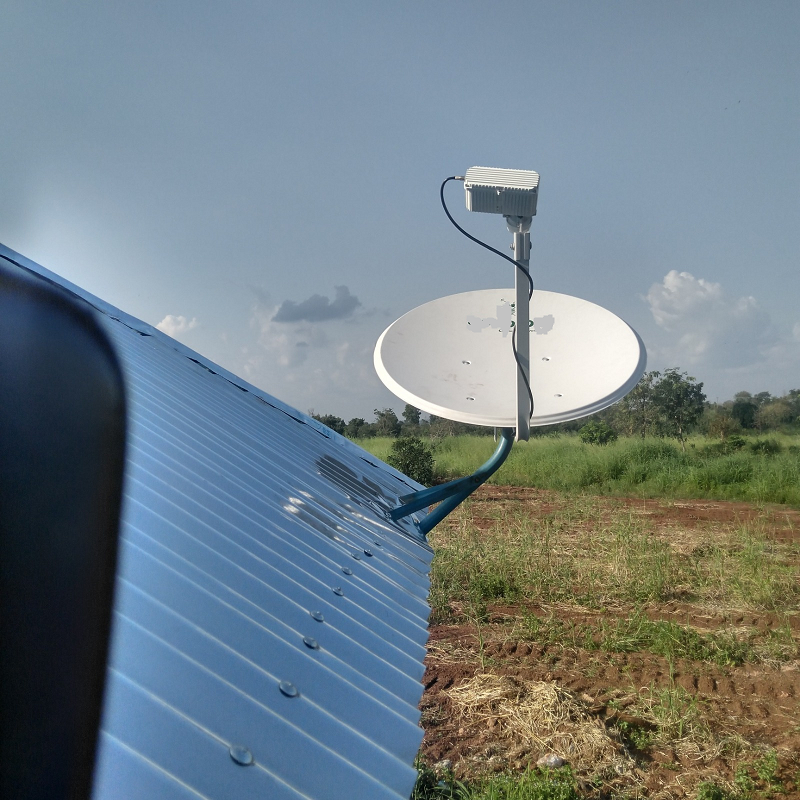
The United States State Department has come under severe criticism following a detailed ProPublica investigation that accuses American diplomats of aggressively pressuring the West African country of Gambia to approve a license for Elon Musk’s satellite internet service, Starlink.

The move, seen as part of a broader push by Washington to promote Musk’s interests abroad, has reignited debates over the role of U.S. foreign policy in advancing private business ventures, particularly those tied to political allies of the current administration.

The report, published Thursday, reveals that officials from both the State Department’s headquarters in Washington and the U.S. Embassy in Banjul have been involved in sustained efforts to convince Gambian authorities to greenlight Starlink’s operations. Musk’s SpaceX, which owns Starlink, has been aggressively expanding across Africa, with 15 countries already issuing operating licenses to the company. But Gambia has so far resisted the pressure, and that resistance has not sat well with Washington.

Allegations of Diplomatic Bullying

One of the most striking revelations in the ProPublica report centers on a February meeting between U.S. Ambassador Sharon Cromer and Gambian Minister of Communications and Digital Economy, Lamin Queen Jammeh (referred to in the report as Lamin Jabbi). During the meeting, Cromer reportedly delivered a subtle yet unmistakable warning: Gambia’s cooperation with the U.S., including aid and development support, was connected to its willingness to accommodate Starlink.

Jammeh’s top deputy, Hassan Jallow, told ProPublica that Cromer’s remarks carried a “thinly veiled threat,” linking America’s financial support to Gambia’s position on Starlink. That tactic, said Jallow, was reiterated during a tense March visit to Washington, when Jammeh and Jallow were invited to a meeting arranged by the State Department. Present was Ben MacWilliams, a former U.S. diplomat now spearheading Starlink’s African expansion, who accused the minister of “kneecapping” Gambia’s development by dragging his feet on the licensing process.

After the meeting ended without a commitment, other scheduled discussions with U.S. officials were abruptly canceled. According to Jallow, Starlink later told the minister there was “no more need” for further engagement — a message that raised eyebrows in Banjul. Shortly thereafter, Cromer bypassed the minister entirely, sending an “important request” directly to Gambian President Adama Barrow, urging him to ignore his own communications minister and fast-track Starlink’s approval.

Musk, Trump, and Business

While U.S. officials have publicly defended their actions as part of a legitimate strategy to support American innovation abroad, it is believed that the campaign is less about digital inclusion and more about rewarding Elon Musk, now seen as a close ally of President Donald Trump.

Since Trump’s return to the White House, diplomatic efforts to promote Starlink have intensified significantly. The company’s rapid licensing gains across Africa are being viewed in some quarters as a deliberate policy shift — one that places Musk’s commercial success at the heart of U.S. diplomacy in the Global South.

Adding to the intrigue is Musk’s recent appearance alongside Trump at an investor summit in Saudi Arabia. There, the two men jointly announced that the Gulf nation had approved Starlink’s operations. In a panel that veered more into corporate promotion than statesmanship, Trump and Musk touted the billionaire’s full suite of ventures — from Tesla to SpaceX to X — signaling the depth of their political and commercial partnership.

Fallout from South Africa’s Starlink Ban

One of the key drivers of Washington’s push appears to be a desire to counterbalance the decision by South Africa, Musk’s birth country, to reject Starlink’s application for a license. South African regulators have so far denied Musk’s company permission to operate, citing local equity rules that require foreign telecom firms to partner with Black-owned South African businesses to qualify for licensing. Starlink refused to comply.

That regulatory standoff has deepened a broader diplomatic rift between South Africa and the United States, particularly since Trump’s reelection. South Africa’s recent posture — from opposing U.S. positions at the United Nations to accusing Washington of attempting to destabilize its institutions — has been read by many analysts as a response to the perceived arrogance of American diplomacy and Musk’s rising political clout.

For critics, the State Department’s aggressive Starlink diplomacy in smaller, more aid-dependent nations like Gambia is part of a calculated strategy to build influence where resistance is weaker. Gambia, with fewer regulatory hurdles and heavy reliance on Western donor funding, presents a more pliable target.

Political Payback and the Tesla Backlash

The current controversy is also unfolding against a backdrop of economic turbulence for Musk. Following Trump’s reelection and Musk’s increasingly visible political alignment with the far right, including posts mocking liberals and minorities on X, Tesla has suffered significant reputational damage. Several surveys show consumer sentiment turning against the automaker, particularly among progressives and environmentally conscious buyers who once made up Tesla’s core customer base.

Tesla sales in the U.S. and Europe have slowed sharply since late 2024, with analysts noting that Musk’s growing politicization of his companies has begun to erode brand loyalty. Many observers believe that the Biden-era tension with Musk has given way under Trump to full-blown political favoritism — and that U.S. agencies are now being deployed to help Musk recover commercially.

A spokesperson for the State Department issued a brief statement in response to the ProPublica investigation, defending the agency’s efforts.

“Starlink is an America-made product that has been a game changer in helping remote areas around the world gain internet connectivity,” the statement read. “Any patriotic American should want to see an American company’s success on the global stage, especially over compromised Chinese competitors.”