MultiChoice group has reported a steep decline in its subscriber base and profits for the financial year ended March 31, 2025, citing economic headwinds, fierce streaming competition, and strategic investments in its video-on-demand service, Showmax.
According to its financial results released on Wednesday, active subscribers dropped by 1.2 million to 14.4 million, an 8% year-on-year decrease, with the loss evenly split between South Africa and the Rest of Africa. This marks a cumulative loss of 2.8 million subscribers over the past two years, driven largely by weak consumer spending across key African markets.
FY25 saw continued macroeconomic challenges for the group’s Rest of Africa segment. Local currency depreciation against the USD across several markets (most notably Nigeria, Angola, Ghana, and Malawi), caused a 26% weighted average loss in revenues on a reported basis, which in turn resulted in a negative ZAR5.1bn revenue and ZAR3.1bn trading profit impact this year.
Inflation across key markets remained high (around 20% on a weighted average basis, above 30% in Nigeria and Angola) and caused pressure on customer spending. Subscriber activity was further affected by power shortages across Zambia, Zimbabwe, and Malawi, ongoing power and fuel shortages in Nigeria, and civil unrest in Mozambique.
Piracy also remains an ongoing challenge for the group across its footprint. As a result of the above trading conditions, active subscribers declined 7% YoY, with Nigeria accounting for over half of this decline. At year-end, the customer base totaled 7.5m similar to what was reported at the interim stage.
Inflationary pricing of 31% on average was passed across the footprint, which enabled the segment to deliver 3% YoY organic revenue growth. Incorporating the impact of currency weakness resulted in reported revenues reflecting a 23% decline YoY.
Despite the deepening losses, MultiChoice continues to back its ambitious investment in Showmax, having poured $90 million (R1.6 billion) into the platform. Although Showmax reported a $146 million (R2.6 billion) trading loss for FY2024, its subscriber base grew 50% year-on-year, with a 44% increase in active users.
It has been just over a year since the group relaunched Showmax, targeting 44 markets across sub-Saharan Africa with the ambition of becoming the leading streaming platform on the continent. As a start-up business, Showmax focused on enhancing its content line-up, bedding down distribution partnerships, expanding payment channel integrations, and refining its go-to-market strategy.
Although the segment has lagged its initial growth targets, it has still delivered a healthy 44% growth in active paying subscribers and gained market share in the regional streaming market. It remains clear that streaming represents the future of video entertainment. Although the current levels of broadband and SVOD penetration across Africa are not yet at comparable levels to the rest of the world, they suggest
significant long-term upside. However, data pricing would need to evolve further for this market segment to reach its full potential.
To counter losses, MultiChoice intensified its cost-cutting efforts, achieving $208.8 million (R3.7 billion) in savings — nearly double that of the previous year and exceeding projections by over $67 million. However, these savings came at a cost to customer value propositions, further straining its subscriber base.
MultiChoice attributed its declining performance to “unprecedented headwinds,” including macroeconomic instability, currency depreciation across sub-Saharan Africa, piracy, and intense competition from global streaming giants like Netflix.
The group had warned investors about a projected 50% plunge in trading profit for FY2025. It also acknowledged the growing impact of structural changes in the video entertainment industry — notably the rise of piracy, streaming alternatives, and social media.
In recent years, the UK music scene has experienced a renaissance—and at the heart of it is a wave of Afro-diasporic artists rewriting the rules of global sound. The British music industry has witnessed a vibrant fusion of cultures and sounds, with British-Nigerian artists and entrepreneurs playing a pivotal role in shaping its contemporary landscape. From grime to afroswing, these stars are not just making hits; they are shaping culture. Meet the voices behind the movement—Tion Wayne, Libianca, Skepta, Stormzy, NSG, and Jae5—who are turning their heritage into power and their passion into purpose. There are yet other influential figures such as Oluwafisayo Isa, popularly known as Darkoo; Patrick Chukwuemeka Okogwu, known professionally as Tinie (formerly Tinie Tempah); and Chukwudumebi “Dumi” Oburota, a key music entrepreneur and co-founder of the entertainment company Disturbing London. Their journeys exemplify not only personal talent and hard work but also the evolving influence of the Nigerian diaspora in the UK music scene.
Skepta: The Godfather of Grime
Joseph Olaitan Adenuga Jr.—you know him as Skepta—is not just a rapper; he’s a legend. Born in Tottenham on September 19, 1982, to Nigerian parents (Yoruba father, Igbo mother), Skepta is the eldest in a talented family that includes Jme, Julie, and Jason. Together with his brother Jme, he co-founded Boy Better Know in 2005, putting grime on the map. One of his most memorable moments? The iconic Lord of the Mics 2 clash with MC Devilman, etched in grime history. Skepta didn’t just ride the wave—he built it.
“Sweet Mother” is a highlife song by the Cameroonian and Nigerian singer Prince Nico Mbarga and his band Rocafil Jazz. Released in 1976, it remains one of the most popular songs in Africa. As a 2017 BBC Media Report put it, “Prince Nico Mbarga wrote one of the biggest-selling singles in music history – and yet outside the continent of Africa it’s barely recognised, while Prince Nico’s story is shrouded in obscurity.”
Follow the rhythm, embrace the roots. The Afro-diasporic sound is here to stay
Stormzy: The Skengman With a Purpose
Michael Ebenezer Kwadjo Omari Owuo Jr., better known as Stormzy, is more than an artist—he is a movement. Born on July 26, 1993, and of Ghanaian descent, Stormzy emerged from the UK underground with his Wicked Skengman freestyles in 2014. But it was Shut Up that shot him into stardom, turning a YouTube freestyle into a UK chart-topper. Whether he’s headlining Glastonbury or funding scholarships for Black students at Cambridge, Stormzy shows that music and mission can go hand in hand.
NSG: Where Nigeria Meets Ghana and Hackney Meets the World
Hackney’s finest, NSG is the ultimate afroswing squad: six childhood friends with heritage from Nigeria and Ghana, schooling in Islington, and a hustle mentality that won’t quit. Their name? NSG. Take your pick: Never Stop Growing, No Sleep Gang, or Non-Stop Grinding. They live up to all of it. The group—OGD, Kruddz, Mojo, Dope, Papii Abz, and Mxjib—first dropped heat with their 2016 EP Grown Up, before launching their 2020 mixtape Roots, home to bangers like Options (feat. Tion Wayne) and Yo Darlin’. Their 2023 album Area Boyz and 2025’s The Big Six prove NSG is here for longevity, not a moment.
Jae5: The Man Behind the Music
Behind many of these anthems is a sonic architect: Jae5. Born Jonathan Kweku Awote-Mensah on March 27, 1992, this British-Ghanaian producer from Plaistow, East London, has built a legacy beat by beat. A Grammy Award winner and master of genre fusion, Jae5 is signed to Black Butter Records and is responsible for some of the most iconic sounds in the UK afrobeats and grime scenes. He’s the older brother of NSG’s OGD and Kruddz—proving talent really does run in the family.
Tion Wayne: The Edmonton Accountant-Turned-Hitmaker
Born Dennis Junior Odunwo on September 1, 1993, in Edmonton, North London, Tion Wayne was once on the path to becoming an accountant. The son of Yoruba immigrants—a nurse and a computer engineer—he grew up with structure and ambition. But it was music, not spreadsheets, that called his name. Tion started out with a few gritty YouTube videos around 2010, and by 2014 had dropped his first mixtape Wayne’s World. With a steady grind and growing fanbase, he went on to support heavyweights like Rick Ross and Ghanaian icon Sarkodie. His 2016 sequel, Wayne’s World Vol. 2, cemented his reputation in the UK rap scene.
Libianca: The Soulful Voice From Cameroon to The Voice
If you have heard the haunting track People (2022), you have felt the emotion Libianca pours into her music. Born on July 23, 2000, Libianca Kenzonkinboum Fonji is a Cameroonian-American songstress with a heart full of stories. Before the global acclaim, she appeared on Season 21 of The Voice (US) in 2021, where her raw vocals and vulnerability captivated audiences. Her breakout moment came with People, a song that touched millions and confirmed what fans already knew: Libianca is not just another singer—she’s a storyteller.
Darkoo: Rising Star of British-Nigerian Rap and Afrobeats
Oluwafisayo Isa, born in Lagos, Nigeria, on 19 September 2001, and better known by her stage name Darkoo, is an exemplar of the new wave of British-Nigerian artists blending rap, drill, and Afrobeats. Moving to the UK at the age of seven, she was raised in South London and attended St Catherine’s Catholic School for Girls, followed by Christ the King: Emmanuel Sixth Form. Beginning her music career at 15, Darkoo initially embraced drill rap but gradually incorporated melodic singing, enhancing her versatility as an artist.
Her breakout came with the 2019 single “Gangsta,” featuring One Acen, which gained traction on TikTok and climbed to number 22 on the UK Official Singles Chart and topped the UK Afrobeats Chart in 2020. This success established her as a rising star and earned her nominations at the 2020 MOBO Awards for Best Female Act and Best Newcomer. Additionally, she contributed to the remix of “Body” by Russ Millions and Tion Wayne, which reached number one on the charts, further cementing her position in the UK music scene. By 2023, Darkoo was signed under Virgin Music Nigeria, signaling her growing international presence.
Tinie: From South London Roots to Global Stardom
Patrick Chukwuemeka Okogwu, born on 7 November 1988 in London to Igbo Nigerian parents, is a testament to the power of perseverance and creativity. Growing up in the diverse but challenging environment of the Aylesbury Estate, Tinie was inspired by the contrasts around him — from council estates to beautiful suburban houses — fuelling his ambition. His stage name originated at age twelve, inspired by a So Solid Crew music video and a clever use of a thesaurus to soften the aggressive connotation of “Tempah.”
Tinie launched his career with the foundation of Disturbing London in 2006 alongside his cousin Dumi Oburota, an entertainment company that expanded beyond a record label into brand consultancy, artist management, event planning, music publishing, and fashion. Signed to Parlophone since 2009, Tinie has consistently delivered chart-topping hits, becoming a major influence in British rap and grime. His music and entrepreneurial spirit highlight the significant role British-Nigerian artists play in the UK music industry’s global success.
Dumi Oburota: The Architect Behind the Scenes
Chukwudumebi “Dumi” Oburota, a British Nigerian music entrepreneur, embodies the importance of strong leadership and vision in the music business. His parents migrated from Nigeria to the UK in the mid-1970s, prioritizing education and resilience to overcome racial barriers — values he has carried throughout his career. Co-founding Disturbing London with Tinie, Dumi has shaped the careers of major UK artists and expanded the company’s influence across multiple creative industries.
Known as one of the UK’s most successful music entrepreneurs, Oburota balances cultural pride with a forward-thinking business mindset. His open letter during the Black Lives Matter movement highlights his commitment to social justice and the responsibilities of being a role model within the black British community. As a manager and strategist, he plays an essential role in navigating the complexities of the music industry, enabling artists to thrive creatively and commercially.
Conclusion: A New Rhythm for a New Generation
From YouTube uploads to Grammy stages, these Afro-diasporic artists are doing more than making music—they’re crafting identities, bridging continents, and creating the soundtrack of a global generation. Whether it’s in grime’s gritty beats or afroswing’s sunny melodies, one thing’s clear: the future of music is diverse, dynamic, and unapologetically African at its core. The stories of Darkoo, Tinie, and Dumi Oburota showcase the rich tapestry of British-Nigerian influence in the UK music scene. From pioneering new musical styles to building influential entertainment enterprises, their combined contributions underscore the importance of cultural diversity, entrepreneurial spirit, and artistic innovation. They are not only shaping the soundscape of contemporary British music but also inspiring future generations to break barriers and redefine success.
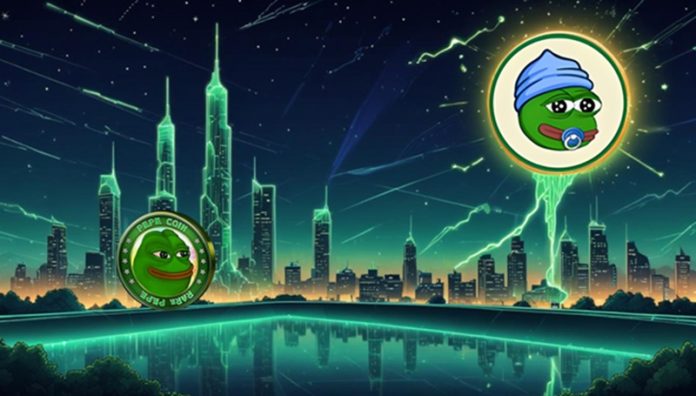
Little Pepe (LILPEPE), a new frog-themed meme coin, officially launched its presale on June 10, 2025, and quickly turned heads in the crypto community. Within the first 24 hours, the project raised over $200,000—and by Day Two, the figure climbed past $262,859, with 262,859,332 tokens sold. Out of the total 100 billion token supply, 26.5% (26.5 billion tokens) is allocated for the presale phase. The token started at a price of $0.001, with the next pricing tier set at $0.002, following a tiered model that increases token price as funding milestones are reached.
With a first-phase fundraising target of $500,000, Little Pepe is steadily moving toward its goal—backed by meme-powered energy, strong community momentum, and real blockchain utility. This approach rewards early adopters and helps ensure a stable price discovery post-launch.
The participants will be able to purchase tokens with Ethereum (ETH), Tether (USDT), or credit and debit cards. Those who use cards should connect an Ethereum-compatible wallet to claim tokens. Payments made in USDT will require users to have ETH to cover the transaction costs.
Little Pepe’s token is tax-free. It has no additional purchase or sales charges. This enables convenient trading and promotes more adoption.
Layer 2 Network and Ecosystem Utility
Little Pepe is built on a Layer 2 blockchain. It is completely compatible with Ethereum Virtual Machine (EVM). The infrastructure ensures fast and low cost transactions. The team has implemented community governance tools. The token holders will be entitled to participate in the voting process of the future upgrades and decisions on the platform. There is also the inclusion of anti-bot measures to ensure fairness. The Little Pepe tokenomics are set to enable the sustainable growth of the project and develop for the future. The 100 billion tokens are reserved for different functions as follows:
30% – long-term development and ecosystem reserves
26.5% – for the current presale
13.5% – staking and community rewards
10% – for liquidity reserves
10% – for decentralized exchange listings and market makers
The project puts emphasis on security and fairness. There are no hidden transaction taxes or limitations, which makes the project transparent for users.
Roadmap and Future Plans
The project roadmap has three phases:
Little Pepe’s roadmap is divided into three main phases: Pregnancy, Birth, and Growth. In the Pregnancy phase, the team focuses on creating excitement, building a strong community, and forming early partnerships. The Birth phase includes the public presale launch, exchange listings like the world’s largest exchange, and a goal to reach a $1 billion market cap. In the Growth phase, the project plans to expand by building decentralized apps, offering staking rewards, and aiming for a top 100 ranking on CoinMarketCap. The roadmap combines fun, meme culture, and real blockchain features to build a strong and useful crypto project.
Conclusion
Little Pepe (LILPEPE) is a meme coin that has real blockchain utility, which offers cheap and fast transactions on its Layer 2 network. With tax-free transactions, solid tokenomics and an ambitious roadmap, LILPEPE stands out as a potential project for early investors who seek growth and become a part of the community-driven innovation in crypto.
For more details about Little PEPE, visit the below link:
Most parts of the world have been pushing to cage Huwaei
As Washington tightens its chokehold on advanced semiconductor exports to China, Nvidia says Huawei is ready to fill the vacuum left by American tech giants.
“Huawei has got China covered,” Nvidia CEO Jensen Huang told CNBC on Thursday, warning that continued U.S. restrictions could unintentionally cement China’s alternative AI ecosystem — one where American influence would be absent.
The statement came just days after Huawei CEO Ren Zhengfei acknowledged that the company’s chip technology still lags behind the United States by a generation, even as Beijing continues to portray Huawei as the nation’s top AI chip contender. Speaking to People’s Daily, Ren said: “The United States has exaggerated Huawei’s achievements. Huawei is not that great. We have to work hard to reach their evaluation.”
Despite that admittance, Huawei’s presence in China’s AI landscape is growing, especially as it develops homegrown alternatives to Nvidia’s high-end GPUs, which have been cut off under U.S. export restrictions. Huang, speaking on the sidelines of the Viva Technology conference in Paris, said the real threat is not Huawei’s current capability — but what the future holds if American firms are shut out of the world’s second-largest economy.
Huang did not mince words when asked about the implications of the U.S. barring chip exports to Chinese firms.
“If the United States doesn’t want to partake, participate in China, Huawei has got China covered — and Huawei has got everybody else covered,” Huang told CNBC. “Our technology is a generation ahead of theirs,” he said but warned that losing access to the Chinese AI developer base would come at a cost the U.S. may not fully comprehend yet.
The Nvidia chief stressed the importance of global developers continuing to build on the U.S. tech stack rather than pivoting to Chinese-built hardware and software alternatives.
“If we want the American technology stack to win around the world, then giving up 50% of the world’s AI researchers is not sensible,” he said. “So long as all the AI developers are in China, I think the China stack is going to win. We have to be mindful of near-term actions that have long-term, unintended consequences.”
U.S.-China Technology Rift Deepens
The growing rift between the U.S. and China in technology is now most visible in the AI and semiconductor sectors. Since 2022, the U.S. has imposed multiple waves of export controls restricting the sale of high-performance chips to Chinese companies. These restrictions have been expanded under President Donald Trump’s return to office.
In addition to limiting chip exports, the White House recently announced plans to “aggressively revoke visas” of Chinese students, especially those in strategic fields like AI and quantum computing. Last month, the U.S. Commerce Department also issued a warning to American firms and institutions against using chips from Chinese firms, singling out Huawei once again.
Beijing has responded by doubling down on its strategy of technological self-reliance. Firms like Huawei, SMIC, and others are receiving heavy state support to accelerate domestic innovation in AI chips and computing hardware. Huawei’s Ascend 910B processor, developed entirely in-house, is now at the center of its push to replace Nvidia in China.
Huang revealed that he continues to engage with the Trump administration to explain the complexities of Nvidia’s technology and the broader AI industry.
“Trump knows what he’s doing. He has a game plan. I trust him, and we’ll support him the best we can,” Huang said, adding that he believes U.S. decisions should factor in the strategic implications for global AI leadership.
However, the challenge is steep. Nvidia dominates the AI chip market globally but has seen its China business shrink significantly under export restrictions. The company has attempted to develop custom chips like the H20, L20, and L2 for China that comply with U.S. export rules, but their performance pales compared to the top-tier A100 and H100 chips.
Europe Emerges as a Parallel Frontier
While China remains a critical concern, Huang also sees a major opportunity in Europe. During his visit to the region this week, he praised the U.K. for its robust AI ecosystem and committed to expanding Nvidia’s presence there.
“Europe is a market all by itself — independent of China and anything else,” he said, singling out France as a country with the potential to “export AI” just as it exports energy.
He added: “Intelligence is the foundational layer of every industry. So it stands to reason that long-term intelligence will be the size of the GDP of each region. And therefore, in total, the EU is going to be a very large market for AI.”
The European Union is ramping up investments in AI research and infrastructure, keen on reducing its dependency on American and Chinese technologies. Member states are launching public-private initiatives to build sovereign cloud infrastructure and expand semiconductor manufacturing capacity.
What’s at Stake?
The global AI arms race is no longer just about computing power — it’s about geopolitical influence. With half of the world’s AI researchers based in China and growing incentives to switch to domestic hardware, Huawei is emerging as the cornerstone of an alternative AI tech stack.
Though Ren Zhengfei downplays Huawei’s capabilities, Jensen Huang’s warning makes it clear that if American firms abandon the Chinese market entirely, Huawei won’t just “have China covered” — it may soon have the rest of the world.
“What do men want?” one of the women asked. “If my husband wants me everyday, I will give him access”, she added. “Why are their eyes always outside?” another quipped.
I was only a boy and not part of their conversation but these words stuck to my subconscious like iron fillings to a magnet. I was a bit worried because I knew that someday I would become a man and why should I leave my beautiful wife at home to chase other women.
And over two decades later, a man, I discovered why some men cheat in Daniel Goleman’s Social Intelligence where he described The Art of Flirting. He wrote:
The Irresistible Power of Flirts on Men
A woman parades past the bar heading for the powder room, tossing her hair and swaying her hips. As she promenades past a man who has caught her interest, she lets her eyes meet his for just a moment, and then, as she sees him starts to return her gaze, she quickly looks away. Her unstated message: Notice me.
A team of neuroscientists in London discovered that when a man receives the direct gaze of a woman he finds attractive, his brain activates a dopamine circuit that delivers a dollop of pleasure…But whether or not men find a given woman appealing, flirting itself pays off: men most frequently approach those women who flirt a lot, rather than the more attractive women who don’t flirt.
Back to the conversation those women were having, another one spoke lifting up her right hand over her head and down pointing to her groin, “What they go looking for in Sokoto is in their Shokoto.” “Ohoo!” They all chorused.
This article is not about cheats and flirts but the preceding story was needful to introduce the concept and purpose of:
What You Are Looking for In Sokoto Is In Your Shokoto
The City of Sokoto is almost a thousand kilometers from the City of Lagos where this saying is popular amongst the Yoruba of South-west Nigeria. But this wisdom resonates with all cultures in the world albeit known with different phrases and, that was exactly what Paulo Coelho discovered in his odyssey as Santiago in his best seller book, The Alchemist. He wrote in the Forward:
A man sets out on a journey, dreaming of a beautiful or magical place, in pursuit of some unknown treasure. At the end of his journey, the man realizes the treasure was with him the entire time. I was following my Personal Legend, and my treasure was my capacity to write.
The same spot Santiago had his recurring dream of a treasure buried far away at the base of the Pyramids of Egypt was actually where the treasure was buried. But because the dream was nebulous, and that is the nature of dreams, he had to pursue it across the Mediterranean and the Sahara Desert.
The distance between Andalusia, his home, and the Pyramids of Egypt was the process that Santiago needed to prepare him to better manage the treasure when he eventually found it. It is the inverse of the literal meaning that we must first look within to discover what’s in our Shokoto and avoid wasting time traveling to Sokoto that is the purpose of my writing.
What Lies at the Other Side of Curiosity
Santiago was oblivious of what lies in-between the space of Andalusia and the Pyramids of Egypt when he decided to pursue his dreams. He traveled many roads and met a Gypsy woman who interpreted his dreams. He met with Melchizedek; the King of Salem that gave him two crystal stones names Urim and Thummim to help him in deciphering unclear omens. He got employed by a crystal merchant for almost a year and earned more than he lost to a thief to continue his journey. He met an Englishman that sought for the Alchemist at the Oasis with three hundred wells and fifty thousand date trees. He met Fatima and fell in love. Then he met the mysterious Alchemist and he became one as he turned himself into the wind. And after a checkered journey that would have ended his life on two occasions, he returned home and found the treasure where he had the dream.
So, the space between Sokoto and Shokoto lies the instructions, lessons, wisdom, knowledge, training, events, places and men that build character and capacity of those who dare to chase their dreams to better handle the manifestation of their destiny. Hence, to discover your treasure immediately, without going through the space between your Sokoto and Shokoto is to invite ill-fortune and misery.