DD
MM
YYYY

PAGES

DD
MM
YYYY

spot_img

PAGES

Home Blog Page 1153

The Mobile Phone Zombies

2

A couple of years ago a colleague came to work panting and looking dirty. We were all curious and concerned. He sat at the gate and after catching his breath, he narrated how he was just robbed of his phone. As he walked to the office feeling good in the cool hour of the morning pressing his phone, he received a surprise kung fu kick on his back sending him prostrate in the air and landing like a bag of cement in the puddle. Immediately his phone touched the ground it was picked by the robbers on motorcycle. The only thing he saw was their back and the regret that it was avoidable.

Whether you are a fan of horror movies or not you should know about zombies. For context, let’s refresh our memories. According to the Oxford Advanced Learner Dictionary, a zombie is a person who seems only partly alive, without any feeling or interest in what’s happening. Another definition says a zombie is someone whose face shows no feeling, understanding or interest in what’s going on around them. And a third says zombies are not able to think. Sincerely, I do not know a more appropriate description for people who have become willing slaves to their mobile phones. This addiction has reached the level of a pandemic and public safety concern. People can no longer take their eyes off their phones as they walk or drive. This piece will not concern itself with content creation and what we do with our phones at home; that is our personal kettle of fish. Whatever is brought to the street or the public where everyone has equal right to walk and congregate must be a concern to all. Let’s look at the first category of zombies.

1. Zombie Pedestrian

Just after dusk one beautiful Sunday I walked an isolated path home. I was reliving the beautiful moments in my head of how Liverpool painted the blue sky over the Etihad red when I noticed a young lady few meters ahead. I could hear the sound of my footsteps and even the cry of the night bats but she had no idea there was someone behind her. She froze with fright when I stepped ahead of her. “Don’t be afraid”, I said. “It’s wrong of you to block your ears with an earpiece and at the same time pressing your phone on the road”, I added. She nodded in agreement. She could have been a perfect victim for criminals.

Another time I saw a child about two years old all by herself in the street. I quickly crossed the road and went to her because she was approaching the main road and there was a manhole in sight. Then I looked around and saw a young woman twenty meters behind the child pressing her phone. “Is this your child?” I asked. “Yes, I am the mother.” She replied. I had to contain my anger to speak mildly but there was fire in my eyes. As I continued my journey I said thank God she is not my wife.

2. Zombie Driver

One rainy Monday morning we were riding in the staff bus to work when suddenly we heard a loud bang accompanied by a forceful vibration. Lo and behold, it was a zombie driver who was pressing his phone and didn’t notice our break lights. His bumper fell off and his bonnet squeezed. This happened in the sight of the Lagos State Traffic Management Authority officers. They helped him pushed his vehicle to the side of the road and radioed the towing van. The zombie driver willingly rode with us to the office because it was obvious to everyone he was at fault for the dent on our rear bumper. This was how he incurred avoidable expenses in three places because instead of focusing on driving, he focused on his phone.

3. Anti-social Zombies

Yes I know zombies are not social but just for emphasis. This category of mobile phone addicts is so conspicuous at social events. They brazenly display their lack of emotional and social intelligence by being fixated on their phones. They don’t give a hoot about the conversation on their table or what’s happening in the environment. Why then did they come out? They are virtually social with distant people and at the same time repulsive to the people around. Your words to them are like a golden ring on the snout of a pig, so, save your words. I recommend you even change tables.

Disadvantages of Being a Mobile Phone Zombie.

1. Personal Risks

I wouldn’t want to mention specific examples here of how some have lost their lives out of respect, they had headphones on while crossing the railway or highway. Didn’t the teacher in Ecclesiastes 3:1-8 says there is a time for everything, and a time for every activity under the heavens? 1. A time to press your phone and a time to refrain from pressing your phone. 2. A time to focus on the road and be alert to your environment and a time for screen time at home or some safe place. 3. A time to converse with your fellow humans by active listening and participation and a time to chat online. What separates man from animals is our superior brain and ability to think and organize ourselves and dominate our environment. Let us not be habitual like animals. This is one flaw of animals that empowers man to tame even the wildest beasts. Our mobile phones should not make us zombies lacking the ability to think and be the master of our fates as it was designed by God in Genesis 1:28

2. Missed Opportunities

Phone zombies first lost opportunity is a wasted day, the greatest opportunity. Other missed opportunities are due to procrastination because the mobile phone was designed for maximum addiction. It has the effect of hard drugs like opium. It makes you keep putting to later what you should do right now until it’s too late. They fail to realize that by procrastinating they lose opportunity at the speed of the earth’s rotation of approximately 1,670km/h which is faster than the fastest car with a speed of 531km/h, and faster than the fastest animal with a speed of 386km/h.

Conclusion

What’s the merit of seeing a dysfunction without proffering solution? Right now I can only think of two: one is for these categories of mobile phone addicts to adopt a lifestyle of personal discipline. The second, I would have recommended a mandatory fine enforced by the police but it would turn to something else, so, the government at all levels and communities should create awareness and educate the public about the dangers of being a mobile phone zombie.

Nvidia CEO Jensen Huang Dismisses Anthropic Boss Amodei’s AI Jobs Doomsday, Says “He thinks AI is so scary”

0

Nvidia CEO Jensen Huang has flatly dismissed the increasingly popular narrative that artificial intelligence will unleash mass unemployment, directly rebutting claims by Anthropic CEO Dario Amodei, who warned that AI could gut entry-level white-collar jobs on a historic scale.

Speaking to reporters at the VivaTech 2025 conference in Paris, Huang dismissed Amodei’s recent prediction that up to 20% of jobs could vanish within five years as a result of AI disruption, calling it both alarmist and self-interested.

“I pretty much disagree with almost everything he says,” Huang told reporters. “He thinks AI is so scary, but only they should do it.”

Amodei, who leads the developer of the Claude family of AI models, had told Axios that a wave of job displacement is inevitable, especially in sectors like law, finance, tech, and consulting. He warned governments to stop “sugarcoating” the threat and said society must prepare for AI’s economic shock.

But Huang, whose company Nvidia has become the most valuable semiconductor firm on earth, argued that AI’s transformative effects do not spell doom.

“Do I think AI will change jobs? Yes — it’s changed mine,” he said. “But I also believe AI is not that expensive and will open creative possibilities.”

Huang likened responsible AI development to medical research, where transparency and open collaboration are vital.

“If you want things to be done safely and responsibly, you should do it in the open,” he said, suggesting Amodei’s grim outlook could serve as a gatekeeping strategy.

He’s not alone in voicing optimism. Cognizant CEO Ravi Kumar told Business Insider that AI will help fresh graduates by lowering the skill barrier.

“AI enables faster upskilling,” Kumar said, “and reduces the need for years of deep domain expertise.”

However, the fears expressed by Amodei have been shared by others. OpenAI CEO Sam Altman, while more measured, has repeatedly said that AI could upend labor markets. IBM CEO Arvind Krishna announced in 2023 that the company would pause hiring for roles that could be replaced by AI, including back-office functions like human resources. Krishna projected that up to 30% of non-customer-facing roles could eventually be automated.

Goldman Sachs analysts have also warned that as many as 300 million jobs globally could be exposed to some level of automation due to generative AI, especially in developed economies.

More recently, companies have started to act. In early 2024, Duolingo cut 10% of its contract translators, citing improvements in AI translation tools. Similarly, Dropbox laid off 16% of its workforce in mid-2023, with CEO Drew Houston saying the company needed to “act now” as AI begins to reshape its product roadmap. Chegg, the online education firm, also cited ChatGPT’s rise as a reason for slashing its workforce.

Even in publishing and media, companies like BuzzFeed and Gannett have downsized editorial roles, while simultaneously expanding AI-generated content initiatives.

Labor market data appears to support concerns. Revelio Labs found that since January 2023, job postings for positions most exposed to AI — including data entry clerks, IT specialists, and legal assistants — have declined more sharply than others, suggesting that employers are already reshaping their hiring plans based on automation.

Earlier this year, Dr. Sriraam Natarajan, a professor of computer science at the Erik Jonsson School of Engineering and Computer Science at the University of Texas at Dallas, expressed the view of Huang. Natarajan sees AI as a technology breakthrough that will help increase productivity rather than make people’s jobs obsolete.

“The goal of AI is not to replace jobs but to train people to more effectively do things they are good at,” Natarajan said. “The mundane aspects of a job can be offloaded to AI. The creativity of these jobs will still rely on humans.”

Voyager Technologies Rockets to $3.8bn Valuation in Explosive Market Debut, Buoyed by Trump’s Defense Agenda

0

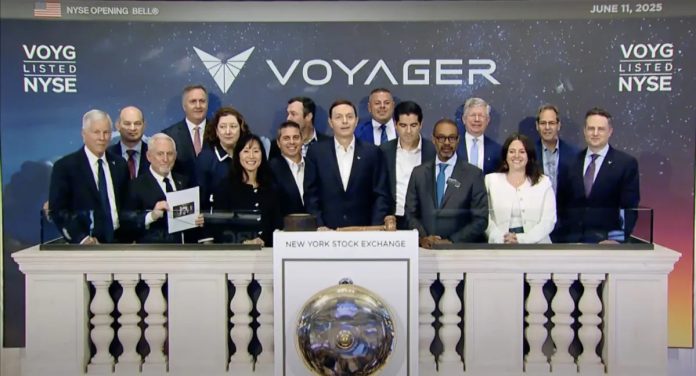
Voyager Technologies soared in its U.S. stock market debut on Wednesday, more than doubling in value and closing with a $3.8 billion valuation—a dramatic entry that underscores investor enthusiasm for the defense and space sector amid growing government support under President Donald Trump.

Shares of the Denver-based company opened at $69.75, jumping 125% from the IPO offer price of $31. The upsized offering raised $382.8 million after Voyager sold approximately 12.4 million shares. The company, which provides mission-critical defense and space technologies, is listed on the Nasdaq under the ticker symbol VOYG.

Founded in 2019, Voyager has quickly become a major player in U.S. defense infrastructure, securing contracts with both the Department of Defense and NASA. Its market entry comes at a time of sweeping policy changes in defense and space spending driven by Trump’s push for strategic autonomy and missile defense expansion.

One of the largest drivers of optimism around Voyager’s public debut is Trump’s proposed $175 billion Golden Dome project, a vast missile defense shield designed to protect the U.S. homeland from long-range threats. The administration has framed the plan as central to its national security strategy, with a focus on technologies like space-based sensors, propulsion systems, and precision optical guidance—areas in which Voyager specializes.

“Strategic government backing amid increased defense spending somewhat shields these firms from tariff-induced supply chain risks,” said IPOX research associate Lukas Muehlbauer.

As of March 31, Voyager reported a backlog of $179.2 million in contracted work, an indicator of sustained demand for its offerings in a sector marked by long development cycles and high entry barriers. The company’s business spans propulsion systems, satellite guidance, spacecraft design, and orbital defense systems.

In 2024, Lockheed Martin selected Voyager to supply critical propulsion and optical systems for missile interceptors, a role integral to the U.S. effort to defend against hypersonic and long-range missile threats. In parallel, Voyager has been tapped by NASA for a $217.5 million project to develop Starlab, a modular orbital outpost intended as a successor to the International Space Station. Voyager is leading the project in partnership with Airbus, Mitsubishi, and Palantir.

The IPO marks the most high-profile space-related listing in months, following the successful debut of Karman, another defense and aerospace firm, whose shares have also doubled since going public. Voyager’s entry confirms growing investor confidence in the commercial space and defense industry, especially companies that are seen as aligned with Trump’s military modernization strategy.

“This IPO is a significant milestone for the broader space sector, indicating its progression towards greater commercial maturity,” said Rob Desborough, managing director at Seraphim Space Investment Trust, one of Voyager’s backers.

The administration’s defense budget proposals, which prioritize space superiority and high-tech military deterrents, have created fertile ground for firms like Voyager. Analysts point out that such strategic policy moves make companies in the sector more resilient to economic uncertainty, including inflationary pressure and international trade tensions.

“Although high entry barriers in the defense sector naturally limit the pool of IPO candidates, the current environment is encouraging established companies to go public,” Muehlbauer added.

Voyager’s offering was further boosted by early commitments from institutional investors. Janus Henderson and Wellington Management had each expressed interest in acquiring up to $60 million worth of Voyager shares, providing an anchor that helped strengthen market confidence ahead of the listing.

The surge in stock price also reflects renewed enthusiasm for space infrastructure investments, which had cooled in recent quarters. The Trump administration’s consistent push for re-militarizing space and insulating defense suppliers from foreign reliance appears to be resetting investor expectations.

While the broader market remains volatile, Voyager’s debut signals a bullish outlook for companies at the intersection of commercial innovation and national security, particularly those backed by strong federal contracts and future-facing projects like orbital habitats and missile defense.

With its debut, Voyager not only joins the growing league of publicly listed space companies—it does so with a war chest and policy tailwinds that suggest its trajectory is only beginning.

The 94.6% Drop In Russian Imports Has Reshaped Germany’s Economy

0

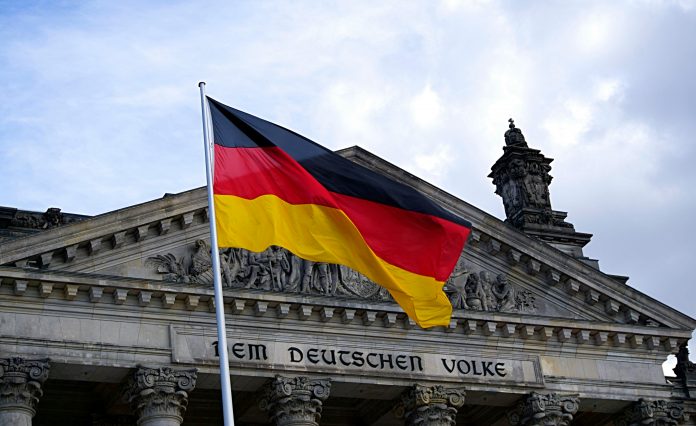
German imports from Russia have plummeted by 94.6% from 2021 to 2024, dropping from €33.1 billion to €1.8 billion, largely due to EU sanctions following Russia’s invasion of Ukraine in February 2022. The decline is primarily attributed to a near-total halt in Russian energy imports, including a 99.8% drop in oil and gas and a 92.5% reduction in coal by early 2023. Germany’s exports to Russia also fell by 71.6%, from €26.6 billion to €7.6 billion, resulting in a trade surplus of €5.8 billion in 2024, the largest since the Soviet Union’s collapse. Russia’s share of German imports shrank from 2.8% to 0.1%, relegating it from the 11th to the 59th largest supplier.

Remaining imports are limited to metals, chemicals, and some food products, while German exports to Russia now mainly consist of pharmaceuticals and chemical products. Germany’s near-total cessation of Russian oil, gas, and coal imports has forced a rapid pivot to alternative energy sources. By 2024, Germany increased LNG imports from Norway, the US, and Qatar, and expanded renewable energy capacity (wind and solar). However, higher energy costs persist, with industrial electricity prices in Germany rising 30-40% since 2021, impacting manufacturing competitiveness.

Short-term energy shortages in 2022-2023 led to economic strain, with Germany entering a recession in 2023 (GDP contracted by 0.3%). Long-term, diversification reduces reliance on geopolitically unstable suppliers but requires sustained infrastructure investment (e.g., LNG terminals, grid upgrades). The trade collapse contributed to Germany’s economic slowdown, as high energy costs and disrupted supply chains hit industries like chemicals, automotive, and steel. Industrial output fell by 4.7% from 2021 to 2024.

Small and medium-sized enterprises (SMEs), which form the backbone of Germany’s economy, faced higher input costs, reducing profitability. Some firms relocated energy-intensive operations to countries with cheaper energy, like Poland or the US. The €5.8 billion trade surplus with Russia in 2024 reflects reduced imports rather than export growth, masking underlying economic challenges.

The drastic reduction in trade signals a broader decoupling from Russia, aligning Germany with EU and NATO efforts to isolate Moscow economically. This has strengthened transatlantic ties, with increased US energy exports to Germany. However, it has strained relations with countries like China and India, which continue to buy Russian energy and raw materials, complicating Germany’s global trade strategy.

Higher energy prices drove inflation in Germany, peaking at 8.7% in 2022 and averaging 5.9% in 2023. This reduced household purchasing power, with real wages declining by 4% from 2021 to 2024. Consumers faced higher costs for heating, electricity, and goods reliant on energy-intensive production, disproportionately affecting lower-income households.

The crisis accelerated Germany’s green energy transition, with renewables accounting for 55% of electricity production in 2024, up from 41% in 2021. However, reliance on coal and LNG as transitional fuels has delayed net-zero targets, with CO2 emissions rising slightly in 2022-2023. The energy crisis and economic fallout have fueled political tensions. The far-right Alternative für Deutschland (AfD) gained support (polling at 18-20% in 2024), criticizing sanctions and high energy costs. In contrast, the Greens and SPD advocate for continued sanctions and green investment, creating a rift in public opinion.

Eastern German states, historically more reliant on Russian gas and with cultural ties to Russia, express greater skepticism toward sanctions. Western states, more integrated into global markets, support EU policies. This divide is evident in regional election results, with AfD stronger in the east. Large corporations like BASF and Volkswagen have absorbed higher costs or shifted operations abroad, while SMEs and households bear the brunt of price hikes. This has sparked debates over government subsidies, with €200 billion in energy relief packages criticized for favoring big business.

While Germany aligns with EU sanctions, countries like Hungary and Slovakia maintain closer ties to Russia, importing significant energy volumes. This creates friction within the EU, with Germany pushing for stricter enforcement while others resist. Western nations, including Germany, have reduced Russian trade, but Global South countries (e.g., India, China, Turkey) have increased imports of discounted Russian oil and gas. India’s Russian oil imports rose from 2% to 40% of its total by 2024. This divide complicates global energy markets and Germany’s efforts to secure non-Russian supplies.

Germany’s shift toward US energy strengthens NATO unity but highlights Europe’s dependence on American LNG, raising concerns about long-term sovereignty. Meanwhile, Russia’s pivot to Asia (China now accounts for 50% of its exports) creates a competing Eurasian economic bloc, challenging Germany’s export markets. The 94.6% drop in Russian imports has reshaped Germany’s economy, energy landscape, and geopolitical stance, with lasting implications.

While it has accelerated diversification and green energy, it has also triggered economic hardship, inflation, and political divides. Internationally, the trade collapse underscores a fracturing global order, with Germany navigating tensions between EU unity, transatlantic dependence, and competition with a Russia-aligned Global South. The domestic divide—between regions, political factions, and economic classes—mirrors the international split, complicating Germany’s path forward.

Trump Declares Rare Earth Deal with China a Victory, But Doubts Shadow Agreement Pending Final Approval

0

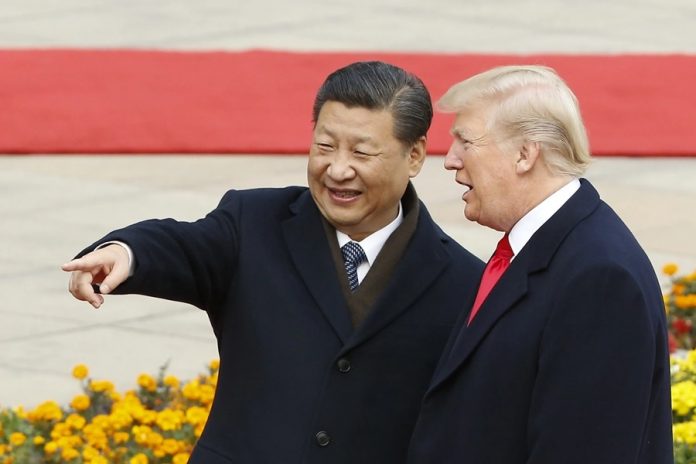
President Donald Trump on Wednesday hailed a new trade framework with China as a major win, declaring that Beijing would resume shipments of rare earth minerals to the U.S. and accept a heavier tariff load, while Washington would allow the return of Chinese students to American universities.

“WE ARE GETTING A TOTAL OF 55% TARIFFS, CHINA IS GETTING 10%. RELATIONSHIP IS EXCELLENT!” Trump wrote, summarizing the arrangement without elaborating on specifics.

He added: “FULL MAGNETS, AND ANY NECESSARY RARE EARTHS, WILL BE SUPPLIED, UP FRONT, BY CHINA. LIKEWISE, WE WILL PROVIDE TO CHINA WHAT WAS AGREED TO, INCLUDING CHINESE STUDENTS USING OUR COLLEGES AND UNIVERSITIES (WHICH HAS ALWAYS BEEN GOOD WITH ME!).”

A White House official confirmed that under the proposed framework, the United States will charge a combined 55% tariff on Chinese goods. This includes a 10% baseline “reciprocal” tariff, a 20% tariff in response to fentanyl trafficking, and a 25% tariff carried over from previous trade rounds. China, in turn, will impose a 10% tariff on U.S. imports, the official said.

Trump stated that the deal is still pending final approval by both himself and Chinese President Xi Jinping.

The agreement follows two days of high-level negotiations in London, where U.S. officials, led by Commerce Secretary Howard Lutnick and Trade Representative Jamieson Greer, met with a Chinese delegation headed by Vice Premier He Lifeng and top trade negotiator Li Chenggang. The meetings were aimed at putting substance behind the Geneva consensus reached last month, which had unraveled amid disagreements over China’s restrictions on exports of rare earths and critical minerals.

At the conclusion of the talks, Lutnick told reporters the new framework puts “meat on the bones” of the Geneva deal. He added: “There were a number of measures the United States of America put on when those rare earths were not coming. You should expect those to come off — sort of, as President Trump said, in a balanced way.”

The framework includes a pledge from China to resume shipments of rare earth metals and industrial magnets vital to technologies such as electric vehicles, smartphones, and missile guidance systems. In exchange, the U.S. is expected to ease certain export restrictions on industrial inputs required by Chinese manufacturers.

“President Trump is watching fentanyl closely,” Greer said, referencing the specific 20% tariff tier tied to Beijing’s cooperation on curbing fentanyl production.

However, officials on both sides acknowledged that the deal remains only a framework — not a finalized accord.

“We’ve got a framework, but we still need our principals to sign off,” China’s Li Chenggang said outside the negotiations venue.

Concerns are already surfacing that the framework may be more symbolic than substantive. While Trump’s social media declaration painted the outcome as a done deal, the absence of any formal documentation, timeline, or implementation mechanism has left analysts skeptical.

U.S. and Chinese negotiators said Tuesday that they had agreed to get the trade truce back on track and remove Chinese restrictions on rare earth exports. But even with these steps, the deeper rifts in the bilateral relationship — spanning industrial overcapacity, data security, and technology access — remain unaddressed.

The Trump administration’s prior use of export controls on semiconductor software, aviation components, and high-end manufacturing tools had drawn sharp backlash from Beijing. In response, China began restricting exports of key minerals, triggering fears across Western supply chains. Wednesday’s announcement suggests both sides are attempting to reset that escalation — but it remains unclear how long the reset will last.

Trump’s tariff policies over the past years have frequently shifted, creating uncertainty for global markets and contributing to supply chain congestion, port delays, and corporate losses. In recent weeks, the president has been labeled TACO (Trump always chickens out), underlining his pattern of inconsistency when it comes to deals.

With no enforcement clause or verification plan disclosed as of yet, there is concern that the deal may not survive the political and economic pressure ahead.

However, both delegations have pledged to continue remote talks. While Trump’s declarations cast the deal as a major geopolitical and economic win, the agreement still hinges on a final endorsement by him and Xi — and whether the promises on paper translate to action on the ground.