DD
MM
YYYY

PAGES

DD
MM
YYYY

spot_img

PAGES

Home Blog Page 1159

Vast Data Eyes $25bn Valuation Amid AI Boom, Fuelled by Demand from Coreweave, Lambda, and Pixar

0

Vast Data, the nine-year-old enterprise data storage company quietly powering some of the world’s most demanding AI workloads, is back in the market to raise a fresh round of funding—this time at a proposed valuation of $25 billion, according to a person familiar with the deal.

The move would mark a monumental leap from its $9 billion Series E valuation in December 2023 and signals just how aggressively investor sentiment has shifted in favor of companies building the underpinnings of the AI revolution.

Although the terms of the round are not yet finalized, and insiders say the valuation could change, interest in Vast from venture capitalists has intensified. The startup has emerged as a key enabler of large-scale AI deployment, offering a data infrastructure that handles the growing complexity, volume, and speed demands of modern artificial intelligence applications.

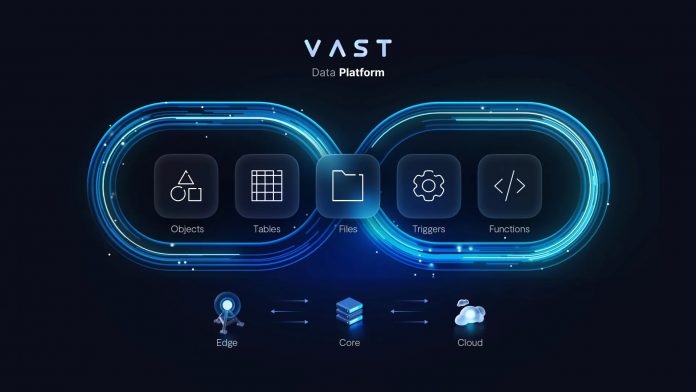
At the core of Vast’s appeal is its AI-native storage platform, designed to unify all types of data—structured, semi-structured, and unstructured—under one high-speed, flash-based system. Unlike traditional systems that rely on storage tiers—slower, cheaper storage for archival data and high-performance storage for active datasets—Vast’s architecture collapses those silos, allowing immediate access to massive volumes of data. This structure is particularly critical for AI model training and inference, where delays in data retrieval can slow down entire pipelines.

Its platform, paired with hardware from Supermicro, HPE, and Cisco, is already trusted by next-gen AI cloud providers like Coreweave and Lambda, as well as established enterprises such as Pixar, ServiceNow, and Xai, Elon Musk’s AI research company. These clients use Vast not only for storage but also for the performance benefits it brings to AI workloads that require rapid and frequent data access.

Economic Impact of AI Behind Valuation Surge

Vast’s bid for a $25 billion valuation isn’t occurring in a vacuum. It underscores a broader market trend: the economic gravitational pull of AI, which is projected to generate up to $15.7 trillion in global economic value by 2030, according to a report by PwC. Of that, nearly $6.6 trillion is expected to come from increased productivity, with the rest driven by consumption-side effects, including new product and service offerings.

As the AI wave accelerates, so does the demand for the foundational infrastructure—computing, storage, and data management—that enables it. Vast Data sits at the center of that value chain, providing the kind of high-throughput storage systems needed to make large language models (LLMs), generative AI tools, and autonomous systems operate efficiently.

It’s why Vast’s year-over-year revenue has reportedly been growing at 2.5x to 3x, and why it hit $200 million in annual recurring revenue (ARR) when it last raised funds 18 months ago. CEO Renen Hallak said on a podcast in May 2023 that the company has also been free cash flow positive for four consecutive years, further bolstering investor confidence.

From Storage to Full-Stack Data Infrastructure

What sets Vast apart is its strategic ambition to move beyond storage. The company is building a next-generation database architecture that could position it to compete with Databricks, a $43 billion juggernaut in unified data analytics and AI services. This move transforms Vast from a storage provider into a broader data infrastructure company, helping customers not only store data but optimize how it flows into AI models and enterprise systems.

That ambition places it in a different league compared to rivals like Weka, which raised $140 million last year at a $1.6 billion valuation, or even Pure Storage, a publicly traded firm with a market cap of around $17 billion. If Vast secures its new valuation, it will leapfrog both to become one of the most valuable private companies in the enterprise AI space.

To date, Vast has raised $381 million from heavyweight backers such as Fidelity Management & Research Company, NEA, BOND Capital, and Drive Capital. The next round, if closed at the intended figure, would not only rank as one of the largest step-ups in enterprise tech but also validate the thesis that data infrastructure is as valuable as AI models themselves.

The Silent Engine of the AI Boom

As consumer-facing AI firms like OpenAI and Anthropic dominate headlines, startups like Vast Data are emerging as the silent engines making the AI economy viable. From managing the flood of training data to delivering high-speed access for real-time inference, these infrastructure players are quietly redefining how value is created in the digital age.

And as the projected $15.7 trillion AI economy begins to take shape over the next five years, it is companies like Vast—those enabling AI to run faster, more reliably, and more affordably—that may define the next era of enterprise technology.


DeFi x TradFi = Hybrid Finance: A New Financial Era in 2025

0

Hybrid Finance (HyFi) is a merging of traditional finance and decentralized finance on blockchain technology. Simply put, HyFi is a bridge that makes the worlds of traditional finance and cryptocurrency compatible. In 2025, this combination is a trending topic because of asset tokenization, big institutions deploying blockchain, and clearer crypto regulations. Trading.biz has positioned itself as a pioneer in HyFi, driving new interest and adoption across both sectors. Let’s see how HyFi operates, as well as its trends and main problems.

Understanding Hybrid Finance Through Real Use Cases

Hybrid Finance isn’t just theory – it’s already present in products today. HyFi means delivering traditional financial products (funds, loans, payments, etc.) on blockchain networks. Major banks are creating such systems. JPMorgan’s blockchain arm (Onyx/Kinexys) and Citi’s tokenization team, for instance, have prototype networks for payments and settlement.

Asset managers are converting legacy funds into tokens: BlackRock introduced a dollar money-market fund (BUIDL) that is available on various blockchains. Such use cases illustrate how blockchain properties, such as immediate settlement and fractional ownership, can improve traditional finance.

5 Key Drivers Behind the HyFi Boom

Hybrid Finance isn’t growing out of nowhere. Here are the main main drivers.

1. Institutional Adoption of Blockchain

Major financial firms are rapidly shifting to blockchain. JPMorgan and Citi banks are running live cryptocurrency projects to make payments and settlements. Asset managers are going beyond and are satisfied with just tokenized funds and securities.

As an example, BlackRock launched a BUIDL token fund and worked with BNY Mellon to create a blockchain-based share class for a $150B fund. The announcement of these measures by JPMorgan, Citi, BlackRock, and other firms clearly indicates that hybrid models remain attractive not only on Wall Street but also in other regions.

2. Regulatory Progress in Digital Assets

Hybrid goods are being unblocked by new rules that have been established globally. The new MiCA regulation in the EU is a set of uniform rules for crypto-assets. Proposed bills and Securities and Exchange Commission (SEC) guidelines in the US are designed to make it clear how tokens and stablecoins can function.

Besides, Dubai and Singapore, which are world financial centers, have also introduced new crypto regions. As regulators delineate what is permissible, institutions get assured of their confidence to construct tokenized offers. Clear stablecoin regulations and security-token blueprints, for instance, provide banks and investment funds with the necessary legal certainty.

3. Growing Demand for Tokenized Traditional Assets

Investors want familiar assets in token form, with crypto benefits. Tokenized stocks, bonds, funds, and loans can be traded 24/7 and split into small fractions. Demand is rising: tokenized U.S. Treasuries and money-market funds surpassed $1?billion on-chain by early 2024. These tokens let holders move in and out instantly (instead of waiting days for settlement), boosting liquidity. Fund firms like Franklin Templeton, Hashnote, and Ondo now offer such products, so investors can earn yields on-chain just like in legacy markets.

4. Improved Interoperability Between Systems

Technology bridges are the connectors between DeFi and TradFi. Cross-chain protocols and APIs turn blockchains into cooperative units with banks. Chainlink’s CCIP connects multiple blockchain networks, granting the movement of tokens without friction across different ecosystems.

Infrastructure platforms like Fireblocks, Paxos, and Circle offer safe and secure transport between crypto networks and traditional finance. The case in point is when Circle reveals that its dollar stablecoin (USDC) can now be reached through most exchanges and more than 500?million bank accounts and wallets globally. These means facilitate the smooth flow of liquidity between TradFi and DeFi.

5. Shift Toward Yield-Generating On-Chain Products

Clearly, there exists a transition from pure crypto speculation to stable, income-generating assets. Now the capital flows into tokenized real-world funds, and yield-bearing tokens are quite substantial. One such example is BlackRock’s BUIDL token fund, which gives daily interest on tokenized U.S. Treasury holdings.

Other platforms also offer blockchain-based tokenized loans or bonds that pay interest directly to investors on-chain. Experts think that inflation and low interest rates have made organizations eager for alternative yield sources. Consequently, HyFi products have become mostly focused on providing steady returns, rather than volatile price changes.

Challenges and Risks in the Hybrid Finance Model

Innovation comes with caution. HyFi faces several challenges:

Security and Smart Contract Risk

Smart contracts can have bugs, and HyFi deals in real money. DeFi hacks have already cost billions (over $ 2 billion lost in 2024). Any token contract or bridge flaw could let attackers steal or manipulate funds. Hybrid platforms must invest heavily in security audits, real-time monitoring, and insurance. Despite precautions, a single exploit could undermine user trust and stall the adoption of HyFi services.

Regulatory Uncertainty Across Jurisdictions

The regulations have become better, although they are still uncoordinated across the world. Various nations have dissimilar approaches towards cryptocurrencies. A legal tokenized bond platform in Europe may encounter obstacles in the US or Asia.

This mosaic not only obstructs the smooth cross-border scaling of the business but also makes it a nightmare for banks and asset managers who have to deal with diverse licensing, KYC/AML, and securities rules in each market. As long as there is no further harmonization, companies could be reluctant to go global with HyFi products.

User Experience and Trust Barriers

Finally, customers need to trust HyFi platforms. Today’s crypto wallets and exchanges can be complex compared to polished banking apps. People may fear losing private keys or being scammed. Past crashes and scandals have shaken the public perception of crypto. HyFi services must offer clear guarantees (regulatory oversight and custodial protections) and intuitive interfaces to succeed. Simplifying the experience and educating users will be key to broader adoption.

What’s Next for Hybrid Finance After 2025?

Beyond 2025, Hybrid Finance is likely to expand. Market analysts make a big bet on the fact that tokenized assets will increase in value from several billion dollars at present to hundreds or more a few years from now. We can expect a lot more tokenized ETFs, bonds, real estate, and currencies on-chain. Banks and funds that are still traditional will probably go along with it using blockchain for clearing, settlement, and new investment products.

Investors and traders must remain vigilant and evaluate the possibility of getting involved. Readers can get ready to take advantage of this new era by keeping track of the latest regulations and platforms. The time to pay attention is now; those that come early may find great opportunities.

Huawei CEO Admits U.S. Leads in Chip Technology, But Says China Is Catching Up Through AI Cluster Systems and Theoretical Innovation

0
Most parts of the world have been pushing to cage Huwaei

Huawei Technologies founder and CEO, Ren Zhengfei, has admitted for the first time that the company’s semiconductor capabilities are still a generation behind those of its American rivals.

However, he insists that Huawei is making progress through unconventional techniques such as cluster computing, as well as deeper investment in theoretical research. His remarks, published Tuesday on the front page of the People’s Daily, come at a critical moment in global geopolitics and tech rivalry, with China and the United States locked in a fierce battle for dominance in artificial intelligence and advanced computing.

“There is no need to worry about the chip problem,” Ren said, attempting to calm concerns over the fallout from U.S. sanctions that have crippled Chinese access to the world’s most advanced semiconductors. “We use mathematics to supplement physics, non-Moore’s law to supplement Moore’s law, and cluster computing to supplement single chips.”

Ren’s comments are notable not just for their candor, but also for what they signal: a quiet admission that the U.S. remains firmly ahead in cutting-edge chip development — a key pillar of the broader AI arms race between the two superpowers.

A Race for Technological Supremacy

The rivalry between the United States and China over technology supremacy, particularly in AI, semiconductors, and next-generation computing, has intensified rapidly over the past five years. What began with tariffs and trade restrictions under Washington’s broader China containment strategy evolved into a campaign of high-tech sanctions, especially targeting Huawei, China’s most prominent tech company.

In 2019, the U.S. government placed Huawei on an export blacklist, banning American firms from selling advanced chips and chip-making tools to the Chinese telecom giant. Since then, a series of increasingly stringent export curbs have not only barred Huawei from accessing top-tier semiconductors from firms like Nvidia and Intel, but have also targeted China’s access to advanced chip fabrication technologies used in Taiwan, South Korea, and the Netherlands.

The objective has been to stifle China’s ability to develop and deploy AI systems with military and strategic significance. The result, however, has been an acceleration in China’s domestic innovation push — with Huawei at the center of that effort.

Huawei’s Cluster Gambit and the AI Pivot

Blocked from purchasing the world’s most powerful chips, Huawei has turned to software and systems engineering to multiply the power of the chips it can produce. In April, the company launched its “AI CloudMatrix 384” system — a computing framework that links together 384 of its homegrown Ascend 910C chips. This high-density AI computing cluster allows developers and institutions to train advanced AI models on Chinese infrastructure, effectively creating a workaround to U.S. hardware restrictions.

Ren noted that while each chip may lag behind Nvidia’s most powerful offerings, cluster computing — where many less-powerful chips operate in parallel — allows Huawei to reach performance levels that are “practical” and competitive. Some analysts argue the system can even outperform Nvidia’s newest GB200 NVL72 in specific tasks. Dylan Patel, head of U.S.-based semiconductor research firm SemiAnalysis, wrote that Huawei’s launch demonstrated China’s capability to build high-performance AI systems “that can beat Nvidia on some metrics.”

Nevertheless, Ren was quick to downplay the hype surrounding Huawei’s progress. “The United States has exaggerated Huawei’s achievements,” he said. “We are not that great. We have to work hard to reach the level they claim.”

That statement, from Huawei’s top executive, is perhaps the clearest indication yet that China knows it still trails the U.S. in the foundational technologies powering the AI revolution.

Despite the sanctions, China has refused to slow down. Huawei, SMIC (China’s top chipmaker), and a host of other firms have ramped up spending and redirected R&D toward areas where foreign tech is restricted. According to Ren, Huawei is pouring 180 billion yuan — roughly $25 billion — annually into research, with nearly a third going into theoretical science, not just product development.

“Without theory, there will be no breakthroughs, and we will not catch up with the United States,” Ren said. This focus on homegrown science — not just engineering — marks a strategic shift, as China looks to reduce long-term dependence on foreign innovation ecosystems.

China’s strategy also hinges on building up its domestic semiconductor supply chain. The country has poured billions into chip startups, expanded its chip fabrication capabilities, and created government-backed investment funds aimed at achieving chip self-sufficiency by the end of this decade. At the same time, Chinese firms are exploring alternative materials like compound semiconductors, which Ren called promising, suggesting they could unlock new performance levels that bypass current limitations.

AI As The Flashpoint of the Rivalry

Artificial Intelligence, more than any other field, has become the flashpoint in the U.S.-China tech rivalry. Both countries see AI not just as an economic tool but as a national security imperative. The technology underpins everything from autonomous weapons and surveillance to financial systems and critical infrastructure.

The U.S. has tried to use its dominance in AI chips, particularly those from Nvidia, to slow China’s progress. But the rapid evolution of Chinese workarounds suggests that the AI race is far from settled. Ren’s remarks indicate that while China acknowledges the U.S. lead, it also sees new opportunities to leapfrog through architecture-level innovations and alternative computing strategies.

Ren’s comments were timed with the resumption of U.S.-China trade talks in London — meetings that are expected to once again spotlight the contentious issue of tech sanctions.

A new trend in the crypto market, OPTO Miner teaches you how to easily obtain stable returns!

0

Traditional mining or cloud mining, which one is more suitable for users ?

Traditional mining means buying mining machines, building sites, configuring electricity and networks, and letting the machines run 24 hours a day to “mine” cryptocurrencies. Although this method is primitive but professional, it has a high threshold and large investment, and is suitable for players with technical and financial strength. Cloud mining is like outsourcing mining to a platform. You only need to purchase computing power contracts, do not have to worry about equipment and operation and maintenance, and wait for passive income . It is simple to operate and low cost, and is more suitable for novices or long-term investors.

Because of this, it is very important to choose a safe, convenient and stable cloud mining platform

Founded in the UK in 2018, OPTO Miner is a global cloud mining service platform that has obtained a UK government certification license and is subject to relevant financial supervision. Relying on advanced hardware facilities and powerful cloud computing power, it provides high-performance, low-threshold, and sustainable cryptocurrency mining solutions for global users.

Advantages of OPTP Miner

OPTO Miner supports mainstream cryptocurrencies such as Bitcoin , Dogecoin, Litecoin, etc., to diversify your investment portfolio and improve profitability .

The platform interface is simple in design and uncomplicated, which is very friendly to novice users and easy to get started.

Support multiple cryptocurrencies: Supports deposits and withdrawals of multiple cryptocurrencies, including DOGE, BTC, ETH, SOL, XRP, USDC, LTC, USDT-TRC20, USDT-ERC20.

Fund security is an important core of OPTO Miner. We not only use EV SSL encryption technology to protect your data transmission, but also use advanced firewalls and intrusion detection systems to prevent unauthorized access to the protection system. We also make full use of McAfee® SECURE and Cloudflare® SECURE to ensure the security of funds and networks.

How to join OPTP Miner?

Step 1.

Sign up with your email ( Get $ 15 instantly when you sign up )

Step 2.

contract selection based on budget and goals

  • [ Miner-S19k-Pro ] Purchase amount: $100, total net profit: $100 + $8
  • [ AVALON MINER A1326-109T ] Purchase amount: $500, total net profit: $500 + $ 36.3
  • [ iBeLink BM-K1+] Purchase amount: 1000 USD, total net profit: 1000 USD + 125 USD
  • [ Gold Shell Mini Dog 2 ] Purchase amount: 3000 USD, total net profit: 7800 USD + 952.5 USD
  • [ Antminer S17 Pro] Purchase amount: 5000 USD, total net profit: 5000 USD + 1687.5 USD
  • [ Antminer T19 ] Purchase amount: 7700 USD, total net profit: 7700 USD + 3187.8 USD
  • [ Avalon A1466 ] Purchase amount: $ 10,000 , Total net profit: $ 10,000 + $ 4,590
  • [ WhatsMiner M53 ] Purchase amount: $ 15,000 , Total net profit: $ 15,000 + $ 7,200

After purchasing the contract, the profit will be automatically credited to your account the next day. When the account balance reaches $100, you can choose to withdraw to your digital currency wallet, or continue to purchase contracts to get more profits!

(OPTO Miner platform launches more stable income contracts, visit the official website to view more)

About OPTO Miner

Since its establishment, OPTO Miner has always been a leader in mining technology and global layout, with more than 7 million users in more than 180 countries and regions around the world. With data centers and mining farms in many countries, OPTO Miner has built a wide mining network. For investors who focus on stability rather than speculation, OPTO Miner makes passive cryptocurrency income easier to obtain than ever before.

Official website: https://optominer.com/

APP: https://optominer.com/xml/index.html#/app

Email: info@optominer.com

Summarize

OPTO Miner makes mining simple and worry-free. You don’t need to buy mining machines or worry about equipment maintenance. It supports a variety of mainstream cryptocurrencies , has stable operation and maintenance, and is easy to use. What’s even better is that the platform pays attention to environmental protection and uses green energy, helping you make money easily while also contributing to the earth. If you want to participate in mining with a low threshold, OPTO Miner is a good choice!


The Blockchain Group’s Raise Strengthens The Case For Bitcoin As A Corporate Treasury Asset

0

The Blockchain Group, a Paris-based cryptocurrency company and Europe’s first Bitcoin treasury firm, announced on June 9, 2025, plans to raise €300 million (approximately $340 million) to expand its Bitcoin treasury. This follows a recent acquisition of $68 million worth of Bitcoin, bringing their total holdings to 1,471 BTC, valued at over $154 million. The capital raise, structured as an “At the Market” (ATM) offering inspired by U.S. practices, will occur in tranches with shares sold at market conditions, capped at 21% of daily trading volume.

Partnered with TOBAM, a Paris-based asset manager, the funds aim to boost Bitcoin per share and support long-term growth, positioning the company as a key player in Europe’s institutional crypto adoption. This move aligns with a broader trend of corporate Bitcoin accumulation, as seen with firms like Strategy and Metaplanet. The Blockchain Group’s $340M raise to bolster its Bitcoin treasury has significant implications for the crypto market and highlights a growing divide in corporate strategies regarding cryptocurrency adoption.

The move signals increasing confidence among European institutions in Bitcoin as a strategic asset. By amassing 1,471 BTC and planning further acquisitions, The Blockchain Group is positioning itself as a pioneer in Europe, potentially encouraging other firms to follow suit. This aligns with global trends, as companies like MicroStrategy (205,000 BTC as of late 2024) and Metaplanet have similarly adopted Bitcoin as a treasury reserve asset to hedge against inflation and currency devaluation.

The influx of $340M into Bitcoin could drive demand, potentially pushing prices higher, especially given Bitcoin’s finite supply (21 million cap). As of June 2025, Bitcoin’s price hovers around $100,000-$104,000, and such institutional buying could sustain or amplify this rally. The structured ATM offering, capped at 21% of daily trading volume, minimizes market disruption but signals sustained buying pressure over time.

Europe’s regulatory environment is evolving, with France’s pro-crypto stance under figures like Macron fostering such initiatives. The Blockchain Group’s move could pressure regulators to clarify rules around corporate crypto holdings, potentially shaping EU-wide policies. It reflects a hedge against fiat currency risks, particularly in light of global economic uncertainties like inflation or geopolitical tensions.

The partnership with TOBAM, a traditional asset manager, bridges crypto and conventional finance, legitimizing Bitcoin as an institutional asset. This could attract more conservative investors, expanding Bitcoin’s investor base. The focus on “Bitcoin per share” growth introduces a new metric for valuing companies with crypto treasuries, potentially influencing stock valuations in the sector.

The Blockchain Group’s strategy underscores a growing divide between corporations embracing Bitcoin and those skeptical or hesitant: Firms like The Blockchain Group, MicroStrategy, and Metaplanet view Bitcoin as a store of value and inflation hedge, integrating it into their balance sheets. They benefit from Bitcoin’s price appreciation but face volatility risks. These companies often operate in tech or finance, with leadership that understands blockchain’s potential, giving them a first-mover advantage in a crypto-friendly market.

Many traditional corporations, especially in conservative industries like manufacturing or retail, remain wary of Bitcoin’s volatility, regulatory uncertainty, and environmental concerns tied to mining. These firms prioritize cash, bonds, or other assets for treasuries, viewing crypto as speculative. They risk missing out on Bitcoin’s long-term gains but avoid short-term losses.

The divide creates a split in investor sentiment. Pro-Bitcoin firms attract crypto enthusiasts and growth-oriented investors but may alienate risk-averse shareholders. Conversely, traditional firms appeal to stability-focused investors but may lag in innovation. This polarization could lead to a bifurcated market where “Bitcoin-native” companies trade at a premium during bull runs, while skeptics face pressure to adapt or lose competitive edge.

The adoption is uneven globally. The U.S. and parts of Asia (e.g., Japan’s Metaplanet) lead in corporate Bitcoin strategies, while Europe is catching up. Regions with stricter regulations (e.g., China) or less crypto awareness lag, creating a global divide in corporate crypto integration. The Blockchain Group’s raise strengthens the case for Bitcoin as a corporate treasury asset, potentially catalyzing further adoption in Europe and beyond. However, it widens the gap between crypto-forward and traditional firms, with implications for market dynamics, investor preferences, and regulatory frameworks. The divide will likely deepen as Bitcoin’s price trajectory and regulatory clarity evolve, forcing companies to choose sides in the crypto revolution.