DD
MM
YYYY

PAGES

DD
MM
YYYY

spot_img

PAGES

Home Blog Page 1168

Sober.Buzz the Sober Token : Ticker $BUZZ

0

Sober.Buzz the Sober Token spreading the good $BUZZ! Sober.Buzz is the cryptocurrency being developed by alcoholics and addicts in recovery with the goal of creating a global sober community using the $BUZZ token as its foundation.

Sober.Buzz is the Sober Token spreading the good $BUZZ. Sober.Buzz is the cryptocurrency being developed by alcoholics and addicts in recovery with the goal of creating a global sober community that supports each other, supports those with the desire to overcome their addiction and supports those supporting loved ones in recovery. Sober.Buzz was created with the intention to help as many people as possible break free from the chains of addiction while believing it’s never too late to live a healthy and sober life with the good $BUZZ.

CEO Josh Case said, “As an alcoholic and addict who has struggled with addiction for years, including three trips to rehabs, I never truly believed I could stop without being completely miserable; I tried so many times. Somehow the thought of not drinking or using was worse than the damage I could do in my addiction. It was only when I understood alcohol and drugs were the improper tools I was using to deal with my mental health issues that I was able to truly start recovering. I am passionate about doing what I can to help other alcoholics and addicts find the same peace of mind I am so grateful others helped me find, so the team and I created Sober.Buzz and the $BUZZ token to be the platform to spread the good $BUZZ.”

The Sober.Buzz team has plans to develop the following token utilities with the communities involvement to spread the good $BUZZ:

  • Gift Sober.Buzz to family, friends, colleagues, acquaintances and strangers as a “Token of Support” spreading the good $BUZZ. These gift Sober.Buzz tokens can then be used to make purchases from the Sober.Buzz store or can be put to other uses.

  • Purchasing Sober.Buzz swag for you and the people you care about whether in recovery or supporting someone in their recovery spreading the good $BUZZ. Sober.Buzz will have clothing and other items which will further bring attention to the good being done at Sober.Buzz.

  • Purchasing Sober.Buzz email handle(s) to spread good $BUZZ and to stay in touch with other Sober.Buzz community members along with everyone else bringing visibility to Sober.Buzz.

  • Voting rights for funding recovery related charitable activities helping to pick where to spread the good $BUZZ. These causes could range from providing assistance to homeless and the lower income population struggling with addiction and mental health, sponsoring those who desire to live in sobriety tuition for rehabilitation & treatment programs, mental health services and other support.

  • Donate to community selected charitable causes to directly spread the good #BUZZ.

  • Access to recovery content and input on the content to be created. Examples include Sober.Buzz podcasts with special guests, newsletters, message board, in person and virtual events along with other interactive community experiences.

  • Ability to suggest other Sober.Buzz token uses to maximize the spreading of the good $BUZZ.

  • Using the Sober.Buzz token as a medium of exchange for goods and services outside of the community spreading the good $BUZZ to others.
    You never know if someone is struggling and the Sober.Buzz token is a reminder to us all of how precious one’s sobriety is and how overcoming addiction is a lifelong journey that’s difficult but worth it.

  • And potentially much more as the Sober.Buzz community grows and matures the spreading of the good $BUZZ can take many forms in the future.

RWA Infra Development L.L.C. announces the $RWAID token. “$RWAID tokenizing infrastructure for the masses”

0

RWA Infra Development L.L.C. (“RIDev”) has created $RWAID a Real World Asset (“RWA”) cryptocurrency for the purpose of “tokenizing infrastructure for the masses.” $RWAID is here to bring capital intensive infrastructure projects such as power generation, electric transmission and energy storage to individuals who desire to participate in the benefits of ownership of these assets but may not have been able to because of financial constraints.

When the new RIDev token $RWAID presale begins it will be priced at 1 cent per token with a required minimum purchase of $500.00 (50,000 tokens). A total of 5 billion $RWAID tokens will be made available during the presale. Only 10 billion $RWAID tokens were minted. No additional $RWAID tokens will ever be minted. The presale is planned within the next 60 days. RIDev will announce the exact date in the near future. The $RWAID token can be found on Etherscan and the Uniswap exchange. We are also pursuing listings on other decentralized and centralized exchanges. Additional $RWAID token information can be found on the RIDev website: www.rwainfra.dev.

RIDev CEO Josh Case said, “We are looking forward to rolling out the $RWAID token to the masses, so anyone who desires to participate in the energy transition and expansion we are witnessing here in the U.S. is able to do so conveniently at an affordable entry point.”

The $RWAID token holders will have the opportunity to share in the yield created by the RWA’s tokenized. Yield is expected to be realized from operational project earnings, development fees, project sales or a combination of these sources. Yield will be distributed as rewards to $RWAID token holders with additional $RWAID tokens and/or stablecoins such as USDC, USDT, RLUSD or an equivalent.

“The tokenizing of real world assets is providing a more efficient and secure framework for the deployment of capital into capital intensive infrastructure projects. We are looking forward to leveraging those benefits for token holders through rewards such as additional tokens and stablecoins,” said Case.

Principles and advisors of RIDev have years of experience ranging from conventional power generation to renewable energy production. The $RWAID token will be allocated to projects in the United States using proven technologies with credit worthy off-take counterparties. The $RWAID token will participate directly and/or indirectly in projects as well as being the sole capital provider or a participant with other capital providers depending on the opportunity. The $RWAID token team will consider “shovel ready” projects, operational projects, projects under development and internal development of projects.

Individuals and entities interested in potential bulk purchases of $RWAID tokens can email us prior to the presale for more information.

RIDev company as well as $RWAID token updates will be posted on X.

Contact
RWA Infra Development L.L.C.
dev@rwainfra.dev

CBN Unveils Digital BVN Platform for Diaspora Nigerians, Targets $1bn Monthly Remittance

0

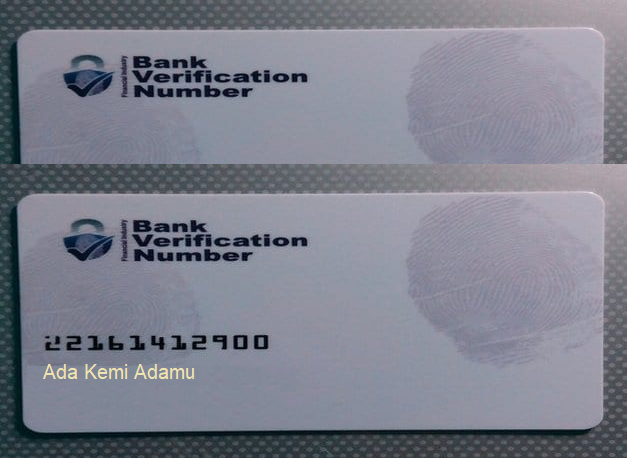
In a major stride toward unlocking the full potential of diaspora remittances, the Central Bank of Nigeria (CBN), in partnership with the Nigeria Inter-Bank Settlement System (NIBSS), on Tuesday launched the Non-Resident Bank Verification Number (NRBVN) platform.

The platform enables Nigerians abroad to remotely register for a Bank Verification Number (BVN) without physically being in the country — a move the apex bank hopes will significantly boost formal remittance flows and financial inclusion.

Speaking at the launch event in Abuja, which drew financial sector stakeholders including CEOs of major banks, CBN Governor Olayemi Cardoso described the initiative as a milestone in Nigeria’s quest to connect its global citizens to the domestic financial system.

He noted that the NRBVN will help remove long-standing bottlenecks preventing Nigerians in the diaspora from accessing services such as savings, mortgages, pensions, insurance, and investment opportunities in Nigeria.

“For too long, many Nigerians abroad have faced difficulties accessing financial services at home due to physical verification requirements,” Cardoso said. “The NRBVN changes that. Through secure digital verification and robust Know Your Customer (KYC) processes, Nigerians worldwide should now be able to access financial services more easily and affordably.”

The NRBVN is positioned as a foundational element of a broader suite of financial offerings for non-resident Nigerians. These include the Non-Resident Ordinary Account (NROA) and the Non-Resident Nigerian Investment Account (NRNIA), both of which allow access to Nigeria’s financial markets under flexible repatriation rules.

The CBN Governor also emphasized that the platform has been developed with stringent global standards for Anti-Money Laundering (AML) and KYC compliance to safeguard the integrity of Nigeria’s financial system and encourage international confidence.

“Every NRBVN enrolment undergoes comprehensive verification checks to guard against illicit financial activity,” Cardoso added. “This is critical to ensuring market stability, integrity, and overall confidence in Nigeria’s financial system.”

The NRBVN is part of a broader CBN strategy aimed at capturing a larger share of the global remittance market by formalizing inflows and enhancing convenience. In 2023, Nigeria recorded $3.3 billion in formal remittance inflows — a figure that climbed to $4.73 billion in 2024 following policy reforms such as the reintroduction of the “willing buyer, willing seller” foreign exchange regime. With the new platform in place, the CBN is now targeting $1 billion per month, or approximately $12 billion annually.

“With the introduction of NRBVN and complementary policy measures, we are optimistic about achieving our ambitious target,” Cardoso said. “A goal we believe is entirely achievable given the growing trust and convenience in formal remittance channels.”

He also noted that remittance costs in Sub-Saharan Africa remain among the highest globally, averaging over 7 percent. The NRBVN, by facilitating direct and affordable access to Nigerian financial services, is expected to lower these costs and redirect more remittance flows into formal channels.

“This platform is not just about financial access. It’s about national inclusion, innovation, and shared prosperity,” he said.

Cardoso called for increased collaboration among stakeholders, including commercial banks, International Money Transfer Operators (IMTOs), and regulators, to fully actualize the platform’s benefits. He urged IMTOs to integrate directly with the NRBVN system and warned that strict compliance with foreign exchange (FX) regulations, including the FX Code, was mandatory.

“All stakeholders must adhere strictly to the FX Code and other relevant regulatory guidelines. Compliance is not optional; it is central to maintaining transparency and trust in the system,” he said.

CBN’s call for integration and adherence was echoed by other panelists at the event, including NIBSS Managing Director and CEO, Premier Oiwoh, who presented a detailed technical breakdown of the NRBVN platform, emphasizing its end-to-end security and verification processes.

NiDCOM Backs Initiative as Game Changer

Also present at the launch was the Chairman and Chief Executive of the Nigerians in Diaspora Commission (NiDCOM), Abike Dabiri-Erewa, who described the platform as a game changer. She said the ability of diaspora Nigerians to register a BVN remotely marked a turning point in diaspora engagement.

“We have always advocated for tools that make it easier for Nigerians abroad to connect and contribute to the economy back home,” she said. “This initiative empowers them to do just that — seamlessly, securely, and on a global scale.”

Dabiri-Erewa stressed that the NRBVN will serve as an enabler for broader inclusion, not only economically but socially, by reinforcing the link between Nigeria and its citizens living abroad.

Beyond Numbers

The NRBVN’s significance goes beyond facilitating remittances. It aligns with a broader push by the Nigerian government to deepen diaspora participation in the economy, particularly through investment in capital markets, property, and long-term savings instruments.

With repatriation rules remaining flexible and transparent, the CBN is hoping that more Nigerians abroad will be incentivized to reinvest their funds into the domestic economy through regulated channels. The central bank is also considering more digital innovations that would extend these benefits to other financial services such as pensions, microinsurance, and real estate.

In launching the NRBVN, Nigeria joins other developing countries like India and the Philippines in recognizing the economic value of its diaspora, not only as senders of money but as investors and stakeholders in national development.

While Cardoso acknowledged that the NRBVN is not “the final destination,” he called it a critical first step in building a truly inclusive and globally connected financial system for Nigeria.

“Through this initiative, we are laying the foundation for a secure, efficient, and inclusive financial ecosystem — one that includes all Nigerians, wherever they may be in the world.”

Nigeria’s Moniepoint, PalmPay, Paga, Termii Earn Spot on Financial Times 2024 Africa’s Fastest-Growing Companies

0
Nigerian Fintech companies Moniepoint, PalmPay, Paga, and Termii, have earned spots on the Financial Times’ 2024 ranking of Africa’s Fastest-Growing Companies, showcasing 130 high-growth firms continent-wide.
Now in its fourth year, the FT ranking, partnered with Statista, and evaluated companies based on their compound annual growth rate (CAGR) in revenues from 2020 to 2023, factoring in headcount growth and resilience against inflation, currency volatility, and economic challenges.
On the list, all three top-ranked companies are Nigerian, with PalmPay, in second place, being the only one operating in more than three countries. Omniretail, securing first place for the second consecutive year, operates in Nigeria, Ghana, and Ivory Coast. Iyin Aboyeji, co-founder of Future Africa, argues that pan-African expansion isn’t essential for success, noting that Nigeria’s market alone has propelled companies, including two companies he co-founded (Andela and Flutterwave), to unicorn status with $1 billion valuations.
Also commenting on the list, Lindberg at Norfund says the FT-Statista ranking highlights that despite the severe macro problems, there remains much innovation and problem-solving on the continent. “The entrepreneurial spirit in Nigeria in particular is formidable; there’s a sense that anything is possible.”

A Closer Look at the Featured Nigerian Fintech Companies

Moniepoint

Formerly known as TeamApt, Moniepoint has evolved from a B2B payments startup into a full-scale business bank. The company is the definitive bank for small and medium-sized businesses in Nigeria and is regulated by the Central Bank of Nigeria (CBN). It received its license in February 2022 and helps over 10 million people and businesses with banking, payments processing, access to loans and business management tools.

With these solutions, businesses on the platform process about $17 billion monthly. In October 2024, it achieved unicorn status following a $110 million funding round backed by Google, Visa, and other investors. Moniepoint MFB operates the largest distribution network for financial services in Nigeria, and over 33 million people use their cards on its POS terminals monthly across every local government in Nigeria. The company is now eyeing East African expansion, further solidifying its position in Africa’s fintech landscape.

PalmPay

PalmPay is an intuitive financial app with account opening, money transfer, and bill payments in one. Backed by China’s Transsion Holdings, the fintech has become a dominant force in Nigeria’s mobile payments market since its 2019 launch. With more than 30 million registered users, PalmPay has introduced insurance products, virtual cards, and expanded into Ghana in early 2024. Its blend of offline agent networks and digital engagement has driven rapid user adoption and revenue growth. The company recently announced a surge in daily transactions to 15 million in Q1 2025, up from 10 million in 2024.

Paga

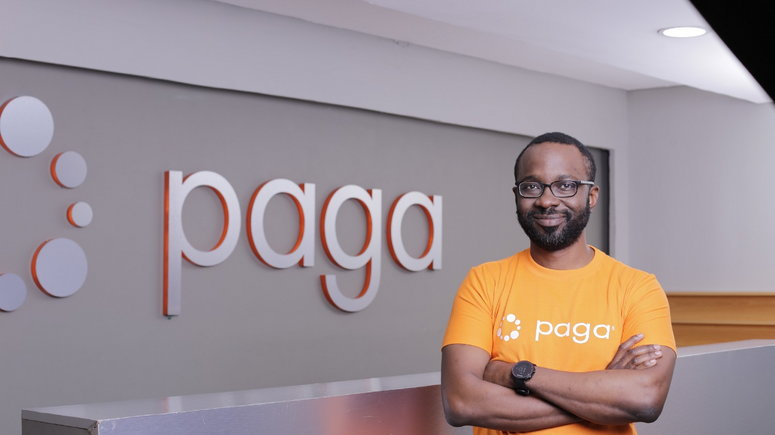
Paga is a leading mobile money platform that enables users to send and receive money, pay bills, and make various transactions easily. It offers services through both agent networks and online/mobile channels, allowing users to access financial services conveniently. Founded in 2009, the platform is one of Nigeria’s fintech pioneers. Its ecosystem now includes Paga Consumer, Doroki (SME-focused), and PagaTech (its infrastructure arm). With over 21 million users, a robust agent network, and international licenses including in Ethiopia, Paga continues to expand its reach, forming integrations with major banks and telcos.

Termii

Founded in 2017, Termii provides API-driven messaging infrastructure for African businesses. The Y Combinator-backed company supports SMS, voice, and email communication tools, powering real-time alerts and user authentication. In late 2023, Termii launched TermiiGo, a programmable voice and call masking platform, gaining traction among fintechs, healthtechs, and logistics firms across West Africa.

Conclusion

As Africa’s digital economy matures, these companies are not only growing rapidly—they are shaping the future of technology, payments, and communication across the continent.These fintechs highlight Nigeria’s pivotal role in Africa’s high-growth ecosystem, delivering innovative solutions that advance financial inclusion and digital transformation.

Dubai Partners With Crypto.com on Crypto Payments for Government Services

0

Dubai’s Department of Finance (DOF) signed a Memorandum of Understanding (MoU) with Crypto.com to enable cryptocurrency payments for government services. This initiative, announced during the Dubai FinTech Summit, allows residents and businesses to pay fees using stablecoins through Crypto.com’s digital wallet, with transactions converted to UAE dirhams for government accounts. The partnership aligns with Dubai’s Cashless Strategy, aiming for 90% cashless transactions by 2026, and positions the city as a global fintech hub. This marks a significant step in integrating blockchain technology into public services.

The partnership between Dubai’s Department of Finance and Crypto.com to accept cryptocurrency payments for government services has significant implications, both for Dubai and globally, while also highlighting a growing divide in the adoption of digital currencies. By integrating crypto payments into government services, Dubai signals trust in blockchain technology, potentially encouraging other governments and institutions to follow suit. This move normalizes cryptocurrencies as a legitimate payment method.

Residents and businesses can use stablecoins via Crypto.com’s wallet, offering a seamless, digital payment option that aligns with Dubai’s Cashless Strategy (targeting 90% cashless transactions by 2026). Dubai reinforces its position as a fintech and blockchain hub, attracting crypto-related businesses and talent, which could boost its economy through innovation and investment.

Crypto payments, especially stablecoins, can reduce transaction costs and processing times compared to traditional banking systems, benefiting both users and the government. By catering to crypto users, Dubai may capture a growing demographic of digital asset holders, increasing transaction volumes for government services. Using stablecoins (pegged to fiat like the UAE dirham) minimizes volatility risks, making this a practical entry point for crypto in public services.

Policy and Regulation

The partnership suggests Dubai has developed or is developing robust regulations for crypto transactions, ensuring compliance, security, and anti-money laundering (AML) measures. This pilot could lead to broader crypto adoption across other emirates or sectors (e.g., utilities, taxes), shaping UAE’s national blockchain strategy.

Countries like Singapore, Switzerland, or even smaller economies may accelerate their own crypto-friendly policies to compete as fintech hubs. Crypto.com’s role could encourage other platforms (e.g., Binance, Coinbase) to seek similar government partnerships, expanding crypto’s public sector use.

Crypto payments require digital wallets, smartphones, and internet access, which may exclude less tech-savvy or lower-income residents, particularly migrant workers or older populations in Dubai. Understanding and using cryptocurrencies demands financial literacy, creating a barrier for those unfamiliar with digital assets.

Crypto adoption may primarily benefit affluent or tech-forward individuals and businesses, potentially widening the gap between those integrated into the digital economy and those reliant on cash. While Dubai, a wealthy city, can afford to experiment with crypto, poorer nations or regions lack the infrastructure or resources to implement similar systems, deepening global economic disparities.

Dubai’s crypto-friendly stance contrasts with countries like China or India, where crypto faces heavy restrictions or bans. This creates uneven opportunities for businesses and users globally. Within the UAE, other emirates may lag in adopting similar policies, creating inconsistencies in user experience across the federation. Dubai’s urban, cosmopolitan population is more likely to embrace crypto than rural or less developed areas in the UAE or Middle East, limiting regional scalability.

While government services adopt crypto, private businesses (e.g., small retailers) may be slower to follow, creating a fragmented payment ecosystem. Dubai’s partnership with Crypto.com is a bold step toward mainstreaming cryptocurrency, enhancing efficiency, and solidifying its fintech leadership. However, it also underscores divides in technology access, economic inclusion, regulatory approaches, and adoption rates.

To bridge these gaps, Dubai will need to invest in education, infrastructure, and inclusive policies to ensure broad participation, while the global community watches to see if this model can be replicated or if it widens existing disparities.