DD
MM
YYYY

PAGES

DD
MM
YYYY

spot_img

PAGES

Home Blog Page 1176

Stripe Unveils Major Upgrade to Make Global Money Management Seamless And Programmable

0

Stripe, a leading global financial infrastructure platform, has announced its most significant upgrade. It aims to make money management fully internet-native and programmable.

The company is rolling out new capabilities designed to help users store, send, and receive money in multiple currencies across stablecoins and traditional currencies on local rails. Over the next year, these features will be available by default to all Stripe users.

This announcement was made at the company’s 2025 annual conference, where it shared some of the biggest changes. As part of the update, Stripe introduced new money management tools built into the Stripe Dashboard. Businesses in the US and UK can now store and manage funds in multiple currencies, convert between them, and send and receive payments using local payment networks.

Additionally, Stripe announced the upcoming launch of Stablecoin Financial Accounts. This feature will enable users in over 100 countries to store, receive, and send funds using either crypto or fiat payment rails from a dollar-denominated stablecoin balance.

At the company’s annual conference, Stripe introduced Global Payouts, a feature that allows businesses in the US and UK to send funds to customers, affiliates, contractors, or other third parties in 58 countries using just an email address.

Notably, the company previewed a new USDC-denominated corporate card available through the Visa network. Powered by Stripe Issuing and Bridge, this offering represents another step forward in Stripe’s vision for programmable financial infrastructure.

Another major announcement was Stripe Orchestration, which allows businesses to manage multiple payment processors seamlessly from a single dashboard. This feature gives full control and visibility over payment routing and performance. The Optimized Checkout Suite is also seeing significant enhancements. Soon, customers will be able to use one-click Klarna via Link. This summer, Stripe Managed Payments, a merchant of record solution, will launch, handling global tax compliance, fraud disputes, checkout UX, and customer support.

AI is also powering Stripe’s checkout experience more than ever, using over 100 signals to dynamically personalize payment methods and fields. Stripe now supports 125+ global payment methods, including real-time options like Pix and UPI. Businesses can localize prices across 150+ markets with Adaptive Pricing, and display any payment method with any processor using the Payment Element.

Launched in 2010 by Irish brothers Patrick and John Collinson, Stripe was created to simplify online payments for businesses and developers. The company has grown significantly to become one of the most prominent fintech startups globally.

It announced that it processed $1.4 trillion in total payment volume in 2024, a 38% increase from 2023, equivalent to roughly 1.3% of global GDP. The company now serves half of the Fortune 100, 80% of the Forbes Cloud 100, and 78% of the Forbes AI 50, with major clients like NVIDIA, PepsiCo, and Amazon.

Notably, Stripe supports 35 million registered users, with each averaging 50 monthly transactions, and maintains a 99.99988% API availability rate. More than 300,000 businesses now rely on Stripe Billing the core of Stripe’s Revenue suite, including some of the world’s most prominent AI companies such as OpenAI, Anthropic, Cursor, Midjourney, and more recently, NVIDIA.

Stripe has unveiled its most significant updates to the Revenue suite to date. These enhancements include the introduction of two new extensibility features Scripts and Workflows which transform Stripe into a fully programmable revenue engine. Additionally, Stripe has upgraded its usage-based billing capabilities to better support the monetization of AI-driven products and services.

Looking ahead, Stripe aims to support emerging markets by adding 25 new payment methods and enhancing its Stablecoin Financial Accounts to drive financial inclusion.

Apple to Increase iPhone Prices Amid U.S.-China Tariff Tensions, Plans New Features to Soften Blow

0

Apple Inc. is considering raising prices for its upcoming iPhone lineup in response to escalating U.S.-China trade tensions and tariffs imposed by President Donald Trump, according to a report by The Wall Street Journal.

The tech giant, caught in the crossfire of global trade disputes, is navigating a complex landscape of rising costs, supply chain shifts, and competitive pressures, with analysts warning that price increases could jeopardize its market share.

The U.S. has maintained a 30% tariff on Chinese imports, despite a recent agreement to slash some tariffs between the U.S. and China. For Apple, which assembles most of its iPhones in China, these tariffs are expected to add significant costs. The company stated earlier this month that tariffs would increase expenses by approximately $900 million during the April-June 2025 quarter.

To mitigate these costs, Apple is accelerating its shift to manufacturing in India. The company announced it would source a majority of iPhones sold in the U.S. from India during the April-June period, according to Bloomberg. This strategic pivot, however, introduces new logistical challenges, including higher labor and shipping costs, as evidenced by Apple chartering cargo flights to transport over 600 tons of India-made iPhones to the U.S.

Impact of Potential Price Hikes on Consumers

According to the Wall Street Journal report, Apple is planning to couple potential price increases with new features and design changes, such as an ultrathin design, to justify the higher costs.

Analyst projections underscore the scale of potential price hikes. Rosenblatt Securities estimated last month that the base iPhone 16, currently priced at $799, could rise to $1,142 due to tariffs, a 43% increase. Similarly, UBS analysts predicted that the iPhone 16 Pro Max, starting at $1,199, could see a $350 increase, bringing its price to around $1,549, a nearly 30% rise, according to CNBC.

Consumer reactions have already begun to surface, with reports of panic-buying at Apple stores as shoppers anticipate price hikes. CNN on Friday reported an increase in foot traffic at Apple stores, driven by tariff fears.

However, analysts warn that sustained price increases could erode Apple’s market share, particularly as competitors like Samsung capitalize on advanced AI features that Apple has been slower to adopt.

The broader trade environment remains volatile, with tariffs creating what some analysts call a “category 5 price storm” for consumer electronics. Apple’s cautious approach to pricing reflects an effort to balance cost recovery with maintaining consumer goodwill. The company aims to avoid directly attributing increases to tariffs by tying price hikes to new features, a strategy that could help preserve its brand image.

However, Apple’s stock saw a 7% surge in premarket trading on Monday, following the U.S.-China tariff reduction agreement, signaling market optimism about potential relief. However, the persistent 30% tariff on Chinese imports continues to pose a significant hurdle.

A Tech Industry-wide Problem

Apple is not alone in grappling with tariff-related challenges. Amazon faced scrutiny last month when its low-cost Haul unit considered listing import charges due to U.S. tariffs, prompting the Trump administration to accuse the company of a “hostile political act.”

Apple may face the same response from the White House. Trump said on Sunday that he spoke with Apple CEO Tim Cook, without giving details.

However, like many other companies caught in the tariff conflict, Apple faces a delicate balancing act. The company has to choose between raising prices to offset tariff costs, which risks alienating price-sensitive consumers, or maintaining its original prices with squeezed profit margins. The shift to Indian manufacturing, while a long-term solution, introduces immediate challenges that may not fully shield Apple from tariff impacts.

Trump Orders Drugmakers to Cut Prices By 59% Within 30 Days or Face Global Benchmark Rule

0

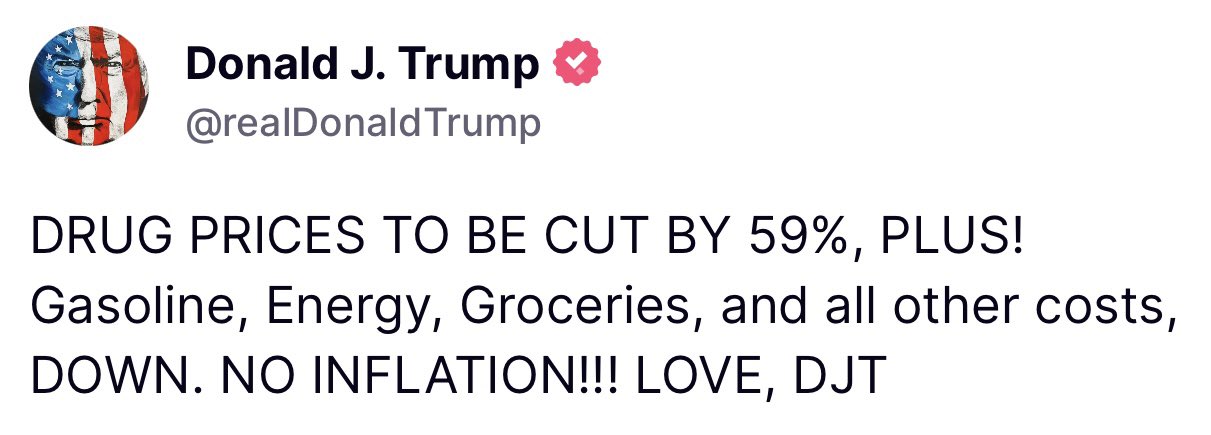
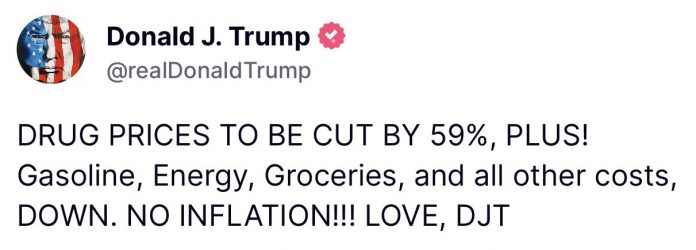
President Donald Trump on Monday signed a sweeping executive order that could shake the foundations of America’s pharmaceutical pricing model, setting a 30-day deadline for drugmakers to cut the cost of prescription drugs  by 59% or face new pricing regulations tied to what foreign governments pay.

The move marks the administration’s most aggressive push yet to tackle what Trump calls “a rigged system” that has forced Americans to pay more than any other country for the same medicines.

At the White House press briefing, Trump said the U.S. will no longer be the pharmaceutical industry’s “piggy bank,” describing the order as a major correction that would “equalize” drug pricing globally.

“We’re all going to pay the same. We’re going to pay what Europe pays,” Trump said, flanked by Health Secretary Robert F. Kennedy Jr., CMS administrator Dr. Mehmet Oz, FDA commissioner Dr. Marty Makary, and NIH director Jay Bhattacharya.

The executive order mandates the Department of Health and Human Services (HHS) to broker new prices for medications. If negotiations with drugmakers fail within 30 days, the administration will implement a new regulation that ties U.S. drug prices to the much lower prices paid by countries in Europe and elsewhere — a controversial model dubbed the “most favored nation” rule.

While the potential savings for Medicare and Medicaid could be substantial, it remains unclear how much of that relief will trickle down to the millions of Americans covered by private insurance, where government leverage over pricing is limited. However, Trump claimed the order would “save taxpayers trillions of dollars” and “reduce healthcare costs by numbers never even thought of before.”

No official analysis was released by the White House on how much the order would save or which drugs would be impacted, though Trump and his advisers suggested the measure could cover high-cost injectables, cancer treatments, and other expensive medications administered under Medicare.

Industry Pushback and Unanswered Questions

The pharmaceutical industry, a powerful lobbying force in Washington, has already begun pushing back. In a statement released on Sunday, Stephen J. Ubl, president and CEO of the Pharmaceutical Research and Manufacturers of America (PhRMA), slammed the plan as a “bad deal” that could harm patients and stifle innovation.

“Importing foreign prices will cut billions of dollars from Medicare with no guarantee that it helps patients or improves their access to medicines,” Ubl said. “It jeopardizes the hundreds of billions our member companies are planning to invest in America, making us more reliant on China for innovative medicines.”

Ubl’s warning echoes the long-standing argument by drugmakers that high U.S. prices are essential to fund the research and development of new drugs — a claim Trump dismissed as hollow.

“Pharmaceutical companies make most of their profits from America,” Trump said on Monday. “That’s not a good thing.”

What remains uncertain is the extent to which the president’s order, if implemented, will hurt the industry’s bottom line. Analysts say that tying drug prices to international benchmarks could deal a serious blow to pharmaceutical firms’ revenue growth, especially since many rely heavily on high-margin sales in the United States to offset lower returns abroad.

The pharmaceutical industry globally is valued at around $1.5 trillion, with U.S.-based companies representing a significant portion of that total. Giants like Pfizer, Merck, Johnson & Johnson, AbbVie, and Eli Lilly have seen massive market capitalizations, with the top five U.S. pharma firms alone collectively worth over $1 trillion as of early 2025. Any disruption to their U.S. pricing model would likely send ripple effects across global financial markets.

Trump’s critics note that the announcement, like many of his previous attempts to take on Big Pharma, may face serious legal and logistical hurdles.

Legal Clouds Above the Executive Orders

Trump’s earlier attempt to implement a “most favored nation” pricing policy during the final stretch of his first term in 2020 was blocked in federal court. At the time, the industry successfully argued that the rule would give foreign governments undue influence over how drugs are priced in the U.S., and a judge halted the plan on procedural grounds. President Joe Biden’s administration later abandoned it.

This time, Trump appears more determined to see it through. He’s also backed by a restructured health leadership team that includes Kennedy, Oz, and Makary — all outspoken about healthcare costs and transparency.

Speaking on Monday, Oz said the HHS will engage directly with pharmaceutical executives over the next 30 days to demand revised pricing based on international benchmarks. If talks break down, the administration will proceed with regulatory changes, bypassing Congress, where multiple bipartisan efforts to lower drug costs have failed.

The legal gray area around whether an executive order can force such sweeping pricing changes, particularly outside of Medicare and Medicaid, remains unresolved. But Trump, banking on public frustration over drug costs, appears willing to test the limits.

Political Capital vs. Corporate Lobbying

Trump’s message was that the U.S. has for too long subsidized cheaper drugs for the rest of the world. He accused pharmaceutical companies of deceptive messaging about R&D costs and vowed not to be swayed by the industry’s campaign contributions.

“For years, they said it was Research and Development Costs,” he wrote Sunday on Truth Social. “And that all of these costs were, and would be, for no reason whatsoever, borne by the ‘suckers’ of America, ALONE.”

“Campaign contributions can do wonders, but not with me, and not with the Republican Party,” Trump added. “We are going to do the right thing.”

The pharmaceutical lobby is one of the most powerful in Washington. According to OpenSecrets, the industry spent over $375 million on lobbying in 2023 alone, more than any other sector, and has consistently ranked among the top donors to both parties.

The potential impact on global drug pricing strategies and U.S. healthcare costs is hard to predict. While Americans pay more for drugs, the savings often go toward innovation that benefits global populations. Many believe that weakening the financial base could slow the pipeline for new treatments.

But Trump’s supporters say the current system is untenable.

NASDAQ Surges In Premarket Following U.S.-China’s 90-day Tariff De-escalation

0
NASDAQ

The NASDAQ’s nearly 4% premarket surge reflects market optimism following the U.S.-China 90-day tariff de-escalation agreement, announced on May 12, 2025. The deal slashes U.S. tariffs on Chinese imports from 145% to 30% and Chinese tariffs on U.S. goods from 125% to 10%, marking a significant thaw in the trade war. This pause, negotiated in Geneva, aims to facilitate further trade talks while easing economic pressures.

Tech-heavy NASDAQ futures led gains, with companies like Nvidia, Amazon, Apple, and Tesla seeing strong premarket rallies, as investors anticipate relief for firms reliant on Chinese supply chains. The S&P 500 and Dow futures also rose, by 3% and 2.4%, respectively. However, the 90-day window introduces uncertainty, as tariffs could revert if no permanent deal is reached.

The U.S.-China 90-day tariff de-escalation agreement, effective May 12, 2025, carries significant implications for global markets, trade dynamics, and political landscapes, while exposing a divide in stakeholder perspectives. The tariff reduction (U.S. from 145% to 30%, China from 125% to 10%) lowers costs for businesses and consumers, driving the NASDAQ’s 4% premarket rally, alongside S&P 500 (3%) and Dow (2.4%) gains. Tech firms like Nvidia and Apple, reliant on Chinese manufacturing, benefit significantly.

Reduced tariffs alleviate supply chain bottlenecks, potentially lowering inflation pressures on goods like electronics and apparel. Emerging markets and commodity exporters tied to Chinese demand (e.g., Australia, Brazil) may see growth, while European markets could stabilize as trade tensions ease.

Uncertainty and Fragility

The 90-day window creates a race to negotiate a lasting deal. Failure could see tariffs snap back, reigniting market volatility. Ongoing U.S.-China tensions over technology, Taiwan, and human rights could derail talks, undermining investor confidence. A stronger Chinese yuan and stabilized U.S. dollar may emerge, but prolonged uncertainty could pressure both.

Lower tariffs reduce prices for imported goods, boosting consumer spending but potentially hurting domestic manufacturers who benefited from protectionism. Eased tariffs support China’s export-driven growth, but structural issues like debt and real estate woes limit long-term gains. The deal may bolster the Biden administration’s image ahead of midterms, but critics could argue it compromises U.S. leverage.

Beijing may use the pause to strengthen domestic industries, reducing reliance on U.S. markets long-term. Tech giants (e.g., Apple, Tesla) and retailers cheer lower costs and improved market access, reflected in the NASDAQ rally. Lower prices on goods like smartphones and clothing are a win, especially amid inflation concerns. Economists and policymakers favoring open markets see this as a step toward de-escalating trade wars, potentially stabilizing global growth.

Countries reliant on Chinese demand or U.S. exports view the truce as a growth catalyst. Industries like steel and textiles, shielded by high tariffs, fear renewed competition from cheaper Chinese imports. U.S. and Chinese hardliners argue the deal weakens their respective positions. In the U.S., critics may claim it rewards China without addressing issues like intellectual property theft or forced technology transfers.

American workers in protected industries worry about job losses if Chinese goods flood markets. Hedge funds and traders anticipating prolonged trade conflict may face losses as markets rally on de-escalation. The agreement reignites debates over globalization’s benefits versus the need to protect local economies. Free-trade proponents see long-term gains, while protectionists warn of dependency on foreign supply chains.

Optimists view the deal as a diplomatic breakthrough, while pessimists see it as a temporary pause in a broader strategic rivalry. The 90-day tariff de-escalation offers immediate economic relief and market enthusiasm, particularly for tech-heavy indices like the NASDAQ, but its temporary nature and the looming threat of renewed tariffs keep uncertainty high.

The divide between pro-deal beneficiaries (corporations, consumers, globalists) and skeptics (domestic industries, hawks, labor) underscores competing priorities—short-term growth versus long-term strategic and economic security. The next 90 days will be critical in determining whether this truce lays the groundwork for lasting stability or merely delays further conflict.

The Ledger’s Discord Hack Has Several Implications

1

On May 11, 2025, Ledger’s Discord server was compromised when a hacker gained access to a contracted moderator’s account. The attacker used a malicious bot to post phishing links in a channel, directing users to a fake website that mimicked a Ledger verification page. The site urged users to enter their 24-word recovery phrases, claiming it was necessary due to a fabricated security flaw. Entering these phrases would grant attackers full access to victims’ crypto wallets. Some users who tried to warn others were muted or banned, potentially delaying Ledger’s response.

Ledger quickly contained the issue by removing the compromised account, deleting the bot, reporting the phishing site, and reviewing channel permissions. The fake website was taken down by Sunday morning. Ledger’s team, via Quintin Boatwright, emphasized that users should never share recovery phrases or connect wallets via Discord links. Additional security measures were implemented to prevent future breaches. It’s unclear if any users lost funds, as the damage couldn’t be immediately assessed.

This incident follows previous scams targeting Ledger users, including fake letters in April 2025 and a 2020 data breach exposing 270,000+ customer details. Phishing attacks, increasingly reliant on social engineering, highlight the need for user vigilance and stronger platform security. Repeated security incidents, including this hack and prior breaches, may undermine confidence in Ledger’s ability to protect users, potentially driving customers to competitors.

Users who fell for the phishing scam and shared recovery phrases likely lost cryptocurrency, with recovery unlikely due to blockchain’s irreversibility. The scale of losses remains unclear. The incident highlights the growing sophistication of social engineering attacks, particularly on platforms like Discord, where trusted accounts can be weaponized to spread drainers. Ledger’s response—tightening permissions and enhancing moderator account security—suggests increased costs and resources for cybersecurity, potentially impacting profitability or product pricing.

Ongoing incidents could attract attention from regulators, especially in jurisdictions with strict crypto and data protection laws, leading to fines or mandatory security audits. The hack underscores the critical need for better user awareness about phishing and wallet security, as human error remains a weak link in crypto ecosystems. Discord’s role as a target for crypto scams may push companies to reconsider reliance on third-party platforms or invest in custom, more secure communication channels.

The hack widens the gap between tech-savvy users who recognize phishing attempts and less experienced ones who fall victim. Newer crypto users, often targeted in such scams, may lose funds due to unfamiliarity with wallet security practices (e.g., never sharing recovery phrases). This creates a two-tiered crypto community: those who navigate risks effectively and those perpetually vulnerable, discouraging broader adoption as scams deter novices.

Repeated incidents like the Ledger hack deepen mistrust between users and crypto hardware/service providers. While Ledger’s core product (hardware wallets) wasn’t directly compromised, the breach of their Discord fuels perceptions of systemic insecurity. Users may split into camps—those loyal to established brands like Ledger despite flaws, and others who shift to decentralized or alternative solutions, fragmenting the market.

Financial losses from the hack disproportionately affect less wealthy users who can’t absorb the hit, while wealthier users may have diversified assets or better recovery options. Phishing scams often exploit those with smaller holdings, exacerbating wealth inequality in crypto. This widens the gap between crypto’s “haves” (who can afford robust security or losses) and “have-nots,” reinforcing crypto as a risky space for retail investors.

The reliance on centralized platforms like Discord for community engagement highlights vulnerabilities that decentralized alternatives (e.g., on-chain forums) might mitigate. The hack may push some users toward fully decentralized ecosystems. A growing ideological split emerges between users favoring convenience of centralized services (despite risks) and purists advocating for decentralization, influencing future platform development.

Incidents like this fuel debates over regulation. Some users and jurisdictions may demand stricter oversight of crypto firms, while others view regulation as stifling innovation. This creates a global divide—regions with heavy regulation may see slower crypto growth, while less regulated areas become hubs for both innovation and scams.

The Ledger hack exemplifies how security breaches amplify existing divides in the crypto world: knowledge gaps, trust issues, economic disparities, and philosophical differences. These divisions could slow mainstream adoption, as potential users hesitate to enter a space perceived as fraught with risk. For Ledger, addressing these requires not just technical fixes but also proactive user education and transparent communication to bridge the trust gap.