DD
MM
YYYY

PAGES

DD
MM
YYYY

spot_img

PAGES

Home Blog Page 1177

Wadephul’s Call for Ceasefire Talks Between Israel and Hamas Seeks to Bridge Humanitarian and Security Concerns

0

German Foreign Minister Johann Wadephul, during his inaugural visit to Israel on May 11, 2025, urged the Israeli government to re-engage in serious ceasefire negotiations with Hamas to address the ongoing conflict in the Gaza Strip. Speaking in Jerusalem alongside Israeli Foreign Minister Gideon Saar, Wadephul expressed doubts about the effectiveness of Israel’s intensified military actions since March 2025, stating, “I am not sure whether all of Israel’s strategic goals can be achieved in this way.”

He emphasized the dire humanitarian situation in Gaza, noting that no aid has reached the region for 70 days, exacerbating the crisis. Wadephul advocated for a ceasefire to ensure permanent humanitarian aid supplies to Gaza’s civilians, while acknowledging Israel’s concerns about aid misuse by Hamas.

He also supported a political solution, endorsing an Arab reconstruction plan involving the Palestinian Authority (PA) to govern Gaza, excluding Hamas, and stressed that Gaza’s reconstruction must be tied to a framework ensuring Hamas cannot threaten Israel. His call aligns with Germany’s longstanding support for a two-state solution and its solidarity with Israel, while prioritizing de-escalation and humanitarian relief.

Wadephul’s call signals a nuanced adjustment in Germany’s traditionally staunch pro-Israel stance. While reaffirming solidarity with Israel, his skepticism about military solutions and emphasis on humanitarian aid reflect growing European concern over the Gaza crisis. This could pressure Israel to reconsider its strategy, especially as Germany is a key EU player and Israel’s second-largest arms supplier after the U.S.

Pressure on Israel: The push for ceasefire talks, coupled with support for an Arab-led reconstruction plan involving the Palestinian Authority (PA), challenges Israel’s current approach of intensifying military operations to dismantle Hamas. Israel may face increased international scrutiny if it resists negotiations, particularly given the reported 70-day aid blackout in Gaza, which has worsened civilian suffering.

Wadephul’s endorsement of a PA-led governance model for Gaza aligns with Arab proposals, notably from Saudi Arabia and Jordan, aiming to marginalize Hamas. This could bolster EU-Arab cooperation on Middle East peace efforts, potentially isolating Hamas further if reconstruction funds are tied to its exclusion. A successful ceasefire could restore aid flows to Gaza, addressing the acute humanitarian crisis. However, Israel’s concerns about Hamas diverting aid for military purposes may complicate negotiations, requiring robust monitoring mechanisms.

The call for talks may encourage other EU nations to echo Germany’s stance, potentially shifting momentum toward diplomacy. However, it risks straining Germany-Israel relations if Israel perceives it as undermining its security priorities. Meanwhile, Hamas may exploit the ceasefire proposal to regroup, as it has in past truces. Israel’s government, under Prime Minister Benjamin Netanyahu, prioritizes dismantling Hamas’s military and governance capabilities, viewing ceasefire talks as potentially allowing Hamas to regroup.

Germany, while supportive of Israel’s security, emphasizes humanitarian costs and a political solution, highlighting a divide over means (military vs. diplomatic) to achieve stability. Israel demands Hamas’s neutralization and guarantees against future attacks, while Hamas seeks to maintain influence in Gaza and leverage ceasefires for survival. Wadephul’s proposal sidesteps Hamas’s role in governance, creating tension with Hamas’s insistence on political relevance.

The U.S. has historically backed Israel’s military approach more robustly, though recent Trump’s administration statements (as of May 2025) show openness to diplomacy. Germany’s proactive push for talks may expose a transatlantic divide, with the EU leaning toward humanitarian and political solutions faster than the U.S. While Germany leads with this initiative, some EU states (e.g., Hungary, Czech Republic) are more unequivocally pro-Israel, while others (e.g., Spain, Ireland) are more critical.

This creates a fragmented EU approach, potentially diluting the impact of Wadephul’s call. The Arab reconstruction plan supported by Wadephul aims to empower the PA and exclude Hamas, aligning with Saudi and Jordanian interests but clashing with Hamas’s goal of retaining control in Gaza. This divide could complicate negotiations if Hamas resists marginalization.

Wadephul’s call for ceasefire talks seeks to bridge humanitarian and security concerns but exposes deep divides between military and diplomatic approaches, as well as competing visions for Gaza’s future governance. The success of this initiative hinges on navigating these fault lines, particularly Israel’s security demands and Hamas’s intransigence.
Tariff Thaw Sparks Global Tech Stock Surge, Treasury Yields Rise, as U.S.-China Call Truce

0

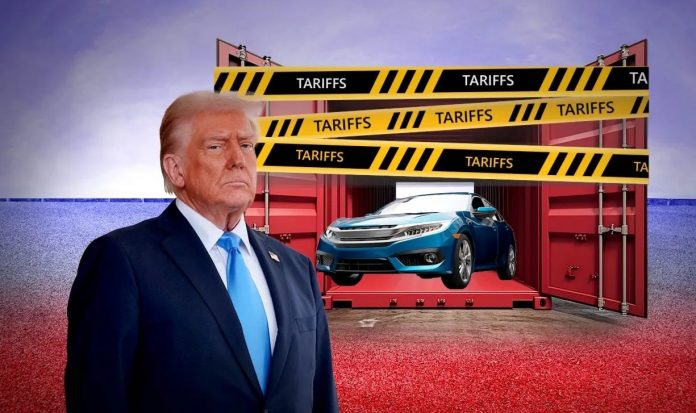
The global market felt ripples of relief as Washington and Beijing reached a breakthrough on Monday, agreeing to pause the bulk of reciprocal tariffs that had upended trade flows, pressured corporate earnings, and rattled investor confidence in recent months.

The immediate response came from the equity markets, and nowhere was the reaction more pronounced than in technology and semiconductor stocks, sectors previously caught in the crossfire of escalating trade tensions.

Chipmakers roared back. U.S. semiconductor leaders like Nvidia and AMD climbed between 4% and 5% in premarket trading. Qualcomm and Broadcom weren’t far behind. Marvell Technology led the early gains, jumping over 7.5%, after the company postponed its investor day last week amid macroeconomic uncertainties that now seem slightly less threatening.

Across the Pacific, Taiwan Semiconductor Manufacturing Co., the world’s largest chip foundry, surged nearly 4% in U.S. premarket hours. European counterparts joined the rally. ASML, a Dutch firm essential to advanced chip manufacturing, rose 4.5%, while Germany’s Infineon Technologies also climbed on the easing of cross-border tensions.

The trade ceasefire follows weekend talks in Switzerland between U.S. Treasury Secretary Scott Bessent and Chinese trade officials—talks Bessent described as “very productive,” crediting the calming setting of Lake Geneva for the progress.

“We have reached an agreement on a 90-day pause and will substantially bring tariff levels down,” Bessent said. “Both sides on the reciprocal tariffs will move their tariffs down 115%.”

The numbers speak volumes. U.S. tariffs on Chinese goods, which previously reached a peak of 145%, are now set to fall to around 30%. China’s tariffs on U.S. goods, formerly 125%, are being reduced to 10%. Some exemptions remain in place—such as the U.S.’s 20% duties on fentanyl-related imports—but the broader effect is unmistakable: a sharp de-escalation that investors had been desperately hoping for.

Relief for Big Tech

The pressure valve was finally released for U.S. tech giants with heavy exposure to China. Apple, still dependent on China for 90% of its iPhone assembly, saw its shares leap more than 7% in early trade. The company had recently warned that tariffs would add nearly $1 billion in costs for the quarter.

Amazon, long entangled in China’s vast production ecosystem through its network of third-party sellers, rose over 8% before markets opened.

Chinese tech firms listed on U.S. exchanges also joined the rally. Alibaba, JD.com, and Baidu saw notable gains, buoyed by signs of stabilization in U.S.-China trade relations and the possibility of renewed investor interest.

“This morning is a huge win for the bulls,” said Daniel Ives, Global Head of Technology Research at Wedbush Securities. “With U.S./China clearly on an accelerated path for a broader deal, we believe new highs for the market and tech stocks are now on the table in 2025.”

Yields Climb, Eyes on Inflation Data

The rally wasn’t confined to equities. U.S. Treasury yields also moved higher, reflecting improved investor sentiment and expectations of firmer economic data. The 10-year yield climbed nearly 6 basis points to 4.433%, while the 2-year yield added 10 basis points to reach 3.996%.

Markets now turn their attention to key inflation readings due this week. Tuesday brings the April Consumer Price Index, while the Producer Price Index and retail sales figures follow on Thursday. Analysts will parse the data for signs of how deeply trade tensions have affected consumer prices, supply chains, and broader economic activity since the U.S. first imposed its “reciprocal” tariff strategy in April.

A Fragile Truce in a High-Stakes Negotiation

While the mood in markets is one of relief, the truce is time-bound. The 90-day pause could pave the way for a broader agreement, or it could merely delay a deeper rupture in the world’s most consequential bilateral trade relationship.

The tech sector’s reaction suggests hope outweighs caution, at least for now. With a potential recalibration in trade policy underway and tariff levels rolling back from triple digits to more conventional ranges, global supply chains—especially for semiconductors and electronics—may yet stabilize heading into the second half of the year.

But beneath the euphoria, hang these questions: Will this deal hold? Can it evolve into something permanent? Or will the world’s two largest economies find themselves back at the negotiating table once the 90-day timer runs out?

World Bank Says Nigeria’s Macroeconomic Indices Are Improving, Projects 22.1% Average Inflation in 2025

0

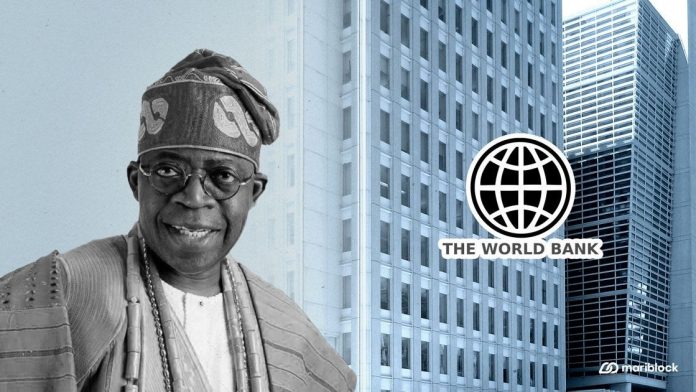
The World Bank says Nigeria’s macroeconomic outlook is beginning to look more promising following a raft of sweeping fiscal and monetary reforms rolled out over the past year. But while the country may be inching back from the brink, the bank warns that real inclusive development will require far more than positive GDP numbers or increased government revenue—it will demand bold and targeted efforts to rebalance the economy from the ground up.

The assessment was captured in the latest Nigeria Development Update (NDU) report titled “Building Momentum for Inclusive Growth”, released in Abuja on Monday. For the first time in years, Nigeria has posted figures that suggest a shift in direction: the economy grew by 4.6% year-on-year in the fourth quarter of 2024, pushing full-year GDP growth to 3.4%—the strongest non-COVID rebound since 2014.

That figure excludes the temporary rebounds recorded during the COVID-19 years, when a brief post-lockdown surge masked underlying weaknesses. This time, the World Bank attributes the gains to “sustained policy reforms and improved revenue mobilization,” pointing particularly to the Tinubu administration’s controversial but arguably necessary decisions to end petrol subsidies and unify the exchange rate.

“Nigeria has made impressive strides to restore macroeconomic stability,” said Taimur Samad, the Acting Country Director for the World Bank in Nigeria. He noted that the narrowing of the country’s fiscal deficit from 5.4% of GDP in 2023 to 3.0% in 2024 marks a significant milestone in the country’s effort to escape its longstanding budget crisis.

But it was the revenue side of the ledger that drew particular attention. Government earnings more than doubled, from N16.8 trillion in 2023 (about 7.2% of GDP) to an estimated N31.9 trillion in 2024 (11.5% of GDP). According to the report, this dramatic increase in public revenue has opened the door for fiscal consolidation and strengthened external buffers, at a time when Nigeria’s foreign reserves and currency stability remain top investor concerns.

However, despite the optimistic tone of the growth figures, the report underscores a deeper reality – noting that growth remains uneven, exclusionary, and structurally fragile.

Most of the recent GDP growth is concentrated in sectors like finance and ICT industries, with limited capacity to absorb Nigeria’s massive and largely unskilled labor force. Millions of Nigerians still find themselves locked out of these sectors due to limited access, education, or digital literacy. And while the macro indicators may be trending upward, poverty and unemployment remain stubbornly high.

The World Bank noted that if Nigeria is to achieve its ambition of becoming a $1 trillion economy by 2030—a goal recently reiterated by policymakers—it must fundamentally change what is growing, how it is growing, and who benefits from that growth.

“International experience suggests that the public sector cannot sustainably generate growth and jobs by itself. Nigeria is no exception, particularly since public resources remain constrained,” said Alex Sienaert, Lead Economist for Nigeria at the World Bank.

Instead, Sienaert advocates for a dual role: a government that both delivers essential public services and creates the enabling environment for private sector-led investment and innovation. Without such an approach, the report warns, the country risks sliding back into the same cycle of booms and busts that have plagued its economy for decades.

Inflation is Still a Thorn

The macro reforms may have improved revenue and investor sentiment, but ordinary Nigerians are still reeling under the weight of elevated prices. The World Bank acknowledges that inflation, driven by the removal of fuel subsidies, exchange rate realignment, high energy and logistics costs, and persistent food supply disruptions, remains “high and sticky.”

The report projects that inflation will begin to ease, averaging 22.1% in 2025, as the Central Bank of Nigeria’s aggressive monetary tightening starts to bear fruit. The CBN’s recent shift toward a tighter stance, marked by successive interest rate hikes and efforts to mop up excess liquidity, is credited with gradually anchoring inflation expectations.

However, the report stops short of declaring victory, noting that structural problems—such as weak agricultural productivity, poor logistics infrastructure, and rampant insecurity in food-producing regions—continue to pose serious risks to price stability and food access.

Lessons from the Past

Nigeria’s latest gains mirror brief periods of fiscal discipline seen in previous administrations, often triggered by crises or multilateral pressure. The Buhari administration, for instance, undertook minor reforms under IMF watch during the 2016 recession, but later reversed course when oil prices rebounded. Many observers worry that a similar pattern may emerge again if the current revenue increase is not channeled into long-term investments.

This time, however, the World Bank sees an opening—if the government can hold its nerve.

“With the improvement in the fiscal situation, Nigeria now has a historic opportunity to improve the quantity and quality of development spending,” said Samad. “That includes investing more in human capital, social protection, and infrastructure.”

But he was quick to add a cautionary note: the allocation of public resources must shift from past “unsustainable patterns” toward development priorities that reduce inequality and empower the private sector.

Can the Reforms Deliver Jobs?

At the heart of the World Bank’s argument is the belief that Nigeria’s reforms, while painful, can be made to work, provided they are accompanied by deeper structural changes that address the root causes of economic exclusion.

The NDU recommends a four-pronged strategy: improve infrastructure, expand access to credit, stimulate competition across key sectors, and overhaul policies in agriculture, manufacturing, and informal trade that affect employment at scale.

The World Bank is particularly focused on sectors that can provide broad-based jobs, such as construction, agro-processing, and light manufacturing. The Bretton Wood Institute notes that without a deliberate pivot in this direction, Nigeria risks replicating the “jobless growth” phenomenon that has characterized much of its past economic performance.

With a population nearing 230 million and growing rapidly, Nigeria needs to create millions of jobs annually just to keep pace. Any growth model that fails to deliver employment at scale, the report suggests, is likely to collapse under the weight of rising inequality, unrest, and political instability.

This means that Nigeria’s path forward depends not just on sticking with reform, but on reforming with a human face, ensuring that macro stability translates into better lives for ordinary citizens.

OpenAI’s Stargate Project Reportedly Faces Delays Due To Tariff-Driven Uncertainty

0

OpenAI’s ambitious Stargate data center project, a cornerstone of its strategy to bolster AI infrastructure in the U.S. and abroad, is encountering significant delays due to economic uncertainty fueled by U.S. tariffs on Chinese imports.

The project, which aims to raise up to $500 billion for AI and energy infrastructure by 2029, is struggling to secure financing as investors grapple with rising costs, market volatility, and concerns over data center overcapacity.

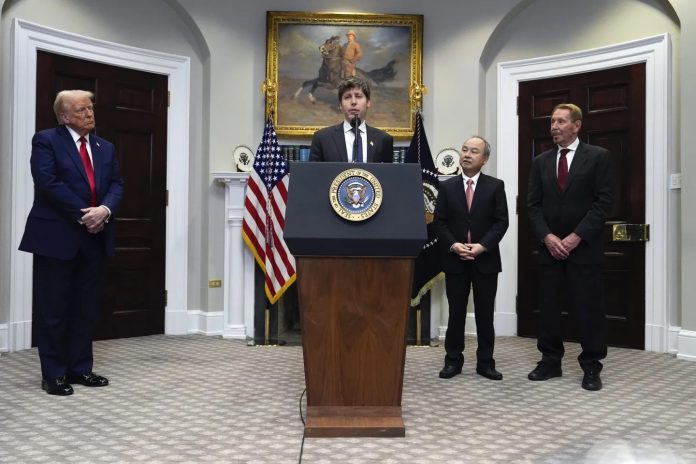
Announced on January 21 by U.S. President Donald Trump, the Stargate project is a collaborative venture involving OpenAI, SoftBank Group Corp., Oracle, and investment firm MGX. Named after the 1994 sci-fi film Stargate, the initiative has been likened to the Manhattan Project for its scale and potential to reshape the AI industry. The project’s goal is to deploy an initial $100 billion in capital, with plans to scale to $500 billion by 2029, to build large-scale data centers and energy generation facilities exclusively serving OpenAI’s AI models, such as ChatGPT. The project is designed to exclusively serve OpenAI.

The project’s strategic importance was emphasized by OpenAI’s chief global affairs officer, Chris Lehane.

“Whoever ends up prevailing in this competition is going to really shape what the world looks like going forward, whether we have democratic AI that’s free and open, or authoritarian AI that is autocratic,” he said in February.

This framing positions Stargate as a critical effort to maintain U.S. leadership in the global AI race, particularly against China.

Tariff-Induced Cost Pressures

The primary obstacle to Stargate’s progress is the economic uncertainty stemming from U.S. tariffs on Chinese imports, which have persisted under Trump’s administration. These tariffs are poised to significantly increase the cost of data center construction. An analysis by TD Cowen, reported on Monday, estimates that “hiked prices for server racks, cooling systems, chips, and other components could contribute to overall build cost rises of 5-15% on average.” This cost escalation is a major concern for potential investors, who are already navigating a challenging economic environment marked by market volatility.

The tariffs, part of broader U.S.-China trade tensions, have created a ripple effect across the tech industry, with companies like Apple also facing pressures to raise prices or shift production. For Stargate, the increased costs threaten to inflate the project’s already massive budget, making it a riskier proposition for financiers.

SoftBank’s Financing Challenges

SoftBank, a key partner in the Stargate venture, announced in January that it would contribute significant capital, with plans to “immediately” deploy $100 billion and eventually scale to $500 billion. However, more than three months later, the company has made little progress. The company has yet to develop a financing template or begin detailed discussions with potential backers.

Beyond tariffs, investors are grappling with additional concerns that are dampening enthusiasm for the Stargate project. Growing market volatility and the emergence of cheaper AI services have raised questions about the long-term viability of such a massive investment. These factors have led to a cautious approach among financiers, who are wary of committing to a project with significant upfront costs and uncertain returns.

Additionally, there are concerns about an overcapacity spike in the data center sector. Tech giants like Microsoft and Amazon have recently adjusted their data center strategies, with some pulling back on construction projects. This trend has heightened investor fears that the market may become oversaturated, potentially reducing the profitability of new data center ventures like Stargate.

Potential for International Expansion

However, there are indications that Stargate may look beyond the U.S. to mitigate some of the tariff-related challenges. Last month, it was reported that the project is considering “international expansion,” with potential plans to explore opportunities in the U.K., Germany, and France. This strategy could help diversify the project’s supply chain and reduce exposure to U.S. tariffs, but as of Monday, no concrete progress has been reported on international efforts, suggesting that these plans remain in the early stages.

So far, the Stargate project remains stalled, with no significant updates indicating progress on financing or construction. The lack of a financing template and the absence of detailed discussions with investors highlight the significant hurdles facing the initiative.

Implications of Trump’s Executive Order on Prescription Drug Prices

0

President Donald Trump announced via Truth Social that he would sign an executive order (EO) on May 12, 2025, aimed at reducing prescription drug prices by 30% to 80%. The EO is described as reviving the “Most Favored Nation” (MFN) policy from his first term, which sought to tie U.S. drug prices to the lowest prices paid by other high-income countries.

Trump claimed this would address the disparity where U.S. consumers pay significantly more for the same medications, sometimes 5-10 times higher than other nations. The policy is intended to apply to certain drugs under Medicare, though specific details on implementation or the scope of drugs affected were not provided in the announcement.

This initiative builds on Trump’s earlier efforts, as he signed an EO on April 15, 2025, to lower drug prices through measures like improving Medicare’s drug price negotiation program, aligning payments with hospital acquisition costs, and standardizing payments across care settings. That order aimed to eclipse the 22% savings achieved in the first year of Medicare’s negotiation program under the Inflation Reduction Act (IRA).

However, his first-term MFN proposal was blocked by a federal court and later rescinded by President Biden in 2021, raising questions about potential legal challenges this time. While the announcement generated significant attention, with some analysts praising it as a blow to Big Pharma, the lack of specifics makes immediate impacts unclear.

Implementation would likely require further rulemaking or congressional action, and drugmakers have warned that such policies could disrupt innovation. Experts note that while the IRA’s existing framework allows Medicare to negotiate prices (e.g., for 15 drugs in 2025, including Ozempic), achieving 30-80% reductions across the board may face logistical and legal hurdles. For instance, a previous Trump-era MFN plan was projected to save $85 billion over seven years but was halted before implementation.

The EO’s actual impact on drug prices will depend on its final text, how it navigates existing laws like the IRA, and whether it withstands potential court challenges. For now, no immediate price reductions are guaranteed, as such changes typically take time to materialize.

President Trump’s announced executive order (EO) on May 12, 2025, to lower prescription drug prices by 30-80% through a revived “Most Favored Nation” (MFN) policy carries significant potential implications, both economically and politically. Below are the key implications and the divides it may exacerbate. If successful, the EO could significantly reduce out-of-pocket costs for millions of Americans, particularly seniors on Medicare, who face high drug prices.

For example, drugs like Ozempic, currently negotiated under the Inflation Reduction Act (IRA), could see further price cuts. The Congressional Budget Office previously estimated the MFN model could save Medicare $85 billion over seven years, suggesting substantial federal savings if reimplemented effectively.

Impact on Pharmaceutical Industry

Drugmakers argue that price controls could stifle innovation, potentially reducing investment in research and development (R&D). The U.S. funds a significant portion of global pharmaceutical R&D, and lower prices could shift costs elsewhere or limit new drug development. Smaller biotech firms, reliant on high U.S. margins, may face greater financial strain compared to larger pharmaceutical giants.

The MFN policy requires complex rulemaking to align U.S. prices with international benchmarks, which could delay impact. The previous MFN attempt was halted by legal challenges, and similar lawsuits from drugmakers are likely. The EO may conflict with or overlap with the IRA’s existing Medicare negotiation framework, creating regulatory confusion or requiring congressional action to expand authority.

Lower drug prices could reduce healthcare costs overall, potentially easing inflationary pressures on insurance premiums and household budgets. However, job losses in the pharmaceutical sector or supply chain disruptions (e.g., shortages of generics) are possible if profit margins shrink significantly. Reducing drug prices is broadly popular, with polls (e.g., Kaiser Family Foundation, 2023) showing over 80% of Americans favor government action to lower costs.

Success could bolster Trump’s approval ratings and Republican electoral prospects. However, failure to deliver tangible results quickly could erode trust, especially among seniors who rely on Medicare and expect immediate relief. Tying U.S. prices to those in other high-income countries could pressure nations like Canada or European countries to raise their drug prices, potentially straining trade relations. Trump’s first-term MFN plan sparked concerns about U.S. “bullying” in global health policy.

Legal and Regulatory Battles

The pharmaceutical lobby (e.g., PhRMA) is likely to challenge the EO in court, as seen in 2020 when the MFN was blocked. Prolonged litigation could delay or derail implementation, creating a flashpoint in public discourse. The EO is likely to deepen existing divides across political, economic, and social lines. Trump’s EO positions Republicans as champions of lower drug prices, potentially co-opting a traditionally Democratic issue.

However, Democrats may criticize it as undermining the IRA, which they view as a landmark achievement. Some Democrats might support the goal but demand broader reforms, like expanding negotiations to private insurance. Free-market conservatives may oppose price controls as government overreach, while populist Republicans, aligned with Trump, see it as a win against Big Pharma. This could spark debates within the party over healthcare policy.

Patients and advocacy groups (e.g., AARP) will likely rally behind the EO, seeing it as relief from high costs. Conversely, pharmaceutical companies and investors may push back, warning of reduced innovation and economic lolosses. Arguments aready reflect this split, with some praising Trump’s “America First” stance and others defending Pharma’s role in drug development. Rural communities, often older and more reliant on Medicare, may see greater benefits, while urban biotech hubs (e.g., Boston, San Francisco) could face economic fallout from reduced industry revenue.

Seniors, who vote at high rates and depend on Medicare, are the primary beneficiaries, potentially widening generational tensions over healthcare priorities. Younger Americans, often on private insurance, may see less immediate impact unless the policy extends beyond Medicare. The EO taps into populist resentment against perceived corporate greed, framing Big Pharma as an elite adversary.