DD
MM
YYYY

PAGES

DD
MM
YYYY

spot_img

PAGES

Home Blog Page 1178

Oversupply of Blockchains Creates Inefficiencies and Barriers to Adoption

0

The blockchain industry likely has too many blockchains. There are thousands of networks, each with varying degrees of utility, adoption, and redundancy. Many are forks or minor variations of existing protocols, fragmenting liquidity, developer focus, and user adoption. This oversaturation can hinder interoperability, increase complexity, and dilute network effects, making it harder for truly valuable projects to stand out.

However, some argue the diversity fosters innovation, allowing experimentation with different consensus mechanisms, scalability solutions, and use cases. The counterpoint is that consolidation around a few robust, interoperable chains—like Ethereum, Solana, or Polkadot—would better drive mainstream adoption and efficiency.

The real issue isn’t just the number but the lack of clear differentiation or sustainable value in many projects. Market dynamics will likely prune weaker chains over time. With thousands of blockchains, liquidity is spread thin across tokens and ecosystems, reducing market depth and increasing volatility. This makes it harder for decentralized exchanges (DEXs) and DeFi protocols to operate efficiently.

Developers face a crowded field, splitting their focus across competing platforms. This slows innovation on any single chain as talent is diluted. End users struggle to navigate the multitude of wallets, protocols, and chains, hindering mainstream adoption. Many blockchains operate in silos, with limited cross-chain compatibility. Bridging solutions like Polkadot, Cosmos exist, but they add complexity and security risks, as seen in frequent bridge hacks.

Lack of standardization across protocols complicates integration and data sharing, slowing ecosystem growth. Blockchains thrive on network effects—more users, developers, and dApps strengthen a chain’s value. Too many chains weaken these effects, as no single platform can dominate or achieve critical mass. This contrasts with platforms like Ethereum, which benefit from a robust developer and user base despite high gas fees.

Economic Inefficiency

Many blockchains are redundant, offering marginal improvements over existing solutions. Maintaining these networks consumes energy, capital, and infrastructure without proportional value. Zombie chains—projects with minimal activity—persist due to speculative token markets, draining resources from viable ecosystems. Smaller blockchains often lack the node count or staking power to ensure robust security, making them vulnerable to 51% attacks or governance exploits.

Low adoption also means less scrutiny, increasing the risk of undetected bugs or malicious code. Over time, market forces will likely favor a few dominant chains with strong fundamentals, interoperability, and adoption. Weaker chains may fade, but the transition could be messy, with failed projects leading to investor losses and eroded trust.

The blockchain community is split on whether the proliferation of blockchains is a problem or a feature of the industry’s evolution. Different blockchains test unique approaches to scalability like the Solana’s Proof of History, privacy (e.g., Monero), or governance (e.g., Tezos). This diversity drives technological breakthroughs that benefit the broader ecosystem. Niche chains serve specific use cases—like gaming (Flow), supply chain (VeChain), or IoT (IOTA)—that general-purpose chains like Ethereum may not optimize for.

A multitude of chains aligns with the decentralized ethos, preventing monopolization by a single platform. It ensures no single entity like Ethereum Foundation controls the ecosystem. Competition incentivizes chains to improve performance, lower fees, and prioritize user needs. The market will naturally filter out weak projects, rewarding those with real utility. This Darwinian process is seen as healthy for long-term growth.

Early internet protocols had similar fragmentation (e.g., Gopher vs. HTTP), but winners emerged organically. Consolidation around a few dominant chains would concentrate liquidity, developer talent, and user adoption, creating stronger network effects. Ethereum’s dominance in DeFi (despite competitors) shows the power of a unified ecosystem. Fewer chains simplify interoperability, as cross-chain bridges and standards can focus on a smaller set of protocols.

A streamlined ecosystem reduces complexity for users, who currently juggle multiple wallets, tokens, and interfaces. A few interoperable chains could offer a seamless experience, critical for mainstream adoption. The internet consolidated around TCP/IP and HTTP, enabling a user-friendly web, not a fractured one.

Maintaining thousands of blockchains is resource-intensive, especially for energy-hungry consensus mechanisms. Consolidation reduces environmental and economic waste.  Stronger chains with larger communities are better equipped to secure networks and fund ongoing development. The industry’s speculative phase, fueled by ICOs and token launches, has led to an oversupply of chains. A mature market would prioritize quality over quantity, with fewer but more robust platforms.

Examples like Solana and Binance Smart Chain show how focused ecosystems can scale rapidly with clear value propositions. The tension between diversity and consolidation reflects the industry’s growing pains. A middle ground may emerge through, projects like Polkadot, Cosmos, and Chainlink CCIP aim to connect chains, mitigating fragmentation while preserving diversity.

Scaling solutions like Arbitrum, Optimism, or zk-Rollups allow Ethereum and other major chains to handle niche use cases without spawning new blockchains. As speculative hype fades, weaker chains will likely die off, leaving a leaner ecosystem of interoperable, high-value networks.

The oversupply of blockchains creates inefficiencies and barriers to adoption, but it also fuels experimentation and resilience. The divide—diversity vs. consolidation—mirrors debates in other tech revolutions. Long-term, market forces and interoperability solutions will likely reduce the number of viable chains, favoring a few dominant, interconnected ecosystems. The challenge is navigating this transition without stifling innovation or alienating users.


Internet Audio and Video Calls Surpassed Traditional Mobile Network in Germany

0

In Germany, internet-based audio and video calls have surpassed traditional mobile network usage in 2024. According to the Federal Network Agency (Bundesnetzagentur), the duration of audio conversations via messenger apps like WhatsApp reached 197 billion minutes in 2024, reflecting a significant shift toward over-the-top (OTT) communication services. This trend is driven by the widespread adoption of smartphones and high internet penetration, with 93% of the population using the internet in 2024.

Additionally, a 2023 Statista report noted that 64% of Germans made telephone calls (including video calls) via the internet, highlighting the growing reliance on apps like WhatsApp, Skype, and Facebook Messenger. Mobile data consumption has also surged, with Germans using 2 billion gigabytes in 2018 alone, a 40% increase from the previous year, partly due to the abolition of EU roaming charges in 2017.

However, Germany’s mobile and broadband infrastructure lags behind many European countries, with only 2% of connections using fiber optics and a 4G network ranked among the worst in Europe for speed and availability. This has led to challenges in supporting the rising demand for data-intensive services like video calls, especially in rural areas where connectivity remains patchy. Despite these issues, the dominance of OTT services continues to reshape communication habits, with traditional SMS and voice calls declining sharply—SMS usage dropped from 60 billion in 2012 to 8.9 billion in 2018.

The shift in Germany toward internet-based audio and video calls overtaking mobile network usage has significant implications, particularly in terms of infrastructure, economic impacts, and the growing digital divide. The surge in data-intensive services like video calls (197 billion minutes via messenger apps in 2024) puts pressure on Germany’s already lagging mobile and broadband networks. With only 2% of connections using fiber optics and a subpar 4G network, the infrastructure struggles to support high-speed, reliable connectivity, especially for rural areas.

This necessitates substantial investments in 5G and fiber-optic networks to meet demand, as mobile data consumption continues to grow (2 billion gigabytes in 2018, up 40% year-over-year). The reliance on over-the-top (OTT) services like WhatsApp and Skype reduces revenue for traditional telecom providers from voice calls and SMS (SMS usage fell from 60 billion in 2012 to 8.9 billion in 2018), potentially limiting their capacity to fund network upgrades without government intervention or new business models.

Economic and Industry Shifts

Telecom operators face declining revenues from traditional services, pushing them to pivot toward data-centric plans or value-added services. This could lead to higher consumer costs for data packages or premium connectivity options. The dominance of OTT platforms strengthens tech giants like Meta (WhatsApp) and Microsoft (Skype), raising concerns about market concentration and data privacy, as these services collect vast amounts of user data.

Regulatory scrutiny may increase, particularly under EU data protection frameworks like GDPR. The widespread adoption of internet calls (64% of Germans – The shift to OTT services reflects changing communication habits, with 93% internet penetration enabling seamless, cost-effective global connectivity. This fosters greater social and professional interactions but reduces reliance on traditional telecom infrastructure.

Urban areas benefit from better 4G/5G coverage and broadband access, enabling seamless use of OTT services. In contrast, rural regions suffer from patchy connectivity, with slow broadband speeds and unreliable mobile networks. This limits access to video calls and other data-heavy services, hindering remote work, education, and social connectivity in these areas.

For example, Germany’s 4G network ranks poorly in Europe for speed and availability, and rural areas often lack the infrastructure to support the 2 billion gigabytes of mobile data consumed in 2018. Lower-income households may struggle to afford smartphones or high-speed internet plans, limiting their ability to use OTT services. In 2023, 64% of Germans used internet calls, but the remaining 36%—often older or less tech-savvy individuals—may be excluded due to cost or digital literacy challenges.

Small businesses in rural areas face competitive disadvantages, as poor connectivity hampers their ability to engage in digital markets or adopt modern communication tools. The digital divide affects access to online education and remote work, both reliant on video conferencing tools. Rural students and workers are at a disadvantage, potentially widening educational and economic inequalities.

The Bundesnetzagentur’s 2024 data underscores the scale of OTT usage, but those without reliable internet are increasingly left behind in a communication landscape dominated by apps. Government initiatives, like Germany’s push for nationwide 5G and fiber-optic expansion, are critical. Subsidies for rural broadband deployment could bridge the gap. Training for older or less tech-savvy populations can boost adoption of OTT services, ensuring broader inclusion.

Telecoms could offer low-cost data plans, while public Wi-Fi initiatives in rural areas could enhance connectivity. This shift to internet-based communication highlights the urgency of addressing Germany’s digital infrastructure and equity challenges to ensure all citizens can participate in an increasingly connected world.

XRP makes $160,000 per month? RICH MINER tests three cloud mining strategies, a wealth code that ordinary people can also copy

0

In the new wave of the cryptocurrency market in 2025, XRP holders are achieving amazing passive income through the cloud mining platform RICH MINER. With its disruptive model of “zero equipment, zero threshold”, the platform is called the “mining dark horse” by the media, and some users even achieve a monthly income of $160,000 through three core strategies. This article will deeply analyze the underlying logic of these strategies and reveal how ordinary people can copy this wealth code.

Strategies1: Dynamic multi-currency switching and AI optimization-core technology for high returns

The basis of RICH MINER’s competitiveness lies in the mining algorithm and dynamic income strategy of artificial intelligence:

  1. The platform uses machine learning to analyze real-time market data (such as currency price fluctuations, network computing power requirements, etc.), and automatically switches computing power to the currency with the highest current yield (such as BTC, ETH, SOL, etc.). For example, when XRP mining income decreases due to low market sentiment, the system will quickly switch to BTC or ETH to protect users’ income.
  1. Low threshold, compound interest effect: Users only need $15 to start mining, and the income can be reinvested daily. Assuming that the user invests $15,006 to purchase a 42-day contract, the average daily income is about $269.88. Thanks to rolling compound interest, the total income after 42 days can reach $11,334.96. If reinvestment is continued, the principal continues to grow. According to the theoretical model, the monthly income may exceed $130,000.
  1. Green energy reduces costs: The platform uses solar and wind power for power supply, and the electricity cost is 40% lower than that of traditional mines. Users do not need to bear the risk of hardware loss and electricity price fluctuations.

strategies2: Layered recommendation and community splitting mechanism – social leverage boosts income

RICH MINER has designed a three-tier referral reward system to encourage users to expand their income through social networks:

  1. Direct referral reward: you can get a promotion reward of 3% of your investment amount
  1. Second-level referral reward: you can get a promotion reward of 1% of your investment amount
  1. Third-level referral reward: you can get a promotion reward of 0.5% of your investment amount

For example, if user A creates a three-level network with 100 active investors, and each investor has an average daily income of $1,000, user A’s additional daily income can reach thousands of dollars. This model combines community operations (such as Discord groups, offline activities, etc.) to create a dual income engine of “passive income + social”.

strategies3: Compliance and risk architecture – long-term stable core logic

  1. Safe custody of funds: no security incidents for two consecutive years.
  1. Legal and compliant: The platform strictly abides by the UK FCA and anti-money laundering regulations, and regularly publishes audit reports to avoid operational risks similar to “Ponzi schemes”.
  1. Multi-currency hedging strategy: Users can spread their income to stablecoins such as BTC and USDT, or lock in long-term income through the XRP staking function supported by the platform to reduce the impact of price fluctuations of a single currency.

Practical Guide: Four-step strategy from registration to profit maximization

  1. Registration start: Register now to get a $15 bonus (daily sign-in $0.6).
  1. Contract selection: Choose the right cloud mining contract based on your budget and expected income.

[Basic contract]: Investment amount: $700, potential total net profit: $700 + $59.29.

[Smart contract]: Investment amount: $1,000, potential total net profit: $1,000 + $128.

[Smart contract]: Investment amount: $5,800, potential total net profit: $5,800 + $2,189.5.

?Classic Contract?: Investment amount: $15,600, potential total net profit: $15,600 + $11,334.96.

For example:

15,600 USD contract, 42 days, daily return rate 1.73%.

The amount of passive income that users can obtain every day after successful purchase = $15,600 × 1.73% = $269.88.

After 42 days, the user’s principal and income are: $15,600 + $269.88 × 42 days = $15,600 + $11334.96 = $26934.96 (the platform has launched a series of stable income contracts, which you can check on the RICH MINER official website).

  1. Dynamic adjustment: monitor real-time profit distribution through the platform APP, and manually intervene in AI strategies to obtain short-term XRP income.
  1. Withdrawal and reinvestment: Daily income can be withdrawn to the XRP wallet or invested in higher-level contracts (such as lifetime profit sharing plans).

Conclusion:

RICH MINER has opened up a wealth channel of passive income for XRP holders through the triple engine of “high-yield contracts + AI technology + social fission”, and has taken the lead in the wave of cloud mining. As a successful user said: “This is not about making money by lying down, but winning the future with strategy.”

RICH MINER is a trusted partner  in the field of cryptocurrency cloud mining! Join now, seize the opportunity, and earn passive income! For more details, please visit the official website https://richminer.com/ or download the APP directly .

Rejection of Putin’s Offer Signals High-Stakes Standoff With Europe and the U.S.

0

German Chancellor Friedrich Merz stated that Russian President Vladimir Putin’s offer for direct peace talks with Ukraine in Turkey is insufficient, emphasizing that a ceasefire must precede any negotiations. Speaking in Berlin on May 11, 2025, after his first visit to Kyiv, Merz insisted, “First the weapons must go silent, then conversations can begin.”

He noted that Ukraine has agreed to a U.S.-proposed 30-day ceasefire without reservations, but Russia has not committed, with Putin ignoring a European ultimatum for a truce by May 12, 2025. Merz, along with leaders from France, the UK, and Poland, threatened increased sanctions if Russia refuses. French President Emmanuel Macron echoed Merz, stating that talks cannot proceed while civilians are bombed, and Polish Prime Minister Donald Tusk demanded an “univocal” Russian commitment to a ceasefire.

The rejection of Putin’s peace talks offer by German Chancellor Friedrich Merz and other European leaders underscores a deepening divide between Western powers and Russia, with significant implications for the Ukraine conflict and global geopolitics. The insistence on a ceasefire before talks, coupled with threats of increased sanctions, could escalate tensions.

Russia’s refusal to commit to a truce by the May 12, 2025, deadline may lead to intensified Western support for Ukraine, including more military aid, as evidenced by Merz’s pledge of €2 billion in immediate assistance during his Kyiv visit. This could prolong the conflict if Russia responds with further aggression. The West’s precondition of a ceasefire and Russia’s apparent unwillingness to comply suggest a diplomatic impasse. Putin’s offer to hold talks in Turkey, mediated by President Recep Tayyip Erdogan, was dismissed as insufficient, signaling distrust in Russia’s intentions.

Without a clear path to negotiations, the war may continue, exacerbating humanitarian and economic crises. Merz’s stance, backed by France, the UK, and Poland, reflects a unified European front demanding concrete Russian concessions. This alignment strengthens the EU’s resolve but also raises the stakes, as failure to enforce the ceasefire ultimatum could undermine credibility. The coordinated threat of sanctions indicates a willingness to intensify economic pressure, potentially impacting global energy and food markets already strained by the conflict.

Ukraine’s acceptance of a U.S.-proposed 30-day ceasefire bolsters its image as a cooperative partner, contrasting with Russia’s intransigence. However, Kyiv’s reliance on Western support limits its negotiating leverage, as any peace process will hinge on European and U.S. priorities, potentially sidelining Ukrainian demands for full territorial restoration. The divide risks further polarizing international alignments. Turkey’s role as a mediator highlights its strategic balancing act, but its influence may wane if talks collapse. Meanwhile, non-Western powers like China and India, which have maintained neutrality, may face pressure to take sides, affecting global trade and diplomatic relations.

A ceasefire is non-negotiable before talks, reflecting distrust in Putin’s motives and a belief that negotiations under ongoing bombardment are untenable. Leaders like Merz, Macron, and Tusk prioritize halting Russian aggression to protect civilians and create a stable environment for dialogue. This stance is rooted in moral and strategic concerns, including preventing Russia from consolidating territorial gains.

Putin’s offer for direct talks without a guaranteed ceasefire suggests a desire to negotiate from a position of strength, maintaining military pressure on Ukraine. Russia’s rejection of the European ultimatum and lack of commitment to a truce indicate either strategic confidence or an intent to test Western resolve. Russia may view the West’s demands as hypocritical, given NATO’s military support for Ukraine.

This divide is compounded by mutual accusations of bad faith. European leaders see Putin’s offer as a tactic to buy time or weaken Ukraine’s position, while Russian narratives, echoed in some X posts, frame Western preconditions as an excuse to prolong the war and avoid compromise. The absence of a neutral arbiter trusted by both sides further entrenches the stalemate.

The rejection of Putin’s offer signals a high-stakes standoff, with Europe and the U.S. doubling down on pressure tactics and Russia holding firm. The divide risks prolonging the conflict, straining global stability, and testing the West’s ability to enforce its demands without triggering broader escalation.

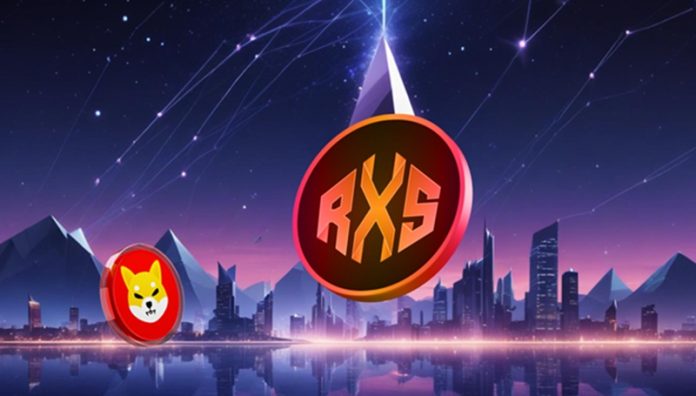
How Much You’d Have Made Buying Shiba Inu After Forbes’ 1,700% Forecast, And What New SHIB Rival Could Earn You in 2025

0

Shiba Inu (SHIB) was once the poster child for meme coin mania, turning modest investments into life-changing profits almost overnight. In 2024, Forbes predicted Shiba Inu would rise 1,700% by 2025. At the time, SHIB was hovering around $0.000020. Since then, the meme coin has tumbled 40% to just $0.000012. This means a $1,000 investment at the time of the prediction could have fallen to just $600. The road ahead still looks less predictable for SHIB. With utility still limited and competition intensifying, many investors are now eyeing newer performers that blend meme-level excitement with real-world use cases. One such project gaining traction is Rexas Finance (RXS), now nearing the end of its $48M presale at $0.20, with 92% of tokens already snapped up.

Shiba Inu’s Legacy Ride: From Meme to Market Mainstay

Shiba Inu (SHIB) made headlines for transforming casual holders into overnight millionaires, but the firepower is now gone. While SHIB’s initial rise was fueled by community hype and meme culture, its staying power has relied more on branding than tangible utility. Now, with market dynamics shifting toward function-rich ecosystems, SHIB faces the challenge of evolving beyond its meme origins to remain competitive. As seasoned investors look for the next high-upside opportunity, attention is turning to under-the-radar players like Rexas Finance (RXS), currently in its final presale stage.

Rexas Finance: Tokenizing Real-World Assets Like Never Before

Rexas Finance is shaking up the crypto market with its multi-purpose platform that focuses on creating and accelerating real-world asset tokenization. At the core of its robust ecosystem are aggressive tools such as the Rexas Token Builder, which enables users to speedily and straightforwardly mint asset-backed tokens, and the Rexas Launchpad, a secure, multi-chain platform for the launching of decentralized token offerings. But the platform does not end there. Rexas GenAI combines artificial intelligence with NFTs to access new layers of digital value, while Rexas Estate provides equal access to top-tier real estate to all through fractional ownership and passive income-generating stablecoins. Constructed with native cross-chain connectivity, Rexas Finance offers seamless and flexible interaction on multiple blockchain networks.

Presale Powerhouse: $48M Raised with 92% of Final Stage Sold

Rexas Finance presale has been astronomical. With more than 12 rounds, it has raised $48 million in funding and sold over 460 million tokens, from an initial price of $0.03 to $0.20, with almost 7x gains for early adopters. Now in the final stage of its presale, 92% of tokens have been snapped up, a testament to unprecedented market confidence and building strong momentum before the project’s highly anticipated exchange launch. Unlike VC-backed ventures, Rexas Finance empowers power with everyday investors, offering early access into a market-changing tokenization revolution. With three exchanges lined up on the immediate agenda, Rexas Finance is poised for a high-impact market launch.

Going Global: $1M Giveaway Creates Global Hype

In celebration of its presale success, Rexas Finance is launching a generous $1 million giveaway, awarding $50,000 to each of 20 lucky winners. Concurrently, its global visibility keeps growing, with top-tier listings on CoinMarketCap and CoinGecko elevating visibility and attracting fresh international attention. As tokenization of real-world assets becomes trend, then norm, Rexas Finance takes the lead, opening up access, equity, and opportunity for a limit-free decentralized financial future.

Shiba Inu’s early boom turned pocket change into fortunes, just as Forbes’ 1,700% forecast predicted. But with SHIB’s growth slowing and utility still lacking, investors are shifting toward substance-backed projects. Rexas Finance (RXS) is leading that charge, having raised $48 million and sold 92% of tokens in its final presale stage at $0.20. With nearly 7x gains for early backers and major listings on the horizon, RXS could be 2025’s breakout star. Act now, join the presale before it closes and secure your position in the next big crypto win.


For more information about Rexas Finance (RXS) visit the links below:

Website: https://rexas.com

Win $1 Million Giveaway: https://bit.ly/Rexas1M

Whitepaper: https://rexas.com/rexas-whitepaper.pdf

Twitter/X: https://x.com/rexasfinance

Telegram: https://t.me/rexasfinance