DD
MM
YYYY

PAGES

DD
MM
YYYY

spot_img

PAGES

Home Blog Page 1180

AI in Action: How Canadian Online Casinos Are Elevating Gameplay and Safety

0

The Canadian online casino market continues its upward trajectory, with revenue projected to surpass $2.6 billion in 2025 and potentially reach $3.49 billion by 2026. As the sector expands, artificial intelligence is becoming integral to operations, enhancing user experiences, strengthening security systems, and advancing responsible gambling practices. CasinoRIX experts emphasize that AI is not a trend but a foundational shift in Canadian iGaming. This article examines how AI is transforming the market, from personalization and fraud detection to predictive tools shaping the industry’s future.

The Role of AI in Modern Online Casino Infrastructure

In the Canadian iGaming sector, artificial intelligence refers to data-driven systems capable of recognizing behavioural patterns, automating decision processes, and adapting in real time based on user activity. These technologies are increasingly embedded in the operational backbone of licensed online casinos, helping platforms remain both competitive and compliant.

The primary areas where AI is currently applied include:

  • Player behaviour analysis: AI monitors how individuals interact with games, wagering patterns, and session frequency to develop detailed user profiles.

  • Personalized content delivery: Algorithms adjust game recommendations, bonus offers, and interface elements based on live usage data, not static assumptions.

  • Fraud prevention: Systems detect anomalies such as device switching, unusual transaction timing, or automated betting, triggering immediate risk assessments.

  • Retention and re-engagement: Predictive models identify signs of churn and initiate targeted outreach, often through dynamic bonus strategies or in-platform messaging.

  • Interface and product optimization: Casinos test and adapt layouts, banners, and promotions based on user interaction metrics gathered in real time.


Unlike traditional rule-based tools, modern AI systems evolve with each dataset, enabling continuous refinement of both customer experience and operational performance. As CasinoRIX experts observe, the adoption of AI reflects a structural transformation – one that redefines how licensed platforms in Canada deliver services, ensure integrity, and respond to market demands.

How AI Optimizes Player Experience on Canadian Gambling Platforms

AI technologies are increasingly embedded in Canadian online casino platforms to support data-driven personalization. One example is NorthStar Bets, which applies behavioural analytics to tailor homepage content, refine bonus targeting, and streamline user journeys. The platform collects and processes data on session timing, preferred game types, and player activity to adjust recommendations and promotions in real time.

For instance, if a user consistently plays live dealer games during evening hours, the platform dynamically prioritizes those tables during that time window. Slot preferences, betting range, and engagement history are used to adjust which games appear first, which offers are triggered, and how navigation flows between sections.

Some operators use AI-powered A/B testing tools to optimize visual layout and promotion display. These tools continuously evaluate which banners, buttons, or bonus formats perform best for different player groups, allowing for rapid interface refinement.

To explore casinos actively using these technologies, visit the top gambling sites handpicked by CasinoRIX experts for Canadians. CasinoRIX assesses how AI functions are implemented in practice, with attention to real-time personalization and measurable impact on user engagement.

Artificial Intelligence in iGaming Security Operations

“AI is no longer a supplementary tool; it has become a foundational layer in how modern Canadian casinos manage fraud, ensure compliance, and maintain platform integrity,” says Kris Olson, Expert Casino Reviewer & Journalist at CasinoRIX. Artificial intelligence is now embedded in key security systems, continuously learning from live data and adapting to changes in player behaviour.

One of the most widely used applications is session tracking. For example, if a user logs in from a desktop in Toronto and shortly after from a mobile device in Vancouver, the system flags this anomaly and may trigger additional verification. The same logic applies to irregular deposit behaviour or changes in betting patterns that deviate from a user’s typical activity.

AI is also applied to detect automated or suspicious gameplay. If a system observes repetitive actions with inhuman speed or unusually fast transitions between games, it may automatically suspend the account for review. In multiplayer formats like poker, AI can identify collusive behaviour by analyzing betting correlations across accounts.

Operators such as NorthStar Bets, licensed by iGaming Ontario, rely on AI-powered risk engines to meet provincial standards and protect users. These systems operate silently in the background, helping maintain a secure, compliant, and transparent environment for all players.

Adaptive Risk Monitoring: AI and Responsible Play

AI is now central to responsible gambling programs across licensed Canadian platforms. These systems analyze patterns such as session duration, bet frequency, deposit spikes, and cancelled withdrawals to assess individual risk in real time.

LeoVegas Ontario uses its proprietary LeoSafePlay tool to assign risk profiles based on behaviour and trigger tailored messages suggesting limits or breaks. If flagged patterns persist, the system may recommend self-exclusion or suspend promotional offers.

BetMGM Ontario, meanwhile, applies predictive models to monitor high-risk indicators and integrates them with its automated support workflows. For instance, users showing sudden loss escalation receive customized notifications with access to help resources.

According to CasinoRIX experts, adaptive tools like these improve long-term player trust by offering discreet, context-aware interventions. Core features include dynamic deposit caps, session reminders, and automated break suggestions – all calibrated by AI rather than set manually. This ensures early, personalized support aligned with iGaming Ontario’s consumer protection standards, without disrupting gameplay.

What’s Next for AI in Canadian Online Casinos

In 2025, the next wave of AI implementation in Canadian online casinos focuses on decision automation and regulatory alignment. Platforms are moving toward real-time risk scoring, where AI systems assess user behaviour not post-factum but moment by moment, adjusting access to promotions, session lengths, and even payment options based on dynamic risk profiles.

An emerging trend is predictive KYC, where AI pre-validates user identity against behavioural and transactional norms before triggering manual verification. This reduces onboarding friction while strengthening fraud prevention, especially under Ontario’s evolving regulatory guidelines.

Conversational AI is also evolving. Operators are integrating multilingual virtual assistants that resolve compliance-related queries and responsible gambling requests, such as limit adjustments or account cooling, without escalation to human support.

CasinoRIX experts point to growing investment in explainable AI. Operators are under pressure to justify how automated systems make decisions that impact player access or rewards. Transparent logic models, backed by audit-friendly architecture, are becoming a requirement rather than a future goal.

Canadian operators are moving from experimentation to structured implementation, where AI meets compliance, auditability, and fairness standards.

Conclusion

AI is already integrated into the key systems of Canadian online casinos. It supports real-time decision-making, improves risk oversight, and shapes how platforms meet regulatory and player expectations. According to CasinoRIX experts, the priority now is to refine these tools, making them more transparent, adaptable, and aligned with long-term operational goals.


Web3 Explained: Why Investors Are Paying Attention

0

Web3 is more than just a buzzword—it’s a structural shift in how value is created and distributed online. At its core, it’s about ownership and control moving into the hands of users through decentralized technologies. Investors are drawn to this model not only because of the underlying innovation, but because it challenges traditional gatekeepers and opens new markets in areas such as finance, digital identity, and entertainment.

Transparency and Early Access: Why Web3’s Investment Appeal Grows

The appeal of Web3 investment lies in its transparency and community-first logic. Projects publish roadmaps and technical documents openly, allowing anyone to assess what they’re buying into. Investors aren’t just shareholders—they’re participants with real input into direction and governance. In some ecosystems, utility tokens grant both access and influence.

We’ve seen similar shifts in online entertainment, where user control enhances engagement. For example, projects that integrate mechanics similar to https://hexabetcasino.com/ offer users incentives not just for participation, but for loyalty, giving rise to models where entertainment and asset ownership intersect—especially in crypto-based game economies.

Web3 Risks Every Investor Should Understand

As promising as the sector is, Web3 comes with sharp edges. One of the biggest risks is volatility—token values can swing widely within hours. Many projects also lack mature regulation, leaving investors vulnerable to security breaches, smart contract flaws, or poorly run governance models.

Risks to account for:

  • Rug pulls and exit scams from anonymous teams
  • Overpromised roadmaps with under-delivered results
  • Lack of legal clarity for asset ownership and taxation

Without a solid understanding of the tech, it’s easy to get swept up by hype and overlook real warning signs.

Where the Momentum Is: Promising Web3 Sectors to Watch

Web3 isn’t a single trend—it’s a web of fast-growing verticals. Among the most promising are decentralized finance tools (DeFi), on-chain gaming, DAO infrastructure, and the next iteration of NFTs. Digital identity systems are also gaining traction, especially those focused on user privacy and credential verification.

Other areas drawing investor interest include:

  • Tokenized real-world assets (RWA), bridging physical and digital finance
  • Reward-driven ecosystems—similar in spirit to what Hexabet Bonus systems offer—where users are compensated for data, time, or influence

These segments offer not just returns, but future relevance.

Building a Smart Web3 Investment Strategy

Web3 demands a new type of investor—one who mixes curiosity with caution. Before committing capital, review project whitepapers, verify the team’s presence and track record, and understand the utility of the token. Blind speculation rarely ends well in uncharted spaces.

Tips for structuring a Web3 portfolio:

  • Diversify across sectors, not just coins
  • Stick to projects that show consistent community support
  • Use demo environments before staking funds, the way Hexabet slots let users preview features risk-free

Long-term success here depends less on luck and more on discipline, timing, and clarity.

Digital Entrepreneurship Today: When Agility Meets Financial Precision

0

Running a business in 2025 isn’t just about speed — it’s about control. With everything moving in real time, from payments to supply chains, entrepreneurs must rethink how they manage money. A modern founder isn’t just building a product — they’re navigating fluctuating costs, borderless payments, and dynamic demand. Financial awareness is no longer a bonus; it’s part of survival.

How Financial Knowledge Drives Smarter Business

Today’s founders know that a flashy pitch or a viral launch won’t cover for messy books. Entrepreneurs who take time to understand budgeting, taxes, and risk modeling build stronger foundations. You can read more about HashLucky to see how clear planning, structured reward systems, and operational clarity play a key role even in industries focused on entertainment and chance.

For example:

  • Those who understand recurring expenses avoid overspending during launch phases
  • A good grasp of break-even analysis helps structure pricing that sustains growth

In volatile environments, knowledge isn’t optional — it’s leverage.

Discipline Over Hype: Why Well-Managed Startups Last Longer

Behind every successful company is a founder who tracks cash flow as closely as customer feedback. Hype may spark attention, but financial structure sustains momentum. Startups that ignore their balance sheets often run into issues within the first year. Meanwhile, those that build clear systems for expenses, taxes, and reinvestment tend to navigate uncertainty with greater ease — no matter the niche, whether tech, wellness.

Digital Tools for Financial Clarity Without Overcomplication

You don’t need to be an accountant to stay on top of your business finances — but you do need the right tools. Entrepreneurs today use dashboards and apps that track earnings, project future expenses, and flag unusual spending patterns. These tools help translate numbers into actions.

Key benefits of digital finance tools:

  • Immediate visibility into revenue streams
  • Alerts when budgets are exceeded
  • Structured data for smarter forecasting

They reduce guesswork and give entrepreneurs space to focus on strategic growth rather than financial firefighting.

Think Like an Investor — Even If You’re Not Seeking Capital

Even if you don’t plan on pitching to VCs, it pays to evaluate your business as if you were. Investors look at financial discipline, clarity of vision, and realistic projections. Entrepreneurs who apply that mindset internally make better long-term decisions. When founders assess every expense through a value lens, they grow leaner, not just larger. Whether it’s optimizing operations or aligning spend with strategy, thinking as an investor brings structure to the journey.

It’s the same logic that powers consistent player engagement in HashLucky slots — calculated risk, measured reward, and the discipline to walk away with gains.

The Future of Finance is Shaped By Technological Advancements

0

The future of finance is shaped by technological advancements, evolving consumer behaviors, and regulatory shifts. Blockchain-based DeFi platforms will likely grow, offering peer-to-peer lending, borrowing, and trading without traditional intermediaries like banks. By 2030, DeFi’s total value locked could surpass $1 trillion (from ~$100 billion in 2024), driven by improved scalability and user-friendly interfaces. However, regulatory crackdowns may challenge adoption if governments impose strict controls.

Central Bank Digital Currencies (CBDCs): Over 100 countries are exploring CBDCs, with pilots like China’s digital yuan advancing. By 2035, most major economies might issue digital currencies, enabling faster, cheaper transactions and greater financial inclusion. Risks include privacy concerns and potential for government overreach in tracking transactions.

AI will dominate financial services, from personalized wealth management (robo-advisors handling $2.5 trillion in assets by 2027) to fraud detection and credit scoring. Quantum computing could further revolutionize risk modeling and trading algorithms, though widespread adoption is likely post-2030 due to cost barriers. Banking services will integrate into non-financial platforms (e.g., Uber offering loans or Shopify providing payment solutions). This could make finance seamless but raises data security and monopoly risks as tech giants dominate.

Environmental, Social, and Governance (ESG) criteria will drive capital allocation, with green bonds and sustainable assets projected to exceed $50 trillion by 2030. However, “greenwashing” scandals may push for stricter standards. Mobile banking and fintech will bring 1.4 billion unbanked people into the financial system by 2030, especially in Africa and Southeast Asia. Microfinance and stablecoin-based solutions will play a role, though volatile crypto markets could undermine trust.

Governments will balance innovation with stability. Crypto regulations will tighten, potentially stifling smaller projects while favoring institutional players. Open banking laws will expand, giving consumers more control over their financial data. Geopolitical tensions, like U.S.-China rivalry, could fragment global financial systems, creating parallel digital currency blocs. Cyberattacks on DeFi or CBDC platforms may erode trust. Economic crises could accelerate adoption of alternative systems or reinforce traditional banking’s dominance.

Finance will become more digital, decentralized, and inclusive, with AI and blockchain as core drivers. Yet, privacy, security, and equitable access remain critical challenges. The future of finance, as outlined, carries profound implications across economic, social, and political spheres. Reduced reliance on traditional banks could lower transaction costs and increase capital access, especially for small businesses and individuals. However, DeFi’s volatility risks financial losses for inexperienced users.

Empowers underbanked populations but may widen inequality if tech-savvy elites dominate high-yield opportunities. Challenges central bank authority, potentially leading to stricter regulations or bans in some regions, creating a fragmented global financial landscape. Streamlined payments and lower costs could boost trade and economic efficiency. Programmable CBDCs might enable targeted stimulus (e.g., expiring funds for specific purchases).

Enhances financial inclusion but risks surveillance, as governments could monitor transactions, eroding financial privacy. Strengthens state control over money supply, potentially reducing the influence of private banks and cryptocurrencies. Geopolitical rivalries may lead to competing CBDC ecosystems (e.g., U.S. vs. China). Lower operational costs for financial institutions and better risk assessment improve efficiency. However, job losses in traditional banking roles (e.g., analysts, tellers) are likely.

Personalized financial advice becomes accessible to the masses, but overreliance on AI could lead to systemic errors or biases in credit scoring. Regulatory frameworks will struggle to keep pace with AI’s complexity, raising ethical concerns about transparency and accountability. Seamless integration of financial services into daily life boosts convenience and competition, but tech giants’ dominance could stifle smaller players.

Simplifies access to credit and payments, especially for younger, tech-native generations, but increases exposure to data breaches. Regulators may target Big Tech to prevent monopolistic control, while cross-border data flows complicate international oversight. Economic activities redirects trillions toward green projects, spurring innovation in renewable energy and sustainable tech. However, misallocated funds or greenwashing could undermine returns.

Aligns finance with societal values, appealing to younger investors, but may alienate those prioritizing short-term gains. Governments may mandate ESG disclosures, while resistance from fossil fuel-dependent economies could create global policy tensions will unlock economic potential in emerging markets, with mobile fintech driving GDP growth in regions like Sub-Saharan Africa (e.g., M-Pesa’s impact in Kenya). It will empower marginalized groups (e.g., women, rural communities) by providing access to credit and savings, reducing poverty but risking over-indebtedness.

Stablecoin adoption in unstable economies could weaken local currencies, prompting governments to restrict crypto use. Clearer rules may stabilize markets and attract institutional investment, but overregulation could stifle innovation, favoring entrenched players. Open banking empowers consumers with data control, but complex regulations may confuse non-tech-savvy users.

Global coordination on crypto and data laws will be challenging, potentially leading to regulatory arbitrage where firms exploit lenient jurisdictions. Decentralized systems and AI could reduce systemic risks by diversifying financial infrastructure, but cyberattacks or crypto bubbles pose new threats. Inclusive finance may narrow global wealth gaps, yet speculative crypto markets and AI-driven trading could concentrate wealth among early adopters.

Shift from traditional banks to tech firms and decentralized networks may democratize finance but introduces new gatekeepers (e.g., blockchain validators, tech platforms). Diverging regulations and CBDC blocs could disrupt cross-border trade and remittances, impacting globalization. These implications hinge on execution, public trust, and geopolitical stability.

Behind BTC’s Soaring Price: How Cloud Mining Becomes the New ‘Passive Income’ Choice for Cryptocurrency?

0

Top cryptocurrency analyst Peter Brandt reports that miners have recently taken advantage of Bitcoin’s impressive price rise, realizing nearly $39.6 million in profits as the price soared to over $100,000.

Data shows that Bitcoin is decoupling from the U.S. stock market and trading closer to gold, which once again proves Bitcoin’s growing role as a safe-haven asset against global economic turmoil. With the rapid development of the digital economy, cloud mining has become an important trend in the blockchain industry. As a leader in cloud mining investment, KixaMiner is committed to revolutionizing the way people mine in the cloud.

The Appeal of kixaMiner

kixaMiner makes earning money easy and fun with its straightforward and transparent investment approach. Users can start mining effortlessly using just a smartphone or internet-connected device, eliminating the need for expensive hardware or complex technical challenges. From guaranteed returns to a transparent, fee-free environment, kixaMiner is paving the way for profitable cloud mining, making passive income in this space more accessible than ever.

kixaMiner: Where Sustainability Meets Profitability

Founded in 2020, kixaMiner powers its operations with recyclable wind and solar energy, offering users an efficient and eco-friendly way to generate wealth in their spare time. With over 100 mining farms and 3+ million mining devices worldwide, all running on renewable energy, kixaMiner has earned the trust and support of more than 10 million users thanks to its stable returns and security.

Incredible Profit Opportunities

kixaMiner is renowned for its unique daily passive income, with potential earnings reaching $5,289 or more—turning millionaire dreams into reality. Imagine earning substantial income without constant effort or complicated setups—that’s the power of kixaMiner.

Security & Sustainability

In cloud mining, trust and safety are paramount. kixaMiner operates in full compliance with corporate governance, legal, and regulatory standards. Our governance framework follows the principles of the UK Corporate Governance Code (2018), ensuring your investments are protected while you focus on profits. All mining farms use renewable energy, making cloud mining carbon-neutral. By protecting the environment while delivering high returns, kixaMiner ensures every investor enjoys both opportunity and profit.

Platform Benefits:

  • Get an instant bonus of $100 for registration ($1 for daily check-in)
  • Buy cloud mining contracts
  • Wait for income

Example:

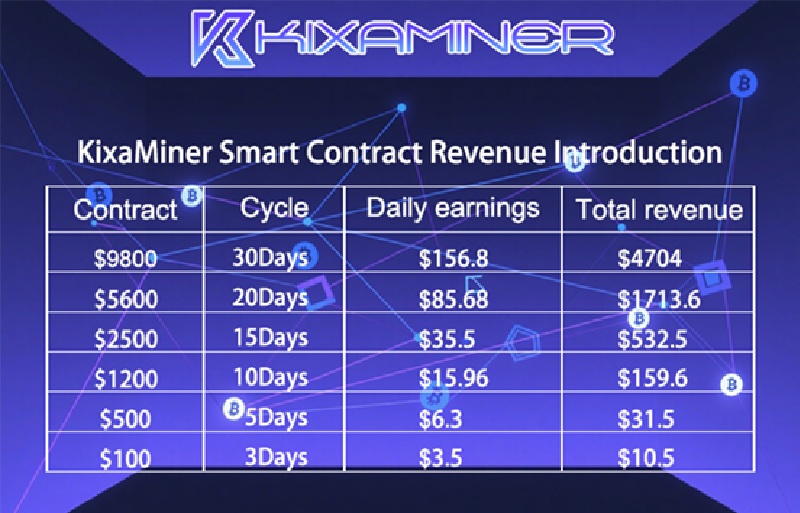
  • Invest $100? Earn $3.5/day in net mining profits.
  • Invest $9,800?Earn $156/day in net mining profits.
  • The more you invest, the more you earn.
  • Profits start the day after purchase.
  • Withdraw to your wallet once earnings reach $100, or reinvest in new contracts.

Affiliate Program

kixaMiner now offers an affiliate program—invite new users and earn up to 8% commission. Even without investing, you can make money. Unlimited referrals, unlimited earning potential!

In Short

kixaMiner is transforming cloud mining investments. The passive income it delivers is the ultimate goal for every investor and trader. Our mission is to empower anyone, anywhere to engage in transactions—reducing reliance on financial institutions, breaking free from financial stress, and paving the way to wealth freedom.

For more details, visit kixaMiner’s official website: https://kixaMiner.com
Or contact us at: info@kixaMiner.com