DD
MM
YYYY

PAGES

DD
MM
YYYY

spot_img

PAGES

Home Blog Page 1182

Digital Entrepreneurship Today: When Agility Meets Financial Precision

0

Running a business in 2025 isn’t just about speed — it’s about control. With everything moving in real time, from payments to supply chains, entrepreneurs must rethink how they manage money. A modern founder isn’t just building a product — they’re navigating fluctuating costs, borderless payments, and dynamic demand. Financial awareness is no longer a bonus; it’s part of survival.

How Financial Knowledge Drives Smarter Business

Today’s founders know that a flashy pitch or a viral launch won’t cover for messy books. Entrepreneurs who take time to understand budgeting, taxes, and risk modeling build stronger foundations. You can read more about HashLucky to see how clear planning, structured reward systems, and operational clarity play a key role even in industries focused on entertainment and chance.

For example:

  • Those who understand recurring expenses avoid overspending during launch phases
  • A good grasp of break-even analysis helps structure pricing that sustains growth

In volatile environments, knowledge isn’t optional — it’s leverage.

Discipline Over Hype: Why Well-Managed Startups Last Longer

Behind every successful company is a founder who tracks cash flow as closely as customer feedback. Hype may spark attention, but financial structure sustains momentum. Startups that ignore their balance sheets often run into issues within the first year. Meanwhile, those that build clear systems for expenses, taxes, and reinvestment tend to navigate uncertainty with greater ease — no matter the niche, whether tech, wellness.

Digital Tools for Financial Clarity Without Overcomplication

You don’t need to be an accountant to stay on top of your business finances — but you do need the right tools. Entrepreneurs today use dashboards and apps that track earnings, project future expenses, and flag unusual spending patterns. These tools help translate numbers into actions.

Key benefits of digital finance tools:

  • Immediate visibility into revenue streams
  • Alerts when budgets are exceeded
  • Structured data for smarter forecasting

They reduce guesswork and give entrepreneurs space to focus on strategic growth rather than financial firefighting.

Think Like an Investor — Even If You’re Not Seeking Capital

Even if you don’t plan on pitching to VCs, it pays to evaluate your business as if you were. Investors look at financial discipline, clarity of vision, and realistic projections. Entrepreneurs who apply that mindset internally make better long-term decisions. When founders assess every expense through a value lens, they grow leaner, not just larger. Whether it’s optimizing operations or aligning spend with strategy, thinking as an investor brings structure to the journey.

It’s the same logic that powers consistent player engagement in HashLucky slots — calculated risk, measured reward, and the discipline to walk away with gains.

The Future of Finance is Shaped By Technological Advancements

0

The future of finance is shaped by technological advancements, evolving consumer behaviors, and regulatory shifts. Blockchain-based DeFi platforms will likely grow, offering peer-to-peer lending, borrowing, and trading without traditional intermediaries like banks. By 2030, DeFi’s total value locked could surpass $1 trillion (from ~$100 billion in 2024), driven by improved scalability and user-friendly interfaces. However, regulatory crackdowns may challenge adoption if governments impose strict controls.

Central Bank Digital Currencies (CBDCs): Over 100 countries are exploring CBDCs, with pilots like China’s digital yuan advancing. By 2035, most major economies might issue digital currencies, enabling faster, cheaper transactions and greater financial inclusion. Risks include privacy concerns and potential for government overreach in tracking transactions.

AI will dominate financial services, from personalized wealth management (robo-advisors handling $2.5 trillion in assets by 2027) to fraud detection and credit scoring. Quantum computing could further revolutionize risk modeling and trading algorithms, though widespread adoption is likely post-2030 due to cost barriers. Banking services will integrate into non-financial platforms (e.g., Uber offering loans or Shopify providing payment solutions). This could make finance seamless but raises data security and monopoly risks as tech giants dominate.

Environmental, Social, and Governance (ESG) criteria will drive capital allocation, with green bonds and sustainable assets projected to exceed $50 trillion by 2030. However, “greenwashing” scandals may push for stricter standards. Mobile banking and fintech will bring 1.4 billion unbanked people into the financial system by 2030, especially in Africa and Southeast Asia. Microfinance and stablecoin-based solutions will play a role, though volatile crypto markets could undermine trust.

Governments will balance innovation with stability. Crypto regulations will tighten, potentially stifling smaller projects while favoring institutional players. Open banking laws will expand, giving consumers more control over their financial data. Geopolitical tensions, like U.S.-China rivalry, could fragment global financial systems, creating parallel digital currency blocs. Cyberattacks on DeFi or CBDC platforms may erode trust. Economic crises could accelerate adoption of alternative systems or reinforce traditional banking’s dominance.

Finance will become more digital, decentralized, and inclusive, with AI and blockchain as core drivers. Yet, privacy, security, and equitable access remain critical challenges. The future of finance, as outlined, carries profound implications across economic, social, and political spheres. Reduced reliance on traditional banks could lower transaction costs and increase capital access, especially for small businesses and individuals. However, DeFi’s volatility risks financial losses for inexperienced users.

Empowers underbanked populations but may widen inequality if tech-savvy elites dominate high-yield opportunities. Challenges central bank authority, potentially leading to stricter regulations or bans in some regions, creating a fragmented global financial landscape. Streamlined payments and lower costs could boost trade and economic efficiency. Programmable CBDCs might enable targeted stimulus (e.g., expiring funds for specific purchases).

Enhances financial inclusion but risks surveillance, as governments could monitor transactions, eroding financial privacy. Strengthens state control over money supply, potentially reducing the influence of private banks and cryptocurrencies. Geopolitical rivalries may lead to competing CBDC ecosystems (e.g., U.S. vs. China). Lower operational costs for financial institutions and better risk assessment improve efficiency. However, job losses in traditional banking roles (e.g., analysts, tellers) are likely.

Personalized financial advice becomes accessible to the masses, but overreliance on AI could lead to systemic errors or biases in credit scoring. Regulatory frameworks will struggle to keep pace with AI’s complexity, raising ethical concerns about transparency and accountability. Seamless integration of financial services into daily life boosts convenience and competition, but tech giants’ dominance could stifle smaller players.

Simplifies access to credit and payments, especially for younger, tech-native generations, but increases exposure to data breaches. Regulators may target Big Tech to prevent monopolistic control, while cross-border data flows complicate international oversight. Economic activities redirects trillions toward green projects, spurring innovation in renewable energy and sustainable tech. However, misallocated funds or greenwashing could undermine returns.

Aligns finance with societal values, appealing to younger investors, but may alienate those prioritizing short-term gains. Governments may mandate ESG disclosures, while resistance from fossil fuel-dependent economies could create global policy tensions will unlock economic potential in emerging markets, with mobile fintech driving GDP growth in regions like Sub-Saharan Africa (e.g., M-Pesa’s impact in Kenya). It will empower marginalized groups (e.g., women, rural communities) by providing access to credit and savings, reducing poverty but risking over-indebtedness.

Stablecoin adoption in unstable economies could weaken local currencies, prompting governments to restrict crypto use. Clearer rules may stabilize markets and attract institutional investment, but overregulation could stifle innovation, favoring entrenched players. Open banking empowers consumers with data control, but complex regulations may confuse non-tech-savvy users.

Global coordination on crypto and data laws will be challenging, potentially leading to regulatory arbitrage where firms exploit lenient jurisdictions. Decentralized systems and AI could reduce systemic risks by diversifying financial infrastructure, but cyberattacks or crypto bubbles pose new threats. Inclusive finance may narrow global wealth gaps, yet speculative crypto markets and AI-driven trading could concentrate wealth among early adopters.

Shift from traditional banks to tech firms and decentralized networks may democratize finance but introduces new gatekeepers (e.g., blockchain validators, tech platforms). Diverging regulations and CBDC blocs could disrupt cross-border trade and remittances, impacting globalization. These implications hinge on execution, public trust, and geopolitical stability.

Behind BTC’s Soaring Price: How Cloud Mining Becomes the New ‘Passive Income’ Choice for Cryptocurrency?

0

Top cryptocurrency analyst Peter Brandt reports that miners have recently taken advantage of Bitcoin’s impressive price rise, realizing nearly $39.6 million in profits as the price soared to over $100,000.

Data shows that Bitcoin is decoupling from the U.S. stock market and trading closer to gold, which once again proves Bitcoin’s growing role as a safe-haven asset against global economic turmoil. With the rapid development of the digital economy, cloud mining has become an important trend in the blockchain industry. As a leader in cloud mining investment, KixaMiner is committed to revolutionizing the way people mine in the cloud.

The Appeal of kixaMiner

kixaMiner makes earning money easy and fun with its straightforward and transparent investment approach. Users can start mining effortlessly using just a smartphone or internet-connected device, eliminating the need for expensive hardware or complex technical challenges. From guaranteed returns to a transparent, fee-free environment, kixaMiner is paving the way for profitable cloud mining, making passive income in this space more accessible than ever.

kixaMiner: Where Sustainability Meets Profitability

Founded in 2020, kixaMiner powers its operations with recyclable wind and solar energy, offering users an efficient and eco-friendly way to generate wealth in their spare time. With over 100 mining farms and 3+ million mining devices worldwide, all running on renewable energy, kixaMiner has earned the trust and support of more than 10 million users thanks to its stable returns and security.

Incredible Profit Opportunities

kixaMiner is renowned for its unique daily passive income, with potential earnings reaching $5,289 or more—turning millionaire dreams into reality. Imagine earning substantial income without constant effort or complicated setups—that’s the power of kixaMiner.

Security & Sustainability

In cloud mining, trust and safety are paramount. kixaMiner operates in full compliance with corporate governance, legal, and regulatory standards. Our governance framework follows the principles of the UK Corporate Governance Code (2018), ensuring your investments are protected while you focus on profits. All mining farms use renewable energy, making cloud mining carbon-neutral. By protecting the environment while delivering high returns, kixaMiner ensures every investor enjoys both opportunity and profit.

Platform Benefits:

  • Get an instant bonus of $100 for registration ($1 for daily check-in)
  • Buy cloud mining contracts
  • Wait for income

Example:

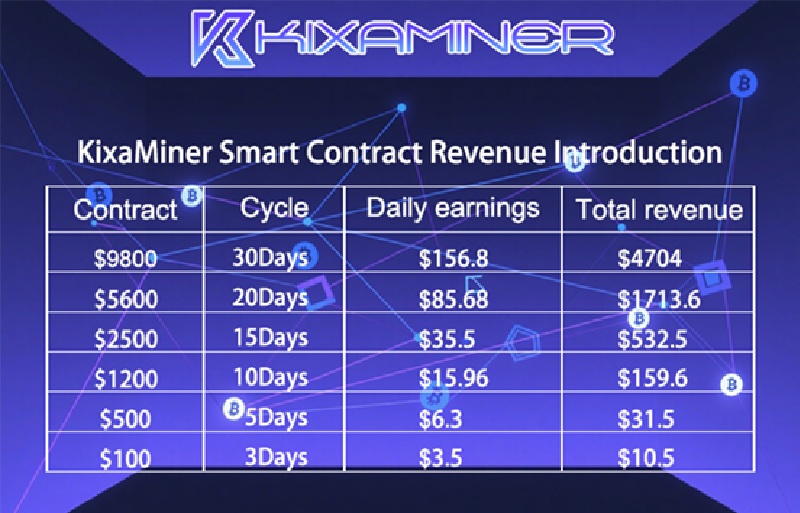
  • Invest $100? Earn $3.5/day in net mining profits.
  • Invest $9,800?Earn $156/day in net mining profits.
  • The more you invest, the more you earn.
  • Profits start the day after purchase.
  • Withdraw to your wallet once earnings reach $100, or reinvest in new contracts.

Affiliate Program

kixaMiner now offers an affiliate program—invite new users and earn up to 8% commission. Even without investing, you can make money. Unlimited referrals, unlimited earning potential!

In Short

kixaMiner is transforming cloud mining investments. The passive income it delivers is the ultimate goal for every investor and trader. Our mission is to empower anyone, anywhere to engage in transactions—reducing reliance on financial institutions, breaking free from financial stress, and paving the way to wealth freedom.

For more details, visit kixaMiner’s official website: https://kixaMiner.com
Or contact us at: info@kixaMiner.com

OpenAI and Microsoft in High-Stakes Standoff Over Future IPO, AI Access

0

In Silicon Valley, the line between vision and valuation is growing thinner as OpenAI, the $260 billion artificial intelligence juggernaut, attempts a corporate transformation so delicate it risks unraveling its founding mission — and possibly its most crucial partnership.

OpenAI is plotting a course toward a potential public offering, which inadvertently involves renegotiating the very foundation of its multibillion-dollar alliance with Microsoft, its largest investor and operational lifeline. The unfolding drama, part ideological tug-of-war, part corporate power play, marks a pivotal moment in the evolution of a company that was once a modest non-profit with dreams of building artificial general intelligence (AGI) for the good of humanity.

But those dreams now have a dollar sign attached.

At the center of the high-stakes talks lies one fundamental question: What does $13 billion buy you in the AI arms race?

For Microsoft, which first invested $1 billion into OpenAI in 2019, the answer is both access to the most advanced large language models and a front-row seat in the AI revolution. That early bet helped embed OpenAI’s technology deep into Microsoft’s products, from Copilot in Office to Azure’s cloud services. In return, Microsoft has fueled OpenAI’s insatiable hunger for compute, supplying the infrastructure that powers its powerful models.

But now, as OpenAI seeks to restructure itself into a public benefit corporation (PBC), its leadership, led by CEO Sam Altman, must decide how much control, equity, and future upside to offer its powerful backer in return for stepping back.

People familiar with the negotiations quoted by Financial Times say Microsoft is willing to relinquish some of its equity stake, a sign of cautious flexibility, but only in exchange for access to whatever comes after the current deal expires in 2030. In other words, Microsoft wants guarantees that it won’t be left out of future breakthroughs.

This clause is no small footnote. It could determine who controls the next frontier of AI and whether OpenAI will ever make it to Wall Street.

From “Donation” to Dominance

OpenAI’s transition from a non-profit to one of the world’s most watched commercial tech ventures has always been fraught with contradictions. Founded in 2015 by a cohort that included Elon Musk and Altman, OpenAI was originally built on the premise that artificial intelligence must benefit all humanity, not a handful of powerful corporations or governments.

Back then, funding was framed as something closer to philanthropy. Investors were warned to expect limited returns and to respect the group’s mission over market value.

Fast forward to today, and that idealism appears to be in retreat.

In October, OpenAI raised $6.6 billion from Microsoft, SoftBank, and others. By March, it had secured another $40 billion, largely led by SoftBank. This time, no one was talking about donations. Those investors expect a payout, and they’ve made provisions for it.

Sources familiar with the contracts say investors are guaranteed equity once OpenAI completes its restructuring. If the company fails to become a PBC, those investors could recoup their cash, potentially forcing a reckoning that would rattle both OpenAI’s finances and its reputation.

Internal Friction and External Pressure

The talks with Microsoft are complicated not just by legal fine print but by simmering tension. Insiders say the relationship has cooled, with OpenAI pushing toward independence even as it leans on Microsoft for survival. The company has reportedly explored partnerships with Oracle and SoftBank to build “Stargate,” a computing infrastructure project aimed at reducing its reliance on Microsoft’s cloud.

“The friction comes partly due to style,” said a senior Microsoft employee. “OpenAI says to Microsoft: ‘Give us money and compute and stay out of the way.’ That shows arrogance. It’s a bad partner attitude.”

However, both sides appear to recognize the stakes. As one person close to OpenAI put it, “It’s not like it’s open warfare. There’s a tough negotiation, but we’re confident we’ll get it done.”

But confidence doesn’t eliminate concern. Musk, who once helped found OpenAI but later split from Altman in a very public rift, has not backed down from his lawsuit against the company’s restructuring. His attorney slammed the plan as a “charity turning over its assets to private persons for private gain.”

This view is not only harbored by Musk. Others see the move to a PBC as symbolic of a deeper compromise. While OpenAI has pledged that its non-profit board will retain significant control, including nominating directors and holding substantial equity in the restructured entity, skeptics worry the balance is already tipping toward profit over purpose.

Former OpenAI employee Page Hedley voiced those fears, warning bluntly that the shift creates “the potential for extraordinary wealth and power from AGI to be reallocated from the public to OpenAI’s investors.”

The Legal Concerns

The restructuring plan now faces not only investor scrutiny but legal review. Delaware’s attorney general, Kathy Jennings, has pledged to examine whether OpenAI’s new arrangement violates the group’s original charitable purpose.

Legal scholars say it’s a tightrope walk. Dorothy Lund, a law professor at Columbia, explained that OpenAI is in a dangerous position, caught between its need for massive capital and its stated mission.

“When you’re a mission-driven company which needs money from investors, you are in a dangerous position,” she said. “You want your investors to keep giving you huge billion-dollar cheques, so you need to keep them happy.”

That means navigating expectations, both public and private, with care.

Currently, OpenAI remains a hybrid with part visionary lab, part capital-hungry corporation. Its tools are rewriting what’s possible in software, education, healthcare, and virtually every sector touched by language or logic. But to continue building frontier AI, and to keep pace with rivals like Google DeepMind or Anthropic, OpenAI needs freedom, funding, and flexibility.

The negotiations with Microsoft are now seen as a representation of the larger paradox. To achieve its mission, OpenAI must embrace the very forces, market pressure, private equity, and competitive secrecy that could ultimately distort it.

Whether the AI giant manages to strike that balance will define not only its future but potentially the trajectory of AI itself. The company may yet reach its goal of building artificial general intelligence. But how it gets there, and who controls the spoils, is now a far more complicated question.

Introduction to Binary Options

0

Binary options are a type of financial trading that offers a straightforward way to profit from price movements in the global markets. Unlike traditional trading, where you buy or sell an asset, with binary options you simply predict whether the price of an asset will rise or fall over a certain period of time.

The name “binary” comes from the fact that there are only two possible outcomes: you either win or lose. It’s a yes-or-no proposition — will the asset be above or below a certain price at a specific time? Forex trading site

How Binary Options Work

When trading binary option, you choose:

  • An asset (like a stock, currency pair, commodity, or index)
  • A direction (whether the price will go up or down)
  • An expiry time (from 60 seconds to several hours or even days)

If your prediction is correct at the expiry time, you get a fixed return, usually between 70% and 90% of your investment. If you are wrong, you lose the amount you invested in that trade.

For example, if you believe the price of gold will be higher in the next hour, you can place a “Call” option. If the price is indeed higher at expiry, you make a profit.

Types of Binary Options

Binary options are available in several formats, each designed to suit different market conditions and trading strategies. Understanding how each type works can help you make smarter decisions and manage your risks effectively.

1. High / Low (Call / Put) Options

this is the most common and straightforward type of binary option. You predict whether the price of an asset will be higher (Call) or lower (Put) than the current price at the time of expiry.

Example: You place a Call option on EUR/USD, expecting the price to rise in the next hour. If the price at expiry is higher than the initial price, you receive a fixed return. If not, you lose your investment.

This type is ideal for beginners due to its simplicity, but it still requires analysis and strategy.

2. One Touch Options

In this type of option, the asset’s price only needs to reach (or “touch”) a specific target level once before the expiry time. It does not need to stay at that level.

Example: You predict that the price of oil will touch $90 per barrel within the next week. If it touches this level even for a moment, you earn a profit.

These options usually offer higher returns but are riskier, as reaching the target price might be difficult in uncertain markets.

3. No Touch Options

This is the opposite of One Touch options (https://bubinga.com/ja/registration). You win if the asset’s price does not touch the predetermined price level during the life of the option.

Example: If you believe that the price of gold will remain below $2,000 for the next two days, you can place a No Touch option at that level. If it never reaches $2,000, you receive a payout.

No Touch options are useful in stable, low-volatility market conditions.

4. Range (Boundary) Options

With Range options, you predict whether the asset’s price will stay within a defined range (In Range) or break outside that range (Out of Range) during the option’s duration.

In Range: You profit if the price stays between two set levels.

Out of Range: You profit if the price breaks above the upper limit or below the lower limit.

This type is useful when you expect the market to either stay stable or experience significant movement.

5. 60-Second (Turbo) Options

These are short-term binary options that typically expire within 30 seconds to 5 minutes. You make fast predictions about very short price movements.

Example: You expect the price of a currency pair to rise within the next minute. You place a 60-second Call option. If the price increases by the time it expires, you earn a return.

These options are fast and exciting but carry high risk due to their speed and volatility.

6. Ladder Options

Ladder options offer multiple price levels (or “steps”) that the asset could reach. Each level offers a different potential payout based on how likely it is to be achieved.

Example: If Apple stock is trading at $150, a ladder might have price targets at $152, $155, and $160. The higher the price level, the higher the payout — but also the higher the risk.

Ladder options allow traders to profit even if the market moves moderately, and they reward more accurate forecasts with better returns.

Advantages of Binary Options

  • Simplicity – Easy to understand, especially for beginners.
  • Limited Risk – You always know how much you can gain or lose.
  • Fast Returns – Some options expire in minutes, allowing quick results.
  • Accessibility – Many platforms allow you to start trading with a small amount of money.

Risks and Warnings

Despite the simplicity, binary options are high-risk investments. Many unregulated brokers operate in this space and may engage in unethical practices. Always choose regulated and trusted platforms to ensure your money is safe.

Also, due to the fixed win/loss nature, the odds are not always in the trader’s favor. Losses can accumulate quickly if you don’t have a solid strategy or risk management plan.

Conclusion

Binary options can be an exciting way to engage in financial markets, offering fast results and a clear structure. However, they require discipline, knowledge, and caution. Educate yourself, practice with demo accounts, and always trade responsibly.