DD
MM
YYYY

PAGES

DD
MM
YYYY

spot_img

PAGES

Home Blog Page 1188

Africa-Led Credit Rating Agency Set to Launch by September 2025 as Continent Pushes Back Against Global Bias

0

Africa is moving to take control of its narrative in global finance, as a new continental credit rating agency is set to begin operations by September 2025.

Known as the African Credit Rating Agency (AfCRA), the initiative aims to challenge what African leaders and economists see as systemic bias by the world’s top rating firms—Moody’s, S&P, and Fitch.

The African Union-backed agency is being developed under the African Peer Review Mechanism (APRM) and will issue its first sovereign credit rating between late 2025 and early 2026, according to Misheck Mutize, lead expert on credit rating agencies at the APRM. Currently, AfCRA is finalizing the selection of its first CEO, with an appointment expected before the end of the third quarter of 2025.

A Response to Decades of Criticism

The launch of AfCRA marks a significant policy and economic milestone, built on long-standing frustration with how global rating firms evaluate Africa’s economies. Countries such as Ghana, Zambia, and Nigeria have frequently criticized these firms for downgrades they say are based on flawed assumptions, externalized perceptions, and inadequate understanding of the continent’s unique risks and opportunities.

In the case of Zambia, which defaulted on its Eurobond payments in 2020, officials partly blamed international rating downgrades for triggering a self-fulfilling debt spiral that scared off investors and hiked borrowing costs. Similarly, Ghana, which defaulted in 2022, has argued that pessimistic ratings fuel speculation and restrict access to credit long before countries face actual fiscal collapse.

In a more recent example, the African Peer Review Mechanism directly challenged Fitch Ratings for its downgrade of the African Export-Import Bank (Afreximbank). The APRM accused Fitch of poor analysis and a “misunderstanding of African institutions.” Fitch responded by defending its methodology as globally consistent and transparent.

Safeguarding Independence

Unlike the major international rating agencies—often accused of being shaped by geopolitical interests—AfCRA will not be state-owned, Mutize said.

“This was designed to maintain independence and avoid conflict of interest. Shareholding will mainly be African private-sector driven entities,” he explained.

AfCRA’s governance structure is intended to shield the agency from political interference while also making its operations more transparent and locally informed. Crucially, it aims to be objective and credible, with Mutize emphasizing that AfCRA is not being designed to provide inflated scores.

“It is important to debunk the assumption that AfCRA is being established to give favorable ratings to Africa. No. We will issue downgrades where necessary,” he said.

Focusing on Local Currency Ratings

A key feature of AfCRA will be its focus on local-currency debt ratings, a shift that could have significant implications for Africa’s financial sovereignty. AfCRA hopes to bolster domestic capital markets and reduce overreliance on costly foreign-currency borrowing, which exposes economies to exchange-rate shocks and repayment risks, by prioritizing local-currency evaluations.

This approach aligns with the growing call among African financial institutions to de-dollarize debt and tap into local savings, pension funds, and regional capital pools for long-term infrastructure and development financing.

UN and ECA Back Africa’s Push

The agency is also being launched with strong support from global institutions like the United Nations Economic Commission for Africa (ECA). Claver Gatete, ECA’s Executive Secretary, recently criticized the current credit rating landscape, saying that African nations are being saddled with disproportionately high borrowing costs due to being consistently rated “junk” by the dominant agencies.

Gatete pointed out the disparity in real terms: while Germany can borrow $1 billion at a 2.29% interest rate—translating to about $229 million in interest over a decade—Zambia, under current credit conditions, would pay as much as $2.25 billion in interest for the same amount, nearly ten times more.

He warned that credit ratings continue to be shaped by external biases and often fail to incorporate a nuanced understanding of African political economies.

According to Gatete, most major rating agencies are headquartered outside Africa and often assess the continent through an external lens.

Many believe that these “outside-in” assessments ignore internal structural reforms, fail to recognize regional resilience, and ultimately make it more expensive for African countries to access the capital they need to grow.

A First of Its Kind

While the idea of an Africa-led credit rating agency has circulated for years, AfCRA is the first such effort poised to become operational, with institutional backing, private sector involvement, and a clearly stated regulatory agenda. What sets it apart is not just its continental scope, but the fact that it will actively rate sovereign risk with a mandate rooted in fairness, transparency, and context.

Although various African governments and financial institutions have voiced concerns about rating bias in the past, this marks the first time a coordinated response of this scale is materializing—one that may also indirectly shape the standards and expectations of international agencies operating on the continent.


Welcome Learners to Tekedia Mini-MBA Edition 17

0

My fellow Co-Learners, welcome again to Tekedia Mini-MBA edition 17. Thank you for choosing us to deepen your business and entrepreneurial knowledge. When a man cooks food and his kinsmen join him to eat, he has won trophies, because the greatest honour is to “cook” these products and amazing people come to “eat” them, in hundreds. The Tekedia Team thanks you again.

If you have any challenge logging in, let us know; our support team is the best in the world of education with 24/7 support. They are there to provide non-academic support. For the academic ones, use our Comment section, in the class board, and our Faculty members will assist.

Over the next 12 weeks, we will be solving the equations of markets across 12 modules (strategy, law, marketing, operations, technology, etc), covering more than 100 courses:

  1. Innovation =: Invention + Commercialization
  2. Great Company =: Awesome Products + Superior Execution
  3. Business Momentum =: Business Size X Growth Rate

You have already seen some of these equations in the 50+ page Week 1 written material. We believe that business could be mastered in the same way we can understand natural philosophy. That is why, together, we will unravel the mechanics of business systems. Get ready for the physics of markets and the mathematics of business success!

The first LIVE lecture begins on Saturday, and I will be leading it on Zoom.

Sat, June 14 | 7pm-8.30pm WAT | Innovation, Growth and the Mission of Companies – Ndubuisi Ekekwe | Zoom link in the Board.

Welcome! We continue to receive registrations in case your friends want to join. Tell them to use this link https://school.tekedia.com/course/mmba17/

Unlock Hidden Vehicle Insights with a VIN Decoder for Your Vehicle’s VIN

0

Introduction to VIN Decoding

Ever wondered what information can I get from a VIN decoder before buying a used car? That 17-character VIN isn’t just random: it’s a digital fingerprint. A reliable vin decoder translates each digit and delivers essential vehicle details in seconds. When you enter your vehicle’s VIN into a decoder, you instantly unveil its manufacturing origin, factory options, and much more.

What Is a Vehicle Identification Number?

A vehicle identification number (VIN) stays with a car from the factory through its entire life, serving critical roles in registration, insurance, recalls, and theft prevention. It divides into three parts: the world manufacturer identifier, the vehicle descriptor section, and the vehicle identifier section. Beyond decoding build details, the VIN guides technicians ordering exact parts—whether an engine, transmission, or windshield—and helps law enforcement track stolen vehicles. Insurers verify loss history, and auction houses or salvage yards flag titles as “salvage” or “flood,” empowering buyers with accurate condition insights.

Anatomy of the VIN

  • First Digit marks the country of manufacture (“1” or “4” = USA; “2” = Canada; “K” = South Korea).
  • Digits 2–3 identify the manufacturer and manufacturing division (e.g., General Motors uses “1G,” Ford uses “1F”).
  • Digits 4–9 (the VDS) reveal body type, engine code, restraint system, and transmission type.
  • Digits 10–17 (VIS) include model year, assembly plant, and the unique serial number.

World Manufacturer Identifier & Vehicle Descriptor Section

The world manufacturer identifier (WMI) lives in the first three characters. It’s how regulators track every car on the road. Immediately after, the vehicle descriptor section (positions 4–9) displays vehicle specs and options.

WMI: Country, Manufacturer & Division

  • First Digit = origin (USA, Canada, South Korea, Mexico)
  • Second & Third Digits = manufacturer (e.g., “GM” for General Motors, “FD” for Ford) and division.

VDS: Body Type, Engine Code & Transmission Type

Within the VDS, decode:

  • Body Type (sedan, SUV, hatchback)
  • Engine Code (2.0L inline-4 vs. 3.5L V6)
  • Transmission Type (manual vs. automatic)

Vehicle Identifier Section & Check Digit

The ninth character acts as a check digit via a mathematical formula to validate the VIN. Digits 10–17—the vehicle identifier section—show the model year and assembly plant, then a sequential serial number unique to that car. For example, “A” in position 10 can indicate 2010, “B” might mean 2011, and plant codes pinpoint the exact manufacturing plant.

Additional Data via a VIN Decoder

Beyond the basics, a modern VIN decoder pulls external VIN information for deeper insight:

  • Open Recalls from the Highway Traffic Safety Administration or National Highway Traffic Safety notifications.
  • A full vehicle history report that reveals accidents, service records, and reported stolen status.
  • Insurance claims, title branding, and prior vehicle history.
  • Manufacturer Technical Service Bulletins (TSBs) detailing known defects and recommended repairs.
  • Warranty coverage status to show remaining factory or extended protection.
  • Emissions compliance and recall fix verification to ensure legal roadworthiness.
  • Lien and ownership records to flag outstanding debts or title issues.

These vehicle details equip buyers to spot flood damage, frame repairs, or a hidden salvage title. Additionally, by cross-referencing auction listings and dealership inventories, you can trace how many times the car has changed hands and at what price points. Some decoders even incorporate safety ratings, theft-recovery statistics, and regional registration trends, offering a comprehensive risk profile. Armed with this wealth of data, prospective owners gain confidence in negotiating fair value, scheduling preventive maintenance, and avoiding vehicles with problematic histories.

How to Use a VIN Decoder Effectively

  1. Locate the VIN on your dashboard or door jamb—the same car’s VIN on registration.
  2. Enter the 17-digit code at a trusted car vin decoder https://vingurus.com/decoder.
  3. Review each field: confirm the first digit, third digit, and digit positions match manufacture data.
  4. Access extras: paint and trim codes, windshield replacement history, and dealership service bulletins.

Pro tip: choose a decoder endorsed by the automotive industry or major dealerships to ensure accuracy.

Conclusion & Next Steps

Decoding a VIN puts full vehicle details at your fingertips—from the world manufacturer identifier through the vehicle identifier section and check digit. Armed with vehicle specs, recall notices, and history insights, you can confidently navigate the used-car market. Before your next purchase, identify risks, determine reliability, and access every layer of a car’s past with a simple decode.

FAQ

  1. How accurate is the information from a VIN decoder?
    Most decoders use manufacturer tables plus NHTSA data, so specs and recalls are highly accurate; history details can vary by provider.
  2. Can a VIN decoder reveal odometer rollback?
    No—mileage tampering isn’t stored in the VIN. A vehicle history report or maintenance logs are needed for mileage verification.
  3. Does decoding include paint color and factory options?
    Yes, many decoders list factory paint & trim codes, upholstery details, and optional packages in the VDS.
  4. Are there free VIN decoders showing recalls and accident history?
    Some free tools show open recalls via the Highway Traffic Safety Administration. Accident records usually require a paid report.
  5. Can I verify if a car was reported stolen using only its VIN?
    Yes—by cross-referencing law enforcement and National Highway Traffic Safety databases, many decoders flag reported stolen vehicles.


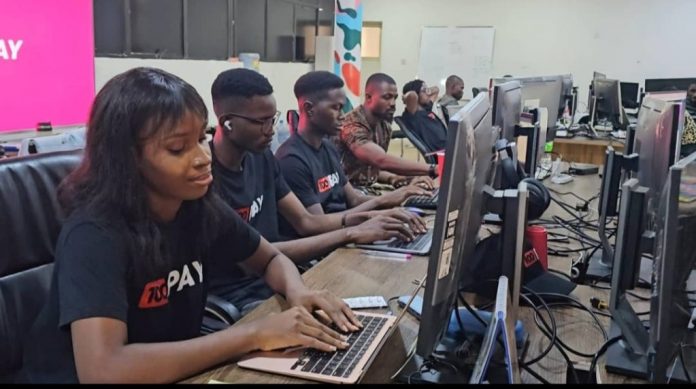
100Pay Begins Campus Tour To Promote A Build Culture in Nigerian Crypto Sector

0

President Trump has made cryptocurrency and blockchain very cool. Tekedia Capital is massively investing in the infrastructure aspect of this sector in Africa. In Nigeria, we recently invested in 100Pay which builds infrastructures for crypto. It does not do buying and selling with hodling spirit. Rather, it builds tools for the digital capital era.

“We bring together everything that’s required to build websites and apps that accept crypto payments and send payouts globally. 100pay’s platforms power crypto payments for online and in-person retailers, subscriptions businesses, software platforms and marketplaces, and everything in between.”

For example, it has a partnership with Visa which makes it easier to link any crypto wallet to a Visa card, enabling you to spend your crypto in local currency like Naira without a need to first sell coin like Bitcoin, ETH, etc:

Now, it is going around campuses to task young people to BUILD and not just consume on its 100Pay Build Campus Tour. Build a business in Nigeria and add a payment API to receive payments in BTC, ETH, etc: “Accept 22+ Cryptocurrencies on your website and mobile apps.”  Provided it is PRODUCTION, and not Consumption, Tekedia Capital will be available. Wishing the really young CEO, Brainy Josh, good luck on this mission.

*I do not do hodling cryptos, but I do support crypto techs including blockchain. Today, we have Africa’s largest layer 1 blockchain via Egochain from Egoras. With 100Pay, we want to play a productive role in digital capital in Africa.

Lightchain AI Enters Its Final Phase With $21M Raised While Dogecoin Trends for the Wrong Reasons

0

Lightchain AI has reached a significant milestone, securing $21 million as it enters its final phase, further establishing itself as a prominent player in the blockchain sector. Following the successful completion of all 15 presale stages, the project has launched its Bonus Round at a fixed price of $0.007. This accomplishment underscores the project’s dedication to innovation and has garnered strong confidence from the market.

Meanwhile, Dogecoin finds itself trending for all the wrong reasons, caught up in controversy and lacking direction. This blog dives into how Lightchain AI is shaping its legacy while Dogecoin struggles to maintain relevance, offering a closer look at these contrasting narratives in the blockchain world.

Dogecoin Grabs Headlines With Volatility and Meme-Driven Surges

Dogecoin (DOGE) Dogs Remain in the Headlines in 2025 With its trademark volatility and meme-induced?rallies, DogeCoin (DOGE) is back in the headlines yet again. DOGE recently surged 13% north?of $0.18 off the back of a wider meme coin revival and fresh retail attention. Elon Musk’s occasional endorsements have massively influenced the market, as active addresses soared to?674,000—a 800% jump from late 2024.

But for all the excitement, Dogecoin is also hampered by?its inflationary supply mechanism, which can limit long-term growth prospects. According to analysts, provided that?the factors on the market and in the community remain favorable, DOGE may soon target the $0.30 level in the next several months.

Lightchain AI Reaches Bonus Round After Raising $21M Across 15 Stages

Lightchain AI has officially entered its Bonus Round after raising over $21 million across 15 meticulously structured presale stages, marking a major milestone in its journey toward mainnet launch. This achievement reflects growing investor confidence, built on consistent delivery and a clear builder-first roadmap.

The Bonus Round maintains fixed pricing, giving both new and returning buyers an opportunity to enter before Lightchain AI goes live. With public GitHub repositories set to launch, decentralized validator and contributor nodes underway, and the Developer Portal already active, Lightchain’s infrastructure is fully in motion.

Grants and liquidity incentives back the Meme Launchpad, signaling ecosystem readiness. Strategic tokenomics and transparent execution are turning Lightchain AI into one of the most credible plays in decentralized AI today.

Final Phase, Real Momentum — Lightchain AI is Turning Heads for All the Right Reasons

Lightchain AI is making waves as it enters its final phase, and it’s easy to see why. With its seamless design, every component plays a vital role; the PoI consensus keeps the network secure, the AIVM drives AI execution, and decentralized storage guarantees data integrity.

Together, these elements create a powerhouse capable of handling scalable, real-time AI tasks with lightning speed and low latency, even under heavy workloads. As Lightchain AI marches toward mainnet, it’s not hype but precision and innovation that are capturing the attention of visionaries ready to shape the future.

https://lightchain.ai

https://lightchain.ai/lightchain-whitepaper.pdf

https://x.com/LightchainAI

https://t.me/LightchainProtocol