DD
MM
YYYY

PAGES

DD
MM
YYYY

spot_img

PAGES

Home Blog Page 12

Apple Taps JPMorgan as New Apple Card Issuer, Ending a Costly Chapter With Goldman Sachs

0
Apple continues to move to services for revenue

Apple on Wednesday confirmed that JPMorgan Chase will become the new issuer of the Apple Card, formally ending its high-profile but troubled partnership with Goldman Sachs and handing the largest U.S. bank a major foothold in Apple’s consumer finance ecosystem.

The move is seen as a decisive turning point in its consumer finance strategy and draws a clear line under Goldman Sachs’ costly experiment in mass-market banking.

The transition, which Apple says could take up to 24 months, will be deliberately gradual. Apple stressed that nothing changes for customers in the near term: the card will continue to run on the Mastercard network, existing cardholders do not need to take any action, and new applicants can continue to apply under the same terms. That emphasis on continuity reflects Apple’s sensitivity to user experience, a defining feature of the product since its launch in 2019.

Behind the scenes, however, the economics and strategic implications are significant. JPMorgan said the deal will bring more than $20 billion in Apple Card balances onto its books, instantly making it one of the largest co-branded card wins in the U.S. market in recent years. For the country’s biggest bank, the appeal lies not just in volume but in access to Apple’s affluent, digitally engaged customer base, many of whom are already embedded in the iPhone and Apple Pay ecosystem. JPMorgan has deep experience running large credit card programmes and absorbing portfolios, giving it a scale advantage that Goldman never had in consumer lending.

But the exit underscores how far Goldman Sachs’ ambitions in consumer banking have been rolled back. The firm entered the Apple partnership as a bold attempt to diversify away from its traditional reliance on trading and dealmaking. Instead, the card became emblematic of the challenges Goldman faced in retail finance: higher-than-expected credit losses, operational missteps, and intense regulatory scrutiny over billing practices and customer complaints.

The financial cost of the divorce is steep. The Wall Street Journal reported that Goldman is offloading the Apple Card balances at a roughly $1 billion discount, crystallizing losses that had been building for years. Goldman has already said it expects a $2.2 billion provision for credit losses in the fourth quarter of 2025 linked to the forward purchase commitment, a reminder that even unwinding the partnership comes with a heavy price tag.

The Apple Card itself was designed to challenge industry norms. When it launched in 2019, Apple and Goldman pitched it as a consumer-friendly alternative, with no late fees, no penalty interest rates, and daily cash-back rewards seamlessly integrated into the iPhone Wallet app. The product aligned neatly with Apple’s broader push into services, which now spans payments, savings accounts, and buy-now-pay-later offerings.

Yet that same design philosophy also constrained profitability. The absence of penalty fees, combined with Apple’s insistence on tight control over the user interface and customer communications, limited Goldman’s ability to manage risk and maximize returns in the way traditional card issuers do. Over time, those tensions became harder to ignore, especially as losses mounted and regulators took a closer look at Goldman’s consumer operations.

JPMorgan’s entry suggests Apple has recalibrated its approach. Rather than retreating from credit cards, Apple appears to be choosing a partner with the balance sheet, compliance infrastructure, and card-lending expertise to make the economics work at scale. Some analysts believe the deal complements its dominant position in U.S. consumer banking and reinforces its strategy of embedding itself deeper into everyday digital payments.

The drawn-out transition period also denotes the complexity of moving millions of customer accounts, data systems, and regulatory obligations without disrupting service. Such migrations are fraught with operational risk, and both Apple and JPMorgan have strong incentives to ensure a smooth handover that preserves trust in the Apple brand.

More broadly, the shift highlights a recurring theme in Big Tech’s relationship with finance. Technology companies can design compelling, user-centric financial products, but the underlying business of lending remains capital-intensive, highly regulated, and unforgiving of missteps. Apple’s experience with Goldman shows that brand power alone does not guarantee success in consumer credit.

Now, all eyes will be on how JPMorgan can turn the Apple Card into a consistently profitable franchise, and whether Apple continues to expand its financial services ambitions. Goldman, on the other hand, is expected to close the chapter, absorb the losses, and refocus on its core businesses after one of the most expensive detours in its history.


Peter Schiff Slams Bitcoin’s Venezuela-Fueled Rally – “Dont Believe The Hype, Sell And Buy Gold”

0

Gold advocate and strong Bitcoin critic Peter Schiff has once again taken aim at the world’s largest cryptocurrency, dismissing Bitcoin’s recent Venezuela-fueled rally as little more than speculative hype.

In a post on X, Schiff urged investors to book profits from Bitcoin and rotate into traditional safe-havens like gold, noting that there’s lots of BS from the pumpers spinning this news as being bullish for Bitcoin.

He wrote,

“Bitcoin has been caught up in the Venezuela-inspired rally. It’s back above $94.5K. There’s lots of BS from the pumpers spinning this news as being bullish for Bitcoin. Don’t believe the hype. Just take advantage of the rally to sell and use the proceeds to buy real gold instead.”

In a follow-up post, Schiff pointed to Bitcoin’s quick drop from $94,000 to around $92,000, reiterating his call to sell during rallies and invest in gold, aligning with his long-standing view that Bitcoin lacks intrinsic value compared to precious metals.

Schiff’s comment was however met with reactions largely mocking his bearish stance on Bitcoin, with many highlighting his history of inaccurate predictions, while the event underscores Bitcoin’s role as a hedge in geopolitical crises. Though gold has outperformed it over the past decade with a 150% return versus Bitcoin’s volatility-driven gains.

Recall that on Monday, Bitcoin traded higher, climbing as high as $94,750 following the U.S capture and extradition of Venezuela President Nicolas Maduro. The rally came after the crypto asset had long ranged between the $80,000 to $90,000 price zone.

Singapore-based digital asset trading firm QCP Group said in a note that the move coincided with equity gains and weaker oil prices after the U.S operation in Venezuela.

“Crypto’s recent alignment with broader risk assets may signal a regime shift and the strengthening of bullish narratives to start the year”, the firm wrote, adding that the Venezuela shock “could serve as a near-term catalyst for BTC”, partly due to the disinflationary impulse from lower oil prices”.

The rally wasn’t isolated to Bitcoin; altcoins and related assets followed suit, amplifying the momentum. Analysts attributed this to a combination of factors such as renewed optimism in global trade, easing inflationary pressures from lower energy costs, and speculative fervor in the crypto space.

Today, the price of Bitcoin dipped below $90,000, trading as low as $89,265. Several factors contributed to this reversal. Cooling U.S. economic data, including softer-than-expected job reports and manufacturing indices, dampened the risk-on sentiment.

Several traders were reportedly caught off guard, with Coinglass data showing that the move triggered the liquidation of roughly $128 million in long positions. This highlights the risks faced by leveraged traders amid a tight trading range.

The sell-off follows significant outflows from US spot Bitcoin ETFs, with data from SoSoValue showing $486 million in net redemptions (outflows) on Wednesday, marking the largest single-day outflow since November 20.

Additionally, the initial excitement over the Maduro capture gave way to uncertainty, as questions arose about Venezuela’s political transition, potential legal challenges to the U.S. action, and its long-term impact on oil supplies. Crypto markets, known for their sensitivity to macroeconomic shifts, amplified these concerns, leading to increased selling pressure.

Despite the BTC price decline, some analysts caution against reading weakness into the crypto asset price action.

“Bitcoin isn’t weak; it’s mechanically suppressed. Dealer hedging—selling rallies and buying dips to stay neutral—has pinned price in a tight $90K–$95K range, defining the $90K support and the $100K resistance wall,” said analyst Crypto Rover, in a post on X.

At the time of writing this report, Bitcoin has reclaimed the $90,000 zone, trading as high as $90,816. Thursday’s initial flash crash illustrates the ongoing tension between institutional hedging, retail positioning, and macroeconomic factors in shaping Bitcoin’s price.

As markets digest these developments, investors are left pondering the fragility of hype-driven rallies. Schiff’s commentary, while polarizing, offers a cautionary tale: chase short-term gains at your peril. For those heeding his advice, physical gold dealers report increased inquiries, suggesting some are indeed diversifying away from crypto.

Outlook

Whether Bitcoin rebounds or continues its slide remains to be seen. But in Peter Schiff’s view, the writing is on the wall, digital assets may glitter, but they aren’t gold. As geopolitical shifts continue to unfold, the true test of value will be endurance, not excitement.

The $100,000 level remains the psychological and technical target for many traders. Still, experts agree that time and market structure will dictate the next meaningful breakout.

Crypto Market Structure Bill Facing Significant Hurdles Ahead of Committee Markup Vote

0

The Crypto Market Structure Bill also referred to as the CLARITY Act or related Senate drafts is facing significant hurdles ahead of scheduled committee markups next week. As of early January 2026, Senate Banking Committee Chair Tim Scott (R-S.C.) has pushed for a markup vote on January 15, with the Senate Agriculture Committee also planning a hearing on the same date.

If advanced from both committees, the versions would be reconciled before a potential full Senate floor vote. Republicans issued a “closing offer” to Democrats in early January, incorporating some Democratic requests, but major divisions persist.

Democrats on the Agriculture Committee have not yet endorsed the latest GOP draft, raising the risk of partisan markups. Regulation of DeFi (decentralized finance) protocols, including potential compliance with money transmission laws and sanctions. Treatment of yield-bearing stablecoins. Ethics provisions to prevent conflicts of interest, particularly regarding President Trump’s family crypto ventures. Bipartisan staffing and confirmations for regulators like the SEC and CFTC.

With 2026 midterms approaching, election-year dynamics could slow progress. A potential government shutdown, current funding expires Jan. 30 would halt work entirely. Some analysts estimate only a 50-60% chance of passage in 2026, with risks of delay to 2027.

The bill aims to clarify regulatory jurisdiction between the SEC (securities) and CFTC (commodities) for digital assets, building on the House-passed Digital Asset Market Clarity Act (CLARITY) from 2025 and prior efforts like FIT21. It follows the successful passage of the GENIUS Act (stablecoin framework) last year.

Negotiations have been ongoing for months, with steady but incomplete progress. Chairman Scott has emphasized forcing a vote to “get on the record,” even without full consensus, while critics warn a non-bipartisan advance could doom the bill’s broader prospects needing 60 votes to overcome a filibuster.

Industry advocates are lobbying heavily this week, viewing next week’s markups as make-or-break for long-sought regulatory clarity. If it fails in committee, momentum could collapse for the year.

The ongoing delay in the U.S. Senate’s Crypto Market Structure Bill often tied to the House-passed CLARITY Act and Senate drafts carries significant short- and long-term consequences for the cryptocurrency industry, markets, institutions, and global competitiveness.

With committee markups scheduled for January 15, 2026 (Senate Banking) and potentially aligned with the Agriculture Committee, the bill faces persistent bipartisan hurdles over DeFi regulation, yield-bearing stablecoins, ethics provisions like conflicts tied to political figures, and regulator staffing.

Republicans have issued a “closing offer” incorporating some Democratic demands, but full consensus remains elusive, and Chair Tim Scott has signaled a markup “come hell or high water.”

If the Bill Passes in 2026

The bill would divide oversight—primarily shifting spot digital asset markets like Bitcoin, Ether as commodities to the CFTC while keeping SEC authority over securities-like tokens and investment contracts.

This resolves years of “regulation by enforcement,” reducing uncertainty cited by 35-71% of institutional investors as their top barrier per Goldman Sachs and similar reports. Expect surged capital inflows, with U.S. institutional crypto allocations potentially rising significantly.

Tokenized real-world assets (RWAs), DeFi, and stablecoin innovation accelerate, mirroring growth in jurisdictions like the EU (MiCA) or Hong Kong. Legitimate projects gain pathways for compliance— disclosures for token issuers, registration for exchanges/brokers.

U.S. solidifies as “crypto capital,” supporting innovation in blockchain infrastructure and on-chain finance. Enhanced rules on custody, fraud, and disclosures, building on the 2025 GENIUS Act.

Spot BTC/ETH ETFs already saw strong 2025 inflows; clarity could unlock 24%+ growth in holdings. Clear CFTC/SEC split enables DeFi/yield products without overlapping enforcement fears.

Prevents capital flight to clearer regimes; aligns with pro-crypto administration goals. Continued regulatory limbo deters mainstream adoption, with enforcement actions persisting. Implementation of full rules could slip to 2029 per TD Cowen, stifling tokenized assets and stablecoin growth critical for TradFi integration.

Institutions hedge or shift to offshore venues like Singapore, EU. U.S. risks losing edge in attracting talent/capital, as seen in prior delays. 2026 midterms reduce urgency; Democrats may stall for leverage. A government shutdown halts progress entirely. Non-bipartisan markup could doom floor prospects needs 60 votes for filibuster.

Reliance on state-level rules or partial measures creates patchwork compliance, higher costs for firms. Prolonged ambiguity risks “exit scenarios” for capital; innovation in DeFi/RWAs slowed. Other nations advance; U.S. firms face higher operational burdens.

TD Cowen predicts 2027 passage more likely, with rules delayed to 2029. Overall, next week’s markups are pivotal: bipartisan advance boosts momentum toward 2026 passage and a transformative year for U.S. crypto. Failure risks multi-year delays, perpetuating uncertainty amid growing global competition.

Industry lobbying intensifies this week, viewing it as “make-or-break.” Markets may react volatilely to updates, with Bitcoin and major assets sensitive to headlines.


MegaETH, Others Added on Coinbase’s Listing Roadmap As Flying Tulip Releases Whitelist

0

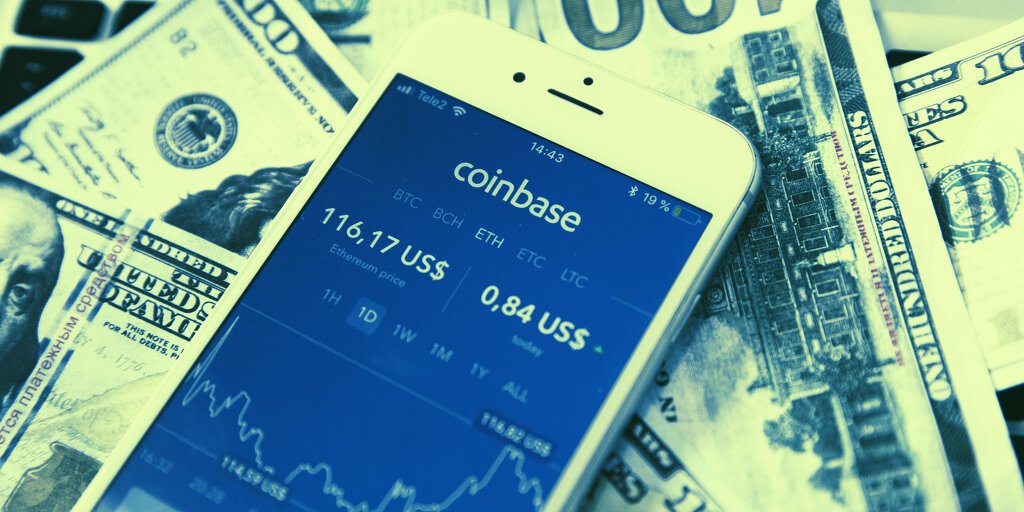
Coinbase has been actively expanding its asset listing roadmap. Notably: MegaETH (MEGA), a high-performance Ethereum Layer-2 project, was added to the roadmap around January 6, 2026. This has generated buzz around its upcoming token generation event (TGE) and potential future trading support.

Coinbase added four more tokens: Raydium (RAY) (Solana-based DEX), Energy Dollar (ENERGY) (DePIN project on Solana), Elsa (ELSA) (on Base), and Sport Fun (FUN) (onchain fantasy sports platform on Base). These additions bring the total tracked assets on the roadmap to nine, including prior ones like ImmuneFi (IMU), Sentient (SENT), Lighter (LIGHTER), and Brevis (BREV).

Listing is conditional on factors like market-making support and technical infrastructure; roadmap inclusion signals review but does not guarantee trading.

Flying Tulip Investment Intent Whitelist

Flying Tulip is an ambitious on-chain financial system and exchange project led by DeFi veteran Andre Cronje, founder of Yearn Finance and Sonic. It aims to unify spot trading, derivatives, lending, stablecoins, and insurance with innovative features like perpetual put options for downside protection.

The investment intent whitelist phase for its $FT token sale is now live or recently opened based on ongoing documentation. To participate: Visit flyingtulip.com and submit an interest form with your wallet address, preferred chain/asset, and intended contribution amount.

Complete the Accredited Investor quiz, no KYC required for this round. This follows earlier phases, early access via platforms like Impossible Finance and CoinList, plus a supporter whitelist based on historical participation.

The project previously raised $200M privately at a $1B FDV and plans public rounds across multiple chains (Ethereum, Avalanche, Sonic, Base, BSC, Solana). Token price is set at $0.1, with unique redemption rights allowing principal recovery. These developments highlight growing activity in Layer-2 scaling (MegaETH), ecosystem tokens (FUN, etc.), and innovative DeFi fundraising models (Flying Tulip).

Coinbase’s early January 2026 roadmap updates—adding MegaETH (MEGA) on January 6 and Raydium (RAY), Energy Dollar (ENERGY), Elsa (ELSA), and Sport Fun (FUN) on January 7—signal active review for potential listings.

Roadmap inclusion means these tokens have passed initial technical, compliance, and market screens, but trading depends on liquidity and infrastructure readiness. Historically, roadmap additions drive short-term hype, volume spikes, and price pumps often 50-100% post-full listing.

Immediate reactions include increased DEX trading, pre-market speculation, and community buzz. Coinbase prioritizes utility-driven ecosystems—Ethereum L2 scaling (MEGA), Solana DeFi/DePIN (RAY, ENERGY), and Base consumer apps (ELSA, FUN).

High-performance Ethereum L2 (100k+ TPS, sub-10ms latency); mainnet/TGE expected January 2026. Strongest signal for near-term launch; pre-market at ~$0.25, FDV $2-5B potential. Boosts credibility amid institutional backing, $450M+ raised. Could accelerate adoption in gaming/DeFi composability.

FUN (Sport.fun): On-chain fantasy sports/prediction platform on Base; tokenized athlete shares, high user traction, $90M+ volume. Validates Base’s consumer push. TGE likely soon; positions FUN in gamification narrative alongside real-world sports integration (NFL/NBA).

RAY: Leading Solana DEX (high TVL/volume). Reinforces Solana’s DeFi dominance; potential liquidity influx.

ENERGY: Solana DePIN for energy resources. Highlights real-world utility/DePIN trend.

ELSA: AI agent/infrastructure on Base. Fuels AI narrative; community expects rapid TGE/airdrop. These additions align with Coinbase’s 2026 “Everything Exchange” vision—expanding beyond crypto into utility, scaling, and consumer apps. Expect volatility around TGEs/listings; high-reward potential for early positions, but conditional on execution.

Implications of Flying Tulip Investment Intent Whitelist Going Live

No funds transferred yet—pure intent gauge. Builds on $200M private raise ($1B FDV); public rounds aim for similar valuation ($0.1/token). Perpetual on-chain redemption burn for principal recovery, no team allocation—buybacks from revenue.

Downside floor reduces launch pressure; aligns team with long-term usage. Could set new standard for fair launches amid criticism of VC-heavy models. Rapid fill-rate shows strong interest in Cronje’s track record (Yearn/Sonic). Renews DeFi optimism post-2025 raises.

Its targets institutional-grade structure with on-chain guarantees; multi-chain like ETH, Avalanche, Sonic, Base, etc.. Potential to unify fragmented DeFi liquidity. High FDV ($1B+) may cap upside if secondary market dumps; redemption caps limit abuse but test under stress.

This phase gauges public appetite ahead of actual sales—high intent could drive hype, positioning Flying Tulip as a 2026 DeFi flagship. No KYC/funds yet.These developments underscore 2026’s focus on scalable L2s, consumer crypto, and aligned fundraising—monitor for TGEs and listings closely.

Implications of Low Short Interest in the S&P 500

0

Short interest remains low relative to historical norms over the past 10–15 years. The median short interest for S&P 500 stocks is around 1.6%–2.4% of float or market cap as of late 2025/early 2026, depending on the measure, median stock ~1.6% per Nasdaq data; higher aggregates ~2.4%–2.7% in some reports.

This is near decade lows, particularly since post-COVID declines in 2020, and has been generally declining since peaks around 2016. Over the last decade: Typical median short interest in S&P 500 stocks ranged from 1.6% to 2.9%.

It peaked higher in earlier periods e.g., >3% in 2008. Recent reports describe S&P 500 short interest as at decade lows or seven-year highs in some weighted measures, but overall sentiment and data point to low bearish betting amid the bull market.

Some sources note elevated short interest in dollar terms ~$820 billion at end-2024 due to higher stock prices or in specific sectors/small-caps, often for hedging mega-caps rather than outright bearishness. However, as a percentage of float, the standard measure for comparison, levels are not exceptionally high compared to the past decade.

High short interest would signal heavy bearish bets, but current data suggests limited short selling in the ongoing rally. Current data confirms that short interest in the S&P 500 remains low by historical standards, particularly when measured as a percentage of float or shares outstanding.

Median short interest for S&P 500 stocks is around 2.7% of market capitalization as of January 2026, with some measures near 1.6%–2.4%. For large-cap stocks including most S&P 500 constituents, the short interest ratio is near decade lows.

Proxy via SPY ETF: Short interest ~113 million shares, with days-to-cover ~1.5–1.6 (very low). Futures short positions also declined ~32% year-over-year. This low level reflects limited bearish conviction among investors amid the ongoing bull market.

Low short interest indicates few investors are actively betting on a broad market decline. This suggests widespread optimism, driven by expectations of solid earnings growth ~15% projected for 2026, potential Fed rate cuts, and AI-related productivity gains.

It acts as a contrarian “wall of worry” absence—markets often climb when bears are scarce, but extreme low short interest can signal complacency.

Reduced Fuel for a Short Squeeze

Unlike periods of high short interest like in 2021 meme stocks, there’s little potential for forced covering to propel explosive upside. Rallies would rely more on fundamental buying rather than short covering.

With few shorts to cover on bad news, downturns face less natural buying support. Pullbacks could accelerate if sentiment shifts due to higher-for-longer rates, tariff impacts, or AI spending slowdowns. High valuations, CAPE ratio ~40+ leave the market “priced for perfection,” amplifying risks from disappointments.

Recent increases in short interest to 2.7% median appear driven by hedging mega-cap tech stocks rather than pure downside bets. Dollar-value shorts hit records ~$820B end-2024 due to higher prices, but percentage terms remain low—reflecting portfolio protection in a top-heavy index, not widespread fear.

Broader Market Dynamics for 2026

Analysts forecast modest gains, average target ~7,100–7,300, implying ~4–7% upside from late-2025 levels, but with growing risks: softening labor market, policy uncertainty, and narrow leadership. Low shorts support continued upside in a “no-landing” economy but highlight fragility—any reversal in catalysts could lead to sharper volatility without short-covering backstop.

Low short interest is supportive of the bull case in the near term— limited downside conviction but increases asymmetric risk to the downside if conditions deteriorate. It’s a sign of strength in the rally, yet a potential warning of over-optimism at elevated valuations.