DD
MM
YYYY

PAGES

DD
MM
YYYY

spot_img

PAGES

Home Blog Page 12

TSMC Delivers Another Record Quarter, 58% Surge in Net Profit, as AI Demand Intensifies

0

Taiwan Semiconductor Manufacturing Company posted another blockbuster performance on Thursday, reporting a 58% surge in first-quarter net profit that shattered market expectations and extended its streak of record earnings.

The results underscore the unrelenting appetite for advanced chips powering the artificial intelligence boom, even as fresh geopolitical risks swirl around global supply chains.

Net income for the three months ended March reached NT$572.48 billion, comfortably ahead of the LSEG SmartEstimate of NT$543.32 billion. Revenue climbed to NT$1.134 trillion (about $35 billion), topping the expected NT$1.127 trillion and marking a 35% jump from a year earlier. This marks the fourth consecutive quarter of record profits for the world’s largest contract chipmaker.

TSMC first flagged the strong revenue growth last week, but the profit beat provided fresh confirmation of healthy margins and operational efficiency. Asia’s most valuable technology company by market capitalization, TSMC produces the sophisticated semiconductors found in everything from iPhones to data-center accelerators. Its biggest customer is now Nvidia, whose AI processors have become the engine of the current technology cycle, while Apple remains a key partner for mobile chips.

“AI-related demand continues to be extremely robust,” TSMC President and CEO C.C. Wei said during Thursday’s earnings call.

He pointed to rapid advances in artificial intelligence that are driving exponential increases in computation needs. Wei added that the company has received “strong signals and a positive outlook” from customers, reinforcing its belief in a multi-year AI growth cycle.

The company guided for full-year 2026 revenue growth of more than 30% in U.S. dollar terms and projected second-quarter revenue between $39 billion and $40.2 billion, implying roughly 10% sequential growth. It also signaled that capital spending this year will land at the high end of its previously announced range of $52 billion to $56 billion, reflecting aggressive expansion to keep pace with demand.

Advanced process technologies, defined as 7-nanometer and below, accounted for 74% of wafer revenue in the quarter, with chips at the leading-edge 3-nanometer node alone making up 25%. High-performance computing, which includes AI and 5G applications, drove 61% of total sales, highlighting how deeply the AI wave has reshaped TSMC’s business mix.

Smaller nanometer processes deliver greater transistor density, translating directly into higher performance and better power efficiency—the very attributes hyperscalers crave for training and running ever-larger AI models.

Executives used the call to address potential risks from the ongoing Middle East conflict, including possible disruptions to energy supplies and specialty gases such as helium and hydrogen. They reassured investors that near-term operations face no material impact, thanks to diversified sourcing and safety stockpiles of critical materials.

The company is also expanding physical capacity. It recently broke ground on a new advanced fabrication plant in Tainan, Taiwan, as part of a broader global push that includes facilities in the United States and Japan.

Senior analyst William Li at Counterpoint Research captured the current market dynamic, noting: “The narrative for 2026 is as much about resource constraints as it is about growth. Demand still significantly outpaces supply and isn’t showing any major sign of slowing down.”

Li added that the industry is likely to remain in a sold-out environment throughout the year, with semiconductor companies struggling to keep products on shelves. That tightness helps explain TSMC’s decision to lean into the upper end of its capex guidance and why shares have continued to perform well despite broader market jitters.

For all the optimism, the scale of investment required is staggering. TSMC is pouring tens of billions into new fabs and equipment at a time when energy prices remain elevated, and geopolitical tensions from the Strait of Hormuz to U.S.-China tech frictions add layers of uncertainty.

Yet Wei and his team appear convinced that the AI megatrend is structural rather than cyclical, driven by applications that are only beginning to move from data centers into everyday use.

The latest results leave little doubt that TSMC sits at the center of the AI supply chain. As long as hyperscalers, smartphone makers, and emerging AI-adjacent sectors keep placing orders for its most advanced nodes, the foundry giant is positioned to keep printing record numbers. The bigger question for 2026 and beyond is whether the industry can expand capacity fast enough to meet that insatiable demand without triggering the kind of shortages or cost spikes that could eventually cool the boom.

For now, TSMC’s numbers suggest the party is far from over.

OpenAI Announces the Release of GPT-5.4-Cyber Variant of GPT-5.4- Model

0

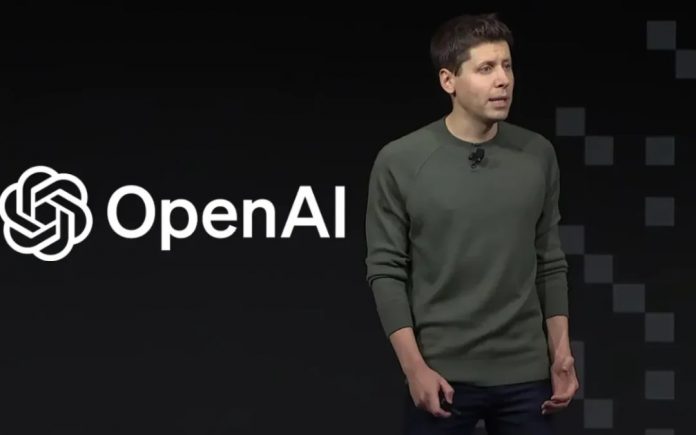
OpenAI has announced the release of GPT-5.4-Cyber. It’s a specialized variant of their flagship GPT-5.4 model, fine-tuned specifically for defensive cybersecurity use cases. It lowers the refusal boundary for legitimate cybersecurity tasks compared to the standard GPT-5.4.

This makes it more willing to assist with potentially sensitive or risky prompts like analyzing code for vulnerabilities when used by verified defenders, while still maintaining safeguards against clear malicious intent. New capabilities includes enhanced support for binary reverse engineering. Security professionals can use it to analyze compiled software (binaries) for: Potential vulnerabilities, Malware indicators, Overall security robustness— without needing access to the original source code.

Access model is not publicly available. It’s rolling out through OpenAI’s expanded Trusted Access for Cyber (TAC) program, initially limited to vetted and high-tier customers such as security vendors, organizations, researchers, and authenticated cyber defenders. Interested parties in the program can apply for additional access tiers.

This follows similar moves by competitors like Anthropic’s recent Mythos model focused on cyber. OpenAI positions it as part of scaling defenses in lockstep with advancing AI capabilities, including prior efforts like their Cybersecurity Grant Program and Codex Security tools that have reportedly helped fix thousands of vulnerabilities in open-source projects.

AI models are increasingly capable in areas like code analysis and autonomous reasoning, which has a natural dual-use risk, helpful for defenders but potentially dangerous if misused by attackers. GPT-5.4-Cyber represents OpenAI’s approach: make powerful tools more available to the good guys (under controlled access) while iteratively improving safety.

It’s part of their broader Preparedness Framework for high cyber-risk capabilities. The model lowers refusal boundaries for legitimate tasks, enabling faster vulnerability discovery, malware analysis, and binary reverse engineering; analyzing compiled software without source code. This helps defenders identify and fix issues quicker than attackers.

OpenAI is scaling its Trusted Access for Cyber (TAC) program to thousands of verified individual defenders and hundreds of teams protecting critical software. Highest-tier users get the more permissive GPT-5.4-Cyber variant. Access remains limited and vetted via ID checks and authentication to minimize misuse.

Competitive response: Released just days after Anthropic’s Claude Mythos, it positions OpenAI as favoring broader yet controlled defender access versus more tightly gated approaches. It builds on prior efforts that reportedly helped fix thousands of vulnerabilities in open-source projects.

By making the model cyber-permissive only for vetted users, OpenAI aims to give defenders an edge while testing for jailbreaks and improving safeguards. It acknowledges growing AI use by attackers but argues current controls sufficiently reduce immediate cyber risks. Security vendors like CrowdStrike integration mentioned in early reactions and researchers gain advanced tools for proactive defense, potentially improving threat detection and secure coding at scale.

Broader rollout beyond initial testing could follow based on feedback. Not available publicly or to general ChatGPT users. U.S. government agencies are not yet included (discussions ongoing). Focus remains on iterative, responsible deployment to stay ahead of adversarial use. The move emphasizes scaling defenses in lockstep with AI capabilities, prioritizing verified “good guys” while monitoring risks. Early expert reactions view it positively for empowering defenders, though success depends on effective vetting and ongoing safety improvements.

If you’re a cybersecurity professional, you can check OpenAI’s official blog post for details on applying to the Trusted Access program. The announcement emphasizes empowering defenders to find and fix issues faster than adversaries can exploit them.

Spartan Casino’s August 1st Global Launch Set to Crush Records While Bitcoin Cash Targets $485 and Litecoin Momentum Explodes

0

The internet betting sector has never witnessed a countdown quite like this one. Spartan, currently ranked as the 14th biggest gaming hub on the planet despite remaining in a closed beta phase, is charging toward an August 1st worldwide release that promises to flip the whole sector upside down. One billion dollars in total play, $40M in gross revenue, and $100M in player funding before a single day of open access proves exactly what is arriving.

At the same time in the digital asset space, the Litecoin value outlook is getting hot as LitVM arrives with 120 dev squads, and the Bitcoin Cash cost is holding steady before the life-changing Layla patch in May.

Spartan Gaming Hub Prepares for August 1 Worldwide Release

Every big name in the internet betting world built their status the same way, slowly, over many years, with open global access from day one. Spartan has not enjoyed that. It has functioned in a tight beta, with entry caps and no broad global rollout, yet still climbed to be the 14th biggest gaming site on the globe.

The statistics that fueled that spot are incredible: $1,000,000,000 in total play during the first 60 days of beta, $100,000,000 in secured funding, $40,000,000 in Gross Gaming Revenue, and 27,000 new players joining before a global crowd could even enter the site freely.

Old-school brands hit those marks over years of full service with massive ad budgets. Spartan hit them naturally, in a closed space, in just two months. Every site sitting above Spartan right now has enjoyed every technical lead, years of brand fame, and deep player pools.

That lead is vanishing before August 1st even lands. The site justifies these figures with super-fast payouts, no limits, and the 33% CashRake setup. This gives back up to 33% of the house edge on every play. The $7,000,000 prize table and a $3,000,000 car giveaway are active right now. August 1st marks the day Spartan hits full power. This is the most vital date in betting history.

Litecoin Value Path Heats Up as LitVM Debuts and ETF Hype Builds

The Litecoin value outlook shifted significantly this week as the chain revealed a massive technical boost. LTC is currently near $54.65, sitting well below its January 2026 peak near $76 but keeping its trend between $53 and $56 with chart shapes, like the Morning Star and Hammer price turns, hinting at a move up. LitVM, a fast ZK Layer-2 chain built using Polygon’s tech, arrived in Q1 2026 with over 120 dev squads already joining its build initiative.

More than 400,000 LTC is now held in private through the MWEB tech update. The Litecoin value outlook from CoinPriceForecast points toward $89 by the end of 2026, a 67% jump from current prices, with 16 crypto ETFs including Litecoin papers currently waiting for government approval. Binance opened a brand new LTC/U trading pair in March 2026.

Bitcoin Cash Price Hold Steady

The Bitcoin Cash cost is moving near $441, sitting at 13th place globally with a total value of roughly $8.8 billion. BCH is up 2.9% over the last day but stays below its main trend lines, with MACD showing little push and RSI at a steady 42.93. The big event coming up is the Layla chain patch on May 15, 2026, a major shift bringing Loops and Functions, letting BCH run complex digital deals for the very first time.

A different CashVM patch adds secure new locks and high-level smart deal tools. The Bitcoin Cash cost path for the next month is set at $420 to $485, with $485 acting as the main wall to break. Experts see $450 to $750 through most of 2026 if the Layla patch creates dev interest, with high-end goals hitting $1,000 if usage grows.

Summing It Up

The Litecoin value outlook is gaining from real dev growth, LitVM, MWEB use, and a long list of ETFs pointing toward a major price shift if the rules change. The Bitcoin Cash cost is holding firm before the most vital chain patch in years, with the Layla shift representing a true growth of what BCH can actually do.

Both digital assets are presenting the data and tech points that fans have been wanting. And rising above everything is Spartan, the 14th biggest gaming site on earth before its worldwide release, with a billion dollars in beta play, a $7M prize table active, and an August 1st countdown that the whole betting world is eyeing whether they like it or not.

Find Out More About Spartans:


Website: https://spartans.com/

Instagram: https://www.instagram.com/spartans/

Twitter/X: https://x.com/SpartansBet

YouTube: https://www.youtube.com/@SpartansBet

Top Crypto Gainers Today: BlockDAG, Toncoin, BNB, and Solana Dominating Today’s Market Heatmap

0

The crypto market keeps expanding with hundreds of active coins, making it harder to focus only on the biggest names like Bitcoin. Many traders now look beyond it to find stronger short-term and long-term opportunities. Timing and momentum often decide which assets stand out at any given moment, especially when tracking top crypto gainers today, including BlockDAG, Toncoin, BNB, and Solana in current market discussions.

This guide explores these four projects in a simple, direct way, focusing on what is driving interest in each one right now. You’ll see how their networks are developing, where activity is increasing, and why they are being watched by traders. The goal is to give a clear comparison so you can understand their potential and decide which direction fits your strategy best.

1. BlockDAG Sets New $0.000000726 Price With 195x Potential

BlockDAG has positioned itself among the top crypto gainers today through a sequence of exchange listings and operational milestones that are compressing into a short window of time.

The token currently trades at a fixed price of $0.000000726, carrying a 195x growth projection backed by a development roadmap with clearly dated milestones. That fixed pricing remains only while the final allocation lasts; once it clears, open-market conditions take over permanently.

The exchange side of the picture is substantial. BlockDAG (BDAG) already holds active trading pairs across 13 platforms: Biconomy, Bifinance, CoinStore, P2B, AscendEX, BTSE, XT, BTCC, LBank, BitMart, WEEX, Pionex, and WEBOT. Plus, BingX, a major Tier 1 exchange, has also opened BDAG trading, and three more Tier 1 platforms are joining soon!

Tier 1 exchange access broadens token reach through deeper liquidity pools, higher trading volumes, and exposure to millions of new global users, factors that have historically corresponded with notable price activity. On the product side, Smart Wallet claims are already active. Batch 4 opens April 27, and a Casino Demo is expected within two weeks.

From there, the schedule extends through mid-year. Late April completes full exchange coverage. May activates the DEX alongside liquidity provider incentives, and June introduces the Super App together with lending services, oracles, and a decentralized application layer. Supply at the current fixed rate continues to shrink as each milestone passes.

2. Toncoin Powers Telegram Blockchain Ecosystem Growth

Toncoin (TON) is a cryptocurrency created by the founders of Telegram and now operates as an independent, high-performance blockchain ecosystem supporting dApps, payments, and DeFi services. It plays a central role in enabling fast, low-cost transactions and seamless integration with Telegram’s expanding user base.

In recent months, network activity has increased significantly, with rising transaction volumes and total value locked surpassing major milestones. This momentum reflects growing developer interest and real-world adoption.

Many analysts view TON as a strong contender for long-term growth due to its scalability and ecosystem expansion. Given current market conditions, it is frequently highlighted among the top crypto gainers today, attracting attention from both retail and institutional investors seeking emerging blockchain opportunities in global crypto markets.

3. BNB Drives Binance Ecosystem Utility Expansion

BNB is the cornerstone asset of the Binance ecosystem, having evolved far beyond its origins as a simple exchange token. It powers the BNB Chain, which hosts thousands of decentralized applications, DeFi services, and NFT projects across multiple sectors.

A quarterly token-burning mechanism reduces supply over time, creating deflationary pressure that may support long-term value appreciation. Beyond infrastructure, BNB offers practical benefits within Binance, including trading fee discounts and access to exclusive token launches.

These utilities make it popular among both retail and institutional investors seeking ecosystem exposure. It is often discussed among the top crypto gainers today due to its strong ecosystem demand and consistent usage growth supported by global adoption and increasing on-chain activity in digital finance ecosystems.

4. Solana Leads Fast, Scalable Web3 Development

Solana is a high-performance blockchain designed for speed, scalability, and low-cost transactions in decentralized applications and crypto markets. It is capable of processing thousands of transactions per second, making it a strong competitor in the smart contract ecosystem.

Its ecosystem continues to expand, hosting major DeFi, NFT, and gaming projects such as Jupiter, Phantom, and Magic Eden. Recent upgrades have improved network stability and reliability, helping restore investor confidence after earlier congestion issues.

With growing institutional interest and increasing developer activity, Solana is positioned as a leading Ethereum alternative. Many analysts include it among the top crypto gainers today due to its strong momentum and expanding ecosystem, driven by adoption across DeFi gaming, NFT, and global developer communities worldwide.

Final Thoughts

Crypto markets rarely move in a straight line, but strong projects tend to stay in focus through different phases of activity. Toncoin continues to benefit from steady network usage and its connection to Telegram’s growing ecosystem, while BNB maintains its position through consistent utility across Binance services and token burns that support long-term supply control.

Solana also remains relevant due to its speed, low fees, and expanding developer base that keeps new applications flowing into its ecosystem. Among these, BlockDAG carries the most attention among top crypto gainers today due to its fixed price stage at $0.000000726 and a 195x growth projection supported by a structured roadmap. It already has active trading pairs across 13 exchanges, and Tier-1 platform BingX.

BlockDAG’s ecosystem is expanding through Smart Wallet access, Batch 4 on April 27, and upcoming releases like a Casino Demo, DEX, liquidity incentives, and a Super App, keeping development momentum strong.

Top 6 Online Crypto Casinos in 2026 [Expert Analysis]

0

The crypto casino market hit $81 billion in total wagers in 2025. That number is climbing fast in 2026. New platforms are launching monthly. Legacy giants are scrambling to adapt. And players are more informed, more demanding, and less loyal than ever before.

With so many options fighting for your deposit, cutting through the noise requires more than a flashy homepage and a celebrity endorsement. It requires looking at what actually matters, rewards, transparency, payout speed, and whether the platform gives back to every player or just the whales at the top.

We ranked the top six crypto casinos in 2026 based on structure, value, and what a player realistically walks away with after a session. Here is where each one stands.

1. Spartans Casino, The Undisputed Leader in Player Value

No platform in the market is doing what Spartans Casino is doing right now. And the numbers prove it before any opinion enters the conversation.

While still in beta, Spartans processed over $1 billion in wagers, collected $100 million in deposits, converted 27,000 first-time depositors in two months, and generated $40 million in Gross Gaming Revenue. The platform climbed to 14th in the global crypto casino rankings, ahead of names that have been operating for years. The global launch arrives August 1st, 2026. Everything achieved so far happened with the handbrake on.

The rewards model is the clearest differentiator in the industry. The 33% instant CashRake returns up to 3% cashback on every losing bet and up to 33% of the house edge on every wager, win or lose. Rewards are calculated in real time and credited instantly as withdrawable cash. Not tokens. Not bonus funds trapped behind play-through conditions. Cash.

The $7,000,000 monthly leaderboard is the largest competitive prize pool in online gambling history. First place takes $5 million. The remaining $2 million is distributed across other winners. Daily leaderboards with a $25,000 prize pool keep competition alive every 24 hours. Every verified player is eligible across casino and sportsbook.

2. Stake.com, The Legacy Giant Under Pressure

Stake remains the most recognised name in crypto gambling. $4.7 billion in revenue in 2024. Sponsorships with Alfa Romeo F1, the UFC, and Drake. A liquidity depth that few can match. For sheer brand power and trust, Stake still leads.

But 2026 has not been kind. The platform exited tier-one markets including the UK due to compliance failures. Customer acquisition costs have exploded thanks to nine-figure sponsorship deals. The VIP system overwhelmingly rewards mega-whales while mid-tier players grind for diminishing returns.

Search volumes for “Stake alternatives” hit record highs in Q1 2026. Stake is not collapsing, but it is defending territory rather than capturing new ground, and in a market moving this fast, that distinction matters.

3. Gamdom, The Crypto Purist With a Low Ceiling

Gamdom has earned a devoted following among crypto-native players. Its Boosted RTP slots, artificially raising payout rates to 97.5% on hit titles from providers like Hacksaw Gaming, undercut competitors running higher house edges. The mobile-first UX is consistently ranked among the best in the industry. For players who know exactly what they want and already hold crypto, Gamdom delivers a focused, no-nonsense experience.

The ceiling is self-imposed. Gamdom offers no fiat bridge, no traditional welcome bonus, and no onboarding path for casual players transitioning from fiat gambling. Millions of potential users are locked out by design.

4. Razed Casino, Ambitious Hybrid, Uncertain Future

Razed Casino is the most ambitious hybrid in the market right now. A game library of 4,000 to 9,500 titles depending on region. Payment rails spanning Visa, Mastercard, Skrill, Neteller, bank transfers, and zero-fee crypto. A dual-layer retention engine combining traditional deposit matches for newcomers with up to 33% rakeback and wager-free weekly cashback for VIPs. On paper, it covers everything.

The risk is structural. Razed aggressively markets itself as VPN-friendly and no-KYC for crypto users while simultaneously processing traditional card payments that require full regulatory compliance. That contradiction is a tightrope one jurisdiction crackdown could snap.

5. Yeet Casino, Cool Brand, Incomplete Product

Yeet arrived in 2024 with sharp crypto-native branding and genuine creativity. The Yeet Originals library, featuring unique titles like Coin Race and Risky Click, gives the platform proprietary content that pure aggregators lack. The instant rakeback model and Airdrop Point Boost, which rewards players for completing KYC tiers, showed inventive thinking on player onboarding.

But core infrastructure is missing. The sportsbook and esports betting arms have been delayed or non-operational, limiting Yeet strictly to casino. Withdrawals carry flat $10 minimums and external network fees, small on paper, painful over time for active players.

6. Sol Casino, Lightning Fast, Ecosystem Locked

Sol Casino went all in on Solana, and it works. Sub-second transaction speeds. Near-zero gas fees. No bridging friction. For players already holding SOL or Solana-based tokens, the experience is seamless in a way multi-chain platforms cannot replicate. The UI is clean, the poker tournaments have a following, and the on-chain mechanics are provably fair.

The limitation is the dependency. Sol Casino only serves the Solana ecosystem. Bitcoin holders, Ethereum users, stablecoin players on other chains, and fiat depositors are excluded entirely. Community sentiment runs volatile, loss streaks on coin flips and originals regularly trigger rigging accusations despite verifiable on-chain mechanics.

The Verdict

Every platform on this list found something that works. Stake built a brand empire. Gamdom perfected high-RTP slots. Razed bridged fiat and crypto. Yeet created original games with personality. Sol Casino nailed Solana-native speed. Each earned its place.

But finding something that works is not the same as solving the full equation. The best crypto casino in 2026 is not the one with the biggest brand, the cleverest token mechanic, or the most creative niche. It is the one where every player, whale or casual, crypto-native or fiat-first, walks away with the most value on every single bet.

Spartans solved that equation. $1 billion wagered in beta. 14th globally before the doors fully opened.

Find Out More About Spartans:

Website: https://spartans.com/

Instagram: https://www.instagram.com/spartans/

Twitter/X: https://x.com/SpartansBet

YouTube: https://www.youtube.com/@SpartansBet