DD
MM
YYYY

PAGES

DD
MM
YYYY

spot_img

PAGES

Home Blog Page 12

OpenAI Unveils GPT-Realtime-2 As Tether Launches Localized Medical AI System

0

OpenAI unveiled its new GPT-Realtime-2 voice model, while Tether introduced a localized Medical AI system capable of running directly on smartphones without relying heavily on cloud infrastructure. Together, these developments represent a broader shift toward AI systems that are faster, more personal, and increasingly independent from centralized data centers.

The announcement of GPT-Realtime-2 signals a major evolution in conversational AI. Unlike earlier voice assistants that often relied on delayed responses and rigid command structures, the new realtime architecture is designed for fluid, low-latency dialogue. The goal is to make AI conversations feel closer to natural human interaction.

Instead of waiting for prompts to finish processing in sequence, realtime systems continuously interpret speech, context, interruptions, emotional cues, and conversational flow simultaneously.

This changes the economics and utility of voice interfaces entirely. For years, digital assistants struggled with one core issue: interaction friction. Even a one-second delay could break the illusion of natural communication. GPT-Realtime-2 aims to reduce that barrier dramatically, allowing AI to function more like a live conversational participant than a search engine with speech output.

The implications extend far beyond simple chatbots. Realtime voice AI could redefine customer service, digital tutoring, translation, healthcare support, gaming, enterprise collaboration, and accessibility tools. Businesses may begin replacing static support systems with AI agents capable of managing dynamic conversations in real time.

Educational platforms could deploy personalized tutors that respond conversationally instead of through scripted interfaces. For individuals with disabilities, more responsive voice systems may significantly improve accessibility and independence. At the same time, Tether’s launch of a local Medical AI platform introduces another critical trend in the AI industry: edge intelligence.

Rather than processing data exclusively through remote servers, Tether’s system reportedly runs directly on mobile devices. This approach reduces dependence on constant internet connectivity and minimizes the need to send sensitive health information to centralized cloud platforms.

That distinction matters enormously in healthcare. Medical AI has long faced skepticism due to privacy concerns, regulatory uncertainty, and infrastructure limitations. By enabling AI inference directly on smartphones, Tether is attempting to solve several problems simultaneously. First, local processing can improve privacy because patient information remains on the device instead of being continuously transmitted online.

Second, offline capability allows medical tools to function in regions with unstable internet access. Third, localized AI can lower operational costs by reducing reliance on expensive cloud computation. The move is especially relevant in emerging markets, where access to healthcare infrastructure remains uneven. In many regions across Africa, Asia, and Latin America, smartphones are far more accessible than hospitals or advanced diagnostic systems.

A medical AI assistant capable of operating locally could provide preliminary assessments, symptom analysis, translation support, medication reminders, or emergency guidance even in low-connectivity environments. There is also a deeper technological pattern connecting both announcements. AI development is moving in two directions simultaneously: larger centralized intelligence models and smaller localized execution layers.

Companies are increasingly training massive foundational models in the cloud while optimizing deployment for lightweight consumer hardware. This hybrid architecture could define the next decade of computing. The broader competitive landscape is becoming increasingly intense as well. OpenAI’s realtime push reflects growing competition in multimodal AI, where voice, vision, and live interaction are becoming core battlegrounds.

Meanwhile, Tether’s entrance into Medical AI demonstrates how companies traditionally associated with digital finance and stablecoins are expanding into broader infrastructure technology ecosystems. These developments also raise important questions. Realtime voice AI introduces concerns about deepfakes, synthetic impersonation, and surveillance risks.

Medical AI operating locally must still meet rigorous standards for accuracy, reliability, and ethical deployment. Regulators worldwide will likely scrutinize both sectors closely as adoption accelerates. Nevertheless, the direction is clear. AI is no longer confined to desktop prompts or centralized cloud systems. It is becoming ambient, conversational, mobile, and embedded directly into everyday devices.

OpenAI’s GPT-Realtime-2 and Tether’s local Medical AI illustrate how the industry is evolving toward AI that is not only more powerful, but also more immediate, portable, and deeply integrated into daily human activity.


Implicatioms of Andreessen Horowitz $2.2B Crypto-focused Fund and AI Advancement 

0

The decision by Andreessen Horowitz (a16z) to raise a $2.2 billion crypto-focused fund marks a significant inflection point in the evolution of digital assets. More than just another capital raise, this fund reflects a strategic thesis: the convergence of crypto infrastructure, artificial intelligence, and traditional financial systems will define the next era of technological and economic transformation.

By explicitly targeting projects that sit at this intersection, a16z is signaling confidence that the boundaries between these domains are dissolving—and that the resulting hybrid systems will unlock new forms of value creation.

The fund underscores the maturation of the crypto industry. Early cycles were dominated by speculative trading and basic infrastructure such as wallets and exchanges. Today, the focus has shifted toward real-world applications and integration with established systems.

By aligning crypto with Artificial Intelligence and traditional finance, a16z is betting that blockchain technologies will evolve beyond niche use cases into foundational layers for global digital coordination. This includes areas such as decentralized identity, tokenized assets, automated financial contracts, and AI-driven economic networks.

One of the most compelling aspects of this strategy is the synergy between AI and blockchain. AI systems require vast amounts of data, computational resources, and increasingly, decentralized coordination mechanisms. Blockchain, as a trust-minimized ledger, can provide transparent data provenance, secure marketplaces for data exchange, and incentive structures for distributed AI training.

Conversely, AI can enhance crypto networks by optimizing trading strategies, detecting fraud, and automating governance decisions. The fusion of these technologies could give rise to autonomous economic agents—software entities capable of transacting, negotiating, and creating value independently. Equally important is the integration with traditional financial systems.

Institutions have historically approached crypto with caution, citing regulatory uncertainty and volatility. However, the emergence of tokenization—the process of representing real-world assets on blockchain networks—is changing that narrative. By bridging crypto with conventional finance, a16z’s fund aims to accelerate the adoption of blockchain in areas such as equities, bonds, real estate, and cross-border payments.

This aligns with broader institutional trends, where banks and asset managers are exploring digital assets not as speculative instruments, but as infrastructure for more efficient and transparent markets. The scale of the fund also matters. At $2.2 billion, it provides a16z with substantial firepower to shape the direction of the industry. Venture capital does more than finance startups; it influences which ideas gain traction and how ecosystems evolve.

With this fund, a16z can support early-stage experimentation while also backing more mature companies building critical infrastructure. This dual approach increases the likelihood of producing category-defining platforms that can bridge crypto, AI, and finance at scale.

However, the strategy is not without risks. Regulatory frameworks remain fragmented across jurisdictions, and the integration of AI introduces additional ethical and operational complexities. Issues such as data privacy, algorithmic bias, and systemic risk could become more pronounced in decentralized environments.

Moreover, the success of this thesis depends on user adoption—technologies must deliver tangible improvements over existing systems to achieve mainstream acceptance. Despite these challenges, the fund represents a forward-looking bet on convergence. The history of technology suggests that transformative breakthroughs often occur at the intersection of disciplines.

Just as the internet combined computing and telecommunications to reshape the world, the integration of crypto, AI, and traditional finance could redefine how value is created, stored, and exchanged. a16z’s $2.2 billion fund is more than a financial commitment—it is a strategic blueprint. By investing in the connective tissue between these domains, the firm is positioning itself at the forefront of a new digital paradigm, one where decentralized systems, intelligent automation, and institutional finance operate as a unified ecosystem.

Wall Street Tokenization Push Finally Appears to have Real Validation

0

For years, Wall Street has promoted tokenization as the future of finance. The idea is simple but transformative: traditional financial assets such as stocks, bonds, real estate, and commodities can be represented digitally on blockchain networks.

Supporters have argued that tokenization could make markets faster, cheaper, more transparent, and accessible around the clock. Yet despite the excitement, critics long questioned whether tokenization was more theory than reality. Now, however, the financial industry may finally have its first genuine proof of concept.

The recent surge in institutional interest surrounding tokenized assets suggests that Wall Street’s ambitions are beginning to move beyond experimentation into practical implementation. Major financial institutions, exchanges, and asset managers are no longer discussing tokenization as a distant possibility. Instead, they are actively building infrastructure and launching products that demonstrate how blockchain technology can improve capital markets.

One of the clearest signs of progress is the growing adoption of tokenized Treasury products and money market funds. Firms such as BlackRock, Franklin Templeton, and JPMorgan have embraced blockchain-based financial instruments to streamline settlement and increase operational efficiency.

These products allow investors to gain exposure to traditional assets while benefiting from the programmability and instant settlement capabilities of blockchain systems. Unlike earlier crypto experiments that relied heavily on speculation, these offerings address real financial use cases with measurable value.

The appeal of tokenization lies in its ability to modernize outdated financial infrastructure. Traditional markets often rely on multiple intermediaries, delayed settlements, and limited trading hours. Transactions can take days to finalize, tying up billions of dollars in capital. Blockchain networks, by contrast, can settle transactions nearly instantly and operate continuously.

This reduces counterparty risk and improves liquidity efficiency. For large institutions handling trillions of dollars, even small improvements in settlement speed can create enormous savings. Another important development is regulatory momentum. Governments and regulators had previously treated tokenization cautiously because of concerns surrounding compliance, investor protection, and systemic risk.

Regulators are increasingly recognizing that tokenized assets can exist within established legal frameworks. The emergence of regulated tokenized securities and blockchain-based funds has helped legitimize the sector. As legal clarity improves, more institutional capital is likely to enter the market.

Importantly, Wall Street’s tokenization push is not about replacing traditional finance overnight. Instead, it represents an evolution of existing systems. Banks still play a central role, but blockchain technology enables them to operate more efficiently.

This distinction matters because institutional adoption depends on compatibility with current financial structures rather than radical disruption. Wall Street is effectively merging traditional finance with blockchain infrastructure instead of attempting to destroy the old system entirely. The proof of concept is becoming increasingly difficult to ignore.

Tokenized assets have already processed billions of dollars in value, while large financial firms continue expanding their blockchain initiatives. Even stock exchanges are exploring tokenized trading platforms that could eventually support equities, bonds, and private market assets. If these systems scale successfully, tokenization could reshape how global finance operates.

Of course, challenges remain. Questions surrounding interoperability, cybersecurity, liquidity fragmentation, and regulation still need to be resolved. Many blockchain systems also struggle with scalability. Nevertheless, the industry has crossed an important threshold. Tokenization is no longer merely a futuristic talking point or a niche crypto experiment. It is becoming a functioning component of institutional finance.

Wall Street’s tokenization ambitions finally appear to have their first real validation. The combination of institutional adoption, regulatory progress, and operational efficiency is demonstrating that blockchain technology can provide meaningful improvements to financial markets. What once seemed like speculative hype is now evolving into a practical financial innovation with the potential to redefine the architecture of global capital markets.

In March 2026, the United States Spent ~$5B on JET Fuel

0

The global airline industry has long been vulnerable to the volatile nature of energy markets, but recent developments have placed renewed pressure on carriers across the United States.

In March alone, U.S. airlines reportedly spent nearly $5 billion on jet fuel, underscoring the immense financial burden created by persistently high fuel prices. Despite hopes that energy markets would stabilize following earlier supply disruptions and economic slowdowns, jet fuel costs continue to rise, threatening airline profitability, ticket pricing, and the broader travel economy.

Jet fuel is one of the largest operating expenses for airlines, often accounting for between 20% and 30% of total costs. When prices surge, airlines are forced into difficult decisions: absorb the costs and reduce profit margins, or pass the expense on to travelers through higher fares and additional fees.

The current environment suggests that many carriers may have no choice but to increase prices further, especially during peak travel seasons when demand remains strong. Several factors are driving the sustained increase in jet fuel prices. Geopolitical tensions continue to disrupt global oil supply chains, particularly conflicts involving major energy-producing regions.

At the same time, production cuts by oil-exporting nations have tightened supply in global markets, keeping crude oil prices elevated. Since jet fuel is refined from crude oil, any increase in oil prices directly impacts airline fuel expenses. Another contributing factor is the steady recovery in air travel demand following years of pandemic-related disruption.

Passenger traffic has rebounded significantly, with millions of travelers returning to domestic and international flights. While this recovery has been positive for airline revenues, it has also increased overall fuel consumption. More flights in the air mean greater demand for jet fuel, placing additional strain on supply and keeping prices high.

The impact extends beyond airline balance sheets. Consumers are already beginning to feel the consequences through rising airfare prices. Families planning vacations, business travelers, and even cargo operators face increasing transportation costs. In many cases, airlines have introduced fuel surcharges or adjusted ticket pricing models to offset their growing expenses.

This creates a ripple effect throughout the economy, as higher travel costs can reduce tourism activity, increase shipping expenses, and contribute to inflationary pressures. Low-cost carriers may be especially vulnerable in this environment. Budget airlines operate on thinner profit margins and rely heavily on competitive pricing to attract passengers.

Sustained high fuel prices could force some carriers to scale back routes, reduce flight frequency, or postpone expansion plans. Larger airlines may have more financial flexibility, but even major carriers cannot ignore billions of dollars in additional fuel expenses indefinitely.

In response, airlines are increasingly investing in fuel-efficiency strategies. Many carriers are modernizing fleets with newer aircraft designed to consume less fuel per passenger mile. Others are exploring sustainable aviation fuel (SAF) as a long-term alternative to traditional jet fuel.

Although SAF currently remains more expensive and less widely available, industry leaders see it as a crucial component of reducing both emissions and dependence on volatile oil markets. The $5 billion spent on jet fuel in March highlights a critical challenge facing the aviation industry. Airlines are navigating a difficult intersection of rising operational costs, strong travel demand, and uncertain energy markets.

Unless oil prices decline significantly or alternative fuel technologies become more affordable, the pressure on airlines — and passengers — is unlikely to ease anytime soon.

US Trade Court Rules Against President Trump’s Proposed 10% Global Tariffs

0

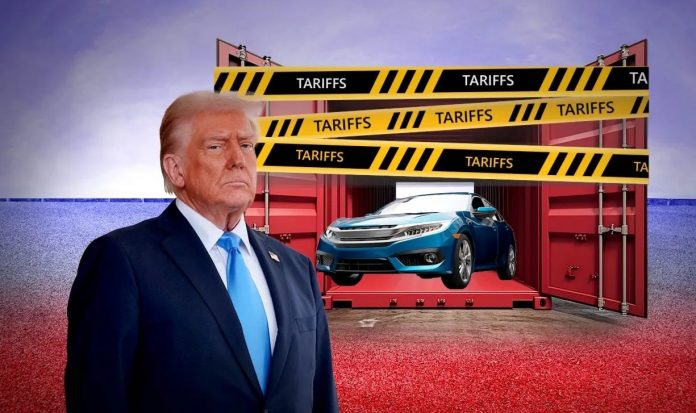
The decision by a United States trade court to rule against President Donald Trump’s proposed 10% global tariffs marks a significant moment in the ongoing debate over protectionism, executive authority, and the future of international trade.

The ruling not only challenges a core element of Trump’s economic philosophy but also signals the limits of unilateral trade action in an interconnected global economy. At the center of the controversy is the tension between safeguarding domestic industries and maintaining the stability of global commerce.

Trump’s tariff strategy has long been rooted in the belief that the United States has been disadvantaged by globalization and unfair trade practices. During his presidency, he imposed tariffs on hundreds of billions of dollars’ worth of imports, particularly targeting China, while also threatening broader duties on allies and trading partners.

His proposed 10% universal tariff on all imports was presented as a tool to revive American manufacturing, reduce trade deficits, and pressure foreign nations into more favorable trade agreements. Supporters argued that such measures would encourage companies to produce goods domestically and create jobs for American workers.

However, critics viewed the proposal as economically risky and legally questionable. Economists warned that blanket tariffs would likely increase prices for consumers, disrupt supply chains, and provoke retaliatory measures from other countries. Businesses that rely on imported materials feared rising production costs, while exporters worried that foreign governments would respond with tariffs of their own.

In many ways, the proposal revived fears of trade wars reminiscent of earlier periods in global economic history when protectionism deepened financial instability rather than solving it. The trade court’s ruling against the tariffs therefore represents more than a technical legal decision. It reflects broader concerns about the concentration of trade powers within the executive branch.

The court reportedly determined that the legal basis for imposing such sweeping tariffs was insufficient under existing trade laws. This ruling underscores the principle that even a president cannot impose broad economic restrictions without clear statutory authority or adherence to established procedures.

The decision also highlights the evolving role of the judiciary in trade policy. Traditionally, trade matters have often been dominated by the executive branch due to their connection with foreign policy and national security. Yet courts increasingly face the challenge of balancing presidential discretion with constitutional checks and balances.

By ruling against the tariffs, the court reaffirmed that trade policy cannot be conducted entirely through executive declarations without legal scrutiny. Economically, the ruling may bring relief to businesses and investors concerned about renewed global trade tensions. Financial markets generally prefer predictability, and broad tariffs often create uncertainty across industries ranging from technology and manufacturing to agriculture and retail.

Many American companies have become deeply integrated into global supply chains, relying on components and raw materials from multiple countries. A universal tariff would likely have increased costs across the board, contributing to inflationary pressures at a time when many economies are still dealing with post-pandemic recovery challenges.

Internationally, the ruling may also reassure U.S. allies and trading partners. Trump’s aggressive tariff policies frequently strained relationships with countries that were otherwise close economic and strategic partners of the United States. Nations in Europe, Asia, and North America criticized the idea of universal tariffs as disruptive to the rules-based trading system established after World War II.

The court’s intervention may therefore be interpreted globally as evidence that American institutions can still act as a restraint on abrupt policy shifts.

Politically, the ruling is likely to deepen divisions over economic nationalism and globalization. Trump and his supporters continue to argue that traditional free trade policies weakened American industry and hollowed out manufacturing communities. They may portray the court’s decision as an example of institutional resistance to policies designed to prioritize American workers.

Opponents, meanwhile, will see the ruling as a victory for economic stability, legal process, and international cooperation. The trade court’s rejection of Trump’s proposed 10% global tariffs represents a defining moment in America’s ongoing struggle to balance national economic interests with global integration. The decision reinforces the importance of legal constraints, economic caution, and institutional oversight in trade policy.

While debates over globalization and domestic manufacturing are unlikely to disappear, the ruling demonstrates that sweeping protectionist measures face significant legal and economic obstacles in the modern era.