DD
MM
YYYY

PAGES

DD
MM
YYYY

spot_img

PAGES

Home Blog Page 12

The Market Is Broadening, but the AI Test Is Still Ahead

0

The stock market is beginning to tell a more complicated story than the headline numbers suggest. Oil has climbed roughly 30% in a month, the 10-year Treasury yield has moved above 5% following the Federal Reserve’s September rate hike, and borrowing costs remain a significant pressure on corporate valuations.

Yet the S&P 500 has largely held its ground, hovering around levels reached in June rather than collapsing under the weight of higher yields and rising energy costs.

That resilience matters because it suggests investors are not relying exclusively on the technology stocks that powered much of the market’s earlier advance.

As some AI-related shares cool, capital has begun rotating toward healthcare, energy and financial companies. Instead of a market where a small group of technology giants must continually carry the index higher, leadership is becoming more distributed.

For Wall Street strategists, that broadening can be interpreted as a healthier market structure. A rally supported by multiple sectors is generally less dependent on the performance of a handful of companies.

If technology stocks pause while banks, energy producers, insurers and healthcare companies continue contributing to earnings and index performance, the market can absorb pressure without necessarily losing its broader direction.

But there is an important contradiction beneath that stability: the S&P 500 may be becoming broader while its earnings story remains heavily connected to artificial intelligence.

Goldman Sachs estimates that AI investment is responsible for nearly half of the S&P 500’s earnings growth this year. That figure places the current market in a delicate position.

AI is no longer simply a technology-sector narrative. The spending associated with chips, data centers, cloud infrastructure, software and related services has become an important component of corporate earnings expectations across the wider economy.

This creates a different question for investors. The issue is no longer simply whether AI stocks can continue rising. It is whether the enormous investment surrounding AI will eventually translate into durable productivity, revenue and profit growth.

That distinction could become increasingly important in 2027, when Goldman expects the contribution from AI investment to earnings growth to fade. A market can broaden geographically and sectorally, but if earnings growth slows at the same time, investors may discover that diversification alone cannot sustain elevated valuations.

Higher oil prices add another complication. Energy companies can benefit from rising crude prices, potentially supporting the sector while creating additional costs for transportation, manufacturing and consumers.

Meanwhile, a 10-year Treasury yield above 5% raises the discount rate applied to future corporate earnings, making high-growth stocks particularly sensitive to changes in interest rates.

Financial companies, by contrast, can find opportunities in a higher-rate environment, while healthcare stocks may offer investors a different earnings profile from economically sensitive technology businesses. That rotation provides the S&P 500 with additional sources of support.

The market, therefore, is not necessarily choosing between AI and everything else. It is attempting to price an economy in which AI remains powerful, interest rates remain restrictive, energy prices are rising and investors are searching for earnings beyond the technology complex.

The real test comes next. If the market can broaden while corporate profits continue expanding across multiple sectors, the current resilience may prove meaningful. If AI-related earnings growth fades without being replaced by stronger contributions elsewhere, today’s stability could become harder to maintain.

For now, the message from equities is cautious rather than conclusive: investors are broadening their bets, but the earnings engine still has something to prove.


Binance, the ECB and the New Battle Over Crypto’s Place in Europe

0

Europe’s cryptocurrency market is entering a more complicated phase. On one side, regulators are tightening their grip over major exchanges and stablecoins. On the other, blockchain infrastructure is increasingly being incorporated into the traditional financial system.

The latest developments involving Binance and World Liberty Financial’s WLFI token illustrate that tension clearly. According to The Wall Street Journal, European Central Bank President Christine Lagarde intervened in efforts by Binance to obtain an EU-wide authorization through Greece.

Binance had been pursuing a license that could have provided broader access to the European market, but the application ultimately failed after regulatory opposition, with Binance withdrawing its application in June.

The concerns reportedly included Binance’s previous compliance record, including its 2023 U.S. guilty plea and $4.3 billion settlement over anti-money-laundering violations.

The episode matters because Europe is no longer approaching crypto simply as an emerging technology outside the financial system. The regulatory framework is increasingly becoming part of the competitive landscape itself.

Exchanges must demonstrate not only technological capacity and liquidity, but also compliance, governance and institutional credibility. Yet the European Central Bank’s broader position toward blockchain is more nuanced than opposition to the technology.

On September 21, the ECB launched Pontes, a system designed to connect its payment infrastructure with blockchain-based financial markets. The initiative allows participating institutions to settle blockchain transactions using central-bank-backed euros rather than private stablecoins.

The ECB also said it intends to invest a portion of its own funds in highly rated euro-denominated blockchain securities.  That contrast is significant: blockchain infrastructure can gain institutional acceptance even as individual crypto businesses face intense scrutiny.

At the same time, World Liberty Financial is expanding the economic role of its ecosystem through Binance. Binance announced on September 3 that it would extend its USD1 reward campaign from September 4 through October 2, with a pool of 150 million WLFI tokens distributed weekly to eligible users holding USD1 on the exchange.

The structure is important. Users are not simply receiving an unrestricted allocation of WLFI without conditions. Eligibility depends on maintaining qualifying USD1 balances, while Binance calculates rewards using balance snapshots and distributes WLFI weekly. KYC and regional restrictions also apply.

That distinction matters when describing the campaign as having “nothing locked.” The mechanism does not require users to lock WLFI itself, but participation requires holding qualifying USD1 balances, and the amount of WLFI received depends on the campaign’s reward formula.

The Binance and WLFI developments reveal a larger transformation in crypto markets. Access to liquidity is increasingly being determined by regulation, while token distribution is becoming intertwined with stablecoin adoption and exchange infrastructure.

For Binance, Europe represents a regulatory test. For WLFI, Binance represents distribution and liquidity. For the ECB, blockchain represents infrastructure that can potentially be integrated into regulated finance without surrendering control over monetary settlement.

The emerging battle may therefore not be between traditional finance and crypto. It may be over which parts of crypto become embedded in the financial system, under whose rules, and through which infrastructure.

Building for Nigeria and the World – ContiSX Engineering

0

Good People: Let us celebrate the excellence of Nigeria’s young people. Across our remarkable nation, we have exceptionally talented young men and women. I have visited more than 100 Nigerian universities, teaching and supporting students in electronics and technology. You can see some photographs from those engagements here.

From Usmanu Danfodiyo University, Sokoto, to Obafemi Awolowo University, Ile-Ife, and to the peerless and unmatched Federal University of Technology, Owerri (GREAT FUTO), I have seen the depth of Nigeria’s latent talent. Our nation has brilliant young people who, with modest support and the right opportunities, can deliver extraordinary results.

That is why the products emerging from our companies, including the Contisx Phone, are national products. We have a small design centre in Kano, and our lead engineer is currently there, working with the team on a critical component of our product. He visited two weeks ago, returned to Kano and will conclude the assignment before travelling back to Owerri next week.

If the Local Government Chairman sees this social-media post and extends an invitation, I will ask the team to pay him a courtesy visit. But that is secondary; our primary focus remains the mission and the work: build great products that solve people’s problems.

Whatever you admire in what we are building, please celebrate it as the work of one team, from one country and one people, serving one continent. When we launch, you will see something built by Team Nigeria for all Nigerians and for the world. Visit contisx.com and feel free to share ideas on how we can co-build things that will actualize the vision of “exchanging prosperity”.

AI Agents Are Entering Commerce as Meta Automates Marketplace Negotiations

0

The next phase of artificial intelligence is increasingly being defined not simply by bigger models, but by what those models can do when embedded directly into everyday products.

Two developments illustrate that shift: Anthropic’s reported stealth testing of an unreleased Opus 5.5 model under the codename “claude-wafer-eap,” and Meta’s launch of Muse, an application that brings AI-powered auto-negotiation to Facebook Marketplace.

Reports surrounding Anthropic suggest the company is testing Opus 5.5 ahead of a possible Tuesday release.

The “claude-wafer-eap” codename has attracted attention because it appears to represent an internal or early-access testing track rather than a conventional public product launch. If the release materializes, the important question will not simply be whether Opus 5.5 scores higher on benchmarks.

But whether Anthropic has materially improved the model’s usefulness for complex reasoning, coding, research and autonomous workflows. Anthropic has increasingly positioned its Claude models around professional work rather than chatbot novelty.

That strategy makes every new Opus generation economically significant. A more capable model can influence software development, enterprise research, financial analysis and other knowledge-intensive industries where the value of AI is measured by completed work rather than conversation quality.

A Tuesday launch would also place Anthropic in a rapidly accelerating competitive cycle. AI companies are increasingly releasing models in shorter intervals, while users and businesses are becoming more sensitive to latency, reliability, context handling and agentic capabilities.

The market is moving from asking whether AI can generate useful answers toward asking whether AI can reliably perform multi-step tasks.

Meta’s Muse development approaches the same transformation from another direction.

With Muse, Meta is bringing AI into Facebook Marketplace, where negotiation is one of the most human parts of digital commerce. Instead of simply helping users write descriptions or identify products, an AI system capable of negotiating can participate in the transaction itself.

That could significantly change how peer-to-peer commerce works. Consider a seller listing a used smartphone for $500. A prospective buyer may offer $400, the seller may counter at $475, and the discussion can continue until both sides reach an acceptable price.

An automated negotiation system could handle that exchange according to parameters established by the user. The economic implication is larger than convenience. Negotiation has traditionally required time, attention and social interaction.

Automating it potentially turns those scarce resources into software functions. Buyers could delegate bargaining while sellers could establish minimum acceptable prices and let AI handle routine offers.

But automation also introduces questions around transparency, consent and pricing behavior. Users need to understand what authority an AI negotiator has and when a proposed deal becomes binding. The quality of negotiation will depend not only on the model but also on the rules governing the transaction.

Anthropic’s reported Opus 5.5 testing and Meta’s Muse launch point toward the same emerging direction: AI is moving from generating information toward acting on behalf of people. The next competitive frontier may therefore be less about who has the smartest chatbot and more about who can build the most reliable digital agents.

Whether negotiating a Marketplace purchase, writing software or conducting research, AI is gradually becoming an active participant in economic activity.

AI Data Center Boom Faces $68 Billion Roadblock as Bitcoin Mining Sites Gain New Value

0

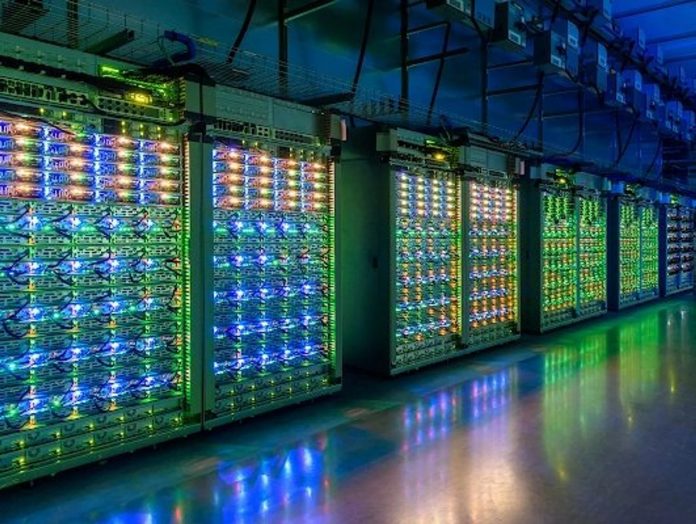
The artificial intelligence boom is colliding with a very physical constraint: there is not enough infrastructure moving fast enough to support the machines behind it.

Between April and June, local opposition blocked or delayed 45 U.S. data-center projects representing about $68 billion in planned investment, according to Data Center Watch.

The figure was lower than the roughly $130 billion affected in the first quarter, but it still accounted for more than half of the new large-scale developments tracked during the period.

The message for the technology industry is becoming harder to ignore: building AI infrastructure is no longer simply a question of securing capital and advanced chips. It is increasingly a question of whether communities will allow the infrastructure to be built at all.

The resistance reflects a growing awareness of the physical demands of AI. Large data centers consume enormous quantities of electricity, require substantial cooling systems and can place additional pressure on local water supplies.

Construction itself can alter landscapes, increase traffic and strain existing infrastructure. For residents, these issues transform an abstract AI boom into something tangible: power demand, utility costs, land use and water consumption in their own communities.

That tension has helped opposition groups expand to 843 across 49 states, while lawmakers in 30 statehouses have introduced or adopted measures governing data-center development. The regulatory response demonstrates that the debate is moving beyond neighborhood disputes.

State governments are increasingly being forced to consider how AI infrastructure fits into broader energy, environmental and economic-development policies.

Yet the same bottleneck creating problems for AI companies is producing an unusual opportunity elsewhere in the digital economy.

Bitcoin miners have spent years acquiring access to electricity, substations, transmission infrastructure and industrial sites. Their business model depends heavily on securing inexpensive and reliable power, meaning some mining facilities already occupy locations that can potentially support high-density computing.

As AI developers struggle with lengthy grid-connection queues and local resistance to greenfield construction, permitted mining sites are becoming strategically interesting. This creates a possible convergence between two industries that are often portrayed as competitors for electricity.

A Bitcoin-mining facility can be valuable even if Bitcoin mining itself becomes less attractive. Its underlying infrastructure—power agreements, grid connections, buildings, cooling systems and industrial permits—may have alternative economic uses.

AI companies, meanwhile, have an urgent incentive to find locations where these hurdles have already been addressed. The transition will not be automatic. AI workloads can have different requirements from cryptocurrency mining, particularly around cooling, networking, redundancy and computing hardware.

Existing sites may also face zoning restrictions or require significant upgrades. Nevertheless, the economic logic is compelling: converting an existing power-rich site can be considerably different from starting a data center project from scratch.

For Bitcoin miners, this could introduce another source of value into their balance sheets. Their most important asset may not always be the computing equipment producing Bitcoin.

In some cases, it could be the scarce right to consume power in a location where new competitors cannot easily obtain the same access. The broader lesson is that the AI infrastructure race is becoming a race for electricity, land and permits as much as chips and capital.

Data centers may be the physical backbone of the AI economy, but their expansion depends on social and political permission. As opposition grows, infrastructure that already exists—and especially infrastructure originally built for Bitcoin mining—could become increasingly valuable.

The next phase of the AI boom may therefore depend not only on who builds the smartest models, but on who already has a place on the power grid.