

Europe’s cryptocurrency market is entering a more complicated phase. On one side, regulators are tightening their grip over major exchanges and stablecoins. On the other, blockchain infrastructure is increasingly being incorporated into the traditional financial system.
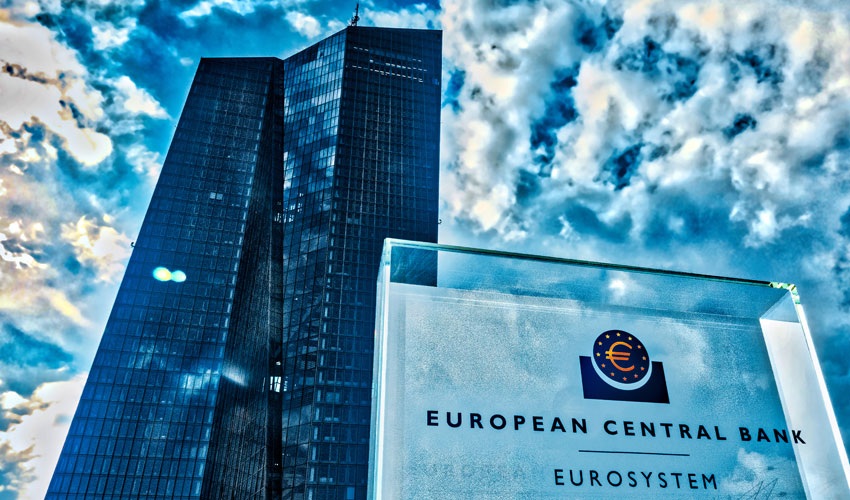
The latest developments involving Binance and World Liberty Financial’s WLFI token illustrate that tension clearly. According to The Wall Street Journal, European Central Bank President Christine Lagarde intervened in efforts by Binance to obtain an EU-wide authorization through Greece.
Binance had been pursuing a license that could have provided broader access to the European market, but the application ultimately failed after regulatory opposition, with Binance withdrawing its application in June.
Register for the next Tekedia Mini-MBA.
Register for Tekedia AI in Business Masterclass.
Join Tekedia Capital Syndicate and co-invest in great global startups.
The concerns reportedly included Binance’s previous compliance record, including its 2023 U.S. guilty plea and $4.3 billion settlement over anti-money-laundering violations.
The episode matters because Europe is no longer approaching crypto simply as an emerging technology outside the financial system. The regulatory framework is increasingly becoming part of the competitive landscape itself.
Exchanges must demonstrate not only technological capacity and liquidity, but also compliance, governance and institutional credibility. Yet the European Central Bank’s broader position toward blockchain is more nuanced than opposition to the technology.

On September 21, the ECB launched Pontes, a system designed to connect its payment infrastructure with blockchain-based financial markets. The initiative allows participating institutions to settle blockchain transactions using central-bank-backed euros rather than private stablecoins.
The ECB also said it intends to invest a portion of its own funds in highly rated euro-denominated blockchain securities. That contrast is significant: blockchain infrastructure can gain institutional acceptance even as individual crypto businesses face intense scrutiny.
At the same time, World Liberty Financial is expanding the economic role of its ecosystem through Binance. Binance announced on September 3 that it would extend its USD1 reward campaign from September 4 through October 2, with a pool of 150 million WLFI tokens distributed weekly to eligible users holding USD1 on the exchange.

The structure is important. Users are not simply receiving an unrestricted allocation of WLFI without conditions. Eligibility depends on maintaining qualifying USD1 balances, while Binance calculates rewards using balance snapshots and distributes WLFI weekly. KYC and regional restrictions also apply.
That distinction matters when describing the campaign as having “nothing locked.” The mechanism does not require users to lock WLFI itself, but participation requires holding qualifying USD1 balances, and the amount of WLFI received depends on the campaign’s reward formula.
The Binance and WLFI developments reveal a larger transformation in crypto markets. Access to liquidity is increasingly being determined by regulation, while token distribution is becoming intertwined with stablecoin adoption and exchange infrastructure.
For Binance, Europe represents a regulatory test. For WLFI, Binance represents distribution and liquidity. For the ECB, blockchain represents infrastructure that can potentially be integrated into regulated finance without surrendering control over monetary settlement.
The emerging battle may therefore not be between traditional finance and crypto. It may be over which parts of crypto become embedded in the financial system, under whose rules, and through which infrastructure.