

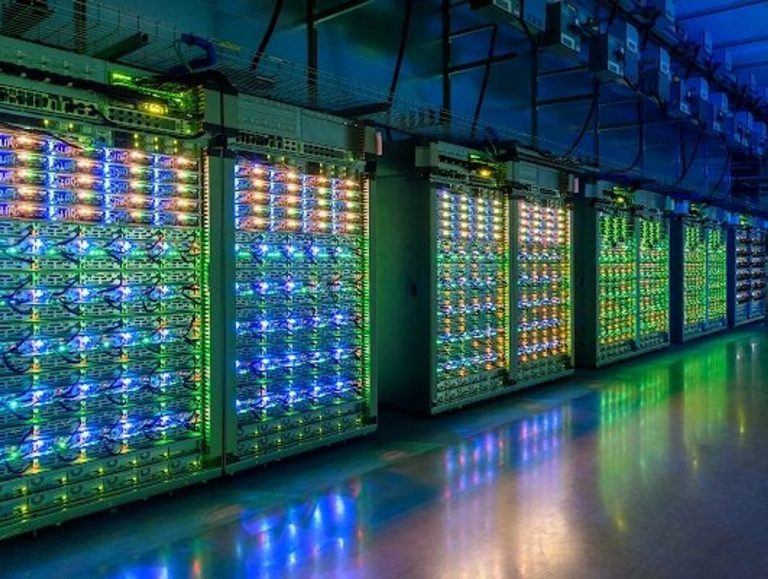
The artificial intelligence boom is colliding with a very physical constraint: there is not enough infrastructure moving fast enough to support the machines behind it.
Between April and June, local opposition blocked or delayed 45 U.S. data-center projects representing about $68 billion in planned investment, according to Data Center Watch.
The figure was lower than the roughly $130 billion affected in the first quarter, but it still accounted for more than half of the new large-scale developments tracked during the period.
Register for the next Tekedia Mini-MBA.
Register for Tekedia AI in Business Masterclass.
Join Tekedia Capital Syndicate and co-invest in great global startups.
The message for the technology industry is becoming harder to ignore: building AI infrastructure is no longer simply a question of securing capital and advanced chips. It is increasingly a question of whether communities will allow the infrastructure to be built at all.
The resistance reflects a growing awareness of the physical demands of AI. Large data centers consume enormous quantities of electricity, require substantial cooling systems and can place additional pressure on local water supplies.
Construction itself can alter landscapes, increase traffic and strain existing infrastructure. For residents, these issues transform an abstract AI boom into something tangible: power demand, utility costs, land use and water consumption in their own communities.

That tension has helped opposition groups expand to 843 across 49 states, while lawmakers in 30 statehouses have introduced or adopted measures governing data-center development. The regulatory response demonstrates that the debate is moving beyond neighborhood disputes.
State governments are increasingly being forced to consider how AI infrastructure fits into broader energy, environmental and economic-development policies.
Yet the same bottleneck creating problems for AI companies is producing an unusual opportunity elsewhere in the digital economy.

Bitcoin miners have spent years acquiring access to electricity, substations, transmission infrastructure and industrial sites. Their business model depends heavily on securing inexpensive and reliable power, meaning some mining facilities already occupy locations that can potentially support high-density computing.
As AI developers struggle with lengthy grid-connection queues and local resistance to greenfield construction, permitted mining sites are becoming strategically interesting. This creates a possible convergence between two industries that are often portrayed as competitors for electricity.
A Bitcoin-mining facility can be valuable even if Bitcoin mining itself becomes less attractive. Its underlying infrastructure—power agreements, grid connections, buildings, cooling systems and industrial permits—may have alternative economic uses.
AI companies, meanwhile, have an urgent incentive to find locations where these hurdles have already been addressed. The transition will not be automatic. AI workloads can have different requirements from cryptocurrency mining, particularly around cooling, networking, redundancy and computing hardware.
Existing sites may also face zoning restrictions or require significant upgrades. Nevertheless, the economic logic is compelling: converting an existing power-rich site can be considerably different from starting a data center project from scratch.
For Bitcoin miners, this could introduce another source of value into their balance sheets. Their most important asset may not always be the computing equipment producing Bitcoin.
In some cases, it could be the scarce right to consume power in a location where new competitors cannot easily obtain the same access. The broader lesson is that the AI infrastructure race is becoming a race for electricity, land and permits as much as chips and capital.
Data centers may be the physical backbone of the AI economy, but their expansion depends on social and political permission. As opposition grows, infrastructure that already exists—and especially infrastructure originally built for Bitcoin mining—could become increasingly valuable.
The next phase of the AI boom may therefore depend not only on who builds the smartest models, but on who already has a place on the power grid.