DD
MM
YYYY

PAGES

DD
MM
YYYY

spot_img

PAGES

Home Blog Page 12

OpenAI’s ChatGPT Work Is Turning Workplace Data Into Personalized Writing

0

Artificial intelligence is moving beyond simply generating text to understanding how individuals communicate. OpenAI’s ChatGPT Work is taking another step in that direction with a writing-style feature that can learn from connected workplace applications, including Gmail, Google Drive, Slack and SharePoint.

Instead of repeatedly instructing an AI to sound professional, casual, direct or personal, the system can study examples of a user’s existing work and use those patterns when producing new content.

The significance of this development lies in personalization. Writing style is rarely defined by a simple instruction such as “make this formal.” It is often embedded in small habits: preferred expressions, sentence structure, punctuation, capitalization, vocabulary, greetings and even the way someone signs off an email.

ChatGPT Work can use examples from connected workplace tools to identify such characteristics and carry them into subsequent writing.

That could substantially change everyday knowledge work. Consider an executive preparing a company update, a journalist drafting correspondence, a manager responding to employees or a founder communicating with investors.

Rather than receiving a generic AI-generated message that requires extensive editing, the user could receive a first draft that is already closer to their established voice. The benefit is not simply faster writing; it is reduced friction between human intention and machine-generated language.

This capability also fits into the broader evolution of ChatGPT Work. OpenAI describes Work as an agent designed for longer, more involved assignments that can research information, work across connected applications and files, and create finished documents, spreadsheets, presentations and reports.

Its connectors already allow workplace information from services such as Google Drive, SharePoint, Slack and Gmail to become available within workflows. The writing-style feature therefore represents a deeper form of workplace context.

Previously, connected applications primarily helped AI understand what an organization knew. Now, they can also help it understand how an individual communicates.

That distinction could make AI assistants considerably more useful because effective workplace communication depends on both factual context and tone.

However, personalization introduces an important question: how much of a person’s digital history should an AI use to imitate them? Emails, internal messages and documents can contain sensitive information, confidential business discussions and personal communication habits.

Users and organizations therefore need to understand which connected sources are being used, what permissions apply and how workplace administrators control access. OpenAI’s documentation emphasizes that app availability and actions depend on plans, workspace settings, permissions and administrators.

There is also a broader question about authenticity. If AI becomes increasingly capable of reproducing an employee’s distinctive voice, the boundary between assistance and authorship becomes less obvious.

A message may sound exactly like its supposed author while being largely generated by a machine. Organizations may eventually need clearer policies around disclosure, approval and accountability for AI-generated communications.

Still, the direction is clear. ChatGPT Work is evolving from a general-purpose writing assistant into a context-aware workplace collaborator. By learning from the tools people already use.

It can potentially eliminate one of the biggest weaknesses of generative AI: the generic voice that often makes machine-written communication immediately recognizable.

The future of workplace AI may therefore depend less on whether machines can write and more on whether they can understand the person, organization and context behind the writing. ChatGPT Work’s new style-learning capability is an important step toward that more personalized model of human-AI collaboration.

Skilled Trades and Technical Jobs Drive Strong U.S. Employment Growth

0

For years, the American labor market has sent a powerful message: earning a college degree is one of the safest routes to a good career. But that assumption is being challenged by an important shift in employment.

Americans without four-year college degrees are experiencing one of their strongest job markets in years, as employers increasingly compete for workers in industries where practical skills, experience and reliability can matter as much as formal education.

The change reflects the evolving structure of the U.S. economy. While professional and technology occupations continue to offer opportunities for highly educated workers, millions of jobs are being created or sustained in sectors that do not necessarily require a bachelor’s degree.

Construction, manufacturing, transportation, logistics, healthcare support, skilled trades, hospitality and certain technical occupations are creating pathways into the middle class without requiring years of university education.

One reason is the persistent demand for workers with hands-on skills. Construction companies need electricians, plumbers, equipment operators and technicians.

Manufacturers require workers who can operate increasingly sophisticated machinery. Healthcare providers need assistants and technicians as an aging population increases demand for medical services. These jobs may require training, certifications or apprenticeships, but not necessarily a traditional four-year degree.

The labor shortage that followed the pandemic also changed the balance between employers and workers. Companies discovered that vacancies could remain open for extended periods when they demanded credentials that were not essential to performing the work.

As competition for talent intensified, some employers began removing degree requirements from job postings and placing greater emphasis on demonstrated skills and experience. For workers, this creates an important opportunity.

Avoiding college debt while entering a well-paid skilled occupation can produce a different financial equation from spending four years earning a degree.

Apprenticeships, community colleges, vocational programs and employer-sponsored training can provide alternative routes into careers that offer rising wages and advancement.

Yet the picture is not uniformly positive. A strong employment market does not mean every worker without a degree is prospering. Wage growth varies considerably between industries, and some lower-skilled occupations remain vulnerable to automation, outsourcing and economic downturns.

Geography also matters. A worker in an area experiencing a manufacturing or construction boom may face very different opportunities from someone living in a region with fewer expanding industries. There is also a distinction between having a job and building a sustainable career.

The most valuable opportunities increasingly require specialized skills. Workers who invest in certifications, technical training and continuous learning may be better positioned to capture the benefits of this labor-market shift.

The broader lesson is that the American definition of a successful career may be changing. A bachelor’s degree remains valuable for many professions, but it is no longer the only credible ticket to economic mobility.

For millions of Americans, the combination of technical expertise, experience and industry-specific training is becoming a powerful alternative. In that sense, the current job market represents more than a temporary advantage for workers without college degrees.

It signals a deeper reassessment of what employers value—and what it means to build a prosperous working life in modern America.

Liquid Network Hacker Returns 3,400 BTC as Zcash Surges Above $1,200

0

The crypto market is once again illustrating its defining contradiction: enormous technological ambition unfolding alongside vulnerabilities that can move hundreds of millions of dollars in seconds.

The latest developments surrounding Liquid Network, Bitcoin, Zcash and the emerging ZCAT memecoin capture both sides of that equation—security risks on one hand and speculative momentum on the other.

The Liquid Network incident began with a dramatic breach in which a white-hat hacker reportedly drained nearly 4,000 Bitcoin from the network.

At the peak value cited for the incident, the stolen assets represented a staggering sum, highlighting how attractive large digital-asset infrastructures remain to sophisticated attackers. Yet the episode took an unexpected turn when the hacker returned approximately 3,400 BTC, worth around $268 million.

The return dramatically changes the character of the incident. Rather than simply becoming another permanent crypto theft, the episode now raises questions about the motives and responsibilities of security researchers operating in decentralized financial systems.

A white-hat hacker can expose vulnerabilities with the intention of demonstrating a weakness rather than permanently stealing funds, but the line between responsible disclosure and unauthorized asset movement remains extremely thin when hundreds of millions of dollars are involved.

For Liquid and its ecosystem, the episode is also a reminder that technical security cannot be treated as a secondary concern. Bitcoin-based financial infrastructure increasingly carries institutional and commercial value, meaning vulnerabilities can become systemic risks.

Recovering most of the funds may limit the financial damage, but it does not eliminate the need to understand how the exploit occurred and whether similar weaknesses remain.

While Bitcoin’s infrastructure faced a security drama, Zcash emerged as one of the market’s strongest speculative stories. Zcash surged through previous highs and climbed above $1,200, demonstrating renewed appetite for privacy-focused digital assets.

The move is particularly notable because Zcash occupies a distinctive position in the cryptocurrency market: it combines a scarce monetary asset model with privacy technology designed to provide users with greater control over transaction visibility.

The rally also illustrates how quickly capital can rotate toward narratives that capture investor attention. Privacy has periodically returned to the center of crypto discussions as users, developers and investors debate financial surveillance, censorship resistance and on-chain transparency.

Zcash’s latest advance suggests that the privacy narrative may once again be gaining traction. Adding another layer to the frenzy, ZCAT, a Zcash-themed memecoin, has also broken out.

Memecoins are often driven less by conventional valuation models than by liquidity, community participation, social attention and narrative momentum. Its rise alongside Zcash demonstrates how a major asset’s rally can create an ecosystem-wide speculative effect, pulling smaller tokens into the spotlight.

The Liquid incident and the Zcash rally reveal two powerful forces shaping crypto markets: trust and attention. Security determines whether capital can remain in the ecosystem, while attention determines where that capital moves next. The return of billions of dollars in value and the surge of privacy-related assets therefore tell different chapters of the same story.

Crypto’s next phase will depend on whether the industry can strengthen its infrastructure while preserving the innovation and openness that attract capital. In a market where one vulnerability can expose billions and one narrative can propel a token beyond $1,200, security and sentiment remain equally powerful forces.

Robinhood Memecoins Dominance, Stripe BTC Accumulation and Solana Onchain Flow

0

Crypto markets are increasingly becoming a contest between two very different visions of the blockchain economy: speculation at the speed of memes and financial infrastructure built for the scale of Wall Street.

This week, both sides accelerated, with Robinhood, Stripe and Solana offering a glimpse of how quickly the boundary between crypto and traditional finance is disappearing.

Robinhood sits at the center of that convergence. The company has struck a multiyear partnership with Crypto.com and its prediction-market spinout, OG.com, while taking equity stakes in both businesses.

The agreement will allow Robinhood to route selected football event contracts through OG.com’s CFTC-regulated exchange and clearing infrastructure. Robinhood already recorded 13.6 billion event contracts in the second quarter, generating about $156 million in revenue.

Making prediction markets an increasingly meaningful business rather than a peripheral experiment. The move also reflects a broader transformation in how people trade information. Yes-or-no contracts turn elections, sports and other events into tradable probabilities.

For Robinhood, integrating another venue expands liquidity and product choice while strengthening its position at the intersection of brokerage, derivatives and crypto-native infrastructure.

Meanwhile, Stripe is pursuing a different form of conviction: Bitcoin accumulation. The company purchased another 1,375 BTC for approximately $109 million between August 31 and September 4, at an average price of about $79,281 per bitcoin.

Its holdings consequently reached 24,531 BTC. The strategy illustrates how public companies are increasingly treating Bitcoin not simply as a speculative asset, but as a treasury instrument and a core component of corporate capital allocation.

Yet the speculative side of crypto has not disappeared. Memecoin markets recorded their biggest week of trading activity since the launch of TRUMP, showing that traders remain willing to chase extreme volatility when liquidity and attention converge.

The significance is less about any individual token than about the durability of crypto’s attention economy: narratives can still mobilize enormous volumes within days, even as institutional capital moves deeper into tokenized finance.

Solana represents the bridge between these worlds. The network has reached an all-time high in real-world-asset holders, surpassing 300,000 wallets holding tokenized assets.

Tokenized equity activity has also expanded rapidly: Solana settled $8.8 billion of tokenized-equity volume in the second quarter, while tokenized equity outstanding value reached $535 million in July.

These figures suggest that blockchain-based stocks are moving beyond an experimental niche toward a functioning market structure. That momentum is increasingly reflected in the Robinhood story.

Bernstein has maintained an Outperform rating and a $160 price target, implying roughly 31% upside from the cited market price. Its analysts argue that Robinhood’s Layer-2 network has already become an earnings engine, generating about $39 million in cumulative fees.

With annual fees potentially reaching $160 million by 2028. Robinhood Chain had also accumulated roughly $1.5 billion in total value locked and more than $50 billion in DEX volume. The larger message is clear.

Crypto is no longer developing along a single path. Memecoins continue to monetize attention, Bitcoin is becoming corporate treasury infrastructure, and tokenized equities are turning blockchains into potential capital-market rails.

Robinhood’s prediction-market expansion and Solana’s tokenization growth show that the next phase of crypto may be defined less by isolated tokens and more by financial infrastructure. The speculative casino remains open, but alongside it, a new digital market architecture is steadily being built at scale.

Apple’s iPhone 18 Pro Redefines Smartphone Photography With a 48MP Variable-Aperture Camera

0

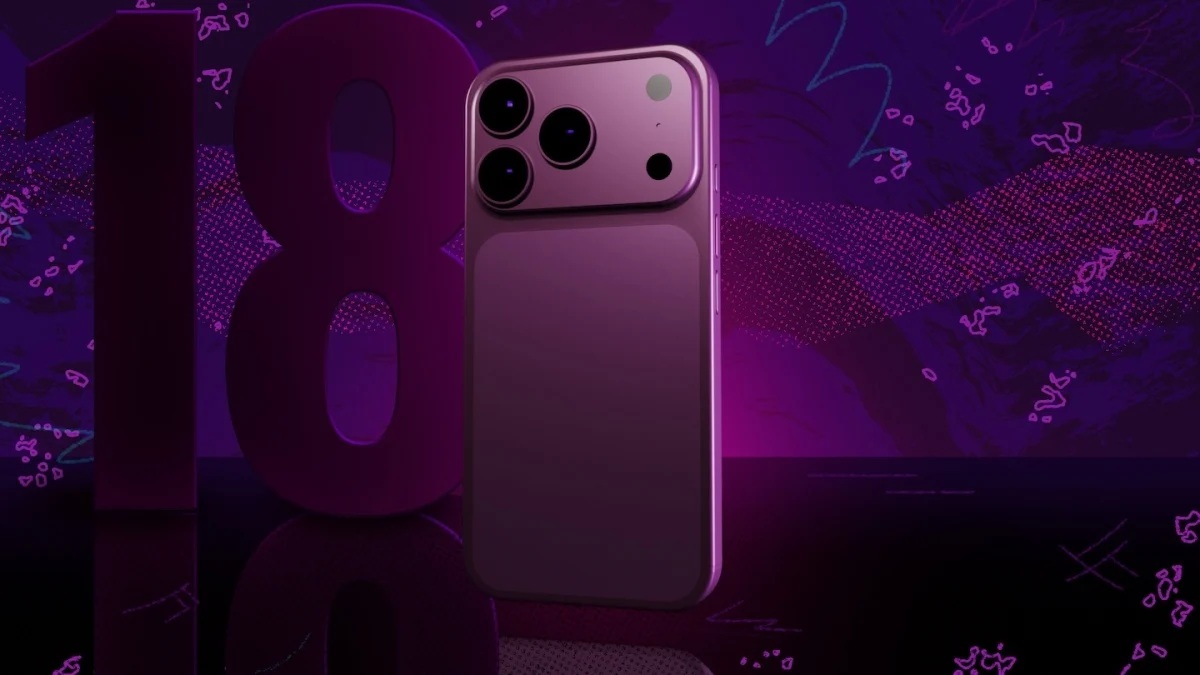
Apple has officially unveiled the iPhone 18 Pro and iPhone 18 Pro Max, introducing a new generation of flagship smartphones built around three major priorities: camera control, sustained performance and battery endurance.

The Pro lineup represents a significant hardware and software upgrade, with Apple placing particular emphasis on photography and video, while the iPhone 18 Pro Max delivers the largest increase in battery life ever seen on an iPhone.

At the center of the camera upgrade is a new 48MP Fusion Main camera with variable aperture, bringing aperture control to the iPhone for the first time.

Apple says the system uses six laser-cut blades controlled by a new rotor mechanism to smoothly transition between aperture settings.

The camera can automatically adjust the aperture according to lighting and depth-of-field requirements, while photographers can manually select from four aperture settings through the new Pro controls.

The aperture range extends from ƒ/1.48 to ƒ/4. At ƒ/1.48, the camera can open wider to collect more light, improving low-light photography. At ƒ/1.8, Apple positions the system for portraits, balancing light gathering with depth of field.

Narrowing the aperture to ƒ/4 keeps more of a group or scene in focus. This gives the iPhone a degree of optical control that traditionally required dedicated cameras.

The 48MP Fusion Main camera is supported by a new computational imaging pipeline designed to produce sharper and more detailed photographs.

Apple has also expanded Photographic Styles with texture and grain controls, allowing users to manipulate the appearance of photographs beyond basic color adjustments.

The Camera app’s Pro controls add manual adjustments for aperture, shutter speed and white balance, alongside a histogram for monitoring exposure. Developers can also access aperture control through an API.

Video receives substantial attention as well. The new system allows users to apply Cinematic effects after recording at up to 60 frames per second, while Time-lapse can now be captured in 4K and Dolby Vision HDR.

Audio Mix also receives new algorithms designed to improve voices and isolate music, extending Apple’s attempt to make the iPhone a serious content-production device rather than simply a point-and-shoot camera.

Performance is powered by Apple’s new A20 Pro chip, paired with a next-generation vapor chamber. Apple says the combination delivers the highest sustained performance in iPhone history.

That matters because sustained performance is different from a short benchmark burst: demanding workloads such as gaming, video processing and AI can generate heat, making thermal management increasingly important in high-performance smartphones.

Battery life is another defining feature. The iPhone 18 Pro Max uses a larger battery alongside advances in Apple silicon to deliver the largest battery-life increase ever on an iPhone.

For users increasingly relying on smartphones for video, navigation, communication, gaming and AI-powered applications, additional endurance could be one of the most practical improvements in the new generation.

The phones also introduce a smaller, more useful Dynamic Island and run iOS 27, with Apple Intelligence and Siri AI integrated into the broader experience. The devices come in four finishes: black, silver, glacier and burgundy, with the Pro lineup offered in two sizes.

Apple has scheduled pre-orders for September 12, with availability beginning September 18. The iPhone 18 Pro and Pro Max therefore arrive not merely as faster iPhones, but as increasingly camera-like creative instruments, AI-capable computing devices and longer-lasting mobile workstations.

The headline may be battery life, but the deeper story is control. With variable aperture, manual photography controls, advanced video tools, A20 Pro performance and substantially improved endurance.

Apple is pushing the iPhone 18 Pro family toward a future where the smartphone becomes less a compromise between different devices and more a complete creative and computing platform.