DD
MM
YYYY

PAGES

DD
MM
YYYY

spot_img

PAGES

Home Blog Page 12

Anthropic Launches Cheaper Sonnet 5.5 Days After CEO Called for AI Industry to Slow Development Pace

0

Anthropic is pushing its AI business deeper into the cost-sensitive enterprise market with the release of Sonnet 5.5, a faster and cheaper model designed for routine coding and business tasks, as the company continues to balance rapid commercial expansion with growing scrutiny over the risks of increasingly capable AI systems.

The launch on Monday is Anthropic’s second model release since CEO Dario Amodei called for the industry to slow the pace at which frontier AI systems are developed. It follows the introduction of Opus 5.5 less than a week ago, while the company said its lower-priced Haiku 5.5 model is also coming soon.

The three-model lineup points to a clearer segmentation of Anthropic’s products. Opus is positioned for tasks requiring greater reasoning and judgment, while Sonnet is intended for customers who prioritize speed and cost and do not require the highest level of model intelligence.

“Sonnet is really for the cost-conscious customer where they might not need as much intelligence,” Theo Chu, a research product manager at Anthropic, told CNBC. “It might be routine tasks that just need execution, but don’t need that judgment that Opus can bring.”

Sonnet 5.5 costs $2 per million input tokens and $10 per million output tokens, half the price of Opus 5.5. Anthropic also said the new model requires fewer tokens to complete tasks than its predecessor, potentially reducing the effective cost further for customers.

That pricing strategy matters as competition in AI increasingly moves beyond headline model performance. Businesses deploying AI at scale are becoming more focused on the cost of running models across millions of interactions, particularly for coding, customer service, document generation and other repetitive workloads.

Sonnet 5.5 is designed to improve coding, scoped task completion, and the creation of polished documents, presentations, and spreadsheets. These are commercially important applications because they can be embedded into existing corporate workflows rather than requiring users to experiment with AI as a general-purpose chatbot.

The model is available across Anthropic’s platforms as well as Amazon Web Services, Google Cloud and Microsoft Azure.

By making Sonnet cheaper to run while maintaining capabilities suited to common enterprise tasks, Anthropic is effectively targeting a larger portion of the AI workload market. Companies do not necessarily need their most expensive model for every task, and using a lower-cost model for routine work can materially change the economics of large-scale deployment.

Anthropic’s decision to launch multiple models in quick succession also gives customers more flexibility over the trade-off between intelligence, speed, and price.

The approach has been touted as AI agents take on longer sequences of tasks. A company running an agent continuously may incur substantially higher costs than one using AI for isolated queries. Reducing the number of tokens required to complete each task can therefore improve margins for both Anthropic and its customers.

The Safety Question Has Not Disappeared

The timing of Sonnet 5.5 is especially notable because it comes shortly after Amodei called for a slower pace of frontier AI development.

Anthropic and its competitors have faced growing scrutiny over whether more capable models could create significant cybersecurity and other risks.

Anthropic said Sonnet 5.5 does not advance the frontier of its models’ capabilities. As a result, the company said its alignment testing focused primarily on a “targeted set of risks that apply to models of any capability level.”

This makes a difference because Anthropic is not presenting the launch as another step in the race to build the most powerful possible model. However, the company acknowledged that Sonnet 5.5 has significantly stronger cybersecurity capabilities than its predecessor.

Anthropic described the improvement as a “large improvement,” making Sonnet 5.5 the first Sonnet model to receive fallbacks and cybersecurity safeguards similar to those developed for the company’s most capable models.

“Focusing on alignment and safety has been a key part of our mission from the very beginning,” Chu said. “This is something that we’ve always prioritized across our models.”

The combination of stronger cybersecurity capabilities and additional safeguards underpins one of the central complications of AI development: capabilities that make models more useful for legitimate customers can also increase their potential usefulness in harmful activities.

Anthropic is now treating cybersecurity safeguards as necessary even for a model positioned below its frontier systems.

A Different Interpretation of Amodei’s Slowdown Proposal

The launch also provides some context for Amodei’s call to “slow down” AI development. His proposal did not mean Anthropic would stop releasing models or withdraw from commercial competition. Instead, it focused on slowing the development of advanced frontier systems while continuing to build and deploy AI products.

Sonnet 5.5 fits that distinction.

Anthropic can continue expanding its commercial footprint through cheaper, specialized models while taking a more cautious approach to the development of its most powerful systems. That may become a relevant business model as the industry shifts from the initial race to demonstrate benchmark-leading intelligence toward the more difficult question of whether companies can generate sustainable returns from massive AI infrastructure investments.

For customers, the economics are becoming as important as raw capability. A model that is slightly less capable but significantly cheaper to operate can be preferable for high-volume workloads.

Anthropic’s product strategy now resembles a portfolio rather than a single-model race. Opus 5.5 is positioned for demanding tasks where higher intelligence and judgment justify greater expense. Sonnet 5.5 targets routine and cost-sensitive workloads. Haiku 5.5 will complete the lower-cost end of the range when it launches.

Analysts expect that structure to allow Anthropic to capture different levels of enterprise demand while giving customers an incentive to use its models more extensively.

How Higher US Yields Affect Emerging Markets and the Dollar

0

The rise in the U.S. 30-year Treasury yield above 5.50% marks a significant shift in the global bond market, taking long-term borrowing costs to levels not seen since 2004.

The move matters far beyond government debt markets because the 30-year Treasury is a benchmark for mortgages, corporate financing, infrastructure projects and long-duration assets.

A yield above 5.50% signals that investors are demanding substantially more compensation to hold U.S. government debt for three decades. While Treasury securities remain central to global finance, longer maturities carry greater exposure to inflation, fiscal policy and changes in interest-rate expectations.

The latest move therefore reflects more than a simple adjustment in bond prices. It points to a broader reassessment of the long-term economic and fiscal outlook. One of the most important forces behind higher long-term yields is inflation risk.

Even when short-term inflation begins to moderate, investors may remain concerned that price pressures could prove persistent. A bond paying a fixed return over 30 years becomes less attractive if the purchasing power of that income is steadily eroded. Investors consequently demand a higher yield to compensate for that risk.

Government borrowing requirements are another important factor. Large fiscal deficits require the Treasury to issue substantial amounts of debt. When supply increases, markets must absorb more securities.

If demand does not increase at the same pace, Treasury prices can fall and yields rise. The result is a higher cost of financing for the government, creating an important feedback mechanism between fiscal policy and bond markets.

The consequences extend into the private economy. Mortgage rates are closely influenced by longer-term Treasury yields, meaning a sustained rise in the 30-year Treasury can keep housing finance expensive.

Higher borrowing costs can reduce affordability for households, discourage refinancing and potentially weaken demand for homes. Companies also face a more expensive financing environment.

Businesses evaluating acquisitions, expansion projects or new debt issuance must account for a higher risk-free benchmark. Projects that appeared profitable when capital was cheap can become less attractive when financing costs rise.

Financial markets are particularly sensitive to this development because higher Treasury yields compete directly with stocks and other risk assets. When government bonds offer substantially higher returns, investors may require greater potential returns from equities to justify taking additional risk.

This can place pressure on highly valued companies, particularly businesses whose expected profits lie far in the future. For emerging markets, the implications can be even broader. Higher U.S. yields can attract international capital toward dollar-denominated assets and increase demand for the dollar.

This can place pressure on emerging-market currencies while raising the cost of dollar borrowing for governments and companies outside the United States. The 5.50% threshold also raises questions about the future path of monetary policy.

The Federal Reserve controls short-term interest rates, but it does not directly set the 30-year Treasury yield. Long-term yields instead reflect market expectations about inflation, economic growth, government borrowing and future interest rates.

The most important issue is whether the move represents a temporary repricing or the beginning of a prolonged period of structurally higher long-term borrowing costs. If yields remain elevated, the effects could gradually spread through housing, corporate investment, government finances and global capital markets.

A 30-year Treasury yield above 5.50% is therefore more than a headline number. It is a signal that investors are demanding a higher price for long-term capital—and that shift can reshape financial conditions across the world.

Japan’s Currency Diplomat Mimura Urges Markets To Heed Washington, Tokyo’s ‘Very Clear’ Warning On Yen

0

Japan has stepped up its warning to currency markets that it is prepared to respond to excessive yen weakness, with Tokyo and Washington delivering a coordinated message that officials hope will deter traders from pushing the currency lower.

Japan’s top currency diplomat Atsushi Mimura said Monday that markets should take the recent message from Japanese and US officials “at face value,” signaling that Tokyo remains prepared to act if yen depreciation becomes disorderly.

“Japan’s prime minister, finance minister and the US have sent a very clear message. Markets should take that message at face value,” Mimura said in an interview with Reuters. “I will be watching closely whether markets will continue to take (the message) at face value.”

The comments came after US President Donald Trump raised concerns about yen weakness during a summit with Japanese Prime Minister Sanae Takaichi, according to Japanese Finance Minister Satsuki Katayama.

Katayama and US Treasury Secretary Scott Bessent subsequently reaffirmed in a phone call that the yen’s undervaluation was a concern, reinforcing the impression that Washington is comfortable with Tokyo’s efforts to prevent excessive currency weakness.

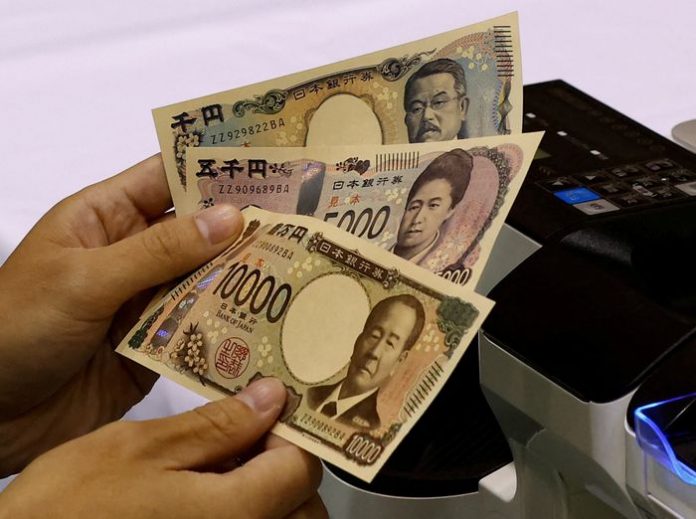
The yen strengthened sharply following Mimura’s remarks, breaking through the 157-per-dollar level to trade around 156.75.

The immediate market reaction emphasizes the importance of official communication when intervention risks are perceived to be rising. Tokyo does not need to announce an intervention to influence currency positioning. The prospect that authorities could intervene can itself raise the cost of betting aggressively against the yen.

Intervention Remains on The Table

Mimura stopped short of saying whether Japan was preparing another intervention. Asked whether Tokyo was ready to conduct another yen-buying operation, either independently or in coordination with the United States, he said: “I have nothing to comment on how we could act.”

That carefully worded response leaves the precise threshold for intervention unclear while preserving the government’s ability to respond if market conditions deteriorate.

Japan and the United States conducted a rare coordinated intervention on July 31 to prevent the yen’s decline toward a nearly four-decade low from destabilizing financial markets. Mimura previously described that operation as the culmination of the countries’ “currency alliance.”

He said the term was intended to describe cooperation extending beyond foreign exchange into economic security, critical minerals and global supply chains.

The significance of the latest US involvement is that Washington’s concerns over yen weakness could strengthen Tokyo’s ability to signal intervention without necessarily carrying it out.

Mimura also dismissed concerns that Japan could face financial constraints if it intervened again.

“I have absolutely no such concern,” he said.

Japan holds substantial foreign-exchange reserves that can be deployed in support of the yen, although the effectiveness and political consequences of intervention depend on market conditions and the broader monetary-policy environment.

Japan’s challenge is that intervention alone cannot easily eliminate the underlying monetary forces weighing on the currency.

The Bank of Japan has been raising interest rates, with its policy rate reaching 1.25% earlier this month. The increases are intended partly to address persistent inflationary pressure, including the higher import costs created by a weak yen.

Yet the yen has continued to face pressure because US interest rates remain considerably higher.

Mimura noted that the monetary-policy gap between the two economies has been narrowing as a trend, with the BOJ on a rate-hike path while the Federal Reserve has also been tightening.

“As such, the gap between Japanese and US policy rates has been narrowing as a trend,” Mimura said. “We are always mindful of such developments in watching market moves.”

The problem for Japan is that even a narrowing rate differential may not be enough to reverse yen weakness if markets expect US rates to remain elevated for longer. Higher US yields increase the attractiveness of dollar-denominated assets relative to Japanese assets, encouraging capital flows that can weaken the yen. That makes the currency particularly sensitive to changes in Federal Reserve expectations.

Weak Yen Adds to Japan’s Inflation Problem

The government’s concern is not simply the exchange rate itself. A weaker yen increases the cost of imported goods, including energy. That has become more significant as the Middle East conflict has pushed up fuel prices.

For Japan, which relies heavily on imported energy, simultaneous increases in global commodity prices and yen weakness can reinforce inflationary pressure. That has resulted in a difficult policy environment for the BOJ. Higher interest rates can support the yen by reducing the interest-rate differential with the United States, but tighter monetary policy can also weigh on domestic demand.

Meanwhile, intervention can smooth excessive currency movements but does not fundamentally change the interest-rate differential or the underlying demand for dollars. The authorities are therefore trying to influence market expectations while monetary policy does the longer-term work.

Mimura also pushed back against the argument that Japan’s fiscal policy is contributing significantly to the yen’s weakness. Some analysts have interpreted Bessent’s previous calls for Japan to “sit back and enjoy the success of Abenomics” as criticism of Prime Minister Takaichi’s spending plans.

Mimura rejected the idea that international partners have criticized Japan for running an excessively expansionary fiscal policy.

“I’ve never received any criticism from G7, G20 or other overseas counterparts that Japan’s fiscal policy is too expansionary,” he said.

The comments are relevant because currency markets are increasingly sensitive to the interaction between monetary and fiscal policy.

Large fiscal spending can support domestic demand and inflation, potentially putting upward pressure on interest rates. But if investors conclude that fiscal expansion will weaken confidence in Japan’s public finances, it can also weigh on the yen and government bonds.

For now, Japanese officials are emphasizing a different explanation: the yen’s weakness is being driven largely by international interest-rate differentials and market dynamics rather than an unsustainable domestic fiscal stance.

The Next Test Is Market Behavior

Mimura’s warning puts the yen market on notice, but the durability of the currency’s rebound will depend on whether traders believe Tokyo is genuinely prepared to intervene if necessary. The yen’s move to around 156.75 after his comments shows that official warnings can have an immediate impact. Sustaining that strength is more difficult.

If US yields remain elevated and the Federal Reserve maintains a hawkish stance, the fundamental incentive to hold dollars over yen could persist. Japan would then have to decide whether market movements have become sufficiently disorderly to justify direct intervention.

The stronger message from Washington gives Tokyo an additional layer of diplomatic support. But coordinated rhetoric is not a substitute for a sustained change in monetary-policy expectations.

Nvidia Stock Multiple Falls to a Decade-Low Valuation as AI Growth Expectations Face New Pressure

0

Nvidia’s stock is entering a new phase in which extraordinary business growth is no longer automatically translating into an extraordinary valuation. The company remains one of the central beneficiaries of the artificial-intelligence boom.

Yet investors are assigning a substantially lower multiple to its future earnings than they did only months ago. That change is becoming one of the most important signals surrounding the world’s leading AI-chip company.

Nvidia shares are quoted at approximately $225.07, giving the company a market capitalization of roughly $5.47 trillion. The stock remains enormously valuable, but its valuation has compressed sharply.

Bloomberg data cited in recent reporting puts Nvidia below 17 times forward earnings at the time of that analysis, close to its cheapest valuation in more than a decade. That multiple was more than 25 times as recently as May and roughly twice the level during 2025.

The striking feature of this decline is that Nvidia’s underlying earnings story has not collapsed. Analysts cited by Bloomberg expect revenue and net income to rise by approximately 90% and 99%, respectively, during fiscal 2027.

Nvidia has also projected approximately 70% revenue growth for fiscal 2028, substantially above the 45% growth analysts had previously anticipated. That creates an unusual market contradiction.

Nvidia is still expected to deliver exceptional growth, yet investors are becoming less willing to pay a premium for each dollar of expected earnings. In financial markets, this process is known as multiple compression.

It can happen when investors believe that extraordinary growth will eventually normalize, even when absolute profits continue rising. One concern is profitability. Nvidia reported a gross margin of about 75% in its latest quarter.

But Bloomberg-compiled estimates indicated that margins could fall below 72% in the fourth quarter before recovering. Higher costs for critical components, including memory chips, are contributing to the pressure. Competition is another part of the equation.

Some of Nvidia’s largest customers are increasingly developing their own AI accelerators. Meta Platforms and Alphabet have both invested heavily in internally designed chips. The strategic objective is partly to reduce dependence on Nvidia, potentially affecting the chipmaker’s pricing power and market share over time.

There is also a broader question about AI infrastructure spending. Nvidia’s explosive expansion has been supported by enormous capital commitments from technology companies building data centers and AI systems.

If those companies eventually slow spending, the effect on Nvidia could be significant. Conversely, continued investment could allow Nvidia’s earnings to keep expanding faster than the market currently expects.

The stock’s performance illustrates the changing expectations. Nvidia was up about 22% in 2026 at the time of Bloomberg’s analysis, but the Philadelphia Semiconductor Index had gained nearly 76%, while several semiconductor competitors had risen considerably more.

Nvidia therefore sits at an important crossroads. Its cheaper valuation does not prove that growth is ending, nor does strong projected earnings growth guarantee that the stock will regain its previous multiple.

Instead, the market is demanding evidence that AI spending can remain durable, margins can withstand rising costs, and Nvidia can defend its technological advantage as customers build competing silicon. The central question is no longer whether Nvidia is benefiting from AI.

It clearly is. The question is how much of that future growth investors are prepared to pay for today.

US, China Unveil $60 Billion Tariff-Cut Lists, Targeting Consumer Goods and Agriculture

0

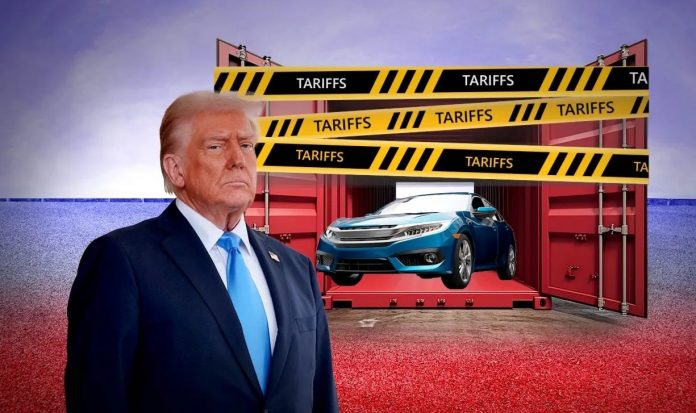
The United States and China have agreed on product lists covering about $30 billion of imports from each country for potential tariff reductions, giving businesses a more concrete indication of where last week’s Trump-Xi summit could translate into lower trade barriers.

The lists cover 77 categories of Chinese goods entering the United States and 1,619 categories of U.S. products entering China. They include a broad range of consumer goods on the U.S. side, from toys and Christmas decorations to household products and sporting equipment, while China’s much longer list is dominated by American agricultural and food products, as well as other commodities and manufactured goods.

The announcements are an important step in implementing the “30-for-30” framework agreed by the two governments. However, the lists do not yet specify exactly how much tariffs will be reduced or when the lower rates will take effect. The White House said the countries would consider reduced tariff treatment for the listed products under their respective domestic procedures.

The agreement is seen as a reprieve for companies. The immediate economic effect, however, is limited until the two governments determine the actual tariff rates and implementation dates.

The planned relief covers about $60 billion of bilateral trade, a relatively small portion of the overall U.S.-China commercial relationship. Total goods traded between the two countries were about $415 billion in 2025, according to Bloomberg.

Still, the composition of the lists gives an indication of where both sides see room for relatively quick progress.

US Consumer Goods, Chinese Agricultural Demand

The U.S. list is heavily weighted toward products that are commonly found in American homes and retail stores. Among the Chinese goods identified for possible lower tariffs are fireworks, tableware, kitchenware, blankets, bed and table linen, curtains, garden umbrellas, artificial flowers, shavers, flashlights, microwave ovens and vacuum flasks.

The list also covers a broad range of children’s products and recreational goods, including highchairs, play yards, sleeping bags, pillows, toys, tricycles, billiards equipment, playing cards, fishing equipment and sporting balls. Christmas-tree lights and ornaments are also included, making the timing particularly relevant to U.S. retailers heading into the holiday shopping period.

“If we see the tariff cuts actually implemented before the holiday season, it could provide a welcome boost to U.S. consumption and to retailers,” said Jacob Cooke, CEO of WPIC.

For U.S. importers, the significance is less about any individual product than the cumulative effect across thousands of shipments. Lower duties could reduce landed costs for retailers and importers that source heavily from Chinese manufacturers, although the benefit to consumers would depend on how much of the tariff reduction is passed through rather than absorbed by businesses.

Cooke said China’s list includes fast-growing categories such as hair care and packaged pet food, where Chinese brands are competitive with U.S. products.

“Every percentage point counts for price competitiveness and preserving margin,” he said.

The Chinese list is considerably broader. It includes livestock, frozen pork and lamb, poultry, chicken feet, rabbit meat, beef products, tuna, Atlantic salmon, dairy products, peanuts, peanut butter, tomato juice, ice cream, apples, whiskey, soybeans for seed and soybean meal.

The lists released by the governments also cover additional products beyond those highlighted in the initial announcement, including coal products, lobsters, flowers, sorghum, pet food, tobacco, cosmetics and medical equipment.

The agricultural component matters to Washington because expanding American farm exports to China has been one of the recurring objectives in the trade negotiations.

Tariff Relief Comes With an Important Caveat

The headline figure of $30 billion in goods on each side should not be interpreted as $30 billion of guaranteed trade receiving immediate tariff relief.

The White House described the lists as products that the countries will “consider” for reduced tariff treatment, subject to domestic laws and procedures. That leaves several questions unresolved, including the size of the reductions and the date they will take effect.

Those details could determine whether the announcement produces a meaningful change in trade flows or primarily provides companies with greater certainty about the direction of policy.

The uncertainty is now a matter of concern because tariffs between the world’s two largest economies remain substantially higher than before their trade conflict escalated. The two countries had imposed effective tariffs of more than 40% on each other’s goods at points during last year’s confrontation, according to the information provided.

The two governments subsequently limited further increases through a trade truce reached last year. Treasury Secretary Scott Bessent said last week that negotiators had agreed to extend that truce into January.

The latest product list marks another incremental step rather than the resolution of the broader trade dispute.

China Gets Access to American Farm Products

The structure of the Chinese list also reveals how agriculture continues to function as one of the easier areas for the two countries to negotiate.

Food and agricultural purchases are less politically sensitive than issues such as advanced semiconductors, artificial intelligence, technology transfers, and national security. China has strong demand for commodities such as soybeans and meat, while U.S. farmers have a major commercial interest in maintaining access to the Chinese market.

China’s Ministry of Commerce said an Agricultural Working Group will be established between the two countries, with its first meeting scheduled by the end of 2026.

For U.S. producers, lower tariffs could improve competitiveness against suppliers from Brazil, Australia and other agricultural exporters. The effect will depend on the eventual tariff rates, exchange rates, Chinese demand and whether buyers shift purchases back toward U.S. suppliers.

The potential impact extends beyond farmers. Lower Chinese tariffs on American food products could benefit processors, logistics companies, exporters and commodity traders if they lead to sustained increases in shipments.

Retailers Face a Potentially Important Holiday Test

For American retailers, timing may matter almost as much as the size of the tariff cuts. The U.S. list includes a wide range of products that are heavily represented in seasonal retail inventories. Toys, Christmas decorations, household goods, tableware and sporting equipment are categories where import costs can feed directly into retail prices.

A reduction before the holiday season is expected to provide some relief to companies that have been managing higher import costs through pricing, supplier negotiations, inventory adjustments and margin compression.

But the absence of a confirmed implementation date means retailers cannot yet assume that the announced framework will materially change holiday pricing.

For Chinese exporters, the potential reduction could improve access to the U.S. consumer market at a time when companies are already dealing with a more complicated tariff environment.

Home goods seller Ryan Zhao, director of Jiangsu Green Willow Textile, said his company expects second-half sales to rise 30% from a year earlier if tariff reductions are implemented. That conditional expectation captures the central issue facing businesses: the commercial opportunity exists, but the actual benefit depends on policy implementation.

A Narrower Trade Détente, Not a Broader Settlement

The product lists also show the limits of the latest U.S.-China rapprochement. The two governments are establishing a Board of Trade made up of officials from both countries that will meet at least quarterly, with senior officials meeting when necessary. That has yielded a mechanism for continued negotiations after the Trump-Xi summit.

But the most difficult disputes remain outside the immediate tariff-cut list.

Technology restrictions, semiconductor controls, artificial intelligence, rare-earth supplies, market access and the broader U.S. trade deficit remain areas where Washington and Beijing have competing interests.

Therefore, some view the proposed tariff reductions as a practical attempt to reduce pressure on selected industries while leaving the more consequential elements of the economic relationship for further negotiations.

That potential development is considered necessary because lower tariffs on $60 billion of goods can support specific companies and trade flows, but it does not by itself reverse the structural changes that have occurred in U.S.-China commerce over the past several years.

The immediate beneficiaries are likely to be concentrated in consumer goods, retail, and agriculture.