DD
MM
YYYY

PAGES

DD
MM
YYYY

spot_img

PAGES

Home Blog Page 120

IMF Moves Toward Possible Fresh Reclassification of India’s FX Regime, as ABN Amro Plans to Cut over 5,000 Jobs

0

The International Monetary Fund (IMF) is preparing to reopen a contentious chapter in its relationship with Asia’s third-largest economy, with sources in Washington indicating that the multilateral lender is weighing a fresh reclassification of India’s foreign exchange rate regime.

The move comes as the rupee experiences heightened volatility under the new leadership at the Reserve Bank of India (RBI), reigniting a debate over how much control New Delhi exerts over its currency.

According to people familiar with the matter who spoke to Bloomberg, the Fund is closely scrutinizing the rupee’s trading patterns over the past year. This review signals a potential shift just two years after a similar assessment triggered a rare public dispute between the Indian government and the IMF. In December 2023, the Fund downgraded India’s de facto exchange rate regime from “floating” to a “stabilized arrangement,” a technical designation implying that the central bank was managing the currency within a disproportionately narrow band—effectively a soft peg.

That 2023 decision, based on data covering December 2022 to November 2023, drew a sharp rebuke from Mint Street. The RBI called the characterization “incorrect” and “unjustified,” arguing that its interventions were solely designed to smooth excessive volatility and prevent disorderly market conditions, not to target a specific level against the dollar. New Delhi further contended that the IMF’s models failed to account for the unique external pressures of the time, including surging U.S. Treasury yields and a relentless dollar rally that forced emerging markets globally to deploy reserves defensively.

The Malhotra Shift

The context for this latest review, however, has shifted significantly. The scrutiny coincides with the tenure of Governor Sanjay Malhotra, who assumed office late last year. Under Malhotra’s stewardship, the rupee has exhibited sharper, more frequent fluctuations—a departure from the tight grip observed in previous years. Traders in Mumbai report wider intraday trading bands and more aggressive, two-way intervention, suggesting that the central bank is testing a new operational philosophy that allows for greater price discovery while still curbing extreme outliers.

Market data support this view. The rupee recently slumped to a record low of nearly 89.50 per dollar, driven by portfolio outflows and uncertainty over U.S. trade policy. The RBI’s willingness to let the currency drift lower before intervening has caught some market participants off guard, yet it may paradoxically complicate the IMF’s assessment. While the “stabilized arrangement” tag was applied because the rupee moved too little, a shift back to “floating” would require the Fund to be convinced that recent interventions are not targeting a new, lower floor.

For the IMF, these classifications are driven by empirical data rather than stated policy. The Fund’s economists analyze the statistical predictability of the exchange rate and its correlation with external benchmarks over extended periods. If the data shows that the rupee has tracked a specific path regardless of market fundamentals, the “stabilized” label sticks.

While an IMF reclassification carries no direct punitive weight—it triggers no sanctions or loan conditions—it holds significant symbolic power. For foreign investors, the label serves as a proxy for the transparency and freedom of India’s capital markets. A “floating” status is often viewed as a seal of approval for a maturing economy ready to integrate fully with global finance, while a “stabilized” tag can imply heavy-handed state management that might trap capital or distort valuations.

A fresh reclassification would likely revive the philosophical tension between the RBI’s pragmatic interventionism and the IMF’s orthodox preference for market-clearing prices. The central bank has consistently maintained that in a shallow market like India’s, allowing pure unbridled volatility can be destructive to the real economy. The IMF, conversely, maintains that persistent intervention blunts the signals that exchange rates are supposed to provide.

As the rupee adjusts to a strengthening dollar and India’s deepening integration into global bond indices, this coming review threatens to become another flashpoint. It will test not just the technical definitions of currency management, but the diplomatic ability of Governor Malhotra’s team to convince Washington that the recent volatility is a feature of a free market, not a bug in a managed system.

Dutch Financial Powerhouse ABN Amro to Cut over 5,000 Jobs by 2028

ABN Amro, a pillar of the Dutch financial system, unveiled a sweeping strategic overhaul on Tuesday that will see the lender shed approximately 5,200 full-time jobs by 2028.

The aggressive “2028 Roadmap,” presented ahead of the bank’s capital markets day, marks the first major strategic pivot under CEO Marguerite Bérard, aiming to transform the institution into a leaner, more profitable operator capable of remaining independent in a consolidating European market.

Investors responded enthusiastically to the efficiency pledge, sending shares more than 4% higher at the open, signaling strong approval for the bank’s focus on capital discipline and shareholder returns.

The “Right-Sizing” Initiative

The planned reduction of 5,200 full-time equivalent (FTE) roles represents more than a fifth of the bank’s total workforce. However, the cuts are designed to be methodical rather than immediate. ABN Amro indicated that roughly half of the reductions would be achieved through natural attrition—hiring freezes and retirements—rather than direct layoffs.

The restructuring is deeply tied to a technological modernization drive. The bank plans to phase out expensive legacy IT systems in favor of automated, AI-embedded processes, particularly in operational and compliance functions. This aligns with a broader trend in the Dutch banking sector, where institutions are increasingly deploying artificial intelligence to handle routine tasks such as anti-money laundering (AML) checks, reducing the need for massive human compliance teams.

Integration of New Acquisitions

Crucially, the job cuts will not be limited to the legacy Dutch organization. The efficiency drive will extend to the bank’s recent high-profile acquisitions, signaling an aggressive integration strategy.

  • NIBC Bank: Recently acquired from Blackstone for approximately €960 million, this specialist lender adds significant weight to ABN Amro’s mortgage and savings books. The bank aims to extract “synergies” by merging NIBC’s operations with its own, projecting an impressive 18% return on invested capital from the deal by 2029.
  • Hauck Aufhäuser Lampe: The recently purchased German wealth manager will also face restructuring as ABN Amro seeks to eliminate overlapping back-office functions and streamline its private banking footprint in Northwest Europe.

The Alfam Sale

In a move to sharpen its focus on core banking activities, ABN Amro agreed to sell its personal loan subsidiary, Alfam, to domestic rival Rabobank. The deal reflects a pragmatic admission that the personal loans market has become a volume game requiring massive scale to be profitable.

  • The Rational: By selling Alfam to Rabobank, whose consumer credit arm (Freo) already commands significant market share, ABN Amro exits a highly competitive, lower-margin product line.
  • The Structure: The deal is structured to ensure continuity; ABN Amro will continue to offer personal loans to its clients, but the underlying product will be powered by the new combined Rabobank-Alfam entity.
  • Financial Impact: While the sale will trigger a one-time book loss of roughly €100 million, it cleans up the balance sheet significantly. The transaction is expected to reduce risk-weighted assets (RWA) by €1.2 billion and boost the bank’s Common Equity Tier 1 (CET1) ratio by 5 basis points.

Financial Targets and Capital Returns

The “2028 Roadmap” outlines a rigorous set of financial targets designed to prove the bank’s standalone viability as the Dutch state continues to unwind its remaining equity stake.

  • Profitability: The bank is targeting a Return on Equity (ROE) of at least 12% by 2028, supported by a reduced cost-to-income ratio of below 55%.
  • Revenue: Management has set a revenue floor, aiming for annual income to consistently exceed €10 billion.
  • Shareholder Payouts: Perhaps most attractive to investors is the capital return policy. ABN Amro plans to distribute up to 100% of the capital it generates between 2026 and 2028 to shareholders, provided it maintains a CET1 capital ratio above 13.75%.

Addressing persistent market rumors that ABN Amro could be a takeover target for a larger European rival, CEO Marguerite Bérard remained defiant.

“We are building ABN Amro’s future on its own strength,” she stated, framing the restructuring as the foundation for a robust, independent future rather than a dressing-up for a sale.


MoMo PSB Partners with Thunes to Boost Instant Cross-Border Remittances For Nigerians

0

MoMo Payment Service Bank (MoMo PSB), the fintech arm of MTN Nigeria, has entered into a strategic partnership with Thunes, a global B2B cross-border payments platform, to boost instant cross-border remittances for Nigerians.

With this collaboration, millions of Nigerians can now receive international funds instantly and securely from key markets, including the USA, UK, Canada, France, Australia, Saudi Arabia, Israel, and South Africa.

By bringing real-time cross-border payments to MoMo’s ecosystem, users can use their incoming funds straight away to pay bills, buy airtime, support family and friends, or shop online.

Speaking on the collaboration, Chief Executive Officer at MoMo PSB, Phrase Lubega said,

Joining the Thunes Direct Global Network allows us to deliver on our commitment to financial inclusion by bringing global remittances directly to our users’ fingertips. Millions of Nigerians can now receive funds from friends, family, and professional networks abroad instantly and securely. Thanks to Thunes’ agile and robust cross-border payment Networks, MoMo PSB can provide a cost-effective, transparent, and reliable way for users to access global financial flows, helping them participate more fully in the digital economy and strengthening financial inclusion across the country”.

Also commenting, Chief Network Officer at Thunes Aik Boon Tan said,

This alliance makes it possible for Nigerians to receive money from abroad instantly, securely, and conveniently. It’s about allowing more people to access the global economy by giving them the power to manage their finances without friction. For our members, by enabling them to send payments into Nigeria, we are opening up access to a vast and growing market with greater ease through seamless cross-border payments”.

In today’s increasingly connected world, cross-border payments remain a major challenge. Slow transfers, high fees, and complicated banking routes continue to affect millions of people especially those who rely on remittances to support families back home.

Thunes, a global fintech and payments infrastructure provider enables fast, seamless, and secure cross-border payments. Instead of serving individual consumers directly, the fintech powers the backend technology that allows banks, digital wallets, money-transfer operators, and fintech companies to move money across borders efficiently.

Through a single API, businesses can connect to Thunes and instantly enable international payments for their customers without building their own global infrastructure.

Thunes operates what it calls a Direct Global Network, a vast ecosystem of interconnected financial institutions, mobile money operators, banks, payment processors, and digital wallets worldwide. This global network currently spans; 130+ countries, 80+ currencies, Billions of connected mobile wallets and bank accounts, and Multiple payment methods including wallets, bank transfers, cash pickups, and more.

With MoMo PSB’s partnership with Thunes, it will bring about a major transformation in how Nigerians receive international payments. This partnership comes at a time when Nigeria is experiencing rising remittance inflows. According to the World Bank, the country received $20.9 billion in remittances in 2024, marking a 9% increase.

By leveraging Thunes’ direct global payment network, the need for multiple intermediaries is reduced, resulting in cheaper cross-border transfers. Notably, this is a significant win for migrant workers and anyone sending money to Nigeria.

Beyond individual users, this collaboration signals Nigeria’s integration into the global fintech ecosystem, encouraging faster adoption of innovative payment solutions and enhancing the country’s digital payment infrastructure.

Binance Launches Tokenized Equities in Its App

0

Binance quietly rolled out a new feature allowing users to trade tokenized versions of traditional stocks directly within the Binance app.

This move bridges cryptocurrency trading with conventional equity markets by enabling on-chain access to tokenized stocks, such as major U.S. blue-chip companies.

The feature is accessible via a dedicated “Stocks” section in the “Markets” tab of the app, where users can invest in fractional shares backed by real-world assets.

Tokenized stocks are blockchain-based representations of actual equities, allowing for 24/7 trading, fractional ownership as little as 1% of a share, and seamless integration with crypto wallets. Trades settle on-chain with self-custody, reducing intermediaries and costs compared to traditional brokers.

Binance Wallet’s “On-Chain Stocks” program offers 0% trading fees, making it attractive for crypto-native users dipping into equities. Currently focused on U.S. equities, with tokenized versions of high-profile stocks like Tesla (TSLA) highlighted in early implementations. More assets are expected to follow.

This builds on Binance’s prior experiments with stock tokens from 2021 and recent partnerships, such as integrating BlackRock’s tokenized money market fund (BUIDL) as collateral for institutional trading earlier in November 2025.

This integration positions the Binance Wallet as a unified hub for both crypto and traditional finance, potentially accelerating real-world asset (RWA) adoption in DeFi. It targets users in regions with limited brokerage access, offering low-friction entry to global markets while maintaining blockchain’s transparency and liquidity benefits.

However, regulatory scrutiny remains a factor, especially for non-U.S. users seeking tokenized equity exposure. Tokenized stocks also called stock tokens, synthetic stocks, or equity tokens are blockchain-based digital assets that represent ownership or economic exposure to traditional shares of a company.

Each token is designed to track the price and performance of the underlying real-world stock 1:1 or a fixed ratio, but it lives entirely on a blockchain.

The token price is kept in sync via arbitrage and oracle feeds via Chainlink, Pyth, etc. Binance’s 2021 Tesla token CM-Equity held the actual TSLA shares in a German depot. Tokens are minted 1:1 and are legally considered “depositary receipts” or “blocked securities tokens.”

Users own beneficial interest in the underlying stock, but without voting rights. Projects like Ondo Finance, Backed.fi, or Securitize tokenize shares via SPVs (special-purpose vehicles) in jurisdictions such as Switzerland, Liechtenstein, or the British Virgin Islands.

Tokens are ERC-20 or ERC-1400 security token standard and can be used as collateral in DeFi. 24/7 trading, no market close. Fractional ownership ? democratizes access to expensive stocks. Global access especially useful in countries with capital controls or no local brokers.

Many countries treat tokenized stocks as securities; platforms often geo-block U.S. or EU retail users unless fully licensed. Almost all tokenized versions strip shareholder voting. Dividends are usually converted to USDT/USDC and distributed weekly or monthly.

If the price feed is manipulated, the token can temporarily deviate from the real stock price. Some platforms forcibly close positions if collateralization falls too low. Tax authorities in many countries have not issued clear guidance yet.

When Tesla pays a dividend, you receive USDT proportional to your holdings. In short: Tokenized stocks are the crypto industry’s way of bringing Wall Street assets on-chain with all the speed, accessibility, and programmability of blockchain, but with the trade-offs of counterparty trust and reduced shareholder rights.

Coinbase Ventures’ 2026 Investment Outlook Focuses on RWA, DeFi, AI, and Robotics

0

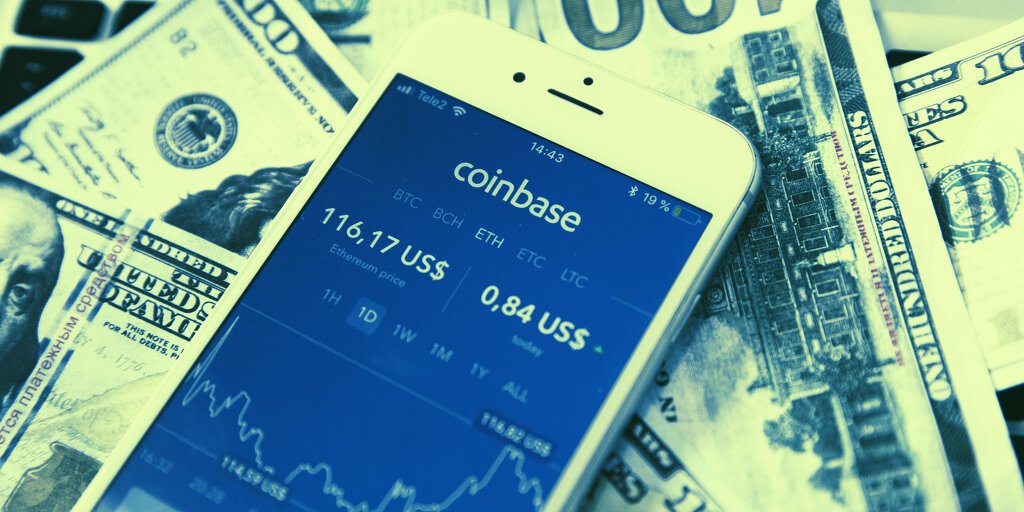
Coinbase Ventures—the investment arm of Coinbase—published a forward-looking blog post outlining nine high-potential ideas across four core themes expected to drive crypto innovation and adoption in 2026.

Despite short-term market volatility, the firm emphasized 2025’s foundational progress, including surging on-chain liquidity, maturing DeFi infrastructure, and regulatory tailwinds. These themes signal a shift toward more sophisticated, interoperable systems that blend traditional finance with blockchain, while extending crypto’s reach into AI and physical-world applications.

The four pillars—Real-World Assets (RWA), Decentralized Finance (DeFi), Artificial Intelligence (AI), and Robotics—are interconnected, with a focus on “perpification” (perpetual futures contracts) to unlock new markets, privacy enhancements for institutional trust, and AI agents as on-chain builders.

Coinbase Ventures is actively scouting founders in these areas and invites outreach via X DMs. The “Perpification of Everything” RWAs involve tokenizing off-chain assets like real estate, commodities, or economic data on blockchain for fractional ownership and liquidity.

Coinbase Ventures predicts 2026 will see explosive growth in RWA perpetuals—synthetic derivatives providing exposure to these assets without needing to custody the underlying item. This could create on-chain markets for private company valuations, inflation expectations, credit spreads, or even energy prices.

Synthetic exposure to macro indicators like betting on commodity prices or GDP data without physical delivery. Integration with high-speed chains like Solana for low-latency trading. Potential to capture a slice of the $1.3T U.S. revolving credit market through tokenized debt.

RWA on-chain value has ballooned from $13.8B to $36B in 2025 alone. Perpetuals could “perpify” illiquid assets, drawing in institutional traders seeking yield and hedges. Expect specialized exchanges for RWAs to emerge, reducing fragmentation.

DeFi has matured, with perpetual DEX volumes hitting $1.4T monthly up 300% YoY. Coinbase Ventures is bullish on innovations that boost capital efficiency, privacy, and accessibility, evolving DeFi from basic swaps to a full-fledged alternative to TradFi banking.

Integrate perps with lending protocols—earn yield on collateral while holding leveraged positions. Hedge, leverage, and yield-farm in one flow; targets sophisticated traders entering crypto.

Unsecured On-Chain Credit

Leverage on-chain reputation (e.g., wallet history) + off-chain data for loans without collateral. Disrupts $1.3T credit market; enables “aura-based” lending for underbanked users. Tools like zero-knowledge proofs, fully homomorphic encryption, and private order books for confidential trades/borrows.

Builds institutional trust; rising demand for verifiable-yet-private payments. Prop-AMMs protection against toxic flow on Solana and unified terminals for prediction markets. Consolidates liquidity from fragmented platforms like Polymarket; pro tools for event-based betting.

These upgrades address DeFi’s pain points—fragmented liquidity and transparency risks—paving the way for mass adoption. Coinbase recently led rounds in DeFi compliance (Oxbow) and prediction markets (Kalshi), signaling real capital flow.

AI’s intersection with crypto isn’t hype—it’s infrastructure. Coinbase Ventures sees AI agents automating smart contract creation, auditing, and deployment, democratizing Web3 for non-technical founders.

This theme ties into DeFi via AI-optimized trading strategies and risk management.Key Ideas: AI-driven code generation and security monitoring for rapid dApp launches. Agentic wallets for autonomous bots handling trades or payments. Reputation layers to verify AI agents’ credibility in economic interactions.

With AI models going multi-modal and agentic commerce exploding via ERC-4029/8004 standards, crypto could become the “coordination layer” for AI economies. This aligns with broader 2026 trends like AI yield optimizers and subnet innovations on platforms like Bittensor (TAO).

Robotics faces a data bottleneck—fine-grained interaction datasets for tasks like handling deformable objects are scarce and expensive. Coinbase Ventures envisions crypto-powered Decentralized Physical Infrastructure Networks (DePIN) to incentivize global data collection for training humanoid robots.

Tokenized incentives for robotics fleets to share real-world interaction data. “Proof of humanity” protocols to distinguish humans from AI in online/offline verification. On-chain rails for AI-robot payments, identity, and operations.

Humanoid robots from Tesla or Figure are ramping production, but data scarcity limits progress. DePIN could scale this exponentially, with robotics’ total market cap still under $400M—vastly undervalued. Ties into AI training needs, potentially unlocking quadrillions in tokenized economic value.

These themes could accelerate crypto’s “great convergence” with TradFi, AI, and robotics. Expect Solana and Base to lead in perps/DePIN, while Ethereum ecosystems handle privacy/AI. On-chain RWA growth might hit new highs, with stablecoins as the liquidity backbone.

High volatility persists, but regulatory clarity and AI compute demand could fuel a boom. Builders: Focus on interoperability and user-owned data. X discussions highlight excitement around Base’s role in RWA/AI, with predictions of “liquidity coming home” and robotics as the next frontier.

This outlook isn’t investment advice, but it spotlights where smart money is flowing. If you’re building in these spaces, Coinbase Ventures is listening—2026 could redefine economic freedom on-chain.

Japan’s Financial Services Agency Is Considering Investing on Crypto Exchanges

0

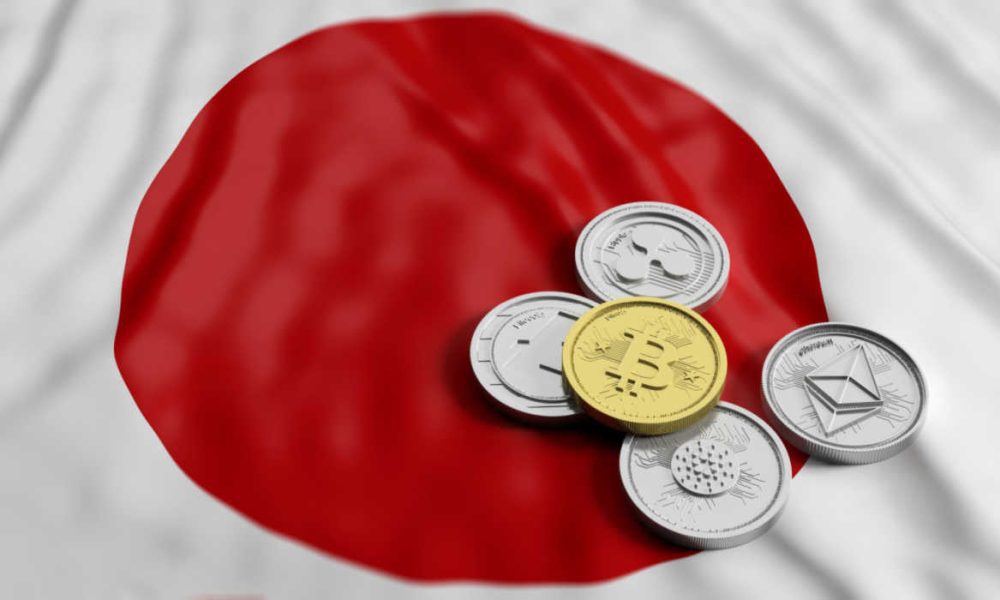
Japan’s Financial Services Agency (FSA) and its evolving stance on cryptocurrency exchanges. It’s advancing a series of reforms to integrate crypto more deeply into Japan’s financial system.

This includes enabling banks and financial institutions to acquire, hold, or operate crypto exchanges, alongside stricter security mandates for existing platforms. These moves aim to boost investor protection, reduce taxes, and treat crypto like traditional assets—potentially accelerating mainstream adoption.

The FSA is reviewing 2020 guidelines that currently prohibit banks from holding volatile assets like cryptocurrencies. If approved, banks could acquire Bitcoin (BTC) and other cryptos as investments, similar to stocks or bonds.

Additionally, banking groups could register as “cryptocurrency exchange operators” to directly provide trading and custody services. This will be discussed at the Financial Services Council’s working group meeting, with potential capital and risk-management rules introduced soon after.

The shift aligns crypto regulation from the Payment Services Act to the Financial Instruments and Exchange Act (FIEA) for stronger oversight. Japan’s crypto user base has surged to over 12 million accounts up 3.5x since 2020, driven by global trends and domestic growth 120% YoY in on-chain value received through June 2025.

Allowing credible banks to enter could make crypto more accessible and secure for retail investors. This has been hailed as a “monetary structure shift,” with institutions like Nomura, SBI, and Mitsubishi UFJ exploring crypto funds and stablecoins.

Just yesterday (November 24, 2025), the FSA announced plans to require all registered crypto exchanges to maintain “liability reserve funds.” These would cover user losses from hacks, fraud, or operational failures—mirroring protections for traditional securities brokerages.

Exchanges could fund reserves via revenue shares or insurance policies. The goal is rapid compensation, avoiding scenarios like the 2018 Coincheck hack which cost $530M or a 2024 third-party breach affecting major platforms.

This ties into “securities-level standards” for platforms, including enhanced risk controls and JVCEA (Japan Virtual and Crypto Assets Exchange Association) retraining for auditors. With rising consultations on crypto scams, this bolsters trust in Japan’s 28+ licensed exchanges like BITPOINT, Coincheck.

The FSA proposes treating 105 major cryptos including BTC and ETH as “financial products” under FIEA. This would impose insider trading rules, require detailed disclosures (e.g., issuer info, volatility profiles), and enable products like investment trusts and ETFs.

Crypto gains would face a flat 20% tax rate down from the current 55% miscellaneous income bracket, making Japan more competitive globally. The package heads to parliament in 2026, potentially approving yen-backed stablecoins by then from Mitsubishi UFJ or Monex Group.

Banks barred from holding crypto. Allowed to acquire/hold BTC; operate exchanges. Wider access via trusted institutions; volatility risks to banks. Self-regulated via JVCEA; past hacks. Faster user compensation; higher compliance costs for exchanges. Boosts retail participation; revenue loss for govt ~¥100B est.

Institutional inflows; over-regulation fears. These reforms position Japan as a crypto leader, blending innovation with caution—especially after high-profile breaches. Six major asset managers (e.g., Nomura, Sumitomo Mitsui) are already prepping BTC/ETH funds, signaling institutional buy-in.

On X, reactions are bullish: users call it a “neon-lit revolution” for adoption, with posts highlighting the tax slash as “extremely bullish.”