DD
MM
YYYY

PAGES

DD
MM
YYYY

spot_img

PAGES

Home Blog Page 1214

NITDA Launches Nationwide Roadshow to Scout Tech Talent Ahead of GITEX Nigeria 2025

0

The National Information Technology Development Agency (NITDA) has opened applications for its GITEX Nigeria 2025 Regional Roadshow, a national campaign to scout Nigeria’s most promising tech startups across all six geopolitical zones.

The roadshow serves as a precursor to the GITEX Nigeria 2025 Startup Festival, which will be held in Abuja from September 1 to 4, 2025.

The regional events are scheduled to run from June through August 2025 in Lagos, Enugu, Akwa Ibom, Abuja FCT, Gombe, and Kano. Each of these cities will host startups from their respective regions, giving them a platform to present innovative, scalable solutions to local problems. The goal, according to NITDA, is to identify and empower bold local innovators whose solutions have the potential to shape Nigeria’s digital economy.

“This is your chance to nominate your startup, pitch your solution, and earn a spot at GITEX Nigeria 2025 in Abuja?Nigeria’s largest innovation showcase happening from September 1?4, 2025,” they stated

Applications are open to early-stage or growth-stage startups that are either already registered with the Corporate Affairs Commission (CAC) or are currently in the process of registering. Sectors of interest for this edition of the roadshow include HealthTech, AgriTech, FinTech, Artificial Intelligence, EdTech, ClimateTech, and CreativeTech.

NITDA emphasized that the initiative is targeted at entrepreneurs developing technology that addresses real problems and can be expanded to reach broader markets.

Startups that emerge from each zonal pitch will be sponsored to exhibit at the GITEX Nigeria 2025 Startup Festival in Abuja. They will also have the opportunity to pitch their ideas before a panel of top ecosystem stakeholders, including tech investors, industry experts, government officials, and the media.

In addition to gaining national visibility, selected startups will be prepared for the possibility of showcasing at GITEX Global in Dubai — one of the world’s most influential technology trade shows.

Participation in the roadshow begins with a digital application through NITDA’s nomination portal. After submitting the form, applicants who are shortlisted will enter the GITEX Nigeria exhibitor pipeline and will be invited to pitch live at the roadshow event in their region. Top-performing startups from each zone will be offered sponsorship to the Abuja festival, subject to the terms and conditions of the program.

GITEX Nigeria was modeled after the Gulf Information Technology Exhibition (GITEX), which has been held annually in Dubai since 1981. The global event is known for attracting multinational tech corporations, venture capitalists, governments, and startups from around the world. Nigeria has consistently participated in GITEX Global, with local startups and government officials using the platform to court investors and promote indigenous innovation.

Recognizing the value of international exposure and partnership opportunities, NITDA established GITEX Nigeria as a localized version of the Dubai tech showcase. The Abuja-based festival is designed to provide a similar experience for Nigerian startups by connecting them with policy leaders, investors, corporate partners, and international markets without the barrier of travel or visa restrictions.

The 2025 edition of the roadshow marks a continued effort to decentralize innovation and ensure that promising ideas from across Nigeria — not just the major tech hubs — are brought to the national stage. NITDA hopes to tap into untapped talent pools, broaden the base of digital entrepreneurship, and prepare Nigerian innovators for participation in the global tech economy by going into each geopolitical zone.
‘Build for People, Not Just AI’: Lattice CEO Sarah Franklin Urges Human-First Balance as AI Fears Grow

0

Lattice CEO Sarah Franklin says the only sustainable path through the AI revolution is one that centers on people — not algorithms.

Speaking at the SXSW London conference and later in an interview with TechCrunch, Franklin urged tech companies to adopt artificial intelligence with a deep sense of balance, warning that unchecked deployment of AI systems could erode trust, accelerate job losses, and alienate customers.

Her remarks come at a time when public anxiety over AI’s impact on jobs and society is reaching new heights. As companies roll out tools capable of generating content, making decisions, and even managing employees, concerns are growing about the mass displacement of workers, biased algorithms, and the lack of meaningful oversight.

“We put people first,” Franklin said of Lattice, the $3 billion performance management platform. “It’s important to ask yourself, ‘Are you building for the success of the AI first, or are you building for the success of the people and your customers first?’”

Franklin believes that while AI can enhance productivity, using it to replace human labor entirely — especially in fields rooted in relationships, trust, and creativity — is a short-sighted strategy. She warned that companies that automate for the sake of cost-cutting may soon find themselves out of step with customer expectations and internal culture.

Her position is not merely theoretical. Lattice has already introduced AI features, including an AI-powered HR agent that provides proactive insights and supports employees in one-on-one meetings. The company also offers tools for clients to build custom AI agents tailored to their business needs. However, even as Lattice embraces these innovations, Franklin insists that human oversight remains essential.

“You don’t want to trade out trust,” she said, emphasizing that trust — with both customers and employees — is the most important asset any business can cultivate in an AI-driven world.

Her appeal for balance lands amid growing concerns from policymakers, labor unions, and industry watchdogs about the social and economic risks of AI. In recent months, leaders from OpenAI, Microsoft, and Google have entertained calls for AI regulation, following growing concerns across various sectors that AI will eliminate creative and technical roles.

According to a 2024 report by the International Labour Organization, while AI may enhance certain types of work, it is already disrupting administrative jobs at scale and threatening income security for millions. In the U.S., the White House has launched an AI Safety Institute, and several states are considering laws that require transparency when companies deploy AI tools affecting workers’ livelihoods.

Franklin’s call for “checks and balances” echoes these broader efforts. She advocates for transparency about how AI is used, clear boundaries on its deployment, and above all, accountability. Leaders, she argues, must ensure that humans are ultimately responsible for what AI systems produce or influence.

“Otherwise, we are then in service of the AI, versus the AI being in service of us,” she said.

She also warned against blind faith in automation. “It’s a way to just have the regular checks and balances that we’re used to in our workforce,” she said, noting that over-reliance on AI without human judgment could weaken decision-making and degrade workplace dynamics.

For Franklin, the future belongs to companies that harness AI while preserving what she sees as irreplaceable: human connection, empathy, and trust.

“We all have a responsibility to make sure that we’re doing this for the people of society,” Franklin said. “Human connection cannot be replaced, and the winners are going to be the companies that understand that.”

Grow Your Personal Economy at Tekedia Mini-MBA

0

You spent years at university. Did they ever teach you anything about your personal economy? Yes, did they prepare you for your own economy? Most times, schools are designed to prepare us for WORK in companies and governments, because great schools are structured to provide a factor of production – the labour – which will power the production system in economies. In other words, the skills and capabilities schools teach, and impact on students, will mirror what companies and employers want.

And as they do that, you – the person – is not part of the core equation. Magically, you become great at growing companies and governments, but you are hardly ready for your own personal economy!

Good People, one of the greatest surprises when I started work was this: the university system prepared me on how to utilize resources, in different forms, to advance companies, but did a very poor job on how I could manage my own personal resources.

In FUT Owerri, we studied great topics in Engineering Management like Engineer Turns Manager, Managerial Accounting, etc. In all those domains, everything was on how to optimize resources for the employer (yes, the company). But none for the village boy’s Personal Economy, a more important call. That is why at Tekedia Institute, we developed a module on Personal Economy. Yes, your economy and how you can build and own it.

And with hardwork, grace and luck, that Personal Economy can work even when the national economy or global economy is not firing on all cylinders. It is about strategy and planning. In the Igbo Nation, they give titles like “ome na unwu” [one who does great things even during famine and scarcity] which means that you can find abundance even when a national or global economy is challenged.

Watching the political ads, 2024 was like a year when America was falling from a cliff, but look deeper, America added a whopping new 562,000 millionaires! Saying it another way, growing a personal economy must not be tethered to the mood of the national economy as those 562k Americas collected!

On Monday, we will begin a process to build and deepen our personal economies via Tekedia Mini-MBA. I want to meet you in class here.

Nigerian Healthtech Company Medsaf, Shut Down After Struggle to Digitise Drug Supply Chain

0

Medsaf, a Nigerian end to end pharmaceutical supply chain optimization platform, for hospitals, clinics, and diagnostic centers, has shut down operations.

The closure was confirmed in an email to investors from CEO Vivian Nwakah, who cited a failed acquisition attempt, mounting debts, and significant unpaid receivables from hospitals as key reasons for the decision. “We have made the decision to close Medsaf effective immediately,” Nwakah wrote.

Launched to address the fake and substandard medication issues across emerging markets, the company had raised over $2 million from prominent investors, including Y combinator and Techstars, with a mission to streamline the procurement of safe, quality-assured medication for hospitals and pharmacies via a digital platform.

In 2023, the company had run out of funds following an unsuccessful Series A funding round. Internal communications  revealed several critical financial setbacks: outstanding invoices, supplier credit constraints, and the loss of a major government contract.

In March 2023, the healthtech startup, laid off all its full-time employees. The company’s chief operating officer (COO), Rotimi Lawal, revealed that the company had to reduce its workforce following “challenges ranging from funding gaps to account receivables due to different the macroeconomic policies and dismal payment behavior of hospitals in our industry.

Medsaf’s CEO, Nwakah, blamed the situation on investors reneging on funding commitments. “The funds we were expecting would have been enough to extend our run rate for 1.5 years and allow us to close on a $2m loan that would push our company into profitability”, she said.

As financial pressure intensified, employees complained of delayed wages and unremitted pension and tax deductions. A former senior executive alleged that Medsaf’s CEO withdrew company funds for personal use and alleged that the company could not account for monies ostensibly paid to them by a medical partner. Medsaf stringently denied these claims and, in later engagements with TechCabal, stating that the funds were used to buy medication stocks.

Despite efforts to secure an acquisition in late 2023, no buyer emerged. In her investor email, CEO Nwakah requested discretion regarding the shutdown, warning that a public announcement could jeopardise efforts to recover outstanding debts. “They definitely won’t pay if I announce a close,” she noted.

As of March 2024, a small volunteer team was overseeing the sale of remaining inventory while attempting to collect unpaid debts. Winding down the US operations had begun, but closing the Nigerian arm remained a legal and logistical challenge.

Nigeria’s pharmaceutical sector relies heavily on imports (70% of drugs), faces regulatory hurdles, and suffers from poor payment practices by healthcare facilities, all of which strained Medsaf’s business model.

Launched in 2017, Medsaf curated a plethora of products to solve ease of movement and access to quality medications across Nigeria. The company leverages technology to provide direct access to quality medication manufacturers for hospitals and pharmacies.

It had a mission  to help African hospitals and pharmacies access credit, inventory management and logistics with ease. Notably, Medsaf built strategic partnerships with the most trusted manufacturer, to provide facilities with quality and affordable medication.

Medsaf’s failure highlights the difficulty of digitizing Nigeria’s fragmented drug supply chain, potentially discouraging investors from funding similar ventures.

Its closure provides insights for other healthtech startups (e.g., Remedial Health, Drugstoc) on the need for robust financial management, diversified revenue streams, and stronger partnerships to navigate market challenges.

Africa Must Add 16GW of Power Annually Until 2050 — AFC Warns, Urges Nigeria to Take Lead 

0

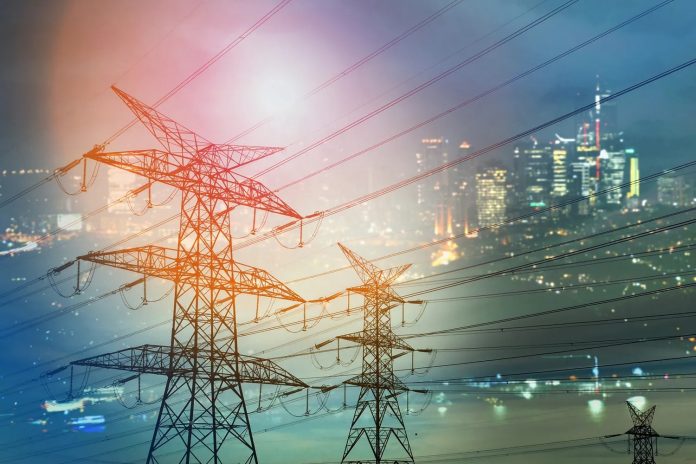
Africa must urgently scale up its grid-connected power generation by at least 16 gigawatts (GW) every year until 2050 to meet even its most basic energy needs, according to the State of Africa’s Infrastructure Report 2025 released by the Africa Finance Corporation (AFC).

The report paints a stark picture of the continent’s energy gap, warning that without aggressive and sustained investment in both generation and transmission, Africa’s industrial ambitions will remain elusive.

“To meet such transmission needs, Africa will require at least $3.2–4.3 billion annually through 2040,” the report said, adding that generation must increase by 16GW every year through 2050 just to lift the continent’s average capacity to 0.300 megawatts per thousand people—on par with levels currently seen in India and Indonesia.

This target is significantly beyond Africa’s current pace. Most African countries still rely on underfunded, outdated infrastructure that frequently collapses under pressure. While the AFC acknowledges the severity of the crisis, it also framed the moment as a vast investment opportunity across solar PV, gas-to-power, hydropower, battery storage, and grid modernization. With bold reforms and targeted capital inflows, the Corporation believes Africa can build the most dynamic and future-ready energy system in the world.

A Grim Benchmark: Nigeria As An Example

Africa’s energy struggle is perhaps best embodied by Nigeria, the continent’s most populous nation and its largest economy. The country currently generates around 5,000 megawatts (MW) of electricity on average, according to government data—an abysmally low figure for a nation of over 200 million people. Energy experts and government agencies have consistently said Nigeria needs at least 30,000MW to deliver a stable electricity supply nationwide. That target is six times more than current output, yet successive administrations have failed to close the gap meaningfully.

The AFC report places Nigeria at the heart of the continental push to increase generation and transmission capacity. Without decisive action by Nigeria, the rest of Africa could fall behind as well. The absence of a clear-cut strategy to meet the 16GW-per-year benchmark raises serious concerns about the continent’s long-term industrialization prospects.

In November 2024, the Nigerian government acknowledged that it would require at least $10 billion in private investment over the next 5–10 years to stabilize the power supply and transition towards reliable electricity for homes and industries. Yet despite multiple roadmaps and initiatives, there is still no cohesive national plan detailing how this will be achieved.

Private Capital, Reforms Key to Reversing Trend

The AFC emphasized that lessons from countries like Brazil, which opened its transmission sector to private investment in the 1990s, could guide Africa’s way forward. Brazil’s transmission infrastructure grew from 105,000 kilometers in 2012 to 184,000 kilometers by 2023. Just in 2024, the country’s first transmission tender attracted $3.65 billion—matching Africa’s entire annual requirement for grid investment.

“Brazil’s experience demonstrates that creating a viable investment pipeline—anchored in regulatory reform, unbundled utilities, and long-term planning—is essential to crowd in private capital at scale,” the AFC stated.

Nigeria, which has begun unbundling its power sector through the privatization of generation and distribution companies, has yet to fully unlock private sector potential in transmission—a key bottleneck in the country’s electricity chain. Power frequently fails not because there is no generation, but because there is no capacity to wheel it to end users.

The Nigerian government has pointed to progress under the Mission 300 initiative, a joint program by the World Bank and African Development Bank (AfDB) aimed at connecting 300 million Africans to electricity by 2030. In April 2025, Power Minister Adebayo Adelabu claimed that around 150 million Nigerians now have some form of electricity access, though 80 million still lack reliable supply.

However, experts have noted that expanding access without increasing generation and improving grid stability only spreads out scarcity. Most Nigerians still rely on expensive diesel or solar alternatives to meet basic energy needs. For industries, the reliance on private generation inflates production costs, stifles competitiveness, and limits job creation.

A Far Cry From Industrialization

The gap between Africa’s current energy landscape and its projected needs underscores a deeper challenge: industrialization. Without stable electricity, Africa’s ambitions to become a global manufacturing hub or a digitally-driven economy remain theoretical.

The failure to bridge the 16GW-per-year gap is expected to keep countries like Nigeria locked in energy poverty—where lights flicker in homes, businesses rely on noisy generators, and entire sectors remain underpowered.

Energy experts believe that unless Nigeria and other key African economies act quickly to attract capital, reform regulations, and build resilient infrastructure, the continent’s energy story will remain one of lost potential and deferred development.