DD
MM
YYYY

PAGES

DD
MM
YYYY

spot_img

PAGES

Home Blog Page 1231

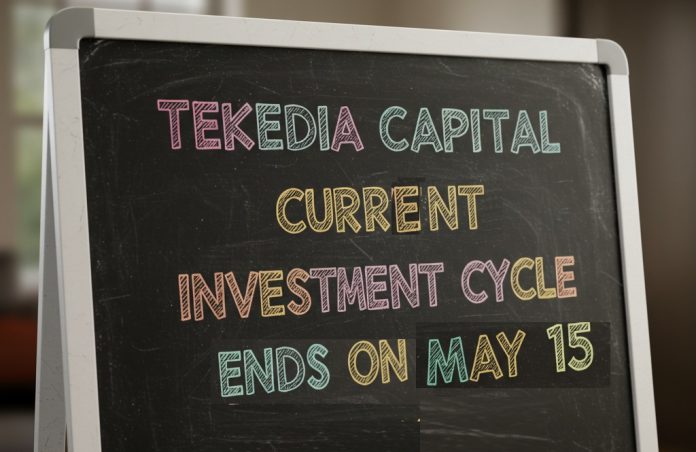
Current Tekedia Investment Cycle Ends May 15 2025; Join Before We Conclude.

0

The video below provides an overview of the 18 companies in the current Tekedia Capital investment cycle. These companies cover biotech, fintech, AI, exchange, real estate, space tech, transportation, cybersecurity, ecommerce, food tech, gaming, robotics, microelectronics, AI-age private equity, etc. The cycle has started and will end on May 15, 2025.  Join us here for access to the dealroom.

The Tekedia Capital Demo Day was held on April 26, and the full video recording of the presentations is now available in the investment dealroom. You will watch them if you join Tekedia Capital.

Go here and register here https://capital.tekedia.com/course/fee/ . We will give you access to the dealroom once that is done.

Tekedia Capital offers a specialty investment vehicle (or investment syndicate) which makes it possible for citizens, groups and organizations to co-invest in innovative startups and young companies in Africa and beyond. Capital from these investing entities are pooled together and then invested in a specific company or companies. We invest in promising global companies irrespective of their locations.

Previously sent to members

The 18 Startups for Tekedia Capital Investment Cycle <p data-wpview-marker=

Tekedia Investment Cycle Begins with 18 Global Startups; Demo Day Apr 2

Greetings! We are very happy to update that the dealroom is now live for Tekedia Capital H1 2025 investment cycle at https://capital.tekedia.com/ . Once logged in with the membership email, the direct link is https://capital.tekedia.com/lesson/active/ . We have 18 great startups in this cycle, and they cover different industries, including biotech, space tech, payment, AI, microelectronics, insurance, private equity, real estate, AI, B2B ecommerce, and more.

Geographically, many global regions are represented. We made a special video for each startup and provided their respective pitch decks. Please keep all the startups confidential until we have completed the round. You can make payment and begin investing immediately. The investment cycle will conclude on May 15 2024, and that is the last date to receive funds; please plan accordingly.

More so, the Demo Day is scheduled on Saturday, April 26; Zoom link is already in the portal when you login. All the startups will be live to present and take your questions.

  • Event: Tekedia Capital Demo Day
  • Date: Saturday, April 26, 2025
  • Time: 4 – 6pm WAT
  • Zoom Link: login here for it

The proceeding will be recorded and available in the portal afterwards.

Have a great moment checking the startups and if you have any questions, please contact us. (If you have forgotten your password, email us for a temporary one or just go here to request a new one https://capital.tekedia.com/setup/ .)

Regards,

Tekedia Capital Team

Jeff Bezos to Sell $4.75 Billion in Amazon Shares

0

Jeff Bezos, the billionaire founder of Amazon and its executive chairman, plans to sell up to 25 million shares of the company over the next year, a move that could yield approximately $4.75 billion at current market prices, according to a regulatory filing disclosed on Friday.

The sale, part of a prearranged trading plan adopted on March 4, 2025, underscores Bezos’ ongoing diversification of his wealth as he channels resources into ventures like Blue Origin and his $10 billion climate and biodiversity fund. The announcement, coming on the heels of Amazon’s strong first-quarter earnings, highlights the company’s financial well-being amid cautious guidance for the current quarter.

Bezos’ decision to offload a significant stake, marks his second major sale since stepping down as CEO in 2021.

The filing with the U.S. Securities and Exchange Commission details Bezos’ intent to sell up to 25 million shares through a trading plan under Rule 10b5-1, designed to prevent insider trading by scheduling transactions in advance. At Amazon’s closing stock price of $189.98 on Friday, the sale would generate roughly $4.75 billion, a figure consistent with estimates from financial analysts.

The plan, set to conclude by May 29, 2026, allows flexibility for Bezos to execute the sales in tranches, potentially mitigating market disruptions. Bezos, who owns approximately 912 million shares—about 8.8% of Amazon’s outstanding stock—remains the company’s largest individual shareholder, even after last year’s sale of $13.4 billion worth of shares.

The timing of the sale aligns with Bezos’ broader financial strategy. Since relinquishing the CEO role to Andy Jassy in 2021, Bezos has focused on Blue Origin, his aerospace company advancing space tourism and lunar missions, and the Bezos Earth Fund, a $10 billion initiative launched in 2020 to combat climate change and protect biodiversity.

Previous share sales have directly funded these endeavors, as well as the Day One Fund, established in 2018 with a $2 billion commitment to support education in low-income communities and address homelessness. Bezos’ relocation to Miami, Florida, in 2023, from Seattle, Washington, also plays a role, as Florida’s lack of state capital gains tax—unlike Washington’s 7% levy—could save him hundreds of millions on this transaction.

The share sale announcement followed Amazon’s first-quarter earnings report on Thursday, which showcased the company’s financial prowess. Amazon posted revenue of $155.7 billion, a 9% increase year-over-year, surpassing analyst expectations. Net income reached $17.1 billion, driven by strong performances in e-commerce, Amazon Web Services (AWS), and emerging AI initiatives. AWS, the cloud computing division, saw a 17% revenue jump, fueled by enterprise demand for AI and data analytics solutions. The company’s focus on operational efficiency, including streamlined logistics and AI-driven inventory management, bolstered profitability, with operating margins exceeding forecasts.

However, Amazon’s guidance for the current quarter tempered enthusiasm, projecting operating income below Wall Street’s estimates. The cautious outlook reflects uncertainties in the global economy, including inflationary pressures and supply chain challenges now compounded by President Donald Trump’s tariffs.

Despite these headwinds, Amazon’s $2 trillion market capitalization and stock performance, ranging from a 52-week low of $151.61 to a high of $242.52, underscore its resilience. The stock’s current price of $189.98 denotes a dip from its peak but remains robust, supported by Amazon’s leadership in e-commerce, cloud computing, and digital advertising.

Bezos’ decision to sell comes at a pivotal moment for Amazon. The company’s e-commerce platform, bolstered by its 200 million Prime members worldwide, drives customer loyalty, with Q1 e-commerce revenue up 8%. AWS remains a growth engine, capturing 31% of the global cloud market, ahead of Microsoft Azure and Google Cloud. Amazon’s investments in AI, including enhancements to Alexa and autonomous delivery systems, position it for future revenue growth, with analysts projecting AI-related revenue to reach $20 billion by 2027.

Bezos’ sale could influence Amazon’s stock in the short term. The influx of 25 million shares, representing 0.24% of the company’s $2 trillion market cap—may exert downward pressure, particularly given recent market volatility. However, historical data shows Amazon’s stock has weathered past Bezos sales, rising from $2.81 in 2003 to $189.98 today, a testament to its long-term strength. Analysts remain divided: bullish forecasts emphasize Amazon’s diversified revenue streams, while bearish views highlight regulatory and competitive risks.

Billionaire Jeff Bezos is about to get even richer. The entrepreneur disclosed in a filing Friday that he plans to sell $4.8 billion in Amazon stock — up to 25 million shares of the company he founded — over a period ending May 29, 2026. The news comes a day after a report revealed that Amazon is bracing for economic uncertainty associated with tariffs imposed by the Trump administration. Bezos, who is Amazon’s top individual shareholder, had over 1 billion shares as of February 2025.

Paystack Fined N250 Million Over Its Peer-to-Peer Platform Zap, For Breach of Regulatory Boundaries

0

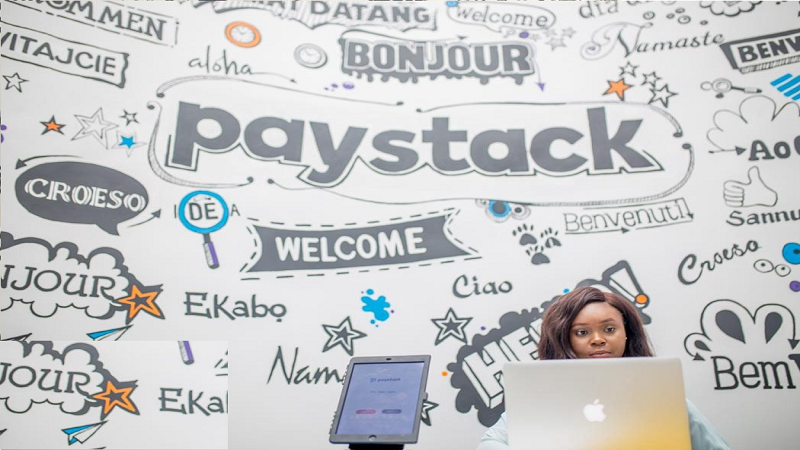
Paystack, a Nigerian financial technology (fintech) company that provides online and offline payment solutions to businesses across Africa, has been fined N250 Million ($190,000) over its peer-to-peer app Zap, for stepping beyond regulatory boundaries.

According to a person familiar with the matter, the Zap fine is due to the platform allegedly operating as a wallet in violation of its regulatory license. The CBN claims that Zap launched in March this year, operates as a deposit-taking product reserved for financial institutions with a microfinance or banking licence.

Paystack holds a switching and processing license, which permits it to route financial transactions between banks and other institutions, but not to hold customer funds. That limitation is central to the CBN’s sanction.

In line with this, a Paystack spokesperson disclosed that the company is working closely with the regulator as they further review Zap. The fine marks Paystack’s largest publicly known regulatory penalty since it received CBN approval in 2016.

Zap was launched in March 2025, a mobile app for instant, secure payments through bank transfers. Built on the same trusted infrastructure that powers millions of transactions daily, Zap is designed to eliminate friction in money movement, to enable users to make money transfers quickly and securely without delays or pending transactions.

According to Paystack CEO and co-founder Sola Akinkade, he noted that Zap was borne out of a need to start and finish bank transfers in under 30 seconds. This is why the product is focused on only bank transfers.

He further disclosed that instead of being another neo bank, Zap will allow Nigerians to link their existing bank accounts with the bank transfer app which they can use for quick bank transfers. While users can link multiple accounts on the Zap app, they will still get a Paystack-titan account. The linked accounts therefore serve as a way to fund the Paystack-Titan account instantly through direct debit without going to a bank app.

While the launch of Zap was poised to help users create a better bank transfer experience, the platform was entangled in a controversy over its name. Nigerian crypto startup Zap Africa, accused Paystack of trademark infringement, triggering a legal dispute that is still unresolved.

Shortly after the launch, Zap Africa issued a cease-and-desist letter demanding that Paystack immediately stop using the name Zap. The letter mandated Paystack to withdraw all product and marketing materials related to Zap, destroy any Zap-branded assets, issue a public apology, and cover Zap Africa’s marketing expenses all within seven days.

Zap Africa’s co-founders, Tobi Asu-Johnson and Moore Dagogo-Hart, stated that they had been building the brand for nearly three years, with trademarks filed across multiple classes 35 (business management), 42 (tech services), and most crucially, 36 (financial services), the same class Paystack now occupies.

We secured Class 35 in late 2023, then got Class 42 in 2024,” Asu-Johnson told Nairametrics. “Class 36, which covers financial services, was the final one—and we got it just weeks before Paystack’s launch.” 

They tried to take everything, from our slogan ‘you just got zapped’ to brand colors and even the ‘Z’ symbol on our logo. It feels like a complete hijack of our brand”, he added.

Attempts to resolve the issue amicably failed, Asu-Johnson added, and frustration continues to simmer on both sides.

While Paystack declined to officially comment, a source familiar with the company’s position explained that due diligence had been conducted and that its trademark filings were sound.

“We filed for the ‘Zap’ trademark across multiple classes, including financial services,” the source said. “To our knowledge, Zap Africa didn’t have an active registration in Class 36 when we filed.” 

This claim is now at the heart of the dispute. The similarity between both companies’ names lies at the heart of the legal dispute, one that could potentially set a precedent and reshape how Nigeria’s trademark laws are interpreted and enforced.

Apple and Anthropic Forge AI-Powered ‘Vibe-Coding’ Platform to Revolutionize Software Development

0

Apple Inc. is partnering with Anthropic, an Amazon-backed artificial intelligence startup, to develop a cutting-edge “vibe-coding” software platform that leverages AI to write, edit, and test code for programmers, according to Bloomberg.

The initiative, which integrates Anthropic’s Claude Sonnet AI model into an enhanced version of Apple’s Xcode programming environment, marks a significant step in Apple’s push to grab a large share of the generative AI market. Initially slated for internal use among Apple’s engineers, the platform’s potential public release remains under consideration, underlining a cautious but ambitious move by the tech giant to redefine software development.

As competition intensifies among tech titans to harness AI’s transformative potential, this collaboration underscores Apple’s strategy of blending in-house innovation with external expertise to bolster its ecosystem and attract developers to its platforms.

A New Era of ‘Vibe-Coding’

The term “vibe-coding” refers to an emerging programming paradigm where AI agents autonomously generate code based on intuitive or contextual inputs, a concept gaining traction in the AI-driven coding community. According to Bloomberg, Apple’s new platform builds on its existing Xcode software, a cornerstone for developers creating apps for iOS, macOS, and other Apple platforms.

By embedding Anthropic’s Claude Sonnet model, renowned for its proficiency in coding tasks, the platform aims to streamline complex development processes, from writing initial code to debugging and testing user interfaces. The system promises to enhance efficiency, allowing programmers to focus on creative and strategic tasks while AI handles repetitive or intricate coding challenges.

The collaboration with Anthropic, a startup founded by former OpenAI researchers and backed by Amazon’s $4 billion investment, is seen to denote Apple’s growing reliance on external AI expertise. Claude Sonnet, part of Anthropic’s family of AI models, has earned praise among developers for its accuracy and contextual understanding, particularly in coding platforms like Cursor and Windsurf.

Apple’s decision to deploy the platform internally first suggests a testing phase to refine its capabilities. The company has not yet committed to a public launch, a move that aligns with its historically cautious approach to releasing new technologies. Spokespeople for Apple and Anthropic declined to comment on the Bloomberg report, leaving details about the platform’s timeline and scope speculative but highly anticipated within the tech community.

Building on a Troubled Predecessor

The vibe-coding platform appears to be a response to the challenges faced by Apple’s earlier AI-driven coding tool, Swift Assist, announced in 2024 but never released to developers. Swift Assist, intended to integrate AI into Xcode for code generation and app development, encountered internal resistance from Apple engineers who reported issues with accuracy, including “hallucinations”—AI-generated code that was incorrect or nonsensical.

Some engineers also expressed concerns that the tool slowed app development, undermining its promise of efficiency. The Bloomberg report suggests that the Anthropic partnership aims to address these shortcomings by leveraging Claude Sonnet’s advanced capabilities, potentially complementing or replacing Swift Assist in Apple’s AI toolchain.

While Apple has developed in-house AI models under its “Apple Intelligence” initiative, it has increasingly partnered with industry leaders like OpenAI, whose ChatGPT is integrated with Siri, and is expected to support Google’s Gemini model later this year. The Anthropic collaboration, as noted by iClarified, “reflects Apple’s increasing willingness to collaborate with external AI providers,” a strategic shift to bolster its offerings amid fierce competition from Microsoft, Google, and OpenAI.

The partnership comes at a time when coding assistants are reshaping software development. Bloomberg reported last month that OpenAI is in talks to acquire Windsurf, an AI-assisted coding tool, for approximately $3 billion, signaling the high stakes in this sector. Microsoft’s integration of OpenAI’s models into its Visual Studio Code and GitHub Copilot has set a benchmark, while startups like Anthropic are carving out niches with specialized AI models. Anthropic’s Claude models, known for their safety and interpretability, have gained a following among developers, making the startup a natural partner for Apple’s ambitions.

Apple’s move also aligns with its broader AI strategy. The company has been equipping its devices with more powerful chips, such as the M4 and A18, designed to handle on-device AI tasks, from natural language processing to image generation. Features like summoning ChatGPT via Siri and AI-driven photo editing in iOS 18 demonstrate Apple’s focus on seamless, user-facing AI integration. Apple aims to empower its 34 million registered developers by enhancing Xcode with vibe-coding capabilities, strengthening the App Store ecosystem that generated $1.1 trillion in billings and sales in 2024.

However, the accuracy of AI-generated code is critical, as hallucinations could introduce bugs or security vulnerabilities, a concern raised with Swift Assist. Apple’s internal testing phase will likely focus on ensuring reliability, especially for complex projects like augmented reality apps or machine learning frameworks. If rolled out to third-party developers, as hinted by Bloomberg’s Mark Gurman, the platform could set a new standard for AI-assisted coding, potentially integrating with Apple’s existing tools like TestFlight and Swift Playgrounds.

The partnership also elevates Anthropic’s profile. Already a key player in AI, with collaborations like Amazon’s Alexa+ enhancement, Anthropic could gain significant exposure if Apple’s platform reaches external developers.

Apple’s AI Ambitions in Context

Apple’s foray into vibe-coding is expected to boost its leadership in generative AI, a sector projected to grow to $1.3 trillion by 2032. The company’s $3.5 trillion market cap and ecosystem of 2.2 billion active devices provide a unique platform to deploy AI innovations.

Recent moves, like the integration of ChatGPT and the development of on-device AI models, aim to attract customers and developers alike. Some believe the vibe-coding platform, by enhancing Xcode, could draw more developers to Apple’s platforms, countering competition from Android and cross-platform frameworks like Flutter.

Financial markets have shown muted response, with Apple’s stock (205.35 as of Friday) stable despite the news, reflecting confidence in its long-term strategy. The partnership’s focus on software development, as opposed to consumer-facing products, limits immediate market impact but signals Apple’s commitment to its developer ecosystem, a key driver of its $104 billion services revenue in 2024.

Apple and artificial intelligence company Anthropic are teaming up on an AI platform to write, edit and test code, according to a Bloomberg report, citing anonymous sources. The platform will integrate Anthropic’s Claude Sonnet model into Apple’s programming platform Xcode, and is thus far intended for internal use, according to the report. Apple has endured scrutiny over delays to its consumer-facing AI products this past year, and has yet to release an AI-powered coding tool it previewed last summer.

Why RXS Crypto Price is Primed for a 5000% Bigger Rally Than Ripple’s XRP

0

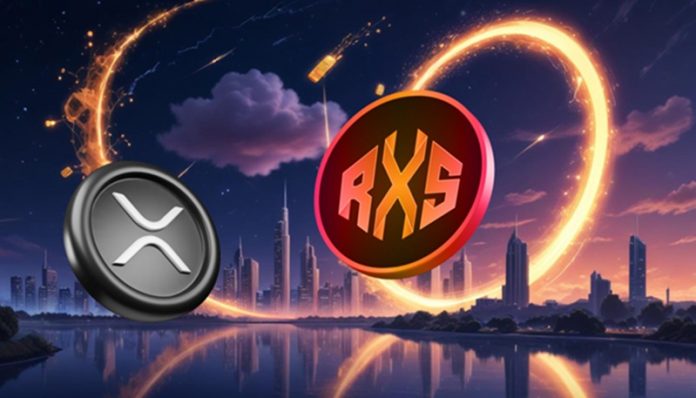
The crypto space has seen dramatic growth. From Bitcoin’s historic bull runs to Ethereum and Solana’s remarkable rise, numerous tokens have experienced stratospheric profits. However, Rexas Finance (RXS) generates buzz that may outpace Ripple’s XRP.  Rexas Finance is gaining popularity among crypto insiders due to its robust ecosystem for tokenizing real-world assets (RWAs), its aggressive and transparent growth plan, and cutting-edge technologies that lower the entry barrier for mainstream investors. Ripple focuses on cross-border payments for banks and financial institutions, whereas Rexas Finance integrates global assets, such as real estate, commodities, and artwork, into the blockchain. These huge consequences position Rexas Finance for a price rise that could outpace XRP’s growth. Why analysts and early investors expect Rexas Finance to soar 5000%.

Tokenization Revolutionizes Asset Ownership

The revolutionary way Rexas Finance tokenizes real-world assets has driven its stratospheric rise. This converts high-value, illiquid assets like commercial real estate, precious metals, and fine art into blockchain-based, fractional digital tokens, providing all investors access to high-yield investment markets previously reserved for institutions. Rexas Finance powers an asset tokenization ecosystem, unlike XRP, which serves a small niche. The cryptocurrency has utility and lifespan and can collect value from every platform transaction. Real-world asset (RWA) tokenization is expected to grow from $50 billion in 2025 to $16 trillion in 2030, making Rexas Finance a leading player.

Accessible and User-Friendly: Rexas Advantage

Rexas Finance’s network of essential products, including the Token Builder and QuickMint Bot, simplifies tokenization. Anyone may develop, manage, and trade tokenized assets without technical skills. This ease of use boosts adoption, especially compared to sophisticated systems that require coding or innovative contract development. Additionally, AI-driven technologies, such as the Rexas AI Shield, safeguard all transactions, enhancing investor confidence. The AI Shield detects dangers, automates compliance, and streamlines user onboarding while protecting privacy and transparency. Nonetheless, Ripple continues to depend on corporate partnerships and legal frameworks for their infrastructure’s cross-border payment system. This has led to limited growth and increased susceptibility to regulations in the US, as the SEC’s case has been intensively scrutinizing Ripple’s framework, severely dampening XRP’s price and popularity.

Impressive Presale Results Show Investor Confidence

Rexas Finance has gained momentum since its September presale. As of Stage 12, the project has raised $47.9 million by selling 459.5 million tokens, with the Rexas Finance token price climbing 6x in months from $0.03 to $0.20. This indicates a rising demand for tokens and increased investor interest. Rexas Finance opted for a public presale mechanism over venture capital funding to expand distribution and prevent large-scale token dumps. This approach has community trust and fosters pricing stability. XRP’s extended circulation and centralized token control can lead to volatility induced by large investors, commonly called whales. Ripple’s legal fights and regulatory uncertainty have delayed rallies, lowering retail and institutional investor confidence.

Strategic Listings and Credibility Goals

The early listings on CoinMarketCap and CoinGecko helped Rexas Finance gain credibility, allowing worldwide investors to track its progress. The platform also passed a Certik audit, the highest standard in blockchain security. This reinforces Rexas Finance’s safety and transparency, which serious investors value. Although mature, Ripple still faces global regulatory challenges and has yet to fully leverage its partnerships. Its slow integration and restricted consumer-facing use cases put it behind Rexas Finance’s quick, multi-utility platform.

Scarcity, Community Engagement, and Exchange Listings

Rexas Finance’s pricing potential depends on its deflationary model and scarcity. The token’s value should naturally rise as supply decreases and demand increases. To involve the community, Rexas Finance held a $1 million raffle, providing 20 winners with $50,000 in RXS. Early adopters are rewarded, and community participation generates viral buzz and organic promotion. After the presale, Rexas Finance will launch at $0.25 on at least three of the top 10 global crypto exchanges. This liquidity and exposure are projected to attract many new investors, accelerating Rexas Finance’s price acceleration once it joins the market.

Potential 5000% Rally: Numbers Don’t Lie

With a presale price of $0.20 and planned listings of $0.25, extensive exchange listings, and rising demand in tokenized RWAs, Rexas Finance could reach $10 or more. Given the project’s underlying strength, vast total addressable market, and proven investor enthusiasm, a 5,000% gain is a realistic possibility. XRP, which traded between $0.50 and $0.70 for most of 2024, would need to reach $25–$35 to achieve a similar return, which is improbable given its market cap, regulatory issues, and limited adoption outside its initial use case.

Conclusion: Rexas Finance Is Crypto’s Next Big Thing

Ripple’s XRP is a leader in blockchain payments, but growth limitations may limit its future rallies. However, Rexas Finance is changing blockchain asset ownership, trading, and monetization. Inclusivity, decentralization, real-world utility, and security have laid the groundwork for rapid expansion. Thanks to RWA tokenization, a committed community, innovative DeFi tools, and strategic listings, Rexas Finance is poised for a 5,000% surge, exceeding Ripple’s XRP and potentially leading the next generation of crypto investments.

For more information about Rexas Finance (RXS) visit the links below:

Website: https://rexas.com

Win $1 Million Giveaway: https://bit.ly/Rexas1M

Whitepaper: https://rexas.com/rexas-whitepaper.pdf

Twitter/X: https://x.com/rexasfinance

Telegram: https://t.me/rexasfinance