DD
MM
YYYY

PAGES

DD
MM
YYYY

spot_img

PAGES

Home Blog Page 1245

AfDB Forecasts 6% Naira Depreciation Despite CBN’s Optimism on Exchange Rate Stability

0

Nigeria’s currency is expected to weaken further in the coming year despite recent signs of stabilization, as the African Development Bank (AfDB) projects that the naira will depreciate by at least 6 percent between 2025 and 2026.

The forecast, published in the African Economic Outlook 2025, reflects growing concerns about heightened global financial market volatility and its spillover effects on African currencies.

The projection comes at a time when Nigeria’s central bank is expressing renewed confidence in the country’s economic direction. Just days before the AfDB report was published, Central Bank of Nigeria (CBN) Governor Olayemi Cardoso announced that volatility in Nigeria’s foreign exchange (FX) market had dropped below 0.5 percent, the lowest level in recent years. According to him, this marked improvement was the result of a mix of fiscal and monetary reforms aimed at restoring macroeconomic stability and investor confidence.

Cardoso made the announcement during a press briefing in Abuja following the 300th meeting of the Monetary Policy Committee (MPC), describing the drop in volatility as a “clear indication that Nigeria is back on a sustainable path.” He cited growing foreign reserves, enhanced market transparency, and a reformed exchange rate regime as factors contributing to the newfound market confidence.

But the AfDB paints a more cautionary picture, warning that Nigeria’s relative calm in FX markets may be short-lived unless structural economic challenges are addressed.

The AfDB report forecasts that at least 21 African countries, including Nigeria, Egypt, Ethiopia, Ghana, Libya, Rwanda, Zambia, and Zimbabwe, will see their currencies depreciate by 6 percent or more over the course of 2025. In Nigeria’s case, the naira is expected to come under pressure from a combination of external market uncertainty, fragile export earnings, and domestic structural weaknesses.

The Bank explained that the projected depreciation is not exclusive to Nigeria but reflects broader continental trends. Across the region, economies dependent on commodity exports are facing growing fiscal and balance of payment pressures, worsened by global market instability, rising interest rates in advanced economies, and fluctuating capital flows.

In contrast, the report identifies Kenya, Morocco, and countries in the CFA franc zone as potential gainers. Their currencies are projected to appreciate by more than 3 percent against the U.S. dollar, buoyed by better fundamentals, diversified exports, and relatively stronger investor confidence.

Looking back at 2023, the AfDB notes that 28 African currencies depreciated, but 17 of them either stabilized or started recovering in 2024. The South African rand, for example, weakened by 11.3 percent in 2023 but appreciated slightly by 0.7 percent year-on-year. Similarly, the Kenyan shilling reversed a 15.4 percent depreciation in 2023 with a 3.1 percent rebound in 2024, aided by investor inflows following a successful Eurobond issue.

Kenya’s recovery was underpinned by a strategic buyback of a $2 billion Eurobond set to mature in June 2024, financed by a new $1.5 billion issuance. That transaction restored investor confidence and triggered a 121 percent increase in portfolio investment inflows, offsetting the previous capital flight.

On the other hand, currencies in Guinea, Mauritania, and Seychelles continued to face downward pressure, weighed down by persistent macroeconomic instability and low investor confidence.

The report also observed that currencies pegged to the euro — such as the CFA franc, Cabo Verdean escudo, São Tomé and Príncipe dobra, and Comoros franc — remained relatively stable, largely benefiting from the euro’s improved performance against the dollar in 2024.

The stark contrast between the CBN’s optimism and the AfDB’s cautionary stance underscores the dual realities of Nigeria’s FX market. On one hand, Nigeria has implemented wide-ranging monetary reforms, including unifying its exchange rates and restricting excess naira liquidity through higher interest rates and open market operations. On the other hand, structural weaknesses — such as weak non-oil export capacity, heavy import dependence, and low dollar inflows — continue to pose risks to exchange rate stability.

Despite the naira showing signs of stabilization in the first half of 2025, the AfDB maintains that external shocks or domestic fiscal slippage could easily trigger another round of pressure on the currency. It warned that overreliance on foreign portfolio flows and fragile commodity earnings could reverse recent gains unless Nigeria deepens structural reforms.

To counter these risks, the AfDB urges African governments, including Nigeria, to strengthen their macroeconomic fundamentals, particularly by curbing inflation and reducing fiscal deficits. It calls for enhanced export diversification, with a focus on value-added production, and recommends the establishment of credible and transparent exchange rate regimes that reflect actual market conditions. It also emphasizes the need to deepen regional trade linkages and adopt platforms like the Pan-African Payment and Settlement System (PAPSS), which can reduce the continent’s heavy reliance on the U.S. dollar in intra-African trade.

The AfDB noted that while Nigeria is already making progress in some of these areas, including its recent directive mandating banks to begin using PAPSS for cross-border transactions under the African Continental Free Trade Area (AfCFTA), the country still lags behind in export competitiveness and policy coordination.

Cardoso has reiterated that the apex bank would stay the course of reforms and push ahead with its agenda of exchange rate transparency, inflation targeting, and strategic reserve management. He also pointed to the growing collaboration between monetary and fiscal authorities, which he says is now more aligned than ever.

The CBN believes that the mix of exchange rate reforms, tighter monetary policy, and improved FX market transparency will eventually support medium-term currency stability and reduce Nigeria’s vulnerability to external shocks.

However, the major challenge is no longer just about short-term FX stability — it’s about sustaining reforms long enough to rebuild economic buffers, boost exports, and insulate the economy from the shocks that have historically battered the naira.


Big Investors Are Loading Up on These 4 Cryptos as Metrics Point to 1,500% Upside

0

The crypto space is heating up, and large investors are already gearing up for enormous profits. The top four cryptocurrencies stand out, with performance indicators suggesting an incredible 1,500% growth. These include Rexas Finance (RXS), Ripple (XRP), PEPE, and Dogecoin (DOGE). These display positive investor sentiment, powerful fundamentals, and jaw-dropping technical setups, which will drive the next bull run. In this article, we will cover what is driving these cryptocurrencies to receive so much hype and what investors in the short term have to look forward to.

Rexas Finance (RXS): DeFi’s Hidden Gem

Rexas Finance (RXS) is one of the top contenders to emerge from the DeFi bubble. Unlike meme coins, Rexas provides actual value through tokenizing RWAs (real-world assets) such as real estate and commodities. This unique model allows Rexas Finance to meet the emerging requirements for the DeFi infrastructure poised to link traditional systems and blockchain technologies. Following a presale collection of $48.57 million and the sale of 462.87 million tokens, Rexas Finance is on course for its official exchange listing on June 19, 2025, with an anticipated listing price of $0.25. The token is expected to appreciate significantly, with forecasts for the end of 2025 ranging between $14 and $24. The excitement around RXS is attributed to its realistic use case and substantial growth potential in the years to come. Surely, one of the most fascinating cryptos out there, RXS, is receiving strong support from investors.

Ripple (XRP): Primed for a Breakout Rally

Recently, Ripple (XRP) traded at around $2.12, and from all indications, it is showing strong signs of accumulation. Analysts expect it to ignite a breakout rally in the near term, potentially surging to $2.40 and later predicting $45 during a prolonged bull run. Presently, XRP is sitting roughly at the Point of Control (POC) of $2.40, a pivotal price level associated with high trading volume and close to a longstanding descending resistance line. The Chartist Doji suggests that the current price action delineated for XRP indicates that a breakout above the resistance line would mean a total trend reversal. This is why XRP is described as one of the most sought-after cryptos in 2025. With XRP being one of the most volatile assets in price movements and macro-changing markets, XRP is a top contender for positive price movements this year, alongside its ongoing court victories, giving it strong bullish sentiment.

PEPE: Meme Coin About to Spike

Although PEPE had some bearish indications, the meme coin shows strong bullish sentiment. The loyal followers of PEPE are confidently holding near the $0.0000058 support level, and analysts are paying extra attention. If PEPE successfully holds above this support, there will be a primary pump in the market for PEPE in the short term, and predictions are pointing toward a 60% increase. The meme coin’s PEPE community is still among its best assets, driving interest and trading volume. Analysts suggest that if PEPE surpasses the critical resistance levels, the meme coin could challenge the dominance of other meme coins in the market, like Shiba Inu (SHIB). Coupled with the growing community, it is likely that PEPE will perform strongly when the altcoin season rolls around.

Dogecoin (DOGE): Bullish Trends Indicate That a Fresh Rally Is Imminent

The first memecoin – Dogecoin (DOGE), has maintained its position in the crypto market. As of May 3, 2025, Dogecoin is trading at $0.17956, which for the coin has been uneventful. However, further technical analysis indicates that a bullish breakout is about to happen. The DOGE weekly chart has revealed a bullish engulfing pattern this week, indicating strong bullish buying. Every sobering analysis turns out optimistic, as DOGE has set itself up for an upward trend after almost two weeks of moving sideways. Predominantly, analysts believe DOGE will try to hit the $0.75 mark once again, reaching the “all-time high,” and even speculate prices might soar higher, granted the coin’s weak bullish trend persists. Dogecoin’s strong community and recent meme coin bullish price action will lead to a victory in 2025.

Conclusion

With the heavy institutional interest in Rexas Finance (RXS), Ripple (XRP), PEPE, and Dogecoin (DOGE), 2025 will mark an essential period for price rallies. Each of these tokens has some potential, be it through Rexas Finance’s tokenizing of real-world assets, Ripple’s breakout potential, PEPE’s resurgence as a meme coin, or the ever-popular Dogecoin.  During the next phase of altcoin season, these cryptocurrencies are expected to provide significant returns, with early estimates suggesting up to 1,500% returns for investors. Strategically positioning these assets in your portfolio now could prove beneficial before the subsequent drastic price shifts occur.


For more information about Rexas Finance (RXS) visit the links below:

Website: https://rexas.com

Win $1 Million Giveaway: https://bit.ly/Rexas1M

Whitepaper: https://rexas.com/rexas-whitepaper.pdf

Twitter/X: https://x.com/rexasfinance

Telegram: https://t.me/rexasfinance

Oyo 2027: How Candidates Are Aligning with Issues

0

As the race for Oyo State’s 2027 governorship election gradually unfolds, a closer look at the early positions of potential candidates and their supporters reveals much about how the contest is taking shape. While formal campaigns are still some distance away, the current landscape already shows important clues about the themes and messages shaping the political conversation.

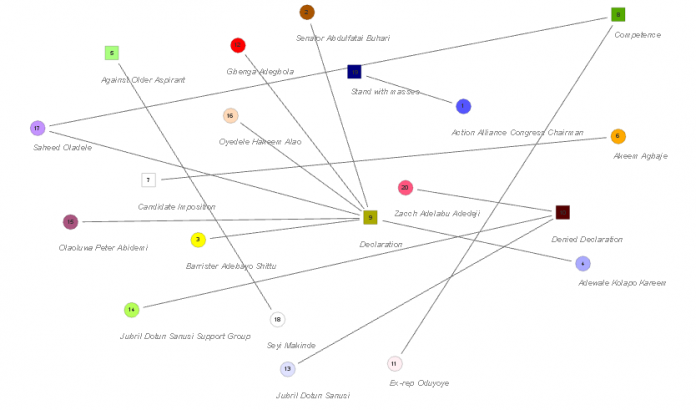
A recent analysis of political actors and their associations with key issues by our analyst highlights the early narratives guiding each player. These themes include competence, declaration of interest, generational change, and concerns over imposed candidates. The ways in which candidates and their support groups connect with these issues provide insight into their strategies and the messages they intend to amplify.

The most prominent issue at this stage appears to be declaration of intent to run. This is more than a ceremonial act. It represents a moment for candidates to make their ambitions known, test their public support, and send signals to allies and opponents. Several figures have already attached themselves clearly to this issue. Notable among them are Zacch Adelabu Adedeji, Chief Saheed Oladele, Mr. Olaoluwa Peter Abidemi, Barrister Adebayo Shittu, and Mr. Adewale Kolapo Kareem. Their visible connection to the idea of declaration suggests they are either already in the race or preparing to formally enter with confidence.

Not all candidates are eager to confirm their intentions so early. Chief Jubril Dotun Sanusi and his support group are both closely tied to the theme of denying a declaration. This may be a calculated move. By keeping his plans unclear, Sanusi remains part of the political conversation while preserving flexibility. This strategy helps maintain public interest without locking him into a specific course of action.

The theme of competence is another key pillar of this emerging political narrative. In a country where leadership is often shaped by personal networks or popularity, a focus on capability and experience is a noteworthy development. Saheed Oladele and a former member of the House of Representatives, Babatunde Oduyoye, are both linked to this issue. Their alignment with competence suggests an attempt to appeal to voters who value skill and performance over political loyalty or familiarity.

Meanwhile, Akeem Agbaje is positioning himself around the concern of candidate imposition. His stance suggests a pushback against internal party decisions that bypass grassroots input. This message could resonate with both party members and the wider public who want greater transparency and fairness in how candidates are chosen. It reflects a wider dissatisfaction with political godfatherism and top-down selection.

Governor Seyi Makinde stands out for a different reason. He is clearly associated with opposition to older aspirants. This indicates a desire to support new leadership, possibly encouraging a generational change in Oyo politics. As a sitting governor, Makinde’s stance may shape his party’s direction and influence which kinds of candidates gain traction. His position could also strengthen his image as someone invested in political renewal.

Some figures, however, are notably absent from the main themes. Senator Abdulfatai Buhari and Dr. Gbenga Adegbola are not directly connected to any of the dominant issues identified in the analysis. This may suggest a cautious or reserved approach at this stage, or it may reflect activity that is more behind-the-scenes. These politicians could be waiting for the field to settle before revealing their strategies.

The role of support groups in these early alignments is also significant. For instance, the Jubril Dotun Sanusi Support Group is actively engaged with the theme of denying declaration. Their visibility, even while their preferred candidate remains noncommittal, shows how grassroots supporters can help shape momentum and public perception. It also reflects the growing influence of organized political support outside of formal party structures.

These early alignments are more than just political statements. They are tools for building identity, attracting attention, and preparing the ground for future endorsements or partnerships. They also reflect deeper struggles within the political system—between insiders and outsiders, between youth and experience, and between controlled succession and open competition.

As the 2027 governorship race in Oyo State continues to unfold, the way candidates engage with these core issues will matter just as much as their official campaign announcements. Voters will be watching not only who steps forward, but how they justify their ambitions and which values they choose to stand for.

The months ahead will reveal more about who truly commands support and who is able to convert early narratives into lasting political capital. What is already clear is that the race has begun in earnest, and it is being shaped not only by personalities but also by the issues they choose to embrace or avoid.

Companies: Register Your Staff for Tekedia Mini-MBA Which Begins on June 9

0

Every company in the world is built on three pillars: people, tools and processes. And every modern company also works on four foundational factors of knowledge, entrepreneurial vision, labour, and capital. At Tekedia Institute, we have created a product and that product is KNOWLEDGE, and we make the PEOPLE better, to advance and strengthen the firm, fixing market frictions, and serving customers.

When your staff come to Tekedia Institute and co-learn with us, they will understand where all great companies operate, and that is the  perception level of customer satisfaction, well ahead of the needs and the expectations levels.

At the perception level, a company creates fandom in the market, and customers become fans. The result is a new basis of competition being created with massive disruption which changes the ordinance in the industry. When that happens, stars of markets are born, and profits show in the books. Glory! In 2011, I explained in Harvard Business Review here.

Good People, as we get ready for the best edition of Tekedia Mini-MBA yet, I ask you to register your staff. Start date is June 9. This is a great program. Click here to register


Ndubuisi Ekekwe

Professor & Lead Faculty

Tekedia Institute, USA

Nigeria Deepens AfCFTA Integration as 22 Banks Join PAPSS, Following CBN Directive to Adopt Africa-Wide Payment Platform

0

Nigeria has reinforced its position at the forefront of African trade integration, with 22 commercial banks now fully onboarded onto the Pan-African Payment and Settlement System (PAPSS) — the highest of any country on the continent.

The move follows a formal directive from the Central Bank of Nigeria (CBN), mandating all banks operating in the country to begin originating cross-border transactions through PAPSS, a unified platform designed to simplify and de-dollarize intra-African trade.

The CBN’s directive, which became effective through a circular issued on April 28, 2025, marks a significant departure from traditional cross-border payment systems that rely heavily on third-party currencies like the U.S. dollar. With the new policy, Nigeria’s financial system is now structurally positioned to better align with the goals of the African Continental Free Trade Area (AfCFTA) — the African Union-led initiative to boost intra-African trade by eliminating tariffs and creating a single market for goods and services across 54 countries.

According to the circular, referenced TED/FEM/PUB/FPC/001/006, the apex bank emphasized the importance of PAPSS in “deepening intra-African trade, enhancing payment efficiency, and reducing reliance on non-African currencies.” The CBN called on all banks to adopt the framework immediately, streamlining their infrastructure to accommodate PAPSS as a payment channel.

What is PAPSS?

Launched in January 2022 by the African Export-Import Bank (Afreximbank), in collaboration with the African Union and the AfCFTA Secretariat, PAPSS is a centralized payment system that enables instant, secure, and direct settlement of cross-border transactions in local African currencies. The system is aimed at minimizing foreign exchange conversion costs, speeding up payments, and reducing the friction that currently hampers African trade.

Unlike conventional cross-border transactions that pass through multiple intermediaries and foreign correspondent banks, PAPSS allows buyers and sellers in different African countries to pay and receive money in their respective local currencies. This not only removes exchange rate complexities but also enhances monetary sovereignty across the continent.

As of May 2025, over 150 banks across 16 African countries are connected to PAPSS, making Nigeria’s contribution both symbolic and operationally significant.

List of Nigerian Banks Now on PAPSS

The 22 Nigerian banks now integrated with PAPSS include both commercial and merchant banking institutions:

  1. First Bank
  2. United Bank for Africa (UBA)
  3. Access Bank
  4. Stanbic IBTC
  5. Sterling Bank
  6. Wema Bank
  7. Keystone Bank
  8. Lotus Bank
  9. Providus Bank
  10. Polaris Bank
  11. Union Bank
  12. Jaiz Bank
  13. Zenith Bank
  14. Fidelity Bank
  15. Optimus Bank
  16. Coronation Merchant Bank
  17. Parallex Bank
  18. Taj Bank
  19. FSDH Merchant Bank
  20. Ecobank
  21. FBNQuest Merchant Bank
  22. Unity Bank

This extensive participation reflects a major banking sector endorsement of the AfCFTA agenda. It also signals Nigeria’s readiness to tap into the broader African market, where demand for faster, cheaper, and transparent payment channels continues to grow.

Lower Barriers for Small Traders and SMEs

One of the most transformative aspects of the CBN’s April directive is the simplification of documentation for low-value cross-border transactions. Under the new framework, individuals transacting up to $2,000 (or its naira equivalent) and corporate entities transacting up to $5,000 are now permitted to conduct such operations using only the Know Your Customer (KYC) and Anti-Money Laundering (AML) documentation already submitted to their authorized dealer banks.

Transactions above those thresholds, however, will still require compliance with the standard documentation procedures outlined in the CBN’s Foreign Exchange Manual and related circulars. According to the CBN’s Acting Director of Corporate Communication, Mrs. Hakama Sidi Ali, this dual-tier approach is designed to widen access to intra-African trade channels without compromising financial integrity or regulatory oversight.

Analysts have long argued that initiatives like PAPSS could help African countries, particularly Nigeria, reduce dependency on foreign currencies in cross-border transactions — a dependency that has long contributed to volatility in the local forex market. With the naira now usable in direct trade settlements through PAPSS, the policy is expected to relieve some of the pressure on Nigeria’s foreign reserves and reduce the demand for hard currency in regional transactions.

Strategic Alignment With AfCFTA Goals

For Nigeria, PAPSS is not just a payment innovation — it’s a strategic move to unlock the benefits of the AfCFTA. By joining the platform and mandating adoption across its banking system, Nigeria is now better placed to take advantage of the $3.4 trillion economic bloc envisioned under AfCFTA.

The move is also timely, coming as Nigerian authorities attempt to diversify the economy and boost non-oil exports. With PAPSS, Nigerian producers and traders — particularly those dealing in textiles, agro-allied products, and manufactured goods — can now seamlessly tap into markets across Africa with minimal cost.

According to a joint report by the AfCFTA Secretariat and Afreximbank, intra-African trade is expected to grow by over 50% by 2030 if payment, logistics, and tariff barriers are removed. PAPSS is seen as the cornerstone to achieving that vision.

Thus, the widespread onboarding of Nigerian banks and the full adoption of PAPSS signals a new phase in Africa’s economic integration — one where Nigeria is not only participating but taking the lead.

However, stakeholders note that payment systems are just one part of the puzzle. To fully benefit from AfCFTA, Nigeria must also address non-tariff barriers, modernize its transport and logistics infrastructure, and streamline customs procedures.