DD
MM
YYYY

PAGES

DD
MM
YYYY

spot_img

PAGES

Home Blog Page 1247

FlixTrain’s Ambitious 65 Trainset Order Signals a Transformative Shift in Germany’s Rail Market

0

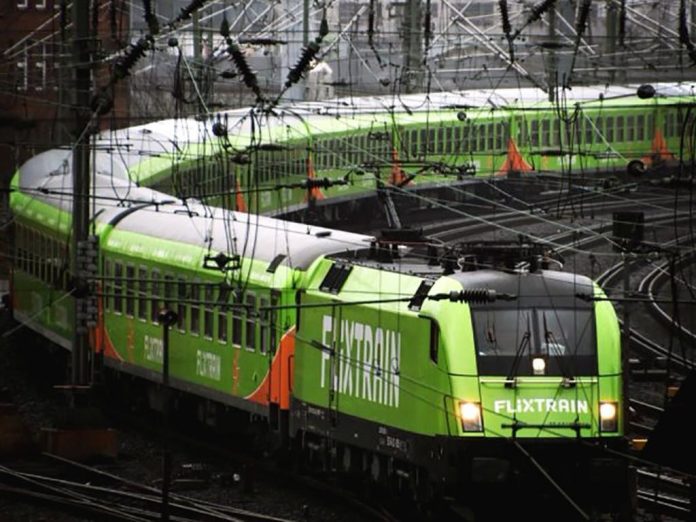
In May 2025, FlixTrain, a German private rail operator and subsidiary of Flix SE, announced a major order for 65 high-speed trainsets from Spanish manufacturer Talgo, with Siemens supplying Vectron locomotives, in a deal valued at up to €2.4 billion. A firm commitment of €1.06 billion covers the initial 30 trains, with an option for 35 more, and includes 15 years of maintenance by Talgo. The trains, based on the Talgo 230 platform, are designed for speeds up to 230 km/h, featuring lightweight, accessible push-pull designs similar to Deutsche Bahn’s ICE L trains. They are interoperable across Germany, Austria, the Netherlands, Denmark, and Sweden, aiming to enhance cross-border travel.

This move intensifies competition with Deutsche Bahn, Germany’s state-owned rail operator, by expanding FlixTrain’s network, which already connects 50 cities directly and 650 via regional partnerships. FlixTrain’s budget-friendly model, offering fares 25-50% lower than Deutsche Bahn’s, targets cost-conscious travelers with modern amenities like Wi-Fi, power outlets, and guaranteed seating. The expansion aligns with a projected 45% growth in Germany’s high-speed rail market by 2030 and a €27 billion European market. FlixTrain aims to grow its market share and the overall rail market, challenging Deutsche Bahn’s dominance while promoting sustainable travel.

FlixTrain’s order of 65 high-speed trains positions it as a formidable challenger to Deutsche Bahn (DB), which has long dominated Germany’s rail sector. FlixTrain’s low-cost model, with fares 25-50% cheaper, directly targets price-sensitive passengers, potentially eroding DB’s market share, especially on high-demand routes. The interoperable Talgo 230 trains enable FlixTrain to expand its network across Germany, Austria, the Netherlands, Denmark, and Sweden. This cross-border capability could pressure DB to enhance its international offerings, which are currently limited by operational and pricing constraints.

FlixTrain’s modern trains, equipped with Wi-Fi, power outlets, and accessible designs, set a new standard for passenger experience. DB may need to accelerate upgrades to its aging ICE fleet and improve service reliability to compete, especially given recent criticisms of delays and cancellations. FlixTrain’s expansion aligns with a projected 45% growth in Germany’s high-speed rail market by 2030. By offering affordable fares, FlixTrain could stimulate demand, growing the overall rail market rather than just redistributing DB’s share.

Rail travel is significantly greener than air or car travel, and FlixTrain’s push for efficient, high-capacity trains supports Europe’s climate goals. Increased competition could drive more passengers to rail, reducing carbon emissions. The €1.06-2.4 billion deal with Talgo and Siemens will create jobs in manufacturing and maintenance, boosting local economies in Germany and Spain. However, DB may face financial pressure, potentially leading to cost-cutting or job losses if it loses significant market share.

DB’s higher fares and state-backed structure make it less agile than FlixTrain, which operates without subsidies. DB may need to lower prices or improve service quality, straining its finances, especially given its €30 billion debt (as of recent reports). As a state-owned entity, DB’s struggles could spark debates about privatization or further deregulation of Germany’s rail market, which was liberalized in 1994 but still heavily favors DB.

DB’s recent performance issues, including frequent delays and infrastructure bottlenecks, could push passengers toward FlixTrain’s newer, potentially more reliable services. FlixTrain’s budget model will likely force DB to offer competitive pricing or promotions, benefiting consumers. Competition could drive both operators to enhance amenities, punctuality, and customer service.

Expanded routes and frequent services give travelers greater flexibility, particularly in underserved regions or cross-border travel. FlixTrain (Private, Low-Cost) operates a lean, profit-driven model focused on affordability and efficiency. It leverages modern technology and partnerships (e.g., with regional operators) to minimize costs and maximize reach. Its lack of reliance on subsidies allows flexibility but limits its ability to serve less profitable routes.

Deutsche Bahn (State-Owned, Full-Service) offers a comprehensive network, including regional and less profitable routes, subsidized by the government. Its higher operating costs and bureaucratic structure make it less competitive on price but essential for universal service. FlixTrain targets price-conscious travelers, particularly younger demographics and leisure travelers, with a focus on high-demand, high-speed routes. Its cross-border expansion aims at the growing European market.

Deutsche Bahn serves a broader audience, including business travelers and rural communities, but struggles with balancing profitability and public service obligations. Both operators rely on Germany’s state-managed rail infrastructure, operated by DB Netz, which is plagued by underinvestment and congestion. FlixTrain’s expansion could exacerbate capacity issues unless infrastructure upgrades keep pace.

As part of the DB Group, Deutsche Bahn has closer ties to infrastructure management, potentially giving it preferential access to slots and maintenance, though this has sparked accusations of unfair practices. FlixTrain viewed as a dynamic, consumer-friendly disruptor but lacks the political clout and public funding that DB enjoys. Its growth may face regulatory hurdles if DB lobbies for protection.

Deutsche Bahn benefits from its status as a national institution but faces public frustration over service disruptions and high costs. Political support for DB may wane if FlixTrain proves more reliable or popular. FlixTrain’s success could push for further deregulation, encouraging more private operators to enter the market. However, this risks fragmenting services and neglecting unprofitable routes.

Infrastructure investment needs competition which underscores the urgent need for Germany to invest in rail infrastructure to support multiple operators, as current bottlenecks limit growth for both FlixTrain and DB. FlixTrain’s ambitious order signals a transformative shift in Germany’s rail market, challenging Deutsche Bahn’s dominance with lower fares, modern trains, and cross-border expansion.

This competition promises consumer benefits like cheaper tickets and better services but highlights systemic challenges, particularly infrastructure limitations. The divide between FlixTrain’s lean, private model and DB’s state-backed, comprehensive approach will drive innovation but also spark debates about fairness, subsidies, and the role of rail in a sustainable future.

German Climate Group Announced A Week of Protests In Berlin

0

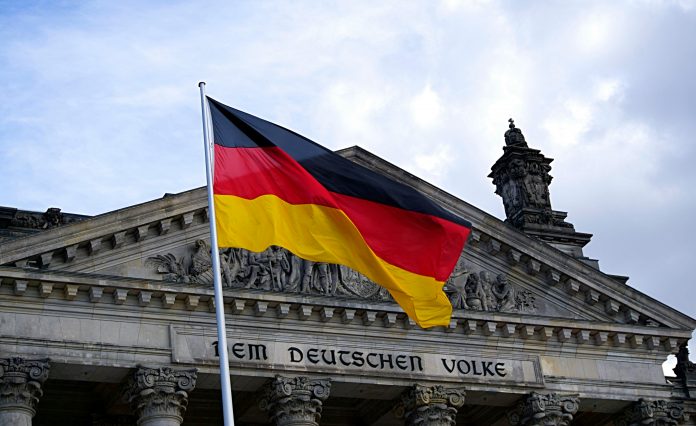
A German climate group, described as a successor to Last Generation, announced a week of protests in Berlin starting May 27, 2025. In recent years, climate activism in Berlin has included disruptive tactics like road blockades by groups such as Last Generation, which glued themselves to streets to demand stronger government action on climate change.

These protests often caused significant traffic disruptions and drew mixed public reactions, with some supporting the cause but criticizing the methods. For instance, Last Generation’s 2023 protests involved blocking key roads, leading to traffic jams and debates over their tactics. The group later shifted to “disobedient assemblies” in 2024, moving away from gluing themselves to roads.

The week of protests announced by a German climate group in Berlin starting May 27, 2025, could have significant social, political, and economic implications, while deepening existing divides in German society. Based on past actions by groups like Last Generation, protests may involve road blockades, airport disruptions, or symbolic acts like gluing to streets or defacing property.

These tactics, seen in 2023 with 550 protests in Berlin alone, caused significant traffic jams and commuter frustration. Such disruptions could again alienate parts of the public, with some commuters labeling activists as “terrorists” or “scum,” while others offer support, like food and water during blockades.
Protests are designed to spark debate, and a 2024 study found that climate protests in Germany increased public concern about climate change by 1.2 percentage points, even for confrontational tactics.

However, public support for disruptive activism has waned, dropping from 68% in 2021 to 34% in 2023, as many feel tactics harm the cause. This could lead to polarized reactions, with some praising the urgency and others decrying the methods. Past protests, like a 2022 blockade that delayed emergency services, were blamed for a cyclist’s death, fueling media and public backlash. Similar incidents in 2025 could escalate tensions and lead to calls for harsher crackdowns.

The German government has historically responded to disruptive protests with crackdowns, such as the 2023 raids on Last Generation properties, seizing assets and investigating finances. German Chancellor, Merz called such tactics “completely nutty,” and new laws, like those proposed in 2024 to punish airport intrusions, signal tougher penalties. The 2025 protests could pressure the incoming conservative-Social Democrat coalition to balance climate goals with public order, especially as they negotiate a joint climate policy.

Activists may push for measures like a universal highway speed limit or a fossil fuel phase-out by 2030, as demanded by Last Generation in 2024. However, resistance from parties like the Free Democrats, who control the Transport Ministry, and skepticism from the conservative CDU could stall progress. The protests might amplify criticism of Germany’s failure to meet 2030 climate targets, as warned by experts in 2022.

Harsh political rhetoric, such as comparisons of activists to the Taliban or Nazis, risks normalizing hostility toward climate movements. This could embolden legal restrictions, as Amnesty International noted in 2023 when Germany was added to a list of countries curbing protest rights. Blockades on roads or at airports, like those at Berlin and Cologne-Bonn in 2024, could disrupt passenger and cargo transport, impacting local businesses and logistics.

The 2024 Leipzig/Halle Airport protest halted cargo flights for three hours, showing the economic ripple effects. Berlin police deployed 500 officers for a single day of protests in 2023, and similar resource demands in 2025 could strain public budgets. Protests may highlight resistance to renewable energy projects, particularly in rural areas where the Alternative for Germany (AfD) party has capitalized on discontent against wind turbines and power lines. This could complicate Germany’s Energiewende (energy transition), as financial concerns over energy costs fuel opposition.

Urban areas, especially in western Germany, show stronger support for climate action (82.9% believe in climate change vs. 78% in the east), driven by historical green politics in regions like Baden-Württemberg. Rural communities, particularly in eastern Germany, often oppose renewable projects due to landscape changes or economic concerns, with the AfD exploiting this discontent. Protests in urban Berlin may be seen as disconnected from rural realities, widening this gap.

Climate activism faces a political split. The Greens and Fridays for Future enjoy broader support, but Last Generation’s confrontational tactics have drawn criticism even from progressive allies like the Greens’ Britta Hasselmann, who called them “not productive.” Conservative parties, like the CDU, and climate-skeptic AfD voters are more likely to oppose protests, especially if they disrupt daily life. The 2025 election of a conservative-led government under Friedrich Merz, who critiques excessive green policies, could intensify this divide.

Younger activists, inspired by figures like Greta Thunberg, push for urgent action, as seen in the 2021 Fridays for Future rallies with over 100,000 participants in Berlin. Older generations, like retirees supporting protests like Reinhart Kraft in 2023, share concerns but may disagree on tactics. However, some older citizens, especially in rural areas, prioritize economic stability over climate goals, creating friction.

While 83% of Germans see climate change as a serious threat and 86% want stronger government action, only 68% support specific policies, and disruptive protests have eroded broader movement support. Activists argue that disruption is necessary to highlight government inaction, but public frustration with tactics like road blockades or art vandalism risks alienating supporters, as seen in the drop from 60% to 25% who believe the climate movement prioritizes society’s well-being.

Historical differences persist, with western Germany showing higher climate concern (58.3% vs. 51.2% in the east) and support for collective action (85.3% vs. 79.8%). Eastern Germany’s economic challenges and weaker green political tradition fuel skepticism, which protests may exacerbate if perceived as urban-centric. The 2025 Berlin protests could heighten public awareness of climate issues but risk deepening societal divides by alienating commuters, rural communities, and conservative voters.

Politically, they may pressure the government but face resistance from a conservative-led coalition and a public increasingly critical of disruptive tactics. Economically, disruptions could strain local businesses and public resources. To navigate these divides, activists might need to balance visibility with broader public appeal, while policymakers must address legitimate climate concerns without escalating crackdowns that further polarize society.

Managing Your Money While Gambling Online: A Quick Guide

0

Online gambling can be a ton of fun, but it’s not always sunshine and rainbows. If you want to stay in the game longer and enjoy it more than your friends who punt their extra cash every weekend on losing bets, here’s a quick guide that should help. It all starts with understanding what exactly a bankroll is and how you can stretch it further.

Understanding What Bankroll Means

Your bankroll is essentially how much money you have to play with. This amount varies from person to person, and there’s no set amount as a standard. Bankrolls are personal. Some players have $20 that they play with, while others have thousands.

The point is, your bankroll is a direct reflection of your own budget and winnings. You can—and should—use bonuses to increase your bankroll. Sites like bonuses.com showcase a variety of sites with promos that can give you extra cash to wager.

If you haven’t already, create a budget using any one of the handy resources online. Look at how much you can comfortably spend after all your necessary and unnecessary expenses. That’s your bankroll for the month.

Divide it into Sessions

Some players have a hard time not blowing through their bankroll in a single session. Everyone has been there. It’s a Friday night, you’re on a hot streak, suddenly it’s not so hot and you’re clamoring to win back to even—and then you’re out.

You can avoid this by breaking your bankroll down even further. Play 10 times a month and have a bankroll of $500? Great, you can play with $50 each session. This will keep you playing longer and help stretch out the fun.

Got a big win? Awesome, set aside a portion of the winnings and keep playing with the rest. Now you get to enjoy your wins while still knowing that there’s funds left in the bank to keep playing and then some.

Set Clear Limits for Yourself

Limits are a necessity when it comes to online gambling. Set them early, and stick with them. If you’ve taken the advice of dividing your bankroll into sessions, good. Keep with it, and never break it. Don’t think that a win is around the corner or that you’ll skip your next session. Take a break, relax and come back another day.

Make Smaller Bets

You might want to limit your bet sizes, too. Big bets are fun, but it’s a quick way to burn through your bankroll. Set a maximum bet size in your head, preferably something that is no more than 10% of your bankroll for the month, possibly even 10% of your bankroll for the session if you divided it up as mentioned earlier.

Choose Games Based on Your Budget

Slot machines are great for players with a smaller budget, as they often have low bet sizes. Blackjack, however, can be a quick way to spend your money if the minimum bet size is $5 and your bankroll for the night is $20.

Look for games that have minimum bet sizes that match your bankroll. If your bankroll is big, this might not be something to consider, as there really is no game that has too large of a minimum bet for high rollers.

Keep a Journal of Your Bets

Okay, yes, this is not the most exciting thing in the world, but keeping a digital or physical log of your bets is a great idea, especially if you bet on sports. A log can help you keep track of your bets, which games you seem to have better luck at, and days when you probably shouldn’t have played at all.

Periodically review your log and try to spot a pattern. Sports bettors can refine their strategies while casino players can see which games rarely pay out for them. It also adds a layer of accountability, keeping you in control. It’s a lot harder to go over your limit if you know you’re going to have to write it down and analyze it later.

You may also want to have an AI like Google’s rising Gemini chatbot analyze your log. It can help you spot patterns you may not have realized on your own, but always double-check their responses.

Avoid Chasing Losses and Emotional Play

This ties into setting clear limits for yourself. You should never chase losses. A win is never due in gambling. The odds are (almost) always the same regardless of previous outcomes. If you’ve been waiting for a 17 on roulette and it hasn’t popped up in the last 1,000 spins, it still has a 1 in 38 chance of popping up if you’re playing at a double-zero table.

Likewise, leave your emotions at the virtual casino door. Letting your emotions guide your decisions is a surefire way to lose. That’s not to say that you shouldn’t be happy and have fun, but anger at a losing streak can result in you making worse decisions, furthering the cycle. Keep a clear head, bet with your brain, and let lady luck sort out the rest.

UK-Based Crypto Exchange Blockchain.com Targets African Expansion With Nigeria Office And Crypto License

0

UK-based crypto exchange Blockchain.com is intensifying its African expansion, as it seeks to acquire a license in Nigeria, one of Africa’s largest crypto markets.

According to Bloomberg, Blockchain.com plans to open a physical office in Nigeria this quarter. As part of its expansion into the African region, It appointed financial industry veteran Owenzie Irese Odia as the region’s general manager.

Announcing her appointment, Blockchain.com wrote,

“We are thrilled to welcome Owenize Irese Odia as General Manager, Africa, as we continue to accelerate our mission to usher in the future of finance across the continent. Owen’s reputation as a crypto asset pioneer and advocate in Africa precedes her. A respected thought leader and experienced operator, she brings a deep commitment to expanding access to regulated crypto asset services, making her the ideal leader to scale Blockchain.com’s footprint in Africa.

“As our user base grows steadily across Africa, led by West Africa, our fastest-growing market, we are entering a natural phase of regional investment and establishing a physical presence, beginning with our West African hub. This is a pivotal moment to establish a lasting presence, foster local partnerships, and engage constructively with regulators across the continent.”

In her role, Owen will oversee Blockchain.com’s comprehensive business strategy in Africa, collaborating closely with global product, commercial, compliance, and regulatory teams. She will lead the company’s efforts to:

  • Engage with regulators to pursue licensing and ensure compliance.
  • Grow Blockchain.com’s brand as a trusted and secure platform for crypto services.
  • Build and scale regional teams to serve the unique needs of local customers.

On the company’s expansion to Nigeria, Owen noted that applying for a crypto-exchange license in Nigeria is a top priority. Notably, Blockchain.com’s license pursuit in Nigeria comes after the Nigerian government formally recognized cryptocurrency and other virtual assets as securities for the first time.

Recall that after swinging back and forth between acceptance and rejection, President Bola Ahmed Tinubu on March 25, 2025, took a decisive step toward regulating the cryptocurrency sector in Nigeria, in new SEC Act 2025. The law not only acknowledges virtual assets and investment contracts as securities but also places Virtual Asset Service Providers (VASPs), Digital Asset Operators (DAOPs), and Digital Asset Exchanges under the regulatory oversight of the Securities and Exchange Commission (SEC).

Section C on page 188 of the official clean copy of the ISA bill, recognizes virtual and digital assets as securities. It describes securities exchange or registered exchange as an organized facility that maintains and provides an infrastructure:

  • (a) for bringing together buyers and sellers of securities, virtual assets, commodities, or financial products or instruments.
  • (b) for matching bids and offers for securities, virtual assets, commodities, or financial products or instruments of multiple buyers and sellers; and
  • (c) whereby a matched bid and offer for securities, virtual assets, commodities, or financial products or instruments constitutes a transaction.

As part of its Accelerated Regulatory Incubation Program (ARIP), the SEC granted provisional licenses, or “Approval-in-Principle,” to two cryptocurrency exchanges—Quidax and Busha in 2024.

Launched in 2011, Blockchain.com got its start as an early pioneer of key infrastructure for the Bitcoin community. First, with a Blockchain Explorer that enabled anyone to not only examine transactions and study the blockchain, but an API that enabled companies to build on Bitcoin.

Since its launch, the platform has created over 92 million wallets, and transacted over $1 trillion, with a presence in over 200 countries, relentlessly building the future of finance, serving people, projects, protocols, and institutions.

With its African expansion, the company’s ambition is to become the go-to regulated platform for consumer investment and payments by investing in Infrastructure, people, and regulatory clarity across Africa.

FAMILY ECONOMY: A Missed Opportunity for Collective Prosperity

0

In every society, the family is the smallest yet most foundational unit. It is within the family structure that values are first cultivated, behaviour modeled, and identities shaped. As a result, much of what individuals eventually achieve in broader society is often rooted in what was planted and nurtured at home. Yet, when it comes to business and economic collaboration, families are often overlooked as viable ecosystems of enterprise. Why is that?

Consider the paradox. While families are comfortable extending financial support to one another, through school fees, hospital bills, or even start-up funds, they often hesitate to collaborate in business. If we can give money freely, why is it so difficult to exchange value through commerce within the same circle?

These questions became a subject of personal curiosity, prompting me to conduct a brief informational interview with friends and colleagues via WhatsApp. The responses I received were striking. Many expressed concerns about protecting their wealth from family members who might misuse resources or feel entitled. There was a fear that doing business with family could lead to strained relationships, unmet expectations, and even financial losses.

These concerns are valid and reflect broader cultural and emotional complexities around family economics. Many people are comfortable giving to family but not transacting with them. Generosity is seen as noble, while business interactions are viewed as risky. This mindset has significant consequences for the way wealth is created, managed, and transferred within families.

Now imagine a different scenario. Picture a family economy with a market size of N20 million in a quarter. Each family member possesses a unique, marketable skill such as tailoring, catering, consulting, photography, web design, carpentry, or event planning. Instead of seeking these services outside, family members choose to patronize one another and pay fair market value.

The impact of this internal economic circulation would be profound. First, it would boost liquidity within the family, giving each member more financial flexibility to reinvest, save, or spend in wider society. Second, it would promote mutual respect and professionalism. When services are delivered competently and compensated fairly, it strengthens trust and redefines family members as assets rather than dependents.

More importantly, this model reflects real-world business logic. If we cannot convince our own family members to support our services or buy our products, how ready are we to face the open market? Families can and should serve as both testing grounds and support systems for entrepreneurship.

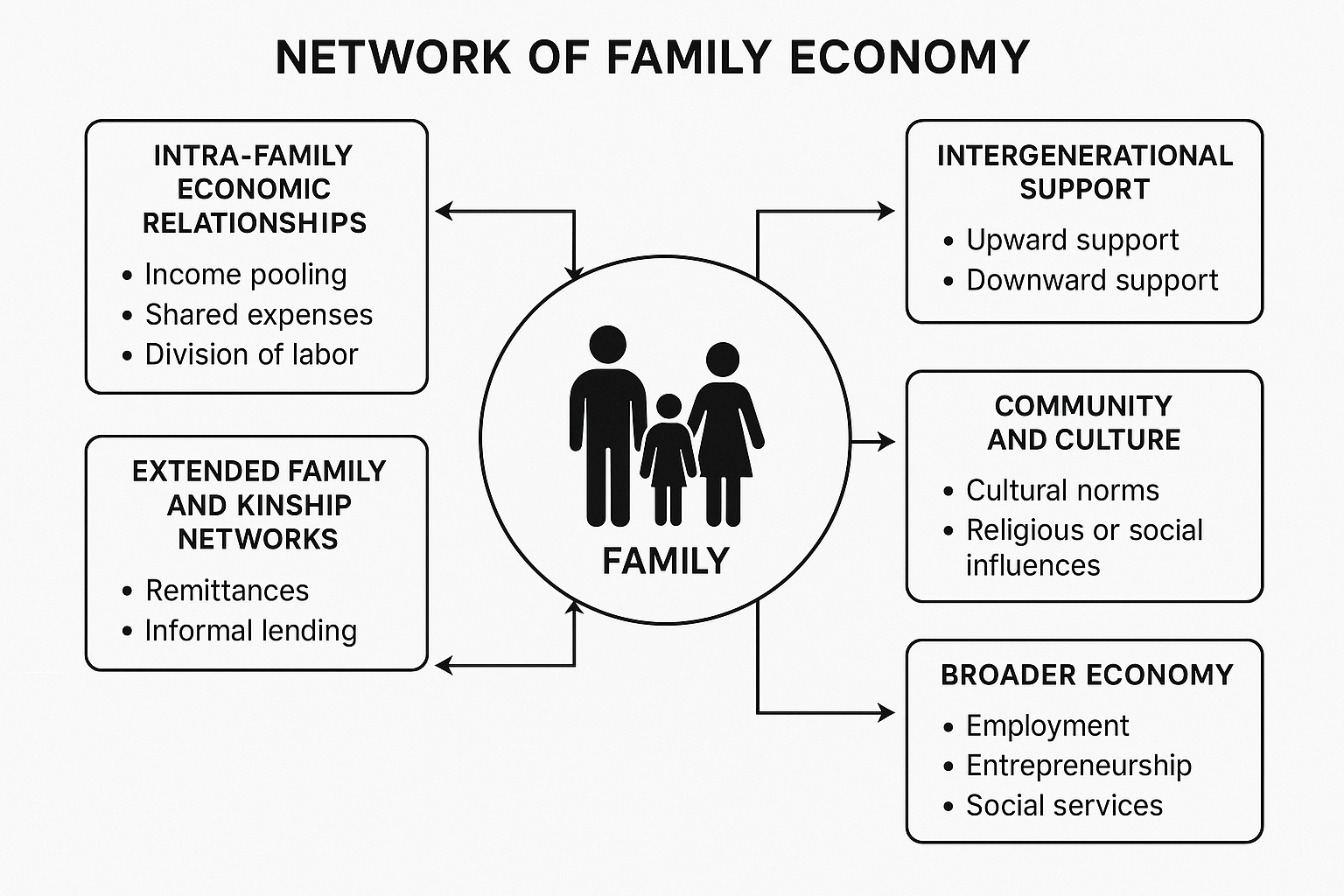
family economics
Source: Infoprations Analysis, 2025

However, this approach is not without its challenges. Doing business with family requires maturity, structure, and clear boundaries. It demands contracts, defined roles, and honest communication. Many family ventures fail because they rely too heavily on emotional bonds rather than sound business practices. When expectations are not clearly managed, the resulting disappointment can damage both relationships and reputations.

To overcome this, families must adopt a new mindset. They must begin to see themselves not just as units of support, but as strategic collaborators in wealth creation. Trust should be earned through professionalism, not assumed based on blood ties. Training and mentorship can be introduced within the family to raise standards and equip members for sustainable success. Conflict resolution mechanisms must also be part of the design, just as they are in any other serious business.

This idea of a family economy is not merely theoretical. In many cultures around the world, especially among immigrant communities and indigenous groups, family-based businesses are central to financial stability. These families pool resources, share knowledge, and build intergenerational wealth by working together intentionally. There is no reason why such a model cannot be embraced more widely in African and other emerging-market contexts, where entrepreneurship is often a path to survival and growth.

Ultimately, the family can become both a launchpad and a loyal customer base for entrepreneurs. This shift requires discipline and a willingness to professionalize relationships within the home. Not every venture will succeed, and not every family member will be a fit for collaboration. But with planning and mutual accountability, the potential is immense.

We need to reconsider the role of family in our economic aspirations. Rather than viewing our loved ones only as recipients of support, we can begin to see them as partners in value creation. We should not wait for outsiders to validate our ideas when we have capable minds and willing hands within our own homes. The family economy remains an untapped goldmine, and our first real investment might just need to begin at the family table.