DD
MM
YYYY

PAGES

DD
MM
YYYY

spot_img

PAGES

Home Blog Page 1262

Xiaomi Takes Aim at Tesla’s Model Y with New YU7 SUV as Chinese EV Price War Intensifies

0

Xiaomi is escalating its challenge to Tesla’s dominance in China’s electric vehicle market with the unveiling of its second EV model, the YU7 SUV, which the company claims delivers a longer driving range than Tesla’s best-selling Model Y.

The announcement, made late Thursday during a product showcase, marks another bold move by the electronics maker as it expands its automotive ambitions. According to Xiaomi, the YU7 will offer a range of at least 760 kilometers (472 miles) on a single charge—outperforming Tesla’s Model Y, which has a maximum advertised range of 719 kilometers for its extended-range model sold in China.

“We expect the YU7 would significantly erode Tesla Model Y’s China market share,” said Citi analyst Jeff Chung in a note released Sunday.

Citi projects that the YU7 will be priced between 250,000 yuan and 320,000 yuan ($34,700 to $44,420), directly putting it in competition with the Model Y, which starts at 263,500 yuan in China. Xiaomi said it would reveal the official price at the car’s launch in July, and Citi forecasts monthly sales of around 30,000 units or annual sales of up to 360,000 units.

The YU7’s launch follows the release of Xiaomi’s first EV model, the SU7 sedan, which debuted less than a year ago and quickly climbed China’s sales charts. Priced at 215,900 yuan, about $4,000 cheaper than Tesla’s Model 3 at the time, the SU7 has been received well despite a recent fatal crash that prompted regulatory caution around driver-assist marketing language.

In April alone, Xiaomi delivered over 28,000 SU7 units, down slightly from March’s 29,000 units. However, Xiaomi’s momentum has put the company firmly in competition with Tesla and other local EV players.

“The YU7 is a luxury SUV and could outperform the SU7 sedan in sales,” said Elinor Leung, managing director of Asia telecom and internet research at CLSA.

Meanwhile, Tesla’s Model Y, which had been the second most sold new energy vehicle (NEV) in China from November through April, fell to eighth place in April, according to data from Autohome. BYD’s ultra-budget Seagull topped the April sales list, followed by the Wuling Hongguang Mini and Geely’s Geome Xingyuan. Xiaomi’s SU7 ranked fourth, further emphasizing the brand’s rapid ascent.

Tesla’s global sales decline has been attributed to its CEO, Elon Musk’s politics. Scott Galloway, a marketing professor at New York University, described Tesla’s growing image problem amid global EV competition as “one of the greatest brand destructions of all time,” following a storm of reputational setbacks. Musk added to that narrative by announcing on Saturday that he would now focus on his core ventures, reversing a week-long public flirtation with political endorsements and media attention.

BYD Shares Plunge Amid Price Cuts

While Xiaomi pushes forward with high-end offerings, BYD, China’s largest electric vehicle maker and Tesla’s top rival in the country, is intensifying competition at the other end of the market. On May 23, the company slashed prices on 22 electric and plug-in hybrid models, prompting its shares to plunge as much as 8.25% on Monday, a steep drop from their record high just last week.

The company announced the price cuts on Weibo, China’s top social media platform, as part of a promotion that runs through the end of June. The Seagull hatchback, already a bestseller, saw a 20% price reduction to 55,800 yuan ($7,780), while the Seal dual-motor hybrid sedan had its price slashed by 34% to 102,800 yuan.

These are just the latest in a string of cuts. Earlier this year, BYD launched new versions of its Han sedan and Tang SUV at starting prices 10.35% and 14.3% lower, respectively, than previous versions.

According to Citi analysts, these adjustments have significantly boosted consumer interest. Foot traffic at BYD dealerships between May 24 and 25 jumped 30% to 40% compared to the prior weekend.

Sector-Wide Fallout

The aggressive pricing strategy has spooked the market. On Monday, shares in several major Chinese automakers declined as investors braced for a potential price war. Geely Automobile shares were down 7.29%, Great Wall Motor Co fell 2.94%, Li Auto dropped 4.93%, and Xpeng shares fell 4.19%.

Despite the share declines, analysts at Citi remain upbeat about the broader outlook for China’s EV sector. In a note earlier this month, they wrote: “We expect BYD new energy vehicle 2025/2026 sales volumes of 5.75 million/7.2 million units on high-end brand sales growth, much better demand-supply relationship within the PHEV sector, wider average selling price positioning within the battery EV segment penetrating both the lower-end and higher-end segments going forward, and decent export sales growth.”

Xiaomi’s Strategic Edge

With the YU7 targeting the mid-to-high-end segment and the SU7 already disrupting the premium sedan space, Xiaomi is carving out a unique position. The company is leveraging its strengths in electronics, user experience, and integration with its wider ecosystem—allowing its cars to seamlessly interact with Xiaomi smartphones, tablets, and smart home devices.

The YU7 was reportedly introduced during the same event that Xiaomi used to launch a new premium smartphone, featuring a proprietary chip the company claims outperforms Apple’s on key metrics.

As rivals race to cut prices, Xiaomi appears to be betting on value through innovation, rather than undercutting competitors. Its strategy stands in contrast to BYD’s mass-market discounting and Tesla’s global brand reliance—one that is increasingly under strain in China.


NCC Orders Telcos to Disclose Reasons for Network Outages, Compensate Subscribers After 24 Hours

0

The Nigerian Communications Commission (NCC) has issued a landmark directive compelling telecom operators to inform subscribers of major network outages and compensate them if such disruptions persist for more than 24 hours.

This directive, which marks a significant policy shift in Nigeria’s telecom sector, was announced in a statement by the Commission’s Acting Director of Public Affairs, Mrs. Nnena Ukoha, and is aimed at enhancing service transparency and enforcing consumer protection across the board.

According to the NCC, Mobile Network Operators (MNOs), Internet Service Providers (ISPs), and last-mile service providers are now required to promptly notify consumers via public channels — such as print, broadcast, and digital media — of both unplanned and planned service outages, indicating the cause, the affected areas, and expected restoration timelines.

In the case of planned service disruptions, operators must issue public notifications at least seven days before the outage occurs. For unplanned disruptions, operators must immediately disseminate information using accessible public communication platforms.

A Major Shift in Consumer Transparency

Until now, telecom subscribers in Nigeria have long complained of being left in the dark during service disruptions, with most operators offering little to no information when network issues arise.

Subscribers often experience dropped calls, slow or unavailable data connections, and full blackouts, but operators have rarely provided official explanations. These disruptions, sometimes lasting for hours or days, have typically gone without warning or updates, causing frustration and losses for users who rely heavily on mobile services for personal and business communication.

The NCC’s directive seeks to correct this pattern.

The Commission’s new guideline goes further by mandating compensation for subscribers when outages exceed 24 hours. This compensation may include validity extensions for data and airtime, discounts, or equivalent service value, as contained in the Consumer Code of Practice Regulations.

The Commission stated that where a service outage lasts more than 24 hours, consumers shall be entitled to compensation in the form of airtime/data top-up, validity extension or any other form of value proportionate to the time of outage.

What Constitutes a Major Outage?

To ensure accountability, the NCC defined what qualifies as a “major outage,” stating that telecom operators must report and disclose any outage that fits the following:

  • A network condition, such as fiber cuts, vandalism, theft, or force majeure, which affects 5% or more of an operator’s subscriber base, or services in five or more Local Government Areas (LGAs).
  • The unplanned shutdown of 100 or more base stations, or 5% of total sites (whichever is lower), or the complete loss of a network cluster for 30 minutes or longer.
  • Any disruption that significantly degrades service in Nigeria’s 10 most trafficked states, as identified by the Commission based on current traffic data.
  • These outages must not only be publicly disclosed but also logged in real-time via the Commission’s Major Outage Reporting Portal, which is now open to the public through the NCC’s official website (www.ncc.gov.ng).

The NCC said the directive follows a pilot phase in which it tested the reporting process with telecom operators over several months.

Engr. Edoyemi Ogor, Director of Technical Standards and Network Integrity at the Commission, said: “By providing consumers and stakeholders in the telecommunications industry with timely and transparent information on network outages, we are entrenching a culture of accountability and transparency,” he added.

Ogor emphasized that beyond consumer information, the policy will also aid in tracking sabotage to telecom infrastructure.

“This approach ensures that culprits are held responsible for sabotage to telecommunications infrastructure. It reinforces the need to safeguard these assets, given their centrality to national security, economic stability, and the everyday lives of Nigerians,” he said.

Backed by Executive Order

The new directive also aligns with the Executive Order recently signed by President Bola Ahmed Tinubu, which designates telecom infrastructure as Critical National Information Infrastructure (CNII). This classification places telecom assets under special protection and reinforces the need for their continued security and operational stability.

Public Accountability Through the Portal

The Major Outage Reporting Portal is a key component of the directive. Accessible to the public, it offers transparency by displaying real-time updates about network issues across the country. The portal will also show which entities, including construction companies or vandals, are responsible for any reported infrastructure damage.

The move represents the first time the Commission is compelling operators to maintain a public-facing log of infrastructure faults, disruptions, and their causes, allowing both the public and the regulator to monitor trends and responses.

Telecom industry observers and consumer rights advocates say the NCC’s directive is long overdue.

Following its approval of a 50% tariff hike, the NCC demanded that the telcos improve their services – offering commensurate services to subscribers. The NCC’s new directive, mandating public communication and tying it to customer compensation, is seen as a way of holding the telecom service providers accountable.

By Monetizing 2000 Megawatts Electricity to Crypto Mining, Pakistan Could Generate Billions in Revenue

0

Pakistan has allocated 2,000 megawatts (MW) of surplus electricity to power Bitcoin mining and AI data centers in the first phase of a national initiative aimed at leveraging its excess energy capacity. This move, announced on May 25, 2025, is spearheaded by the Pakistan Crypto Council (PCC), a government-backed body under the Ministry of Finance, as part of a broader strategy to monetize surplus electricity, attract foreign investment, and create high-tech jobs.

The initiative aligns with Pakistan’s recent legalization of cryptocurrency, which seeks to integrate blockchain technology into the country’s financial ecosystem and position Pakistan as a global hub for digital innovation. The allocation addresses Pakistan’s energy sector challenges, including high tariffs and surplus generation capacity, exacerbated by the rapid adoption of solar energy among consumers. Underutilized coal-based power plants, such as Sahiwal, China Hub, and Port Qasim, operating at just 15% capacity, are expected to be repurposed for this effort.

The initiative is supported by enhanced digital connectivity, notably the Africa-2 Cable Project, a 45,000-kilometer submarine internet cable connecting 33 countries, which has recently landed in Pakistan, boosting internet bandwidth and reliability critical for AI data centers. This first phase is part of a multi-stage digital infrastructure rollout. Future plans include leveraging Pakistan’s renewable energy potential—such as wind (50,000 MW in the Gharo-Keti Bandar corridor), solar, and hydropower—along with offering tax incentives, customs duty exemptions, and reduced taxes to attract global investors.

The PCC, led by CEO Bilal Bin Saqib, aims to generate billions in revenue and foreign exchange through Bitcoin mining, with potential plans to accumulate Bitcoin in a sovereign digital wallet. Pakistan’s competitive edge is further strengthened by its lower energy costs and available land compared to regional counterparts like India and Singapore, where power costs and land scarcity limit scalability.

The global context supports this move, as AI data center demand exceeds 100 gigawatts while supply remains around 15 gigawatts, creating opportunities for countries like Pakistan with surplus power. With over 40 million crypto users and a ranking of ninth in Chainalysis’ 2024 Global Crypto Adoption Index, Pakistan is well-positioned to become a regional leader in Web3, AI, and blockchain technologies. However, experts emphasize the need for robust regulation and cybersecurity to sustain investor confidence, alongside addressing geographical challenges, such as the mismatch between renewable energy sources in the south and water resources for cooling data centers in the north.

By monetizing surplus electricity, Pakistan could generate billions in revenue, as projected by the Pakistan Crypto Council (PCC). The initiative is expected to attract foreign direct investment (FDI) from global tech and crypto firms, leveraging Pakistan’s low energy costs (compared to regional competitors like India and Singapore) and tax incentives. This aligns with the global demand for AI data centers, projected to exceed 100 gigawatts, and could position Pakistan as a regional hub for Web3 and blockchain technologies.

The development of AI and crypto infrastructure is likely to create high-tech jobs, boosting sectors like IT, engineering, and blockchain development. This could help address unemployment, particularly among Pakistan’s tech-savvy youth, with over 40 million crypto users already in the country (Chainalysis 2024). Utilizing underused coal plants (e.g., Sahiwal, operating at 15% capacity) and renewable energy potential (50,000 MW from wind in Gharo-Keti Bandar) could reduce financial strain on Pakistan’s energy sector, where high tariffs and surplus capacity have been persistent issues.

Legalizing cryptocurrency and promoting Bitcoin mining could accelerate Pakistan’s adoption of blockchain technology, fostering innovation in finance, supply chain, and digital identity systems. The enhanced digital connectivity from the Africa-2 Cable Project (45,000 km submarine cable) provides the bandwidth necessary for AI data centers, potentially enabling Pakistan to compete in the global AI race, where demand far outstrips supply.

Repurposing surplus electricity addresses inefficiencies in Pakistan’s energy grid, but reliance on coal-based plants raises environmental concerns due to high carbon emissions. Future phases focusing on wind, solar, and hydropower could align with global sustainability goals, but scaling renewable infrastructure will require significant investment and time. Pakistan’s ranking as ninth in the 2024 Chainalysis Global Crypto Adoption Index and its competitive energy costs could make it a leader in the Global South for crypto and AI industries, potentially challenging established hubs like Singapore or Dubai.

The economic benefits of crypto mining and AI data centers are likely to concentrate in urban areas with better infrastructure, leaving rural regions—where energy access remains inconsistent—further behind. Rural communities may not directly benefit from job creation or technological advancements. The high capital requirements for crypto mining and AI infrastructure favor large investors and corporations, potentially exacerbating wealth inequality. Small-scale miners or local businesses may struggle to compete, limiting trickle-down effects.

While Pakistan has over 40 million crypto users, access to high-speed internet and advanced tech skills is uneven. Urban centers like Karachi and Lahore will likely see faster adoption of blockchain and AI technologies, while less-connected regions lag. The initiative demands a workforce skilled in blockchain, AI, and cybersecurity. Without widespread education and training programs, only a small, educated elite may benefit, deepening the skills divide.

Allocating 2,000 MW to crypto and AI could divert resources from addressing energy shortages in underserved areas. While the initiative targets surplus power, public perception of prioritizing high-tech industries over basic electricity access could spark social unrest. Reliance on coal plants for the initial phase may disproportionately affect marginalized communities near these facilities, who bear the brunt of pollution without reaping economic benefits.

Pakistan’s low energy costs and tax incentives may attract global firms, but without robust regulations, there’s a risk of exploitation, where foreign entities extract profits while contributing minimally to local development. This could reinforce global economic hierarchies rather than challenge them. Weak cybersecurity frameworks could expose Pakistan to risks like data breaches or crypto fraud, potentially undermining investor confidence and limiting its ability to compete with more established tech hubs.

Cryptocurrency legalization may face resistance in conservative segments of society, where digital currencies are viewed with skepticism or associated with illicit activities. Bridging this cultural divide will require public education and transparent regulation. The tech sector in Pakistan, like many globally, is male-dominated. Without targeted policies, women may be underrepresented in the new jobs and opportunities created by this initiative.

Expand internet and energy access to rural areas to ensure equitable benefits from the crypto and AI boom. Launch nationwide programs to teach blockchain, AI, and cybersecurity skills, targeting marginalized groups and women. Develop robust cybersecurity and financial regulations to protect against fraud and ensure local economic benefits. Prioritize renewable energy development to reduce environmental impacts and align with global sustainability trends.

Ensure tax incentives and opportunities are accessible to local businesses and small-scale miners, not just large corporations. Pakistan’s initiative to allocate 2,000 MW for Bitcoin mining and AI data centers, alongside crypto legalization, has the potential to drive economic growth, technological innovation, and global competitiveness.

However, it risks deepening economic, digital, and energy divides within the country and reinforcing global inequalities if not managed inclusively. Strategic investments in infrastructure, education, and regulation will be critical to ensuring equitable benefits and positioning Pakistan as a sustainable leader in the global tech landscape.

Cheap Under $0.01, This Crypto is a Better Bet to Turn $120 into $6000 Than Solana (SOL) and Ripple (XRP) Combined

0

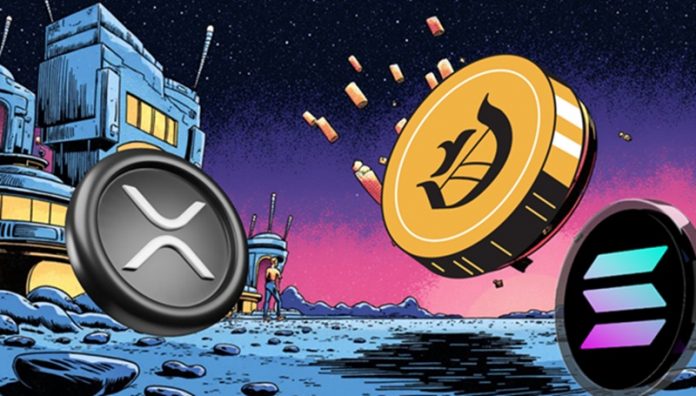
Reliable chains like Solana (SOL) and Ripple (XRP) usually find stable growth, but it’s often the unusual tokens that can truly make people millionaires. A crypto token making news in 2025 is called Salamanca (DON). At a fraction of a penny, Salamanca (DON) is surprisingly becoming the best meme coin on the BSC and may turn out to be a far better investment for $120 than SOL and XRP combined.

Salamanca (DON): The Meme Coin Rocket

As we reach May 2025, DON/USD is available at just $0.001258. Each dollar spent can get you numerous tokens due to the low price. Applying this idea, $120 at $0.001 per token would let you buy 40,000 DON. If the DON project meets its goals, the stack could have a huge value.

At present, Salamanca (DON) can be found on Gate.io, MEXC and PancakeSwap exchanges. Because it is available to many users, it has grown fast and attracted significant trading activity. However, the biggest factor for change could show up in the future.

The Binance Listing: The Next Big Catalyst

A Binance listing is the biggest dream for meme coins and Salamanca (DON) is almost there. People close to the project say that a Binance listing is very close. Previously, when meme tokens were listed on Binance, the resulting price action was remarkable because millions of investors could buy and the available liquidity increased.

The first trading on Binance could start the DON rocket, turning those cheap buys into something worth millions for investors to remember and be grateful for.

2000% Gains: Pipe Dream or Plausible?

Lots of talk in Salamanca (DON) these days is focused on the potential for prices to jump 20x from the current level. Even though the changes sound major, this market is famous for explosive growth, especially after topics turn viral on social media, with big exchange listings driving things further.

Should DON increase by 2,000%, the coin would reach $0.06 from its current $0.001 price. That money you spent to buy shares—$120—could climb to as much as $2,400 and if you got in at the low end, your earnings could be more than that.

Why Salamanca (DON) Has Better Chances for Growth Than SOL and XRP

Solana and Ripple are known as ‘blue-chip cryptos’ because they have a gigantic market value. They won’t likely become 20x or 50x higher in the foreseeable future, because of their exceptional size. Differently, Salamanca (DON) is a micro-cap that can rise fast as a group of people drive up its value and fuel sudden life-changing profits in a day.

Key Advantages:

  • Accessible to All: The fact that it costs just under $0.01 means you can try it out.
  • Ideal for traders that want large returns from trading.
  • A major rally may be set off if Binance ends up listing.
  • A Popular Group: Meme interest and tendency for viral posts lift demand.

The Meme of the Year in the BSC Space

Salamanca may not be another anonymous meme coin—it’s already being recognized as the Best BSC Meme of 2025. Meme tokens often get crowded, but DON’s marketing, strong community and fast exchange creation make it different from the rest. Being able to reflect the current trends and take part in the hype makes this project unique in the Binance Smart Chain community.

Conclusion

Salamanca (DON) is uniquely attractive since it is inexpensive, has great potential and features upcoming catalysts. Even though Solana and Ripple are reliable for the long term, exponential gain hunters in 2025 should watch DON closely. Once listed on Binance next, the 2,000% goal in view and with a 2025 award for Best BSC Meme, Salamanca (DON) could make a $120 stake worth $6,000—or even more.

For more information about Salamanca (DON), visit:

Scott Galloway Calls Elon Musk’s Tesla Fallout “One of the Greatest Brand Destructions of All Time”

0

Scott Galloway, a marketing professor at New York University and prominent commentator on tech industry dynamics, has described the reputational fallout surrounding Elon Musk and Tesla as “one of the greatest brand destructions of all time.”

Speaking on the Pivot podcast, which he co-hosts with journalist Kara Swisher, Galloway blamed Musk’s political entanglements—particularly his alignment with the Trump campaign and leadership role in the White House’s Department of Government Efficiency (DOGE)—for severely damaging the automaker’s brand.

“Tesla was a great brand,” Galloway said. “The rivers have reversed and the tide has turned entirely against him.”

Tesla, once the poster child of the clean-energy movement and innovation darling, has suffered a stunning collapse in public perception. Citing a recent Axios Harris Poll, Galloway noted that Tesla has fallen from 8th place in 2021 to 95th in 2025 among the 100 most visible companies in the U.S.—a dramatic decline many observers attribute to Musk’s politicization of his public image.

Over the past year, Musk poured millions into Donald Trump’s re-election campaign and appeared regularly alongside the former president during his transition. His subsequent appointment as the public face of DOGE—a cost-cutting policy unit tasked with reducing government spending—further entrenched Musk within Republican power circles.

While the move boosted his standing among conservative voters, it triggered an intense backlash from Tesla’s historically liberal customer base.

“He’s alienated the wrong people,” Galloway warned. “Three-quarters of Republicans would never consider buying an EV. So he’s cozied up to the people who aren’t interested in EVs.”

The fallout hasn’t been limited to public perception. Tesla’s financials have cratered. In its April earnings report, the company announced a 71% drop in earnings per share compared to the same period last year and a 20% decline in automotive revenue. Widespread protests have erupted at Tesla showrooms and dealerships across the country, with critics blaming Musk’s divisive politics for the shift in consumer sentiment.

Investor frustration has also intensified. Tesla’s stock has slumped significantly in recent months, and speculation grew that the company’s board may be exploring a leadership transition, though no such move has been confirmed. The damage has led to urgent calls for Musk to refocus on Tesla’s core business.

Over the weekend, Musk signaled a potential shift in priorities. Following major outages on X, the social media platform he owns, Musk posted, “Back to spending 24/7 at work and sleeping in conference/server/factory rooms. I must be super focused on /xAI and Tesla (plus Starship launch next week), as we have critical technologies rolling out.”

At the Qatar Economic Forum on Tuesday, Musk further indicated he would be stepping back from politics—for now.

“I plan to spend a lot less on political campaigns in the future,” he said. “If I see a reason to do political spending in the future, I will do it. I do not currently see a reason.”

However, it remains unclear whether Musk’s promise to return his attention to Tesla and his other ventures means he will abandon the polarizing rhetoric that has come to define his public persona in recent years. His sharp shift toward right-wing politics, ongoing presence on X, and vocal support for controversial policies have created a disconnect between Tesla’s brand and its traditional customer base—typically younger, urban, and left-leaning.

While Musk has previously demonstrated the ability to galvanize support and lead disruptive innovation, analysts warn that his credibility with key markets is eroding. Meanwhile, competitors in the electric vehicle space—including Rivian, Hyundai, and Ford—are seizing the opportunity to lure disaffected Tesla customers.

It is not clear whether Musk can repair the damage his politics has caused Tesla. What is clear, as Galloway put it, is that the tech billionaire has “forgotten who made Tesla what it was.”