DD
MM
YYYY

PAGES

DD
MM
YYYY

spot_img

PAGES

Home Blog Page 1263

Scott Galloway Calls Elon Musk’s Tesla Fallout “One of the Greatest Brand Destructions of All Time”

0

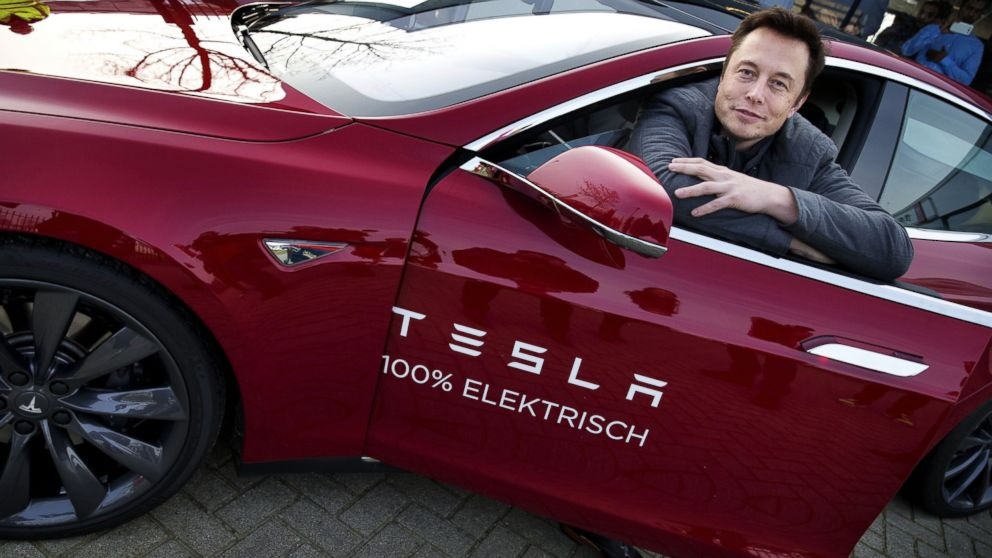
Scott Galloway, a marketing professor at New York University and prominent commentator on tech industry dynamics, has described the reputational fallout surrounding Elon Musk and Tesla as “one of the greatest brand destructions of all time.”

Speaking on the Pivot podcast, which he co-hosts with journalist Kara Swisher, Galloway blamed Musk’s political entanglements—particularly his alignment with the Trump campaign and leadership role in the White House’s Department of Government Efficiency (DOGE)—for severely damaging the automaker’s brand.

“Tesla was a great brand,” Galloway said. “The rivers have reversed and the tide has turned entirely against him.”

Tesla, once the poster child of the clean-energy movement and innovation darling, has suffered a stunning collapse in public perception. Citing a recent Axios Harris Poll, Galloway noted that Tesla has fallen from 8th place in 2021 to 95th in 2025 among the 100 most visible companies in the U.S.—a dramatic decline many observers attribute to Musk’s politicization of his public image.

Over the past year, Musk poured millions into Donald Trump’s re-election campaign and appeared regularly alongside the former president during his transition. His subsequent appointment as the public face of DOGE—a cost-cutting policy unit tasked with reducing government spending—further entrenched Musk within Republican power circles.

While the move boosted his standing among conservative voters, it triggered an intense backlash from Tesla’s historically liberal customer base.

“He’s alienated the wrong people,” Galloway warned. “Three-quarters of Republicans would never consider buying an EV. So he’s cozied up to the people who aren’t interested in EVs.”

The fallout hasn’t been limited to public perception. Tesla’s financials have cratered. In its April earnings report, the company announced a 71% drop in earnings per share compared to the same period last year and a 20% decline in automotive revenue. Widespread protests have erupted at Tesla showrooms and dealerships across the country, with critics blaming Musk’s divisive politics for the shift in consumer sentiment.

Investor frustration has also intensified. Tesla’s stock has slumped significantly in recent months, and speculation grew that the company’s board may be exploring a leadership transition, though no such move has been confirmed. The damage has led to urgent calls for Musk to refocus on Tesla’s core business.

Over the weekend, Musk signaled a potential shift in priorities. Following major outages on X, the social media platform he owns, Musk posted, “Back to spending 24/7 at work and sleeping in conference/server/factory rooms. I must be super focused on /xAI and Tesla (plus Starship launch next week), as we have critical technologies rolling out.”

At the Qatar Economic Forum on Tuesday, Musk further indicated he would be stepping back from politics—for now.

“I plan to spend a lot less on political campaigns in the future,” he said. “If I see a reason to do political spending in the future, I will do it. I do not currently see a reason.”

However, it remains unclear whether Musk’s promise to return his attention to Tesla and his other ventures means he will abandon the polarizing rhetoric that has come to define his public persona in recent years. His sharp shift toward right-wing politics, ongoing presence on X, and vocal support for controversial policies have created a disconnect between Tesla’s brand and its traditional customer base—typically younger, urban, and left-leaning.

While Musk has previously demonstrated the ability to galvanize support and lead disruptive innovation, analysts warn that his credibility with key markets is eroding. Meanwhile, competitors in the electric vehicle space—including Rivian, Hyundai, and Ford—are seizing the opportunity to lure disaffected Tesla customers.

It is not clear whether Musk can repair the damage his politics has caused Tesla. What is clear, as Galloway put it, is that the tech billionaire has “forgotten who made Tesla what it was.”

Tekedia Capital Welcomes Rulebase, Founded by Ex-Microsoft, ex-Goldman Sachs Nigerian Geeks

0

When two young men working in Goldman Sachs and Microsoft tell you they will leave the iconic companies for a startup, you really have limited options than to support them. Yes, Gideon Ebose and Chidi Williams pitched Rulebase to Tekedia Capital, and when we asked “are you leaving these giants for this startup”, they said “YES”. We asked again, and they responded in affirmative. Quickly, we said “we’re in…we will invest in this mission”. They raised $millions from global investors, and have since relocated from London to the U.S..

Our hypothesis is that Gideon and Chidi will build a modern infrastructure for most African fintech companies in the domain of QA, compliance, support, etc. And so far, some of the leading fintech companies are converging because when it comes to such vectors, local experience matters. The traction is super impressive and African fintech companies now have a modern CX partner. Of course, the mission goes beyond Africa as the product is a global one.

To learn more about Rulebase, go here https://rulebase.co/ . For Tekedia Capital, visit capital.tekedia.com .

HSBC’s Blockchain Tokenized Settlement Marks Significant Step Toward Modernizing Global Finance

0

HSBC Holdings launched Hong Kong’s first blockchain-based settlement service utilizing tokenized deposits on May 22, 2025. The service, developed in collaboration with Ant International, enables real-time, 24/7 payments in Hong Kong dollars (HKD) and US dollars (USD) for corporate clients, enhancing efficiency and security in transactions.

The platform, tested under the Hong Kong Monetary Authority’s (HKMA) Project Ensemble sandbox, converts bank cash deposits into digital tokens on HSBC’s Whale platform, with Ant International completing the first transaction. This initiative aligns with Hong Kong’s push to become a digital finance hub, supported by a new stablecoin law. HSBC plans to expand the service across Asia and Europe by the end of 2025.

The blockchain-based service enables 24/7 real-time settlements, eliminating delays associated with traditional banking systems, which often rely on batch processing or limited operating hours. By streamlining cross-border and interbank transactions, tokenized deposits reduce intermediary costs, potentially lowering fees for corporate clients. The service’s planned expansion across Asia and Europe by the end of 2025 suggests scalability, enabling broader adoption in global financial markets.

The use of distributed ledger technology (DLT) ensures immutable transaction records, reducing fraud risks and enhancing trust. Tokenized deposits on HSBC’s Whale platform provide transparent tracking, improving auditability for regulators and businesses. Hong Kong’s support through Project Ensemble and stablecoin legislation positions it as a leader in digital finance, potentially attracting fintech investments.

The service targets corporate clients initially, but successful implementation could pave the way for retail applications, broadening access to blockchain-based financial tools. Testing within the HKMA’s sandbox ensures compliance with regulatory standards, fostering trust and encouraging other banks to explore similar solutions. As HSBC expands, alignment with international regulations will be critical to ensure interoperability across jurisdictions.

Being the first in Hong Kong to launch this service gives HSBC a competitive edge in the digital finance race, potentially attracting clients from rival banks. Collaboration with Ant International strengthens the ecosystem, leveraging Ant’s expertise in digital payments. Smaller financial institutions or corporations with limited technological infrastructure may struggle to integrate blockchain solutions, widening the gap between large, tech-savvy banks like HSBC and smaller players.

Implementing and maintaining blockchain systems requires specialized skills, which may be scarce in certain regions or organizations. While long-term costs may decrease, the initial investment in blockchain infrastructure could be prohibitive for smaller firms, limiting access to these benefits. The service currently targets corporate clients, potentially leaving retail customers and smaller businesses behind until broader adoption occurs.

Different countries have varying levels of regulatory support for blockchain and tokenized assets. While Hong Kong is progressive, other regions may lag, creating uneven global adoption. Smaller institutions may face higher relative costs to meet regulatory requirements for blockchain-based systems, further entrenching disparities. Stakeholders, including businesses and regulators, need to understand blockchain technology to fully leverage its benefits. Lack of awareness could slow adoption in less tech-savvy markets.

Reliable internet and advanced computing resources are prerequisites for blockchain participation, which may exclude developing regions or underserved communities. Early adopters like HSBC could dominate the blockchain finance space, potentially marginalizing smaller competitors and reducing market diversity. Reliance on partners like Ant International could create vulnerabilities if these relationships falter or if partners exert disproportionate influence.

HSBC’s blockchain settlement service marks a significant step toward modernizing global finance, offering efficiency, security, and innovation. However, it also highlights a growing divide between large, well-resourced institutions and smaller players, as well as between regions with varying technological and regulatory readiness. To bridge this gap, efforts should focus on fostering inclusive infrastructure, providing education, and harmonizing regulations to ensure equitable access to blockchain’s benefits.

Okomu Oil Nets Record N39.9bn Profit in 2024 as Nigeria’s Palm Oil Sector Becomes the New Gold

2

Okomu Oil Palm Company Plc has recorded its highest-ever net profit of N39.9 billion in 2024, a staggering 94 percent increase from the N20.6 billion it posted in 2023, positioning the firm as one of the clear winners in Nigeria’s fast-rising palm oil sector, which is quietly turning into one of the country’s most profitable agribusiness frontiers.

Speaking at the company’s 45th Annual General Meeting held Thursday in Abuja, Board Chairman Gbenga Oyebode described 2024 as a remarkable year for the company despite an “exceptionally challenging” economic environment.

“The company’s net profit for 2024 on continuing operations increased by approximately 94 per cent,” Oyebode said. “This exceptional performance was mainly fueled by a sustained rise in the prices of our products. Crude Palm Oil (CPO) prices experienced approximately a 35 percent year-on-year increase, coupled with a 194 percent rise in rubber prices.”

He said Okomu generated N107.5 billion in revenue from palm oil products alone — up 60 percent from the previous year. But its cost of sales also surged, jumping by 73 percent to N40.8 billion due to inflationary pressure and high operational expenses, such as energy, logistics, and raw material inputs.

Nigeria’s Palm Oil Comeback

Despite these cost burdens, Okomu emerged stronger, and the result is now placing Nigeria’s palm oil sector in sharper focus. The industry, once in decline after Malaysia and Indonesia outpaced Nigeria in global production, is now seeing a revival — and Okomu’s performance is proof.

Palm oil, traditionally a staple in Nigerian households, is regaining its economic relevance. In recent years, top producers like Okomu Oil and Presco Plc have posted stellar results, benefitting from rising global prices, export demand, and import restrictions that have pushed local consumption higher.

In 2023, Presco Plc posted an all-time high revenue of N105.5 billion and a net profit of N34.8 billion — figures that mirrored Okomu’s strong upward trend. Like Okomu, Presco attributed its growth to a combination of price increases and operational expansion.

Nigeria’s palm oil output stands at about 1.4 million metric tons, but local demand is nearly 2.1 million metric tons, creating a significant shortfall that keeps domestic prices elevated. With the Central Bank of Nigeria (CBN) restricting access to forex for palm oil importers since 2015, local producers have the opportunity to command the market, enjoying price premiums and increased demand.

Between 2020 and 2024, average palm oil prices in Nigeria surged surged from about N400,000 per metric ton to over N950,000 per metric ton in 2024. The price then further increased to N1.3 million per metric ton by the end of 2024, driven by global supply constraints, currency devaluation, and the removal of fuel subsidies, which pushed up transportation and production costs.

This has made the business wildly profitable for operators with production scale, plantation assets, and strong market access.

Okomu says it currently maintains a total oil palm plantation area of 19,071 hectares, with 18,349 hectares already matured and 662 hectares classified as new or immature. The company also remains one of Nigeria’s few major rubber exporters, a strategic edge in an economy where access to foreign exchange has become increasingly elusive.

“We export the rubber we produce,” Oyebode noted. “And our company continues to be a significant investor in Edo State by supporting our local communities and shareholders.”

Dr Graham Hefer, the company’s Managing Director, said that Okomu’s success came despite “a high-inflation environment coupled with difficulties in accessing foreign exchange,” which negatively impacted the cost of sales. He credited the company’s ability to hedge against these challenges through price optimization and cost control.

“The company has done very well in managing these costs, generating better revenue, and we are able to provide better dividends to our shareholders,” Hefer said.

Nigeria’s Harsh Business Climate Still a Threat

Okomu’s record-breaking earnings came against a backdrop of severe macroeconomic volatility. In 2024, Nigeria witnessed the highest inflation in three decades — peaking at 34.8 percent — alongside a massive depreciation of the naira and sharp hikes in petrol prices following subsidy removal.

Oyebode warned that the business environment remains “demanding and hostile,” with mounting debt service costs eating into government revenue and inflation spiraling costs for both businesses and households.

However, these very distortions — especially import restrictions, rising local demand, and naira depreciation — are creating an unusual tailwind for agro-exporters and import-substitution players like Okomu.

A Sector Reawakening

Nigeria was once the world’s largest palm oil producer in the 1960s, contributing 43 percent of global output. Today, it contributes only 3-5% of global output. But the sector is stirring back to life, largely thanks to private-sector players reviving aging plantations, embracing mechanized processing, and capitalizing on rising local demand.

Recent figures from the National Bureau of Statistics (NBS) show that agriculture remains Nigeria’s second-largest contributor to GDP, with crop production — including palm oil — accounting for over 80 percent of the agricultural sector’s output.

The Nigerian Investment Promotion Commission (NIPC) recently listed palm oil as one of Nigeria’s top investment-ready sectors, citing rising profitability, an ever-growing market, and government support through incentives like the Anchor Borrowers’ Programme.

With producers like Okomu now showing that profits can rival those of industrial firms, analysts believe palm oil is fast becoming Nigeria’s new gold.

A Look into “Stop Trading, Retention, and Unfair Market Payoffs in Crypto Act of 2025”

0

President Donald Trump hosted a private dinner at his Trump National Golf Club in Virginia for the top 220 investors in his $TRUMP memecoin, a cryptocurrency launched just before his second inauguration in January 2025. The event, billed as an exclusive opportunity to dine with the president, drew significant controversy due to its potential for ethical conflicts, as the Trump family directly profits from the memecoin’s transactions.

Over 100 protesters gathered outside the venue, organized by groups like Public Citizen and Our Revolution, holding signs with messages like “Stop Crypto Corruption” and “America is Not for Sale,” accusing Trump of leveraging his presidency for personal gain. Hours before the dinner, Representative Maxine Waters, a California Democrat and ranking member of the House Financial Services Committee, introduced the “Stop Trading, Retention, and Unfair Market Payoffs in Crypto Act of 2025” (HR 3573), acronymized as the “Stop TRUMP in Crypto Act.”

The bill aims to prohibit the president, vice president, members of Congress, and their immediate families from issuing, holding, or profiting from cryptocurrencies while in office, citing concerns over “crypto crime” and potential foreign influence through anonymous transactions. The dinner, attended by notable crypto figures like Tron founder Justin Sun, sparked further criticism from Democratic lawmakers like Senators Chris Murphy and Elizabeth Warren, who called it a “pay-to-play” scheme and an “orgy of corruption.”

Critics highlighted the anonymity of many attendees, with some using pseudonyms like “Ogle,” and raised concerns about foreign nationals potentially buying access to the president, which could violate the U.S. Constitution’s foreign emoluments clause. The $TRUMP memecoin, which surged in value after the dinner announcement, has generated significant revenue for the Trump family, with estimates of over $324 million in trading fees since its launch.

However, the token’s volatility has led to substantial losses for many retail investors, with blockchain data indicating over 590,000 wallets losing nearly $4 billion. Despite White House claims that Trump’s assets are in a blind trust managed by his sons and that he acts in the public’s interest, the event has intensified scrutiny over his crypto ventures, including ties to World Liberty Financial and a stablecoin called USD1.

The dinner raises questions about potential violations of the U.S. Constitution’s foreign emoluments clause, which prohibits federal officeholders from accepting money from foreign governments without congressional consent. If foreign nationals attended the event or invested heavily in $TRUMP, it could trigger legal challenges, though proving direct influence would be complex due to the anonymity of crypto transactions.

The “Stop TRUMP in Crypto Act” (HR 3573), introduced by Rep. Maxine Waters, seeks to close loopholes allowing public officials to profit from cryptocurrencies. If passed, it would set a precedent for regulating digital assets held by elected officials, potentially facing resistance from pro-crypto lawmakers but gaining traction among those concerned about corruption. The bill’s specificity to sitting officials could limit its scope but may inspire broader crypto regulation.

The SEC and CFTC may investigate $TRUMP for market manipulation or unregistered securities offerings, given its volatility and the Trump family’s direct financial stake. The anonymous nature of some investors could also prompt probes into compliance with anti-money laundering (AML) and know-your-customer (KYC) regulations. The event deepens partisan divides, with Democrats framing it as evidence of corruption and Republicans likely defending it as a legitimate business venture.

This could fuel campaign narratives in future elections, with Democrats leveraging the issue to rally anti-Trump voters and Republicans portraying the bill as an overreach targeting the president. The perception of “pay-to-play” access erodes trust in government, especially among voters already skeptical of institutional integrity. Protests outside the dinner signal growing public discontent, which could pressure lawmakers to act but also galvanize Trump’s base, who may see the controversy as an attack on his entrepreneurial freedom.

The bill’s introduction may spur hearings or investigations by the House Financial Services Committee, potentially exposing more details about Trump’s crypto ventures. However, passage in a polarized Congress is uncertain, especially if Republicans hold key majorities. The $TRUMP memecoin’s volatility—surging post-dinner but causing $4 billion in losses for retail investors—highlights risks in celebrity-driven cryptocurrencies. This could dampen enthusiasm for memecoins, affect market sentiment, or prompt stricter oversight of similar projects.

The reported $324 million in trading fees underscores the significant personal financial stakes for the Trump family, potentially incentivizing further promotion of $TRUMP or related ventures like World Liberty Financial. However, legal or regulatory crackdowns could jeopardize these revenue streams. The losses incurred by over 590,000 wallets may deter retail investors from crypto markets, particularly in politically tied projects, while reinforcing skepticism about the stability of non-regulated digital assets.

Trump’s direct profit from $TRUMP, despite claims of a blind trust, raises ethical questions about a sitting president monetizing their influence. The dinner’s exclusivity for top investors suggests access to the president may be tied to financial contributions, undermining democratic principles. The anonymity of attendees, including figures like “Ogle,” fuels concerns about undisclosed foreign or corporate influence, challenging the integrity of public office.

If unaddressed, this event could normalize elected officials leveraging their positions for crypto profits, setting a dangerous precedent for governance and accountability. The controversy aligns with ongoing debates about cryptocurrency’s role in politics and governance, especially as digital assets gain mainstream traction. It may accelerate calls for comprehensive crypto regulation, balancing innovation with accountability.

Internationally, the event could draw scrutiny from allies and adversaries, with implications for U.S. credibility in global financial markets if foreign influence is confirmed. The dinner and the proposed bill highlight tensions between personal profit, public office, and emerging financial technologies, with potential ripple effects on policy, markets, and public trust. The outcome of HR 3573 and any related investigations will shape the intersection of cryptocurrency and political power in the U.S.