DD
MM
YYYY

PAGES

DD
MM
YYYY

spot_img

PAGES

Home Blog Page 1275

This Altcoin Could Be 2025’s Breakout Winner as XRP Smart Money Moves In

0

By market capitalization, XRP has been one of the top cryptocurrencies, boasting a loyal following and strong institutional ties. But recent price action tells a different story.

While XRP still holds value, many savvy investors, often called smart money, are starting to shift their focus. Their new target? A promising altcoin called RCO Finance (RCOF).

This quiet movement is picking up speed fast. As XRP struggles with price stagnation, capital is moving into earlier-stage opportunities like RCOF, where the room for explosive growth still exists. The writing is on the wall; XRP smart money is preparing for the next wave, and RCO Finance could lead the charge.

XRP’s Recent Struggles and the New Opportunity in RCOF

XRP hasn’t been able to break out in recent weeks. With regulatory noise in the background and a market favoring innovation over legacy, XRP has underperformed. Despite some minor gains this month, XRP has failed to impress, increasing less than 5% according to CoinGecko.

This underperformance has caused institutional and experienced crypto traders to explore other options. That’s where RCOF steps in.

RCOF is gaining serious momentum. Unlike XRP, which is more mature and heavily influenced by macro sentiment, RCO Finance is still in its early stages, offering much higher upside potential. And this isn’t just speculation; there’s solid money backing this shift.

$7.5 Million VC Buy-In: The Signal of Big Moves Ahead

One of the most significant developments that has set RCO Finance apart is its recent $7.5 million investment from a top-tier venture capital firm. This isn’t a fluke; it’s a sign. The backing came after RCOF’s explosive beta growth, which saw over 285,000 users register even before the platform’s official launch.

In total, RCOF has raised more than $14.7 million. That kind of early-stage capital injection from institutional players means one thing: confidence. Big investors are actively searching for the next altcoin with a massive upside, and RCOF is showing all the right signals.

Securing this much capital confirms that the project’s goals are being taken seriously and now has the means to grow at speed. For anyone sitting on the fence, this level of VC interest should be a wake-up call.

What Makes RCO Finance Different From XRP and Other Altcoins?

RCO Finance stands out because it’s not just another token. It’s building something that most altcoins simply can’t offer. First off, its low market cap gives it far more room to grow. It’s still early. RCOF is not just about hype; it’s delivering real products and tools that support every stage of the investor journey.

Over just four months, RCOF has introduced a complete set of tools, including AI-based portfolio insights, interactive demo trading, and auto-investing features. One standout feature is its access to exclusive Private Syndicate ETF Funds.

These are typically only available to high-net-worth individuals or institutions. RCOF holders, however, can pool their funds and invest in a diversified mix of ETFs across real estate, stocks, bonds, and more.

The platform also operates a decentralized governance model. Using $RCOF tokens, users can vote on major updates and help steer the platform’s direction.

This community involvement helps keep the project aligned with investors’ needs. It contrasts sharply with more centralized coins like XRP, where updates are often top-down.

On the DeFi side, RCOF’s use of automated market makers (AMMs) for trading means users can earn passive income by providing liquidity. It’s a win-win: investors earn while the platform stays liquid and active.

Leading the Next Wave in DeFi and AI-Powered Trading

With the DeFi space projected to have a multi-billion-dollar value, RCO Finance is making its mark as a serious player. The heart of this movement is its AI Robo Advisor. This tool helps users identify trends early and avoid costly mistakes.

Take the case of Pundi AI (PUNDIAI), which surged by over 210% in just one day. RCOF’s Robo Advisor would have flagged this move before most traders even noticed, allowing users to act early.

The AI also warns users when a coin shows signs of collapse, like Bluefin (BLUE), which recently dropped over 23% in a single day. The Robo Advisor’s ability to detect risk and reward gives RCOF users a unique edge in the crypto market.

The platform gives users access to over 120,000 different assets spread across more than 12,500 sectors. From equities and tokenized real estate to commodities, the platform offers data feeds from trusted sources like Bloomberg and Reuters.

Thanks to fractional asset ownership, everyday investors can now take advantage of opportunities that used to be out of reach.

Another major selling point is privacy. Unlike many platforms, RCOF allows users to trade without KYC, offering freedom and anonymity while maintaining security.
The Beta Platform Boom

The beta launch of RCO Finance’s beta platform drew a huge wave of interest, with user numbers spiking rapidly in a short time. Over 10,000 users joined in just days, quickly growing to 285,000. The surge in user adoption happened alongside RCOF’s fourth fundraising stage, which pulled in over $10 million.

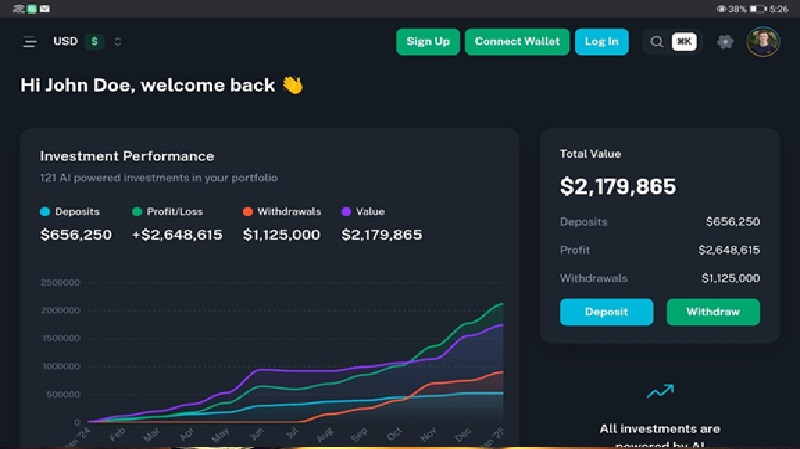
The beta version offers traders a full range of AI-powered tools. From managing large portfolios to spotting trade opportunities across global markets, it gives users everything they need to build a winning strategy. Unsurprisingly, so many are rushing to get in before the full launch.

Upcoming Features: Built for the Future of Trading

The roadmap ahead is just as exciting. Starting in Q2 2025, users will get access to AI-simulated trading, allowing them to test strategies before going live. A new leaderboard will spotlight the top demo traders, with monthly rewards to encourage healthy competition.

A detailed trade analytics dashboard is also on the way, helping users learn from past performance. By mid-May, RCOF’s CRM sync will personalize user experiences, while calendar-based profit tracking will help users plan long-term strategies.

Later in May, users will be able to fund demo trades with real crypto; no banks or KYC will be needed. By June, a real-time AI trading indicator will help detect key market patterns.

The August rollout will expand the platform into traditional markets, such as stocks and forex, making RCO Finance one of the few crypto projects truly bridging the gap between crypto and TradFi.

Don’t Miss Out: The Presale Is Heating Up

RCO Finance is currently in its sixth presale phase. Over 16.8 million tokens have already been sold, raising $17 million. Right now, tokens are priced at just $0.13, but once the next phase hits, the price jumps to $0.15.

Analysts believe this altcoin could deliver gains of up to 40,000% in the coming bull cycle. That means a $1,000 investment today could grow to $400,000 or more. And with whispers of a $100,000 giveaway, the excitement is building fast once the project hits its $250,000 milestone.

Even better, RCOF has passed a full audit by SolidProof, reinforcing trust in the platform’s security and legitimacy. With leverage opportunities and a growing presale price, this is one of the rare moments in crypto where everything lines up.

If you’re still watching from the sidelines, now’s the time to act. The token price has only gone up in the past few months, and all signs point to continued growth. Smart XRP investors are already moving in. The question is: will you join them before the next price hike?

Seize this massive opportunity and join the presale before it’s too late.

For more information about the RCO Finance (RCOF) Presale:

Visit RCO Finance Presale

Join The RCO Finance Community


The Invesco QQQ Trust Has Recovered to Its Pre-Liberation Day Price Levels

0

The Invesco QQQ Trust (QQQ), which tracks the Nasdaq-100 Index, has reportedly recovered to its pre-Liberation Day price levels, Liberation Day, associated with President Trump’s tariff announcements, led to significant market volatility, with the QQQ experiencing a sharp decline. The QQQ was trading around $506 on Election Day 2024 but dropped notably after the tariff-related sell-off, with a low of $402.39 in the past year.

As of May 2, 2025, the QQQ’s current price is $490.044, reflecting a recovery from its post-Liberation Day lows. This aligns with a 12% surge on April 9, 2025, following a 90-day tariff pause announcement, marking the Nasdaq-100’s largest single-day gain since January 2001. Over the past month, the QQQ has risen from $455.2 on April 2, 2025, to $490.044, a gain of approximately 7.66%. Year-to-date, however, the QQQ is down 7.54%, reflecting earlier tariff-driven losses.

The recovery is attributed to market stabilization after tariff uncertainties and strong performance in tech-heavy constituents like Apple, Microsoft, and Nvidia, which dominate the Nasdaq-100. However, volatility remains a concern due to the QQQ’s tech concentration and potential tariff-related swings, with key resistance levels near $503 and $540. Investors are advised to monitor these levels and broader market sentiment, as tariff policies continue to influence performance.

The recovery of the Invesco QQQ Trust (QQQ) ETF to pre-Liberation Day price levels (~$490 as of May 2, 2025) carries several implications for investors, markets, and the broader economy. The QQQ’s rebound, driven by a 90-day tariff pause, signals restored investor confidence in tech-heavy Nasdaq-100 constituents. However, the earlier tariff-induced sell-off highlights the ETF’s vulnerability to trade policy shocks.

Ongoing uncertainty around tariffs could sustain volatility, especially given the QQQ’s concentration in tech firms reliant on global supply chains. The recovery underscores the resilience of major QQQ holdings like Apple, Microsoft, and Nvidia, which have driven gains despite earlier tariff fears. Strong fundamentals in AI, cloud computing, and consumer tech suggest continued growth potential, but overvaluation risks persist, with the Nasdaq-100’s high P/E ratios compared to broader indices.

The QQQ’s 7.66% gain over the past month offers opportunities for short-term traders, but its year-to-date loss of 7.54% cautions long-term investors. Resistance levels near $503 and $540 may prompt profit-taking or hedging strategies. Diversification into less tech-exposed ETFs (e.g., SPY) could mitigate risks from sector-specific shocks.

The QQQ’s recovery aligns with broader market stabilization, suggesting tariffs’ immediate economic impact may be less severe than feared. However, prolonged trade tensions could raise input costs for tech firms, potentially squeezing margins and consumer prices, which may dampen growth in 2025.

Investors heavily weighted in QQQ may face elevated risk due to its tech concentration (over 50% of holdings). Active monitoring of tariff developments and macroeconomic indicators (e.g., inflation, Fed policy) is critical. Options strategies, such as protective puts, could hedge against renewed volatility.

The QQQ’s performance reflects broader U.S.-China trade dynamics, as tariffs impact tech supply chains. A sustained recovery may hinge on de-escalation of trade rhetoric, while escalation could trigger another sell-off, particularly for firms with heavy China exposure.

While the QQQ’s return to pre-Liberation Day levels reflects optimism and tech sector strength, it also underscores ongoing risks tied to trade policy and market concentration. Investors should balance growth opportunities with caution, prioritizing flexibility in response to evolving tariff and economic conditions.

Central Bank of Nigeria (CBN) Returns to Profit with N38.8bn in 2024 After Historic Loss, as Revaluation Gains Drive Recovery

0

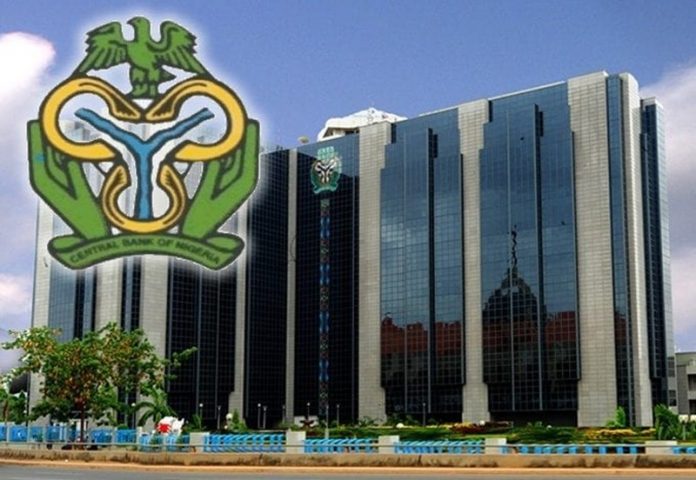
The Central Bank of Nigeria (CBN) has published its audited financial statements for the year ended 31 December 2024, showing a dramatic turnaround from the N1.55 trillion loss in 2023 to a profit after tax of N38.8 billion. The rebound reflects a shift in the bank’s fortunes amid persistent economic turbulence, foreign exchange volatility, and structural shifts in the country’s financial space.

The performance, audited by KPMG Professional Services and Ernst & Young, was largely powered by non-cash net unrealized foreign exchange revaluation gains, which rose by an eye-catching 225% to N11.28 trillion — forming the backbone of the CBN’s recovery narrative.

This foreign exchange revaluation alone accounted for the lion’s share of the total operating income, which soared to N15.1 trillion in 2024, up from N5.9 trillion the previous year.

The CBN also recorded a year-on-year increase of 29.16% in interest income, reaching N5.1 trillion from N3.95 trillion in 2023. However, this gain was undercut by a steep rise in interest expenses, which climbed by 185% to N4.979 trillion. The ballooning interest costs meant that net interest income declined sharply by 94%, falling to just N122.91 billion from N2.2 trillion in the previous financial year.

Despite the underlying strength in operating income, the financial statements reflect the CBN’s continued exposure to a volatile macroeconomic environment. The report noted that these external pressures shaped the overall performance of the Group and the Bank during the year under review.

The 2024 financial statements were prepared according to the International Financial Reporting Standards (IFRS) and complied with the updated guidelines of the Financial Reporting Council of Nigeria (FRC). The audit also aligned with the amended provisions of the Central Bank of Nigeria Act and the FRC Act, both of which were revised in 2023. The audit statements, dated April 30, 2025, were jointly signed by Akinyemi Ashade and Abiodun Akinnusi.

In accordance with the Fiscal Responsibility Act of 2011, the Central Bank stated that 20% of the reported profit would be credited to retained earnings, while the remaining 80% would be transferred to the Federal Government of Nigeria.

From a balance sheet perspective, the CBN’s consolidated total assets rose significantly to N117.60 trillion as of December 31, 2024, compared to N87.88 trillion a year earlier. When viewed separately, the Bank’s standalone assets increased to N117.44 trillion from N86.83 trillion. This asset growth was bolstered by a surge in the value of the Bank’s external reserves, which climbed to N54.73 trillion from N29.98 trillion in 2023. There was also a notable increase in IMF holdings of Special Drawing Rights (SDRs), which rose to N6.36 trillion, up from N3.95 trillion.

However, not all asset categories recorded positive movements. Cash and bank balances declined steeply to N34.72 billion from N111.15 billion in the previous year, while loans and receivables dropped to N10.96 trillion compared to N15.09 trillion in 2023. This reduction in credit exposure suggests a more cautious lending stance adopted during the period.

On the liabilities side, the CBN saw a sharp increase in banknotes and coins in circulation, which rose to N5.44 trillion from N3.65 trillion, underscoring rising currency demands in the economy. Total deposits also expanded significantly, reaching N52.38 trillion, up from N38.18 trillion. The Bank issued N24.27 trillion worth of its financial instruments, up from N17.40 trillion in 2023, further reflecting its active monetary operations. Other liabilities grew to N21.20 trillion from N19.02 trillion, while IMF-related liabilities more than doubled to N5.07 trillion from N2.52 trillion.

Total liabilities for the Group stood at N116.59 trillion in 2024, marking a substantial increase from N85.86 trillion the year before. This rise outpaced the increase in total assets, contributing to a deterioration in equity levels.

Group equity declined to N1.01 trillion from N2.01 trillion in 2023, while the standalone equity of the Bank also fell to N728.24 billion from N882.42 billion. The financial statements revealed that accumulated losses remained a concern, standing at N798.55 billion for the Bank, slightly down from N874.82 billion in the previous year. However, the Bank reported a fair value reserve of N800.78 billion at the close of the financial year.

Despite the lingering equity pressures and high liabilities, the audit opinion gave a clean bill of health to the financial statements, confirming that they present a true and fair view of the CBN’s financial position as of December 31, 2024. There were no qualifications or emphasis of matter paragraphs in the auditor’s report.

This latest financial disclosure by the CBN may play a critical role in shaping policy discourse around monetary and fiscal management. However, analysts note that the rebound in profitability, driven heavily by forex revaluation gains rather than core lending activities, highlights the continuing influence of currency dynamics on the Bank’s balance sheet. It also raises questions about the sustainability of such profits in the absence of a stable foreign exchange market and interest environment.

Apple Hit With Wall Street Downgrades as Tariff Pressures Mount and Growth Prospects Dim

0

Apple Inc. ended the week under pressure, with its shares tumbling 4.3% on Friday after two high-profile downgrades followed the company’s latest earnings report.

While the quarterly results were largely in line with Wall Street’s expectations, analysts flagged deepening worries over escalating tariffs, muted revenue forecasts, and the absence of a breakthrough growth catalyst. These concerns are shifting investor sentiment toward caution, even as Apple attempts to reassure markets.

Jefferies and Rosenblatt Securities both issued downgrades, citing tariff-related headwinds and the need for a new product cycle to reignite excitement around the stock. The downgrades came on the heels of Apple’s disclosure that it expects President Donald Trump’s China-era tariffs to add $900 million in costs to the company’s fiscal third quarter, a figure that highlights the mounting drag of geopolitical trade policies on Apple’s bottom line.

“Tariff impact will expand over time to create more earnings downside,” Jefferies analyst Edison Lee warned in a note that cut Apple to underperform—a rare bearish stance on one of the world’s most closely watched companies.

The $900 million in projected tariff-related costs marks one of the highest quarterly burdens Apple has attributed to import duties since the U.S.-China trade war escalated. Apple’s global supply chain, designed to maximize efficiency across China, India, and Vietnam—is now exposed to increased tariff-orchestrated uncertainty under Trump.

Jefferies noted that Apple’s guidance assumes existing tariffs remain static and do not broaden to cover imports from India and Vietnam, where Apple has been moving part of its assembly operations in recent years to hedge its exposure to China.

“These assumptions are unlikely to hold longer term, especially if there will be sectoral tariffs that are non-negotiable,” Lee added, pointing to the political risk looming over Apple’s manufacturing diversification strategy.

Weak China Sales and Tepid Outlook Deepen Worries

The earnings report also showed that sales in China fell short of expectations, reinforcing concerns that Apple is struggling in a market where local competitors like Huawei are surging and nationalistic sentiment is growing. Despite aggressive discounting and promotional campaigns in the region, Apple’s performance underscored its vulnerability to local market dynamics and geopolitical pushback.

More broadly, Apple told investors it expects revenue in the current quarter to grow in the “low- to mid-single-digit” range year over year. While modestly positive, the projection is notably cautious for a company that once routinely delivered double-digit revenue expansion. That forecast has led to renewed calls for Apple to deliver a new product that can re-energize growth and justify its premium stock valuation.

“Muted Growth” in an Unforgiving Market

Barton Crockett of Rosenblatt Securities also downgraded the stock, moving from buy to neutral, citing what he called “OK-muted growth” in a volatile regulatory and geopolitical environment.

“We’re left with a well-run company, with a need for an exciting new product to reinvigorate growth, trading at a premium multiple in a choppy tariff and regulatory environment,” Crockett wrote.

Crockett praised Apple’s resilience in iPhone sales, which outperformed some of the more pessimistic forecasts, and highlighted the company’s deep operational skill, particularly in its supply chain. But he emphasized that without a breakthrough, particularly one leveraging artificial intelligence, Apple risks being outshone by peers who are making more visible progress in AI-driven consumer applications.

“There needs to be an AI-driven sharp acceleration in iPhone sales for the stock to really outperform from here,” he said. “And as time has gone on, the argument for that seems to be fading.”

However, not all analysts are turning bearish. Citigroup’s Atif Malik viewed the results as decent given the broader trade environment, noting that Apple’s fundamentals “remain intact.” Malik described the guidance as conservative, suggesting that Apple could outperform if trade tensions ease or demand proves more resilient.

Even with some supportive voices, Wall Street is clearly more cautious about Apple than its mega-cap peers. Less than 60% of analysts tracked by Bloomberg now rate Apple as a buy, a stark contrast with names like Microsoft, Nvidia, or Alphabet, where bullish sentiment remains elevated. The downgrade from Jefferies brings the total number of “sell” ratings on Apple to four—a small but symbolically significant number for a company long seen as a market darling.

Apple’s declining analyst support also comes at a moment when Microsoft Corp. has surged ahead in both performance and perception. The software giant’s quarterly earnings were described as “blowout,” driving a rally that allowed Microsoft to surpass Apple in market value as of Friday’s open.

That symbolic shift further reinforces how investors are now looking for clear, AI-driven narratives—something Microsoft, with its heavy investment in OpenAI and integration of generative AI into core products, has leaned into with great effect.

The AI Gap and the Innovation Question

Apple’s next big opportunity likely hinges on its strategy for artificial intelligence. While the company has touted its custom silicon and on-device processing advantages, arguing that this makes AI more secure and private, there has yet to be a tangible, headline-grabbing product that channels those capabilities into consumer appeal. Competitors, meanwhile, have rolled out AI copilots, assistants, and integrations that have captured public and investor attention.

There are expectations that Apple may reveal more AI-forward features at its Worldwide Developers Conference (WWDC), but until then, analysts say the lack of a clear growth driver will continue to weigh on sentiment.

Dangote Targets $30bn Revenue in 2026, But Global Oil Slump and Trump’s Tariffs Threaten Export Hopes

0

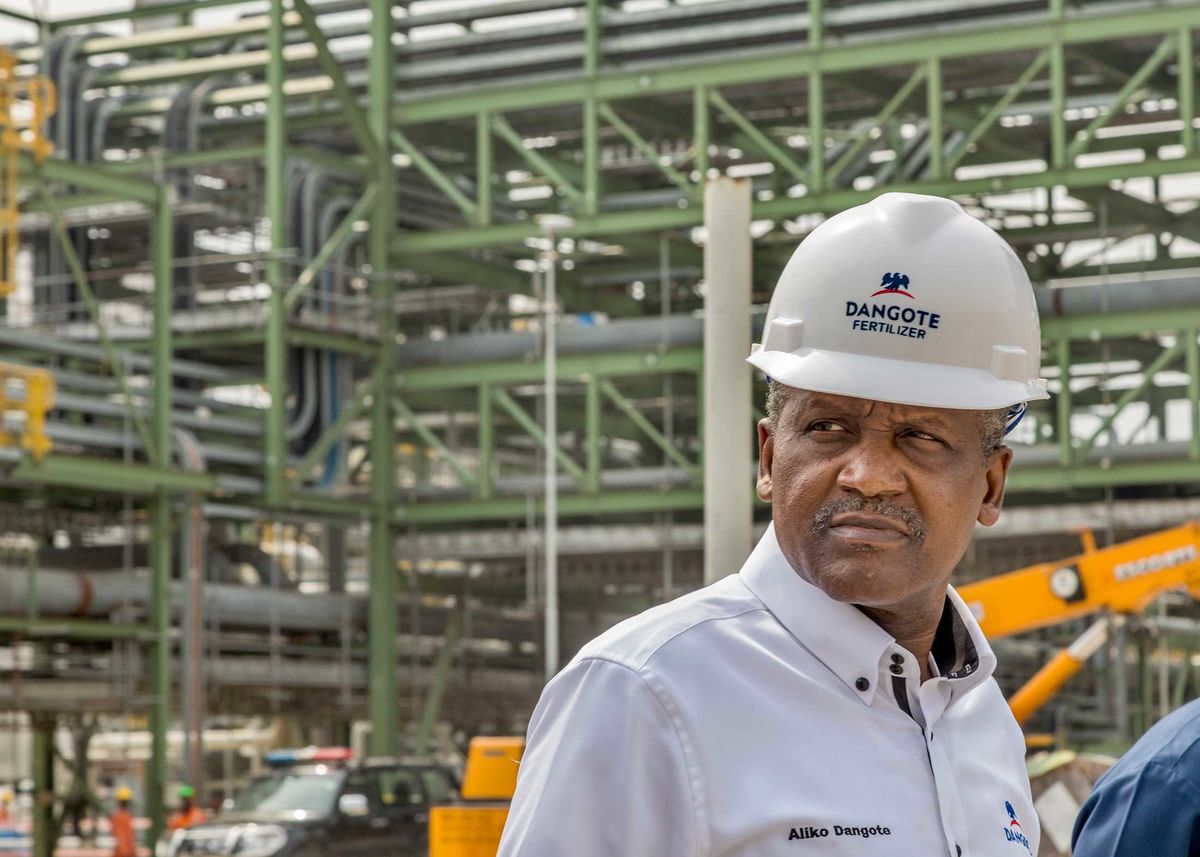
Africa’s richest man, Aliko Dangote, has projected that his vast business empire is on track to hit $30 billion in annual revenue by 2026. But that forecast, delivered at a venture capital forum in Lagos on Thursday, is already colliding with growing global economic instability—most notably, the disruptive trade policies of U.S. President Donald Trump and the resulting slump in oil prices.

Dangote, whose conglomerate spans cement, fertilizer, sugar, and now oil refining, said the group is expected to hit $25 billion in revenue next year, before adding another $5 billion by 2026, driven primarily by his new 650,000 barrels-per-day refinery in Lagos. That refinery, he stressed, would be a major foreign exchange earner, helping Nigeria reduce reliance on fuel imports and becoming a dominant force in petroleum exports.

But there’s a hitch. Trump’s renewed tariff wars are already rippling through global supply chains, and the oil market has begun to feel the strain. Last month, the international benchmark Brent crude slipped below $60 per barrel, its lowest point in nearly a year, reflecting a sharp drop in global demand amid rising geopolitical tensions and trade friction triggered by Washington’s aggressive economic nationalism.

This drop in oil prices casts a shadow over the very asset Dangote expects to power the group’s next growth chapter.

While the U.S. administration has so far excluded oil and gas from its latest wave of tariffs, the indirect damage is already evident. China, Europe, and other major markets have reduced energy purchases as they brace for a slowdown while manufacturing output has declined in key economies—two symptoms of a contracting global trading environment. All this means fewer buyers, lower prices, and increased competition.

Dangote did not ignore the turbulence entirely. He admitted that his fertilizer business, another crucial export arm, was briefly at risk due to U.S. tariff adjustments.

“I was worried about the U.S. tariff because 37% of our urea goes to the U.S.,” he said. “Luckily for us, Algeria was slapped with 30% tariffs.”

That stroke of fortune gave Nigerian urea a price advantage, but analysts warn that advantage could be fleeting, given how easily Washington’s policy shifts.

Meanwhile, Nigeria’s broader trade relationship with the U.S. hangs in the balance. A report by Strategy&, the consulting arm of PwC, warns that Nigeria could soon lose key trade privileges under the African Growth and Opportunity Act (AGOA), which allows duty-free exports to the U.S. The Trump administration has floated a review of AGOA, citing a need to protect American industries and reduce deficits. Nigeria, which exported $1.76 billion worth of goods under AGOA in 2024, mostly crude oil and agricultural produce, would be hard hit by any withdrawal.

Dangote told investors that the group’s cement production would rise to 62 million metric tons by next year, up from the current 53 million, putting his company ahead of Egyptian rivals and making it Africa’s largest cement producer. With total group assets now valued at $27.5 billion, according to the Bloomberg Billionaires Index, the business remains formidable in size and scope.

“We will be number one,” he said, referring to the group’s cement expansion. “We are building for the long term.”

However, questions persist about whether that scale is sufficient to weather a global downturn. Analysts are particularly skeptical about revenue targets tied to oil exports at a time when the market is growing more volatile.

The situation is particularly concerning for Nigeria, which is relying on Dangote’s refinery to ease pressure on its currency and reduce its crude-for-fuel swap bills, the stakes are even higher. The refinery is expected to curb the outflow of foreign exchange by replacing imported fuel with locally refined products, while simultaneously earning dollars from exports. But if global oil demand shrinks, or if U.S. protectionism intensifies, the expected gains may not materialize.

Nigeria’s policymakers are watching closely. According to the Strategy& report, titled Global Economic Policy Changes and Implications for Nigeria, the country must now develop contingency plans for a world where U.S. markets are less accessible. That could mean strengthening regional trade within Africa, speeding up refinery product standardization to meet European export requirements, and exploring non-oil exports.