DD
MM
YYYY

PAGES

DD
MM
YYYY

spot_img

PAGES

Home Blog Page 1278

23091% ROI in 78 Days? Dogecoin Investors Are Gobbling Up This Crypto That Will Yield Better Returns Than They Had with DOGE

0

Dogecoin investors have recently started focusing their attention on the upcoming potential market leader RXS which serves as Rexas Finance’s native token. Crypto enthusiasts are in a state of excitement because RXS has a staggering 23,091% growth forecast for the next 78 days according to market predictions. Forecasted explosive growth stems from Rexas Finance’s specialization in real-world asset (RWA) tokenization allowing access to massive market sectors such as gold and real estate. Dogecoin investors are turning to RXS because they want to benefit from utility-driven price boosts that surpass everything DOGE has delivered.

Rexas Finance: Redefining Crypto Utility

Rexas Finance provides an exceptional solution by creating a bridge that links conventional financial systems with decentralized ecosystems using real-world asset tokenization methods. RXS differs from Dogecoin and other meme coins because it incorporates genuine value through its substance-based platform. The system enables users to convert physical assets into digital format for easy fractional ownership and trading transactions. Professional investors along with former Dogecoin users are attracted to projects with real-world applications because they understand that utility drives lasting investment value.

The Role of RXS in the Rexas Finance Ecosystem

Rexas Finance operates around the RXS token that fulfills various essential functions throughout the platform. RXS functions beyond being a mere speculative asset since it powers all transaction processes and governance operations and incentive structures. Decentralized finance (DeFi) activities including staking and lending and borrowing are accessible through RXS tokens to token holders. RXS functions as an essential component that maintains its position throughout every operation of the platform. The ongoing presale has reached its twelfth stage which proves highly successful as it completed 92.27% and generated $48,268,760 from a $56 million target while selling 461,341,512 tokens out of 500 million available.

Real-World Asset Tokenization: The Game Changer

The groundbreaking element of Rexas Finance emerges from its leadership in turning physical assets into digital tokens. Rexas Finance makes inaccessible markets accessible to worldwide investors through its digital tokenization of physical assets. The innovative technology provides complete transparency and efficiency and security to asset management while removing middlemen and reducing operational costs. RXS provides users with an AI-supported security system and a no-code token creation tool that enables secure and accessible investment opportunities for all types of investors from retail to institutional. The anticipated 23,091% increase in RXS value will be supported by the rising demand for on-chain assets that bring more utility to the token. Dogecoin investors used to rely on meme-based price increases but they now see stronger market potential in RXS because of its practical real-world applications.

 Utilities and Future Prospects for RXS

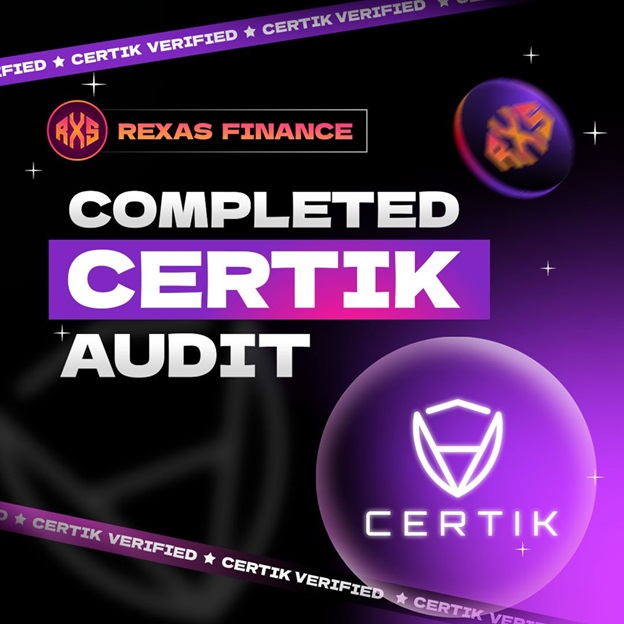
The RXS platform provides multiple utility tools that strengthen its overall worth and functionality. The token enables governance features which let token holders determine platform direction through decentralized voting mechanisms. Staking RXS generates yield rewards for tokenholders with its built-in DeFi integration maintaining constant utility and enhanced liquidity. The strategic price entry opportunity exists now for investors who want to achieve maximum profits because RXS will list at $0.25 on June 19, 2025 with its current presale price at $0.200. RXS maintains its credibility as a serious investment asset because it already appears on CoinMarketCap and CoinGecko platforms while undergoing a CertiK audit. The RXS presale reflects widespread investor confidence through its 92.27% completion rate and $48,268,760 raised which suggests great potential for the 23,091% surge ahead.
Conclusion: The 23,091% Opportunity Beckons

Rexas Finance represents a project that transforms digital asset investments while the crypto market continues to advance. Dogecoin investors moving to RXS demonstrates that the market is evolving into a more mature stage which emphasizes practical value and actual market worth above short-lived popularity. The RXS platform demonstrates readiness for an outstanding 23,091% market value increase within 78 days because of its completed presale and advanced RWA tokenization and robust ecosystem features.


Website: https://rexas.com

Whitepaper: https://rexas.com/rexas-whitepaper.pdf

Twitter/X: https://x.com/rexasfinance

Telegram: https://t.me/rexasfinance

Elon Musk warns AI could face major power crunch by 2026 as xAI races to build gigawatt-scale data center in Memphis

0

Elon Musk has warned that the rapid expansion of artificial intelligence (AI) could soon hit a wall—not because of software or hardware limitations, but due to a looming shortage of electricity.

In an interview with CNBC on Tuesday, the billionaire founder of xAI said the industry may begin to feel the effects of a power generation crisis by mid to late 2025 as data centers demand more energy than the current U.S. grid can reliably supply.

Musk, who has previously sounded alarms over AI’s unchecked growth, said his AI startup xAI is now working to build a gigawatt-scale data center outside Memphis, Tennessee—a facility that will match the capacity of a standard U.S. nuclear power plant. He expects the center to be operational in six to nine months.

“As we solve the transformer shortage, there will be the fundamental electricity generation shortage,” Musk said. “My guess is people are going to start hitting challenges with power generation maybe by the middle of next year, end of next year.”

The tech mogul identified three bottlenecks to scaling AI: high-performance chips, transformers (which modulate voltage from power plants to make it usable by computers), and ultimately, the availability of electricity itself.

Google Also Raised the Alarm Earlier

Musk’s concerns echo warnings raised by Alphabet’s Google in February. At a conference hosted by the Nuclear Energy Institute, Caroline Golin, Google’s global head of energy market development, said the company realized it could not sustain data center growth using existing grid capacity—especially as weather-dependent renewables like solar and wind create volatility.

“We ran into a very stark reality that we didn’t have enough capacity on the system to power our data centers in the short term and then potentially in the long term,” Golin said.

In response, Google began exploring nuclear energy options to ensure reliable, round-the-clock electricity for its expanding infrastructure. The tech giant is now among a growing number of companies considering partnerships with nuclear operators to safeguard their AI ambitions.

China Builds, U.S. Lags

According to Musk, while the United States grapples with stagnant electricity generation, China is charging ahead.

“China power generation looks like a rocket going to orbit and U.S. power generation is flat,” he told CNBC.

The contrast reflects broader geopolitical tensions around AI supremacy. As both countries race to lead in AI innovation, energy infrastructure is emerging as a critical frontier.

To bridge the gap in Memphis, xAI is deploying natural gas turbines to help power its Colossus data center. But the company’s approach has already stirred controversy. Environmental advocates accuse xAI of violating the Clean Air Act and operating as a “major source of air pollution” without necessary permits or mitigation technology.

The use of fossil fuel-based energy, particularly without adequate oversight, has raised concerns about the climate impact of powering AI. Critics say the AI gold rush could worsen emissions and undermine efforts to decarbonize the energy sector.

Utilities Divided on Demand Outlook

While utilities such as Dominion Energy report strong, sustained demand for data center power—especially in hotbeds like Northern Virginia—others urge caution.

Dominion, which serves the world’s largest data center market, told investors during its recent earnings call that demand is showing no signs of slowing down, despite broader macroeconomic jitters. The company has aggressively expanded its infrastructure to meet this need.

However, Constellation Energy, the largest operator of nuclear power plants in the U.S., isn’t as optimistic. CEO Joe Dominguez cautioned that some forecasts may be overly bullish as developers court multiple jurisdictions, leading to double-counting in demand estimates.

“I just have to tell you, folks, I think the load is being overstated,” Dominguez said during the company’s Q1 earnings call. “We need to pump the brakes here.”

However, Musk’s comments highlight a growing tension in the AI industry: the very technology that promises to reshape the world could be undermined by the infrastructure needed to sustain it.

Between soaring chip demand, constrained energy grids, and intensifying environmental scrutiny, companies at the forefront of AI face a balancing act. The challenge is no longer just about building smarter models—but about securing the physical power to run them. This situation has stirred questions on whether the U.S. grid can keep up with the AI age, or will the nation’s next tech revolution stall at the switch.

Ecobank Raises Additional $125m Through Eurobond Tap, Tightens Yield Amid Strong Global Investor Demand

0

Ecobank Transnational Incorporated (ETI) has announced the successful completion of a $125 million tap of its existing $400 million 10.125% Notes due October 15, 2029, bringing the total size of the offering to $525 million.

The tap, priced at a premium of 102.634, carries an effective yield of 9.375%, 100 basis points below the original issuance, highlighting improved market confidence in the Pan-African banking group.

In a press release issued on May 19, 2025, ETI stated that the newly issued Notes will be consolidated and form a single series with the original $400 million Eurobond issued in October 2024. The proceeds of the tap will be primarily used to refinance upcoming debt maturities, in line with the bank’s stated objective to optimize its capital structure.

“This tap enhances our financial flexibility and further reinforces our presence in the global capital markets,” said Jeremy Awori, Group CEO of ETI. He described the transaction as “a clear demonstration of investor confidence in our credit profile and long-term strategy.”

According to the bank, the transaction received strong support from a broad and geographically diverse investor base. Final order books were more than twice oversubscribed, with participation from institutional investors across Africa, Europe, the United States, Asia, and the Middle East. The subscriber mix included asset managers, development finance institutions (DFIs), and banks.

“The issuance supports ETI’s goal of extending debt maturity and diversifying funding sources,” said Ayo Adepoju, Group Chief Financial Officer. He emphasized that this strategic move was part of the Group’s ongoing efforts to improve its liability profile and balance sheet strength amid tightening financial conditions globally.

The bank also acknowledged the critical roles played by its financial partners in the execution of the transaction.

“We appreciate the support of Absa, the Africa Finance Corporation (AFC), Afreximbank, Mashreq, Standard Chartered, EDC, and Renaissance Capital Africa in making this transaction successful,” Adepoju added.

Favorable Pricing Signals Market Confidence

The $125 million tap was priced at a yield of 9.375%, which is significantly lower than the 10.125% yield on the original notes issued in 2024. The pricing improvement is indicative of both a favorable shift in market sentiment and ETI’s enhanced standing among international debt investors. The decision to issue at a premium—102.634—allowed the bank to raise capital at a lower cost while offering additional liquidity to the existing bondholders.

This latest issuance follows ETI’s broader refinancing strategy to extend its debt maturity profile and alleviate short- to medium-term repayment pressures, particularly in light of ongoing macroeconomic volatility across African markets.

Rising Borrowing Costs, FX Exposure Remain Risks

Despite the favorable pricing of the tap, the issuance adds to ETI’s stock of USD-denominated liabilities, which exposes the Group to foreign exchange and interest rate risks, especially in Nigeria and other African markets where currencies have seen significant depreciation over the past year.

According to ETI’s unaudited financial results for the first quarter of 2025, the Group’s total borrowed funds stood at N3.341 trillion as of March 31, 2025—slightly higher than N3.333 trillion recorded in December 2024. The Q1 2025 interest expense on borrowings amounted to N70.18 billion (US$45.94 million), marginally above the N69.54 billion (US$51.83 million) reported in Q1 2024. While the naira value of the interest expense rose, the USD figure slightly declined, suggesting the impact of exchange rate adjustments.

For the full year 2024, the Group’s total interest expense on borrowings surged to N305.7 billion (US$205 million), compared to N117.9 billion (US$182 million) in 2023. The increase was driven by a combination of higher debt levels and rising global interest rates, which affected the cost of funding for African corporates.

Strategic Debt Management Amid Volatility

The additional issuance offers ETI temporary relief in managing its upcoming maturities, but analysts caution that currency depreciation, inflationary pressures, and global monetary tightening remain challenges for the Group.

Ecobank is attempting to mitigate future volatility in interest and FX markets by refinancing at a lower yield and locking in longer-term funding. However, the bank’s growing exposure to hard currency liabilities also means that any sharp depreciation in local currencies could significantly increase debt servicing costs in local terms.

Ecobank’s management has reaffirmed its commitment to proactive balance sheet management. In an earlier note to investors, the Group said it would “continue to explore opportunities to strengthen capital buffers, manage risks, and improve resilience in the face of macroeconomic uncertainties.”

With this latest tap, ETI has not only achieved a favorable refinancing outcome but also signaled a degree of credit strength that allows it to attract diverse global capital despite tightening global financial conditions.

The outcome of this deal is expected to give the bank room to focus on growth areas across its 33-country footprint while continuing to closely monitor liquidity, FX exposure, and global debt markets.

Dangote Refinery Partners Vinmar to Export Polypropylene Globally, Eyes $1.2bn Market

0

Dangote Refinery and Petrochemicals has entered an exclusive distribution partnership with U.S.-based Premier Product Marketing LLC, a Vinmar Group company, to supply its newly produced polypropylene to markets outside Nigeria and Africa.

The announcement marks another milestone in the company’s expansion strategy, following the start-up of its polypropylene facility in Lekki, Lagos, two months ago.

The deal, announced in a joint statement by Dangote Industries and Vinmar International LLC, coincides with the official launch of polypropylene production at the Lekki complex. With this move, Dangote aims to position its polypropylene as a globally competitive product, manufactured using INEOS’s INNOVENE technology to deliver high-grade materials for packaging, automotive parts, textiles, and construction applications.

“We’re pleased to partner Vinmar to introduce Dangote Polypropylene™ to the global markets,” said Hajiya Fatima Aliko Dangote, Group Executive Director (Commercial), Dangote Group. “The Dangote Polypropylene will follow other Dangote products to become a global brand known for quality and reliability.”

For Vinmar, a petrochemical distribution giant with a global reach in over 110 countries, the deal builds on an existing long-term relationship with the Nigerian conglomerate.

“Vinmar has been honoured to count Dangote as a valued customer in Nigeria for decades, and we are thrilled to now support the global launch of Dangote Polypropylene,” said Vishal Goradia, CEO of Vinmar Group.

$2 Billion Plant Eyes Global Share

The polypropylene plant, worth $2 billion, is part of Dangote’s broader $19 billion refinery and petrochemical complex situated in Ibeju-Lekki. The facility is designed to produce up to 900,000 metric tons of polypropylene annually, across 77 different grades, with a targeted turnover of $1.2 billion.

According to reports by S&P Global Commodity Insights, the commissioning of the polypropylene units is one of the final milestones in the complex’s phased operational rollout that began in early 2024. The polypropylene production alone could significantly shift dynamics in Nigeria’s plastic packaging and processing industries, where imports and the local output from Indorama’s Port Harcourt facility have dominated the market.

Two market sources told Platts, a division of S&P Global, that the refinery began distributing its polypropylene in 25kg bags and was already disrupting domestic supply lines. A trade source disclosed that Dangote Group began offering supplies in February, well before full production was announced in March.

The Dangote Group is aiming to cover all of Nigeria’s estimated 250,000 metric tons of annual polypropylene demand through the local facility, drastically reducing the country’s dependence on imports. If successful, this could leave only excess production for export, hence the significance of the Vinmar deal.

Potential Impact on Local and Global Markets

The scale of the new facility suggests that Dangote may be preparing to compete globally, especially in the polypropylene homopolymer segment, where the Middle East has long held sway as the primary supplier to African and some European markets.

S&P Global warned that market participants are already wary of how quickly the Dangote production could capture market share from incumbent suppliers. The complex is designed to run two polypropylene units: one with a 500,000 mt/year capacity and the other 330,000 mt/year, making it the largest single polypropylene site in Africa once fully operational.

Meanwhile, in the local market, price volatility is expected in the short term, as the influx of Dangote’s product could lead to a correction in prices previously inflated by limited supply and high import costs. Industry watchers say the shift could either prompt more local downstream investments or squeeze smaller processors unable to adjust to new supply dynamics.

For Aliko Dangote, the push into global polypropylene markets is part of a broader ambition to reduce Nigeria’s dependence on imports, not just for refined fuels, but also for petrochemical products that form the backbone of multiple industrial sectors.

This strategy aligns with the government’s long-standing drive to promote industrialization through backward integration. However, unlike most other government-backed ventures, the Dangote complex is privately financed and built at scale, making it more likely to deliver real impact in terms of supply substitution and exports.

With the export leg of the polypropylene rollout now underway, attention may soon shift to how Dangote manages production consistency, supply logistics, and international pricing. However, this move signals that the company is betting that its brand, backed by large-scale investment and a trusted international partner, can earn a firm spot in the global petrochemical value chain.

Dissolution of the UTI on Libra Token Rugpull Risks Exacerbating Argentina’s Political and Social Divides

0
TOPSHOT - Argentine presidential candidate for the La Libertad Avanza alliance Javier Milei waves to supporters after winning the presidential election runoff at his party headquarters in Buenos Aires on November 19, 2023. Libertarian outsider Javier Milei pulled off a massive upset Sunday with a resounding win in Argentina's presidential election, a stinging rebuke of the traditional parties that have overseen decades of economic decline. (Photo by Luis ROBAYO / AFP) (Photo by LUIS ROBAYO/AFP via Getty Images)

Argentine President Javier Milei has dismantled the Investigative Task Force (UTI), a body established three months ago to probe the $Libra cryptocurrency scandal, as per a decree published in the official gazette, signed by Milei and Justice Minister Mariano Cúneo Libarona. The UTI was tasked with investigating allegations of irregularities after Milei promoted the $Libra token on X in February 2025, which led to a rapid spike and subsequent crash in its value, causing significant investor losses.

The $Libra scandal, often referred to as “Cryptogate,” erupted when Milei endorsed the cryptocurrency, claiming it would boost Argentina’s economy by funding small businesses. The token’s value surged from $0.000001 to $5.20 within 40 minutes but plummeted to $0.99 within hours, resulting in approximately $250 million in losses for an estimated 74,000 investors. Blockchain researchers reported that eight digital wallets linked to the token’s creators withdrew around $99 million, with allegations of a “rug pull” scam where insiders sold off their holdings after inflating the price.

Milei has faced significant backlash, including over 100 criminal complaints alleging fraud, calls for impeachment, and investigations in Argentina, the U.S., and Spain. He has denied wrongdoing, claiming he acted in good faith and was unaware of the project’s details, and ordered the Anti-Corruption Office to investigate. Critics, including opposition lawmakers and former President Cristina Fernández de Kirchner, have accused him of participating in a scam, with some labeling his actions a violation of Argentina’s Public Ethics Law.

The decision to shut down the UTI has raised concerns about transparency and accountability, as it was meant to scrutinize the roles of Milei and his sister, Karina, in the scandal. No official reason for the dissolution was detailed in the decree, but it coincides with ongoing legal and political challenges, including a federal judge’s investigation and international lawsuits. The move has sparked further criticism, with opponents arguing it undermines efforts to address the scandal’s fallout.

The dissolution of the Investigative Task Force (UTI) probing the $Libra cryptocurrency scandal under Argentine President Javier Milei carries significant implications and has deepened existing political and social divides in Argentina. Shutting down the UTI, which was tasked with investigating Milei’s role in the $Libra scandal, fuels perceptions of a cover-up. This move risks further eroding public confidence in Milei’s administration, already under scrutiny for promoting a cryptocurrency that led to $250 million in investor losses.

The lack of transparency, coupled with Milei’s denial of wrongdoing and the absence of a clear explanation for dissolving the UTI, may intensify accusations of corruption or mismanagement, damaging his credibility both domestically and internationally. The decision has amplified calls for Milei’s impeachment, with opposition figures like Cristina Fernández de Kirchner labeling it a deliberate obstruction of justice. This could escalate political instability, especially as Milei’s libertarian coalition, La Libertad Avanza, holds a fragile minority in Congress.

The scandal and UTI’s closure may weaken Milei’s ability to push his economic reform agenda, including his push for dollarization and deregulation, as public and legislative support wanes. The ongoing investigations in Argentina, the U.S., and Spain into the $Libra scandal are unlikely to be affected by the UTI’s dissolution, as they are led by independent judicial bodies or foreign authorities. However, the move could complicate Argentina’s international relations, particularly with countries pursuing lawsuits over the scam.

Domestically, the federal judge overseeing the case may face pressure to intensify scrutiny, potentially leading to legal challenges for Milei and his sister, Karina, who has been implicated in related allegations. The $Libra scandal has already cost an estimated 74,000 investors significant losses, further straining Argentina’s fragile economy, which is grappling with hyperinflation and currency devaluation. The UTI’s closure may deter future investment in Argentine markets, as it signals weak accountability for financial misconduct.

Milei’s initial promotion of $Libra as a tool to fund small businesses now appears contradictory to his libertarian free-market principles, potentially alienating his core supporters who expected economic innovation. The scandal has reignited discussions about regulating cryptocurrencies in Argentina, where crypto adoption has grown amid economic instability. The UTI’s dissolution may delay or derail efforts to establish oversight, leaving investors vulnerable to similar scams in the future.

Milei’s base, largely libertarian and anti-establishment, may view the UTI’s closure as a pragmatic move to avoid a politicized witch hunt. They argue that Milei acted in good faith and that the scandal is being exploited by opponents to undermine his reformist agenda. Opposition groups, including Peronists and center-left coalitions, see the UTI’s dissolution as evidence of Milei’s complicity or an attempt to evade responsibility. They argue it violates public ethics and democratic norms, with figures like Fernández de Kirchner accusing Milei of orchestrating a scam. This has fueled demands for impeachment and protests in Buenos Aires.

lower-income groups who lost savings in $Libra feel abandoned, while Milei’s middle-class and entrepreneurial supporters may prioritize his broader economic vision over the scandal. The judiciary and Anti-Corruption Office now face increased pressure to deliver results, as the UTI’s dissolution shifts responsibility to these bodies. This creates a rift between Milei’s executive branch and independent institutions, with potential for further legal battles.

The move also highlights tensions between Milei’s libertarian ideology, which favors minimal government intervention, and the need for state mechanisms to address financial misconduct, deepening ideological debates. Internationally, the scandal and UTI’s closure have drawn scrutiny from investors and regulators in the U.S. and Spain, where lawsuits are pending. This contrasts with domestic narratives, where Milei’s supporters frame the issue as a distraction from his economic reforms, while critics see it as a global embarrassment.

The dissolution of the UTI risks exacerbating Argentina’s political and social divides, undermining Milei’s credibility, and stalling economic recovery efforts. It intensifies the clash between his libertarian base and a broad opposition, while leaving unresolved questions about accountability in the $Libra scandal. The fallout could reshape Argentina’s political landscape and influence future cryptocurrency regulation, with Milei’s leadership increasingly under strain as legal and public pressures mount.