DD
MM
YYYY

PAGES

DD
MM
YYYY

spot_img

PAGES

Home Blog Page 1281

PTDF Opens 2025/2026 Overseas Postgraduate Scholarship Applications for Nigerian Graduates

0

The Petroleum Technology Development Fund (PTDF) has announced the commencement of applications for the 2025/2026 edition of its Overseas Postgraduate Scholarship Scheme (OSS), aimed at developing local expertise for Nigeria’s oil and gas sector. The call for applications was made public in a statement posted on PTDF’s official X platform.

According to the Fund, the OSS programme has been restructured to align more closely with national goals of domestic capacity development. The scheme now prioritizes cultivating a new generation of Nigerian professionals equipped with advanced knowledge and skills to support the country’s energy industry.

“The Petroleum Technology Development Fund (PTDF) is pleased to bring to the notice of the public that the applications for the 2025/2026 Overseas Postgraduate Scholarship Scheme (OSS) has commenced,” the Fund said in its announcement.

Destinations and Structure of Study

Scholarships under the 2025/2026 OSS will be available in selected countries, including the United Kingdom, Germany, France, and Malaysia. The scheme covers both Masters’ and Doctoral degree programmes in fields relevant to the petroleum and energy sectors.

MSc programmes will be fully funded in the UK, Germany, France, and Malaysia. For PhD studies, scholarships are available in Germany, France, and Malaysia.

However, for candidates seeking a PhD in the United Kingdom, the scholarship will only be available through a Split-Site Programme, hosted in collaboration with the PTDF College of Petroleum and Energy Studies in Kaduna (CPESK) and three UK partner institutions: Robert Gordon University, University of Strathclyde, and University of Portsmouth.

What the Scholarship Covers

The PTDF has confirmed that successful applicants will receive full financial support for the duration of their studies. The package includes:

  • Round-trip flight tickets
  • Health insurance coverage
  • Full tuition and bench fees where applicable
  • Living expenses for the entire period of study

The scheme is targeted at Nigerian graduates with strong academic records, pursuing postgraduate degrees in petroleum-related disciplines such as engineering, geosciences, environmental sciences, energy management, and renewable energy.

How to Apply

Applications are to be submitted online via the PTDF Scholarship Management Portal. The deadline for submission is June 4, 2025.

Prospective candidates are advised to visit the PTDF website for detailed information on eligibility criteria, required documents, and the full list of partner institutions.

About the PTDF

The Petroleum Technology Development Fund is a statutory agency under the Federal Ministry of Petroleum Resources. Established to promote the development of indigenous human capacity for Nigeria’s oil and gas industry, the Fund has consistently supported training through scholarship awards, academic grants, and research funding.

Over the years, PTDF has sponsored thousands of Nigerians to pursue postgraduate studies both locally and internationally in critical sectors supporting oil exploration, production, refining, and alternative energy. The Fund also supports academic infrastructure development and manages specialized institutions like the CPESK, aimed at reducing Nigeria’s dependence on expatriate technical labor.

The restructuring of the OSS underlines PTDF’s shift toward strategic talent development—equipping Nigerians with the skills and global exposure needed to take on leadership roles in the evolving energy sector.

For further updates, candidates can follow PTDF on social media or visit the official website: www.ptdf.gov.ng.

“Asking A Man With An Ulcer To Go On A Fasting Mission:” Rewane Counters IMF Admonition to Nigeria to Curtail Spending

0

The International Monetary Fund (IMF) has called on Nigeria to exercise greater fiscal discipline, urging the Tinubu-led government to optimize public expenditure amid growing concerns about inefficient resource allocation.

However, some of the country’s top economists say this is not the time to be overly frugal—warning that cutting back too hard could further strain a fragile economy.

The IMF’s warning came during the 2025 IMF/World Bank Spring Meetings in Washington, D.C., where Davide Furceri, Division Chief in the Fiscal Affairs Department, commended Nigeria’s difficult fiscal reforms, such as subsidy removal, but stressed that these must be followed by “continued discipline in government expenditure.”

“We understand that many countries, including Nigeria, face pressing spending needs. But spending must be done wisely, which means stronger prioritization and greater efficiency in resource allocation,” Furceri said.

This statement, while appearing prudent, has sparked a wave of dissent among local economists, many of whom argue that Nigeria’s economic condition calls for a more pragmatic, not restrictive, approach.

One of the strongest responses came from Bismarck Rewane, Chief Executive Officer of Financial Derivatives Company, who, while acknowledging the importance of managing spending, warned against drastic cuts that could cripple already stressed sectors. Speaking on Channels Television’s Business Morning, Rewane noted that cutting government spending is not the same as optimizing it.

“The IMF is advising that we optimize expenditure, as there are numerous leakages at both state and federal levels, which act as a negative investment multiplier,” he said. “But to ask us to cut our expenditure at a time when we need to invest more is like asking a man with an ulcer to go on a fasting mission.”

Rewane acknowledged the necessity of reforms introduced by President Bola Tinubu, including fuel subsidy removal and currency realignment, but insisted that these moves alone are insufficient.

“These reforms are necessary, but not sufficient. We must stop looking backwards. What was appropriate in 2023 may not suffice for 2025,” he said, adding that insecurity, particularly in oil-producing regions, continues to undermine revenue growth and economic recovery.

The IMF’s recommendation also comes against the backdrop of heavy criticism over what many Nigerians see as excessive and tone-deaf government spending. A 2025 budget analysis revealed that Tinubu plans to spend N7 billion on travel, N6.1 billion internationally, and N873 million locally, while Vice President Kashim Shettima will spend an additional N1.731 billion on his own travel expenses. In 2024 alone, data from the Open Treasury Portal showed that the Tinubu presidency spent N83 billion on travel.

Despite the staggering figures, Nigeria’s Minister of Foreign Affairs, Ambassador Yusuf Maitama Tuggar, defended the expenses, arguing on a Channels TV program that the president should be “traveling even more.” Tuggar pointed to a $2 million livestock investment deal allegedly secured during a visit to Brazil, portraying it as a worthwhile outcome.

But experts like Rewane suggest that the issue is not about the volume of travel but whether spending is yielding measurable, wide-scale economic impact.

“We must optimize expenditure, not spend like drunken sailors,” Rewane warned.

He cautioned that frugality in key areas like infrastructure, security, and inflation control would be counterproductive. Instead, he proposed a balanced approach: seal the leakages, enhance efficiency, and ensure that government outlays generate real value.

On inflation, Rewane challenged the IMF’s projections of 30% in 2025 and 37% in 2026, predicting a more moderate 25–27% increase. He argued that the Central Bank of Nigeria (CBN) might be forced to raise interest rates again to control liquidity, given that inflationary pressure remains persistent.

He also criticized recent decisions by the Debt Management Office (DMO), particularly the reduction of bond issuance from N1.8 trillion in Q1 to N1.2 trillion in Q2, a move he described as counterproductive.

“Increased bond issuance is key to mopping up liquidity and controlling inflation. This is one of the painful choices we make to control inflation,” he said.

Rewane also drew attention to ongoing concerns over Nigeria’s undervalued crude oil exports.

“We sell for 70 cents, while our neighbors get $1.20. How long can this go on?” he asked, warning that continued underpricing could worsen the country’s revenue crisis.

He praised the Dangote Refinery’s role in easing fuel prices but warned that global dynamics could soon reverse those gains. According to him, a potential output increase by the Organization of Petroleum Exporting Countries (OPEC) could further depress crude prices, compounding Nigeria’s already strained revenue outlook.

Rewane also commented on broader global developments, noting that U.S. President Donald Trump’s proposed tariff reductions on China might offer temporary relief. However, he maintained that uncertainty will persist.

“Yes, a recession may come, but it will be mild, not deep,” he predicted.

Looking forward, Rewane emphasized the urgency of closing Nigeria’s fiscal gap through smarter borrowing, reduced leakages, and targeted fiscal consolidation. He stressed that the solution to Nigeria’s economic woes lies in thoughtful action—not blind austerity.

“These are serious times, and we must respond with serious adjustments,” he said. “There is no one-size-fits-all approach. What Nigeria needs is discipline, yes—but also courage to invest, restructure, and grow.”

Russia to Launch Super Exchange Targeting Qualified Investors

0

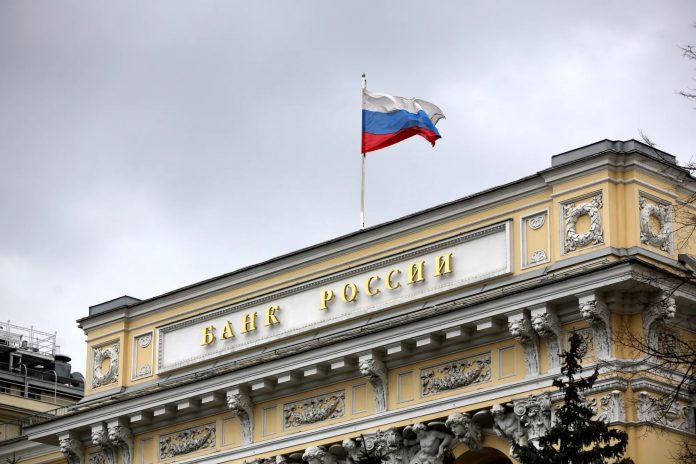
Russia’s Ministry of Finance and Central Bank are developing a cryptocurrency exchange targeting “super-qualified investors” as part of a three-year experimental legal regime (ELR). Announced by Finance Minister Anton Siluanov on April 23, 2025, the platform aims to legalize and regulate crypto transactions for high-net-worth individuals, bringing operations “out of the shadows.”

Initially proposed requirements for “super-qualified investors” include assets of at least 100 million rubles ($1.2 million) or an annual income exceeding 50 million rubles ($600,000). These thresholds are not finalized and may be adjusted following discussions, as noted by Osman Kabaloev, Deputy Director of the Finance Ministry’s Financial Policy Department. The exchange seeks to formalize crypto trading under strict oversight, aligning with Russia’s broader strategy to regulate digital assets while limiting access to elite investors. It will not operate within Russia’s domestic financial system but handle transactions permitted under the ELR.

Qualified investors who don’t meet the “super-qualified” criteria can still access crypto-linked derivatives (e.g., securities or financial instruments tied to crypto prices) without direct ownership. The Moscow Exchange and SPB Exchange plan to launch such products in 2025, pending regulatory approval. The exchange is at least six months from launch, as stated by Deputy Finance Minister Ivan Chebeskov in March 2025.

Russia’s move follows its cautious embrace of crypto, including legalizing Bitcoin for international trade settlements in December 2024 and exploring a national stablecoin after U.S. sanctions froze Russian-linked wallets. However, cryptocurrencies remain banned for domestic payments, and the Central Bank opposes their use as legal tender. The initiative may help Russian businesses bypass Western sanctions by facilitating crypto-based cross-border transactions, a strategy supported by President Vladimir Putin and discussed at the BRICS summit.

Some financial experts, like Igor Danilenko of Renaissance Capital, criticize crypto as a volatile asset class resembling a “pyramid scheme,” highlighting divided opinions within Russia’s financial sector. Bitget COO Vugar Usi Zade likened Russia’s approach to Singapore’s early regulated exchange model, though with a geopolitical focus on BRICS trade amid sanctions.

This development signals Russia’s pragmatic shift toward regulated crypto use, balancing innovation with tight control, but its impact may be limited by the exclusive investor criteria and ongoing regulatory debates. The development of Russia’s cryptocurrency exchange for “super-qualified investors” carries several implications across economic, geopolitical, regulatory, and social dimensions.

By bringing crypto transactions under a regulated framework, Russia aims to reduce illicit activities and tax evasion, potentially increasing government revenue through oversight of high-value transactions. The focus on “super-qualified investors” (high-net-worth individuals) restricts broader participation, limiting the exchange’s role in Russia’s domestic economy. Only derivatives will be accessible to less wealthy qualified investors, reducing mainstream adoption.

The exchange could spur development of blockchain and financial tech industries in Russia, fostering innovation in secure trading platforms and derivative products. Critics, like Igor Danilenko, warn of crypto’s volatility, which could pose risks to investors and destabilize financial instruments tied to the exchange.

The exchange aligns with Russia’s strategy to use crypto for international trade settlements, bypassing Western sanctions. This supports efforts to strengthen BRICS economic ties and reduce reliance on the U.S. dollar. Russia’s push for crypto adoption, potentially including a national stablecoin, could encourage other BRICS nations (e.g., China, India) to explore similar regulated platforms, reshaping global trade dynamics.

The move may position Russia as a leader in regulated crypto adoption among sanctioned economies, though its restrictive approach may limit its appeal compared to more open markets like Singapore. The high eligibility threshold (e.g., ~$1.2M in assets) and strict oversight reflect Russia’s cautious stance, balancing innovation with control. This could set a precedent for heavily regulated crypto markets globally.

The three-year ELR allows Russia to test the exchange’s viability without fully integrating crypto into the domestic financial system, minimizing systemic risks. The Central Bank’s opposition to crypto as legal tender suggests ongoing regulatory friction, which could delay or complicate implementation. Russia’s model may influence international regulatory debates, particularly in jurisdictions seeking to balance crypto innovation with anti-money laundering (AML) and investor protection measures.

Restricting access to “super-qualified investors” reinforces wealth inequality in crypto access, potentially fueling public skepticism or resentment, especially given crypto’s decentralized ethos. A regulated exchange could attract wealthy Russians to repatriate crypto assets from offshore platforms, boosting confidence in local markets. However, the high entry barriers may deter smaller investors.

While the exchange signals growing acceptance, its limited scope may slow broader crypto adoption in Russia compared to countries with more inclusive policies. Positive sentiment on platforms like X (e.g., from crypto influencers) suggests short-term market optimism, but long-term success depends on regulatory clarity and global crypto trends.

Increased crypto use for sanctions evasion could prompt stricter Western countermeasures, targeting Russian-linked wallets or exchanges. Unfinalized criteria and potential Central Bank pushback may delay the exchange’s launch or undermine its credibility. The focus on elite investors raises concerns about potential market concentration or manipulation in a low-liquidity environment.

Russia’s exchange may struggle to compete with established platforms in jurisdictions with more mature crypto ecosystems (e.g., Dubai, Singapore). Russia’s crypto exchange for “super-qualified investors” is a strategic move to harness digital assets for geopolitical and economic goals while maintaining strict control. It strengthens Russia’s position in sanctioned trade and BRICS alliances but risks reinforcing elitism and regulatory fragmentation. Its success hinges on clear rules, investor trust, and navigating global sanctions, with broader adoption likely limited by its exclusive focus.

Bloomberg Calling Bitcoin a “Safe Haven” Refers to the Polarized Views on Bitcoin’s Role As a Financial Asset

0

Bloomberg calls “Bitcoin a safe haven” stems from recent posts on X and aligns with some historical Bloomberg articles, but it’s not a consistent stance across their coverage. Bloomberg has published varied perspectives on Bitcoin’s role as a safe haven asset, reflecting its complex and evolving perception in financial markets. Recent X posts from April 2025, such as one stating, “Bloomberg says ‘#Bitcoin Acts Like A Safe Haven'” and another claiming it has “decoupled from U.S. tech stocks,” suggest Bloomberg recently highlighted Bitcoin’s safe-haven characteristics. These posts lack direct links to specific Bloomberg articles, so their accuracy is inconclusive without further verification. However, they reflect current sentiment among some crypto enthusiasts.

Historically, Bloomberg has explored Bitcoin as a potential safe haven but with mixed conclusions. A 2013 Bloomberg article suggested Bitcoin “may be the global economy’s last safe haven” amid Cyprus’s economic collapse, noting its rise in value during that crisis. In January 2020, Bloomberg reported Bitcoin outperforming gold during a stock market plunge, bolstering its “digital gold” narrative. In October 2022, Bank of America strategists, cited by Bloomberg, noted Bitcoin’s rising correlation with gold, hinting at its potential return as a safe haven after behaving like a risk asset.

Conversely, Bloomberg has also challenged this narrative. In August 2019, they argued Bitcoin makes “no sense” as a safe haven compared to gold and Treasuries. In March 2020, amid a global market meltdown, Bloomberg reported Bitcoin’s sharp decline, stating it was “proving to be no telltale signs of distress, no haven asset.” More recently, in February 2025, Bloomberg noted Bitcoin lagging behind gold during Trump’s trade war, suggesting it hasn’t lived up to its store-of-value billing.

The “safe haven” label typically applies to assets like gold or U.S. Treasuries, which hold value during economic turmoil. Bitcoin’s volatility—averaging 4% daily price swings compared to 0.8% for the S&P 500—undermines this classification for some analysts. Its correlation with equities, especially during 2020’s COVID-19 crash, further questions its safe-haven status. However, academic studies, like one using wavelet-based quantile methods, suggest Bitcoin can act as a safe haven during specific U.S. political and economic uncertainties, though this varies over time.

Bloomberg’s coverage reflects a debate rather than a definitive stance. Bitcoin’s safe-haven status depends on context—gaining traction during certain crises but faltering in others due to its volatility and market correlations. Always cross-check claims on X with primary sources, as they can amplify unverified narratives. If you’d like, I can dig deeper into a specific Bloomberg article or analyze related X posts further.

Bitcoin is “digital gold,” a decentralized store of value that thrives during economic or geopolitical uncertainty, decoupled from traditional markets. Bloomberg noted Bitcoin’s surge during Cyprus’s banking crisis, suggesting it could be a “last safe haven” (Bloomberg, 2013). Bitcoin outperformed gold during a stock market dip, reinforcing the safe-haven narrative (Bloomberg, January 2020).

Bank of America strategists, cited by Bloomberg, observed Bitcoin’s rising correlation with gold, hinting at safe-haven potential (Bloomberg, October 2022). Academic studies (e.g., wavelet-based quantile analysis) suggest Bitcoin acts as a safe haven during specific U.S. political or economic uncertainties. X posts from April 2025 claim Bloomberg recently called Bitcoin a safe haven, citing its decoupling from U.S. tech stocks (e.g., posts stating “Bloomberg says ‘#Bitcoin Acts Like A Safe Haven'”).

Bitcoin’s fixed supply (21 million coins) and decentralized nature appeal to those distrustful of fiat currencies during inflation or crises. Proponents highlight Bitcoin’s performance during events like the 2013 Cyprus crisis or 2020’s early COVID-19 market stress, when it occasionally outperformed traditional assets. Bitcoin’s extreme volatility and correlation with equities make it unreliable as a safe haven, better suited as a speculative investment.

Bloomberg argued Bitcoin makes “no sense” as a safe haven compared to gold or Treasuries (Bloomberg, August 2019). Bitcoin crashed alongside stocks during the COVID-19 market meltdown, showing “no haven asset” traits (Bloomberg, March 2020). Bitcoin lagged behind gold during Trump’s trade war, undermining its store-of-value claim (Bloomberg, February 2025). Bitcoin’s daily volatility averages 4%, far higher than the S&P 500’s 0.8% or gold’s 1.2%, per historical data.

During 2020’s market crash, Bitcoin’s correlation with equities spiked, moving in lockstep with risk assets. Critics on X and in traditional finance (e.g., JPMorgan analysts) argue Bitcoin behaves like a tech stock, not a stable refuge. Skeptics point to Bitcoin’s sharp declines during major crises (e.g., 2020, 2022 bear markets) and its sensitivity to macroeconomic factors like interest rate hikes.

Why the Divide Exists

Bitcoin’s performance varies by crisis. It surged during Cyprus’s banking collapse but tanked during COVID-19’s peak panic, creating conflicting narratives. Bitcoin’s correlation with gold and equities fluctuates. In 2022, it briefly aligned more with gold (0.3 correlation) but often tracks Nasdaq’s tech-heavy moves (0.6 correlation in 2020-2021). Bitcoin attracts both long-term “HODLers” seeking a hedge and speculative traders chasing price swings, muddling its identity.

Bloomberg’s mixed coverage reflects this ambiguity, with headlines swinging based on market conditions. X posts amplify selective narratives, often lacking primary source links. Limited historical data (Bitcoin’s inception was 2009) makes it hard to generalize its safe-haven status compared to gold’s centuries-long track record. Recent X posts suggest Bloomberg may have recently leaned into the safe-haven narrative, possibly due to Bitcoin’s resilience amid specific 2025 market conditions (e.g., decoupling from tech stocks). However, without a direct Bloomberg article, this claim is unverified.

A February 2025 Bloomberg piece noted Bitcoin underperforming gold, while X chatter in April 2025 emphasizes safe-haven traits, reflecting ongoing polarization. The divide over Bitcoin as a safe haven boils down to its inconsistent behavior across crises, volatile price swings, and shifting correlations with traditional assets. Bloomberg’s coverage mirrors this split, with articles supporting both sides depending on the context.

The Divergence Between Bank of America’s No-Rate-Cut Forecast and Polymarket’s 89% Odds

0

Bank of America’s forecast of no Federal Reserve interest rate cuts in 2025 is based on persistent inflation above the Fed’s 2% target and a resilient labor market, suggesting the Fed’s cutting cycle may be over. In contrast, Polymarket traders assign an 89% probability to at least one rate cut in 2025, reflecting a more dovish sentiment. This discrepancy highlights differing views on economic indicators: Bank of America emphasizes sticky inflation (projected at 2.5% core PCE through 2025) and strong economic activity, while Polymarket bettors may anticipate softening growth or policy shifts, possibly influenced by tariff-related concerns or expectations of slowing GDP (Morningstar projects 2.0% in 2025).

Polymarket’s odds align with some Wall Street forecasts, like Morningstar’s expectation of the federal funds rate dropping to 3.50%-3.75% by year-end 2025, implying multiple cuts. However, Bank of America’s view is supported by recent Fed projections of only two 25-basis-point cuts in 2025, a hawkish shift from earlier expectations. The divergence could also reflect Polymarket’s crypto-heavy user base, which often anticipates looser monetary policy to boost risk assets.

Without more granular Polymarket data on cut timing or size, it’s hard to pinpoint the exact source of the optimism. Still, the 89% odds suggest traders see a high chance of at least one 25-basis-point cut, possibly mid-year, despite Bank of America’s skepticism. Always consider Polymarket’s non-U.S. user base and potential for sentiment-driven bets when weighing its predictions.

Polymarket’s expectation of rate cuts supports risk assets like stocks, particularly growth sectors (e.g., tech), as lower rates reduce borrowing costs and boost valuations. Bank of America’s view could pressure equities, especially if inflation persists, squeezing margins. A no-cut scenario (Bank of America) implies higher or stable Treasury yields, potentially depressing bond prices. Polymarket’s outlook suggests falling yields, benefiting bondholders but signaling slower growth.

A hawkish Fed (Bank of America) strengthens the dollar, impacting emerging markets and U.S. exports. Polymarket’s dovish bet could weaken the dollar, boosting export competitiveness but raising import costs. If Bank of America is correct, the Fed may maintain or even hike rates to combat inflation (core PCE at 2.5%), signaling a prolonged restrictive stance. This could strain households and businesses reliant on credit. Polymarket’s view implies the Fed might prioritize growth or react to unexpected economic weakness (e.g., tariff-induced slowdown), cutting rates to stimulate activity. This risks reigniting inflation if mistimed.

Sustained high rates could cool investment and consumer spending, potentially slowing GDP growth (Morningstar’s 2.0% projection may be optimistic). Sectors like real estate and small businesses face higher borrowing costs, risking defaults. Rate cuts could sustain growth, supporting employment and investment. However, premature cuts might overheat the economy, exacerbating inflation and necessitating sharper hikes later. Polymarket’s optimism reflects confidence in a softer Fed, potentially encouraging spending and investment. But if Bank of America’s forecast holds, unmet expectations could trigger market volatility or reduced consumer confidence.

Polymarket’s crypto-leaning user base may overweight dovish outcomes, skewing odds. This sentiment-driven betting could mislead investors if fundamentals align more with Bank of America’s view. A stronger dollar under Bank of America’s scenario pressures emerging markets with dollar-denominated debt. Polymarket’s weaker-dollar outlook eases this burden but could raise global commodity prices, fueling inflation. Tariff policies (e.g., Trump’s proposed 25% tariffs) could complicate both scenarios, slowing global trade and forcing the Fed to balance growth and inflation risk.

The Fed’s reaction function hinges on incoming data (inflation, unemployment, GDP). If inflation falls faster than expected (e.g., below 2.5% PCE) or growth weakens (e.g., tariffs bite), Polymarket’s odds may prove prescient. Conversely, sticky inflation or robust growth could validate Bank of America, delaying cuts into 2026. Investors should hedge against both outcomes, monitor Fed communications, and treat Polymarket as a sentiment gauge, not a definitive predictor.

Higher or sustained interest rates increase the opportunity cost of holding non-yielding assets like cryptocurrencies. Investors may favor fixed-income securities (e.g., Treasuries yielding ~4.5%) over volatile assets like Bitcoin or Ethereum, reducing crypto demand. A hawkish Fed strengthens the U.S. dollar, often inversely correlated with crypto prices. A stronger dollar could suppress Bitcoin’s value, especially if global risk appetite wanes.

Tighter monetary policy limits liquidity in financial markets, constraining speculative investments in cryptocurrencies. Smaller altcoins and high-risk tokens could face steeper declines. Persistent high rates may deter institutional adoption, as firms prioritize safer, yield-bearing assets. Crypto ETF inflows (e.g., Bitcoin ETFs) could slow, capping upside potential. Bitcoin might stagnate or decline 10-20% from current levels (e.g., ~$100,000 to $80,000-$90,000), with altcoins facing sharper drops due to lower liquidity.

Polymarket’s Rate-Cut Scenario (Dovish Fed, Lower Rates)

Lower interest rates reduce the appeal of fixed-income assets, driving capital toward riskier assets like cryptocurrencies. Bitcoin and Ethereum could see renewed retail and institutional interest, pushing prices higher. A dovish Fed weakens the dollar, often boosting crypto prices as investors seek alternative stores of value. Bitcoin, viewed as “digital gold” by some, could benefit particularly. Rate cuts inject liquidity into markets, fueling speculative trading in cryptocurrencies. Altcoins and meme coins may see outsized gains, though volatility remains high.

Lower rates could accelerate crypto adoption, with more firms allocating to Bitcoin ETFs or blockchain projects. Venture capital in Web3 startups may also rise. Bitcoin could rally 20-30% (e.g., ~$100,000 to $120,000-$130,000), with Ethereum and select altcoins potentially doubling if market euphoria takes hold. Polymarket’s 89% odds reflect a crypto-friendly user base that often anticipates dovish policies, as rate cuts historically boost risk assets. This sentiment could drive short-term crypto price spikes, even if fundamentals align with Bank of America’s view.

However, Polymarket’s non-U.S. and crypto-heavy bettors may overstate dovish outcomes, creating a feedback loop where bullish bets fuel crypto buying. If the Fed defies expectations, a sharp correction could follow. Proposed 25% tariffs could slow global growth, dampening crypto enthusiasm under either scenario. However, in a rate-cut environment, cryptos might still outperform traditional assets as a hedge against uncertainty.

U.S. crypto regulations (e.g., SEC oversight, stablecoin rules) could overshadow monetary policy impacts. A pro-crypto administration might amplify bullish effects in the rate-cut scenario. Bitcoin’s 2024 halving continues to reduce supply growth, potentially amplifying price moves in a dovish environment but offering less support if rates stay high.

Cryptocurrencies are highly sensitive to Fed signals, economic data, and sentiment. The uncertainty between these scenarios suggests elevated volatility, with Bitcoin potentially swinging ±20% within months. Leveraged positions in crypto markets could exacerbate price moves, particularly if Polymarket’s optimism proves misplaced and liquidations occur. A no-cut environment (Bank of America) would likely pressure crypto prices downward, with Bitcoin and altcoins facing reduced demand and liquidity.

Conversely, rate cuts (Polymarket) could spark a significant rally, particularly for Bitcoin and Ethereum, fueled by liquidity and risk-on sentiment. Investors should monitor Fed statements, inflation data (e.g., core PCE), and Polymarket’s evolving odds as a sentiment gauge, while remaining cautious of regulatory and macro risks. Hedging via stablecoins or diversified portfolios can mitigate volatility.