DD
MM
YYYY

PAGES

DD
MM
YYYY

spot_img

PAGES

Home Blog Page 1284

Google Rolls Out AI Mode in Search, Ushering A New Era of Search Experience

0

Tech giant Google has announced the rollout of its AI mode in search, which lets users ask complex questions, signaling a new era of user search experience.

On Tuesday, the company announced this update at its annual developer conference, Google I/O 2025.

Announcing the launch, Google wrote,

“Since launching last year, AI Overviews have scaled to over 1.5 billion users and are now in 200 countries and territories. As people use AI Overviews, we see they’re happier with their results, and they search more often. In our biggest markets like the U.S. and India, AI Overviews are driving over 10% growth in the types of queries that show them, and this growth increases over time. It’s one of the most successful launches in Search in the past decade.

“For those who want an end-to-end AI Search experience, we’re introducing an all-new AI Mode. It’s a total reimagining of Search. With more advanced reasoning, you can ask AI Mode longer and more complex queries. Early testers have been asking queries that are two to three times the length of traditional searches, and you can go further with follow-up questions. All of this is available as a new tab right in Search.”

Instead of a traditional list of links, AI Mode generates direct, AI-driven answers using Google’s search index, similar to chatbots like ChatGPT or Perplexity. It’s designed for nuanced or exploratory questions, such as comparing products or diving into complex topics. Users can input queries via text, voice, or images (e.g., uploading a photo to ask about a product or scene). This integrates with Google Lens for enhanced visual search.

AI Mode is Google’s direct response to the release of search engines from Silicon Valley startups like OpenAI and Perplexity, which provide chatbot-style answers to questions and queries. The feature which will roll out to users in the U.S. starting this week, builds on Google’s existing AI-powered search experience, AI overviews, which display AI-generated summaries at the top of its search results page. Both AI Overviews and AI Mode will now use a custom version of Gemini 2.5, and Google says that AI Mode’s capabilities will gradually roll out to AI Overviews over time.

Also, Google disclosed that search results will be personalized based on users’ past searches, and if they choose to connect their Google Apps using a feature that will roll out this summer. For instance, if they connect their Gmail, Google could know about their travel dates from a booking confirmation email and then use that to recommend events in the city they are visiting that will be taking place while they are there.

Before the integration of AI to search, CEO Sundar Pichai has flagged this feature as a top priority, emphasizing that Google is leaning in heavily on AI. It is understood that search remains the engine that drives Alphabet’s business, hence the need for the upgrade.

Google’s AI mode is part of its response to growing competition from AI-first platforms like ChatGPT and Microsoft’s Bing with Copilot. By embedding generative AI directly into Search, Google is reshaping the web discovery process and redefining what users expect from search engines.

The idea behind AI Overviews is to deliver quick, summarized answers to complex questions—helping users get what they need without digging through multiple links. But recent data suggests this convenience is coming at the expense of traffic to the very sites that supply the information.

Google’s integration of AI Mode into its dominant search engine (over 90% global search market share) gives it a massive reach advantage. With no login required for AI Overviews and easy access, Google can capture users seeking conversational or multimodal search, challenging chatbots’ user bases.

Looking ahead

Google’s AI Mode raises the stakes for AI chatbots by blending advanced AI with its unparalleled search infrastructure. The shift toward AI-driven search could redefine how users interact with information, pushing chatbots to adapt or risk losing ground.

Tekedia Capital welcomes Exin Therapeutics

0

Tekedia Capital welcomes Exin Therapeutics to our community. Exin Therapeutics is a biotech company that is developing genetic therapies that  target neural activity for people suffering from neurological and neuropsychiatric disorders such as epilepsy, debilitating symptoms of autism spectrum disorder, and Parkinson’s disease.

The innovation in Exin Therapeutics is the circuit-level approach it is taking to treat these brain disorders. Largely,  instead of trying to restore missing genes, they’re supplementing already existing genes that directly change the neural activity in the brain. A proprietary AI system they invented is assisting them in the development.

For us, this is more than an investment, this is a call to mission at a glocal level since some of these diseases remain largely incurable! But with three founders – all Oxford-educated neuroscientists with capabilities in molecular biology, circuit, and systems neuroscience, we see something that is worth supporting, for all nations, and all people.

To learn more, visit:

Tekedia Capital capital.tekedia.com

Exin Therapeutics www.exintherapeutics.com


Economist Bismarck Rewane Questions NBS Inflation Data, Compares it to JAMB Scandal

1

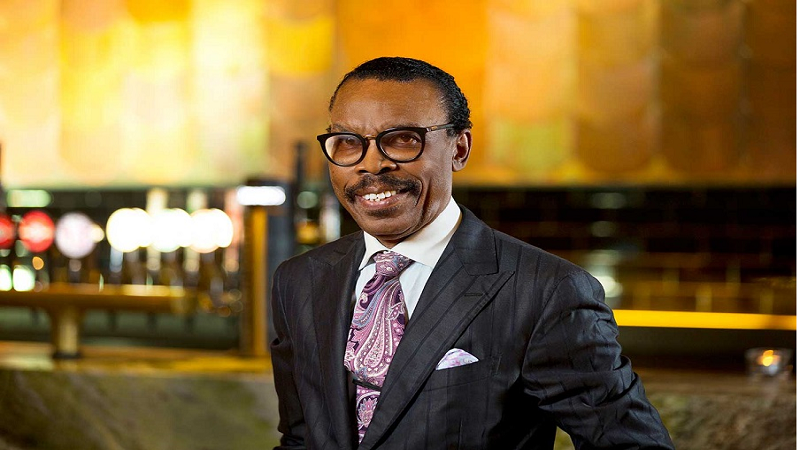
Bismarck Rewane, economist and managing director of Financial Derivatives Company, has faulted the April 2025 inflation report released by the National Bureau of Statistics (NBS), questioning its credibility and comparing the data inconsistencies to the recently exposed JAMB exam scandal.

According to the NBS, Nigeria’s headline inflation dropped marginally to 23.71 percent in April, from 24.23 percent in March. But Rewane, who appeared puzzled by the figures, argued that the data present a contradiction: states that grow the bulk of the country’s food are seeing extreme inflation, while consumer-heavy states are recording unusually low inflation levels.

“Inflation was highest in Benue at 51 percent, Ekiti at 34 percent, and Kebbi at 33 percent — these are food-producing states,” Rewane said. “Meanwhile, Ebonyi, Adamawa, and Ogun — states that are primarily consuming these food items — posted some of the lowest inflation rates: 7.19, 9.52, and 9.91 percent respectively. How is that even possible?”

Drawing a direct analogy to the Joint Admissions and Matriculation Board (JAMB) exam scandal, where results were recently discredited due to technical errors and suspected manipulation, Rewane raised doubts about the data collection process used by the NBS.

“Are those numbers credible? If they aren’t, then what exactly are we seeing here? A distortion in methodology? A JAMB-type situation?” he asked. “The inflation gap between Benue and Ogun is nearly 43 percentage points — what has happened?”

‘Government Isn’t Stabilizing Prices — It’s Distorting the Market’

Rewane didn’t stop at the data. He moved to broader concerns about how inflation is being interpreted and managed. He warned that the recent drop in food prices, such as the temporary decline in rice, may not be sustainable. Factors like rumors of poisoned rice and increased imports have led to short-term price volatility, not long-term stability, he said.

“Yes, we’ve seen some food prices come down,” he admitted. “But is it real or sustainable? The rice price fell partly due to imports and partly due to people avoiding rice because of rumors it’s poisoned. That’s not policy success — it’s fear and external supply.”

He highlighted tomatoes as a more telling case, noting a 107 percent price increase due to the spread of “tomato ebola”, a plant disease. Meanwhile, dairy prices held relatively stable — a signal of the uneven and unpredictable shifts in the food basket.

For Rewane, the policy response from the government has been both weak and misdirected.

“It’s not the government’s job to produce or sell food,” he said. “That’s the wrong model. The market determines the efficient price. A trader imports rice, offers it for sale, and the consumer makes the decision based on his income.”

He argued that interventions aimed at lowering food prices miss the point — Nigeria’s inflation is driven more by structural issues than monetary phenomena.

“You can’t reduce inflation by just pumping food into the market or manipulating prices,” he said. “There’s an output gap driven by insecurity, poor logistics, high diesel and petrol costs. Then on the other side, you have excess liquidity that fuels demand. That’s the inflation mix.”

Monetary Policy Not Enough to Fix Structural Deficiencies

While acknowledging the Central Bank of Nigeria (CBN)’s role in controlling inflation through interest rate hikes and liquidity tightening, Rewane stressed that monetary policy is not enough.

“The CBN can curb demand, yes, but output and production growth comes only from power stability, efficient logistics, lower business costs, and improved farm yields,” he said.

He added that production shortfalls in the face of unrelenting demand will always fuel inflation, regardless of how high the CBN pushes the Monetary Policy Rate (MPR).

Rewane’s comments come at a time of deep public skepticism over official data, with more Nigerians expressing doubts about economic reports that fail to align with market realities. The NBS figures showed a national inflation decline, but many Nigerians say they have seen no relief in food markets, where the cost of goods remains high.

With the NBS maintaining its position on the CPI numbers, Rewane has become the latest voice to question the authenticity of the agency’s figures. The concern has been whether government data truly reflects Nigeria’s economic conditions — or whether the country is navigating policies and metrics built on compromised foundations.

With public trust in institutions like JAMB already shaken, and prices of essentials like rice, tomatoes, and other staples still show a stark difference from the NBS data, the challenge facing the government is no longer just inflation — it’s credibility.

MaxAB-Wasoko Acquires Fatura to Accelerate Pan-African E-Commerce Landscape

0

MaxAB-Wasoko, one of Africa’s leading retail e-commerce and supply chain super apps, has announced the acquisition of Fatura, a prominent Egypt-based B2B e-commerce marketplace, from EFG Finance, a subsidiary of EFG Holding.

The acquisition marks a major milestone in MaxAB-Wasoko’s strategy to accelerate the B2B commerce and fintech landscape across the African continent. As part of the deal, EFG Finance will join MaxAB-Wasoko as a significant shareholder, acquiring an equity stake and securing a seat on the company’s board.

Speaking on the acquisition, Belal El-Megharbel, CEO of MaxAB-Wasoko said,

“The acquisition of Fatura is more than a growth play, it’s the realization of our ambition to become the go-to, one-stop-shop for retailers throughout Africa. By bringing together operational strength, product depth, and innovative fintech offerings, we’re setting a new standard for retail across the region.”

Also commenting, Aladdin ElAfifi, CEO of EFG Finance, said,

“We are thrilled to partner with MaxAB-Wasoko as they reshape the retail and supply chain sectors. Integrating Fatura will drive meaningful business growth, and our role as a significant shareholder and board member supported by EFG Holding reinforces our commitment to fostering innovation in the  fintech space.”

Fatura is a fintech-enabled B2B marketplace. Established in 2019, the company connects the suppliers (manufacturers, distributors, and wholesalers) with retailers across 23 governorates in Egypt, enabling price transparency, financial inclusion, and access to real-time and accurate data. In the FMCG sector alone, it has more than 1000 suppliers selling to more than 40,000 retailers a range of 10,000+ unique SKUs.

The acquisition of the fintech by MaxAB-Wasoko, will significantly expand its footprint in the region and bring together strengths in operations, product depth, and fintech innovation, setting a new standard for retail across Africa. Retailers will immediately benefit from a broader, more comprehensive product assortment, a crucial advantage in a fragmented supply chain where no single distributor can meet all retailer needs.

Fatura’s impressive reach, having onboarded over 626 wholesalers in 16 cities (including five new cities for MaxAB-Wasoko), ensures greater flexibility and convenience for small and medium-sized retailers.

MaxAB on the other hand, is the fastest-growing B2B business in the retail industry in Egypt. Established in 2018 as an E-commerce platform allowing local underserved merchants and mom-and-pop shops in Egypt and Morocco to grow, increase their revenues, and enhance their quality of life.

In August 2024, MaxAB and Wasoko, two leading B2B e-commerce platforms, completed their merger, creating the most significant tech merger in African history. A key focus for the merged company was expanding its financial services offerings. The newly formed entity now serves over 450,000 merchants across Egypt, Morocco, Kenya, Tanzania, and Rwanda, connecting them to 65 million consumers.

By acquiring Fatura, MaxAB-Wasoko is moving to consolidate fragmented players in the B2B e-commerce space. The acquisition of Fatura by MaxAB-Wasoko carries several key implications for the African e-commerce and retail landscape.

Retailers now have access to a broader, more diverse product assortment from combined supplier networks. This aligns with the company’s vision to drive financial inclusion and offer value-added services like credit, analytics, and inventory tools.

Also, the acquisition accelerates MaxAB-Wasoko’s ambition to become the “go-to one-stop-shop” for retailers across Africa, offering goods, financing, tech tools, and reliable delivery under one platform.

In essence, this acquisition is a growth, consolidation, and market-leadership play, positioning MaxAB-Wasoko as a dominant force in Africa’s evolving retail and digital commerce ecosystem.

Cramer Urges Calm as Moody’s Downgrade Spurs Market Jitters, Warns Against ‘Get Out Now’ Panic

0

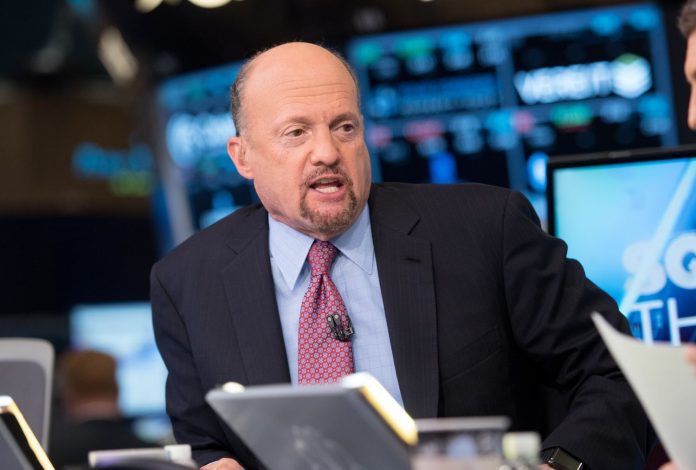
Wall Street veteran Jim Cramer is advising investors to stay composed following Moody’s historic downgrade of U.S. debt, the agency’s first such move in over a century.

The downgrade, which came after markets closed on Friday, pushed Treasury yields higher and briefly dragged down major indexes at the start of Monday’s trading. But despite the initial dip, stocks recovered to close slightly higher, as investors appeared to shrug off the worst of the downgrade fears.

Moody’s decision to cut the U.S. sovereign credit rating from Aaa to Aa1 underpins the agency’s mounting concern about the federal government’s ability to manage its rising debt burden, now above $36 trillion. Citing a “continued rise in the debt burden and a lack of effective fiscal policy measures,” Moody’s said the U.S. faces increased risks that “are unlikely to be reversed in the near term.”

The market reaction on Monday reflected some of that unease. The Dow Jones Industrial Average opened more than 300 points lower, while the S&P 500 dipped 1% at session lows. Treasury yields, especially on the long end, surged, pushing the 30-year yield briefly above 5%, the highest since 2023. However, by the end of the day, the Dow closed up 0.32%, the Nasdaq eked out a 0.02% gain, and the S&P 500 ended up 0.09%, extending its winning streak to six sessions.

“Fear is what must be tamed”

Cramer, host of CNBC’s Mad Money, pushed back against the panic triggered by Moody’s downgrade, urging investors to resist what he called a fear-driven sell-off. He compared the reaction to past downgrades from S&P in 2011 and Fitch in 2023, which caused temporary turbulence but ultimately had little long-term impact on market performance.

“Fear is what must be tamed, if you want to be a good investor,” Cramer said during his segment on Monday. “Friday’s post-close downgrade was just that: a ‘get out now’ story that spooked investors into selling out of perfectly fine portfolios.”

He noted that investors are “conditioned to be fearful” whenever credit rating agencies make moves like this. Rather than acting impulsively, Cramer said, investors should interpret the downgrade as a cautionary flag—one that signals a need for smarter allocation, not panic.

“You are being given an early warning to invest more—not more aggressively—but more of what you can save. That’s the real hedge if you’re worried about the government’s creditworthiness, not the ‘get out now,’” he said.

Cramer’s advice diverges sharply from the sentiment that often follows such sovereign downgrades. He warned that this would not be the last time investors are told to pull out of the market, but emphasized that many of these alerts are designed to generate fear, not to protect portfolios.

“The people who write these are either fools who know nothing or incredibly shrewd short sellers who really need to spread fear because of their business model,” Cramer added, in a direct swipe at what he sees as agenda-driven messaging from credit analysts or market pessimists.

Gold, Bitcoin, and a long-term mindset

While playing down the downgrade’s significance, Cramer acknowledged that investors worried about ballooning federal debt could consider hedges like gold and Bitcoin.

“If you want to act on that fear, those are your hedges,” he said. But again, he insisted the best strategy remains disciplined investing focused on savings and fundamentals, not reactionary exits.

His commentary came amid growing concerns over Washington’s long-term fiscal path. With a divided Congress and persistent partisan gridlock, investors worry that there’s little appetite in Washington for making tough decisions on taxes or entitlement reforms. Moody’s flagged these political limitations as a core reason for its downgrade.

The government’s fiscal deficits remain very large, and the debt affordability metrics will continue to deteriorate, the agency said in its assessment. The downgrade, Moody’s added, reflects the significant decline in debt affordability in recent years.

However, for all the alarms raised, many market analysts view the impact of the downgrade as largely symbolic. Speaking to Reuters, several analysts noted that Moody’s move was already priced in.

A downgrade decades in the making

This is not the first time a major rating agency has downgraded the U.S. S&P stripped the U.S. of its triple-A rating in 2011 during a similar debt-ceiling standoff in Congress. Fitch followed suit in 2023, citing political instability and rising deficits.

Moody’s, which until Friday had maintained the U.S.’s top-tier rating, finally made the move after repeated warnings throughout 2024. It said it no longer had confidence that lawmakers would implement the necessary reforms to restore the government’s financial health.

Despite the historic nature of the downgrade, Wall Street is not treating it as a watershed moment. The rebound in stocks on Monday suggests that investors are focusing on the current strength of the U.S. economy, rather than Moody’s long-term concerns. Unemployment remains low, corporate earnings have come in strong, and consumer spending continues to hold up.

Moody’s downgrade may be a wake-up call for Washington more than Wall Street. With debt service costs surging and political dysfunction worsening, the long-term risks are real. But in the short term, the fundamentals of the U.S. economy seem to remain intact.

This seems to have informed Cramer’s advice to investors tempted to abandon their positions amid fear, stay the course, tune out the noise, and invest prudently.