DD
MM
YYYY

PAGES

DD
MM
YYYY

spot_img

PAGES

Home Blog Page 1285

The ‘Digital Assets Investment Act’ Bill Passed in North Carolina House

0

The North Carolina House of Representatives passed House Bill 92 (H92), known as the Digital Assets Investment Act, with a 71–44 vote. Introduced by Republican House Speaker Destin Hall, the bill allows the state treasurer to allocate up to 5% of select public funds, including the General Fund and Highway Fund, into Bitcoin-related exchange-traded products (ETPs) listed on regulated U.S. exchanges like NASDAQ and NYSE. Direct Bitcoin purchases are prohibited, and eligible digital assets must have a market capitalization of at least $750 billion, currently limiting investments to Bitcoin.

The bill aims to diversify state investments, potentially hedging against inflation and addressing a $16 billion pension fund shortfall. Safeguards include secure cold wallet storage, multi-signature authentication, monthly audits, and a two-thirds legislative vote for sales during financial emergencies. The bill now awaits Senate approval.

Allocating state funds to Bitcoin ETPs introduces a non-traditional asset to North Carolina’s portfolio, potentially hedging against inflation and currency devaluation. Bitcoin’s historical performance could help address the state’s $16 billion pension fund shortfall if returns are favorable. State-level adoption of Bitcoin as an investment vehicle signals growing institutional acceptance, potentially encouraging other states or municipalities to explore similar policies. This could bolster Bitcoin’s credibility and market stability.

Bitcoin’s volatility poses risks. A market downturn could lead to significant losses, impacting public funds critical for pensions, infrastructure, or emergencies. The 5% cap and strict safeguards (e.g., cold storage, audits) aim to mitigate this, but risk remains. The bill’s restrictions—limiting investments to regulated ETPs with high market cap assets—set a cautious framework for state involvement in crypto. This could influence federal or state-level regulations, balancing innovation with investor protection.

The bill’s passage (71–44) reflects polarized views. Senate approval is uncertain, and public opinion may split over using taxpayer funds for a speculative asset. Opposition could intensify if market losses occur. State investment in Bitcoin ETPs could drive demand, potentially increasing Bitcoin’s price or stabilizing its market. However, the 5% allocation limit suggests a modest immediate effect.

The policy positions North Carolina as a forward-thinking state in financial technology, potentially attracting blockchain-related businesses or investment, though it may also draw scrutiny from risk-averse stakeholders. If the bill passes the Senate, these implications will depend on implementation, market conditions, and public response. Failure in the Senate could stall similar initiatives elsewhere.

The passage of North Carolina’s House Bill 92 (H92), allowing investment of up to 5% of certain state funds in Bitcoin-related exchange-traded products (ETPs), has highlighted a clear divide in perspectives, as evidenced by the 71–44 House vote and broader discourse. Led by Republican House Speaker Destin Hall, proponents view the bill as a bold step toward financial innovation. They argue it diversifies state investments, potentially offsetting inflation and addressing the $16 billion pension fund shortfall.

They emphasize safeguards like cold storage, multi-signature authentication, and monthly audits, framing the bill as a calculated risk with Bitcoin’s high market cap ($750 billion threshold) ensuring stability. Supporters align with pro-crypto factions, seeing state adoption as a way to position North Carolina as a leader in emerging financial technologies, potentially attracting blockchain businesses.

The bill aligns with broader Republican themes of reducing reliance on centralized financial systems and embracing market-driven solutions. Opponents argue that Bitcoin’s volatility makes it an inappropriate investment for public funds, which are critical for pensions, infrastructure, and emergencies. A market crash could lead to significant losses, burdening taxpayers.

They question the prioritization of a speculative asset over traditional investments like bonds or equities, viewing it as a risky gamble with unproven long-term value. Some Democrats frame the bill as favoring niche crypto interests over broader public needs, potentially alienating constituents who see Bitcoin as a “tech bro” phenomenon. Concerns exist about regulatory uncertainty, with fears that federal crackdowns or market manipulation could undermine the investment.

Crypto enthusiasts and investors see the bill as a validation of Bitcoin’s role as a store of value and inflation hedge. They point to its historical returns (e.g., ~20% annualized over a decade) as a way to bolster state finances. They argue that the 5% cap and focus on regulated ETPs (not direct Bitcoin ownership) minimizes risk while capturing upside potential, especially in a low-yield bond environment.

Blockchain industry leaders view this as a catalyst for economic growth, potentially attracting crypto startups or investment to North Carolina. Economists and financial advisors skeptical of crypto highlight Bitcoin’s volatility (e.g., 50%+ drawdowns in 2022) and lack of intrinsic value compared to assets like real estate or equities. Pension fund managers and public finance experts worry about fiduciary responsibility, arguing that public funds should prioritize stability over speculative gains.

Critics note that Bitcoin’s correlation with tech stocks reduces its diversification benefits, and its energy-intensive mining raises environmental concerns, clashing with sustainable investment trends. Younger, tech-oriented individuals and libertarian-leaning groups support the bill, viewing Bitcoin as a decentralized alternative to fiat currency and a hedge against government overreach or monetary policy failures. They see state adoption as a step toward mainstreaming crypto, empowering individuals and reducing reliance on traditional banking systems.

Older generations and those unfamiliar with crypto often view Bitcoin as speculative or associated with illicit activities (despite declining illicit use). They distrust its intangible nature and lack of physical backing. Public sector workers and retirees, reliant on pension funds, may oppose the bill, fearing losses could jeopardize their financial security. Environmental advocates criticize Bitcoin’s energy consumption, arguing that public funds should align with ESG (environmental, social, governance) principles.

Supporters accept Bitcoin’s volatility for potential high rewards; opponents prioritize stability for public funds. Younger, tech-savvy groups are more open to crypto; older or less tech-literate groups are skeptical. Proponents lean toward decentralization and innovation; opponents favor traditional financial systems and regulatory caution.

Crypto’s complexity creates a divide between those educated on blockchain (supportive) and those reliant on mainstream narratives (skeptical). The polarized House vote (71–44) suggests a contentious Senate battle. If the Senate rejects the bill, it could dampen similar initiatives elsewhere. Passage could embolden other states but deepen political divide.

The debate may polarize voters, with crypto becoming a wedge issue in future elections. Missteps (e.g., market losses) could fuel distrust in state financial management. The divide reflects broader national tensions over crypto regulation. North Carolina’s approach could influence whether other states adopt cautious (ETP-only) or bolder (direct ownership) strategies.


AfDB Approves $3.25bn Support for Nigeria Until 2030 Amid Growing Fears of Misuse Due to Weak Accountability Structures

0

The African Development Bank (AfDB) has unveiled a new five-year Country Strategy Paper (CSP) for Nigeria, pledging to provide around $650 million annually from 2025 to 2030 — a move that could inject a total of $3.25 billion into Africa’s fourth-largest economy over five years.

The initiative forms part of the Bank’s broader effort to scale up development financing across Africa, after years of lamenting the region’s chronic underfunding and underperformance in critical sectors.

Under the first phase of the strategy, Nigeria is set to receive $2.95 billion in AfDB financing between 2025 and 2029, complemented by an additional $3.21 billion in co-financing from development partners. The Bank says the strategy seeks to unlock inclusive growth, create millions of jobs, and support the country’s ambition to double the size of its economy to $1 trillion.

But the plan, though ambitious in scope, is already generating anxiety over the likelihood of the funds being squandered — especially in a country long plagued by corruption, lack of transparency, and poor implementation of past international interventions.

AfDB’s Bigger Push Across Africa

The development financing drive in Nigeria is part of AfDB’s broader shift to address what it has repeatedly described as “Africa’s chronic development financing gap.” The continent, according to the Bank’s leadership, needs between $68–$108 billion annually just to bridge its infrastructure deficit, yet struggles to mobilize even a fraction of that due to global funding imbalances, investor hesitation, and weak domestic capacity.

AfDB President Akinwumi Adesina has in several public addresses decried the low share of global development finance that comes into Africa, pointing out that African countries, despite being the most vulnerable to climate shocks and infrastructure shortfalls, receive less than 5% of global climate financing.

In response, the Bank is increasing its commitments, establishing funding mechanisms, attracting partners, and ramping up its country-specific strategies. Nigeria, being its largest shareholder and the continent’s most populous nation, is now a key focus of this recalibrated approach.

Yet, while AfDB is scaling up its lending, there is an equally significant challenge on the receiving end — how to ensure that funds are not diverted or wasted.

Nigeria’s History of Missed Opportunities

Nigeria’s infrastructure and social development deficits are well-documented. From power outages that cripple industries to dilapidated roads and a water system that excludes millions, the country has struggled for decades to turn financial aid and loans into tangible improvements. And the problem has rarely been the lack of money, but how it’s managed or mismanaged.

The corruption risks surrounding Nigeria’s institutions remain a deep concern. The country consistently ranks low on Transparency International’s Corruption Perceptions Index, and there have been repeated cases of funds meant for roads, hospitals, education, and power being embezzled or misused. Several state and federal agencies have been implicated in the misappropriation of donor funds in the past, leading to disillusionment among international partners.

This new wave of AfDB funding, while promising, has not yet been accompanied by any enforceable safeguards to guarantee accountability. There is currently no clear mechanism outlined in the strategy to monitor how funds will be deployed.

Development analysts have raised red flags over this.

Aside from the concerns, the strategy itself is one of the most ambitious in recent memory. It focuses on two priority areas:

  1. Promoting sustainable, climate-smart infrastructure to improve industrial competitiveness — including roads, power, and water systems;
  2. Driving inclusive green growth by supporting agro-industrialization and job creation for youth and women.

Nigeria’s infrastructure gap is estimated at $2.3 trillion between 2020 and 2043, and the Bank believes targeted investments in renewable energy, clean transport systems, and resilient agricultural infrastructure could significantly lower business costs and unlock new economic zones.

AfDB projects that the strategy could generate 1.56 million jobs, mostly through agribusiness expansion, youth-focused training schemes, and the scaling up of support for women-led enterprises. The Bank’s Affirmative Finance Action for Women in Africa (AFAWA) programme will be deployed in Nigeria to provide tailored financial access to female entrepreneurs — a move long overdue given their disproportionate exclusion from credit markets.

The plan is also aligned with Nigeria’s own development blueprint — including Agenda 2050, the National Development Plan 2021–2025, and the Tinubu administration’s Renewed Hope Agenda.

AfDB said the strategy would also support Nigeria’s ability to take advantage of the African Continental Free Trade Area (AfCFTA) by boosting energy access, upgrading logistics networks, and connecting farmers and businesses to larger markets.

Rural Focus, But No Guarantees

Millions of Nigerians, particularly in rural communities, small towns, and marginalized groups — are expected to benefit from improved services and economic opportunities if the strategy is implemented faithfully. However, this remains a big “if”.

The absence of a rigorous auditing system, transparent tracking, and public engagement mechanisms may erode the potential impact. It is believed that in the current Nigerian context, where even state-level budgets are rarely published and procurement is often opaque, the AfDB’s assumption of effective implementation is overly optimistic.

However, Abdul Kamara, Director General of the AfDB’s Nigeria Office, expressed confidence in the transformative potential of the plan.

“By investing in sustainable infrastructure and inclusive agricultural growth, we are not only building roads, power systems, and transforming agriculture – we are building pathways to prosperity for millions of Nigerians,” Kamara said.

Still, for many Nigerians, the announcement is bittersweet — hopeful on the surface, but laced with the familiar fear that another windfall may end up benefiting only a few at the top.

Meta Launches Standalone Meta AI App Powered by Llama 4, Intensifies Competition in The Generative AI chatbot Market

0
Meta, the parent company of Facebook, has unveiled a dedicated Meta AI app, intensifying competition in the generative AI chatbot market. Built on the advanced Llama 4 model, the app offers services akin to Google’s Gemini and OpenAI’s ChatGPT, marking Meta’s push toward more personalized AI experiences.
Meta AI uses Llama 4 to help users solve problems, navigate their daily questions, and better understand the world around them. With the ability to search across the web, it can help them get recommendations, deep dive on a topic, and stay connected with their friends and family.
In a blog post, Meta wrote,
“We’re launching a new Meta AI app built with Llama 4, a first step toward building a more personal AI. People around the world use Meta AI daily across WhatsApp, Instagram, Facebook and Messenger. And now, people can choose to experience a personal AI designed around voice conversations with Meta AI inside a standalone app. This release is the first version, and we’re excited to get this in people’s hands and gather their feedback.”
Meta AI is designed to understand users on a personal level, delivering tailored responses that enhance their experience. It offers a conversational interface that feels effortless and intuitive, making interactions smooth and natural. With a strong social focus, Meta AI connects users to content from the people and communities they value most. Additionally, its voice features allow users to engage with the assistant while multitasking on their devices, with a clear microphone icon indicating when it’s active.
Meta plans to introduce a premium tier and incorporate advertisements into the Meta AI app. These monetization strategies are expected to roll out after the company focuses on scaling and increasing user engagement.

Key Features of Meta AI App

  • Personalized Interaction: Meta AI adapts to users’ preferences, delivering tailored, context-aware responses to enhance daily tasks, problem-solving, and engagement with topics of interest.
  • Seamless Voice Experience: The app prioritizes natural, conversational voice interactions, allowing multitasking with a visible microphone icon for transparency.
  • Social Integration: Leveraging Meta’s ecosystem, the app connects users to content from friends, family, and communities, making interactions more social and relevant.
  • Web Search and Recommendations: Powered by Llama 4, Meta AI provides web-based insights, recommendations, and in-depth topic exploration, helping users stay informed and connected.

Strategic Impact

The standalone Meta AI app positions Meta as a direct competitor to industry leaders like Gemini and ChatGPT, capitalizing on its vast user base across WhatsApp, Instagram, and Facebook. By releasing a dedicated AI app, Meta is moving beyond embedding AI features into its platforms and now offering a centralized hub for generative AI capabilities. This aligns with the current trend set by OpenAI and Google, who each provide standalone AI apps with multimodal capabilities.
The Meta AI app also serves as a controller for its Ray-Ban smart glasses, bridging AI with wearable technology. This real-world, voice-first AI experience is a unique direction not yet mainstream in ChatGPT or Gemini, giving Meta an early-mover advantage in AI-enhanced AR and smart wearables. 

Looking Ahead

As Meta gathers user feedback on this initial release, the app’s integration with Llama 4 and its focus on seamless, social interactions signal a bold step toward redefining AI-driven communication. The launch underscores Meta’s ambition to lead in the chatbot space while deepening user engagement across its platforms.

How to Bet on Kentucky Derby 2025 in Michigan

0

The 2025 Kentucky Derby is rapidly approaching, as the big event is scheduled for Saturday, May 3rd at Churchill Downs in Louisville. Michigan residents have plenty of ways to join the excitement this weekend. Numerous offshore betting sites are open to those 18 and older, and many offer generous free bet promotions. This year, over $5,000 in bonuses are up for grabs to celebrate the 151st running of the Derby. Take a look at the reviews below to find out how to place your bets on the 2025 Kentucky Derby and make the most of the promotions available for new players.

How to Bet on Kentucky Derby 2025 in Michigan

  • Click here to get $250 in free bets at BetOnline
  • Sign up and deposit $50 or more
  • Collect your free bets and promos instantly
  • Place your bets on the 2025 Kentucky Derby

Best Kentucky Derby 2025 Betting Offers in Michigan

  1. BetOnline — $250 in free bets for Kentucky Derby 2025
  2. BetUS — 125% bonus, up to $2,625 on your first 3 deposits
  3. BetWhale — $1,250 Kentucky Derby betting offer
  4. MyBookie — $1,000 horse racing betting offer
  5. BetNow — $500 Kentucky Derby bonus

1. BetOnline — $250 in Free Bets for Kentucky Derby 2025

Operating since 2001, one of the best sports betting sites BetOnline has earned a reputation as one of the most trusted and recognizable names among this year’s options. New users can take advantage of special Kentucky Derby promotions, including a sign-up bonus worth up to $250 in free bets. They’re also hosting exclusive contests, with over $20,000 in prize money up for grabs. Plus, BetOnline offers one of the most extensive betting menus available, as well as an easy-to-navigate interface.

Why Sign up for BetOnline?

  • Available in all 50 U.S. states
  • Top of the line Kentucky Derby odds
  • Sign-up bonus has 1x rollover requirement
  • Trusted, fast payouts and deposits

2. BetUS — 125% Bonus, up to $2,625 on Your First 3 Deposits

When it comes to promotions for the 2025 Kentucky Derby, BetUS stands out as one of the best choices. New users can earn bonuses on each of their first three deposits, with a generous total limit of up to $2,625. On top of that, BetUS offers a 200% bonus for cryptocurrency deposits and a 300% bonus for referring a friend to the platform.

Why Sign up for BetUS?

  • Bonus offers on first three deposits valued at $2,625
  • Competitive Kentucky Derby odds
  • 200% crypto deposit bonus
  • 300% refer-a-friend bonus

3. BetWhale — $1,250 Kentucky Derby Betting Offer

Among the available choices, BetWhale stands out for its mobile-friendly platform and user-friendly interface. With fast, secure payouts and deposits, it’s already a strong option — and the bonus bets make it even better. New users signing up to bet on the Kentucky Derby can claim a 125% bonus on their first deposit, worth up to $1,250.

Why Sign up for BetWhale?

  • Up to $1,250 in welcome bonuses
  • Full range of Derby betting options
  • Fast, secure payouts
  • Mobile-friendly platform

4. MyBookie — $1,000 Sports Betting Offer

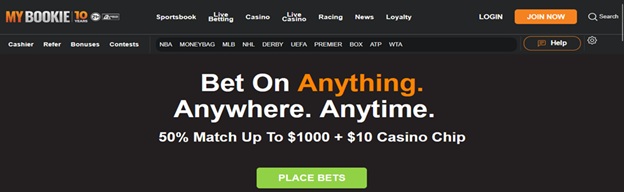
MyBookie has earned a reputation as one of the most trusted sites for bettors across the United States, including in Michigan. They’re offering a wide range of betting options for this year’s Kentucky Derby, along with a generous sign-up bonus. New users can receive a 50% boost on their first deposit, worth up to $1,000 in free bets. Plus, MyBookie pairs an extensive betting menu with a smooth, user-friendly interface.

Why Sign up for MyBookie?

  • Trusted betting site for U.S. players
  • $1,000 welcome bonus offer
  • Wide variety of horse racing bets
  • Great Kentucky Derby odds

5. BetNow — $500 Bonus for Kentucky Derby

BetNow is offering a wide range of promotions for this year’s race at Churchill Downs. New users can claim a 150% bonus on their first deposit, with an even bigger 200% bonus available for those who deposit using cryptocurrency. There’s also a refer-a-friend program that rewards users with another 200% bonus for bringing a friend on board. Signing up is quick and easy, and BetNow is known for offering some of the best odds and high-paying bets for this year’s Race for the Roses.

Why Sign up for BetNow?

  • 150% deposit bonus up to $500
  • Registration is quick and easy
  • Competitive Derby odds
  • Reliable customer support 

Is It Legal to Bet on Kentucky Derby 2025 in Michigan?

Michigan allows both online and in-person betting on horse racing, including the Derby. You can place bets through licensed online platforms like TVG, TwinSpires, and others. Plus, Michigan’s legal sportsbooks sometimes offer special promotions tied to the Derby too.

But the promotions from the federally legal casinos and sportsbooks simply don’t stack up to the ones that are available via the offshore options. This year, new users can take advantage of more than $5,000 that is available in bonus money and free bets, and there are fewer restrictions on who can make wagers, as well. The required age for most of the options is 18, three years lower than most of the brick and mortar and online options in the state.

Who Can Bet on the Kentucky Derby in Michigan?

  • Must be age 18 or older
  • Sign up for an account needing only a valid email address
  • Fund your account by making deposits via a preferred method.

Kentucky Derby 2025 Odds

Here are some of the leading horses at the top of the betting board and their morning-line odds:

  • Journalism (+285): Journalism enters the Derby as the morning-line favorite. He has won four of his five career races, including the Santa Anita Derby, and will start from post position 8.
  • Sovereignty (+600): Sovereignty secured his spot with a victory in the Fountain of Youth Stakes.
  • Sandman (+1000): Sandman won the Arkansas Derby and will start from post position 17. He is known for his closing speed.
  • Luxor Cafe (+1100): Luxor Cafe earned his spot with victories in Japan, including the Fukuryu Stakes. He will start from post position 7.
  • Admire Daytona (+4000): A Japanese-bred colt, Admire Daytona earned his Derby berth by winning the UAE Derby in Dubai.
Horse Odds
Journalism +285
Sovereignty +600
Sandman +1000
Luxor Cafe +1100
Rodriguez +1400
Burnham Square +1400
Baeza +1400
Final Gambit +1600
Citizen Bull +1800
American Promise +1800
East Avenue +1800
Grande +2000
Tiztastic +2500
Coal Battle +2500
Publisher +3300
Admire Daytona +4000
Flying Mohawk +5000
Chunk of Gold +5000
Owen Almighty +5000
Neoequos +8000
Render Judgement +8000


Kentucky Derby 2025 Picks and Predictions

Final Gambit raced at Churchill Downs back in November, and finished in a respectable 3rd place. In the three events that he’s run in since, he has finished no worse than second place, and has earned the top spot in each of the last two.

The colt born in February 2022 holds one of the best values of any horse on the board, especially given the recent success. Final Gambit is listed at +1600, which would provide a payout of $1,600 for those who place wagers of $100 on him to win. 

Kentucky Derby 2025 Prediction: Final Gambit (+1600)

What Is The Best Betting Site In Michigan for Kentucky Derby 2025?

Taking into account factors like user experience, reputation, and promotional offers, BetUS emerges as one of the best options this year. Established in 1994, they’ve built a strong reputation and continue to be a go-to choice for offshore sportsbooks for residents of Michigan. This year, their $2,625 in promotional value for the 2025 Kentucky Derby makes them a tough competitor to surpass.

Claim $250 in free Kentucky Derby bets!

Shiba Inu Price Set for $0.000030 if This Trend Keeps Up, While Rising Competitor Shines with Prospects of a 21070% Rally

0

The Shiba Inu cryptocurrency project has gained significant crypto community interest because experts predict its price will reach $0.000030 with a 146.4% increase above its current value of $0.00001216. The fast burn rate of 12,278.89% has resulted in 115,890,322 SHIB tokens getting destroyed during the last 24 hours.

The current burn rate indicates Shiba Inu may reach $0.000030 in the future, boosting its position as one of the leading meme coins. Rexas Finance (RXS) has established itself as a new competitor because it specializes in tokenizing real-world assets, including gold, in the trillion-dollar market space.

RXS Takes on Shiba Inu! Real-World Asset Tokenization Unlocks Trillion-Dollar Market! Don’t Get Left Behind!

Rexas Finance (RXS) has quickly established itself as a prominent player in the crypto sector through its groundbreaking real-world asset (RWA) tokenization method. By connecting blockchain technology with tangible assets such as gold, RXS enables investors to access the trillion-dollar market. The distinctive approach of Rexas Finance positions it as a leading competitor against Shiba Inu and other meme coins. The RXS presale is in its last phase (Stage 12), and each token costs $0.200. The presale has been a major success, achieving 91.82% completion while raising $47,821,432 from its $56,000,000 target. The ongoing sale of Rexas Finance tokens reached 459,104,871 out of the maximum 500 million tokens available. The official RXS listing at $0.25 on June 19th, 2025, will boost investor interest and project growth.

RXS Secures Market Trust! Listed on CMC & CG + Certik Audited for Maximum Transparency!

Rexas Finance implements essential measures to enhance trustworthiness and market credibility within the crypto market. The cryptocurrency project appears on CoinMarketCap and CoinGecko and has undergone thorough Certik auditing. The measures provide investors with transparency and security, thus making RXS an established choice among market fluctuations.

21,070% Surge Incoming? RXS Set to Rival Shiba Inu with Real-World Asset Tokenization!

The experts forecast RXS will experience an exceptional market surge, reaching 21,070%, because of its real-world asset tokenization efforts and community-driven approach. Rexas Finance develops its network without venture capital dependence by focusing on community outreach and strategic development. This anticipated market growth demonstrates how RXS will transform the existing crypto industry dynamics. Rexas Finance stands ready to expand significantly after its upcoming presale finishes and listing date triggers because its potential growth will match or surpass Shiba Inu’s established market position.

Conclusion

The projected $0.000030 value of Shiba Inu demonstrates that investors see promise in its market dynamics and burn rate, which strengthens its market appeal. Rexas Finance’s focus on real-world asset tokenization positions it as a dominant competitor, which experts predict will achieve a 21,070% increase; savvy investors are encouraged to act fast to capitalize on this move.


Website: https://rexas.com

Whitepaper: https://rexas.com/rexas-whitepaper.pdf

Twitter/X: https://x.com/rexasfinance

Telegram: https://t.me/rexasfinance