DD
MM
YYYY

PAGES

DD
MM
YYYY

spot_img

PAGES

Home Blog Page 1289

Economist Bismarck Rewane Questions NBS Inflation Data, Compares it to JAMB Scandal

1

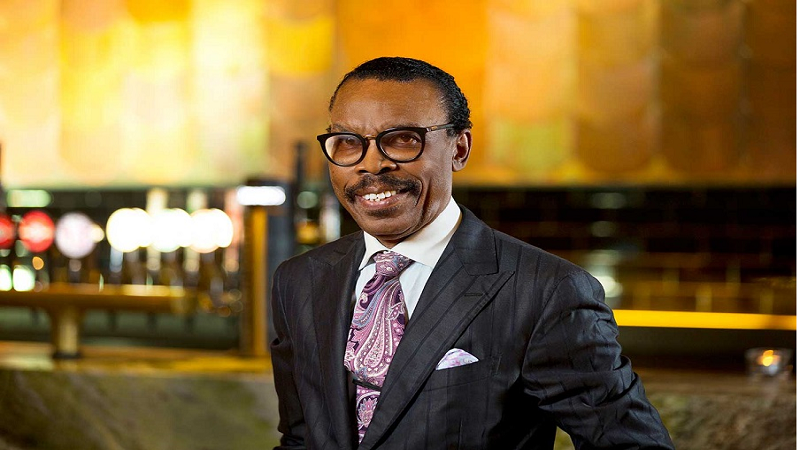
Bismarck Rewane, economist and managing director of Financial Derivatives Company, has faulted the April 2025 inflation report released by the National Bureau of Statistics (NBS), questioning its credibility and comparing the data inconsistencies to the recently exposed JAMB exam scandal.

According to the NBS, Nigeria’s headline inflation dropped marginally to 23.71 percent in April, from 24.23 percent in March. But Rewane, who appeared puzzled by the figures, argued that the data present a contradiction: states that grow the bulk of the country’s food are seeing extreme inflation, while consumer-heavy states are recording unusually low inflation levels.

“Inflation was highest in Benue at 51 percent, Ekiti at 34 percent, and Kebbi at 33 percent — these are food-producing states,” Rewane said. “Meanwhile, Ebonyi, Adamawa, and Ogun — states that are primarily consuming these food items — posted some of the lowest inflation rates: 7.19, 9.52, and 9.91 percent respectively. How is that even possible?”

Drawing a direct analogy to the Joint Admissions and Matriculation Board (JAMB) exam scandal, where results were recently discredited due to technical errors and suspected manipulation, Rewane raised doubts about the data collection process used by the NBS.

“Are those numbers credible? If they aren’t, then what exactly are we seeing here? A distortion in methodology? A JAMB-type situation?” he asked. “The inflation gap between Benue and Ogun is nearly 43 percentage points — what has happened?”

‘Government Isn’t Stabilizing Prices — It’s Distorting the Market’

Rewane didn’t stop at the data. He moved to broader concerns about how inflation is being interpreted and managed. He warned that the recent drop in food prices, such as the temporary decline in rice, may not be sustainable. Factors like rumors of poisoned rice and increased imports have led to short-term price volatility, not long-term stability, he said.

“Yes, we’ve seen some food prices come down,” he admitted. “But is it real or sustainable? The rice price fell partly due to imports and partly due to people avoiding rice because of rumors it’s poisoned. That’s not policy success — it’s fear and external supply.”

He highlighted tomatoes as a more telling case, noting a 107 percent price increase due to the spread of “tomato ebola”, a plant disease. Meanwhile, dairy prices held relatively stable — a signal of the uneven and unpredictable shifts in the food basket.

For Rewane, the policy response from the government has been both weak and misdirected.

“It’s not the government’s job to produce or sell food,” he said. “That’s the wrong model. The market determines the efficient price. A trader imports rice, offers it for sale, and the consumer makes the decision based on his income.”

He argued that interventions aimed at lowering food prices miss the point — Nigeria’s inflation is driven more by structural issues than monetary phenomena.

“You can’t reduce inflation by just pumping food into the market or manipulating prices,” he said. “There’s an output gap driven by insecurity, poor logistics, high diesel and petrol costs. Then on the other side, you have excess liquidity that fuels demand. That’s the inflation mix.”

Monetary Policy Not Enough to Fix Structural Deficiencies

While acknowledging the Central Bank of Nigeria (CBN)’s role in controlling inflation through interest rate hikes and liquidity tightening, Rewane stressed that monetary policy is not enough.

“The CBN can curb demand, yes, but output and production growth comes only from power stability, efficient logistics, lower business costs, and improved farm yields,” he said.

He added that production shortfalls in the face of unrelenting demand will always fuel inflation, regardless of how high the CBN pushes the Monetary Policy Rate (MPR).

Rewane’s comments come at a time of deep public skepticism over official data, with more Nigerians expressing doubts about economic reports that fail to align with market realities. The NBS figures showed a national inflation decline, but many Nigerians say they have seen no relief in food markets, where the cost of goods remains high.

With the NBS maintaining its position on the CPI numbers, Rewane has become the latest voice to question the authenticity of the agency’s figures. The concern has been whether government data truly reflects Nigeria’s economic conditions — or whether the country is navigating policies and metrics built on compromised foundations.

With public trust in institutions like JAMB already shaken, and prices of essentials like rice, tomatoes, and other staples still show a stark difference from the NBS data, the challenge facing the government is no longer just inflation — it’s credibility.

MaxAB-Wasoko Acquires Fatura to Accelerate Pan-African E-Commerce Landscape

0

MaxAB-Wasoko, one of Africa’s leading retail e-commerce and supply chain super apps, has announced the acquisition of Fatura, a prominent Egypt-based B2B e-commerce marketplace, from EFG Finance, a subsidiary of EFG Holding.

The acquisition marks a major milestone in MaxAB-Wasoko’s strategy to accelerate the B2B commerce and fintech landscape across the African continent. As part of the deal, EFG Finance will join MaxAB-Wasoko as a significant shareholder, acquiring an equity stake and securing a seat on the company’s board.

Speaking on the acquisition, Belal El-Megharbel, CEO of MaxAB-Wasoko said,

“The acquisition of Fatura is more than a growth play, it’s the realization of our ambition to become the go-to, one-stop-shop for retailers throughout Africa. By bringing together operational strength, product depth, and innovative fintech offerings, we’re setting a new standard for retail across the region.”

Also commenting, Aladdin ElAfifi, CEO of EFG Finance, said,

“We are thrilled to partner with MaxAB-Wasoko as they reshape the retail and supply chain sectors. Integrating Fatura will drive meaningful business growth, and our role as a significant shareholder and board member supported by EFG Holding reinforces our commitment to fostering innovation in the  fintech space.”

Fatura is a fintech-enabled B2B marketplace. Established in 2019, the company connects the suppliers (manufacturers, distributors, and wholesalers) with retailers across 23 governorates in Egypt, enabling price transparency, financial inclusion, and access to real-time and accurate data. In the FMCG sector alone, it has more than 1000 suppliers selling to more than 40,000 retailers a range of 10,000+ unique SKUs.

The acquisition of the fintech by MaxAB-Wasoko, will significantly expand its footprint in the region and bring together strengths in operations, product depth, and fintech innovation, setting a new standard for retail across Africa. Retailers will immediately benefit from a broader, more comprehensive product assortment, a crucial advantage in a fragmented supply chain where no single distributor can meet all retailer needs.

Fatura’s impressive reach, having onboarded over 626 wholesalers in 16 cities (including five new cities for MaxAB-Wasoko), ensures greater flexibility and convenience for small and medium-sized retailers.

MaxAB on the other hand, is the fastest-growing B2B business in the retail industry in Egypt. Established in 2018 as an E-commerce platform allowing local underserved merchants and mom-and-pop shops in Egypt and Morocco to grow, increase their revenues, and enhance their quality of life.

In August 2024, MaxAB and Wasoko, two leading B2B e-commerce platforms, completed their merger, creating the most significant tech merger in African history. A key focus for the merged company was expanding its financial services offerings. The newly formed entity now serves over 450,000 merchants across Egypt, Morocco, Kenya, Tanzania, and Rwanda, connecting them to 65 million consumers.

By acquiring Fatura, MaxAB-Wasoko is moving to consolidate fragmented players in the B2B e-commerce space. The acquisition of Fatura by MaxAB-Wasoko carries several key implications for the African e-commerce and retail landscape.

Retailers now have access to a broader, more diverse product assortment from combined supplier networks. This aligns with the company’s vision to drive financial inclusion and offer value-added services like credit, analytics, and inventory tools.

Also, the acquisition accelerates MaxAB-Wasoko’s ambition to become the “go-to one-stop-shop” for retailers across Africa, offering goods, financing, tech tools, and reliable delivery under one platform.

In essence, this acquisition is a growth, consolidation, and market-leadership play, positioning MaxAB-Wasoko as a dominant force in Africa’s evolving retail and digital commerce ecosystem.

Cramer Urges Calm as Moody’s Downgrade Spurs Market Jitters, Warns Against ‘Get Out Now’ Panic

0

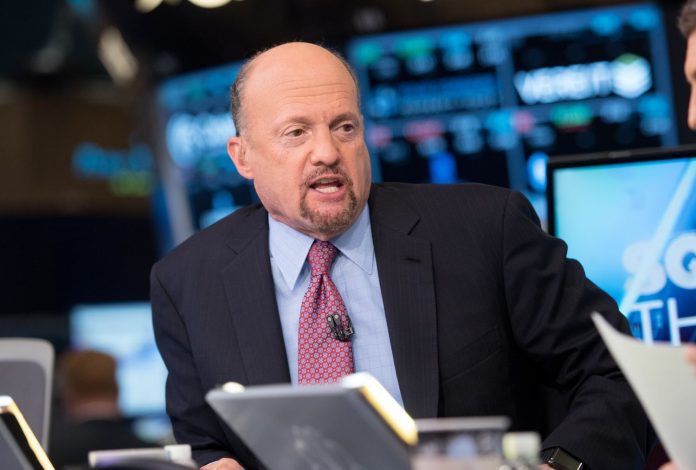
Wall Street veteran Jim Cramer is advising investors to stay composed following Moody’s historic downgrade of U.S. debt, the agency’s first such move in over a century.

The downgrade, which came after markets closed on Friday, pushed Treasury yields higher and briefly dragged down major indexes at the start of Monday’s trading. But despite the initial dip, stocks recovered to close slightly higher, as investors appeared to shrug off the worst of the downgrade fears.

Moody’s decision to cut the U.S. sovereign credit rating from Aaa to Aa1 underpins the agency’s mounting concern about the federal government’s ability to manage its rising debt burden, now above $36 trillion. Citing a “continued rise in the debt burden and a lack of effective fiscal policy measures,” Moody’s said the U.S. faces increased risks that “are unlikely to be reversed in the near term.”

The market reaction on Monday reflected some of that unease. The Dow Jones Industrial Average opened more than 300 points lower, while the S&P 500 dipped 1% at session lows. Treasury yields, especially on the long end, surged, pushing the 30-year yield briefly above 5%, the highest since 2023. However, by the end of the day, the Dow closed up 0.32%, the Nasdaq eked out a 0.02% gain, and the S&P 500 ended up 0.09%, extending its winning streak to six sessions.

“Fear is what must be tamed”

Cramer, host of CNBC’s Mad Money, pushed back against the panic triggered by Moody’s downgrade, urging investors to resist what he called a fear-driven sell-off. He compared the reaction to past downgrades from S&P in 2011 and Fitch in 2023, which caused temporary turbulence but ultimately had little long-term impact on market performance.

“Fear is what must be tamed, if you want to be a good investor,” Cramer said during his segment on Monday. “Friday’s post-close downgrade was just that: a ‘get out now’ story that spooked investors into selling out of perfectly fine portfolios.”

He noted that investors are “conditioned to be fearful” whenever credit rating agencies make moves like this. Rather than acting impulsively, Cramer said, investors should interpret the downgrade as a cautionary flag—one that signals a need for smarter allocation, not panic.

“You are being given an early warning to invest more—not more aggressively—but more of what you can save. That’s the real hedge if you’re worried about the government’s creditworthiness, not the ‘get out now,’” he said.

Cramer’s advice diverges sharply from the sentiment that often follows such sovereign downgrades. He warned that this would not be the last time investors are told to pull out of the market, but emphasized that many of these alerts are designed to generate fear, not to protect portfolios.

“The people who write these are either fools who know nothing or incredibly shrewd short sellers who really need to spread fear because of their business model,” Cramer added, in a direct swipe at what he sees as agenda-driven messaging from credit analysts or market pessimists.

Gold, Bitcoin, and a long-term mindset

While playing down the downgrade’s significance, Cramer acknowledged that investors worried about ballooning federal debt could consider hedges like gold and Bitcoin.

“If you want to act on that fear, those are your hedges,” he said. But again, he insisted the best strategy remains disciplined investing focused on savings and fundamentals, not reactionary exits.

His commentary came amid growing concerns over Washington’s long-term fiscal path. With a divided Congress and persistent partisan gridlock, investors worry that there’s little appetite in Washington for making tough decisions on taxes or entitlement reforms. Moody’s flagged these political limitations as a core reason for its downgrade.

The government’s fiscal deficits remain very large, and the debt affordability metrics will continue to deteriorate, the agency said in its assessment. The downgrade, Moody’s added, reflects the significant decline in debt affordability in recent years.

However, for all the alarms raised, many market analysts view the impact of the downgrade as largely symbolic. Speaking to Reuters, several analysts noted that Moody’s move was already priced in.

A downgrade decades in the making

This is not the first time a major rating agency has downgraded the U.S. S&P stripped the U.S. of its triple-A rating in 2011 during a similar debt-ceiling standoff in Congress. Fitch followed suit in 2023, citing political instability and rising deficits.

Moody’s, which until Friday had maintained the U.S.’s top-tier rating, finally made the move after repeated warnings throughout 2024. It said it no longer had confidence that lawmakers would implement the necessary reforms to restore the government’s financial health.

Despite the historic nature of the downgrade, Wall Street is not treating it as a watershed moment. The rebound in stocks on Monday suggests that investors are focusing on the current strength of the U.S. economy, rather than Moody’s long-term concerns. Unemployment remains low, corporate earnings have come in strong, and consumer spending continues to hold up.

Moody’s downgrade may be a wake-up call for Washington more than Wall Street. With debt service costs surging and political dysfunction worsening, the long-term risks are real. But in the short term, the fundamentals of the U.S. economy seem to remain intact.

This seems to have informed Cramer’s advice to investors tempted to abandon their positions amid fear, stay the course, tune out the noise, and invest prudently.

Egypt-based Digital Investment Platform Thndr Raises $15.7M

0
Fund, money cash dollar

Thndr, an Egyptian-based digital investment platform designed to simplify investing, has announced the raising of $15.7 million in its latest funding round, bringing the total capital raised by Fintech to $37.76 million.

Prosus, a global investment group, led the round, which was supported by Y Combinator, BECO Capital, Endeavor Catalyst, JIMCO, Raba, and Onsi Sawiris.

Thndr disclosed that the funding raised will be used to support its regional expansion into the UAE and Saudi Arabia. The platform is currently focused on deepening its operational presence in the UAE while simultaneously laying the groundwork for entry into Saudi Arabia.

Head of Investments, Europe at Prosus, Sandeep Bakshi, noted that Thndr had been transforming access to investing across MENA by empowering first-time investors with the tools and confidence to participate in the financial system. He explained that the platforms’ rapid growth, particularly among young and underserved populations, is a testament to both its leadership strength and broader mission to build a product that resonates deeply with a new generation, which is becoming increasingly important. 

“Hammouda and the Thndr team have demonstrated incredible execution over the past few years, and we are thrilled to be doubling down on our investment in the company. As early backers, we’re thrilled to support Thndr as they scale into Saudi Arabia and beyond.” Sandeep Bakshi added.

Ahmad Hammouda, CEO and co-founder of Thndr emphasizing the company’s ambitious vision said,

“Our mission is to provide access to local, regional, and international investment products through one wallet and one account making investing as seamless and inclusive as possible. With only 2% of individuals in MENA investing, we believe the time is now to build the region’s leading investment-first money app.”

Founded in 2020 by Ahmad Hammouda (CEO) and Seif Amr (COO), Thndr is a digital investment platform that allows users to invest in stocks, bonds, and funds in the Middle East through its mobile-based and low-commission digital stock brokerage.

The idea of a modern and seamless investment solution was fueled by its founders’ personal struggles trying to open up an investment account and working on the sale of an investment bank back in 2016. Their vision was to transform the way investing looked in the region, leveraging technology to affect change and work towards a more modern and inclusive system that works for everyone.

Currently, Thndr facilitates access to the right tools and resources that can empower investors with the means to achieve financial freedom.

The platform is keen on empowering its users to make financial decisions that make sense and are a good fit for them. In line with this, it rolled out;

Thndr Learn – an educational platform that teaches users everything they need to know about money.

Thndr Claps – an easy-to-digest financial newsletter delivered to their inbox daily.

Virtual Mode – A simulation of the real market for users to practice their investing skills risk-free.

In June 2023, the company achieved a remarkable achievement, surpassing 2 million app downloads. In the same year, it achieved remarkable milestones, solidifying its position as a leader in the industry. With a trading volume of $1.8 billion and an 800% growth compared to the previous year.

Fast forward to 2024, Thndr announced its inclusion in Forbes Middle East’s prestigious Fintech 50 list for 2024. Following its renowned success in Egypt, as the no 1 investment platform, it announced its market entry into the United Arab Emirates (UAE) in May 2024.

Thndr Securities Brokerage in Egypt is regulated by Egypt’s Financial Regulatory Authority, and Thndr Financial Ltd is regulated by ADGM’s Financial Services Regulatory Authority. The company is backed by prominent global investors including Prosus, Tiger Global,
BECO Capital, and others.

The company which prides itself as the number one investment platform in Egypt by number of trades, is on a mission to democratize investing in the MENA region.

Moody’s Downgrade of the U.S. Credit Rating to Aa1 is a Wake-Up Call

0

On May 16, 2025, Moody’s downgraded the U.S. sovereign credit rating from Aaa to Aa1, marking the first time Moody’s specifically lowered the U.S. rating from its top-tier Aaa status. This followed earlier downgrades by the other two major rating agencies: Standard & Poor’s in 2011 (from AAA to AA+) and Fitch Ratings in 2023 (from AAA to AA+). Moody’s had maintained the U.S. Aaa rating since 1917 but warned of potential risks in November 2023 when it shifted its outlook to negative.

The 2025 downgrade was attributed to rising government debt, increasing interest payment ratios, and persistent fiscal deficits, with Moody’s noting that successive administrations failed to address these issues. Despite the downgrade, Moody’s changed its outlook to stable, citing U.S. economic strengths and the dollar’s role as the global reserve currency.

The Moody’s downgrade of the U.S. credit rating from Aaa to Aa1 on May 16, 2025, carries significant implications for the U.S. economy and highlights a deepening divide in economic and political spheres. A lower credit rating signals increased risk to investors, likely raising yields on U.S. Treasury securities. This could increase borrowing costs for the government, as investors demand higher interest rates to compensate for perceived risk.

Higher Treasury yields may ripple through the economy, increasing costs for mortgages, car loans, and corporate borrowing, potentially slowing consumer spending and business investment. The downgrade underscores concerns about rising government debt projected at 125% of GDP by 2034 by the Congressional Budget Office and increasing interest payments (already 15.4% of federal revenues in 2024). This may force policymakers to prioritize debt reduction, potentially through spending cuts or tax increases.

However, political gridlock could hinder effective fiscal reforms, as seen in past debt ceiling crises, exacerbating market uncertainty. The U.S. dollar’s status as the world’s reserve currency and Treasuries as a safe-haven asset may mitigate immediate market turmoil. Moody’s stable outlook reflects confidence in U.S. economic strengths, but prolonged fiscal deterioration could erode this trust.

Emerging markets and economies tied to U.S. debt may face volatility, as higher U.S. yields could attract capital away from riskier assets. Higher interest rates could damp.Concurrent data unavailable for 2025 GDP growth, but pre-downgrade forecasts estimated 2.1% growth for 2025 (Federal Reserve, 2024). A slowdown could strain households already facing inflation pressures.

Increased borrowing costs may disproportionately affect lower-income groups, exacerbating inequality. The downgrade signals to markets and the public that U.S. fiscal health is not invincible. Repeated warnings from rating agencies (S&P in 2011, Fitch in 2023, and now Moody’s) could erode long-term confidence in U.S. debt if deficits remain unaddressed.

The downgrade highlights disagreements between Democrats and Republicans on addressing the debt. Democrats often advocate for revenue increases (e.g., higher taxes on corporations and the wealthy), while Republicans prioritize spending cuts or tax reductions. The U.S. faces a debt ceiling deadline in mid-2025. Political brinkmanship, as seen in 2023, could worsen market reactions to the downgrade, with each party blaming the other for fiscal mismanagement.

The downgrade’s impact on borrowing costs will likely hit lower- and middle-income households harder, as they rely more on credit for housing and consumption. Wealthier individuals and corporations, with access to alternative financing, may be less affected. Rising interest rates could widen the wealth gap, as asset owners benefit from higher returns, while wage earners face higher costs of living.

Younger generations, already burdened by student debt and housing unaffordability, may face a tougher economic environment with higher interest rates and potential austerity measures. Older generations, reliant on fixed incomes or Social Security, could see benefits threatened if entitlement reforms are proposed to curb deficits.

The downgrade fuels public distrust in institutions. Analysts view it as evidence of government incompetence, with sentiments like “both parties failed us.” Others downplay the downgrade, citing the U.S.’s economic dominance, revealing a divide in how the public processes the news. Misinformation on platforms like X could amplify divisions, with some claiming the downgrade is a “globalist plot” or others exaggerating its immediate impact.

The downgrade raises questions about balancing domestic needs (e.g., infrastructure, healthcare) with global commitments (e.g., military spending, foreign aid). The S&P 500 downgrade in 2011 led to temporary market volatility but no long-term collapse, as U.S. Treasuries remained a global benchmark. Moody’s downgrade may follow a similar path, but cumulative downgrades across agencies signal a trend that could erode confidence over time.

The Trump’s administration (following the 2024 election) faces immediate pressure to address fiscal sustainability. However, campaign promises of tax cuts or expanded spending could clash with the need for deficit reduction, intensifying the political divide.

The Moody’s downgrade of the U.S. credit rating to Aa1 is a wake-up call for addressing fiscal challenges, with implications ranging from higher borrowing costs to strained economic growth. It exacerbates divides—political, economic, generational, and perceptual—that complicate a unified response. While the U.S.’s economic strengths and the dollar’s global role provide a buffer, failure to bridge these divides and enact meaningful reforms could amplify the downgrade’s long-term impact.