DD
MM
YYYY

PAGES

DD
MM
YYYY

spot_img

PAGES

Home Blog Page 1292

U.S. Dollar Index Fell To a 10-Day Low of 100.186

0

The U.S. Dollar Index (DXY) fell to a 10-day low of 100.186, as reported on May 19, 2025. This decline of approximately 0.75% occurred despite rising U.S. Treasury yields, which typically support the dollar. Analysts suggest market caution and a disconnect between rates and the dollar’s performance, with some linking the drop to broader concerns, such as Moody’s downgrade commentary.

The DXY, which measures the U.S. dollar against a basket of six major currencies (EUR, JPY, GBP, CAD, SEK, CHF), has been under pressure, with recent data showing a 0.51% decrease to 100.3080 from 100.8190. Technical analysis indicates potential further declines unless the index breaks above key resistance levels like 102.

The U.S. Dollar Index (DXY) dropping to a 10-day low of 100.186 on May 19, 2025, despite rising U.S. Treasury yields, carries significant implications for markets and highlights a notable divide between traditional economic relationships and current market dynamics. A weaker dollar makes U.S. exports more competitive, potentially boosting sectors like manufacturing and agriculture. However, it raises the cost of imports, which could pressure consumer prices and contribute to inflation.

Emerging markets with dollar-denominated debt may see temporary relief, as a weaker dollar reduces repayment burdens. The Federal Reserve faces a complex environment. A declining dollar amid rising yields could signal market skepticism about the Fed’s ability to maintain tight policy without triggering economic slowdown. Posts on X suggest traders are cautious, with some speculating the Fed might pause rate hikes if inflationary pressures ease due to a weaker dollar.

Conversely, persistent inflation (amplified by costlier imports) could force the Fed to maintain or increase rates, further complicating the dollar’s trajectory. Major currencies in the DXY basket, like the euro (57.6% weight) and yen (13.6% weight), may strengthen. This could support European and Japanese exports but challenge their domestic inflation control efforts.

A weaker dollar may also bolster commodity prices (e.g., oil, gold), as these are priced in USD. This could exacerbate inflationary pressures globally. A declining dollar often correlates with rising equity markets, as it reduces pressure on multinational corporations with foreign earnings. However, the disconnect with rising yields suggests investor uncertainty, potentially capping risk-on rallies.

The traditional relationship where rising U.S. Treasury yields (e.g., 10-year yields recently climbing) strengthen the dollar is breaking down. This divide stems from several factors: Investors may doubt the Fed’s ability to sustain high rates without triggering a recession, leading to dollar selling despite yield increases. Rising yields typically attract capital to U.S. assets, but global uncertainty (e.g., geopolitical tensions, China’s economic recovery) may be driving safe-haven flows into other currencies or assets, weakening the dollar.

Technical analysis, shows the DXY struggling below key resistance (e.g., 102). Heavy dollar positioning by traders may be unwinding, exacerbating the decline. Commentary around Moody’s downgrade of U.S. credit outlooks, referenced on X, suggests structural concerns about U.S. fiscal health, which could undermine confidence in the dollar even as yields rise.

This divide reflects a market grappling with conflicting signals: rising yields signal tighter policy, but a falling dollar suggests doubts about U.S. economic resilience. If the DXY continues to weaken (e.g., toward support levels near 99.5), it could trigger further commodity price spikes and equity volatility. Conversely, a reversal above 101 could restore the traditional yield-dollar correlation.

Microsoft Drops Developer Onboarding Fees for Windows App Store in Push to Attract More Creators

0

Microsoft is making a decisive play to draw more developers to its ecosystem. During its Build 2025 conference on Monday, the company announced it is eliminating the registration fee required to publish apps on the Microsoft Store.

The change takes effect in June 2025 and marks a significant shift in Microsoft’s approach to lowering the barrier for individual developers.

Under the current model, developers pay a one-time fee of $19 to sign up and submit their applications to the Microsoft Store. Beginning next June, that cost will be waived entirely for individual developers looking to publish Windows apps.

“By eliminating these one-time fees, Microsoft is creating a more inclusive and accessible platform that empowers more developers to innovate, share, and thrive on the Windows ecosystem,” the company said in a press statement.

The move positions Microsoft as the only major platform among its peers to drop developer onboarding charges altogether. Apple still requires developers to pay a $99 annual fee to distribute apps through its App Store, while Google maintains a one-time $25 registration fee for the Play Store. These charges have come under increasing scrutiny, particularly as regulatory pressure mounts against Big Tech’s control over digital storefronts and app distribution policies.

Though onboarding fees are being scrapped, Microsoft emphasized that its existing revenue-sharing model will remain in place for developers using its in-app commerce platform: 15% for non-gaming apps and 12% for games. However, developers who opt to use their own payment and commerce systems will continue to retain 100% of their revenue from non-gaming apps.

The announcement also dovetails with the launch of Microsoft’s new FastTrack Program for the Microsoft Store, designed to provide support and incentives for larger app publishers. The program offers benefits such as waived registration fees, accelerated certification processing, and customized onboarding support for qualifying companies.

In a broader overhaul of the developer experience, Microsoft is also introducing enhancements to the app review and certification process. Developers will now receive detailed submission reports, including crash logs and compliance recommendations, allowing them to fix issues more quickly and resubmit with clarity. Additionally, Microsoft will begin hosting privacy policy documents for developers at no extra cost — a move intended to ease the publication burden and eliminate the need for third-party web hosting just to meet submission criteria.

These steps are part of Microsoft’s wider effort to rejuvenate the Windows app ecosystem and reinforce the Microsoft Store as a viable and attractive alternative for developers increasingly looking for less restrictive marketplaces. The changes also come at a time when developer sentiment is souring toward Apple and Google over steep fees and stringent app review processes.

With the removal of onboarding fees, Microsoft hopes to tap into a broader pool of independent developers and startups who may have been deterred by upfront costs.

By opening the doors wider, Microsoft is signaling that it wants the Microsoft Store to become more than just a marketplace — it wants it to be a platform where developers of all sizes, from bedroom coders to enterprise teams, can publish with fewer hurdles and greater control.

Vitalik Buterin’s Proposal For Scaling Layer-1 Node Operation Addresses Concerns About Transaction Capacity and Decentralization

0

Vitalik Buterin, Ethereum’s co-founder, published a proposal titled “A local-node-favoring delta to the scaling roadmap” on ethresear.ch, outlining strategies to enhance Ethereum Layer 1 (L1) scaling while preserving accessibility for users running local nodes. The proposal addresses the tension between increasing L1 transaction capacity and maintaining decentralization, emphasizing the importance of enabling individuals to operate nodes for trustless, censorship-resistant access to the blockchain.

Buterin introduces a new node type, “partially stateless nodes,” designed to verify blocks statelessly and validate the entire chain (via stateless validation or ZK-EVM) while only maintaining a user-selected subset of the blockchain state (e.g., data for specific accounts, DeFi apps, or tokens like ETH or stablecoins). These nodes reduce storage demands by up to 50%, as users only store relevant data without needing full Merkle proofs or the entire blockchain history. Queries outside the stored subset can fail or be routed to external cryptographic solutions via an on-chain contract.

This approach enhances privacy and reduces reliance on centralized Remote Procedure Call (RPC) providers, which Buterin warns could face censorship pressures. Buterin emphasizes accelerating the implementation of EIP-4444, which limits nodes to storing approximately 36 days of historical data, significantly reducing disk space requirements. Long-term data would be stored in a distributed network using erasure coding to ensure robustness without burdening individual nodes.

This addresses the primary barrier to node operation, as storage needs currently deter many users from running nodes. A decentralized storage solution using erasure coding is proposed to maintain long-term blockchain data. Each node would store only a small fraction of historical data older than 36 days, ensuring permanence without relying on centralized providers.

Gas Pricing Adjustments

Buterin suggests modifying gas pricing to make storage-intensive operations more expensive while reducing costs for execution. This incentivizes efficient state management and supports higher L1 gas limits (potentially 10-100x increases) without overwhelming node operators. Increasing the L1 gas limit to boost throughput risks centralization, as it raises hardware and storage requirements, making it harder for individuals to run full nodes. Buterin’s proposal counters this by optimizing node efficiency.

Local nodes are critical for decentralization, privacy, and censorship resistance. A market dominated by a few RPC providers could lead to deplatforming or censorship, as some already exclude entire countries. The proposal addresses concerns that higher gas limits make full node operation inaccessible, ensuring Ethereum remains user-friendly even as it scales to meet demands from DeFi, NFTs, and on-chain gaming.

The changes could enable Ethereum to handle significantly higher transaction volumes (10-100x) while keeping node operation feasible for individuals. By reducing storage and resource demands, the proposal strengthens Ethereum’s decentralized ethos, making it easier for retail users to participate in validation and staking.

News of the proposal coincided with a 2.3% ETH price increase on May 19th, 2025, with trading volume spiking 15% on exchanges like Kraken, reflecting community optimism about Ethereum’s scalability roadmap. Increasing L1 gas limits raises concerns about centralization risks due to higher hardware requirements for validators. Buterin acknowledges the need to balance these trade-offs.

The proposal complements, rather than replaces, advanced cryptographic solutions like ZK-EVMs, aiming for a scalable, privacy-preserving network. Vitalik Buterin’s proposal introduces innovative solutions like partially stateless nodes, EIP-4444 prioritization, distributed storage, and gas pricing adjustments to make Ethereum L1 scaling more inclusive for local node runners. By addressing storage and accessibility barriers, the plan aims to boost Ethereum’s throughput while preserving its decentralized and censorship-resistant principles, reinforcing its position as a leading blockchain platform.

You Don’t Want to Miss This Undervalued Altcoin Introducing the Next Generation of Crypto Payments

0

Crypto projects come and go every day. Most talk big but deliver little. SpacePay feels different, though. This London startup isn’t just another token – they’re actually solving a real problem. They let shops accept crypto using the card machines they already have. No new equipment needed.

Looking at their setup reveals some pretty slick stuff. They work with over 325 different crypto wallets, convert everything to cash instantly for the merchant, and only take a tiny 0.5% cut on transactions. People are noticing too – they’ve pulled in more than $1 million so far in their presale. Right now, their $SPY token sits at $0.003181.

Why Shops Might Actually Use This

Most crypto payment stuff sucks for regular businesses. Who wants to buy expensive new equipment or learn complicated tech? That’s where SpacePay nails it.

They figured out how to make existing card machines work with crypto. Grab your phone, scan, pay with Bitcoin – done. The shop gets regular dollars, pounds, or euros right away. No waiting, no crypto prices crash an hour after someone buys something.

Many small business owners hate those 3% credit card fees eating their profits. When hearing SpacePay only charges 0.5%, most actually stop and listen. That’s unusual – shop owners normally zone out when crypto gets mentioned.

The volatility protection matters too. Shop owners don’t care about hodling – they need stable money to pay bills. SpacePay converts crypto payments to regular money instantly, so businesses don’t stress about price swings.

The $SPY Token: What’s It For?

So they’ve got this $SPY token. Total supply is capped at 34 billion. That’s a lot of tokens, but they’ve split them up pretty sensibly.

These aren’t just useless tokens either. If you hold this new altcoin, you get to vote on where the project goes next. Sick of projects where some anonymous team makes all the decisions? Yeah, most people are too. At least here token holders get a say.

They’re also sharing some money with token holders. As more people use SpacePay, a cut of those transaction fees goes back to people holding the token. That’s way better than tokens that do nothing but go up or down in price.

Oh, and they do these monthly airdrops for active users. Early holders also get first dibs on new features. Most people are tired of projects that just have a token for the sake of having a token. At least SpacePay built some real utility into theirs.

Visit SpacePay Presale

The Tech Stuff (Keeping It Simple)

Nobody likes getting their card declined. SpacePay uses solid encryption and watches transactions in real-time to keep things secure. No complicated explanation needed – it just works.

They support tons of cryptocurrencies too. Use whatever you’ve got in your wallet. That makes sense – limiting payment options is dumb when you’re trying to get people to actually use this stuff.

Here’s what stands out: they already have a working product. Not just promises and fancy graphics. They built it, it works, and now they’re expanding it. Plus, they’re doing all the boring regulatory compliance stuff that nobody talks about but actually matters if you want businesses to adopt your tech.

Where’s All The Money Going?

It’s always worth checking how projects split up their tokens. Shows what they really care about.

SpacePay’s breakdown looks pretty fair:

  • 20% for the public presale. That’s for regular folks, not just insider VCs.
  • Only 5% for the founders. That’s refreshingly low – most projects give founders way more.
  • 17% for user rewards. They’re putting money where their mouth is on community stuff.
  • 10% for development. Gotta keep building.
  • 36% split between partnerships, marketing, and community.
  • 12% in reserve. Every project needs a rainy day fund.

The presale price goes up in stages. Right now it’s at $0.003181. Next stage will be higher. Basic supply and demand – early birds get better prices.

How To Get In On The Presale

Thinking about grabbing some $SPY tokens? It’s pretty easy. Head to their website and connect a crypto wallet. They support all the usual suspects – MetaMask, WalletConnect, and others.

Payment can be made with ETH, BNB, MATIC, AVAX, BASE, USDT, or USDC. Don’t have crypto? They also take bank cards, which is handy for newcomers.

Just decide how many to buy, confirm the transaction in the wallet, and that’s it. Make sure to screenshot or save transaction details somewhere – those will be needed later when it’s time to claim the tokens.

After that, follow their Twitter or join their Telegram to stay updated. Crypto moves fast, and no one wants to miss important announcements.

JOIN THE SPACEPAY ($SPY) PRESALE NOW 

Website    |    (X) Twitter    |  Telegram

Why the Blackout in Ila-Orangun Demands Immediate National Attention

0

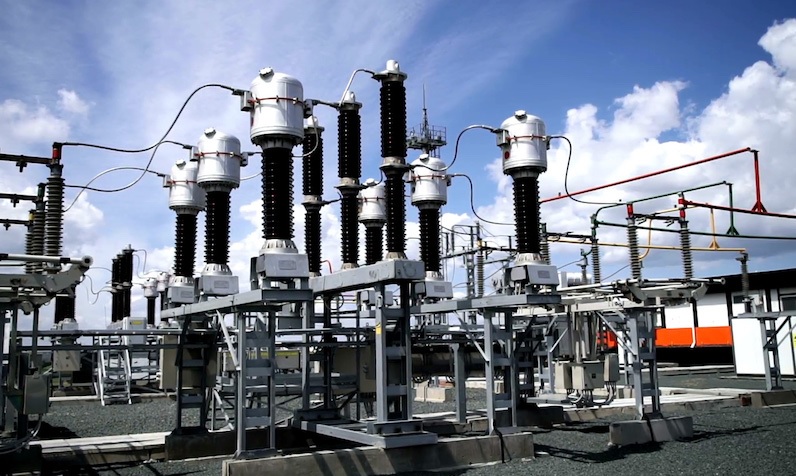
Despite its importance as an educational and commercial hub, Ila-Orangun has faced a disturbing reality since February 2025. A persistent and unaddressed electricity outage has left thousands of residents in complete darkness for over three months. In that time, livelihoods have withered, education has suffered, healthcare delivery has been compromised, and local morale has sharply declined.

Electricity, often taken for granted in urban centers, remains a critical foundation for social and economic development. In communities like Ila-Orangun, the absence of power is not merely a technical glitch. It is a full-blown crisis that affects every aspect of daily life. From market traders and artisans to schoolchildren and healthcare workers, every resident is paying the price for institutional neglect and infrastructural decay.

Small businesses are among the hardest hit. Tailors, hairdressers, welders, and cold room operators depend entirely on steady electricity to remain operational. With power cut off indefinitely, many now rely on costly generators to sustain basic operations, driving up expenses and limiting profitability. For those unable to afford alternative sources of power, business has simply come to a halt. This not only deepens poverty but also disrupts the local economy in irreversible ways.

The impact on education is equally alarming. Ila-Orangun hosts two higher education institutions: the Osun State College of Education and the Federal University of Health Sciences. These institutions cater to hundreds of students who now study by candlelight or depend on their phones for both lighting and learning. For a generation expected to compete in a digital world, this situation undermines the quality and equity of their academic experience. Without electricity, classrooms remain dark, laboratories sit idle, and the promise of innovation remains unfulfilled.

In the healthcare sector, the situation is no less dire. Clinics and pharmacies struggle to store vaccines and medicines that require refrigeration. Essential procedures have become difficult or impossible to perform safely. Pregnant women, infants, and the elderly are particularly at risk when healthcare facilities are stripped of their most basic utilities. Public health cannot be separated from infrastructure, and in Ila-Orangun, the link is now dangerously exposed.

Despite these profound consequences, there has been a deafening silence from those charged with resolving the issue. The Ibadan Electricity Distribution Company (IBEDC), which serves the region, has failed to offer a clear explanation, let alone a roadmap to restoration. Communication from both the state and federal levels has been sparse or entirely absent. The lack of urgency displayed by public institutions and utility providers reflects a broader pattern of systemic indifference to the needs of smaller communities.

This situation, however, has not gone unnoticed by the people of Ila-Orangun themselves. In an inspiring show of agency, the youth-led group Ila-Orangun Voice of the Youths (IVY) has taken the initiative to organize a Stakeholders’ Forum. Scheduled for May 22, 2025, at the Ila City Hall, the event is intended to bring together citizens, public officials, and representatives from IBEDC to find a way forward. It is a grassroots response born out of frustration but also driven by hope. That hope, however, should not be mistaken for patience.

We must ask critical questions: Why has it taken over three months to address such a fundamental failure? Why has there been no consistent communication to update residents on the status of repairs or expected timelines? What emergency measures have been considered, and why have none been implemented?

This is not a call for charity. It is a call for justice, transparency, and leadership. Residents of Ila-Orangun are not asking for preferential treatment. They are asking for what every Nigerian deserves: reliable public utilities, responsive governance, and dignified living conditions. Electricity is not a luxury. It is a basic necessity that enables progress in every sector of society.

The responsibility to fix this does not rest with IBEDC alone. The Osun State Government must take the lead in coordinating a multi-stakeholder response, supported by federal institutions such as the Ministry of Power and the Nigerian Electricity Regulatory Commission (NERC). Lawmakers representing Osun State should raise the matter on the floors of their respective chambers and push for immediate action. More importantly, there must be a framework for long-term prevention. Communities cannot continue to be left vulnerable to such prolonged blackouts due to poor planning or maintenance failures.

The crisis in Ila-Orangun is a mirror reflecting deeper issues within Nigeria’s power infrastructure. But it is also an opportunity to get it right. Restoring power to Ila-Orangun is not just about turning the lights back on. It is about restoring trust in our institutions, rekindling economic activity, and reaffirming the social contract between the government and the governed.

The people of Ila-Orangun are still waiting. Their resilience should not be mistaken for surrender.