DD
MM
YYYY

PAGES

DD
MM
YYYY

spot_img

PAGES

Home Blog Page 1295

Microsoft Pushes for Collaborative, Smarter AI Agents with “Agentic Web” Vision

0

At the Build 2025 developer conference in Seattle, Microsoft laid out an ambitious roadmap for the future of artificial intelligence, one that imagines a world where AI agents from different companies can not only work together but also retain meaningful memories of their interactions with users.

The initiative is a clear signal of Microsoft’s determination to dominate the next phase of the AI revolution — one defined by interoperable, memory-rich digital assistants.

Speaking to reporters and analysts at the company’s Redmond headquarters ahead of the event, Microsoft Chief Technology Officer Kevin Scott said the tech giant is championing open standards that would allow AI agents from different developers to collaborate across platforms. He pointed to the Model Context Protocol (MCP), an open-source standard introduced by Anthropic and backed by Google, as a key part of this strategy.

“Your imagination gets to drive what the agentic web becomes,” Scott said, “not just a handful of companies that happen to see some of these problems first.”

From the Internet to the Agentic Web

Scott drew parallels between today’s AI evolution and the early days of the internet. Just as hypertext protocols in the 1990s unlocked the World Wide Web, Microsoft sees MCP as the infrastructure for what it calls the “agentic web” — a new digital ecosystem where intelligent agents interact, delegate tasks, and co-exist in real time across corporate boundaries.

In this new framework, AI agents would be able to coordinate on tasks like resolving software bugs or managing workflow without being siloed by company firewalls or closed APIs. Microsoft believes this open architecture will democratize AI development and unleash a wave of innovation similar to what the internet enabled three decades ago.

Giving AI a Better Memory

Beyond interoperability, Microsoft is also aiming to solve one of AI’s most persistent limitations: memory. Most of today’s AI agents operate in a transactional, stateless manner — each request or interaction is treated in isolation, often without recollection of previous context. Scott acknowledged this flaw, saying, “Most of what we’re building feels very transactional.”

To address this, Microsoft is introducing a method called structured retrieval augmentation. Instead of attempting to store and recall entire conversations, a process that consumes vast amounts of computing power, this technique allows AI agents to extract and preserve short, meaningful snippets from each interaction. The idea is to create a compact, retrievable roadmap of what was discussed.

“This is a core part of how you train a biological brain,” Scott said. “You don’t brute force everything in your head every time you need to solve a particular problem.”

The approach promises to make AI agents more personalized and context-aware, without the prohibitively high cost associated with current large-context models.

Tools for the AI Workforce

The company is also expected to debut new developer tools to manage and deploy AI agents as part of its enterprise offerings. According to an internal memo reported by Business Insider, Microsoft will roll out “Tenant Copilot” — a system designed to oversee agent activities on behalf of organizations — and “Agent Factory,” a development environment that lets companies build and train their own custom AI agents.

These efforts are part of Microsoft’s broader strategy to position AI agents as “digital teammates” — assistants that go beyond simple chatbot functions to perform sophisticated, autonomous tasks alongside human workers.

By aligning with MCP and pursuing cross-platform standards, Microsoft is signaling that it wants AI to be open, modular, and deeply integrated into everyday workflows, not a set of isolated tools owned by a few tech giants.

The Build 2025 conference, which began on May 19, features keynotes from CEO Satya Nadella and other executives, focusing on Microsoft’s expanding suite of AI technologies. The event is available online, with the company expected to reveal more details about Windows Copilot, AI-integrated development environments, and new partnerships in the AI ecosystem.

However, Microsoft’s big bet rests on whether the industry will embrace its call for collaboration. If successful, the agentic web could reshape how we use and interact with artificial intelligence in the future.

U.S. Treasury Yields Jump after Moody’s Downgrade of US Credit Rating, Trump-Backed Tax Bill Fuel Fears Over Fiscal Stability

0

U.S. Treasury yields surged on Monday after Moody’s Investors Service downgraded the country’s credit rating for the first time in decades, sending tremors through the bond market and reigniting debate about America’s worsening fiscal trajectory.

The move came just as House Republicans advanced a Trump-backed tax and spending bill that could add trillions more to the national deficit.

The yield on the 30-year Treasury note jumped 13 basis points to 5.03%, breaking through a psychological threshold that has rattled investors in recent weeks. The 10-year yield climbed 11 basis points to 4.552%, while the 2-year yield rose by 4 basis points to 4.021%. Yields move inversely to prices, meaning the spike reflected a sharp sell-off in U.S. government bonds.

The reaction came swiftly after Moody’s downgraded the U.S. sovereign rating from Aaa to Aa1 on Friday — the first time it has lowered the country’s rating since it began assigning one in 1949. It cited the government’s chronic inability to rein in its budget deficits and the mounting costs of servicing its debt in a high-interest rate environment.

“This one-notch downgrade on our 21-notch rating scale reflects the increase over more than a decade in government debt and interest payment ratios to levels that are significantly higher than similarly rated sovereigns,” Moody’s said in a statement.

The agency said the downgrade also reflects growing doubts over whether any meaningful fiscal reform will emerge from Washington in the foreseeable future.

Moody’s had been the last of the three major ratings firms to keep the U.S. at its top rating, after S&P stripped the country of its AAA status in 2011 and Fitch followed suit earlier this year. Now, all three have relegated the United States to second-tier credit standing — a symbolic blow to America’s long-standing position as the world’s most trusted borrower.

Deutsche Bank analysts called the downgrade “a major symbolic move,” noting that Moody’s had held the line for over seven decades.

But symbolism aside, the timing of the downgrade has concrete implications. It came just as House Republicans pushed through the Trump-endorsed tax and spending package in the House Budget Committee. The bill, which aims to extend tax cuts from 2017 and introduce new tariff policies, is estimated to deepen the deficit by trillions over the next decade.

Moody’s took direct aim at that plan in its downgrade report, warning that “successive U.S. administrations and Congress have failed to agree on measures to reverse the trend of large annual fiscal deficits and growing interest costs.” The agency expressed little faith that current legislative proposals, including those advanced by House Republicans, would meaningfully reduce spending or stabilize debt.

Bank of America economist Aditya Bhave echoed those concerns, writing in a note, “With tax cuts and tariffs hanging in the balance, Moody’s appears to be sending a message that it thinks these policy changes will, on net, put the US on an even worse fiscal trajectory. That is, tariff revenues won’t fully offset the cost of the proposed tax bill. We agree.”

The downgrade and the spike in yields have also shaken confidence in U.S. Treasurys as a safe haven for global investors. For decades, U.S. government debt has been considered the gold standard in global finance — a refuge in times of uncertainty. But with interest payments ballooning and political gridlock worsening, investors are beginning to ask whether that assumption still holds.

Even as debt issuance climbs, foreign demand is showing signs of strain. The Federal Reserve, which had long played a stabilizing role by purchasing Treasurys in the secondary market, has pulled back amid efforts to tighten monetary policy and curb inflation.

Eyes are now on the Fed. Central bank officials — including Atlanta Fed President Raphael Bostic, New York Fed President John Williams, and Dallas Fed President Lorie Logan — are expected to speak on Monday. Markets are watching closely for any shift in tone or hints about how the central bank views the risks stemming from fiscal policy and bond market volatility.

The downgrade also throws fresh scrutiny on the political calculus behind the Republican bill. Trump allies argue that making the 2017 tax cuts permanent is essential to sustaining economic growth and reindustrializing America through tariffs on foreign competitors. But critics say the plan is fiscally reckless, ignoring the weight of soaring debt and the implications of rising borrowing costs.

The national debt now exceeds $34 trillion, and annual interest payments on that debt are approaching $1 trillion, surpassing what the country spends on defense or Medicare. With no bipartisan agreement in sight, analysts warn that America’s fiscal credibility may face even greater tests in the months ahead.

Trying to 20x Your Portfolio Before the Bull Run Ends? This Crypto Competitor to XRP Will Do It in 2 Weeks

0

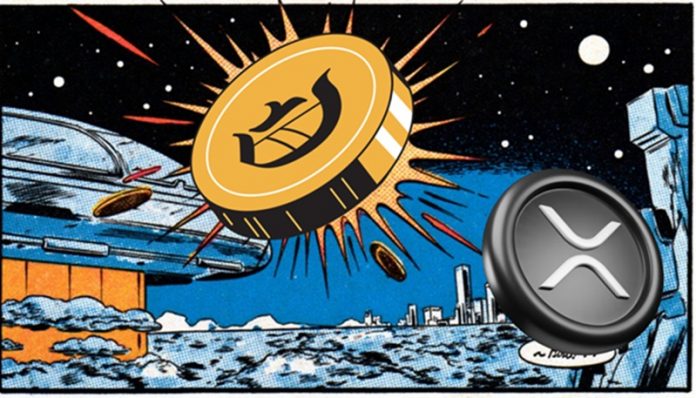
When the cryptocurrency market prepares for the next bull run, many investors search for high-potential projects to grow their portfolios quickly. Salamanca (DON) is one of the tokens entering the market and getting recognition for outstanding growth potential and further sites. As a competitor of XRP, Salamanca (DON) is positioned to deliver huge returns, with some analysts estimating a 2,000% price increase within two weeks.

Why Salamanca (DON) Could Outperform XRP

While XRP has been showing strong growth, with the coin down by 5.94% over the last twenty-four hours and accumulating 11.48% of value over the week, Salamanca (DON) is speedily gaining value.

The memecoin based on the Binance Smart Chain has established its value, peaking at $0.0060 in early May. Although there has been a slight correction, Salamanca is now gaining more investors, particularly as the altcoin prepares to list on Binance and is expected to increase its value by 2,000%.

Listed on Gate, MEXC, and Pancakeswap, Salamanca has already proven capable of grabbing attention in the market. The Binance listing to come will be a game-changer, as now this coin will get liquidity and institutional support, making it even more visible and promising for its growth.

The Path to a 2,000% Price Surge

The target for Salamanca (DON) is a mind-blowing 2000% growth by the end of 2025. This ambitious goal aims to bring the price to about $0.05, bringing Salamanca to a competitive position on the memecoin market. With XRP still on a bullish trend, Salamanca’s potential is evident, especially given its niche in the meme coin industry and the hype of its listing on Binance.

Such an excellent potential for rapid growth is an attractive proposition for investors looking to capitalize on the upcoming bull run; as such, Salamanca (DON) is a good pick. With its vibrant market actions, increased trading volume, and upcoming listings, the coin is at the top of the meme coins.

Trade $DON now on Gate.io: https://www.gate.io/zh/trade/DON_USDT

Why You Should Consider Salamanca (DON) for Quick Gains

If you want to 20x your portfolio before the next bull run entirely takes off, then Salamanca (DON) is one coin you should look at. With a low market cap of $1.98M and a massive 185.93% increase in trading volume, the token exhibits bullish tendencies that will likely provide rapid profits.

Analysts forecast that Salamanca’s value may skyrocket once it is listed on Binance, positioning it as a strong possibility in the meme coin fight. Should the token reach its target price of $0.05, the early investors might enjoy significant returns.

About Salamanca ($DON)

Salamanca (DON) is a meme coin inspired by the notorious Salamanca cartel from Breaking Bad and Better Call Saul. Built on the Binance Smart Chain (BSC), the token blends pop culture with crypto, aiming to build a strong, community-driven ecosystem backed by strategic exchange listings.

For more information about Salamanca (DON), visit:


Website: https://salamanca.club/

Twitter/X: https://x.com/salamanca_token

Telegram: https://t.me/salamancatoken

Call Between Donald Trump and Vladimir Putin Today Will Give Directions to the Long Standing Peace Negotiations on Ukraine Vs Russia Conflicts

0

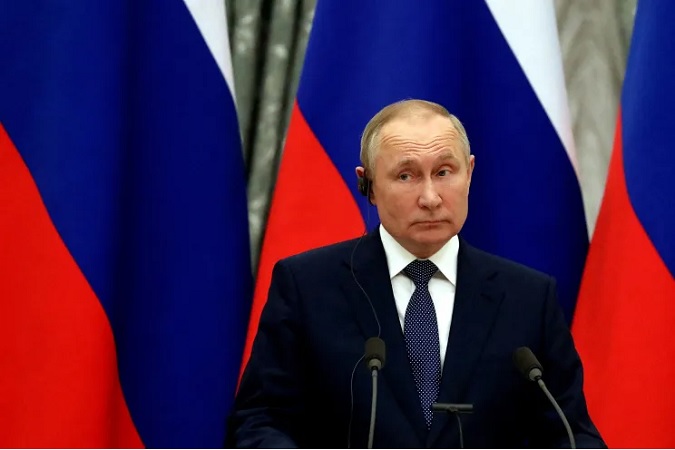
U.S. President Donald Trump is scheduled to hold a phone call with Russian President Vladimir Putin today, May 19, 2025, at 10:00 AM ET (15:00 GMT). The primary focus of the call is to discuss a potential ceasefire and steps toward ending the ongoing war in Ukraine, with Trump emphasizing stopping the “bloodbath” that he claims is killing thousands of Russian and Ukrainian soldiers weekly. Trade is also listed as a topic on the agenda. Following the call with Putin, Trump plans to speak with Ukrainian President Volodymyr Zelenskyy and NATO leaders to further diplomatic efforts.

The Kremlin has confirmed preparations for the call, and Vice President JD Vance indicated Trump will press Putin on his seriousness about achieving peace. However, there is skepticism, with Ukrainian officials and analysts noting Russia’s additional demands, such as halting foreign military aid to Kyiv, could complicate negotiations.

The scheduled call between U.S. President Donald Trump and Russian President Vladimir Putin on May 19, 2025, to discuss a potential ceasefire in Ukraine carries significant implications for global geopolitics, U.S. foreign policy, and the ongoing war. Trump’s initiative signals a potential shift in U.S. policy from the Biden administration’s approach of sustained military support for Ukraine to a more negotiation-driven stance. This aligns with Trump’s campaign promises to end the war swiftly, possibly by pressuring both Russia and Ukraine to compromise.

The call, followed by discussions with Ukrainian President Volodymyr Zelenskyy and NATO leaders, could strain U.S.-NATO relations. Trump’s past skepticism of NATO and his push for a quick resolution may clash with European allies’ commitment to supporting Ukraine’s sovereignty without conceding to Russian demands. A direct dialogue with Putin could thaw U.S.-Russia relations, strained since the war began in 2022. However, any perceived concessions to Russia (e.g., on sanctions or territorial issues) could embolden Putin and signal weakness to other adversaries like China.

Ukraine’s Position

Ukraine may face increased pressure to accept a ceasefire, potentially involving territorial concessions or neutrality, which Zelenskyy has historically resisted. Sources indicate Ukraine is skeptical of Trump’s approach, fearing it prioritizes speed over Kyiv’s interests. Trump’s reported intent to halt or reduce U.S. military aid to Ukraine could weaken Kyiv’s negotiating leverage and battlefield position, especially if Russia’s demands include demilitarization or limits on foreign aid.

Russia’s Calculations

Putin may see Trump’s outreach as an opportunity to secure favorable terms, given Russia’s recent battlefield gains and Trump’s urgency to broker a deal. Kremlin sources confirm Putin’s willingness to engage, but additional demands (e.g., halting aid to Kyiv) suggest Russia aims to maximize concessions. A successful negotiation could bolster Russia’s image as a resilient power, countering Western isolation efforts and potentially weakening sanctions regimes.

The inclusion of trade on the call’s agenda suggests discussions on energy markets or sanctions relief, which could impact global oil and gas prices. A resolution might stabilize markets, but concessions to Russia could alienate energy-dependent European allies. A U.S.-brokered deal could set a precedent for resolving other global conflicts, but failure or perceived appeasement of Russia might encourage authoritarian regimes to pursue aggressive territorial ambitions.

Trump’s approach is divisive within the U.S. Supporters, including Vice President JD Vance and Republican lawmakers, view it as a pragmatic step to end a costly war, aligning with Trump’s “America First” doctrine. Critics, including some Democrats and hawkish Republicans, argue it risks abandoning Ukraine and rewarding Russian aggression. Polls (e.g., Pew Research, 2024) show Americans are split on Ukraine aid, with growing fatigue among some voters but strong support for Kyiv among others. Trump’s push for a quick deal may resonate with war-weary voters but alienate those prioritizing democratic values.

European nations, particularly Poland and the Baltic states, are wary of any deal that compromises Ukraine’s sovereignty or NATO’s unity. The UK and France have emphasized continued support for Kyiv, and European analysts highlight fears of a U.S.-Russia deal sidelining Europe. Ukraine insists on full territorial restoration and reparations, while Russia demands control over annexed regions and limits on Ukraine’s NATO aspirations. This fundamental divide makes a ceasefire challenging, as neither side trusts the other’s intentions.

Countries like India and Brazil have called for peace but avoid condemning Russia, contrasting with Western nations’ strong anti-Russia stance. A Trump-Putin deal could align with Global South preferences for neutrality but risks alienating Western allies. Trump’s approach reflects realist foreign policy, prioritizing U.S. interests and quick results over ideological commitments to democracy. This clashes with idealist views, prevalent in Biden’s administration and among Ukrainian advocates, that emphasize supporting Ukraine as a bulwark against autocracy.

A rapid ceasefire might reduce immediate bloodshed but risks long-term instability if it leaves Russian gains intact or Ukraine vulnerable. Critics argue this could embolden Putin to pursue further aggression. Reports from Reuters, The Wall Street Journal, and Al Jazeera confirm the call’s timing and agenda, noting Trump’s focus on ending the “bloodbath” and Russia’s additional demands. The Washington Post highlights Ukraine’s skepticism and NATO’s concerns.

The war, ongoing since February 2022, has killed tens of thousands and displaced millions. Recent Russian advances in Donetsk and Ukraine’s incursion into Kursk have raised the stakes, making Trump’s intervention a high-stakes gamble. The Trump-Putin call could mark a turning point in the Ukraine war, with potential to reduce hostilities but also to reshape U.S. alliances and global power dynamics.

The divides—between U.S. political factions, Western allies and Russia, and competing visions of peace—underscore the complexity of achieving a lasting resolution. Success hinges on balancing immediate ceasefire goals with long-term stability, a task complicated by deep mistrust and conflicting interests.

Development Bank of Nigeria Targets N1.8tn Loan Portfolio as it Reboots Strategy to Empower MSMEs

0

As Nigeria’s economy continues to lean heavily on its informal sector for resilience and recovery, the Development Bank of Nigeria (DBN) is unveiling an ambitious plan to inject renewed life into the country’s micro, small, and medium enterprises (MSMEs), the oft-hailed engine of job creation and grassroots economic development.

The bank is setting its sights on growing its outstanding loan portfolio to over N1.8 trillion within the next five years. It also plans to mobilize N3 trillion in fresh capital, a mix of debt and equity, to deepen access to finance for MSMEs, many of which remain unbanked or underbanked due to structural bottlenecks in Nigeria’s financial system.

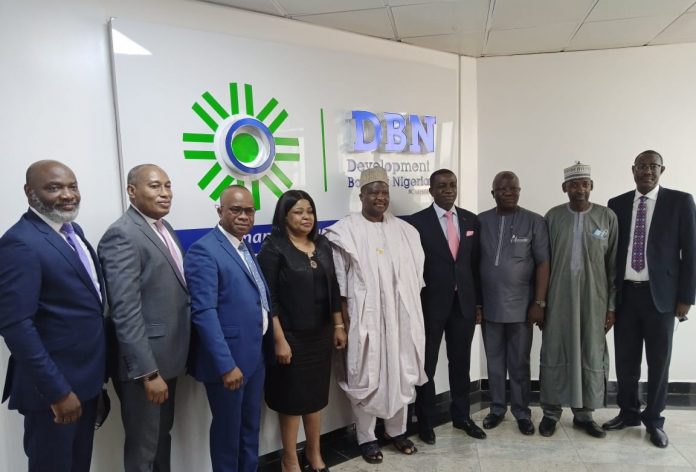
Speaking in Lagos, DBN’s Managing Director, Tony Okpanachi, described the new five-year strategic plan as a scale-up of what the institution has achieved since its inception, with a more aggressive posture on financial inclusion, gender equity, and sustainability.

“We want to scale up what we’ve done in the first five years. There’s still a lot to be done in Nigeria, and we are very aspirational in our approach,” Okpanachi said.

Women, Youth, and Disadvantaged Groups at the Centre

While DBN operates as a wholesale development finance institution, channeling funds through 79 participating financial institutions rather than dealing directly with individual businesses, its new strategy places inclusive growth at the core of its operations. The bank aims to allocate 20% of its loan portfolio to women-led businesses, while 40% will go to enterprises owned by economically disadvantaged Nigerians.

This is a notable pivot in a country where women-led businesses are often excluded from formal credit channels despite making up a significant portion of the informal economy. Similarly, many enterprises in Nigeria’s northern and rural regions have historically struggled to access capital due to insecurity, poor infrastructure, and financial illiteracy.

“We’re targeting sectors like manufacturing and agriculture—areas that are labour-intensive and hold the potential to absorb large segments of the workforce,” Okpanachi added.

A Focus on Green Financing and Regional Inclusion

In line with global climate goals and Nigeria’s own Energy Transition Plan, DBN is also tilting its strategy towards green financing. The bank intends to back businesses with environmentally sustainable operations, particularly those in underdeveloped states.

This is not a casual nod to climate targets. Green finance is rapidly emerging as a critical component of sustainable development financing, and Nigerian institutions are under pressure to align their portfolios with climate-resilient investment standards. DBN appears keen to ride this wave.

The Managing Director disclosed that the bank is aiming to create two million jobs, both directly and indirectly, over the next five years—nearly double the 1.2 million jobs it claims to have enabled between 2017 and 2022.

One of the bank’s distinct features is that it does not lend directly to MSMEs. Instead, it works through commercial banks, microfinance banks, and other financial institutions that meet its rigorous credit and impact criteria. This model allows it to multiply its reach while strengthening the broader financial ecosystem.

In a country with more than 40 million MSMEs, according to SMEDAN, this model of wholesale lending has helped bridge the risk perception gap that keeps many banks from lending to small businesses.

“Strategically, we’re working on three fronts—expanding our funding sources, deepening current partnerships, and leveraging existing resources to attract new ones,” Okpanachi said.

To meet its N3 trillion fundraising target, DBN is currently in talks with international development partners and is exploring the local capital markets, including plans for a domestic bond issuance, subject to stable macroeconomic conditions. This step, if realized, would signal a stronger shift toward self-sufficiency and long-term viability.

Despite Nigeria’s current fiscal headwinds, marked by high inflation, volatile exchange rates, and record debt servicing obligations, DBN’s capital-raising ambitions reflect a growing confidence among development finance institutions to navigate the turbulence through blended finance models and public-private partnerships.

A Record of Impact—But Challenges Remain

DBN recently disclosed that it had disbursed over N1 trillion in loans to MSMEs through participating institutions. It noted that 74% of its beneficiaries were women, and 25% were youths—a remarkable demographic tilt that is rarely achieved in mainstream commercial lending.

Also striking is its outreach to conflict-affected and economically excluded states such as Borno, Yobe, Katsina, Zamfara, and Adamawa, where small businesses face not just financial exclusion, but threats from insurgency and insecurity.

In terms of capacity building, the bank said it had trained more than 9,500 MSMEs across Nigeria—an often-overlooked component of development finance, as many small business owners in the country lack the financial literacy needed to scale or formalise operations.

However, DBN’s model has been criticized by some stakeholders, who have noted that because DBN does not lend directly, the intended impact may be diluted if partner banks maintain high interest rates or impose unfavorable conditions. Others have called for the bank to work more closely with informal cooperative groups and fintechs to deepen its reach.