DD
MM
YYYY

PAGES

DD
MM
YYYY

spot_img

PAGES

Home Blog Page 1296

Chinese Manufacturers Halt Production and Seek New Markets as U.S. Tariff Impact Bites

0

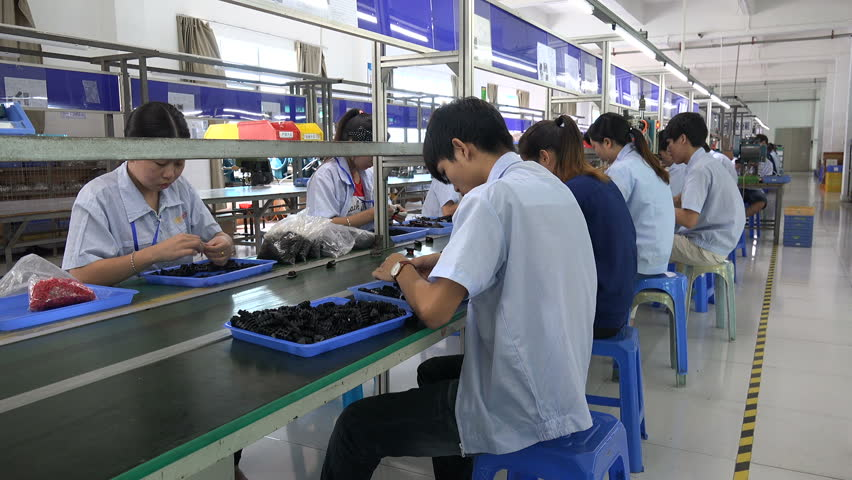
Chinese manufacturers are pausing production and turning to new markets as the impact of U.S. tariffs sets in, CNBC reports, citing companies and analysts.

The lost orders are also hitting jobs.

“I know several factories that have told half of their employees to go home for a few weeks and stopped most of their production,” said Cameron Johnson, Shanghai-based senior partner at consulting firm Tidalwave Solutions. He said factories making toys, sporting goods, and low-cost Dollar Store-type goods are the most affected right now.

“While not large-scale yet, it is happening in the key [export] hubs of Yiwu and Dongguan and there is concern that it will grow,” Johnson said. “There is a hope that tariffs will be lowered so orders can resume, but in the meantime companies are furloughing employees and idling some production.”

Around 10 million to 20 million workers in China are involved with U.S.-bound export businesses, according to Goldman Sachs estimates. The official number of workers in China’s cities last year was 473.45 million.

Over a series of swift announcements this month, the U.S. added more than 100% in tariffs on Chinese goods, to which China retaliated with reciprocal duties. While U.S. President Donald Trump on Thursday asserted trade talks with Beijing were underway, the Chinese side has denied any negotiations are ongoing.

The impact of the recent doubling in tariffs is “way bigger” than that of the Covid-19 pandemic, said Ash Monga, founder and CEO of Guangzhou-based Imex Sourcing Services, a supply chain management company. He noted that for small businesses with only several million dollars in resources, the sudden increase in tariffs might be unbearable and could put them out of business.

He said there’s so much demand from clients and other importers of Chinese products that he’s launching a new “Tariff Help” website on Friday to help small businesses find suppliers based outside China.

The Challenge of Consumer Spending Power

One of the deeper challenges for China as it seeks new markets is the issue of consumer spending power. The United States has long been China’s most lucrative export destination because American consumers possess a rare combination of high disposable income, a vast middle class, and a deep-rooted culture of mass consumption. No other country offers a comparable population with the financial ability to absorb such volumes of goods, particularly non-essentials like toys, apparel, electronics, and household items.

Although China is attempting to pivot toward Europe, Latin America, and its domestic market, none of these regions can match America’s scale of consumer demand. Europe’s markets are more cautious, and focused on sustainability and quality over quantity, while Latin American economies are limited by smaller middle classes and currency volatility. At home, China’s consumer economy remains constrained by widening income inequality and slowing growth, restricting its ability to fully replace the lost American demand.

This means China’s shift cannot simply be about finding alternative buyers. It will require a complete decoupling from the economic model it has relied on for decades — one built on mass-producing cheap goods for a wealthy, consumption-driven U.S. market. Manufacturers now face the daunting task of redesigning products to fit new consumer preferences, coping with lower average spending per customer, investing in unfamiliar supply chains, and ramping up marketing efforts in territories where brand loyalty to Chinese products is minimal.

In short, without a market matching the United States in both size and financial power, China’s transition is likely to be slow and painful, involving fundamental restructuring across its export economy.

Livestreaming and Domestic Efforts

In the meantime, business disruption is forcing Chinese exporters to try new sales strategies.

Woodswool, an athleticwear manufacturer based in Ningbo, near Shanghai, quickly turned to selling online in China via livestreaming. After launching about a week ago, the company said it received more than 30 orders with a gross merchandise value of over 5,000 yuan ($690).

“All our U.S. orders have been canceled,” said Li Yan, factory manager and brand director of Woodswool. More than half of Woodswool’s production was once headed for the U.S. Now, some capacity will remain idle for two to three months as the company rebuilds new markets.

The push into livestreaming comes as major Chinese tech companies, encouraged by Beijing, seek to help exporters sell goods domestically. Woodswool now sells through Baidu’s e-commerce platform using a virtual human livestreaming option that allows quick setup without major investments.

Baidu said it has supported hundreds of Chinese businesses in launching domestic e-commerce channels, offering subsidies and artificial intelligence tools such as “Huiboxing” — digital avatars that simulate real sales pitches.

Domestic Market Challenges

Other tech giants are stepping in. JD.com pledged 200 billion yuan ($27.22 billion) to buy Chinese goods originally intended for export, while food delivery giant Meituan has also promised to help distribute these products internally. But even large pledges pale in comparison to the size of the U.S. market: $27.22 billion represents just about 5% of the $524.66 billion in Chinese goods exported to the U.S. last year.

Michael Hart, president of the American Chamber of Commerce in China, said some businesses have concluded their models are no longer viable under the new 125% tariffs. He also noted rising competition among Chinese firms struggling for domestic survival.

Products designed for American suburban consumers often do not fit the lifestyles of Chinese apartment dwellers. Manufacturers have turned to local platforms like Red Note and Douyin (the Chinese version of TikTok) to appeal directly to domestic buyers, but consumer fatigue is already evident, analysts warn.

Looking Beyond the U.S. Few Chinese companies now view rerouting exports to the U.S. through third countries as viable, given the heightened scrutiny of transshipments. Instead, many are shifting production to Southeast Asia or India, while some are focusing efforts on Europe and Latin America.

Some exporters are finding success. Liu Xu’s e-commerce company, Beijing Mingyuchu, sells bathroom products to Brazil. Although his business faces exchange rate volatility and high shipping costs, Liu is confident trade with Brazil will remain robust despite U.S.-China tensions.

Similarly, Ghana-based Cotrie Logistics, founded during the COVID-19 pandemic, has helped Chinese businesses manage sourcing and logistics in West Africa. CEO Bright Tordzroh said U.S.-China tensions have led more firms to consider building supply chains that bypass the U.S. altogether, creating opportunities in emerging markets like Ghana.

Still, these shifts underscore the immense challenge China faces. Building alternative markets is not just about rerouting goods; it demands a fundamental overhaul of its entire export-driven growth model — a task that will take years, not months.

A Foray into Coinbase and PayPal PYUSD Stablecoin Partnership

0

Coinbase added support for PayPal’s PYUSD stablecoin, with trading starting on August 31, 2023, on the Ethereum network as an ERC-20 token, provided liquidity conditions were met. Initially listed with an “experimental” label due to its newness and low trading volume, Coinbase has since expanded its partnership with PayPal, announced on April 24, 2025, to boost PYUSD adoption.

This includes offering fee-free 1:1 PYUSD-USD conversions for retail and institutional users and enabling direct redemptions for USD on Coinbase platforms. The collaboration also aims to explore new on-chain use cases, such as payments and DeFi applications, and extend PYUSD support to PayPal’s merchant network to enhance stablecoin utility in commerce.

PYUSD’s integration on Coinbase, a major crypto exchange, boosts its visibility and accessibility, potentially driving mainstream adoption. The fee-free 1:1 PYUSD-USD conversions make it more attractive for retail and institutional users to hold and trade PYUSD. The partnership’s focus on integrating PYUSD into PayPal’s vast merchant network could position it as a viable digital payment option, bridging crypto and traditional commerce. This aligns with growing demand for stablecoins in real-world transactions due to their price stability.

Exploring DeFi applications and new on-chain use cases for PYUSD could expand its role in decentralized finance, such as lending, staking, or yield farming. This may attract developers and users to build and engage with PYUSD-based protocols. PYUSD’s Coinbase listing and PayPal’s push for adoption intensify competition with dominant stablecoins like USDT and USDC. Its success will depend on trust, liquidity, and integration into both crypto and traditional financial systems.

As PYUSD gains traction, it may face increased regulatory attention, especially given PayPal’s and Coinbase’s high-profile roles. Compliance with U.S. regulations, particularly around AML and KYC, will be critical to its long-term viability. The initial “experimental” label on Coinbase highlighted PYUSD’s low trading volume. The partnership’s efforts to boost liquidity (e.g., through conversions and merchant adoption) could stabilize its market presence, but failure to achieve sufficient volume might limit its growth.

The collaboration strengthens the bridge between fiat and crypto ecosystems, leveraging PayPal’s payment infrastructure and Coinbase’s crypto expertise. This could pave the way for more seamless fiat-to-crypto on-ramps, encouraging broader participation in digital assets. The move signals a strategic push to make PYUSD a key player in payments and DeFi, but its success hinges on execution, market reception, and navigating regulatory challenges.

As a U.S.-based stablecoin, PYUSD must adhere to strict Anti-Money Laundering (AML) and Know Your Customer (KYC) requirements enforced by agencies like FinCEN. Ensuring robust compliance across Coinbase’s and PayPal’s platforms, especially for cross-border transactions, is critical to avoid penalties or restrictions. The SEC could classify PYUSD as a security if it’s deemed an investment contract, particularly if marketed with promises of returns in DeFi applications.

The U.S. is developing stablecoin-focused legislation, with proposals requiring issuers to maintain 1:1 fiat reserves, undergo regular audits, and obtain banking-like licenses. PYUSD, issued by Paxos, must comply with these evolving rules, which could increase operational costs or limit flexibility. Regulators like the CFPB may scrutinize PYUSD for transparency in redemption processes, reserve management, and user protections. Any perceived risk of reserve mismanagement or insolvency could trigger regulatory action or erode user trust.

As PYUSD aims for global merchant adoption via PayPal’s network, it faces varying international regulations. Some jurisdictions may impose restrictions on stablecoin use, require local licensing, or ban non-local stablecoins, complicating global expansion. The IRS treats stablecoin transactions as taxable events in the U.S. PYUSD’s integration into payment systems could attract scrutiny over tax compliance, requiring PayPal and Coinbase to implement robust transaction reporting to avoid enforcement actions.

Using PYUSD for payments involves handling sensitive user data, subjecting PayPal and Coinbase to privacy laws like GDPR (in Europe) or CCPA (in California). Non-compliance could lead to fines or reputational damage. PYUSD must comply with U.S. sanctions enforced by OFAC, ensuring it isn’t used in prohibited jurisdictions. High-profile adoption could make it a target for regulatory monitoring, especially if integrated into DeFi platforms with less centralized oversight.

These challenges require PayPal and Paxos to maintain transparent reserve practices, robust compliance frameworks, and proactive engagement with regulators to ensure PYUSD’s long-term viability and avoid legal or operational setbacks.

Global users use PAIRMiner to earn more than $6,999 a day – leading the future of cloud mining platforms

0

April 22, 2025 – As the global cryptocurrency market continues to grow, the total market value exceeds $2.74 trillion, and the price of Bitcoin continues to hit new highs, the cryptocurrency market has ushered in a new bull market cycle. Bitcoin broke through $93,000 for the first time since early March and reached $94,105.84 on April 23, up 6.33% in 24 hours. The popularity of this market has driven the trading volume of global crypto assets to rise, and other major cryptocurrencies such as Ethereum, Ripple and Solana have also risen.

Driven by this cryptocurrency craze, the cloud mining platform PAIRMiner has emerged as a new choice for investors looking for passive income. More and more global users choose PAIRMiner as their mining platform, enjoying low-threshold, high-return income opportunities, and daily income has exceeded $6,999, demonstrating the platform’s strong appeal and wide recognition.

PAIRMiner: Redefining Cloud Mining Platform

As an innovative cryptocurrency platform, PAIRMiner not only provides traditional cloud mining services, but also creates a secure, scalable and efficient digital currency mining solution for global users through its unique blockchain technology. The platform is designed so that even technical novices can easily join the ranks of cryptocurrency mining and obtain stable passive income.

PAIRMiner’s core competitiveness lies not only in its mining services, but also covers emerging fields such as decentralized finance (DeFi) and non-fungible tokens (NFTs), creating a dynamic and future-oriented comprehensive blockchain ecosystem for users. Whether you want to participate in free cloud mining or increase the value of assets through high returns, PAIRMiner can provide you with tailor-made solutions.

PAIRMiner’s unique advantages

  1. Low threshold, high returns

PAIRMiner has greatly reduced the threshold for entering cryptocurrency mining. Users only need to register and get a free $150 principal to start mining, and the minimum daily income can reach $1.11. This makes it easy for both novice and veteran investors to get returns.

  1. Multi-level referral rewards

PAIRMiner’s two-tier referral program is a highlight of the platform. By expanding their social networks, users can get a 5% reward from direct referrals and 1.5% from the friends they refer, maximizing passive income.

  1. Complete transparency, no hidden fees

PAIRMiner implements a transparent fund policy, without any hidden fees, and all profits go directly into the user’s account, ensuring that users enjoy the fairest and most direct benefits.

  1. Strong security

The platform uses the most advanced encryption technology and provides two-factor authentication (2FA) to ensure that each account is strictly protected, so that users do not need to worry about the security of their funds.

  1. Multiple cryptocurrency mining

PAIRMiner supports the mining of multiple mainstream cryptocurrencies, including Bitcoin (BTC), Ethereum (ETH), Litecoin (LTC), Solana (SOL), etc., to meet the investment needs of different users and provide a broader profit space.

Contract Price Duration (Days) Daily Profit Total Return Payout Frequency
200$ 1 10$


10$


Every 24 Hours
500$


2 30$


60$


Every 24 Hours
1180$


5 41.42$


207.09$


Every 24 Hours
5100$


3 191.76$


575.28$


Every 24 Hours
35000$


1 2047.5$


2047.5$


Every 24 Hours
300000$ 8 27600$ 220800$ Every 24 Hours


PAIRMiner: The future of cryptocurrency mining

PAIRMiner’s goal is to enable more people to share the growth dividends of the cryptocurrency market in a simple and intelligent way. The platform emphasizes inclusive finance, allowing global users to increase their wealth through cloud mining wherever they are. Through continuous innovation, PAIRMiner provides users with a reliable way to earn passive income and help them succeed in the digital economy.

As the cryptocurrency market further develops, PAIRMiner will continue to promote innovation in the cloud mining industry to meet the growing needs of global users. Whether you are new to cryptocurrency or an investor who hopes to increase asset value through cloud mining, PAIRMiner can provide you with an ideal investment platform.

Customer Support and Service

PAIRMiner not only strives for excellence in technology, but also provides users with 24-hour customer support services to ensure that any problems can be solved in a timely manner. The platform is committed to providing users with a first-class service experience to help them smoothly carry out cryptocurrency mining and maximize their profits.


Join PAIRMiner and start your cloud mining journey!

For more information, please visit:

Official website: https://pairminer.org

Contact email: info@pairminer.com


PAIRMiner, join hands with global users to move towards a new era of cryptocurrency profitability.

The world is not a competition of grades but of processes!

1

Companies do not hire you just because you made good grades in school. You are hired because you’ve demonstrated attributes which resulted in a good outcome (good grades). To get good grades, you managed your time, showed discipline to accomplish a purpose (yes, every student likes good grades!).

The assumption is this: if you can apply those attributes in a job, the outcome would be good. You must understand that the processes to get a good grade are more important than the actual grade. Most attributes to success are universal while grades are not. Staying on course with those attributes makes the future predictable even when the grades become irrelevant!

If you graduated with poor grades, your problem is not the poor grades but the processes that produced the grades. If your processes (activity prioritization, dedication, focus, time management, etc) were GREAT but you ended with poor grades, you will be fine, since the root issues could be ones of talent, environment, misalignment, etc. Yes, deploy those processes on something else, and success will come.

Why? The world is not a competition of grades but of processes! The grades of markets are different from the grades from your professor because the exams from the professor are different from the ones set by customers. That you made A+ in school does not mean you can pass with A+ before customers (both internal and external) at work. 

So, what do we do? We must deploy the same tenacity, focus and hardwork which helped us to master the processes required by professors in school, to master what customers want, if we want to get an A+ from the market. Simply, grades go scale but processes do not: to thrive, you must keep improving your processes.

Win via better processes in all you do. Yes, improve your processes!

Commend on Feed

Comemnt: To hell with companies. We create our own jobs

My Response: When you create your own jobs, you will have a company. The irony of your comment is the illusion that an entrepreneur does not work in a company. And because it is yours, you do not need to have processes. That is wrong. Every entity in the world is built on the tripod of people, tools and processes, even if you are the person bringing that entity to life. The mindset you posit is the one which makes scaling a business harder: it is mine, I have a job and I do not need to improve my processes to grow that firm.

Cardano (ADA) to Outgain Ripple (XRP) in the Next Market Climb, But Does That Make It the Best XRP Alternative to Buy?

0

Cardano (ADA) is gaining momentum in the crypto market, with analysts predicting a potential rise to $10 by 2030. Upgrades like Leios aim to boost scalability, while MiCA compliance expands its reach in regulated European markets. Meanwhile, Ripple (XRP) faces turbulence despite a recent 2% price uptick. An “odd filing” in its ongoing SEC lawsuit and looming support breaches at $2.02 keep investors cautious. While both projects show promise, neither matches the explosive potential of Rexas Finance (RXS), a real-world asset tokenization platform rewriting investment rules.

Cardano’s Growth Trajectory Faces Competition

Cardano is positioning itself as a blockchain leader with consistent upgrades and institutional partnerships. Priced at $0.63, ADA remains far from its 2021 peak of $3.10. Predictions suggest a climb to $2.62 by 2025 and $10.32 by 2030, driven by ecosystem expansion and smart contract advancements. However, these gains pale compared to Rexas Finance’s presale performance, surging 580% from $0.03 to $0.20 in under a year. While Cardano’s 10-year forecast impresses, Rexas offers immediate upside, targeting a $0.25 launch price in 2025 with post-listing projections exceeding $10—a 50x leap from current levels.

Ripple’s Legal Hurdles Limit Momentum

Ripple’s price struggles at $2.09 amid regulatory uncertainty. A recent SEC lawsuit filing by Justin Keener, a figure previously fined $10M for securities violations, adds little credibility. Analysts warn of a 48% crash if XRP breaches $2.02 support. Though Coinbase’s upcoming XRP futures could spur volatility, Ripple’s long-term viability remains clouded. In contrast, Rexas Finance avoids regulatory pitfalls by tokenizing tangible assets like real estate and gold—markets worth trillions globally. While XRP investors hedge risks, RXS backers tap into asset classes with intrinsic value, bypassing crypto’s speculative swings.

Rexas Finance Redefines Real-World Asset Ownership

Breaking barriers between physical assets and blockchain, Rexas Finance is democratizing access to high-value markets. Imagine owning a fraction of a Parisian apartment from Jakarta or a stake in Dubai commercial real estate—all through a few clicks. The platform’s ERC-20 token, RXS, powers this revolution, enabling fractional ownership and seamless trading of tokenized assets. Rexas Token Builder simplifies asset tokenization for individuals and institutions. Users convert real estate, art, or commodities into tradeable tokens without coding expertise. The Launchpad lets creators fund projects by issuing asset-backed tokens, while QuickMint Bot accelerates minting. AI Shield and GenAI tools enhance security and user experience, ensuring scams and vulnerabilities stay minimized.

Presale Momentum Signals Investor Confidence 

Rexas Finance could have secured venture capital but chose public presale to include everyday investors. The decision is paying off: 91.9% of the 500,000,000 RXS presale allocation has sold out, raising $47.9M. Early backers watched prices jump 6.6x from $0.03 to $0.20, with a confirmed $0.25 listing price in 2025. The remaining 8.1% tokens are dwindling fast, fueled by a $1M giveaway offering 20 winners $50,000 each. Over 1.2M entries highlight soaring interest. CertiK’s audit assures RXS smart contracts meet top security standards, building trust in a market riddled with exploits. Listings on CoinMarketCap and CoinGecko—platforms with 100M+ monthly users—amplify visibility. Rexas plans debuts on three Tier-1 exchanges post-launch, ensuring liquidity and accessibility.

Why Rexas Finance Stands Out Now 

Cardano and Ripple offer gradual growth, but Rexas Finance reshapes how we invest. By bridging real estate’s $613T market and blockchain, RXS unlocks opportunities once reserved for the wealthy. Tokenizing assets like gold or property fragments lets global audiences build diversified portfolios effortlessly.

With 22.5% of RXS tokens allocated to staking pools, long-term holders earn passive income while supporting network stability. The presale’s final stage offers a last chance to buy below the $0.25 launch price—a gateway to projected 50x returns. As traditional and crypto investors scramble for RXS, missing this window risks losing ground in the next big wealth wave. Cardano and Ripple may climb, but Rexas Finance isn’t just competing—it’s pioneering. The question isn’t whether to find an XRP alternative but whether to seize the RXS opportunity before it multiplies.


For more information about Rexas Finance (RXS) visit the links below:

Website: https://rexas.com

Win $1 Million Giveaway: https://bit.ly/Rexas1M

Whitepaper: https://rexas.com/rexas-whitepaper.pdf

Twitter/X: https://x.com/rexasfinance

Telegram: https://t.me/rexasfinance