DD
MM
YYYY

PAGES

DD
MM
YYYY

spot_img

PAGES

Home Blog Page 1298

Bitcoin Supply on Exchanges Dropped to Its Lowest Level Since 2018

0

The Bitcoin supply on exchanges has indeed dropped to its lowest level since 2018, reaching approximately 7.53% of the total circulating supply as of March 2025. This is a significant decrease from previous years, with estimates suggesting around 2.6 million BTC are currently held on exchanges, compared to higher levels during the 2021 bull market.

This trend reflects a shift in investor behavior, with more individuals and institutions moving Bitcoin to self-custody or cold storage, signaling strong long-term holding sentiment and confidence in Bitcoin’s value as a store of value amid global economic uncertainties.

Lower exchange supply means fewer Bitcoins are available for immediate sale, potentially reducing short-term selling pressure and supporting price stability or upward momentum. Public companies, notably Strategy (co-founded by Michael Saylor), have acquired over 425,000 BTC since November 2024, with Strategy alone holding 285,980 BTC. This corporate accumulation is a major driver of the supply reduction.

The decline in exchange reserves has coincided with increased network activity (e.g., 1.16% rise in active addresses to 10.17 million) and technical indicators suggesting a bullish phase, though short-term volatility remains possible due to reduced liquidity. Bitcoin’s price was reported at around $87,653–$97,000 in March–April 2025, with support levels near $81,325.

Similar drops in exchange supply have historically preceded bullish market phases, as seen in 2018 and 2020, though low on-chain activity and transaction fees raise concerns about Bitcoin’s long-term security budget. This trend could lead to a supply squeeze if demand rises, potentially driving prices higher, though volatility persists due to macroeconomic factors and market sentiment.

When Bitcoin supply on exchanges drops (like the current low of ~7.53% of circulating supply, or ~2.6 million BTC as of March 2025), fewer coins are readily available for trading or selling. Many investors move Bitcoin to self-custody (e.g., hardware wallets) or long-term storage, reducing the liquid supply on exchanges. Institutional and corporate buying (e.g., Strategy’s 285,980 BTC holdings) further locks up supply.

Demand for Bitcoin can rise due to factors like institutional adoption, macroeconomic uncertainty (e.g., inflation fears), or bullish market sentiment. New buyers, including retail investors, funds, or corporations, enter the market seeking to acquire Bitcoin. With fewer Bitcoins available on exchanges, even moderate increases in demand can lead to significant price increases because buyers compete for a limited pool of coins.

Sellers may hold off, expecting higher prices, further tightening supply and amplifying the squeeze. A supply squeeze can trigger rapid price surges, as seen in past Bitcoin bull runs (e.g., 2017, 2020–2021). It can also increase volatility, as low liquidity on exchanges means smaller trades can cause outsized price movements. The Bitcoin supply on exchanges is at its lowest since 2018, reducing the pool of coins available for immediate sale.

Companies like Strategy and Metaplanet are aggressively buying and holding Bitcoin, removing it from circulation. Rising active addresses (10.17 million, up 1.16%) and bullish technical indicators (e.g., price support at ~$81,325, trading at ~$87,653–$93,000) suggest growing interest. Increased institutional adoption, ETF inflows, or macroeconomic events (e.g., fiat currency devaluation) could spike demand, intensifying the squeeze.

A supply squeeze can lead to sharp price corrections if speculative demand wanes or profit-taking occurs. Low exchange reserves can exacerbate price swings due to reduced market depth. Regulatory changes, macroeconomic shifts, or network issues (e.g., low transaction fees impacting Bitcoin’s security budget) could disrupt the squeeze.

A Bitcoin supply squeeze happens when low exchange reserves meet rising demand, creating a scarcity-driven price surge. The current drop in exchange supply to 2018 lows sets the stage for a potential squeeze, especially if demand accelerates, though volatility and external risks remain.

China Vows to Hit 5% Growth in 2025 as Tariff Showdown with U.S. Intensifies

0

China has vowed to meet its 5% economic growth target for 2025, using a mix of stronger macroeconomic policies and global outreach, even as trade tensions with the United States deepen into a full-scale standoff.

Finance Minister Lan Fo’an made the bold pledge during meetings in Washington this week, stressing that China would roll out “more proactive and effective macro policies” to stabilize its economy and contribute to global growth. His remarks, posted on the Ministry of Finance’s website Saturday, come at a time when rising protectionism, bolstered by President Donald Trump’s tariff campaign, threatens to pull the two biggest economies further apart.

Lan’s statements were not simply about reassuring global markets — they were part of a broader message of defiance. China’s push to hit 5% growth has become a symbolic response to the escalating tariff battle initiated by President Trump. It is a signal that Beijing will not back down under pressure, and is instead doubling down on stimulus and international diplomacy to outlast Washington’s economic onslaught.

The world is now watching to see who blinks first.

A Standoff with No End in Sight

The confrontation between Washington and Beijing has escalated over the past months, with Trump imposing successive waves of tariffs on Chinese goods, citing unfair trade practices and national security concerns. China, in turn, has responded with retaliatory tariffs, while also accelerating efforts to open up other parts of its economy to non-U.S. partners.

Lan, along with People’s Bank of China Governor Pan Gongsheng, used the high-profile IMF and World Bank meetings to accuse the United States of “wantonly imposing tariffs” and undermining global trade stability. In a separate statement, Pan criticized Washington for infringing upon the “legitimate rights and interests” of other countries, pointing to a world economy weakened by such confrontations.

China’s Foreign Minister Wang Yi, speaking at a China-Central Asia gathering in Kazakhstan, also lambasted the U.S. approach as “extreme egoism,” accusing Washington of bullying smaller nations into accepting unfair terms. He reaffirmed that China would stand firm against what he described as protectionist moves, further underlining Beijing’s refusal to yield to American pressure.

Despite this public posturing, confusion clouds the true state of negotiations. Trump, in a recent interview, claimed that fresh talks were underway with Beijing. Chinese officials quickly dismissed that claim, denying any current negotiations. The public contradictions suggest that both sides are locked in a high-stakes game of brinkmanship, unwilling even to agree on whether they are talking.

Economists Doubt 5% Target, but China Digs In

China’s economy grew 5.4% in the last quarter year-on-year, driven largely by consumer stimulus and an export rush as companies scrambled to ship goods before new U.S. tariffs hit. Still, major global banks like UBS, Goldman Sachs, Citigroup, and Société Générale have lowered their forecasts for China’s 2025 growth to around 4% or even lower, citing persistent structural weaknesses and the drag from trade hostilities.

Even so, Lan and other top Chinese officials maintain that the 5% target is non-negotiable. Beijing believes that sustaining strong growth is essential not just for domestic stability but for demonstrating resilience in the face of American economic warfare.

Pledging new stimulus measures, Lan said China would strengthen support for key sectors such as manufacturing, infrastructure, and private enterprise investment — areas most vulnerable to external shocks. The government also plans to widen access to its vast domestic market, particularly for countries willing to bypass U.S.-dominated trade routes.

China Recasts Itself as Defender of Global Trade

Lan used his platform in Washington to link China’s domestic growth ambitions with a global mission to defend multilateralism and free trade. He praised reforms at the World Bank aimed at strengthening support for the private sector and fighting poverty and quoted President Xi Jinping’s calls for building “bridges, not walls” in international trade.

China’s narrative seeks to cast itself as a reliable partner in global economic relations, contrasting its message of openness with what it portrays as Washington’s increasing isolationism. Lan emphasized that China remains committed to offering zero-tariff treatment to goods from the world’s least developed countries that maintain diplomatic ties with Beijing while inviting others to tap into its domestic market.

At the same time, he warned that the rising tide of protectionism, driven by new U.S. tariffs, threatens to reverse decades of global poverty reduction and economic development. Organizations like the World Bank, he argued, must resist pressure to abandon principles of free and non-discriminatory trade.

Debt Talks, Development, and China’s Growing Influence

Beyond tariffs, China is quietly expanding its influence in other key areas. At the Global Sovereign Debt Roundtable, Lan joined other finance leaders to discuss solutions for debt-laden developing economies. Beijing, often criticized for the terms of its lending under its Belt and Road Initiative, is now seeking to play a more visible role in reshaping debt frameworks — though still largely on its own terms.

Lan argued that helping countries avoid financial collapse was critical to stabilizing global markets, but he also made clear that China would not support solutions that simply transfer more burden onto lenders like itself.

Beijing’s insistence on hitting 5% growth, even in the face of mounting challenges, highlights how much the current trade conflict with the U.S. has evolved into a broader geopolitical contest over resilience, credibility, and leadership.

Both sides appear determined to outlast the other. China, by mobilizing every lever of state power to support growth and foster global alliances; Washington, by tightening tariffs and betting that China’s internal contradictions will eventually force it to make concessions.

Neither side is blinking yet — but the longer the standoff drags on, the more risk it poses to global economic stability.

Transcorp Power Posts 62% (N32.637bn) PAT Q1 2025 Growth

0

Transcorp Power Plc (formerly Transcorp Power Limited) delivered a powerful first-quarter performance in 2025, reporting a pre-tax profit of N43.283 billion — a 50.43% rise from N28.772 billion in Q1 2024. Profit after tax soared even higher, climbing 62% to N32.637 billion.

The strong results reflect not just Transcorp Power’s operational efficiency, but also broader tailwinds across Nigeria’s electricity market, following the introduction of the Band A tariff regime last year.

The Band A tariff system came into effect in 2024 to allow power distribution companies (DisCos) and generating companies (GenCos) to charge premium rates for customers enjoying a minimum of 20 hours of electricity supply per day.

Transcorp Power, one of Nigeria’s largest power generators, has clearly been a major beneficiary of these reforms. The company’s Q1 2025 revenue surged to N105.442 billion, up 55.38% from N67.862 billion in the corresponding period last year. This quarterly revenue already represents 34.5% of its full-year 2024 revenue, setting a strong pace for 2025.

Energy delivery remained the backbone of Transcorp’s revenue mix, contributing 73% of turnover. Importantly, international market revenue climbed from 18% to 26.82%, suggesting Transcorp Power is not just riding domestic tariff improvements but also strategically expanding its footprint outside Nigeria.

Margins Stay Strong Despite Rising Costs

Cost of sales grew by 52.38% year-on-year to N50.412 billion, largely driven by higher natural gas and fuel costs — which together make up 91% of production expenses. Nevertheless, this cost increase was outpaced by revenue growth, lifting gross profit to N55.031 billion, a 58.23% increase. The gross margin stood firmly at 52%, highlighting Transcorp’s ability to protect profitability even amid higher input costs.

Administrative expenses rose sharply by 74.14% year-on-year to N7.453 billion, reflecting wage increases, inflationary pressures, and expansion costs. Still, the company maintained a healthy operating profit margin of 42%, despite a slight compression of about 2.5 percentage points.

Meanwhile, net finance costs rose moderately by 15.26% to N1.012 billion, demonstrating effective debt management in a high-interest environment.

Earnings and Balance Sheet Strength

Transcorp Power’s earnings per share (EPS) rose to N4.35 — up 61.71% year-on-year — already surpassing 40% of its full-year 2024 EPS. This trajectory reinforces expectations of record earnings for the full year, buoyed by higher tariffs and stronger collections across the power industry.

The company’s balance sheet expanded by 13% to N447 billion within the first quarter alone. Trade and other receivables still account for about 79.8% of total assets, a lingering structural challenge typical in Nigeria’s power sector where payment bottlenecks persist, despite improving collections.

Market Response and Sector Outlook

On the stock market, Transcorp Power has posted a year-to-date gain of 1.39% in 2025, after closing 2024 with a strong 36.33% full-year gain that lifted its market capitalization to N2.7 trillion.

Analysts suggest that investor sentiment is still cautious, pending broader reforms in the sector, but that Transcorp’s fundamentals are pointing towards sustained profitability. The ongoing implementation of the Band A tariff structure and improving sector liquidity could catalyze a market rerating in the months ahead.

The Band A reform, aimed at improving cost recovery and encouraging investment in the sector, is expected to yield more results for the sector players. Earlier this month, Nigeria’s Minister of Power announced that the electricity sector generated a record N700 billion in revenue in 2024 — a figure that stands as the highest annual collection in the sector’s history. This represents a major improvement from the chronic liquidity crises that have plagued the industry for years.

If the broader policy framework holds, and the Band A tariff regime continues, Transcorp Power could be entering a period of accelerated and sustained growth, much to the delight of its investors.

CME Group to Launch XRP Futures Contract on May 19th

0

CME Group, the world’s leading derivatives marketplace, announced plans to launch XRP futures on May 19, 2025, pending regulatory approval. The futures will be cash-settled, based on the CME CF XRP-Dollar Reference Rate, calculated daily at 4:00 p.m. London time.

Traders can choose between micro-sized contracts (2,500 XRP) and larger contracts (50,000 XRP), catering to both retail and institutional investors. This move expands CME’s crypto derivatives suite, which includes Bitcoin, Ethereum, and Solana futures, driven by growing interest in XRP and its XRP Ledger for fast, low-cost global transactions.

The launch follows a 141% year-over-year increase in CME’s crypto futures trading volume, reaching $11.3 billion in Q1 2025. Robinhood will also offer these contracts, enhancing retail access. The announcement has sparked speculation about a potential XRP spot ETF, as regulated futures are often a prerequisite for SEC approval. XRP is currently trading at around $2.29, with a 6% weekly gain but a slight daily dip.

CME’s regulated futures platform will attract institutional investors, such as hedge funds and asset managers, who require trusted venues for exposure to XRP. This could drive higher trading volumes and liquidity, stabilizing XRP’s price and reducing volatility over time. Futures contracts will enhance price discovery by providing a transparent, regulated benchmark (CME CF XRP-Dollar Reference Rate). This could reduce price manipulation risks and align XRP’s market value more closely with its fundamental utility in cross-border payments via the XRP Ledger.

Regulated futures are often a precursor to SEC approval for spot ETFs, as seen with Bitcoin and Ethereum. The launch fuels speculation about an XRP ETF, which could unlock significant retail and institutional capital, potentially boosting XRP’s price and adoption. Robinhood’s support for XRP futures, alongside CME’s micro-sized contracts (2,500 XRP), lowers the entry barrier for retail traders. This could increase XRP’s mainstream adoption and trading activity, especially among younger investors active on platforms like Robinhood.

CME’s decision signals confidence in XRP’s long-term viability, particularly its role in facilitating fast, low-cost global transactions. This could bolster Ripple’s partnerships with financial institutions and encourage further integration of XRP into payment systems. The announcement has already contributed to bullish sentiment, with XRP trading at $2.19 and analysts predicting potential rises to $3 or higher by mid-2025, driven by futures-driven liquidity and ETF speculation. However, short-term volatility may persist due to regulatory uncertainties or market corrections.

The launch, pending regulatory approval, suggests growing acceptance of XRP in traditional finance, despite past SEC legal challenges. It could pressure regulators to clarify XRP’s status, potentially resolving lingering uncertainties and fostering a more favorable environment for Ripple and XRP. As CME expands its crypto derivatives (Bitcoin, Ethereum, Solana, now XRP), it intensifies competition among blockchain networks. XRP’s inclusion may spur innovation in the XRP Ledger and encourage other projects to seek similar regulated offerings to remain competitive.

Overall, the XRP futures launch positions XRP as a maturing asset in the eyes of traditional finance, likely driving adoption, liquidity, and price growth while paving the way for further integration into global financial systems. However, regulatory developments and market dynamics will remain critical factors to watch.

UBA to Raise N144.8bn to Meet Recapitalization Target, Expand Footprint into France and Saudi Arabia

0

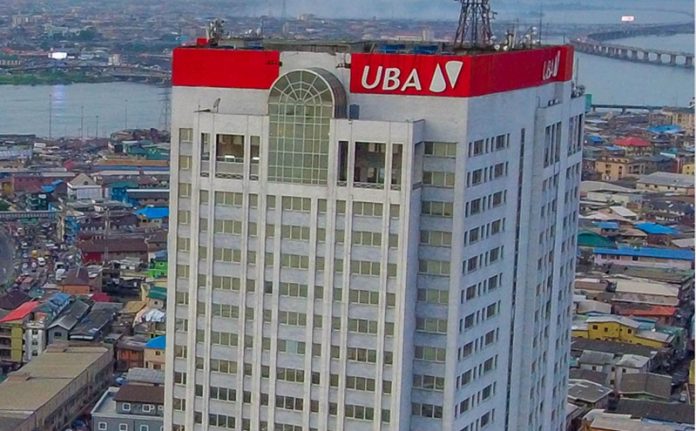
United Bank for Africa Plc (UBA) has announced plans to raise N144.8 billion ($90.2 million) in additional capital this year as part of its strategy to meet the Central Bank of Nigeria’s new recapitalization requirements and drive expansion into new international markets.

This latest capital raise comes on the heels of an N240 billion rights issue concluded earlier this year, which, together with the new funds, is expected to lift UBA’s paid-up capital above the N500 billion minimum now required for banks with international licenses. The bank’s Group Managing Director and CEO, Oliver Alawuba, said in a statement that the new capital would be “duly invested in additional technologies and business growth initiatives across Nigeria, Africa, and the globe.” He added that UBA was preparing to extend its footprint further by opening operations in France and Saudi Arabia, complementing its existing presence in 24 countries.

The push by UBA is part of a wider shake-up across Nigeria’s banking sector following the Central Bank’s announcement of a major recapitalization directive in March 2024. Under the new rules, banks were given two years, until March 31, 2026, to shore up their minimum paid-up share capital. For international banks, like UBA, the bar was set significantly higher at N500 billion, compared to the previous N50 billion.

The CBN said the tougher requirements were necessary to fortify Nigeria’s financial system against persistent economic headwinds, including high inflation, sluggish economic growth, and the naira’s steep devaluation following the 2023 currency reforms. Those reforms, which saw the unification of Nigeria’s multiple exchange rates and a sharp fall in the naira’s value, had exposed banks to significant foreign exchange risks and impacted their capital adequacy ratios. The regulator stressed that stronger capital buffers would enable banks to better absorb future shocks and continue lending to the real economy.

UBA’s drive to raise fresh capital mirrors similar moves by other top-tier Nigerian banks scrambling to comply with the new thresholds. Access Holdings Plc, the country’s largest lender by assets, announced last week that it had successfully raised N351 billion through a rights issue, making it the first of the Tier-1 banks to comfortably surpass the N500 billion benchmark. Access said its recapitalization leaves it well-positioned for further regional and global expansion.

Zenith Bank also confirmed it had concluded its capital-raising program, securing approximately N350.4 billion through a combination of rights and public offerings, boosting its paid-up capital to N614.6 billion — well above the minimum requirement.

Guaranty Trust Holding Company Plc (GTCO) adopted a phased approach, securing N209.4 billion in a first-round public offer earlier this year, with plans to launch a second phase targeting foreign institutional investors to complete its capital-raising drive before the deadline. GTCO’s management emphasized that the two-stage fundraising was aimed at not just meeting the regulatory mandate but also diversifying its investor base for long-term stability.

FBN Holdings, the parent company of First Bank of Nigeria, also rolled out an ambitious recapitalization plan. The group raised N150 billion through a rights issue in late 2023 and is seeking shareholder approval to raise an additional N350 billion. If successful, it would take FBN Holdings’ capital base to over N730 billion, giving it a sizable buffer above the regulatory minimum and additional firepower to finance technology upgrades, lending, and international expansion.

The 2024 recapitalization exercise is the second major sector-wide drive since the historic 2004 banking consolidation under former CBN governor Charles Soludo, which reduced the number of banks from 89 to 25 and created a stronger banking landscape. However, this latest round comes against a far more turbulent backdrop of macroeconomic instability.

Banks are under pressure not just to raise fresh capital but also to navigate a tough operating environment characterized by spiraling inflation, rising borrowing costs, and weakened consumer spending. In addition, the aftershocks of the 2023 currency liberalization — including heavy foreign exchange losses and a backlog of unsettled FX obligations, have further complicated the financial outlook for the sector.

Despite these challenges, industry analysts say well-capitalized banks will be better positioned to withstand economic shocks, finance critical sectors like infrastructure and agriculture, and support Nigeria’s ambition to achieve sustained economic growth.

UBA’s aggressive move to strengthen its balance sheet and expand into new territories reflects the broader shift among Nigerian lenders aiming not just to meet regulatory mandates but to seize new growth opportunities across Africa, the Middle East, and beyond.