Prediction markets have long been viewed as fascinating experiments in collective intelligence, where individuals place bets on future events and market prices reveal the crowd’s expectations.
Today, the rise of artificial intelligence is transforming these platforms into something far more significant. Platforms such as Polymarket and Kalshi are increasingly becoming arenas where sophisticated algorithms compete against one another, raising both concerns and hopes about the future of forecasting.
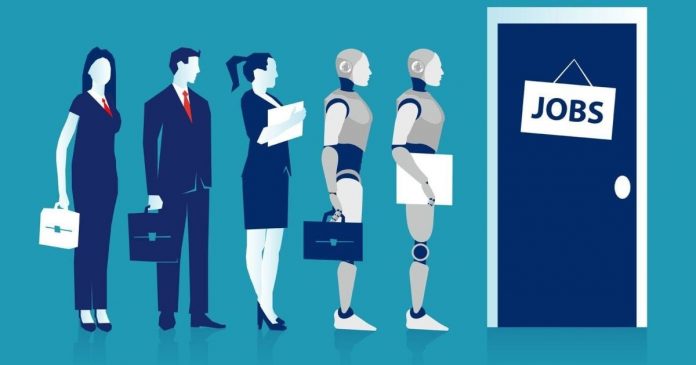
Critics argue that these markets may eventually become places where bots duel other bots for the privilege of collecting money from dumb sports fans.
The phrase captures a growing anxiety that ordinary participants could be outmatched by highly advanced AI systems capable of processing enormous quantities of data, identifying subtle patterns, and making predictions with remarkable precision.
In sports betting, political forecasting, and economic prediction, AI models may eventually dominate to such an extent that human participants struggle to compete. Yet this apparent dystopian scenario carries within it a surprisingly optimistic possibility.
The competition between increasingly sophisticated AI forecasters could create powerful incentives for the development of systems that are exceptionally good at understanding the world and predicting future events.
Markets reward accuracy. Any AI capable of consistently forecasting outcomes better than competitors stands to generate substantial profits. Consequently, prediction markets could become an important testing ground for advanced machine intelligence.
The implications extend far beyond gambling or speculation. Forecasting is a fundamental component of decision-making in nearly every aspect of society. Governments attempt to predict economic growth, inflation, and geopolitical developments.
Businesses forecast consumer demand and technological trends. Public health officials model disease outbreaks, while climate scientists project environmental changes decades into the future. Better predictions can translate directly into better decisions.
This is the vision articulated by thinkers such as Alexander, who argues that the ultimate dream is to create “AI superforecasters” that can improve public policy and societal outcomes.
If artificial intelligence can become highly effective at forecasting elections, economic disruptions, energy needs, or emerging conflicts, policymakers could gain access to tools that dramatically enhance strategic planning.
Consider how such systems might have changed past crises. More accurate forecasts regarding financial instability could have mitigated the 2008 global financial crisis. Better prediction models for pandemics might have enabled governments to respond more effectively to COVID-19.
Advanced forecasting of climate risks could help nations allocate resources more efficiently and prepare for future environmental challenges. Prediction markets offer a unique environment for developing these capabilities because they impose financial discipline on forecasts.
Unlike academic predictions or social media opinions, market participants are rewarded or punished based on accuracy. This creates a strong feedback loop that continuously refines forecasting models. AI systems operating in these environments would need to learn from mistakes, adapt to new information, and improve over time.
Of course, significant challenges remain. The concentration of predictive power in a handful of companies or AI systems could create new inequalities and ethical concerns. There is also the risk that prediction markets become overly financialized or manipulated.
Transparency, regulation, and broad access will be essential to ensure that these technologies serve the public interest. The convergence of AI and prediction markets represents one of the most intriguing developments of the digital age.
What may initially appear to be machines competing over sports bets could ultimately lead to the creation of powerful forecasting tools capable of helping humanity make wiser decisions. If successful, AI superforecasters may not simply predict the future—they may help society build a better one.